

No. 078
Badger Skull Identification: The Locked Jaw, the Crest and 34 Teeth
If the lower jaw on your heavy, broad skull refuses to come off, that stubborn hinge is one of the best clues you have for a badger. In 1965 Charles A. Long described how, in many older American badgers, the lower jaw locks into its sockets on the skull so firmly that it cannot be removed without breaking bone.
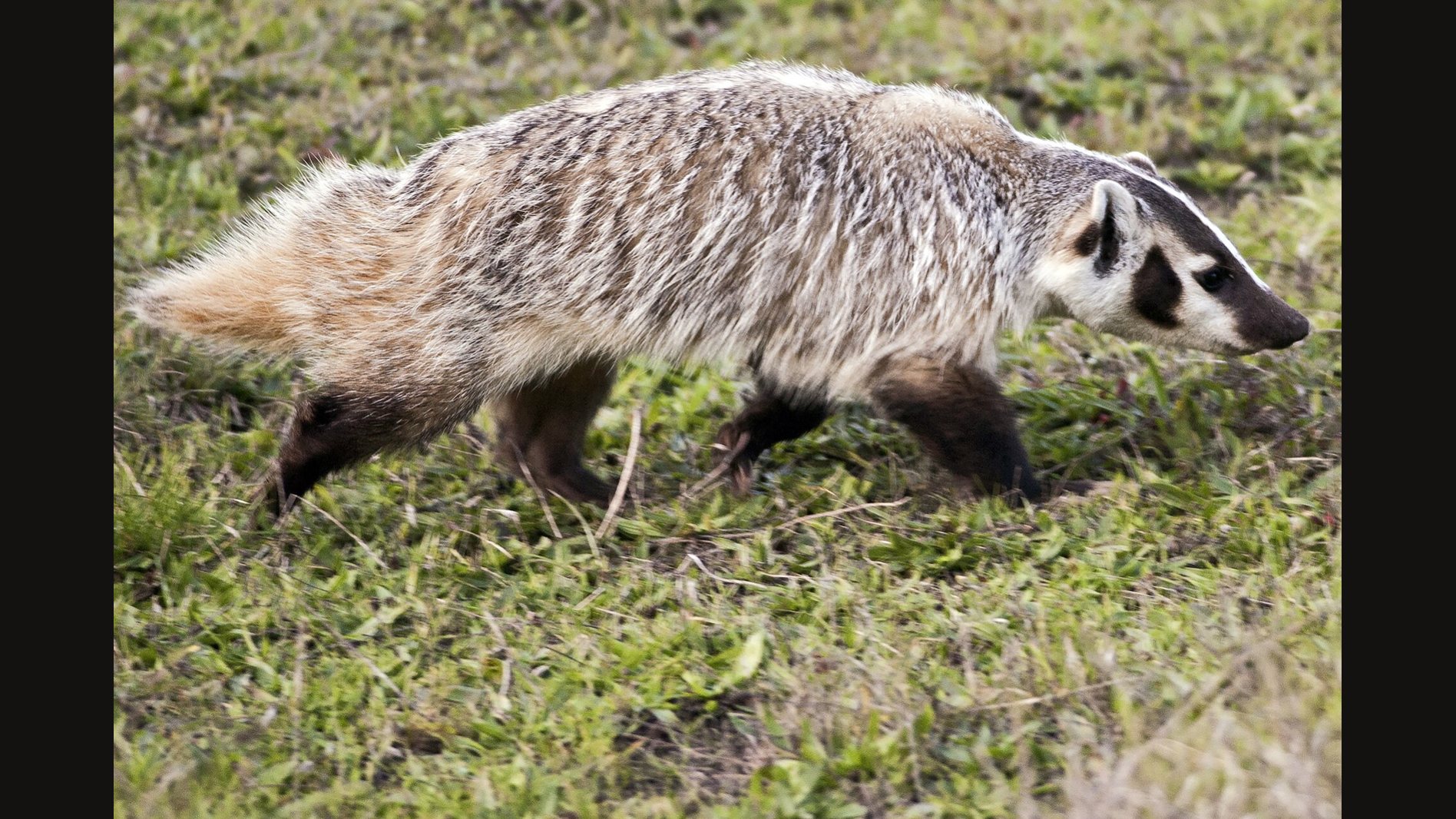
The rest of the profile backs it up. An American badger, *Taxidea taxus*, has a broad, wedge-shaped skull with a triangular back end, a short snout, large canines and 34 teeth, according to the Texas Tech University Natural Science Research Laboratory and the Oregon State University Mammal Collection.
In Europe the badger is a different animal. The Eurasian badger, *Meles meles*, has 38 teeth and a heavier, more massive skull. So, where you picked the skull up matters almost as much as what it looks like.
The American badger skull at a glance
Set the skull down and look at it from above. An American badger skull is shaped like a wedge, wide at the back and narrowing toward a short rostrum, the snout section in front of the eyes. The occiput, the back of the skull where it meets the neck, forms a triangle. Oregon State describes that back edge as fairly straight, which gives the skull a squared-off look from behind. The specimen pages at University of Texas DigiMorph use the same words: wedge-shaped, with a triangular occiput.
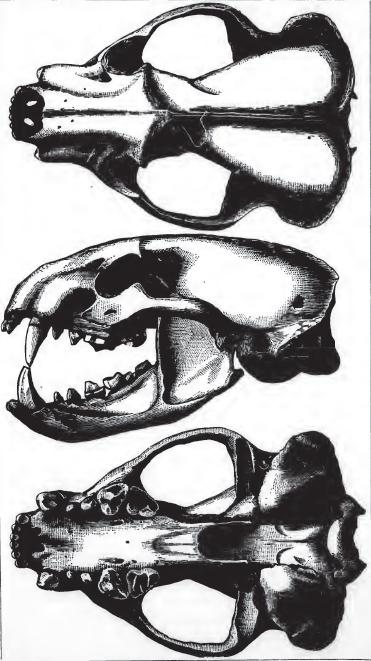
The canines are large, and the cheek teeth tell their own story. The dental formula, I 3/3, C 1/1, P 3/3, M 1/2, covers one side of the mouth, upper jaw over lower. On each side there are three incisors top and bottom, one canine top and bottom, three premolars top and bottom, and one molar on top with two below. That makes 17 per side and 34 in all.
Look closely at the last upper tooth on each side. Oregon State notes that the American badger's upper molar is triangular and not constricted, meaning it does not pinch in at the middle. With only three premolars in each row, the tooth rows look short and solid for the size of the head.
The crest along the top
Many badger skulls carry a sagittal crest, a ridge of bone running front to back along the top of the skull where the big jaw muscles anchor. On an older animal it can stand up like a keel. But the crest is not a fixed feature. Its size varies with age and from one animal to the next.
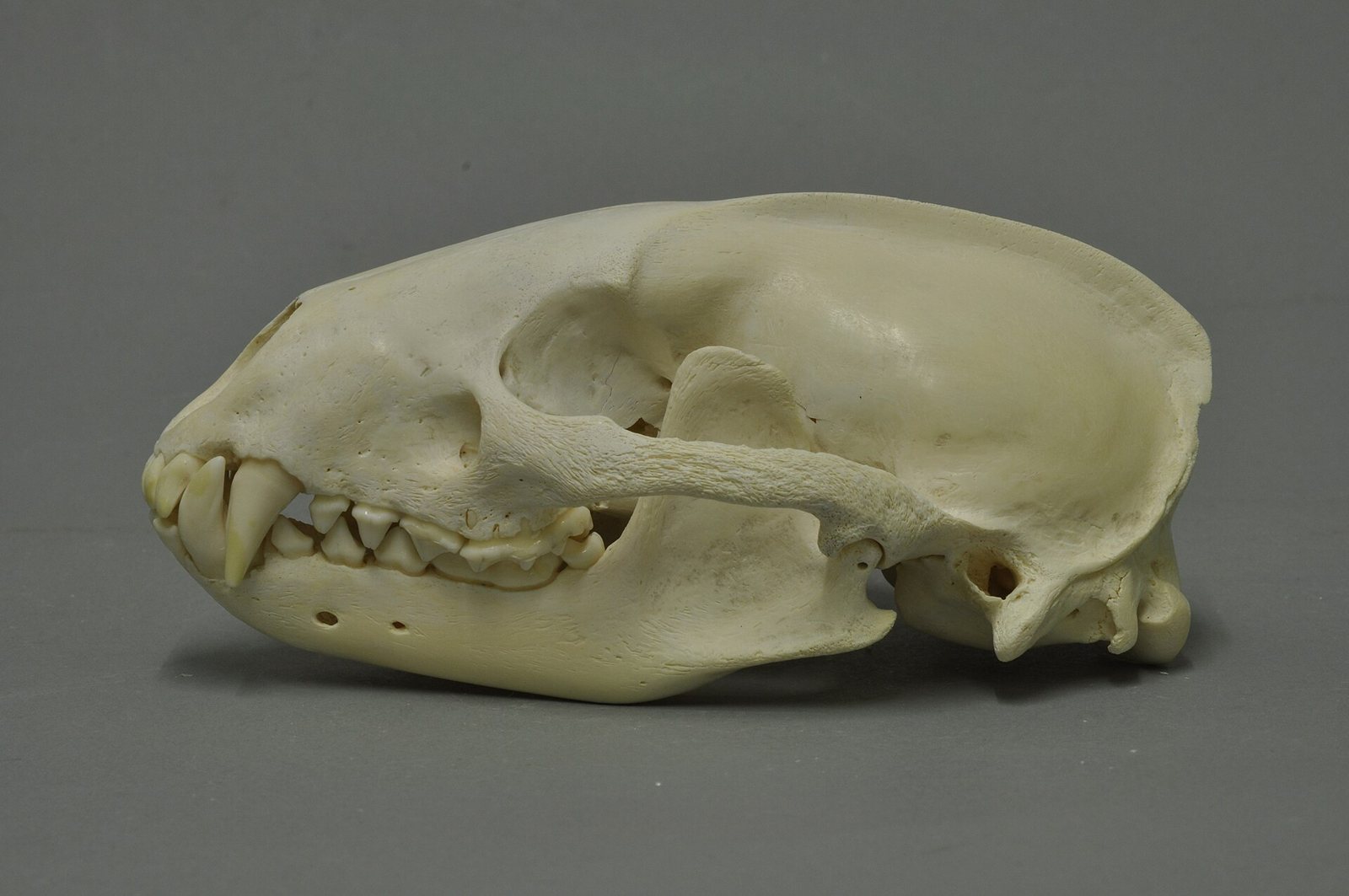
DigiMorph makes the point with its own specimen, an American badger scanned at the University of Texas in 1999. That animal was a subadult: its teeth had fully erupted but showed no wear, and its sagittal crest had not formed yet. A young badger can have a smooth top to its skull and still be a badger.
That is why the crest works best as supporting evidence. The wedge shape, the triangular back, the 34 teeth and the place you came across the skull, taken together, are what make the identification. A big crest on its own does not, and a missing one does not rule a badger out.
Why the jaw will not come off
The locked jaw is the part most people remember, and it has a neat mechanical explanation. In his 1965 paper, Functional Aspects of the Jaw-Articulation in the North American Badger, Charles A. Long described the joint in detail.
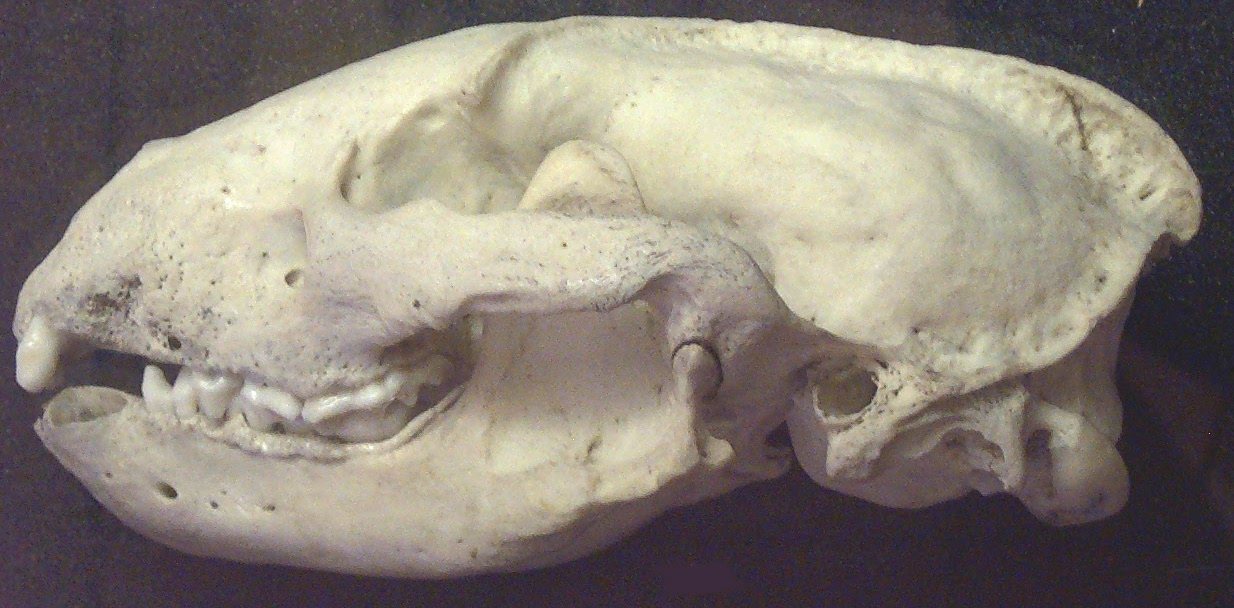
On the lower jaw, the articular process, the knob of bone that forms the hinge, is long, runs side to side and is rounded. It sits in the glenoid fossa, a socket on the underside of the skull, which in a badger is a deep trough with walls that narrow as they close around the knob. The fit allows mostly up-and-down movement, like a door hinge, and very little side-to-side play.
As a badger ages, the front lip of that socket grows farther downward and overlaps the narrow part of the articular process. The knob is then held in by bone on both sides. Long reported that many old American badgers had jaws locked so firmly that separating them would mean breaking bone. That is why a badger skull often keeps its lower jaw long after other mammal skulls in the same field have come apart. The skull is not stuck; it was built that way.
American badger or European badger?
The two badgers share a name, but their skulls are easy to tell apart once you count. The European or Eurasian badger, *Meles meles*, has 38 teeth, with the formula I 3/3, C 1/1, P 4/4, M 1/2, according to Animal Diversity Web at the University of Michigan. That extra premolar in each row is the quickest giveaway.
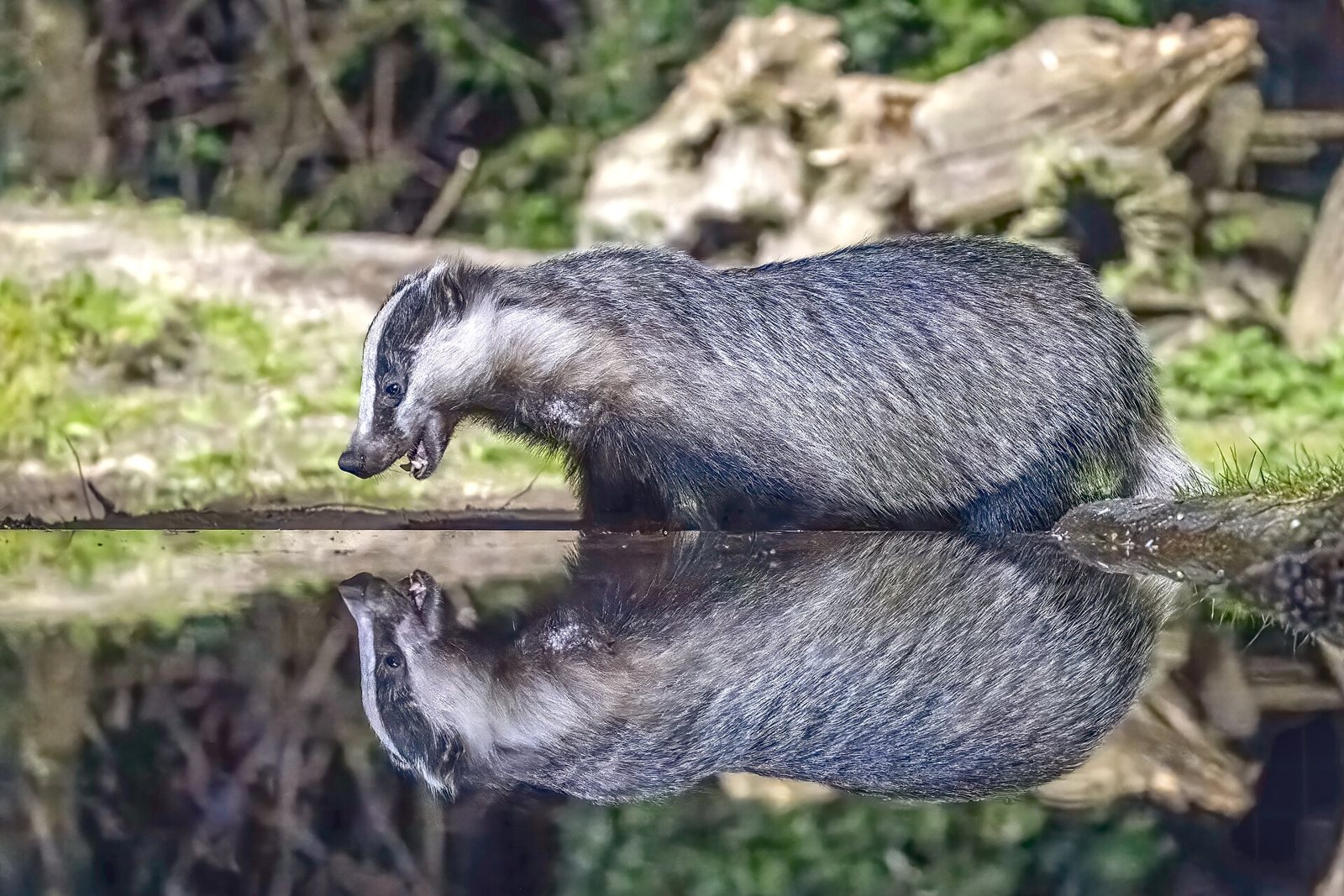
Animal Diversity Web describes the European badger as generally heavier and more massive, with a prominent sagittal crest, short triangular paroccipital processes (small bony points behind the ear region at the back of the skull), flattened molars, small incisors and prominent canines.
The American badger has 34 teeth, three premolars per row, a wedge-shaped skull with a triangular back outline and that unpinched triangular upper molar. Its crest is often less developed, especially in younger animals. The two species also live in different parts of the world, so a skull from a field in Kansas and one from a hedgerow in England start out with very different odds.
Badger, skunk or raccoon?
In North America the two skulls most often mistaken for a badger's are the striped skunk and the raccoon. The skunk is the tricky one. A striped skunk, *Mephitis mephitis*, also has 34 teeth, so counting alone will not separate it from an American badger.
What does separate them is build. Oregon State describes the American badger as usually larger and more solidly built than a skunk, with a broad, triangular skull and a broad back region. Compare the overall size, the proportions of the skull, the shape of the molars and the outline of the back of the skull. Our skunk skull guide walks through that skull feature by feature.
The raccoon is easier. A raccoon, *Procyon lotor*, usually has 40 teeth, with four premolars and two molars on each side of both jaws. The Maryland Department of Natural Resources Key to Common Maryland Mammal Skulls, published in 2022 by Kerry Wixted, separates the weasel family from raccoons by their smaller number of premolars and molars, and places raccoons in the 40 to 42 tooth group. Our raccoon skull guide has the details.
Tap or hover a row to highlight it.
| Animal | Scientific name | Teeth | Useful skull clues |
|---|---|---|---|
| AnimalAmerican badger | Scientific nameTaxidea taxus | Teeth34 | Useful skull cluesWedge-shaped skull, fairly straight back outline, three premolars per row, triangular upper molar |
| AnimalEuropean badger | Scientific nameMeles meles | Teeth38 | Useful skull cluesHeavy, massive skull, prominent sagittal crest, flattened molars, small incisors |
| AnimalStriped skunk | Scientific nameMephitis mephitis | Teeth34 | Useful skull cluesSmaller skull; the tooth count alone does not separate it from an American badger |
| AnimalRaccoon | Scientific nameProcyon lotor | Teeth40 | Useful skull cluesSix or more upper cheek teeth, four premolars and two molars per side, usually a less triangular skull |
No single feature settles every skull. Look at it from above, from the side and from below, count the teeth and empty sockets where you can, measure it, and compare it with the mammal skull key for your region.
Is it a badger? A quick check
Tap a card to bring it forward.
- Locked jaw: The lower jaw stays firmly attached, especially in an older animal.
- Wedge shape: The skull is broad at the back and narrows to a short snout.
- Triangular back: The rear of the skull forms a triangle with a fairly straight edge.
- Tooth count: 34 teeth points to an American badger, 38 to a European badger.
- Crest: A sagittal crest may be strong, faint or missing, depending on age.
- Location: North America suggests Taxidea taxus; Europe suggests Meles meles.
If you are still unsure what kind of animal it came from at all, our guide to human vs animal skulls covers the first, most basic check. And if your skull is flatter, with a short, broad snout, and came from beside a river, the otter skull guide covers another member of the weasel family.
Badger skulls in the human and natural record
Badger skulls have turned up in some unexpected places. At Los Azules, a site in Cangas de Onís, Asturias, in northern Spain, archaeologists recorded a badger skull in an Azilian burial dated to approximately the ninth millennium before the present. A study in the Universidad de Cádiz repository describes it as part of an unusual group of grave materials placed with the person buried there, thousands of years before anyone wrote a skull key.
A much more recent find came from the sky. On 8 July 2014, a young badger skull turned up in a Eurasian eagle-owl nest at the Refugio de Montejo in Segovia, Spain. The Hojas Informativas del Refugio de Montejo records that biologists Jorge González Casanovas and Alfredo Ortega Sirvent confirmed the identification. If owls and skulls together catch your eye, our story on owl and skull meaning looks at the pairing in art and symbol.
Badger skulls through time
Tap or hover a step to follow the order.
Approximately the ninth millennium before the present
A badger skull is placed in an Azilian burial at Los Azules, Cangas de Onís, Asturias.
1877
Elliott Coues publishes a monograph on North American Mustelidae with an illustration of an American badger skull.
1965
Charles A. Long publishes his study of the American badger's jaw joint.
1992
The Protection of Badgers Act 1992 is passed, the law that protects badgers and their setts in England.
2014
On 8 July, a young badger skull turns up in a Eurasian eagle-owl nest at the Refugio de Montejo, Segovia.
2022
Kerry Wixted publishes Maryland's Key to Common Maryland Mammal Skulls.
Can you keep a badger skull?
What follows is general information, not legal advice, and the rules change from country to country and from one piece of land to the next.
England offers the clearest example of badger protection. Badgers and their setts, the underground tunnels where they live, are protected under the Protection of Badgers Act 1992. The GOV.UK guidance on badger protection, first published in 2014 and updated in 2015, lists the offences: intentionally capturing, killing or injuring a badger, damaging a sett or blocking access to it, disturbing badgers in a sett, treating a badger cruelly, letting a dog into a sett, and baiting or digging for badgers. The Act also sets out licences and exceptions.
Those rules are about living badgers and their homes. The rules on keeping a skull you come across are a separate matter, and they depend on the species, the country or state, who owns the land and how the animal died.
The safe order of steps is the same wherever you are. Identify where you are, leave the skull in place if you have doubts, and ask the wildlife agency and the land manager before you move or keep it. In the United States that means your state wildlife agency or the US Fish and Wildlife Service. Our page on finding an animal skull explains who to call. If you do get the go-ahead, the skull cleaning guide can help, though with a badger it is wise to leave the jaw attached, since forcing it loose can break the bone.
Badger skull questions
These short answers cover the questions that tend to follow a first look.
How many teeth does a badger have?
An American badger has 34 permanent teeth, and a European badger has 38. The difference comes from the premolars: three in each row in *Taxidea taxus* and four in *Meles meles*.
What does a badger skull look like from above?
From above, an American badger skull looks like a broad wedge, wide at the back and narrowing to a short snout. The back of the skull forms a triangle with a fairly straight edge, and older animals may show a ridge of bone along the top.
Is the jaw locked in a young badger too?
The jaw locks most firmly in older badgers, so a young one may come apart more easily. Charles A. Long described how, with age, the front lip of the jaw socket grows downward and overlaps the hinge, which is what holds an old badger's jaw in place.
Badger skull quiz
Answer every question to check.
The hinge, the wedge and the count
A badger skull tells you what it is in three ways: a jaw that hangs on, a wedge-shaped head with a triangular back, and a tooth count of 34 in North America or 38 in Europe. Check the crest, but do not lean on it, and count the teeth before you call it a skunk. Then, before the skull goes home with you, make the call to the wildlife agency that settles whether it can.
Terms in this story
Tap a term to see what it means.
Taxidea taxus. The scientific name of the American badger, which lives in North America and has 34 teeth.
---