

No. 014
How to Clean an Animal Skull Safely, From Maceration to Whitening
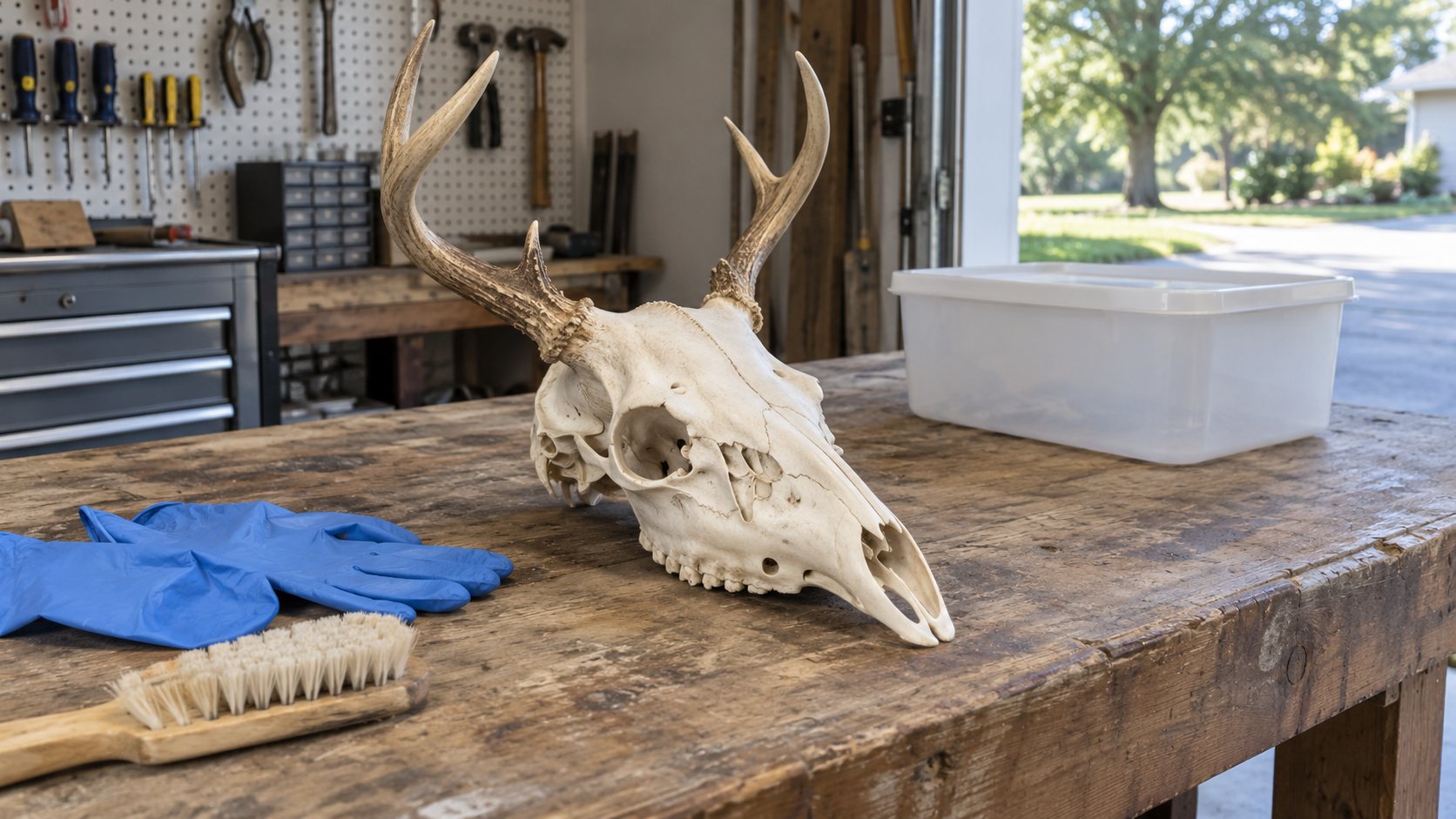
To clean an animal skull safely, put on gloves, remove whatever tissue is left, degrease the bone, whiten it if you want to, and let it dry completely. For most people at home, the gentlest way to remove tissue is cold-water maceration: the skull sits in water while bacteria do the work. Museums also use dermestid beetles. Degrease in soapy water, as Texas Parks and Wildlife recommends, then whiten with 3% hydrogen peroxide, as the Alaska Department of Fish and Game advises. Skip household chlorine bleach, which damages bone and leaves the surface chalky.
One more thing before the water bucket comes out: keeping some animal skulls is regulated, so read the short legal section below first.
Before you start: can you keep it, and is it safe to handle?
A skull on the trail or a gift from a hunting friend can feel like it is already yours. Two questions come first, though, because they decide whether you should be cleaning it at all.
The first is whether the bone could be human. If there is any chance of that, leave it where it is, do not touch or move it, and call your local police or the medical examiner. North Carolina Archaeology and the Massachusetts Historical Commission both give the same instruction.
The second is whether the species is protected.
> Legal note: This is general information, not legal advice. Laws differ by state and country, and they depend on the species, where the skull came from and who owns the land. Ask your state wildlife agency or the US Fish and Wildlife Service before you keep, clean or display a skull.
In the United States, a few federal rules come up again and again:
- Migratory birds. Possessing the parts of many migratory birds, skulls and feathers included, is prohibited without a permit under the Migratory Bird Treaty Act.
- Eagles. Bald and golden eagles have extra protection under the Bald and Golden Eagle Protection Act. The US Fish and Wildlife Service says most people cannot keep dead eagles or eagle parts, including skulls and feathers. It is the federal agency to ask about migratory birds and eagles.
- Marine mammals. Marine mammals are covered by the Marine Mammal Protection Act. NOAA Fisheries allows a narrow exception: in limited circumstances, people may collect clean bones, teeth or ivory from a marine mammal that is not listed under the Endangered Species Act, found on a beach or on land within a quarter mile of an ocean, bay or estuary. The part has to be identified and registered with the nearest NOAA Fisheries regional office, and it may not be sold. Parts from listed species need authorization. A carcass or part that still has soft tissue should be reported to the NOAA Stranding Network and left where it is.
Endangered, threatened, game and state-protected species, archaeological material and anything from public land can carry additional rules. Confirm the species, the place you collected it, the land rules and any permit needs with your state wildlife agency or the land manager. Our story on what to do if you found an animal skull walks through those rules in more detail.
Protect yourself while you work
Cleaning a skull means handling what is left of an animal, so treat it like any other raw carcass. Wear disposable latex, nitrile or rubber gloves whenever you touch tissue or the dirty water. Add eye protection and clothes you do not mind ruining if there is any chance of splashes, and wash your hands well when you finish.
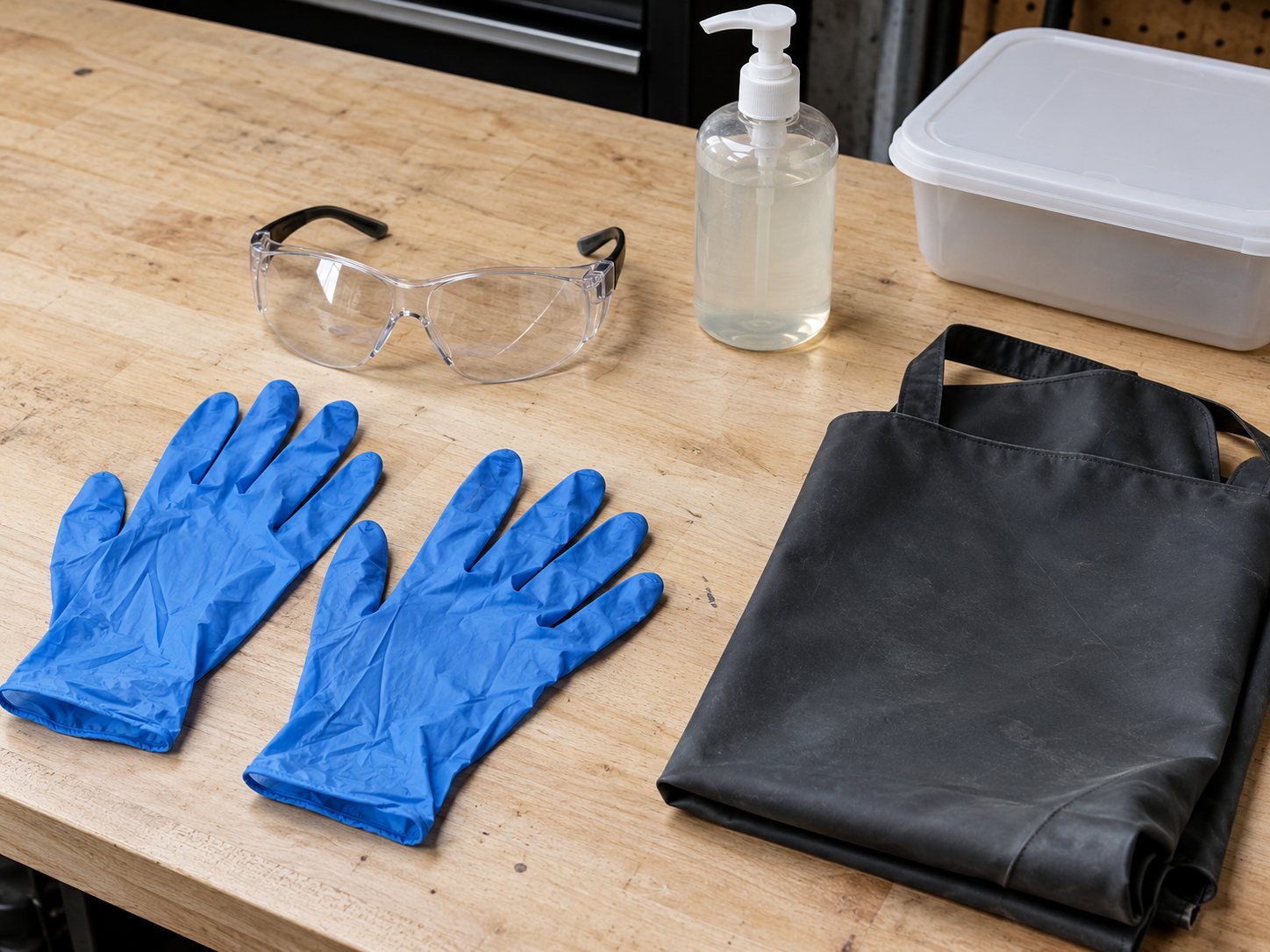
The CDC notes that animal carcasses can expose people to saliva, nervous tissue, blood, urine, feces and other infectious material. With rabies, the concern is mainly saliva and nervous tissue from an animal that may have been exposed, and the CDC's rabies guidance calls for protective equipment and avoiding direct contact with those tissues.
Deer and elk need extra thought. Chronic wasting disease, a prion disease, has been reported in wild deer in 36 US states according to current CDC guidance. In areas where it is present, the CDC recommends not handling deer, elk and related animals found dead, wearing latex or rubber gloves, staying away from the brain and spinal cord, and following your state wildlife and health agencies. CWD has not been shown to infect people, but its prions can stay in soil for years, which is a good reason to take the gloves seriously.
And keep the whole project out of the kitchen. Do not use kitchen knives, pots or tools on a carcass. If you think you may have been exposed to a disease, talk to your doctor or local public health officials.
Skull cleaning safety checklist
Tap a card to bring it forward.
- Confirm the species and place: Some skulls are regulated, so know what it is and where it came from before you keep it
- Possibly human?: Do not touch it, and call local law enforcement
- Gloves and eye protection: Disposable gloves and eye cover for tissue and dirty water
- Avoid fluids and soft tissue: Stay clear of brain, spinal tissue, saliva and blood
- No kitchen tools: Keep knives and pots from the kitchen out of it
- Deer or elk found dead: Do not handle them in a CWD area
- No chlorine bleach: It damages bone and leaves it chalky
- Degrease before whitening: Grease left in the bone causes yellowing and smell
- Dry completely: Let the skull dry fully before it goes on display
- Protected species: Ask the relevant wildlife agency first
Four ways to strip a skull, compared
Museums and wildlife agencies use four main methods to get soft tissue off bone. They differ in speed, smell and risk to the skull, and the gentlest ones are slow.
Tap or hover a row to highlight it.
| Method | What it does | How long it takes | Main risks |
|---|---|---|---|
| MethodCold-water maceration | What it doesBacteria in water break down remaining tissue | How long it takesWeeks to months; very large specimens longer | Main risksSmell, adipocere, damage from too long in water |
| MethodDermestid beetles | What it doesBeetles eat dried soft tissue | How long it takesA small bird in one to three days at AMNH | Main risksEscaped beetles, colony upkeep, allergens |
| MethodSimmering | What it doesHeat loosens and cooks tissue off the bone | How long it takesAt least 45 minutes in Texas Parks and Wildlife guidance | Main risksCracked teeth, weakened sutures, damaged nasal bones |
| MethodBurial | What it doesSoil organisms break down flesh | How long it takesAn elephant skull took up to two years | Main risksHard to monitor, stains the bone |
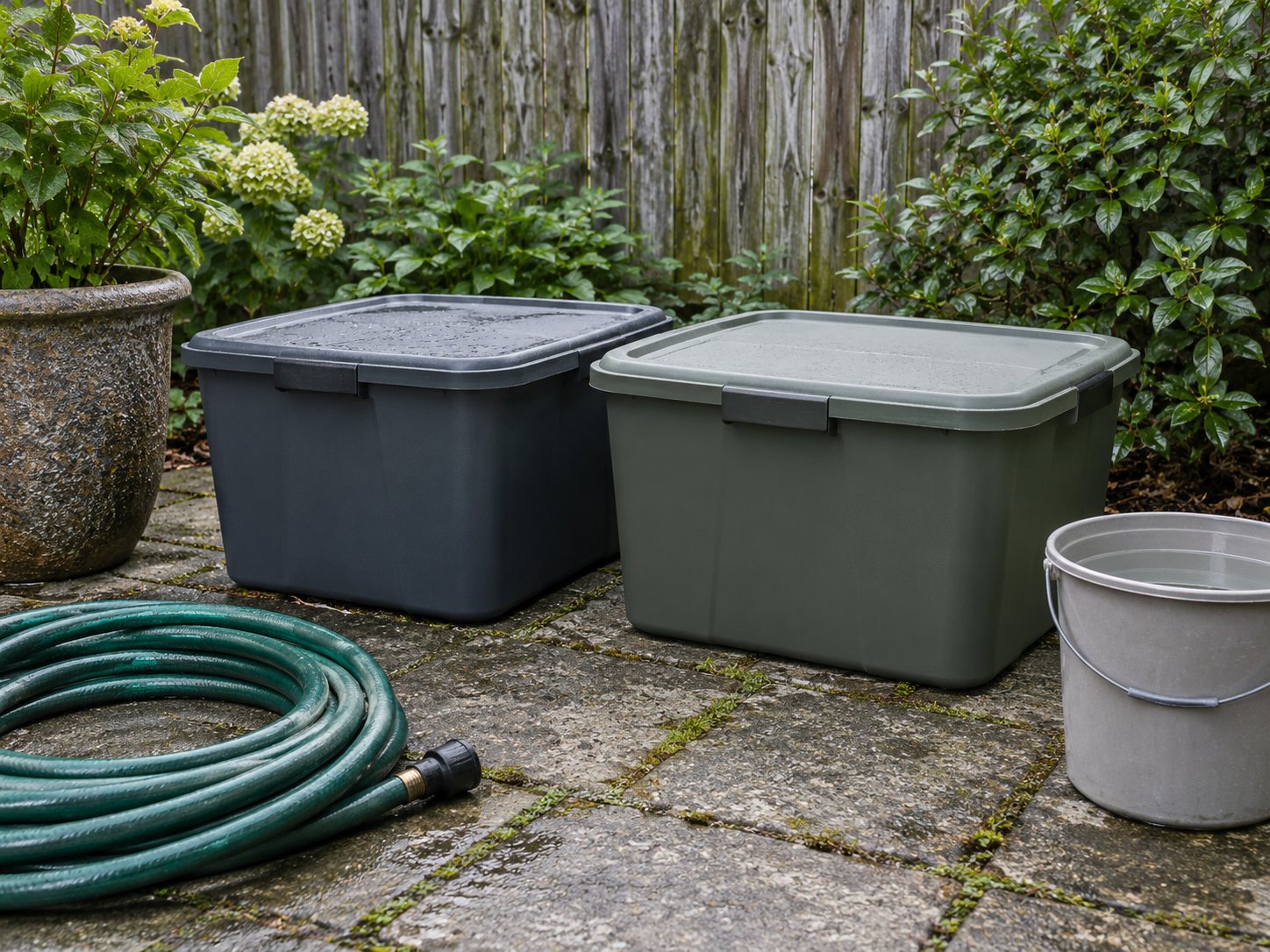
Cold-water maceration is the method most home cleaners can manage. The skull goes into a container of water, and bacteria break down what is left of the flesh. It is slow, it smells exactly as bad as you would expect, and it is easy to check on. The museum manual *Care and Conservation of Natural History Collections* describes it as suitable for young or cartilage-rich specimens too. Changing the water often, or using running water, cuts the odor. Trim off as much flesh as you can at the start, because poor initial fleshing can leave adipocere, a waxy fat by-product that is hard to remove. Expect weeks to months, and longer for very large skulls. The Natural History Museum of Los Angeles County uses water maceration for its larger specimens after the major muscles and organs are removed.
Dermestid beetles are the museum favorite for small and delicate skulls. The beetles eat dried flesh while leaving the bone almost untouched, and the American Museum of Natural History reports that its colony can skeletonize a small bird in one to three days. The method has a long record: a 1933 article in the *Journal of Mammalogy* helped establish it, and Aaron Pahl's 2020 museum study describes it as long established. Museums keep their colonies tightly controlled, though, because escaped beetles will happily eat hides, fabric and collections. That is worth knowing before you set up a tank next to the wool sweaters.
Simmering, sometimes called hot-water maceration, is faster and riskier. Preparators cited in *Care and Conservation of Natural History Collections* work at roughly 37 to 80°C (about 99 to 176°F), with one recommendation of 60 to 65°C (about 140 to 149°F). That is well below a rolling boil. Prolonged boiling damages bone, sutures, teeth and the thin nasal bones. When the Buffalo Bill Center of the West compared beetle-cleaned and boiled skulls in 2020, the boiled ones showed fractures, split teeth, damaged turbinates (the scroll-like bones inside the nose) and weakened sutures.
Burial lets soil organisms do the work. It needs little effort, but you cannot easily watch progress and the soil can stain the bone. The same museum manual records an elephant skull that took up to two years to clean this way. Preparators have used soil, sand, leaf manure and other materials.
How long can a skull stay in water? There is no single safe time. Check it regularly, take it out once the soft tissue is gone, and avoid leaving delicate or immature bone in water longer than it needs, because a long stay in water can damage teeth and joints. For anything unusual or fragile, ask a museum preparator or your state wildlife agency.
Milestones in skull cleaning
Tap or hover a step to follow the order.
1933
The Journal of Mammalogy publishes "Dermestid Beetles as an Aid in Cleaning Bones"
2019
Aaron Pahl's museum best-practices article on dermestids is first published online
2020
The Buffalo Bill Center of the West documents damage in boiled skulls compared with beetle-cleaned ones
2026
CDC guidance reports chronic wasting disease in wild deer in 36 US states and advises gloves and avoiding brain and spinal tissue
Degreasing, the step that stops the smell
A skull that still smells after the flesh is gone usually has grease or bits of tissue left inside it. Fats and oils soaked into the bone cause yellowing, odor, dust that sticks to the surface and slow deterioration later, so degreasing is the step that turns a smelly skull into one you can live with.
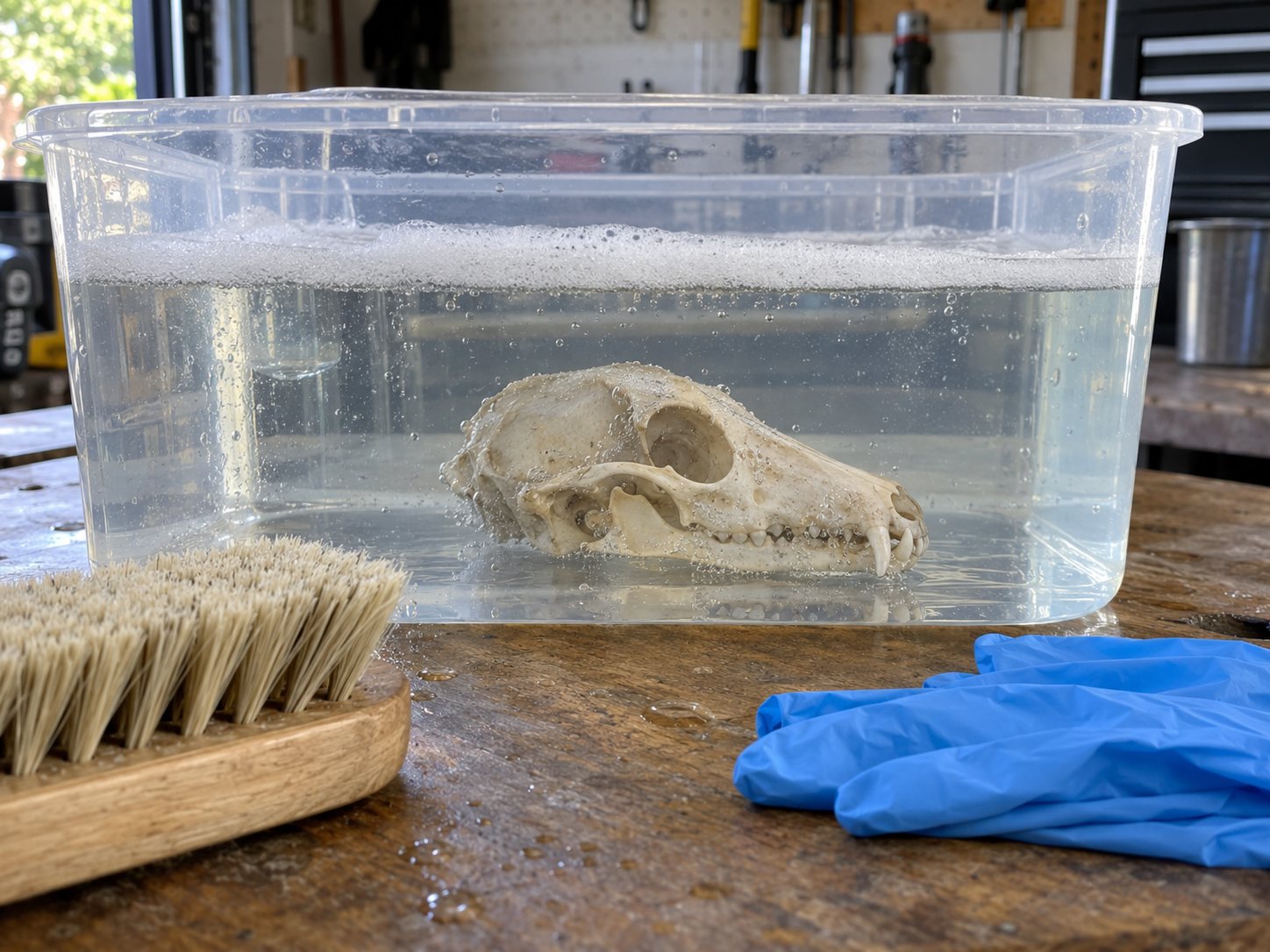
Texas Parks and Wildlife recommends a simple soak in soapy water until the grease is gone. The Buffalo Bill Center describes a diluted ammonia and water bath followed by hydrogen peroxide, and museum preparators also use detergents and other degreasers. For home work, the soapy-water bath is the mildest choice. Change the water as it clouds and keep going until it stays clear and the skull no longer feels or smells greasy.
Watch it as you go. The museum manual warns that aggressive degreasing needs monitoring, because stripping out every bit of fat can contribute to the bone splitting.
Whitening without wrecking the bone
Bleach is the tempting shortcut, and it is the one to skip. Texas Parks and Wildlife says household chlorine bleach causes structural damage and turns the outer layers of bone chalky, and the museum preparation manual lists prolonged hypochlorite treatment among the most destructive approaches.
Hydrogen peroxide lightens bone with much less harm when used carefully. The Alaska Department of Fish and Game suggests leaving a cleaned skull in 3% hydrogen peroxide for several days, and warns against getting it on your skin or in your eyes. The National Park Service recommends short periods in dilute peroxide until the skull reaches the lightness you want, and cautions that overdoing it can wipe out fine anatomical detail.
Peroxide only works on a skull that is already clean and degreased; it does not replace those steps. Strength, time in the solution, temperature and the condition of the bone all matter, so use the weakest solution that does the job and keep an eye on it.
Drying, sealing and display
Let the skull dry completely before it goes on a shelf. Any grease left in the bone can show up later as yellowing, which is one more reason the degreasing step matters.
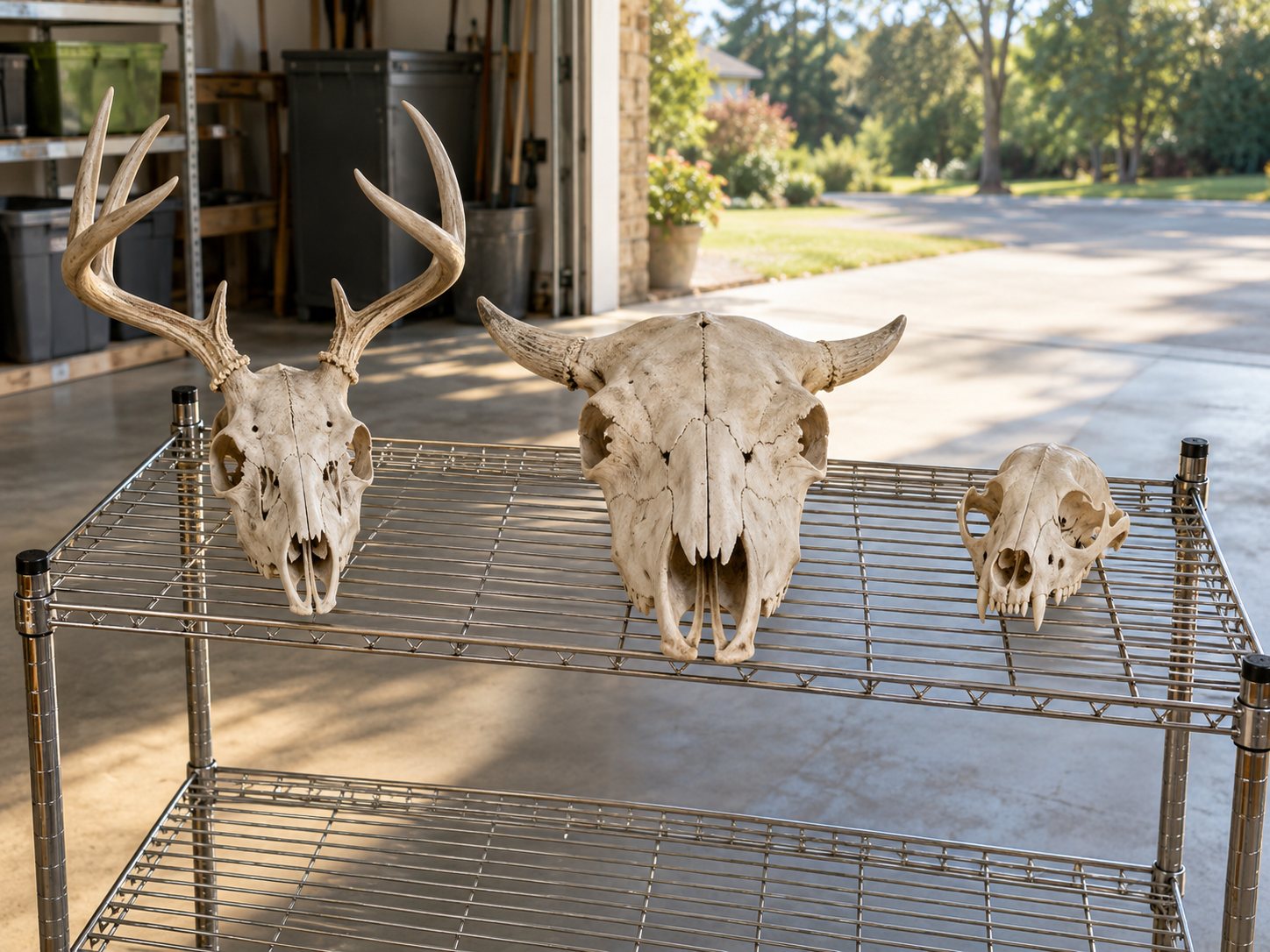
Sealing is optional. The Florida Museum of Natural History at the University of Florida recommends minimal intervention and notes that not every specimen needs consolidation. If a fragile skull does need reinforcing, a conservation-grade consolidant chosen for that particular specimen is the museum approach, rather than a general coat of finish.
For a skull that is rare, fragile, young or legally sensitive, a professional preparator or museum service is the safer route. Once it is clean, a skull can look striking on a shelf, and our page on skull home decor has display ideas. If yours is a cow skull, the story of what a cow skull means covers the symbolism people hang on the wall with it.
Animal skull cleaning quiz
Answer every question to check.
Frequently asked questions
These are the questions that come up most once a skull is sitting in a bucket in the backyard.
How long can you leave bones in water?
There is no single safe time that fits every skull. Cold-water maceration can take weeks or months, and very large skulls take longer, so check regularly and take the skull out once the soft tissue is gone. Delicate or immature bone can be damaged by a long stay in water.
How do you stop animal skulls from smelling?
Finish removing the tissue, then degrease, because a lingering smell usually means soft tissue, brain material or grease is still inside. A soapy-water soak, changed as needed, handles the grease, and the skull should dry completely before display.
What should I soak a deer skull in?
Use plain water for maceration, soapy water for degreasing and 3% hydrogen peroxide for whitening once it is clean. Texas Parks and Wildlife recommends the soapy water and the Alaska Department of Fish and Game the peroxide. With deer, also follow the CDC's chronic wasting disease precautions: gloves, no contact with the brain or spinal cord, and no handling of deer found dead in CWD areas.
Can I keep an animal skull I found?
It depends on the species, the location, who owns the land and your state and federal rules. Do not keep a suspected migratory bird, eagle, marine mammal, endangered species or human skull without first contacting the right authority. This is general information, not legal advice; ask your state wildlife agency, the US Fish and Wildlife Service, NOAA Fisheries or the land manager, and see our page on finding an animal skull.
Where to go next
If the skull came from a walk in the woods, start with the rules in found an animal skull before the cleaning begins. When it is clean and dry, skull home decor has ideas for where it can live. And for the people who spend their working days with animals, our Vet Tech skull tee puts a human skull between a small dog skull and a cat skull, with a stethoscope underneath.