

No. 015
Cow Skull Meaning: From Georgia O'Keeffe to the Southwest Wall
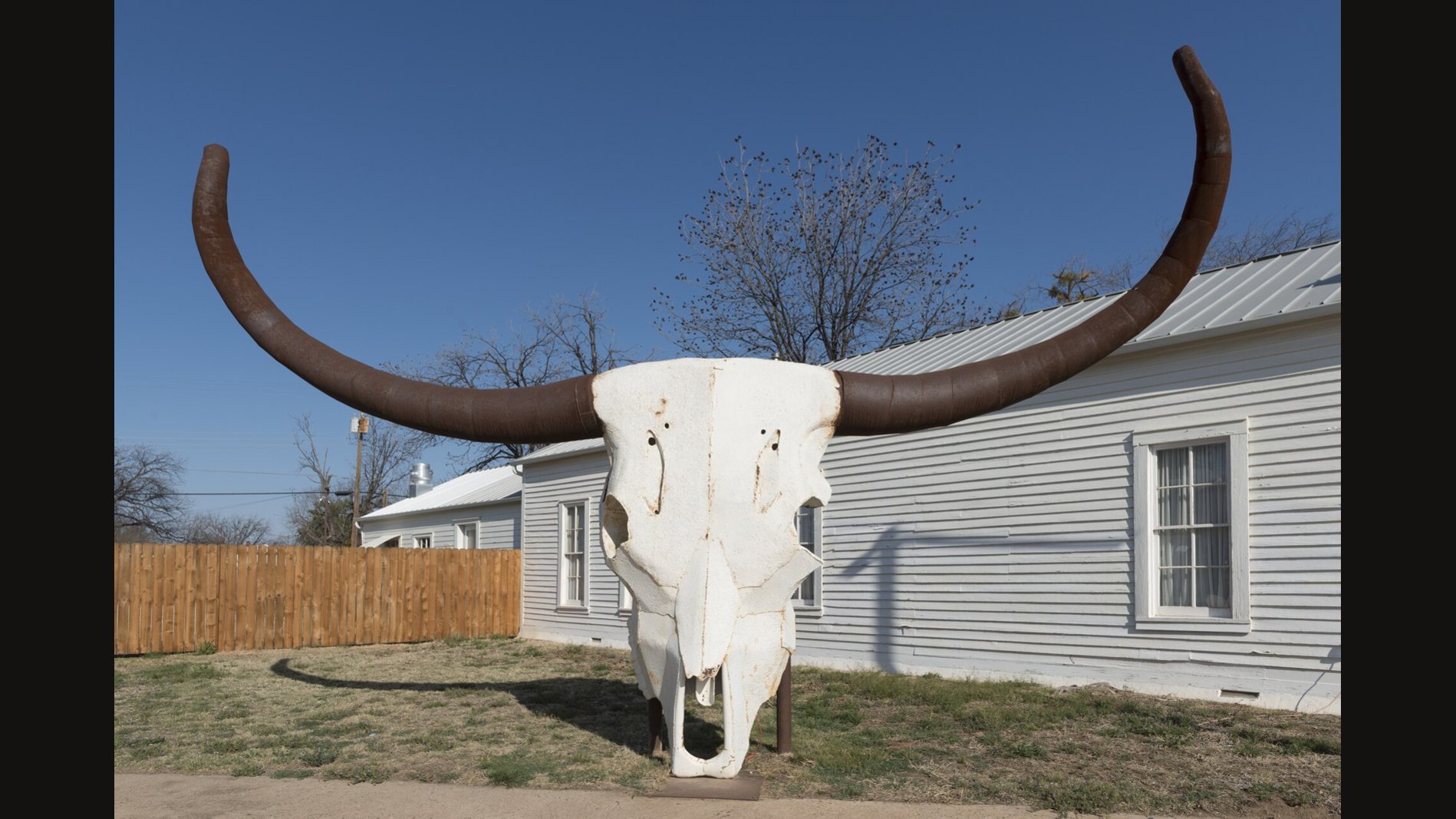
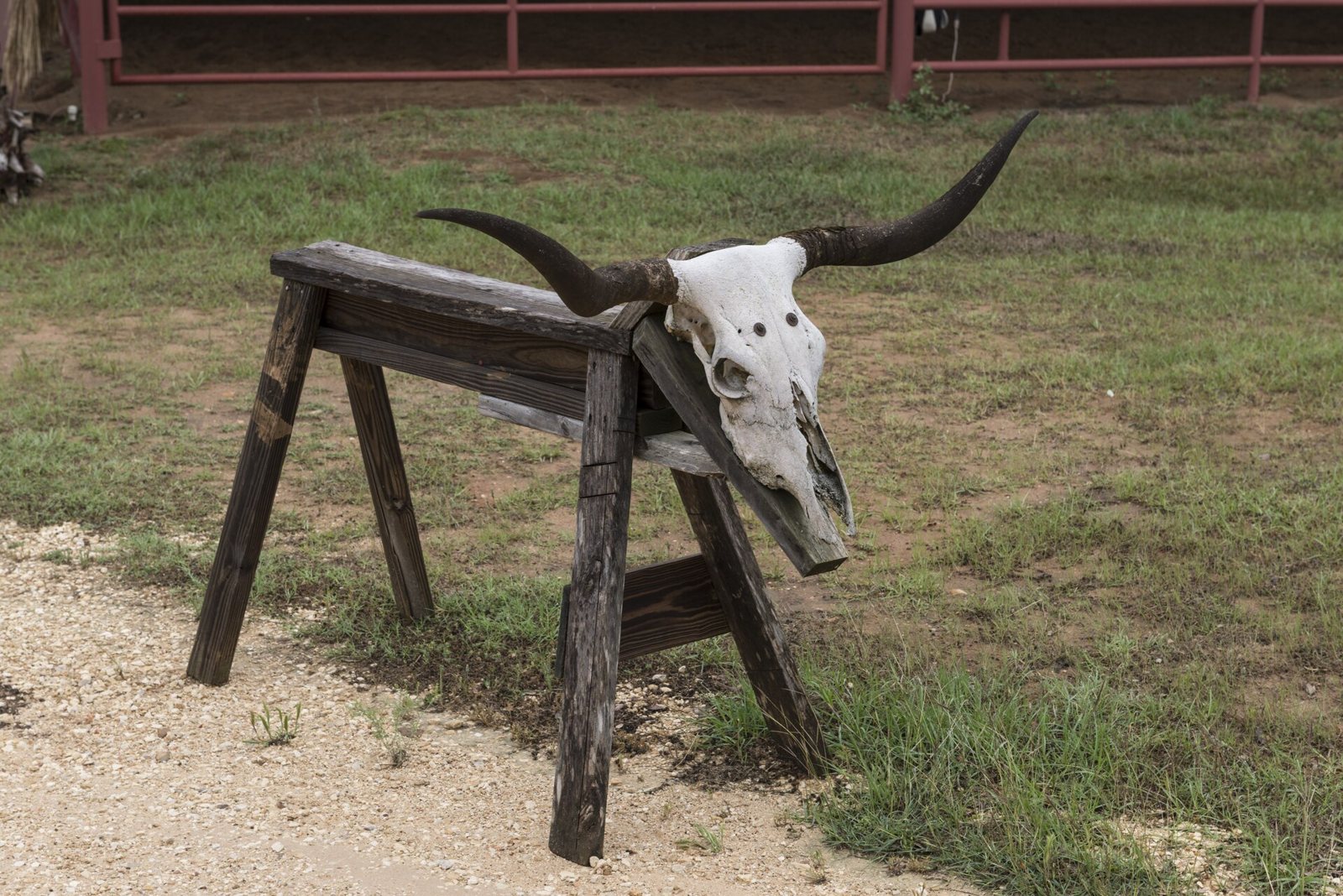
A cow skull does not have one fixed meaning. In the United States, a bleached cow or steer skull with its horns mostly signals the American Southwest, ranching and Western identity. That image was built up over about a century: ranch-country craft, Arthur Rothstein's 1936 Dust Bowl photograph, Georgia O'Keeffe's New Mexico paintings and, later, Santa Fe decor and fashion. For the person who hangs one over a fireplace or wears one on a shirt or in a tattoo, it can also stand for memory, endurance, the desert or simply a shape they love. Older layers sit underneath: ox skulls draped with garlands in Greek and Roman art, and buffalo skulls in specific Lakota ceremonies.
Here is how each of those meanings got attached to the same piece of bone.
Georgia O'Keeffe and the bones of New Mexico
In American art, the cow skull's best-known painter is Georgia O'Keeffe. She first visited New Mexico in 1929 and started collecting the bleached animal bones she found in the desert there. Two years later she painted *Cow's Skull: Red, White, and Blue* (1931, oil on canvas), now in The Metropolitan Museum of Art in New York as part of the Alfred Stieglitz Collection. The Georgia O'Keeffe Museum records that she called it an "American painting" and used the red stripes so that viewers would notice it.
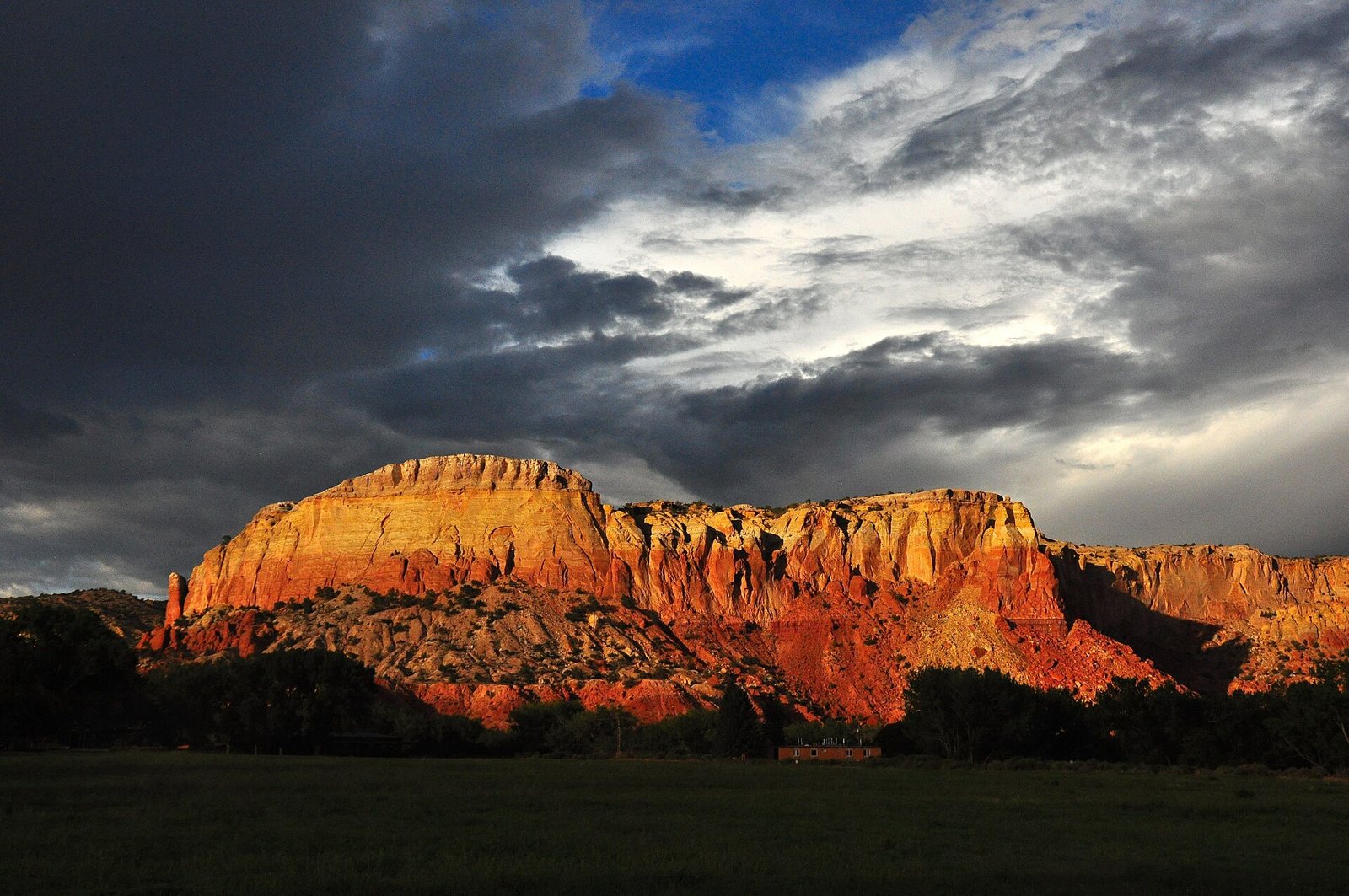
O'Keeffe did not treat the skulls as simple symbols of death. In a 1939 exhibition essay she wrote that she brought the bleached bones home "as my symbols of the desert," and that they seemed "strangely more living than the animals walking around." The Met also records her belief that bones showed the energy of the desert. In her hands, a skull pointed to New Mexico, its open country, endurance, abstract shape and, in the 1931 painting, the nation itself. The exact meaning shifts from canvas to canvas.
Tap or hover a row to highlight it.
| Title | Year | Medium | Collection | Accession |
|---|---|---|---|---|
| TitleCow's Skull: Red, White, and Blue | Year1931 | MediumOil on canvas | CollectionThe Metropolitan Museum of Art, New York | Accession52.203 |
| TitleCow's Skull with Calico Roses | Year1931 | MediumOil on canvas | CollectionArt Institute of Chicago | Accession1947.712 |
| TitleFrom the Faraway, Nearby | Year1937 | MediumOil on canvas | CollectionThe Metropolitan Museum of Art, New York | Accession59.204.2 |
The same year as the red, white and blue painting, she also painted *Cow's Skull with Calico Roses*, now at the Art Institute of Chicago.
How the steer skull became the Southwest's emblem
O'Keeffe did not invent the cow skull as a Western image on her own. The look grew out of several overlapping histories, and no single origin story covers it.
In cattle country, horns and cattle remains were part of ranching life, stockyards and the material culture of the American West. Writing for Cooper Hewitt, Smithsonian Design Museum, Rebecca McNamara describes how Wenzel Friedrich built a nineteenth-century business in San Antonio turning Texas Longhorn horns into furniture. She places it within a Victorian fascination with unusual materials and the symbolic "Wild West." Horns were already decor long before anyone hung a skull in a Santa Fe living room.
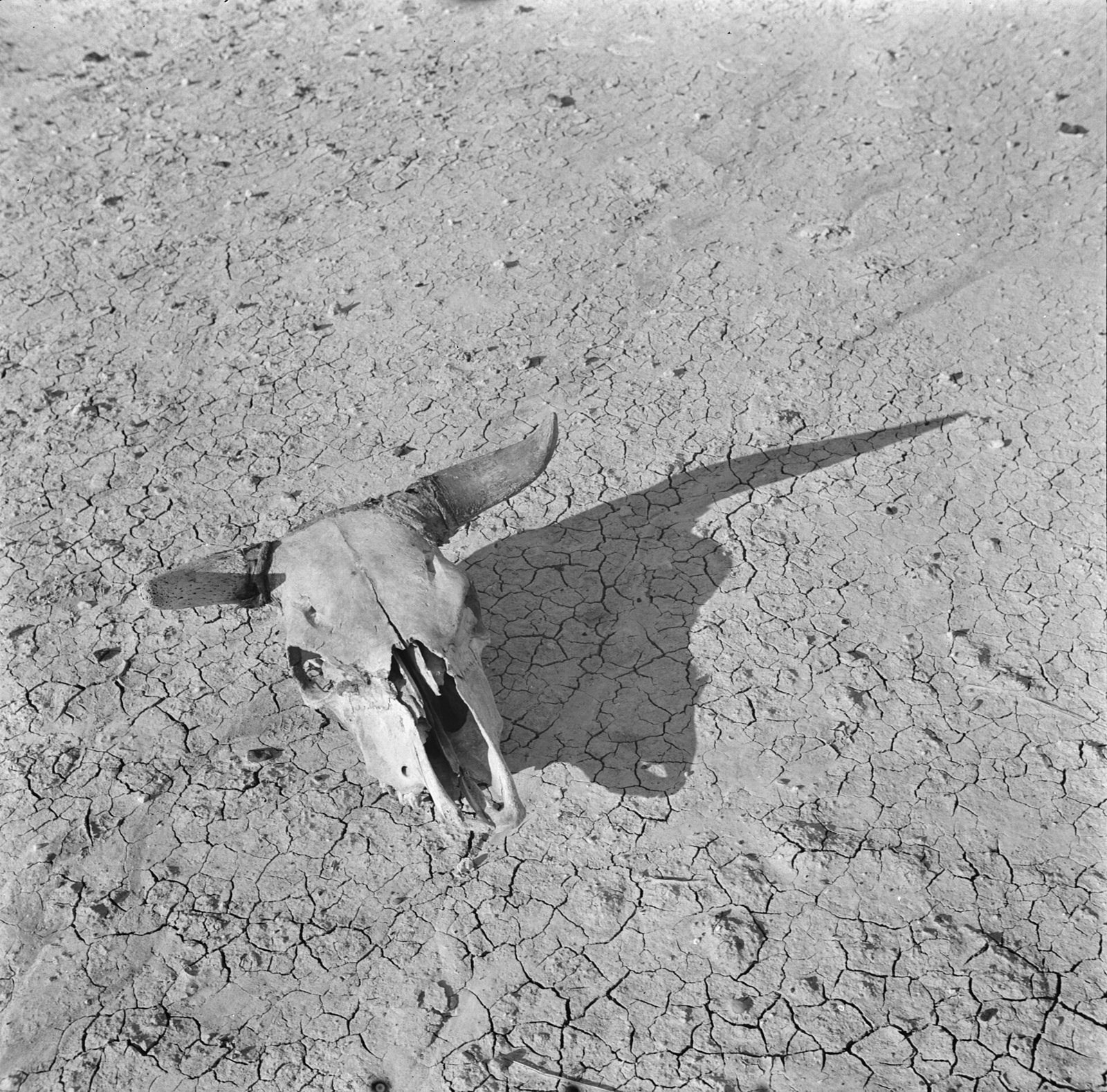
Photography then made the cattle skull a national image. In 1936, Arthur Rothstein photographed a steer skull in the South Dakota Badlands for the Farm Security Administration, a work now titled *Cattle Skull, Badlands, South Dakota*. It became one of the defining images of the Dust Bowl, tying cattle skulls to drought, ruined land and a vanishing West. The University of Michigan Museum of Art notes the catch: Rothstein repositioned the skull, and he made the photograph before the worst of the drought. The image stuck anyway.
O'Keeffe's paintings added a modern, distinctly Southwestern visual language on top of that. By 1988 the bleached steer skull had become a commercial icon. A Los Angeles Times article from February 4, 1988 followed it from ranch fences and desert scenes into Santa Fe restaurants, designer showrooms and stylish homes. A Santa Fe seller quoted in the piece linked the skulls with the "vanishing American West," and the article credited Ralph Lauren and Calvin Klein advertising with helping turn the object into a fashion image.
Put together, the steer skull became a Southwestern emblem through ranching culture, Western nostalgia, Dust Bowl photography, O'Keeffe's modernism and later interior design. It is a modern American image with a lot of history behind it, rather than an ancient or universal one.
How the cattle skull became an image
Tap or hover a step to follow the order.
9 BC
The Ara Pacis is consecrated in Rome, a major example of the sacrificial imagery behind carved ox skulls
1929
Georgia O'Keeffe makes her first trip to New Mexico and begins collecting bleached bones
1931
O'Keeffe paints Cow's Skull: Red, White, and Blue
1936
Arthur Rothstein photographs a steer skull in the South Dakota Badlands for the Farm Security Administration
1988
The Los Angeles Times reports bleached steer skulls moving into Santa Fe restaurants, showrooms and homes
Garlands and ox skulls in ancient Greece and Rome
Long before Santa Fe, cattle skulls decorated temples. The classical name for the motif is the bucranium (plural bucrania): an ox or bull skull shown head-on as a carved ornament, often joined to its neighbors by garlands, ribbons or tools used in sacrifice.
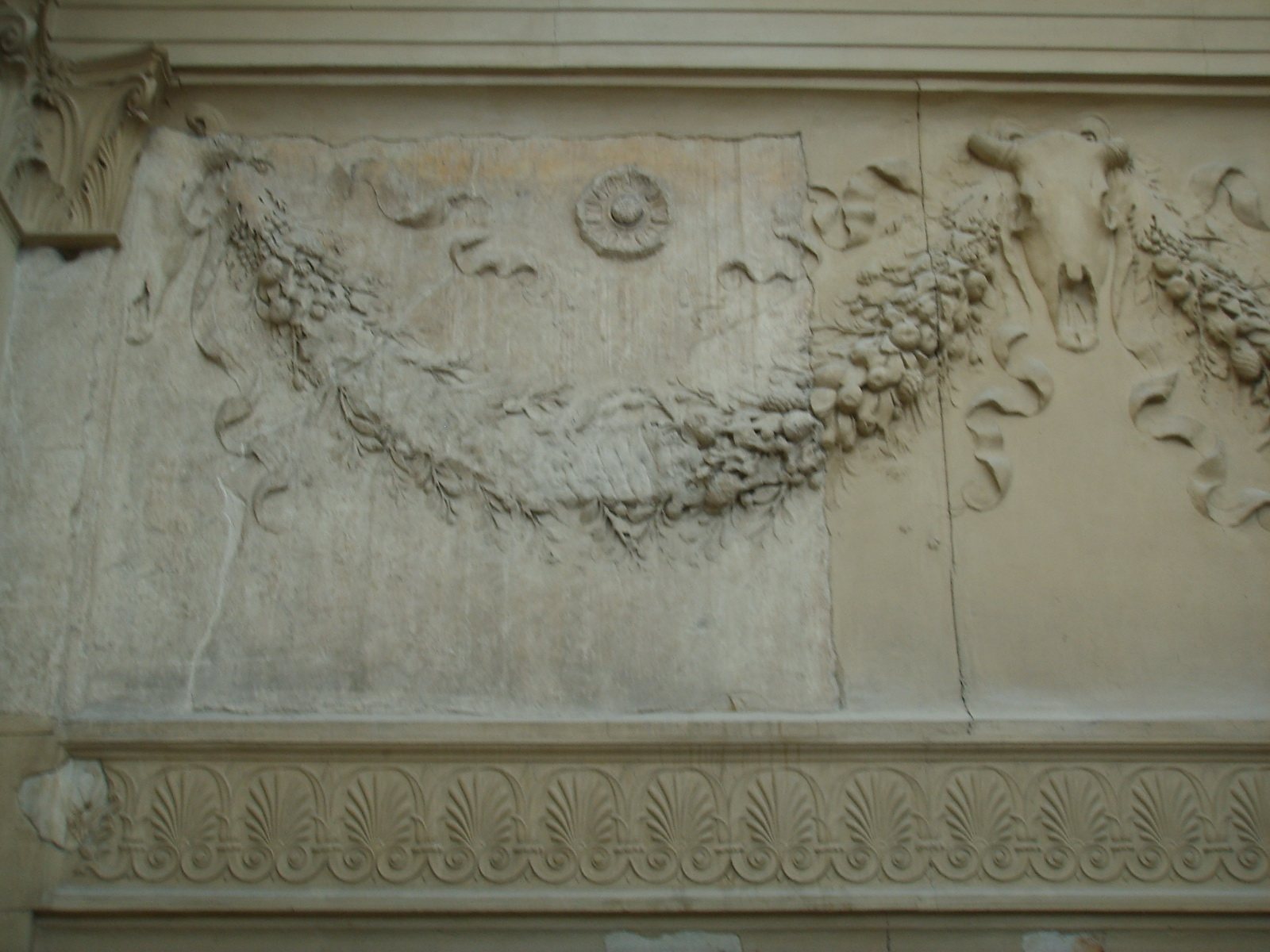
Calder Loth, a senior historian with the Virginia Department of Historic Resources, explains that the motif refers to Greek and Roman animal sacrifice. After a sacrifice, decorated cattle heads were hung at temples, and stone carvers later preserved that practice as rows of skulls and garlands. The Ara Pacis in Rome, consecrated in 9 BC, shows sacrificial animals, ritual vessels and attendants. The Metropolitan Museum's Roman art teaching material points out ox skulls and garlands on the Ara Pacis, and a Met bulletin describes a Roman altar carved with four bulls' skulls joined by a heavy garland of vine leaves and foliage.
Spain's Ministry of Culture defines the bucráneo as a Classical ornament shaped like the frontal skull of a bull or ox, commonly set in the square panels (metopes) of Doric buildings and flanked by garlands or ritual disks, and it notes that the motif was revived during the Renaissance.
The bucranium is a real precedent for a skull dressed in garlands. The skull above a ranch-house door comes out of a separate story, the ranching and Southwestern one told above, even though the two share an animal.
Buffalo skulls in Lakota ceremony
People often ask whether cow skulls are Native American. The documented ceremonial uses involve buffalo skulls, not cow skulls, and they belong to specific nations and ceremonies.
The Aktá Lakota Museum and Cultural Center, an outreach institution of St. Joseph's Indian School in South Dakota, describes the Lakota Sun Dance, Wiwáŋyaŋg Wačípi, as a ceremony of renewal for the people and the earth. Its account says buffalo skulls were prepared and placed around the arena, and that in some forms of the ceremony dancers attached rawhide thongs to pierced skin and dragged buffalo skulls as part of their offering and endurance.
In the encyclopedia *American Indian Religious Traditions*, edited by Suzanne J. Crawford O'Brien and Dennis Francis Kelley, buffalo skull altars, buffalo effigies or buffalo heads appear near the central tree in some Plains Sun Dance traditions, with the buffalo connected to abundance, fertility and strength. The encyclopedia stresses that the exact form differs among nations and ceremonies.
A National Park Service and University of Montana report records a 1999 ceremony involving Gary Silk of the Standing Rock Sioux Tribe, in which buffalo skulls were used in a Lakota ceremony connected with the Yellowstone buffalo. The same report describes a buffalo skull placed on the altar in the Lakota Hunka ceremony, which joins people as relatives, where the buffalo was associated with family loyalty and kinship.
These are living ceremonies of named nations, described here as Lakota institutions and scholars describe them. A decorative cow skull in a home or a tattoo is a different object with a different history, and it is not automatically connected to Lakota, Blackfeet, Kiowa or any other Native ceremony.
What a cow skull on a wall or on skin says today
On a wall in the United States, a mounted cow or steer skull usually says Southwest, ranch, Western or rustic. That is the meaning the 1988 Los Angeles Times story watched being sold. In some homes it is also a memorial, or a piece tied to hunting, farming or a family's own livestock. The object alone cannot tell you which.
Tattoos are more personal still. A cow skull on skin might stand for mortality, memory, survival, rebellion, Western roots or simply a shape the wearer admires, and the wearer's own explanation is the only meaning that really counts. If you are planning one, the broader story of skull tattoo meaning is a good companion read.
The elements around the skull often push the reading in one direction, though none of them have fixed meanings:
What the extras around a cow skull usually suggest
Tap a card to bring it forward.
- Roses or flowers: A life-and-death contrast, a modern design habit rather than a universal rule
- Feathers: Birds, movement or personal identity, not automatically a Native tradition
- Desert scenes: New Mexico, the American Southwest or O'Keeffe's art
- Red, white and blue: National or patriotic feeling, as in O'Keeffe's 1931 painting
- Garlands: An echo of the bucranium and Classical sacrificial imagery
- Geometric or blackwork: Mostly a matter of style
The rose pairing has its own long history across skull art, told in our story on skull and roses meaning.
Cows in belief more widely
Part of the confusion around cow skulls comes from the living animal, which means very different things in different places. In many Hindu traditions, cows are associated with nourishment, motherhood, generosity and sacredness, although interpretations vary by region, history and sect, as the Oxford Research Encyclopedia and Britannica explain. In Southwestern American imagery, cattle are more likely to call up ranching, hard work, food, land and Western identity.
A skull adds its own layer on top of the animal: remains, memory, mortality or endurance. So, a cow skull on a Texas wall does not carry the meaning of a living cow in Hindu practice, or of a buffalo skull at a Plains Sun Dance. Each meaning stays with the people and the place that gave it. For the wider family of skull meanings, from warning signs to memento mori, our page on skull symbolism covers the ground.
Cow skull history quiz
Answer every question to check.
Frequently asked questions
These are the questions people ask most often about cow skulls and what they stand for.
What is the spiritual meaning of animal skulls?
There is no single spiritual meaning; it belongs to the tradition or person using the skull. In Lakota Sun Dance practice, buffalo skulls have ceremonial roles tied to renewal, sacrifice, healing and kinship between buffalo, people and the earth. In Greek and Roman art, carved ox skulls referred to animal sacrifice and temple ritual.
What does a cow symbolize spiritually?
It depends on the religion and community. In many Hindu traditions cows are linked with nourishment, motherhood, generosity and sacredness, with differences by region and sect. In the American Southwest, cattle are tied more to ranching, land, labor and Western identity than to religious meaning.
What does a cow skull on a wall mean?
Most often it signals Southwestern or Western decor, ranching identity, rustic style or a love of horns and bone. In some homes it is a memorial or a link to hunting, farming or livestock. It should not be read as a Native ceremonial symbol unless a specific community and context are known.
Is a cow skull the same as a buffalo skull in Native ceremony?
No. The ceremonial uses described by Lakota institutions and scholars involve buffalo skulls in specific ceremonies such as the Sun Dance and the Hunka. A decorative cow or steer skull comes mainly from ranching culture and Southwestern design.
Where to go next
If you have a real cow skull and want it on the wall, start with how to clean an animal skull, and if you picked it up outdoors, read what to do if you found an animal skull first. For ideas on where it can hang, see skull home decor, and for O'Keeffe in the company of other painters, our page on famous skull art is a good next stop. And for the people who spend their weekends out in the dirt, our Garden Crew skull tee is one of the shirts in the shop.