

No. 016
Biker Skull Meaning: What the Skull Stands For in Motorcycle Culture
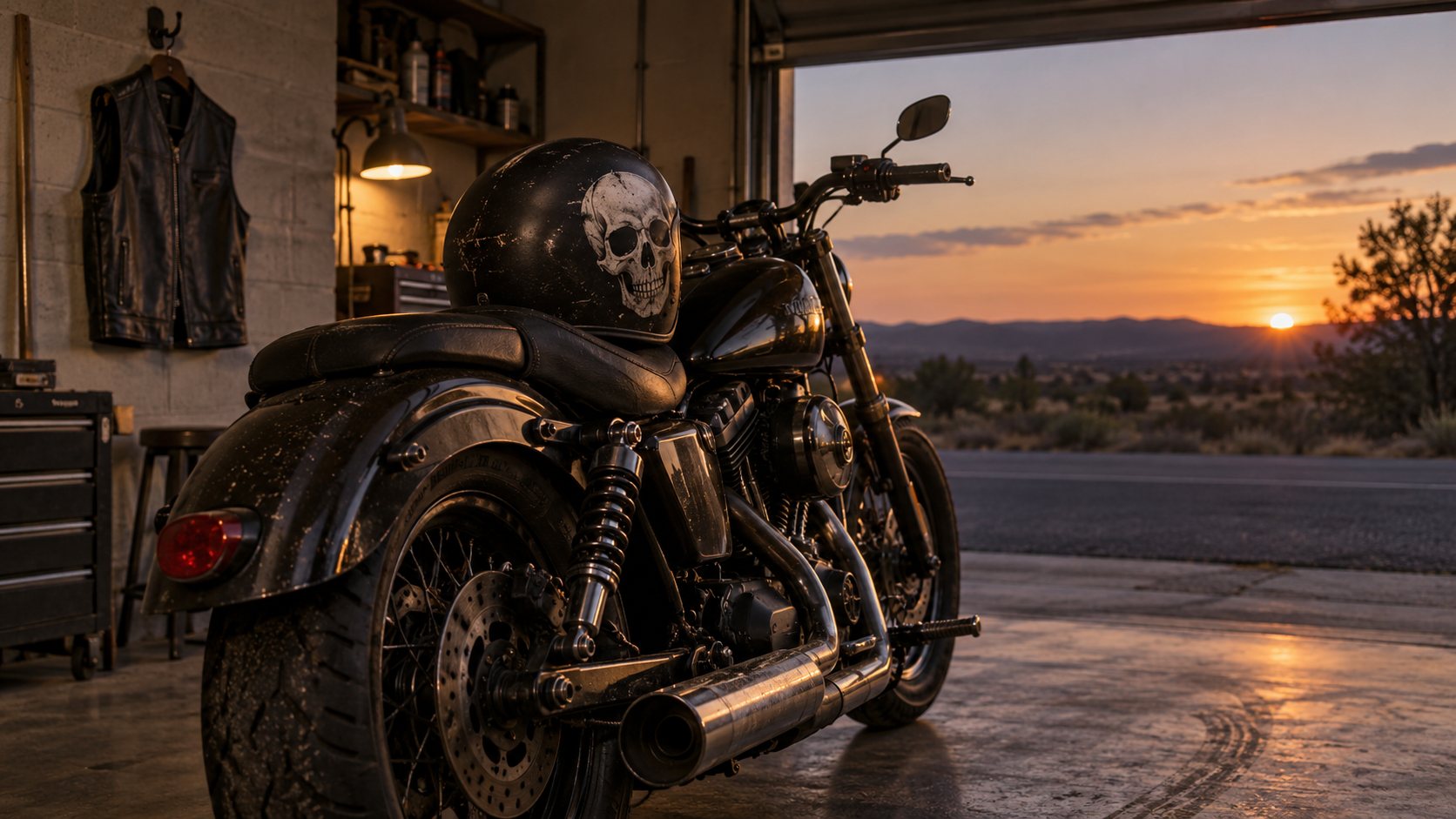
Skulls ride everywhere in motorcycle culture: on vest patches, helmets, gas tanks, fairings, rings and forearms. To most bikers the skull stands for a few connected things. It acknowledges mortality and the real risk that comes with riding. It signals loyalty to the people you ride with, a streak of defiance and a hard-edged identity. And sometimes it is simply a design the rider likes. Part of the image's history in American clubs runs back to World War II aviation insignia and the veterans who formed clubs after the war. There is no single meaning, though. What a skull says depends on the design, the person wearing it, the club, the place and the period.
From fighter planes to postwar clubs
The skull was already at home on military aircraft before it reached the motorcycle. During World War II, American air units used skulls for unit identity, morale and a dark kind of humor about the odds they faced. The National WWII Museum records one vivid example: the 80th Fighter Group, known as the "Burma Banshees," painted a different skull on the air intakes of its P-40 fighters in the China-Burma-India theater.
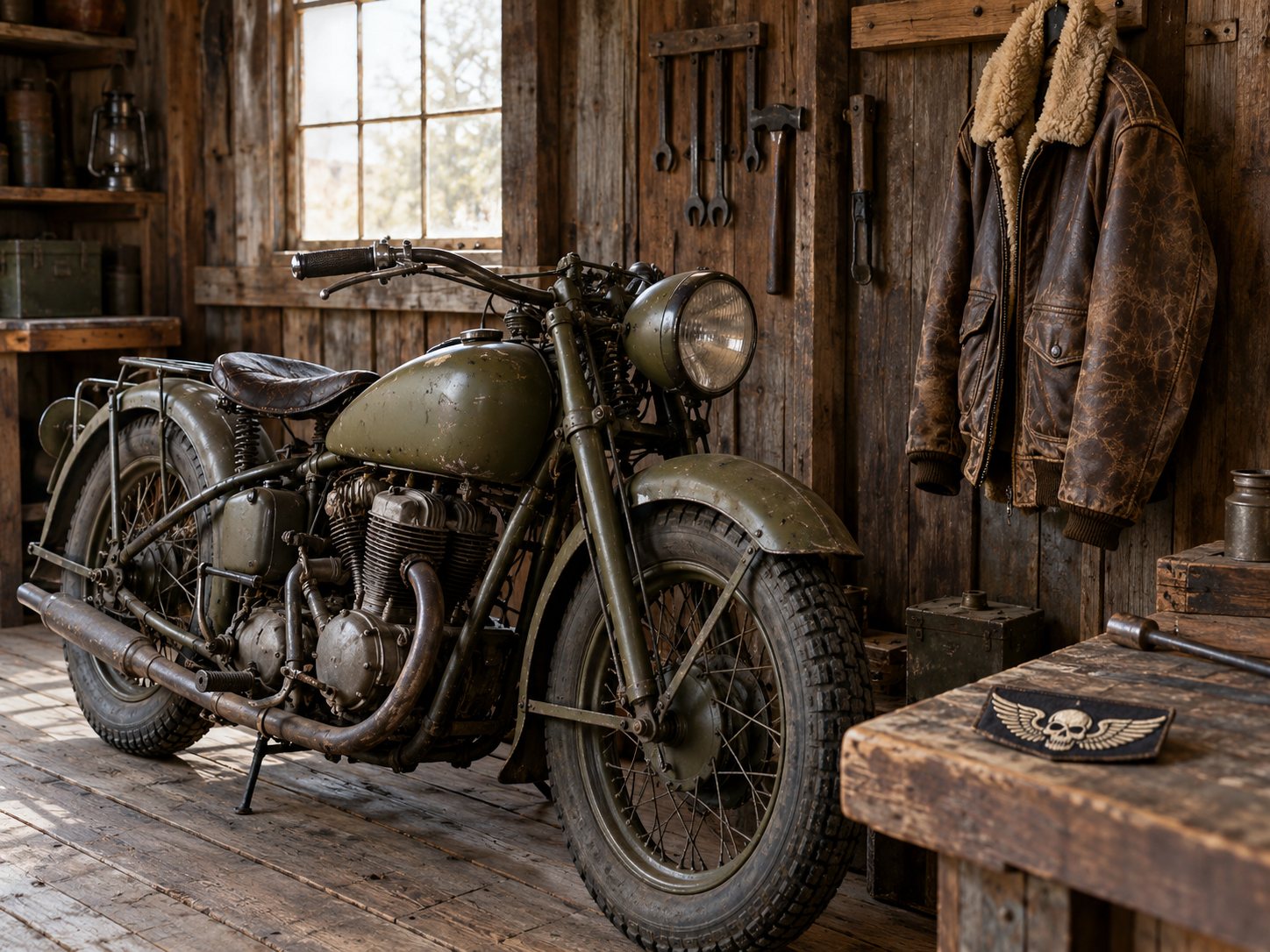
When the war ended, motorcycle clubs grew among returning veterans and among riders on surplus military motorcycles. Historian Randy McBee, speaking to Time, connects the appeal of those clubs to the brotherhood and shared risk of military service. Riding in a group gave men back something the service had given them.
One club's story makes the link concrete. A U.S. Department of Justice report reproduces Sonny Barger's account of the early Hells Angels: a member came across an Air Force-style patch showing a small skull in an aviator cap set inside wings. The club adopted a redesigned version in 1948, and it became the emblem later known as the Death Head.
That is a chain of influence, not a single origin for every skull on every bike. Military aviation imagery and veteran networks supplied the visual habits and the shared outlook, while individual clubs made their own insignia from them.
The skull in American motorcycle culture
Tap or hover a step to follow the order.
World War II
The 80th Fighter Group, the Burma Banshees, paints skulls on the intakes of its P-40 aircraft in the China-Burma-India theater
1947 to 1948
Postwar motorcycle clubs grow among veterans; an aviation-style skull patch becomes the basis of the early Hells Angels Death Head, redesigned in 1948
1989
The Sturgis Buffalo Chip moves its salvaged-metal buffalo skull to the new Sam Kinison Stage
2000
Willie G. Davidson designs the Willie G. Skull for Daytona Bike Week
What riders say the skull stands for
Ask riders and you get different answers, which is the honest state of things. Across motorcycle culture the skull can acknowledge death, name the risks of the road, mark loyalty to a group, push back against fear or project a look meant to keep strangers at a distance.
William Dulaney, a motorcycle-club president who spoke with Time, described club riding as a substitute for the "brotherhood that surrounds service" and said clubs give people with warrior backgrounds a "core identity." McBee put it in similar terms: for many riders, the club was the closest experience to the bond that military service had created. Seen that way, a skull on a vest belongs to people who have accepted risk together.
Not every reason is that solemn. In Barger's account, the aviation-style patch that started the Death Head was simply "cool as hell." The attraction could be about how the image looked and who it made you feel like, rather than a creed anyone wrote down.
Scholars have tried to put the deeper layer into words. In a chapter on death symbolism in metal jewelry, Claire Barratt, drawing on the work of Suzanne McDonald-Walker, connects motorcycle riding with an awareness of fatal risk and a heightened sense of being alive. In that reading, a skull ring or pendant can remind the wearer of death, challenge fate, work like a talisman or simply show bravado. It is the old idea of memento mori riding at highway speed, and a rider can mean all of it or none of it.
Winged skulls, pistons and helmets
A handful of motifs show up again and again on motorcycle gear: winged skulls, skulls wearing aviator caps or helmets, skulls set over crossed pistons, and skulls printed on vests, jackets, helmets, tanks, fairings, jewelry and tattoos. Some have a documented history tied to one club. Others are general decoration.
The winged skull has the clearest club-specific record. The Department of Justice report describes the Hells Angels Death Head as a skull with a helmet and feathers or wings, based on an aviation-style patch found in Sacramento and redesigned by the club in 1948. That design belongs to that club, and its meaning is the club's own.
The skull with two crossed pistons is another example. A medical article on outlaw motorcycle-club symbols, written for emergency department staff, identifies it as the logo of the Outlaws Motorcycle Club. It is that club's mark, not a general symbol for all bikers.
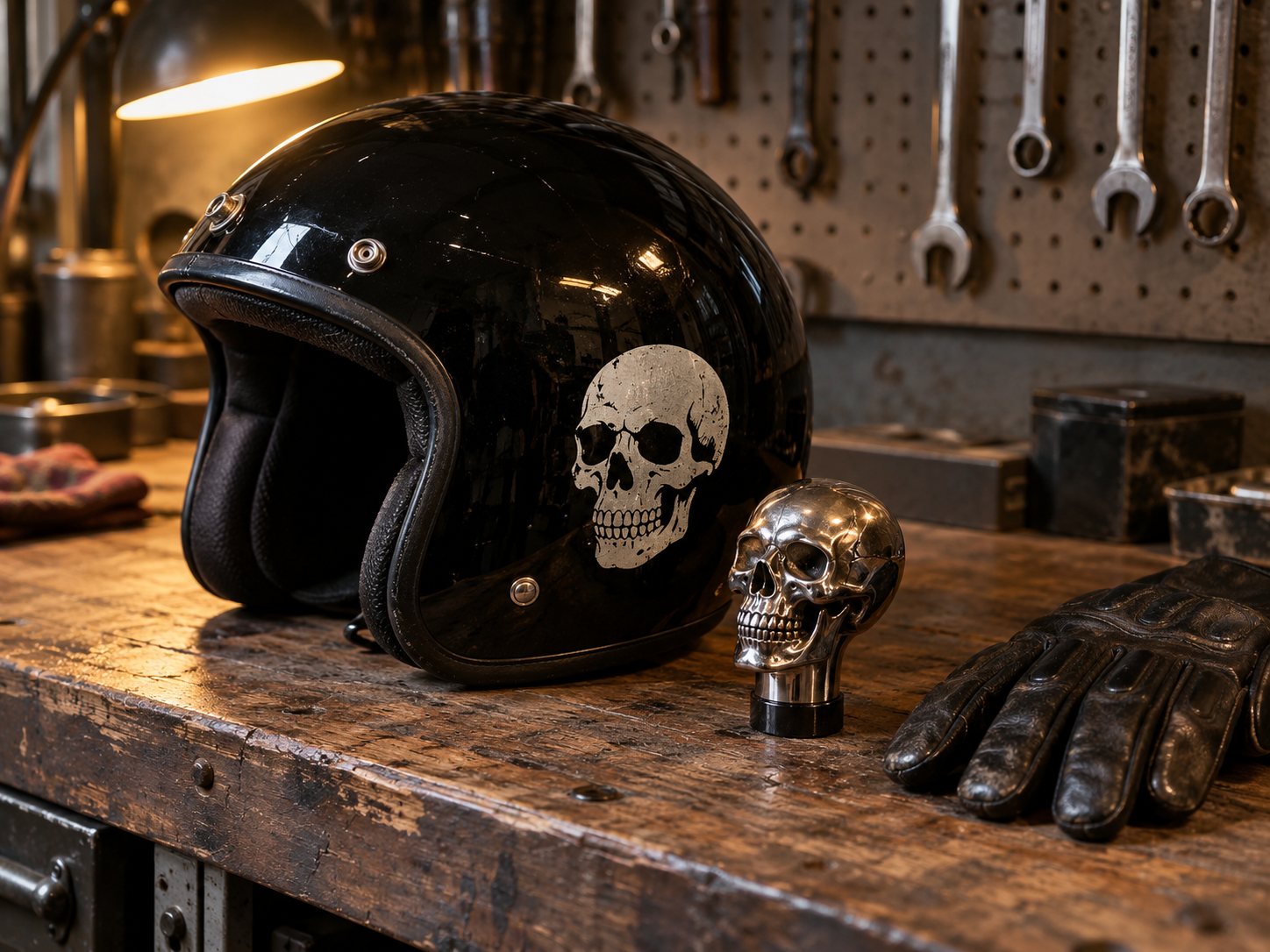
Meanwhile, skulls on helmets, tanks and other parts became ordinary commercial and personal decoration. A skull helmet at a rally, or a fairing covered in painted skulls like the one photographed at Sturgis in 2007, tells you the rider likes skulls. On its own it does not tell you about club membership, criminal ties or any fixed meaning. If you want to know what a particular rider's skull means, the person to ask is the rider.
Skulls on brands and at rallies
The motorcycle industry and its big events have used the skull too, in very different ways.
Harley-Davidson offers the clearest commercial example. The company says that Willie G. Davidson designed the Willie G. Skull for the 2000 Daytona Bike Week. It first appeared on Daytona Rally T-shirts, and Harley-Davidson later carried it onto apparel, motorcycle parts and accessories. A rally graphic became one of the brand's recognizable marks.
The Sturgis Buffalo Chip, a campground venue tied to the Sturgis motorcycle rally, has a skull of its own. Its festival guide tells how a buffalo skull built from salvaged metal was installed at the campground and moved to the Sam Kinison Stage when that stage was built in 1989. The skull became part of the venue's identity.
One is a company turning a rally design into a brand asset; the other is a locally made sculpture that became a landmark. Both show how much riders like the image. Neither sets a single meaning for skulls across motorcycle culture.
Back patches and club colors
This is where a skull can carry real weight. A back patch is the main patch worn on the back of a motorcycle vest or jacket. In traditional three-piece club colors, the top rocker usually gives the club name, the center patch carries the club emblem, and the bottom rocker names the chapter's location.
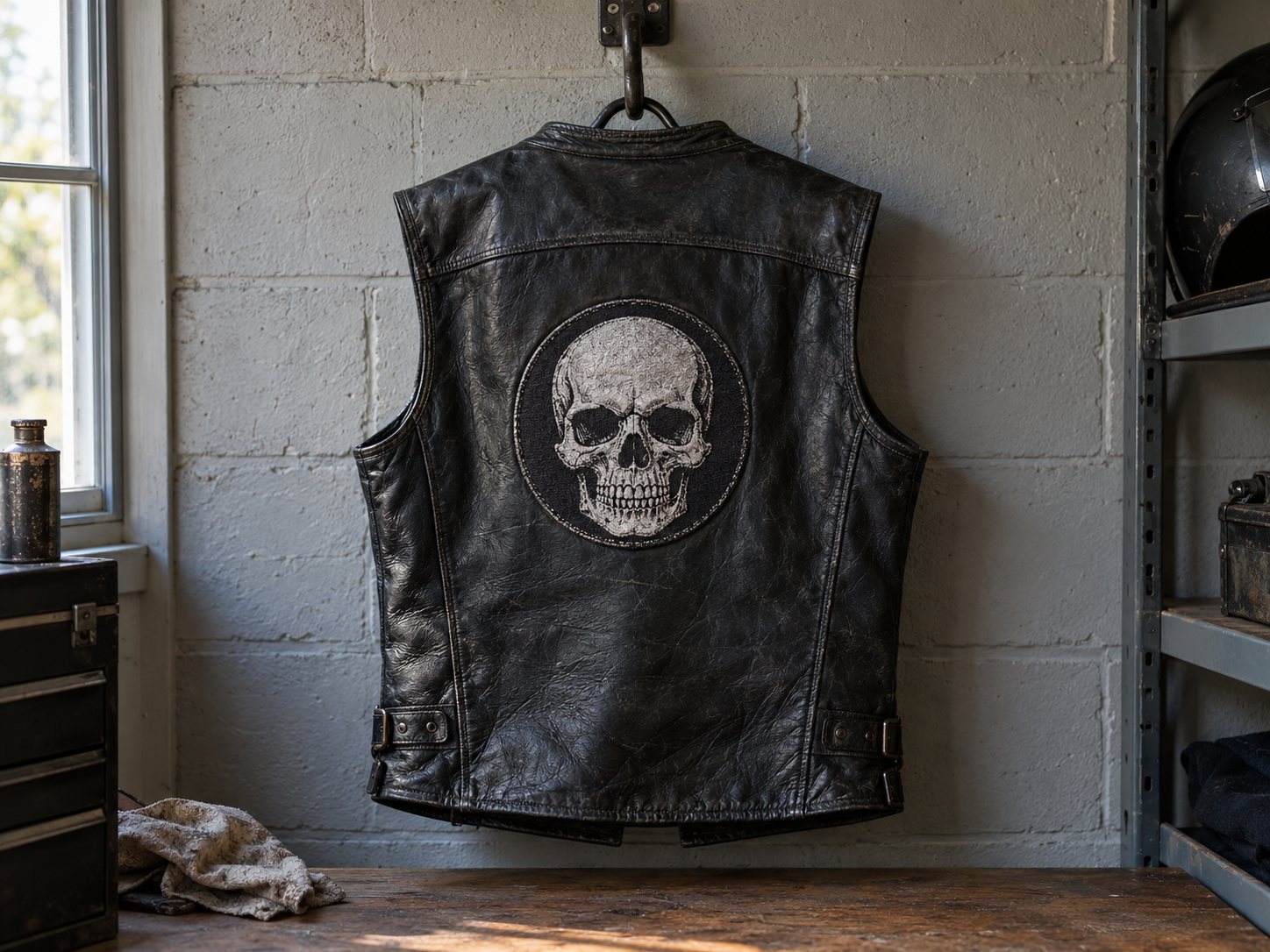
Those patches are commonly called "colors." They identify membership, affiliation and sometimes territory. The medical article on outlaw motorcycle clubs says colors are integral to a member's identity, that full members display the club logo, and that clubs treat their insignia as exclusive property.
Dulaney told Time that young riders may enjoy the look of a leather vest without understanding the "full import" of patches and colors. Rules differ between clubs and between regions. A generic skull patch, a memorial patch or a store-bought design does not mean club membership. A patch arrangement that imitates club colors, with rockers above and below a center emblem, can be read very differently by people who wear real ones. Do not guess what a specific club's emblem means, and do not wear a club's insignia without its permission. When in doubt, ask the owner or someone authorized to speak for the club.
Reading a three-piece back patch
Tap a card to bring it forward.
- Top rocker: Usually the club name
- Center patch: The club emblem
- Bottom rocker: The chapter or its location
- Front patches: May identify rank, role or affiliation
- MC patch: Commonly indicates a motorcycle club
- A skull on its own: Not proof of club membership
The skull, the rider and the road
Put the pieces together and the biker skull looks less like a code and more like a shared vocabulary. A veteran in 1948 might have seen the winged skull as a carryover from the war. A club member wears a skull that belongs to the club and to nobody else. A weekend rider might choose a skull helmet because riding is dangerous and the skull admits it, or because it looks good with black paint. Read every skull with its club, wearer, place and period attached, and you will usually get closer to the truth than any chart of meanings could take you.

If you are curious how this fits into the wider story, the skull's long history as a symbol runs from skull symbolism in general to the skull and crossbones on pirate flags and poison bottles. Skull rings, a favorite in biker jewelry, have their own story in skull rings meaning, and the ink side is covered in skull tattoo meaning. One military skull with a very different history, the German Totenkopf, is explained separately in the Totenkopf.
How well do you know the biker skull?
Answer every question to check.
Quick answers about biker skulls
These are the questions riders and their friends ask most.
What does 666 mean in biker culture?
A 1970s law-enforcement glossary, kept in a U.S. Department of Justice archive, describes a 666 patch or tattoo in the outlaw-biker setting as "the mark of Satan." That is a dated description of one outlaw-biker subculture from that period. It is not a universal meaning for every rider who uses the number, and individual wearers may mean something else entirely.
What does 22 mean to bikers?
The same 1970s glossary defines 22, in the outlaw-biker setting it describes, as a sign that someone has been in prison. It is a dated, specific definition rather than a code shared by all bikers. Meanings like this differ by club, region, period and wearer, so ask the person rather than reading a number from a list.
Do skulls ward off evil?
Some riders treat a skull as a kind of protective charm, but it is not a universal protective symbol. Claire Barratt's discussion of biker skull jewelry says a skull and crossbones may "instill caution," act as a "magic talisman" or express bravado. Many riders wear one because they like the design, and for them the skull is about style or a nod to mortality rather than protection.
Can I wear a three-piece motorcycle patch?
A three-piece arrangement, with a top rocker, center emblem and bottom rocker, is how clubs show membership, so wearing one on your own invites people to read you as a club member. Clubs treat their insignia as their property, and rules differ by club and region. A single generic skull patch is a different thing; if you are unsure about a design, ask a club representative before you sew it on.
Does a skull patch mean someone is in a club?
No. A skull alone is not proof of club membership. Club colors are a specific arrangement of patches with a club's own emblem, while skulls on helmets, tanks, jewelry and store-bought patches are common decoration that many unaffiliated riders choose.
Where to go next
The skull on a motorcycle shares its roots with older ideas, so the story of memento mori is a good next read. For riders who also live in the garage, our Garage Crew skull tee puts an engraved skull gripping a wrench on a shirt for people who work on their own machines.