

No. 189
The Skull and Crossbones Poison Symbol: Why Poison Bottles Carry It
Poison bottles carry a skull and crossbones because the skull means death, and an image of death warns anyone, including people who cannot read. That was the argument Theodore E. Ladd made in a letter to *The Lancet* in 1861, and by the mid-nineteenth century poison containers were commonly marked with the skull and crossbones or a red "Poison" label. Today the same image, set inside a red diamond on a chemical label, is the official pictogram for acute toxicity: a product that can be fatal or toxic.
If you are reading this because someone may have swallowed, touched or breathed in something harmful, stop here first. In the United States, call Poison Control at 1-800-222-1222. Call 911 right away if the person has collapsed, has a seizure, has trouble breathing or cannot be woken.
For everyone else, the story runs from apothecary shelves to Victorian coffin-shaped bottles, a green-faced sticker from Pittsburgh, and the diamond on the cleaning cupboard today.
How a sign of death became a poison warning
The skull and crossbones also turns up on graves, flags and uniforms, a history told in our story on the skull and crossbones. Its job on poison arrived in steps rather than with one famous first bottle.
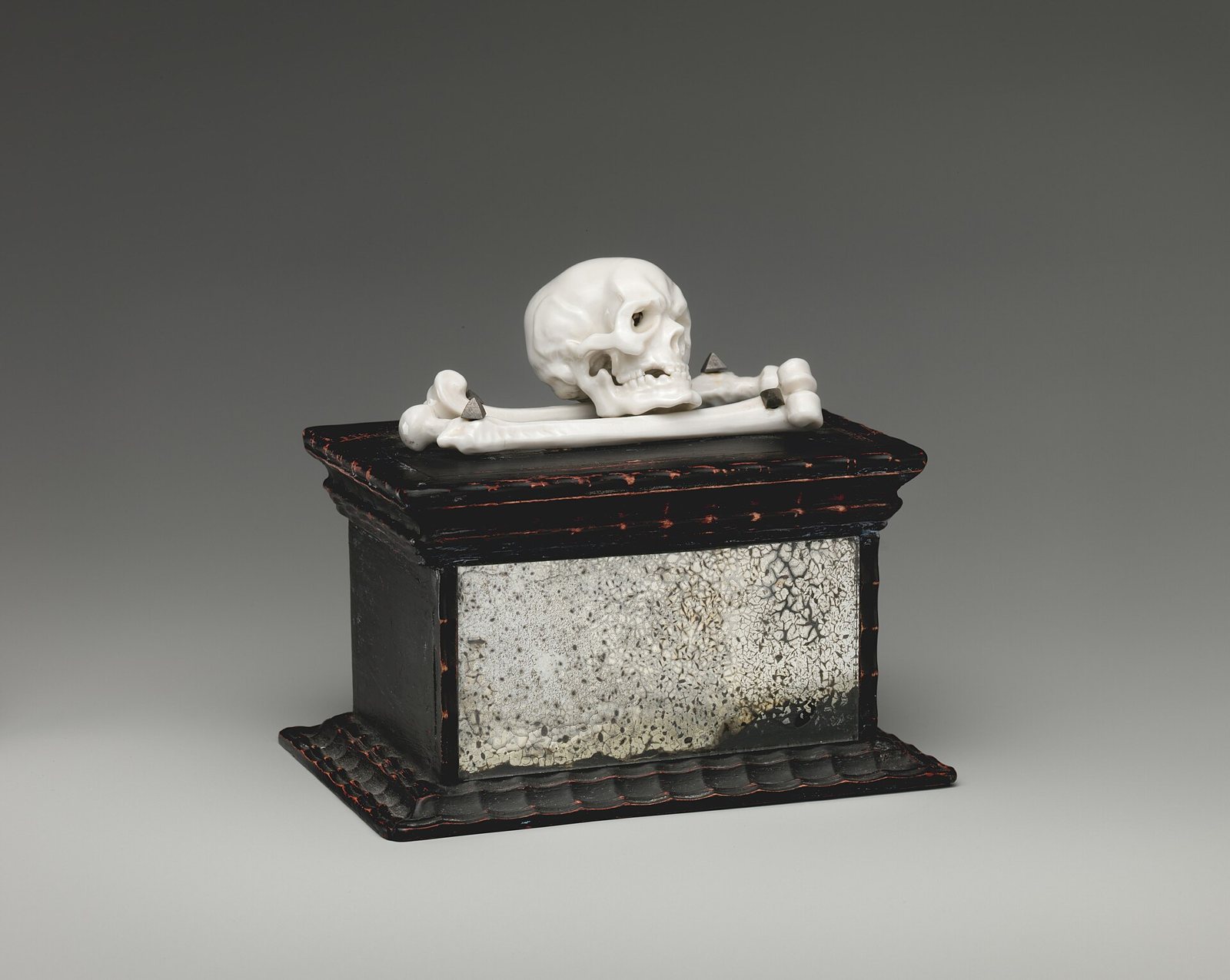
Historians Marian Moser Jones and Isidore Daniel Benrubi, writing in "Poison Politics", report that European and American apothecaries were already using distinctive bottle shapes for poisons by the late eighteenth century. By the mid-nineteenth century, poison bottles were commonly marked with the skull and crossbones or with red "Poison" labels.
The law began to step in too, and the two main accounts describe the first rule a little differently. The Philadelphia Museum of Art records that New York required the word "poison" on harmful bottles in 1829. Moser Jones and Benrubi describe the same 1829 New York law as requiring a conspicuous poison warning on substances such as arsenic and prussic acid. Either way, New York had decided that poison should announce itself.
The skull itself got its strongest early endorsement in 1861. That year Theodore E. Ladd wrote to *The Lancet*, the British medical journal, proposing the death-head design for poison labels, as Bates and colleagues summarize, specifically because it could warn people who could not read. A word only works for readers. A skull works for nearly everyone.
Bottles you could read in the dark
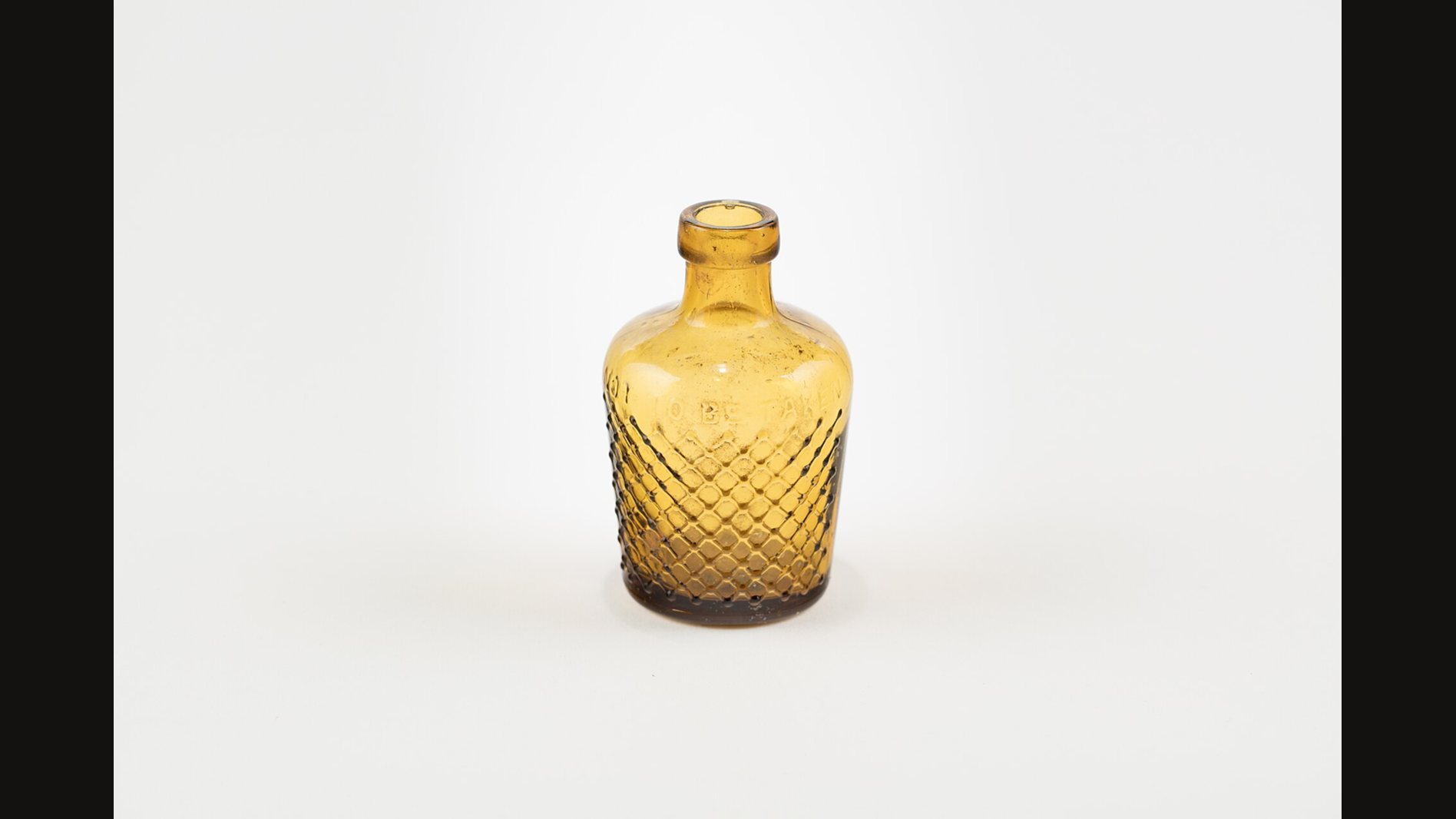
Victorian makers did not stop at labels. They shaped the glass itself so that poison felt different in the hand. Poison bottles of the period came in coffin shapes, with pointed or rough surfaces, raised lettering and projections, odd geometric forms and cobalt-blue or other loud colors, and some carried a death-head design. The idea was simple and practical: someone reaching for medicine in a dim room at night should be able to tell the poison by touch, shape and sight before pouring anything.
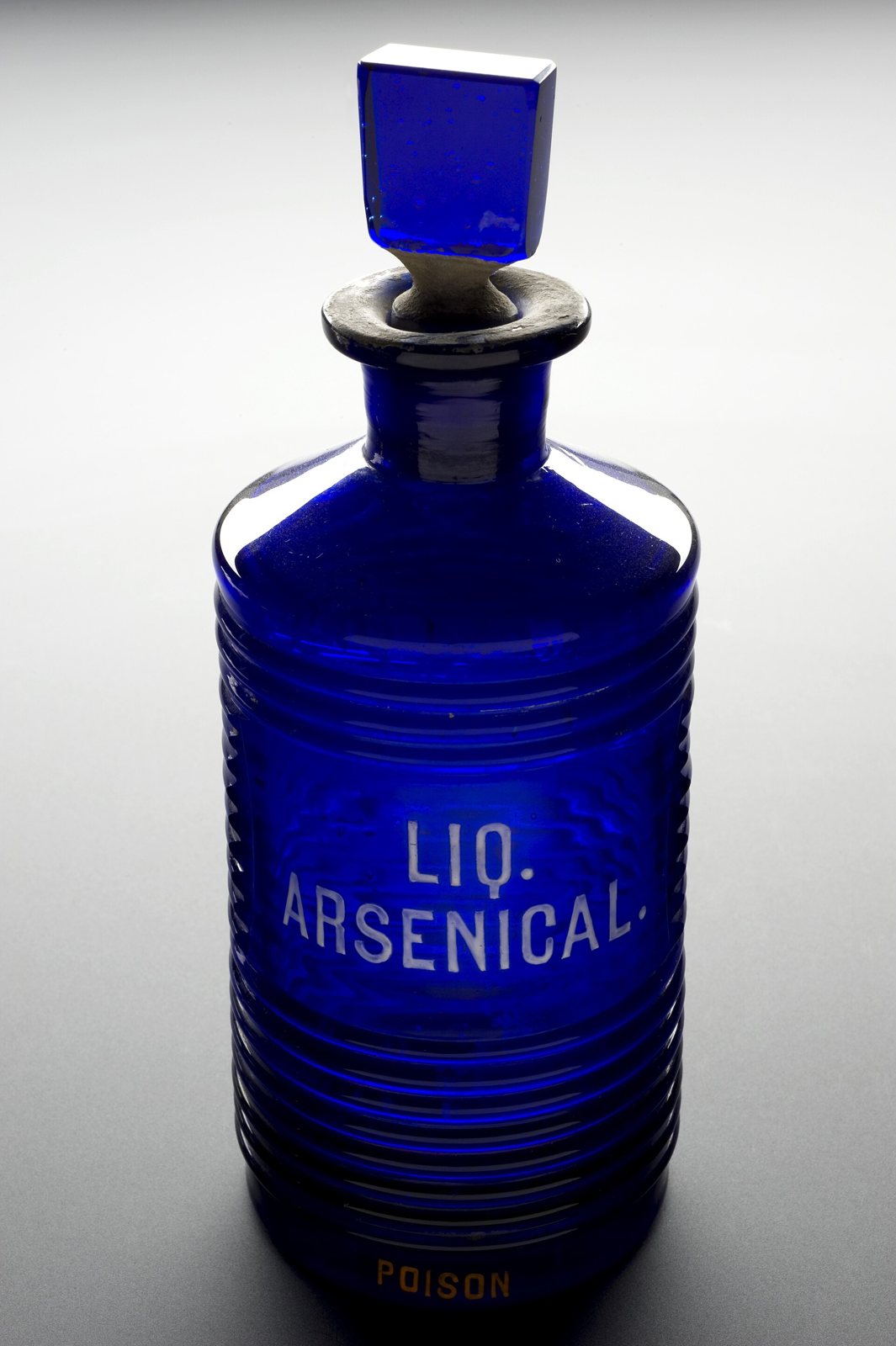
The Philadelphia Museum of Art holds a poison bottle dated to the 1880s and singles out coffin-shaped bottles as especially notable, while listing pointed surfaces, unusual shapes, cobalt-blue glass and the poison symbol among the warning methods of the time. Its record also notes a milestone for American design: the first U.S. poison-bottle patent was applied for in Philadelphia in 1871. A bottle shaped like a coffin is about as direct as packaging gets.
The poison warning, from law to label
Tap or hover a step to follow the order.
1829
New York State requires a poison warning on poisonous substances
1861
Theodore E. Ladd proposes the death-head design for poison labels in The Lancet
1871
The first U.S. poison-bottle patent application is filed in Philadelphia
1971
The Pittsburgh Poison Center introduces Mr. Yuk after children's focus groups
2024
OSHA QuickCard 3491-08R ties the skull pictogram to acute toxicity, fatal or toxic
Mr. Yuk and the Pittsburgh problem
By the twentieth century the skull and crossbones had a rival in one American city, and the reason was baseball. In Pittsburgh, Pennsylvania, Richard Moriarty, MD, saw a steady stream of poisoning visits at Children's Hospital of Pittsburgh. He organized focus groups of children to test which warning images actually worked on them. The trouble, as UPMC HealthBeat tells it, was that in western Pennsylvania the old skull had competing associations, because the Pittsburgh Pirates used similar imagery. For a local child, a skull on a bottle could look more like team spirit than danger.
The answer, created by the Pittsburgh Poison Center in 1971, was Mr. Yuk: a bright-green face with a grimace, meant to say "disgusting" to a child and to spread the poison center's number at the same time. Mr. Yuk stickers carry the national Poison Help number, 1-800-222-1222, and Children's Hospital of Pittsburgh still uses the character in its teaching.
The Cooper Hewitt, Smithsonian Design Museum adds a design-history angle. Material in its Henry Dreyfuss Archive, including a 1972 newspaper clipping, records studies in Pittsburgh and Fort Lauderdale of what children associated with the traditional image. Mr. Yuk was a children's poison-prevention campaign. The skull and crossbones did not go away; it stayed on chemical labels, where it carries an official meaning today.
What the skull pictogram means on a label today
On a modern chemical label in the United States, the skull and crossbones appears as a black symbol on a white background inside a red diamond. Under OSHA's Hazard Communication Standard, its 2024 pictogram QuickCard (OSHA 3491-08R) ties this pictogram to acute toxicity classified as fatal or toxic. In plain words, the product can cause serious, possibly fatal poisoning.
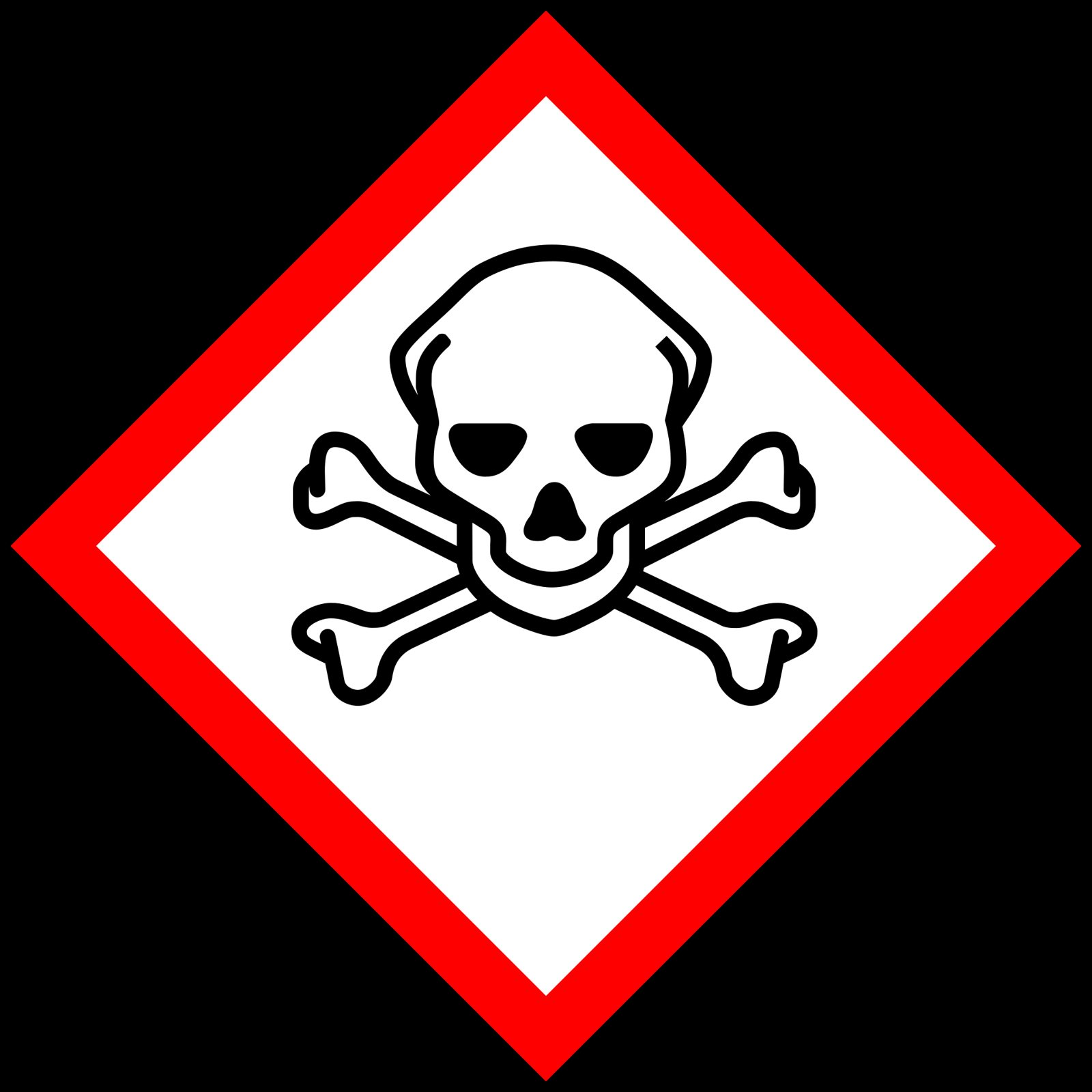
The pictogram is paired with the signal word "Danger." It does not say on its own how the harm happens; the label's hazard statements do that, with wording such as "Fatal if swallowed," "Fatal in contact with skin" or "Fatal if inhaled." So, when you see the diamond, read the sentences next to it. They tell you whether the risk comes from swallowing, skin contact or breathing it in. OSHA's Appendix C to the Hazard Communication Standard sets out the labeling rules behind those statements.
If someone may have been poisoned
Poison Control's own advice is short and clear. In the United States, call 1-800-222-1222 or use the webPOISONCONTROL tool online right away, even before any symptoms appear. The service is free and confidential, according to Poison Control.
Call 911 immediately if the person collapses, has a seizure, has trouble breathing or cannot be woken. Do not make the person vomit. If something was swallowed, follow Poison Control's instructions for that specific product. For the eyes, rinse with room-temperature water for at least 15 to 20 minutes. For the skin, take off contaminated clothing and rinse with running water for at least 15 minutes. If fumes were breathed in, move to fresh air and open the area up. The full steps are on Poison Control's first aid for poisonings page.
If someone may have been poisoned
Tap a card to bring it forward.
- Call Poison Control: In the United States, call 1-800-222-1222 or use webPOISONCONTROL right away, even before symptoms.
- Call 911: If the person collapses, has a seizure, has trouble breathing or cannot be woken.
- Do not induce vomiting: Follow Poison Control's instructions for the specific product instead.
- Eyes: Rinse with room-temperature water for at least 15 to 20 minutes.
- Skin: Remove contaminated clothing and rinse with running water for at least 15 minutes.
- Fumes: Move to fresh air and ventilate the area.
The same skull, other jobs
The poison label is only one of the skull and crossbones' jobs. On a pirate flag it meant something else entirely, as the history of the Jolly Roger shows, and the skull emoji on a phone screen has meanings of its own. Reading any skull image means reading where it sits, the same way a skeleton hand changes meaning with what it is holding. For skulls as symbols more broadly, start with our story on skull symbolism.
More questions about the poison symbol
These short answers add a few details beyond the sections above.
When did the skull and crossbones become a poison symbol?
It was in common use on poison containers by the mid-nineteenth century. Two dated milestones frame that period: Theodore E. Ladd's 1861 proposal in *The Lancet* and the first U.S. poison-bottle patent application, filed in Philadelphia in 1871.
Why did Pittsburgh create Mr. Yuk instead of using the skull and crossbones?
Because children in Pittsburgh tended to link the skull with the Pittsburgh Pirates rather than with danger. Children's focus groups helped shape a face that read as disgust instead, and the skull pictogram still appears on chemical labels today.
Were Victorian poison bottles shaped like coffins?
Some were, and the Philadelphia Museum of Art calls coffin-shaped bottles especially notable. Others relied on pointed surfaces, unusual shapes, raised lettering or cobalt-blue glass to warn the user.
What does a skull and crossbones mean?
It began as a sign of death and became a warning of deadly danger; on a poison label today it means acute toxicity. Its documented adoption on poison labels began in Britain and the United States, and the symbol's many other uses are traced in our skull and crossbones history.
Poison symbol quiz
Answer every question to check.
A skull on a bottle has done the same plain job since the nineteenth century. Keep the number somewhere you can find it, and keep the warnings where they belong: on the label.
Terms in this story
Tap a term to see what it means.
Apothecary. A historical maker and seller of medicines. Apothecaries used special bottle shapes for poisons by the late eighteenth century.