
No. 021
Skull Emoji Meaning: What 💀 Means in a Text or Comment
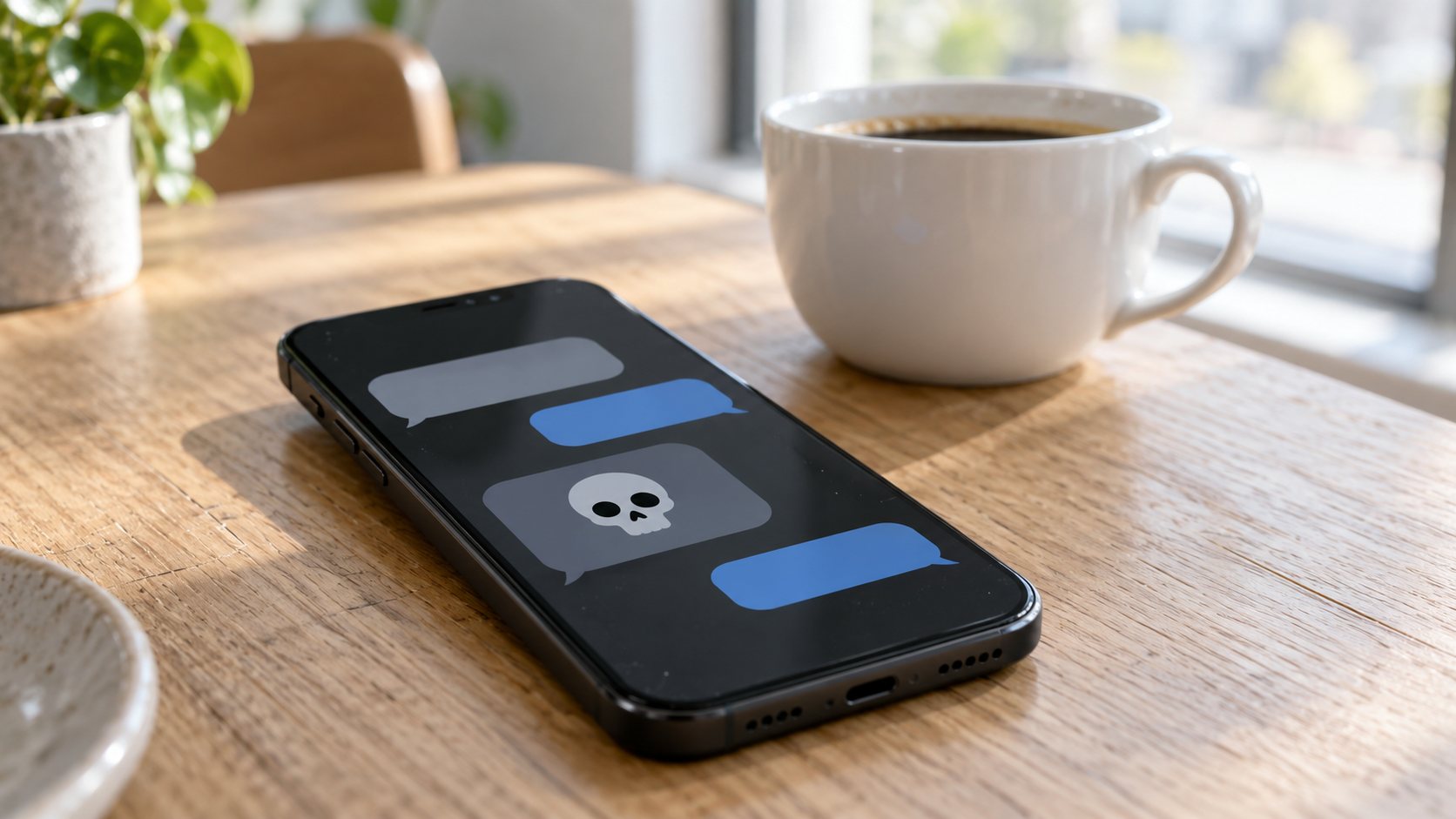
In most texts and comments, 💀 means "I'm dead," as in "that was so funny I died." It is a short way of saying "I'm dying laughing," and it usually lands right after a joke, a ridiculous photo or a story that went sideways. The same little skull can also mean other things: embarrassment, disbelief, frustration, a spooky Halloween mood, or, in a serious conversation, an actual death. The words around it tell you which one you are looking at. A skull after a punchline is laughter. A skull in a message about a funeral is not.
That is the short answer. The longer one is a good story, because the skull emoji is older than the joke, it has a cousin with crossbones that means something different, and it looks a little different on every phone. As a site that spends its days with skulls, we are glad it made the jump to everyday slang.
How a skull came to mean "that was hilarious"
The joke behind 💀 is an old one in English. People have said "I'm dying," "I'm dead" and "I'm dying laughing" for a long time to describe laughing hard. The emoji simply skips a step: instead of typing that you died, you send the skull.
Dictionary.com described the skull this way in an entry dated December 18, 2018, calling it a lighthearted reaction to something so funny that the sender is "dead." So, the laughing meaning was already in use by 2018.
TikTok gave it a big push. On January 25, 2021, Emojipedia founder Jeremy Burge described how many TikTok commenters had swapped 😂 for 💀 to say "I'm dead" from laughter, a shift the Emojipedia blog later recalled. By September 28, 2022, Dictionary.com was explaining the same habit as a Gen Z convention, and in February 2024 it described younger texters using 💀 for intense laughter in place of 😂 or 🤣 in its roundup of the hottest trends in emoji.
Spanish speakers have a matching phrase, *muerto de risa*, literally "dead of laughter," and the skull carries the same joke in Spanish chats.
The skull emoji, from keyboard to punchline
Tap or hover a step to follow the order.
1999
Emojipedia says 💀 first appeared on SoftBank's Japanese emoji keyboard
2010
💀 is approved in Unicode 6.0
2015
💀 and ☠️ are included in Emoji 1.0
December 2018
Dictionary.com describes 💀 as a lighthearted "I'm dead" reaction to something funny
January 2021
Jeremy Burge of Emojipedia describes TikTok commenters using 💀 instead of 😂
September 2022
Dictionary.com explains 💀 as a Gen Z way to laugh
Is 💀 the same as 😂?
They overlap, but they do not feel the same. 😂, officially Face with Tears of Joy, shows laughter as a smiling face crying happy tears. 🤣, Rolling on the Floor Laughing, turns the volume up. Emojipedia notes that 😭, Loudly Crying Face, is also widely used for laughing so hard you cry, sometimes even more strongly than 😂.
The skull takes a different route. Instead of showing a laughing face, it acts out the result: you laughed so hard you died. That gives it a slightly drier, more exaggerated tone. A 😂 says "this is funny." A 💀 often says "this is so funny, or so absurd, that I cannot go on," and it can carry a hint of irony or a deadpan shrug that the cheerful faces do not.
None of this is a rule. Friend groups, platforms and age groups settle into their own habits, and the choice between 💀, 😂 and 😭 is mostly about tone. If someone in your chats always uses 😂 and someone else always uses 💀, they are probably laughing at the same joke.
When the skull means something else
The laughing skull is the most common reading in casual messages, but the emoji still works as a plain skull. Emojipedia describes it as popular around Halloween, and it shows up beside horror films, skeleton decorations, costumes and anything spooky. It can also mean "dying" in other senses: dying of embarrassment, dying of frustration after a long day, or "this is killing me" said with affection about a friend's terrible pun.
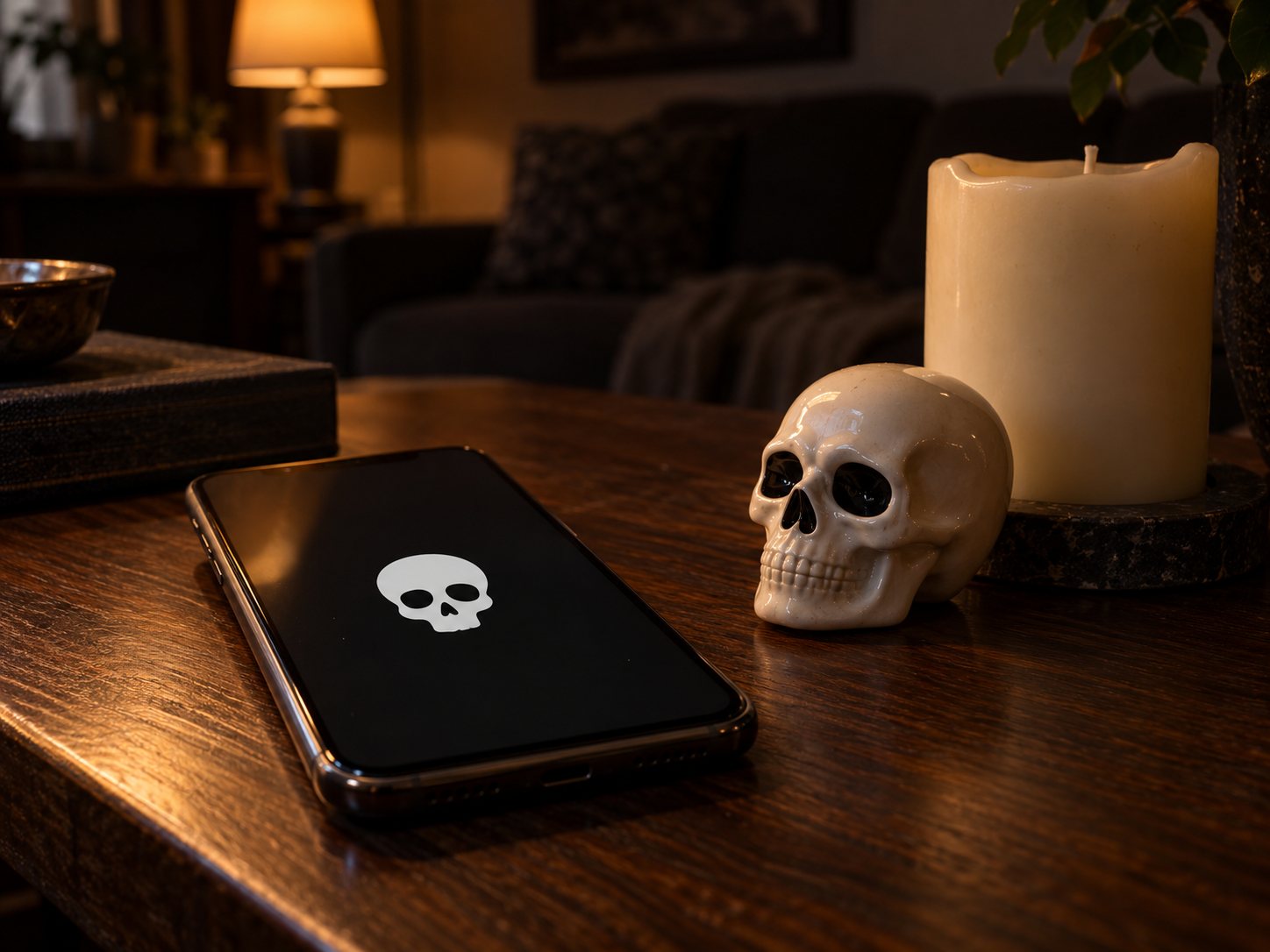
Then there are the moments when it means exactly what it shows. In a conversation about someone who has died, a skull can be literal and serious. If you see one in a serious thread, read the whole message before assuming it is a joke, and ask if you are not sure.
Reading a 💀 by what comes before it
Tap a card to bring it forward.
- After a joke or an absurd story: "I'm dead from laughing"
- After an embarrassing moment: That was painfully awkward
- Beside Halloween or horror posts: A spooky or literal skull
- Beside warnings, poison or piracy: Danger, toxicity or pirate symbolism, often with ☠️ instead
- In a conversation about a real death: Possibly literal and serious, so read carefully
💀 and ☠️ are two different emoji
If you have ever mixed them up, you are in good company. The plain skull and the skull and crossbones look alike at a glance, but they are separate characters with separate histories.
The skull's official Unicode name is SKULL, and its code point is U+1F480. The skull and crossbones is SKULL AND CROSSBONES, U+2620, and it is much older as a character: Unicode 1.1 approved it in 1993, seventeen years before the plain skull. Both entered Emoji 1.0 in 2015, according to Emojipedia.
Tap or hover a row to highlight it.
| Detail | 💀 | ☠️ |
|---|---|---|
| DetailOfficial name | 💀Skull | ☠️Skull and Crossbones |
| DetailCode point | 💀U+1F480 | ☠️U+2620 |
| DetailApproved in Unicode | 💀Unicode 6.0, 2010 | ☠️Unicode 1.1, 1993 |
| DetailIncluded in Emoji 1.0 | 💀2015 | ☠️2015 |
| DetailCommon use today | 💀"I'm dead from laughing," Halloween, death | ☠️Poison, danger, piracy, hazardous materials |
The crossbones change the message. ☠️ is far more strongly tied to poison, danger, piracy and hazardous materials. Emojipedia records an older Samsung design that set the skull and crossbones on a yellow warning triangle, the way you might see it on a chemical label. It can still be used as a joke, but if you want to say "I'm dead" from laughing, the plain skull is the usual choice. For the long story behind the warning sign, see the history of the skull and crossbones, and for the flag that made it famous at sea, the Jolly Roger.
An emoji older than the joke
The skull was not invented for TikTok. Emojipedia says 💀 first appeared on SoftBank's Japanese emoji keyboard in 1999, eleven years before Unicode approved it. It was approved as part of the Unicode Standard in version 6.0 in 2010, which made it possible for one phone to send a skull and another phone, made by a different company, to show a skull too. In 2015 it was included in Emoji 1.0.

For most of that history, the skull meant a skull: death, danger, Halloween, a dark sense of style. The laughing meaning arrived much later, and it sits on top of the older ones rather than replacing them. That is part of why context still matters.
Why it looks different on every phone
The emoji is one character, but every company draws its own version. Emojipedia describes the general design as a whitish-gray cartoon human skull with large black eye sockets. Apple's skull includes a lower jaw, while some other platforms leave the jaw off. Emojipedia keeps versions from Apple, Google Android, Samsung, Microsoft, Facebook, X, WhatsApp, JoyPixels, Snapchat and TikTok, and they vary in the shape of the jaw, the teeth, the shading, the eye sockets and the overall expression.
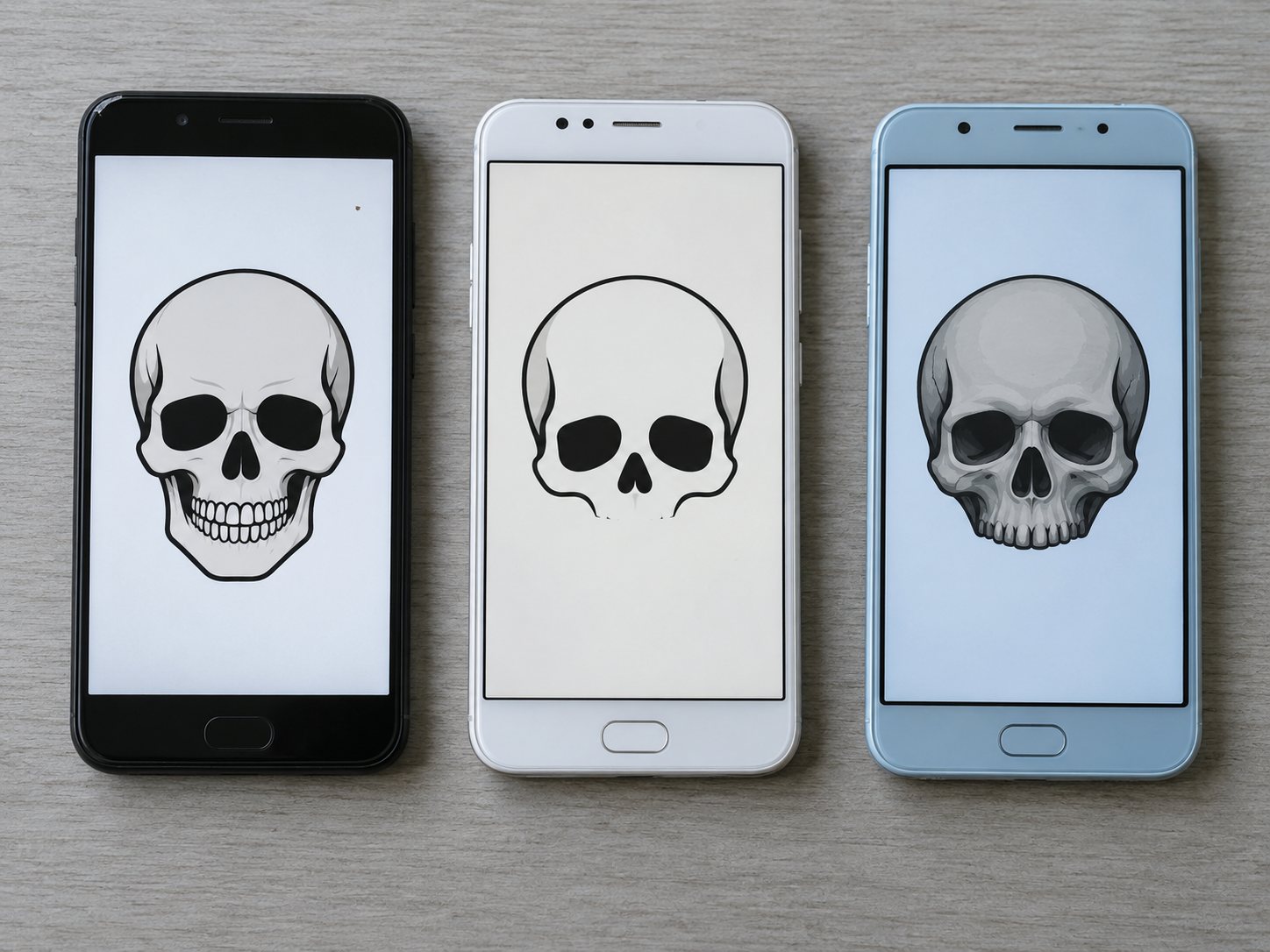
The drawing does not change what the character means. Still, a more detailed or more cartoonish skull can make the same message feel more playful, spookier or more severe, so the skull your friend sent from one phone may look a little grimmer or a little goofier on yours.
A note for parents
If your child, teenager or a younger coworker sends 💀, the odds are good that they thought something was very funny. Dictionary.com and Emojipedia both describe it as a common way for younger people to laugh online, and it is usually no more alarming than an old-fashioned "LOL."
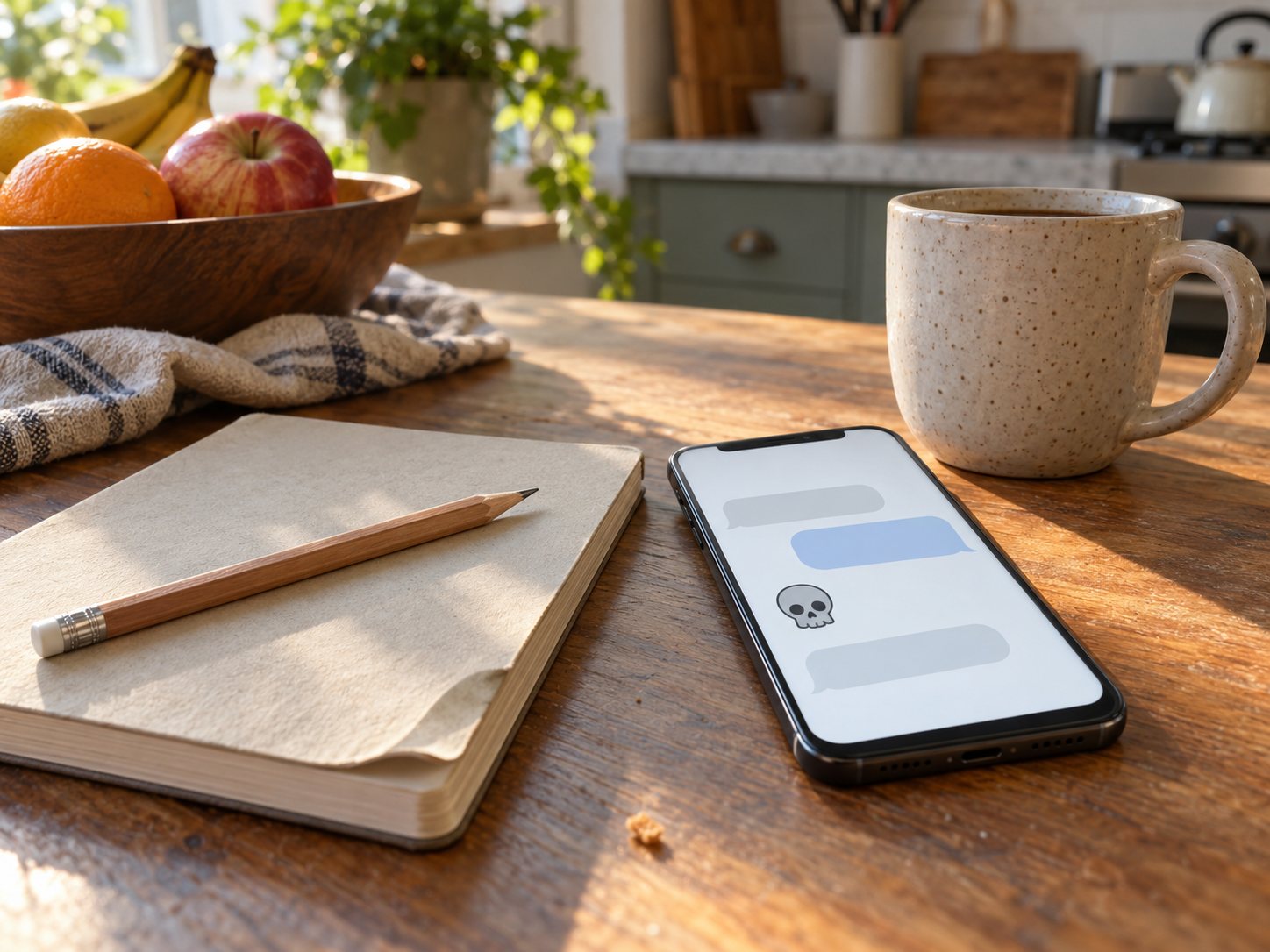
The same reading rules apply to everyone. Look at what came right before it. A skull after a meme, a story about a teacher's typo or a photo of the dog wearing a sock is laughter. A skull after a story about a mistake they made may mean embarrassment. If it appears in a serious conversation, about a loss or about how they are feeling, take it at face value and ask them what they mean. Asking is never the wrong move, and it is a good way to learn the rest of their emoji vocabulary.
Five quick questions, all answered above.
Skull emoji quiz
Answer every question to check.
Questions people ask about the skull emoji
These come up again and again in searches, in English and in Spanish.
What does the 💀 mean in texting?
In texting, 💀 usually means "I'm dead," a quick way of saying you are laughing too hard to function. It can also signal embarrassment, disbelief or frustration, so the message right before it tells you which one.
What does 💀 mean in Gen Z?
For Gen Z, 💀 is mostly a laugh, often used instead of 😂 or 🤣. Dictionary.com described it as a Gen Z laughing convention in 2022, and Emojipedia tied its spread to TikTok comment sections in 2021.
What does 💀 mean from a girl?
A 💀 from a girl means the same thing it means from anyone: usually laughter, sometimes disbelief, embarrassment, shock or a dramatic reaction. On its own it is not a sign of flirting or romantic interest, so the rest of the conversation is the better guide.
Does the skull emoji mean death?
It can, though in casual chats it most often means laughter. Emojipedia lists literal uses such as death, Halloween and horror alongside the laughing one, so a skull in a serious message about a loss should be read literally.
What is the difference between 💀 and ☠️?
💀 is the plain skull, mostly used for laughter and Halloween, while ☠️ is the skull and crossbones, more strongly linked to poison, danger and pirates. They are separate Unicode characters, U+1F480 and U+2620.
Where to go next
The skull on your keyboard is the newest chapter in a very long story. To see what skulls meant to painters, monks, sailors and tattoo artists before anyone texted one, read about skull symbolism. And since 💀 has a busy season every October, the story of skeletons and Halloween explains how the bones ended up on every porch.