No. 001
What Is the Totenkopf? The Death's Head Symbol and Its History
Totenkopf is German for "death's head," and it means a skull, often shown with crossed bones. The word covers several different badges with separate histories: the skull worn by Prussian hussars from 1741, the badge of the Black Brunswickers, the British 17th Lancers' "Death or Glory" skull from 1759, and the emblem of Hitler's SS. The SS Totenkopf is a hate symbol. It was worn by the guards of the Nazi concentration camps, and neo-Nazis and white supremacists still use it today. We Dig Skulls stands against it. The older and unrelated skull badges are a different story, and knowing which is which starts with the unit, the date and what surrounds the skull.
Before the twentieth century: hussars, Brunswickers and lancers
The death's head was a military badge long before the Nazi movement existed. In Prussia, the Hussar Regiment No. 5, established in 1741 under Frederick II, wore a skull on its headgear. That tradition passed to the Prussian 1st and 2nd Leib-Husaren regiments and lasted into the imperial period. The Bavarian Army Museum records the black uniform, the 1741 origin and the skull cap badge of the 1st Leib-Husaren Regiment, associated with August von Mackensen.
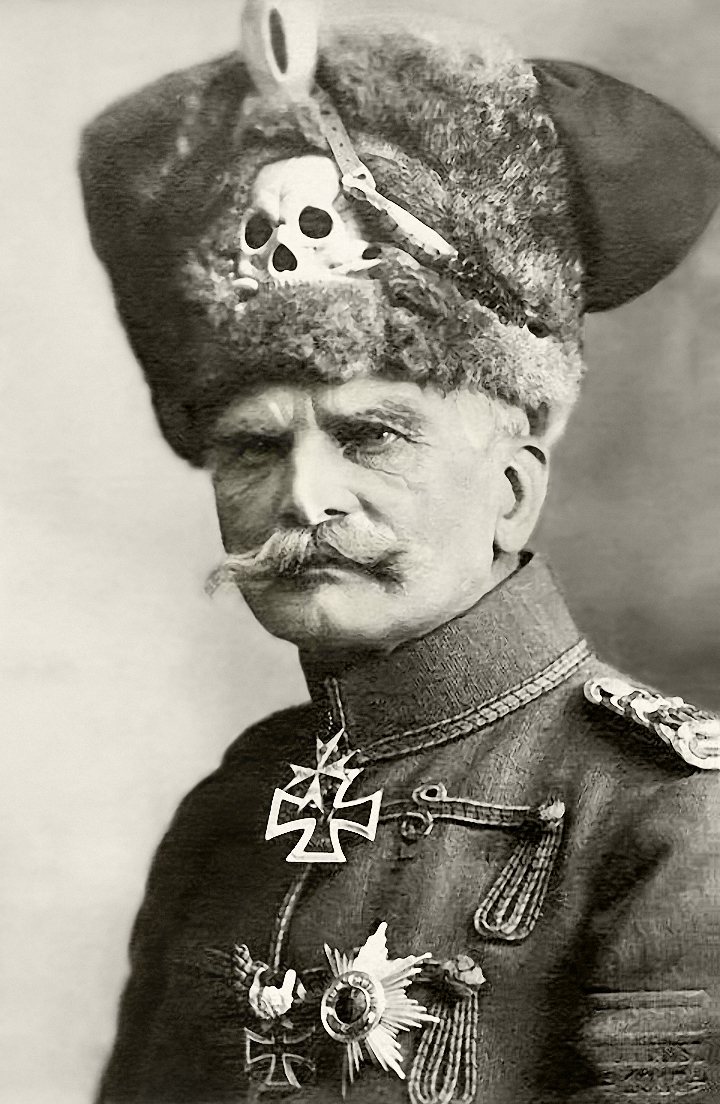
Troops from the Duchy of Brunswick built a separate death's head tradition. Their black-uniformed units, remembered as the Black Brunswickers, wore a skull seen from the front, and the badge continued with the Brunswick Hussar Regiment No. 17 in later imperial German service. It has its own design and its own institutional history, distinct from the Prussian Leib-Husaren.
Britain has the best-known example. According to the National Army Museum, the 17th Light Dragoons adopted a skull-and-crossbones badge in 1759, after Colonel Hale returned from Quebec with news of the death of General James Wolfe. The regiment took the motto "Death or Glory," became lancers in the 1820s and came to be known as the "Death or Glory Boys." The badge continues today with the Royal Lancers.
For these regiments, the skull stood for regimental identity, remembrance of the dead and a stated willingness to face death in battle. None of them were Nazi symbols.
The death's head, 1741 to 2015
Tap or hover a step to follow the order.
1741
Prussian Hussar Regiment No. 5 is established, the start of the documented Prussian death's head hussar tradition
1759
The British 17th Light Dragoons adopt a skull-and-crossbones badge linked to General Wolfe's death and the motto "Death or Glory"
March 1923
The Stabswache in Munich wears black caps with a Totenkopf, an early Nazi movement use before the SS existed
April 1925
The SS is created as the successor to Hitler's guard units and takes over the death's head emblem
April 1936
The SS concentration camp guard units are renamed SS-Totenkopfverbände
January 1943
U.S. Navy fighter squadron VF-17 first flies the Jolly Rogers skull and crossbones, a separate American tradition
2015
The Royal Lancers are formed, carrying the British regimental skull badge forward
How the SS took the death's head
The Nazi use began in Munich. In March 1923, the SA created a special guard called the Stabswache, and the Historisches Lexikon Bayerns, the Bavarian historical encyclopedia, records that its members wore black caps with a Totenkopf. In May 1923 the unit became Stoßtrupp Hitler, Hitler's personal guard. It was banned after the failed Beer Hall Putsch in November 1923. The SS was created in April 1925 as its successor.
The early SS badge was modeled on the older Prussian-style death's head. A later SS version, introduced in 1934, had a longer skull and a lower jaw, which makes it look different from the hussar-style badge. The SS used the emblem to express loyalty, a militant identity and a willingness to die for Hitler and the Nazi movement.
The death's head and the concentration camps
The emblem took on its most criminal meaning inside the SS concentration camp system. The US Holocaust Memorial Museum states that the camp guard units became the SS-Totenkopfverbände, the SS Death's-Head Units, in April 1936. Every SS unit wore the death's head on its caps, but only the Death's-Head Units were authorized to wear it on their lapels as well. The Waffen-SS Totenkopf Division, created in 1940, recruited heavily from concentration camp personnel.
The SS and its organizations were part of the Nazi system of persecution, concentration camps and mass murder. The older military history of the skull badge does not lessen or excuse that history in any way.
What the SS Totenkopf signals today
The Anti-Defamation League lists the Totenkopf in its Hate Symbols Database when it refers to the specific skull-and-crossbones design associated with Hitler's SS. After 1945, neo-Nazis and other white supremacists revived that image because of its importance to the SS and its connection to Nazi racial terror. Used that way, it signals allegiance to, or identification with, Nazi and racist ideology. We Dig Skulls does not use, sell or decorate with it.
The ADL also stresses that context matters. A skull and crossbones is not automatically a hate symbol. The SS version is usually recognizable by its historical design, or by what appears with it: SS runes, Nazi slogans, Nazi colors, a military-style presentation, or other white supremacist symbols. A pirate flag, a poison warning, a motorcycle emblem or a modern military skull badge should not be labeled Nazi only because it has a skull and crossed bones.
Skull badges with other histories
Several modern units use skull insignia that have nothing to do with the SS. The U.S. Navy's Jolly Rogers tradition began in January 1943, when fighter squadron VF-17 first flew a skull and crossbones on its aircraft in the Pacific. Later squadrons, including VF-84 and VFA-103, carried on the Jolly Rogers name and insignia, which stands for naval aviation tradition, squadron identity and the pirate flag. The pirate side of that story is told in the Jolly Roger.
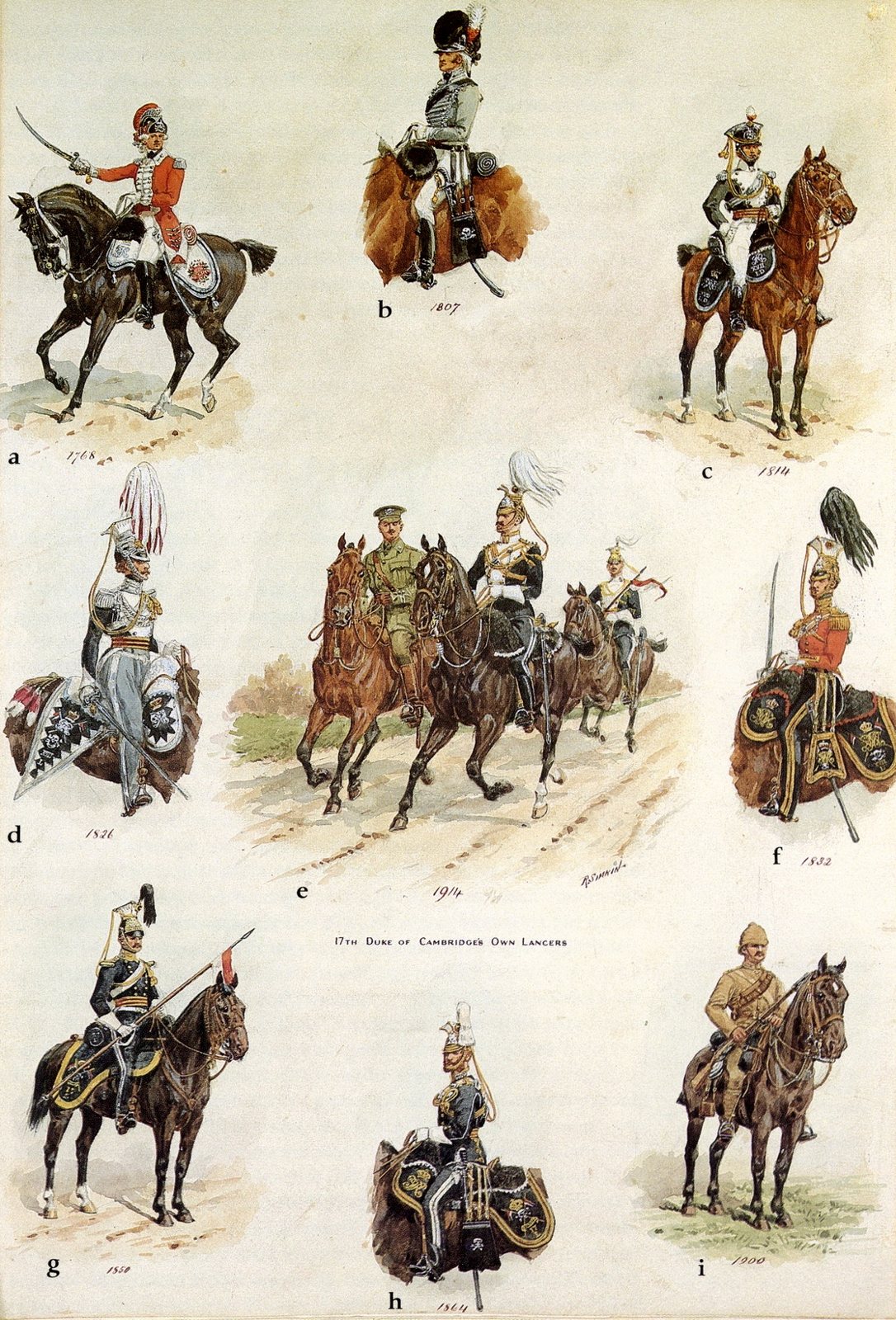
In Britain, the Royal Lancers still wear a skull-and-crossbones cap badge for the motto "Death or Glory." The modern regiment was formed in 2015 from earlier units, including the 17th/21st Lancers.
German Army Panzer units also used skull insignia that were distinct from the SS badge. What any one of these meant depends on the unit, the date and the exact design, so a Panzer death's head should not automatically be read as an SS badge.
Because the shapes can overlap, these badges still cause confusion and sometimes controversy. If you are trying to identify a skull badge, look at the unit name, the country, the date, where it sits on the uniform and what other insignia appear with it before assigning it a meaning.
Telling death's head badges apart
Tap a card to bring it forward.
- Prussian hussar skull: Worn on headgear by Hussar Regiment No. 5 from 1741 and later the Leib-Husaren
- Brunswick skull: A front-facing skull worn by the Black Brunswickers and Brunswick Hussar Regiment No. 17
- 17th Lancers skull: Skull and crossbones with the motto "Death or Glory," continued by today's Royal Lancers
- U.S. Navy Jolly Rogers: Squadron skull and crossbones from VF-17 in 1943, carried on by VF-84 and VFA-103
- SS Totenkopf: The Nazi SS emblem and a hate symbol, often shown with SS runes, Nazi slogans or Nazi colors
- Check before you judge: Unit, country, date, placement on the uniform and surrounding insignia
What the law says about Nazi symbols
Several countries restrict the display of Nazi symbols, and the rules differ. What follows is general information, not legal advice; for a specific display, ask a lawyer in the country concerned.
In Germany, Section 86a of the Criminal Code makes it a crime to publicly use, distribute or prepare to distribute the symbols of unconstitutional or terrorist organizations. Symbols include flags, insignia, uniforms and parts of uniforms, slogans and forms of greeting. The penalty can be up to three years in prison or a fine. The law carries exceptions for civic education, art, science, research, teaching, reporting on current or historical events and similar purposes, and those exceptions depend on the circumstances; they are not a general permission to display the symbols.
Austria's National Socialism Prohibition Act dates from 1945 and remains in force in its consolidated 1947 form. It dissolved the NSDAP, the SS, the SA and other Nazi organizations and prohibits their re-creation.
Australia's federal Criminal Code contains offences for publicly displaying and trading in prohibited Nazi symbols, with defences for religious, academic, educational, artistic, literary, scientific and journalistic purposes, and for genuinely opposing Nazi or fascist ideology.
The United Kingdom has no single general ban on Nazi symbols like Germany's Section 86a. The Public Order Act 1986 can apply where threatening, abusive or insulting displays are intended, or likely, to cause violence, racial hatred, harassment, alarm or distress.
Death's head history check
Answer every question to check.
Quick answers about the Totenkopf
These are the questions people ask most.
What does Totenkopf mean?
Totenkopf is German for "death's head," meaning a skull, often with crossed bones. In military history it names several different badges, including Prussian hussar, Brunswick, British lancer, Nazi SS and modern unit insignia. The word alone does not point to one organization or one political meaning.
Is the Totenkopf a hate symbol?
The SS Totenkopf is a hate symbol when it is used as the Nazi SS death's head emblem or in a white supremacist setting. The ADL separates that symbol from skull-and-crossbones images used by unrelated military units, pirates and poison warnings. The design and the symbols around it decide which one you are looking at.
What is the difference between the Totenkopf and the skull and crossbones?
Totenkopf is a German word for a death's head, while "skull and crossbones" is an English description of a much broader image. The SS Totenkopf is one specific historical version. Other skull-and-crossbones designs, such as the 17th Lancers badge and the U.S. Navy Jolly Rogers insignia, have different origins and meanings; the wider story is in skull and crossbones.
Can an image of the Totenkopf be public domain and still be restricted?
Yes. Some historical images of Nazi insignia are free of copyright, but laws in countries such as Germany and Austria can still restrict displaying them in public. Copyright status and display law are separate questions.
Where to go next
The skull has meant many things to many groups, and most of them have nothing to do with hate. For the long history of the image, start with skull symbolism and the skull and crossbones. The pirate flag that inspired the Navy squadrons has its own story in the Jolly Roger, and the skulls riders wear on patches and helmets are covered in biker skull meaning.