

No. 035
Cempasúchil: What the Marigold Means for Día de Muertos
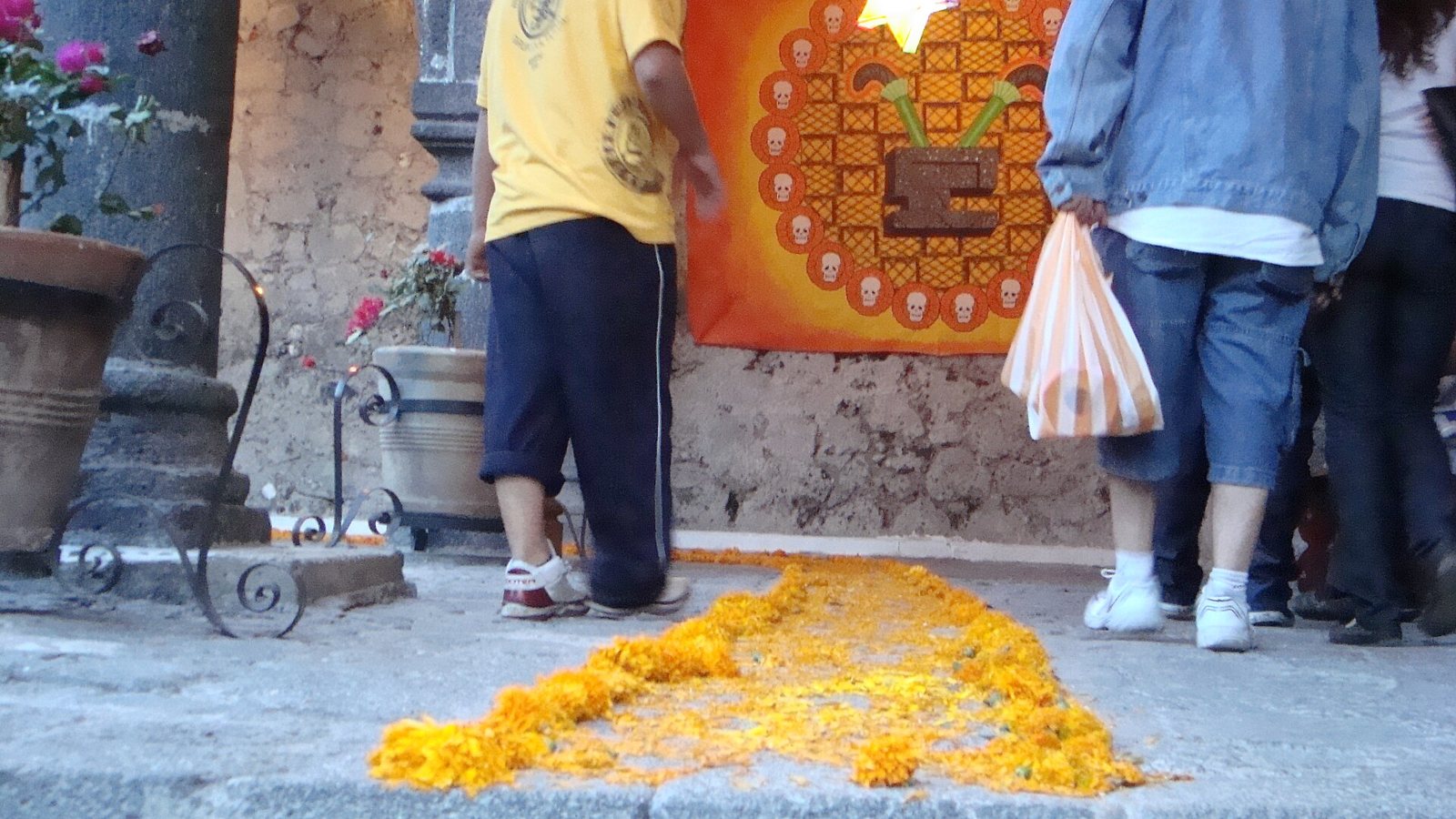
The orange flower piled on ofrendas and graves at Día de Muertos is the cempasúchil, usually the marigold species *Tagetes erecta*, which is native to Mexico and Guatemala. Its Nahuatl name, *cempoalxóchitl*, joins the words for "twenty" and "flower," and the Gran Diccionario Náhuatl records it simply as "flor de muerto," flower of the dead. In the Mexican Día de Muertos practices documented by the Instituto Nacional de Antropología e Historia (INAH), families place it on home altars and at graves as a sign of remembrance and welcome. Its strong color and scent are understood as guiding the returning souls, the ánimas, sometimes along a path of petals laid from the door to the altar.
That is the short answer. The longer one runs through a Nahuatl dictionary, sixteenth-century codices, fields in Puebla and Michoacán, and the particular ways different towns and families use the flower each fall.
The flower and its many names
Botanists know cempasúchil as *Tagetes erecta* L., a flowering annual in the Asteraceae family. Ciencia UNAM, the science outlet of Mexico's national university, identifies it as the species usually used in Mexican ofrendas, and the North Carolina Extension Gardener Plant Toolbox gives its native range as Mexico and Guatemala.
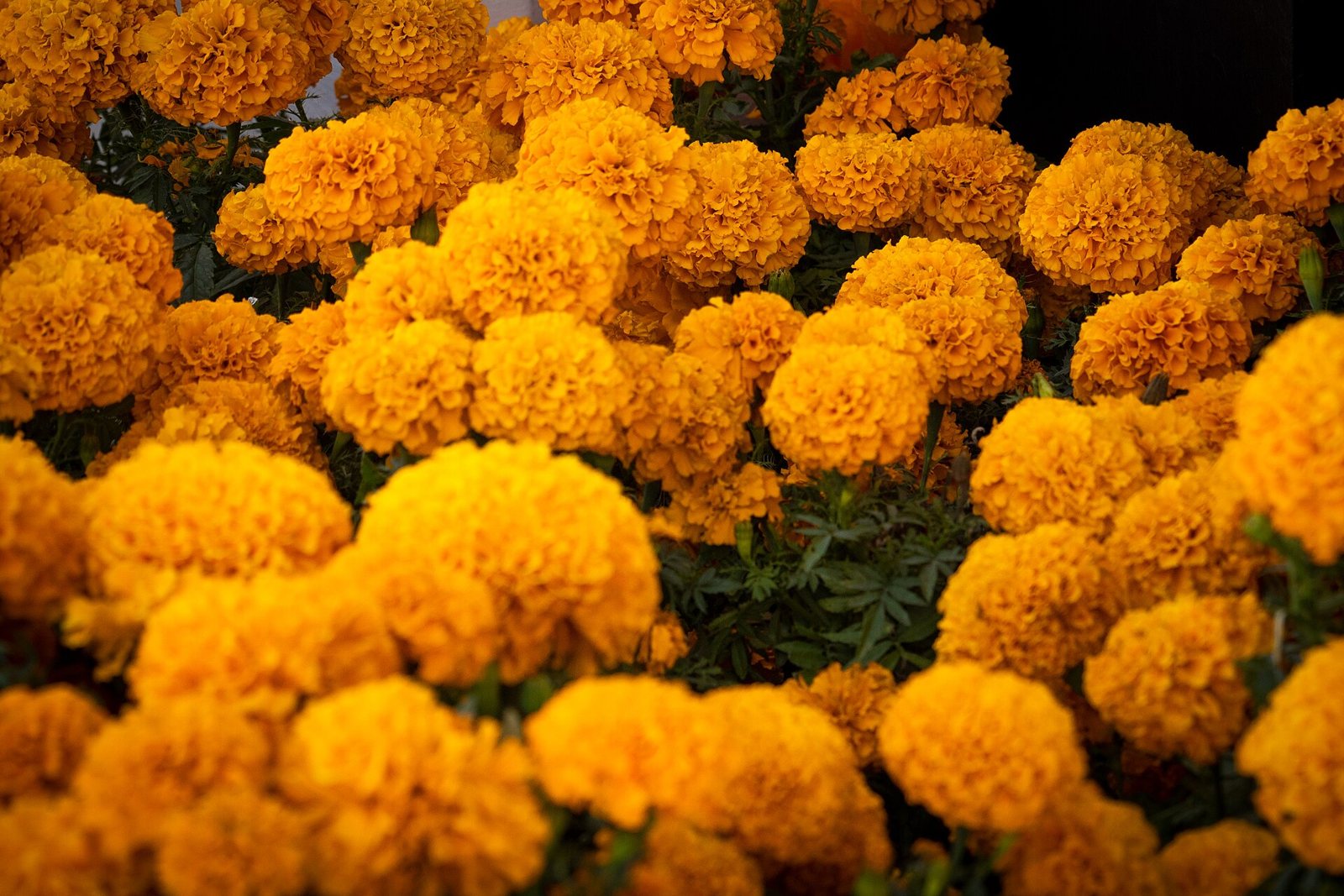
In English it goes by several names: Mexican marigold, Aztec marigold and, confusingly, African marigold. The "African" label comes from the historical trade routes that carried the plant around the world, not from where it started. In Spanish you will hear cempasúchil (also spelled cempasúchitl), flor de muerto and the Nahuatl *cempoalxóchitl*. If you have ever wondered what cempasúchil is called in English, any of those marigold names will do, though "Mexican marigold" is the one that keeps its home attached.
Look closely at one bloom and it turns out not to be one flower at all. Ciencia UNAM explains that what looks like a single flower is a flower head, or inflorescence, and each of the small structures that look like petals is an individual ray flower. The species name *erecta* means upright, and the plants live up to it: North Carolina Extension gives a typical height of one to four feet.
Tap or hover a row to highlight it.
| Fact | Data |
|---|---|
| FactScientific name | Data*Tagetes erecta* L. |
| FactFamily | DataAsteraceae |
| FactNative range | DataMexico to Guatemala |
| FactCommon Mexican names | DataCempasúchil, flor de muerto, cempoalxóchitl |
| FactSun | DataSix or more hours of direct sun recommended |
| FactTypical height | DataOne to four feet |
| FactMain season | DataOctober and November, around Día de Muertos |
| FactLeading 2024 tonnage states | DataPuebla, Hidalgo and Oaxaca |
| Fact2024 plant production | Data3.163 million plants in Mexico City and the State of Mexico |
What the name cempasúchil means
The name comes from Nahuatl. The forms *cempoalxóchitl*, *cempohualxochitl* and *cempoalxochitl* combine *cempōhualli* or *cempoalli*, "twenty," with *xōchitl*, "flower." Translations vary: "twenty flowers," "several flowers" or "flower of the dead." The Gran Diccionario Náhuatl, published by UNAM, records *cempoalxochitl* as "flor de muerto" and identifies it with *Tagetes erecta*.
Why "twenty"? One reading is that it points to the many ray flowers packed into a single head. That is a reasonable interpretation, but it is not a count you can check on every cultivated variety, so it is best held as a likely explanation rather than a rule.
On the ofrenda and at the grave
For the families who keep Día de Muertos in Mexico, cempasúchil belongs in two places: the home ofrenda and the grave. INAH describes the flower on home altars and at cemeteries, and in its photo feature Ofrendas para los muertos it shows petals marking a route from the entrance of a house to the altar. The idea is hospitality. The dead are expected back, and a bright, fragrant trail helps them find the way home.
That is what the flower represents for many families: remembrance of the dead and the welcome given to the returning ánimas. Modern explanations connect its intense orange and yellow with sunlight, and INAH's note on cempasúchil and butterflies treats its color and scent as guides for the souls on their return. Beyond the path, the flower stands for honor, memory and the continuing relationship between a family and its dead. On a crowded altar or a grave among hundreds, it also works as a plain, practical marker: this is the place, and this is what the family has set out.
How the flower is used changes from place to place. In Mexico City, INAH describes petal paths from the front door to the altar. In San Andrés de Mixquic, a community in the Tláhuac borough of Mexico City known for a Día de Muertos celebration centered on its cemetery, cempasúchil fills the ofrendas and covers the graves. Other communities build arches, garlands, crosses or large floral designs, and those forms belong to the specific town, family or event where you see them rather than to Mexico as a whole. Practice also differs between Mexican states, between Mexico and other Latin American countries, and among families in the United States who carry the tradition with them. If you are curious how far those differences go, our guide to Día de Muertos by region goes further into them.
The marigold rarely stands alone. On a home altar it shares space with photographs, candles, water, food the person loved, pan de muerto and cut-paper banners of papel picado. Our step-by-step guide on how to make an ofrenda shows where the flowers usually go and how families build an altar around them.
A Mesoamerican flower with a long record
Cempasúchil is not a recent addition to Mexican life. UNAM botanist Leonardo Beltrán Rodríguez identifies *Tagetes erecta* and *Tagetes patula* as the two *Tagetes* species domesticated in Mesoamerica, which means people were selecting and growing them long before the Spanish arrived.
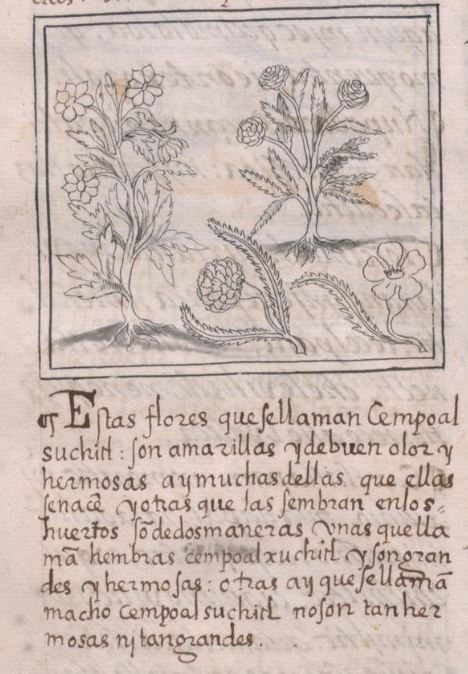
The written record begins in the sixteenth century, when colonial authors set down Nahuatl knowledge of plants. Bernardino de Sahagún's Florentine Codex, Francisco Hernández's *Historia Natural de la Nueva España* and the Codex Cruz-Badiano, a 1552 herbal of Mesoamerican medicine, all describe *Tagetes* plants. The Digital Florentine Codex is a Getty Research Institute project devoted to Sahagún's work.
Cempasúchil through the centuries
Tap or hover a step to follow the order.
Pre-Hispanic Mesoamerica
*Tagetes erecta* and *Tagetes patula* are domesticated.
1552
The Codex Cruz-Badiano records Mesoamerican medical knowledge, including *Tagetes* plants whose exact species is debated.
Sixteenth century
Bernardino de Sahagún and Francisco Hernández record Nahuatl plant names and descriptions.
1577
The Florentine Codex includes cempasúchil among its descriptions of flowers and plants.
2024
Mexico's Agriculture Ministry reports cempasúchil production in bunches, plants and tonnes.
Those old texts call for some care. The Florentine Codex describes cempasúchil as a group of flowers and does not clearly tie *Tagetes erecta* to a specific medicinal treatment. A 2024 historical and medical analysis argues that modern claims about an unbroken pre-Hispanic medicinal use of *T. erecta* often rest on uncertain identification among several *Tagetes* species. Later Mexican ethnobotanical records describe traditional teas and preparations for stomach discomfort, menstrual pain, cough and inflammation. Those are records of traditional use, not evidence that the plant works or is safe as medicine.
The flower has also had a working life as color. UNAM documents its use as a dye for cotton and wool in parts of Oaxaca, Morelos, Veracruz and Michoacán, and the carotenoids that make it orange are used today in pigments for animal feed.
Where Mexico grows it, and when
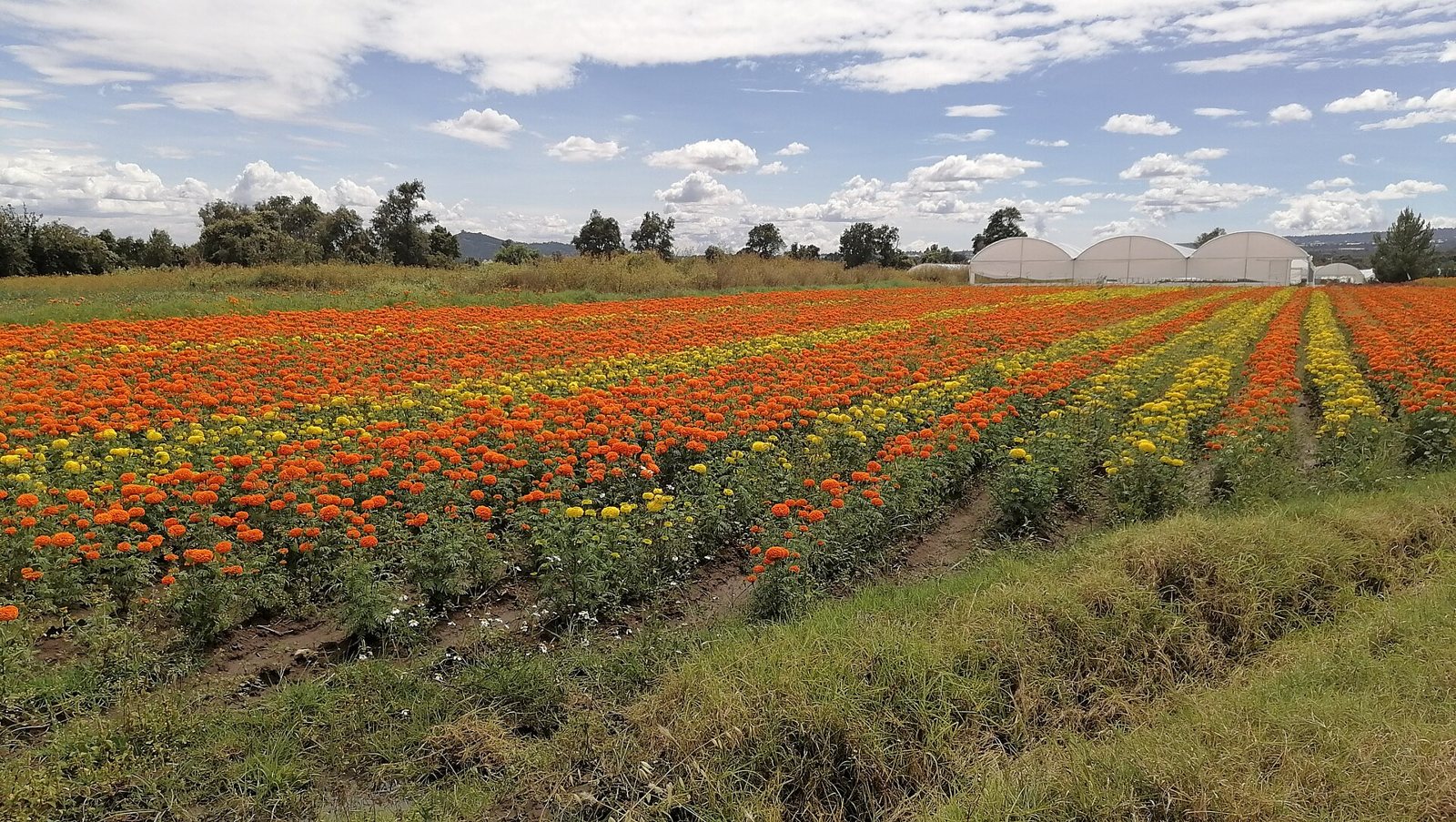
Mexico's Secretaría de Agricultura y Desarrollo Rural, using data from its statistics service SIAP, counts the harvest three ways because the flower is sold three ways: as cut bunches, as potted plants and in bulk by weight. For 2024, the ministry reported 510,019 bunches from 171 hectares, 3,163,000 plants from 17 hectares in Mexico City and the State of Mexico, and 20,659 tonnes from 2,203 hectares.
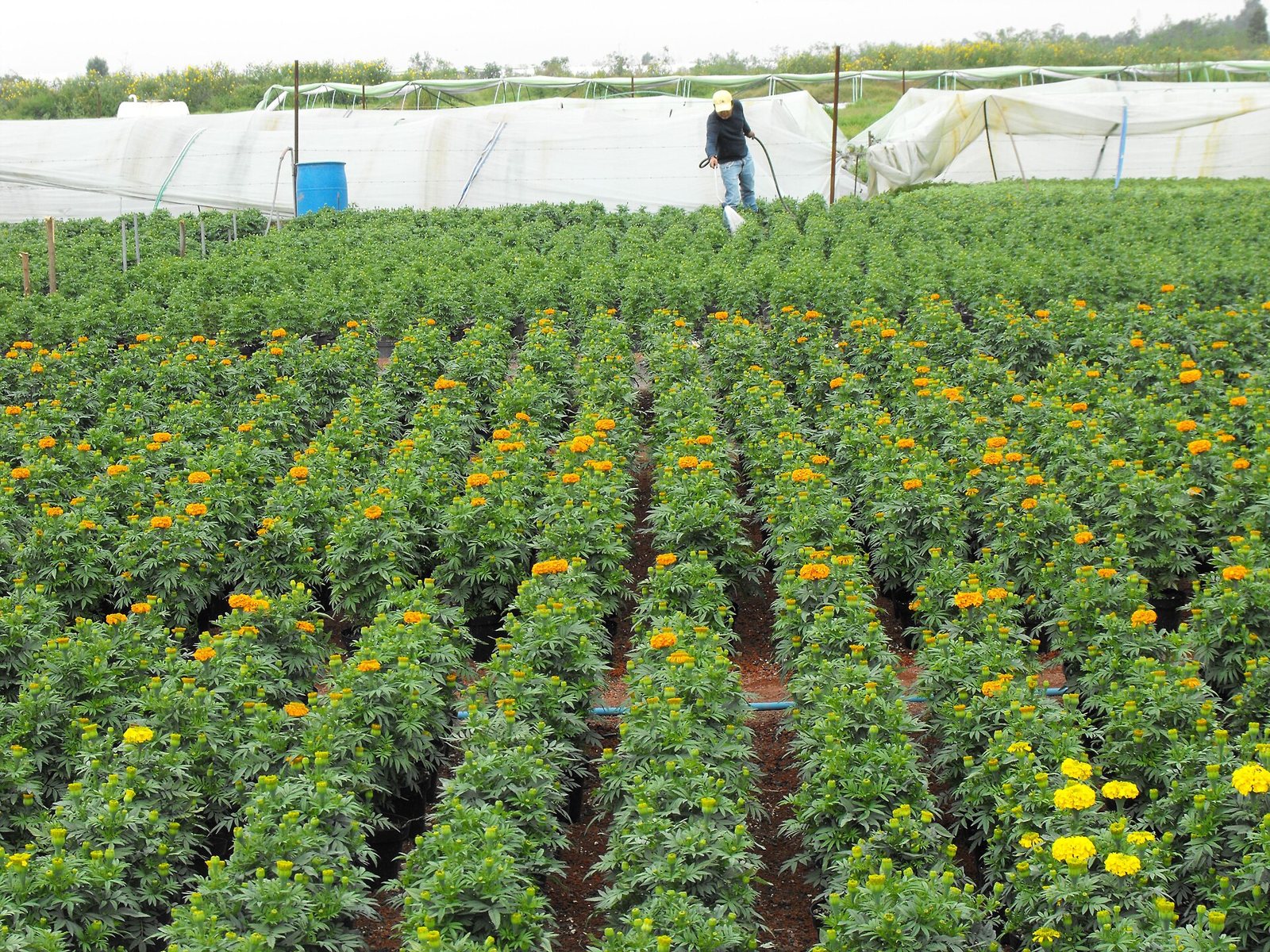
The leading states depend on which measure you use. Michoacán, the State of Mexico and Veracruz led in bunches, while Puebla, Hidalgo and Oaxaca led in tonnage. An earlier ministry summary from 2021 named nine producing states, with Puebla and Hidalgo especially prominent. UNAM's 2024 overview adds Tlaxcala, San Luis Potosí, Guerrero, Morelos, Durango and Sonora to the list, along with Xochimilco and Milpa Alta in Mexico City.
The timing follows the holiday. The ministry notes that supply is concentrated for the demand of October and November, the weeks around Día de Muertos.
Growing cempasúchil at home
If you want your own flowers for an ofrenda, cempasúchil is a forgiving plant in a suitable climate. Start with *Tagetes erecta* seeds or plants, give them full sun, ideally six or more hours of direct light a day, and use soil that stays evenly moist but drains well.
North Carolina Extension recommends starting seeds indoors six to eight weeks before your last frost and moving the plants outside once frost has passed. Tall cultivars can reach four feet and may need staking. The University of Minnesota Extension suggests sowing directly once the soil reaches about 65°F, or planting transplants after frost, spacing African marigolds at least a foot apart, watering without keeping the soil soggy and aiming for a soil pH of about 6 to 7. Pinching off spent flowers encourages more blooms, and in hot climates a little afternoon shade helps. The sap can irritate skin, so handle the plants with care.
A garden-center marigold labeled *Tagetes erecta* will give you the right species, but it is not necessarily the same seed line a particular community has grown for generations for its own celebration. If you are growing flowers for a family altar, plan your planting so the plants are blooming by late October.
How well do you know cempasúchil?
Answer every question to check.
Frequently asked questions
What does the cempasúchil flower represent?
In Mexican Día de Muertos practice, cempasúchil represents remembrance of the dead and the welcome a family gives to the souls who return. Its orange color is linked in modern explanations with sunlight, and its scent is understood as helping guide the dead to the ofrenda. These meanings belong to particular Mexican traditions and families rather than to every marigold custom in the world.
What does the Mexican marigold symbolize?
The Mexican marigold symbolizes honor, memory and the ongoing relationship between families and their dead during Día de Muertos. On an altar or a grave it also marks the place where the family's gifts for the dead are arranged, especially when its petals form a route leading there.
Why are marigolds used for Day of the Dead?
Marigolds are used because cempasúchil is a native Mesoamerican flower with a long history of cultivation, a strong scent and an intense orange and yellow color. In the traditions INAH describes, those qualities make it the flower for decorating altars, graves and the paths associated with the return of the dead.
What is cempasúchil in English?
Cempasúchil is a marigold, usually *Tagetes erecta*, and in English it is called the Mexican marigold, Aztec marigold or African marigold. Despite that last name, the plant is native to Mexico and Guatemala.
How do you grow cempasúchil?
Grow cempasúchil in full sun in evenly moist, well-drained soil, starting seeds indoors six to eight weeks before the last frost or sowing outdoors once the soil warms to about 65°F. Space plants at least a foot apart, stake tall ones, and remove spent flowers to keep new ones coming.
A flower for the people you remember
Cempasúchil carries a lot for one plant: a Nahuatl name, a place in sixteenth-century codices, a harvest measured in tonnes, and a role in thousands of family altars every fall. What it means on any one altar is up to the family who placed it there. If you are setting out marigolds for someone of your own, our guide on how to make an ofrenda walks through the rest of the altar, and our introduction to Día de Muertos covers the days themselves.
Terms in this story
Tap a term to see what it means.
Cempasúchil. The Mexican marigold, usually *Tagetes erecta*, placed on ofrendas and graves during Día de Muertos.