

No. 115
Georgia O'Keeffe's Skull Paintings, One by One: The Stories and Where to See Them
Georgia O'Keeffe began picking up sun-bleached animal bones after her first visit to New Mexico in 1929, and from 1931 into the 1940s she turned them into some of the most recognizable paintings in American art. The best known is *Cow's Skull: Red, White, and Blue*, painted in 1931 and now in the collection of the Metropolitan Museum of Art in New York.
The rest are spread across New York, Los Angeles, Chicago and Santa Fe: a ram's skull floating beside a white hollyhock, a deer skull hanging over red hills, a pelvis opened like a window onto blue sky. Each one gets its own stop below, with what the museum that holds it says and where you can go to stand in front of it.
She explained the bones herself in a 1939 exhibition brochure, quoted in the Met's record for *From the Faraway, Nearby*: "I have wanted to paint the desert and I haven't known how."
How the bones came into her work
O'Keeffe first traveled to New Mexico in 1929. She kept going back for long stays and settled there for good in 1949. The country she found there was huge, dry and full of light, and the 1939 brochure is candid that she did not at first know how to get it onto a canvas. Her solution was close at hand: the bleached bones lying out in the desert. She brought them home as her symbols of the desert and called them "as beautiful as anything I know," according to the Met's 1984 Bulletin on O'Keeffe.
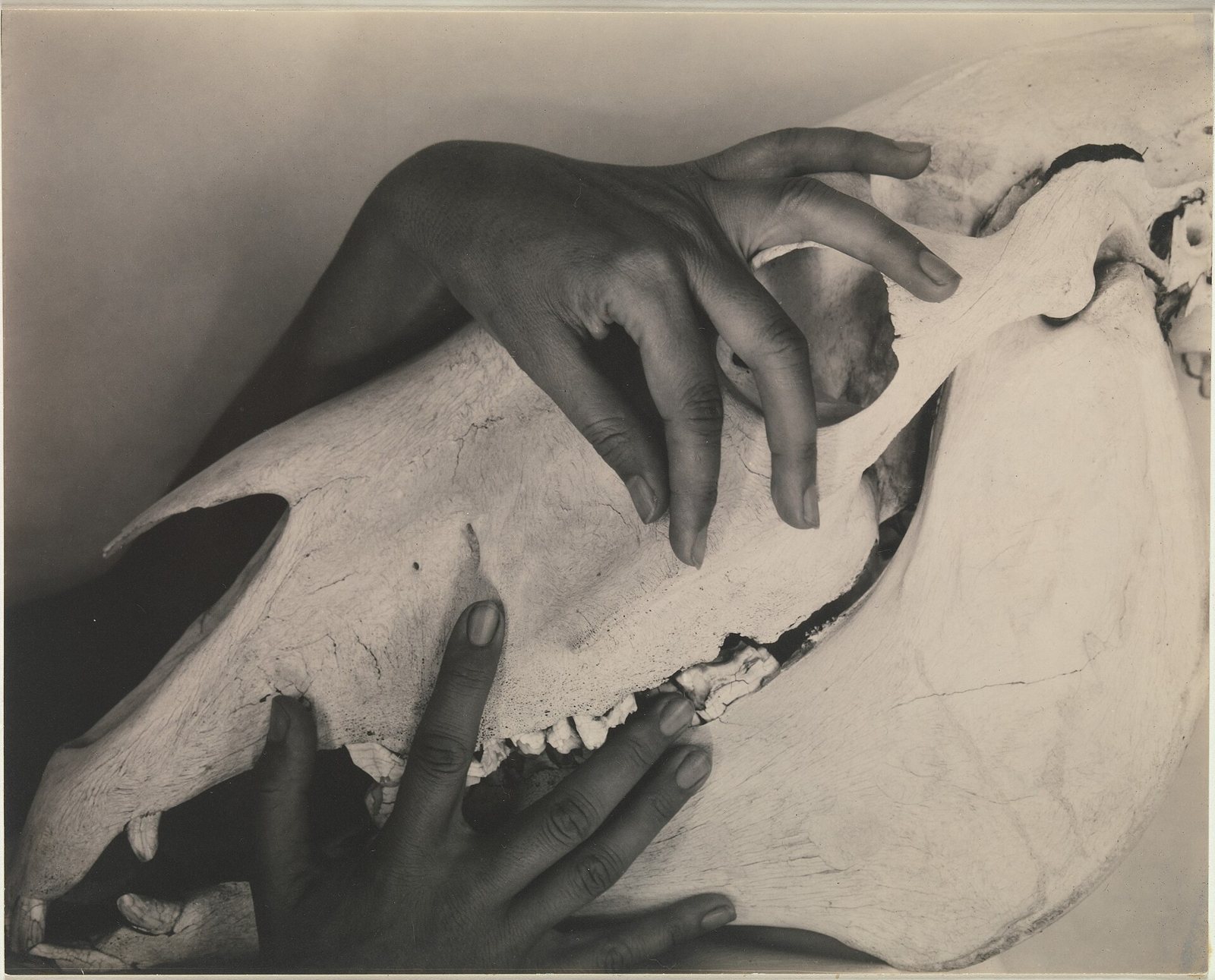
Not every bone stayed in New Mexico. The Met notes that some were shipped east to Lake George, New York, where she painted them in 1931. So, a few of the most famous desert paintings in the country were made beside a lake in upstate New York, from bones that had made the long trip east as freight.
Museums describe each skull by what the painting shows, a cow, a horse, a ram, a deer, and the descriptions below follow theirs. If you have read our story on what a cow skull means, you already know her best-known lines about the bones. This is the painting-by-painting version.
1931 at Lake George: the cow and the horse
*Cow's Skull: Red, White, and Blue* is oil on canvas, accession number 52.203, part of the Alfred Stieglitz Collection at the Metropolitan Museum of Art. The Met's 1984 Bulletin says it was probably painted at Lake George in the fall of 1931, using a cow skull shipped from New Mexico. A single bleached skull hangs flat in the middle of the canvas, held against vertical bands of red, white and blue. The Met draws attention to its jagged edges, worn surfaces and pale color, and calls it one of her earliest and most celebrated studies of a single bone set apart from its natural setting.
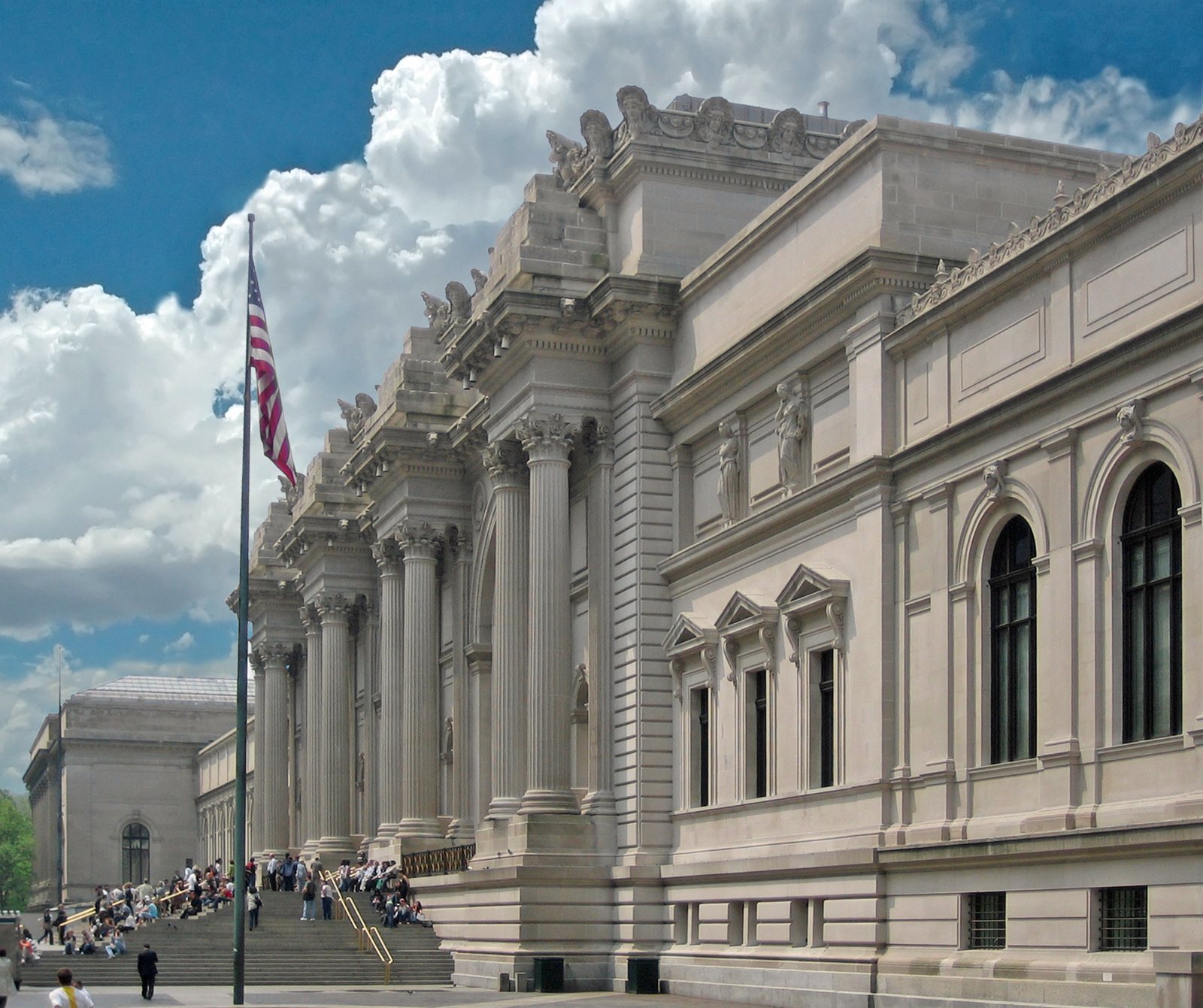
The museum's reading, given on its print page for the work, is that O'Keeffe saw bones as the enduring beauty of the desert and the strength of the American spirit, and the striped background carries that American note. For how the cow skull later became the emblem of the whole Southwest, from ranch fences to Santa Fe living rooms, the cow skull story covers the ground.
She did not paint just one skull that year. *Horse's Skull with Pink Rose*, 1931, is at the Los Angeles County Museum of Art, where it is listed on view. *Cow's Skull with Calico Roses*, also 1931, belongs to the Art Institute of Chicago. Bone and flower side by side turn up again and again in these years, and the long history of that pairing is in our story on skull and roses meaning. The horse skull has a story of its own in horse skull meaning.
The bones went on the wall almost at once. A National Gallery of Art photograph of her 1931 to 1932 exhibition at An American Place, Alfred Stieglitz's gallery in New York, shows skull paintings hanging there, *Horse's Skull with Pink Rose* among them.
Ram's Head, White Hollyhock-Hills, 1935
Four years later the skulls left the flat wall and went up into the sky. In *Ram's Head, White Hollyhock-Hills*, a ram's skull and a white hollyhock float above rolling New Mexico hills under a stormy sky. The painting belongs to the Brooklyn Museum, and its record on Access O'Keeffe gives it as oil on canvas, 30 by 36 inches, catalogue raisonné number 852.
It has carried several names over the years: "Ram's Head & Hollyhock, New Mexico," "Ram's Horn, White Hollyhock, Hills" and "Ram's Head, Hollyhock New Mexico." You will also see it listed as *Ram's Head, White Hollyhock and Little Hills*. The Brooklyn Museum's title, *Ram's Head, White Hollyhock-Hills*, is the one to search for if you want to find it in a collection. The ram skull as a symbol, from horns to tattoos, is in ram skull meaning.
Summer Days, 1936
*Summer Days* is the painting many people have in mind when they think of O'Keeffe's floating skulls. A deer skull with its antlers hangs above the desert, with red and yellow flowers below it. The Whitney Museum of American Art, which holds it, describes the skull as nearly life-sized and centered over the scene.
The Georgia O'Keeffe Museum record gives the work as oil on canvas, 36 1/8 by 30 1/8 inches, catalogue raisonné number 880. Its alternate titles, *Summer Days, Ghost Ranch, New Mexico* and *Summer Days, New Mexico*, tie it by name to the ranch country where she would soon have a house. If the deer skull is what drew you in, our story on deer skull meaning follows antlers and skulls through other traditions.
From the Faraway, Nearby, 1937
A year later she painted deer horns again. *From the Faraway, Nearby*, 1937, is at the Met, accession 59.204.2. The Georgia O'Keeffe Museum record describes deer horns and a skull form set in relation to distant country. Its alternate titles, *Deer's Horns Near Cameron* and *From the Faraway Nearby (Deer's Horns, Near Cameron)*, point to Cameron, Arizona, rather than New Mexico.
The title works almost as a caption for how these paintings are built: the bone close up and enormous, the hills small and far away. This is also the Met record that carries her 1939 words about wanting to paint the desert. The Met currently marks the painting as not on view, so it is one to check on before a trip.
The pelvis paintings of the 1940s
In the 1940s O'Keeffe turned from skulls to pelvis bones, part of what the Georgia O'Keeffe Museum treats as her continued study of bones as abstract forms. *Pelvis II*, 1944, is at the Met: oil on canvas, 40 by 30 inches, an animal pelvis against blue, with the central opening working as a circular window through which you see the background, according to its Access O'Keeffe record.
*Pelvis IV*, from the same year, is documented by the Georgia O'Keeffe Museum as oil on Masonite, 36 by 40 inches. The museum also documents *Pelvis Series, Red with Yellow*, 1945, an oil painting of 36 by 48 inches. Its conservation analysis of that painting places it in postwar New Mexico and in her own development as a painter, and it does not pin a single meaning on the series. The bone has become a frame for sky and color, and the museum leaves the reading open.
Ghost Ranch and Abiquiú, her New Mexico homes
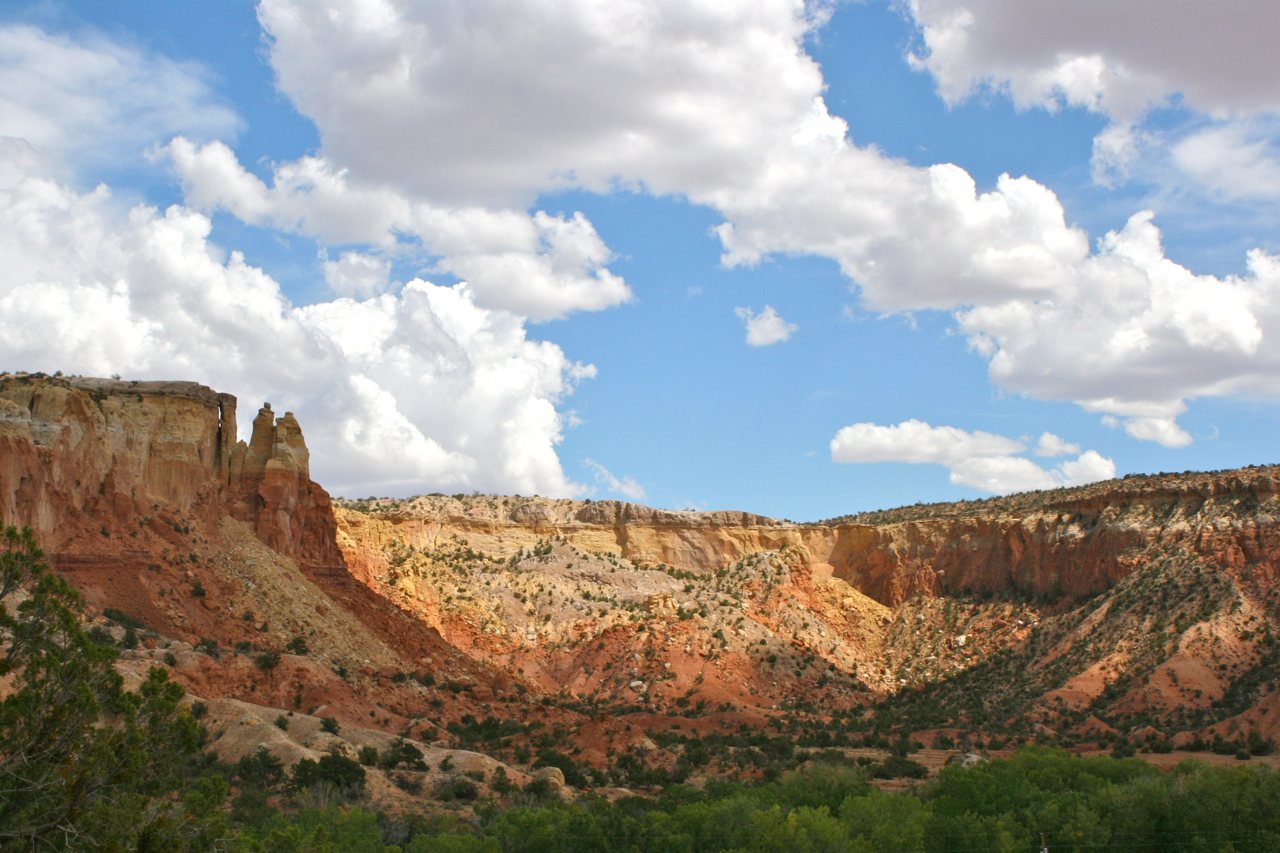
O'Keeffe bought her Ghost Ranch parcel in 1940. According to the Georgia O'Keeffe Museum, the summer house stands on twelve acres at the edge of a much larger 21,000-acre property, about twelve miles from Abiquiú, and it became a base for her work with the desert, bones, skulls and other natural forms. The museum owns the house, but it is not currently open to the public. Ghost Ranch itself is a separate retreat center with its own museum programs and tours of the country she painted.
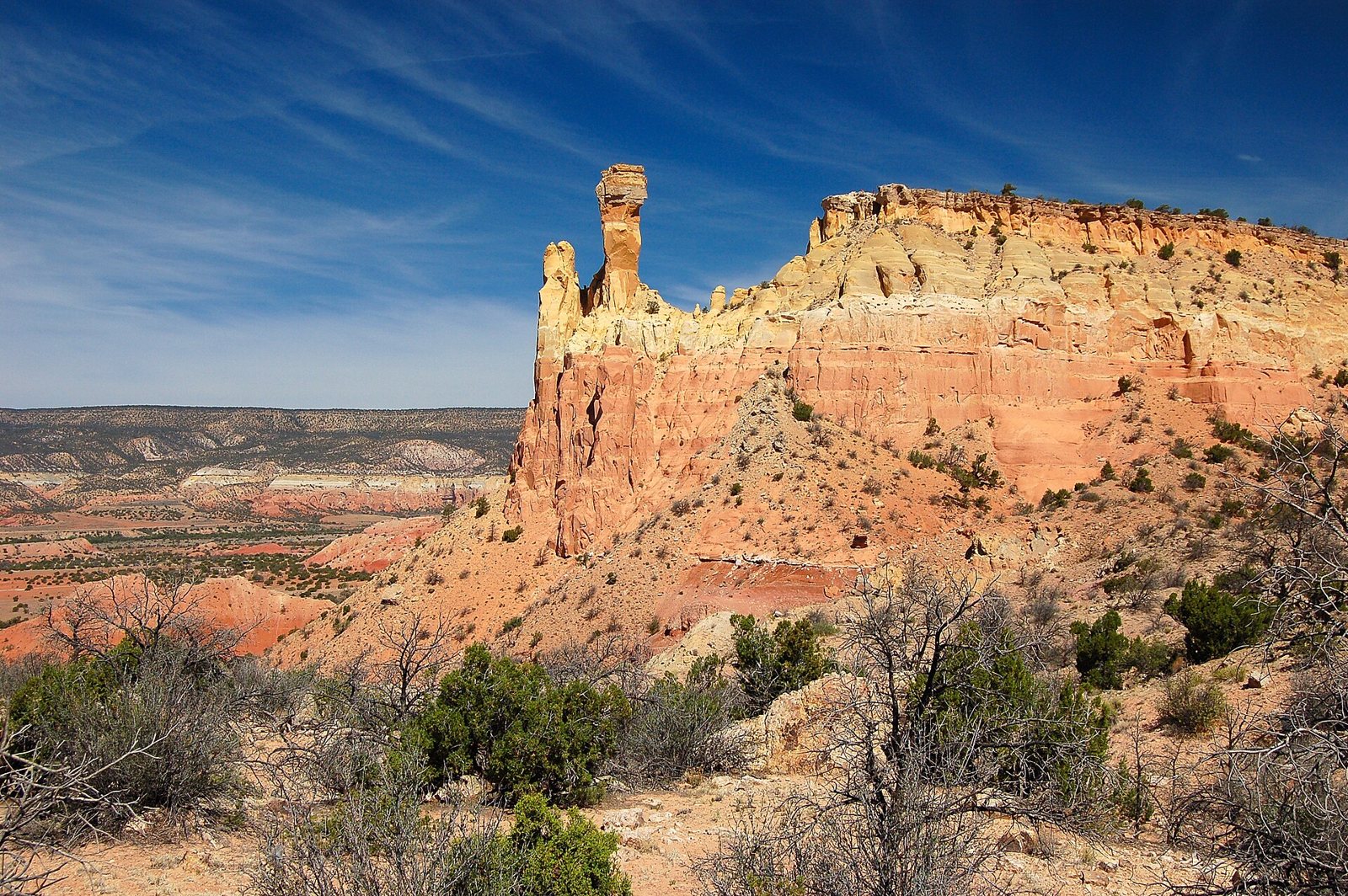
Her other home is the one you can visit. The Abiquiú Home and Studio is open for guided tours by advance reservation. The museum's 2026 visitor page gives the tour season as March through November, with tours starting at the Welcome Center at 21120 US-84, Abiquiú, New Mexico. Book through the museum and confirm dates and times with it before you travel.
O'Keeffe and the bones, 1929 to 1949
Tap or hover a step to follow the order.
1929
O'Keeffe makes her first extended trip to New Mexico.
1931
She paints Cow's Skull: Red, White, and Blue and other horse and cow skull works.
1935
She paints Ram's Head, White Hollyhock-Hills.
1936
She paints Summer Days.
1937
She paints From the Faraway, Nearby.
1940
She buys her Ghost Ranch parcel.
1944
She paints Pelvis II and Pelvis IV.
1949
She settles permanently in New Mexico.
Where to see the skull paintings
Most of the skull and bone paintings are in museum collections you can visit, and New York alone has five of them across three museums:
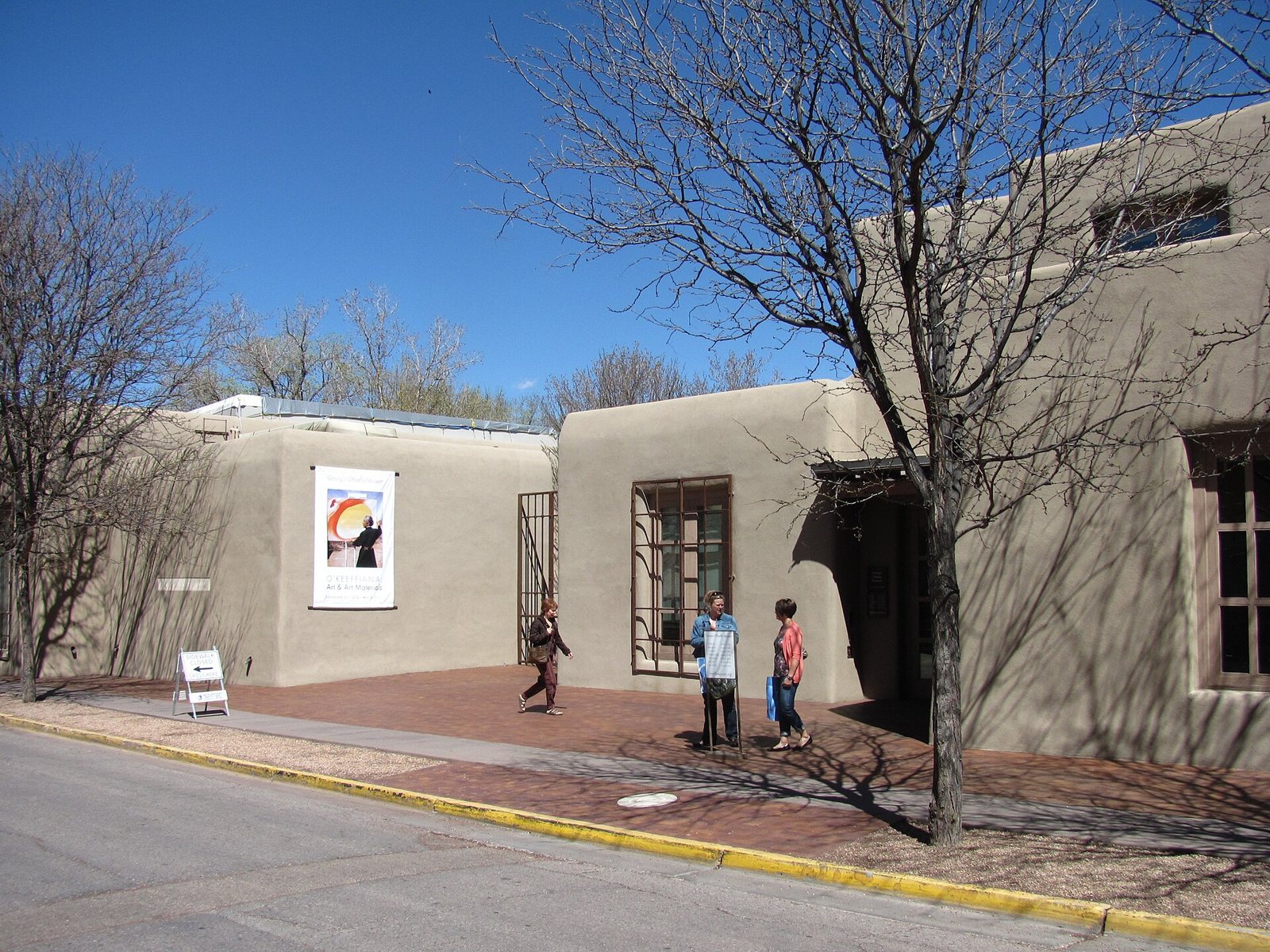
- The Metropolitan Museum of Art, New York: *Cow's Skull: Red, White, and Blue* (1931), *From the Faraway, Nearby* (1937, currently marked not on view) and *Pelvis II* (1944).
- Brooklyn Museum, New York: *Ram's Head, White Hollyhock-Hills* (1935).
- Whitney Museum of American Art, New York: *Summer Days* (1936).
- Los Angeles County Museum of Art: *Horse's Skull with Pink Rose* (1931), currently listed on view.
- Art Institute of Chicago: *Cow's Skull with Calico Roses* (1931).
- Georgia O'Keeffe Museum, Santa Fe: changing selections from its collection, and the online Access O'Keeffe catalogue for more of her bone paintings.
Tap or hover a row to highlight it.
| Painting | Year | Museum | Details |
|---|---|---|---|
| PaintingCow's Skull: Red, White, and Blue | Year1931 | MuseumThe Metropolitan Museum of Art | DetailsOil on canvas, accession 52.203, Alfred Stieglitz Collection |
| PaintingHorse's Skull with Pink Rose | Year1931 | MuseumLos Angeles County Museum of Art | DetailsListed on view |
| PaintingCow's Skull with Calico Roses | Year1931 | MuseumArt Institute of Chicago | DetailsPainted the same year as Cow's Skull: Red, White, and Blue |
| PaintingRam's Head, White Hollyhock-Hills | Year1935 | MuseumBrooklyn Museum | DetailsOil on canvas, 30 by 36 inches, catalogue raisonné 852 |
| PaintingSummer Days | Year1936 | MuseumWhitney Museum of American Art | DetailsOil on canvas, 36 1/8 by 30 1/8 inches, catalogue raisonné 880 |
| PaintingFrom the Faraway, Nearby | Year1937 | MuseumThe Metropolitan Museum of Art | DetailsAccession 59.204.2, marked not on view |
| PaintingPelvis II | Year1944 | MuseumThe Metropolitan Museum of Art | DetailsOil on canvas, 40 by 30 inches |
| PaintingPelvis IV | Year1944 | MuseumDocumented by the Georgia O'Keeffe Museum | DetailsOil on Masonite, 36 by 40 inches |
| PaintingPelvis Series, Red with Yellow | Year1945 | MuseumDocumented by the Georgia O'Keeffe Museum | DetailsOil, 36 by 48 inches |
Display status changes. Confirm a painting's current gallery status with the museum that holds it before you plan a visit around it.
How well do you know O'Keeffe's skulls?
Answer every question to check.
Questions about O'Keeffe's skulls
A few questions come up again and again about these paintings.
Why did Georgia O'Keeffe paint skulls?
She saw bleached animal bones as concentrated symbols of the New Mexico desert, a way to paint country she had wanted to paint and had not known how to. The Met points to their weathered surfaces, jagged edges and pale color as the qualities she found powerful. The skulls also let her float a single form between still life, scenery and abstraction.
What is Georgia O'Keeffe's most famous skull painting?
*Cow's Skull: Red, White, and Blue*, 1931, at the Metropolitan Museum of Art is the best known. The Met counts it among her earliest and most celebrated studies of a single bone set apart from its natural setting. It came to the museum as part of the Alfred Stieglitz Collection.
What do the skulls symbolize?
For the 1931 cow skull, the Met reads the bone as the enduring beauty of the desert and the strength of the American spirit. Across the whole series there is no single fixed meaning: the Georgia O'Keeffe Museum's analysis of the 1945 pelvis painting does not reduce the series to one fixed meaning.
Are the skulls real animal bones?
Yes, she painted real bleached bones she collected in New Mexico, and some were shipped to Lake George, New York, where she painted them in 1931. Museums name the animal by what each painting shows, such as the cow, horse, ram or deer.
Can I visit her house at Ghost Ranch?
Not at present: the Georgia O'Keeffe Museum owns the Ghost Ranch house, and it is not currently open to the public. Her Abiquiú Home and Studio, about twelve miles away, offers guided tours by advance reservation through the museum.
More skulls in paint
O'Keeffe's bones look quite different beside the skulls other painters chose. Holbein, Van Gogh, Warhol and Basquiat share the room in famous skull art, and Cézanne's studio skulls in Aix-en-Provence get their own story in Cézanne's skulls. For the cow skull's life after O'Keeffe, on ranch gates, walls and skin, go back to cow skull meaning.
Terms in this story
Tap a term to see what it means.
Catalogue raisonné. A complete, numbered scholarly list of an artist's works. Ram's Head, White Hollyhock-Hills is number 852 in O'Keeffe's, and Summer Days is number 880.
---