

No. 111
Basquiat's Untitled (Skull), 1981: What the Skull Head Shows and Means
The painting most people call Basquiat's skull is Jean-Michel Basquiat's *Untitled*, 1981, a huge head with an exposed jaw and teeth, painted in acrylic and oilstick on a canvas 81 by 69 1/4 inches. It belongs to The Broad in Los Angeles, which describes the head as a possible self-portrait that exists between life and death.
The $110.5 million Basquiat is a different painting. Sotheby's sold *Untitled*, 1982, in New York on May 18, 2017, to the Japanese entrepreneur Yusaku Maezawa. Two works, both untitled, both enormous heads, one year apart: it is easy to blur them, and the rest of this story keeps them side by side so you can tell which is which.
What the 1981 painting shows
Stand in front of the 1981 canvas and the head fills almost all of it. The Broad describes exposed jaw and teeth, sunken eyes, loose lines, vivid colors and layered marks, so that the face seems to be built and taken apart at the same time. It is not a clean, bare skull. There are eyes and hair as well as teeth and jaw, which is why people looking at it often say it feels like a living face and a skull at once. The Broad's phrase for this is a head that exists between life and death.
The museum's title is simply *Untitled*. "Skull" is the name the painting picked up along the way, and it is the name you will see on posters and in conversation. According to the museum's Basquiat guide, the painting was shown in Basquiat's first solo gallery exhibition in New York. Our famous skull art story gives the short version of this painting among other skull works; here is the longer one.
A book of anatomy after an accident
Basquiat's interest in the inside of the body has a story attached to it. The Estate's chronology, as reported by The History of Art, records that after a car accident and a stay in hospital in 1969, his mother gave him a copy of *Gray's Anatomy*, the medical textbook of the human body.
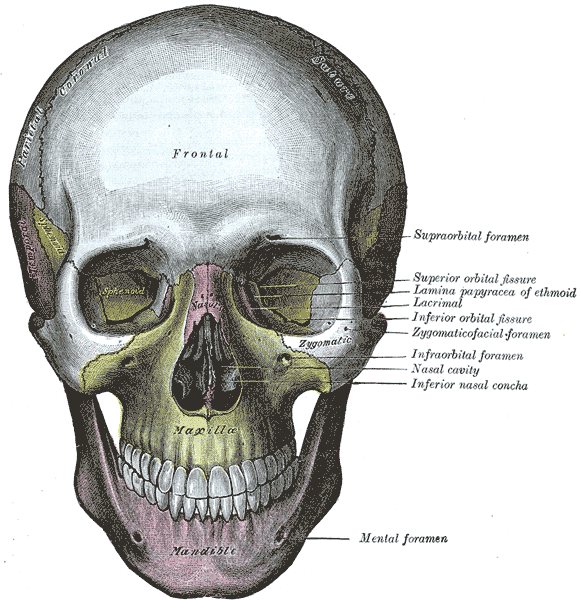
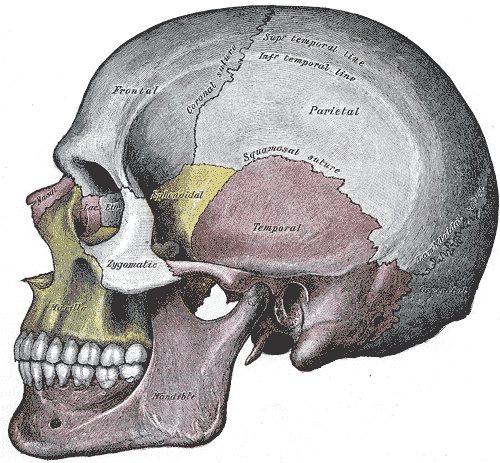
That gift helps explain his later interest in anatomical imagery. It does not mean the 1981 head copies any particular page. The painted skull has no matching plate or model named by The Broad or in the Estate-linked account. If you want to compare his head with the real structure underneath a face, our story on human skull facts walks through the bones.
Heads everywhere in 1981
The skull head did not arrive alone. The National Gallery of Victoria records that in 1981 Basquiat began filling his paintings and drawings with oversized heads. The Broad's canvas is one of the most famous of them, but it belongs to a whole run of faces that year.
Curator and art historian Fred Hoffman reads these heads as places where outer appearance meets inner processes: seeing, hearing, smelling and knowing. Read that way, the 1981 painting opens up. The open jaw, the hollow eyes and the marks scrawled across the skull look less like a portrait of what someone looks like and more like a portrait of what is going on inside a head.
The crown that travels with the heads
If the heads are one of Basquiat's signatures, the three-pointed crown is the other. Curator Megan Kincaid and director Franklin Sirmans of the Pérez Art Museum Miami describe the crown as a recurring symbol across his paintings, drawings and prints. They connect it with recognition, excellence, leadership and resilience, and with the difficulties that come with success. Basquiat crowned Black artists, musicians, athletes, writers and historical figures.
Curator Dieter Buchhart, quoted by The New York Times in an article reproduced by Nahmad Contemporary, puts it more loosely: ten people may give the crown ten different meanings. He ties it to Basquiat's phrase "royalty, heroism and the streets" and to the way he used crowns to mark the figures and subjects he thought mattered. A crowned skull has a story of its own, told in skull with crown meaning.
What the critics see in the skull head
Basquiat did not leave one explanation of the 1981 head, so its meaning comes from the people who have spent years with his work. Their readings overlap without being the same, and they are worth hearing one at a time.
The Broad presents the head as a possible self-portrait suspended between life and death, with a subdued face and intense inner energy. The museum also links it to African mask forms, to identity and to the pressure of sudden commercial success.
Fred Hoffman, as above, sees his heads as the meeting point of visible identity and inner mental life. Writing about the crown, the critic Thomas McEvilley described it as "a royal selfhood somehow lost but dimly remembered, overlaid by a voodoo mask," as the Los Angeles Times reported in 1993.
The same article gives the reading of bell hooks, who wrote her name in lowercase. She read the crown as a critique of Basquiat's own desire for fame, and the skeletal quality of some of his Black figures as a sign of the violent erasure of Black people, their culture and their traditions. That reading turns the skull from a private self-portrait into a statement about history, and it sits beside The Broad's reading rather than replacing it.
For the wider range of things a skull can stand for, from mortality to warning, our page on skull symbolism covers the ground.
The other head: Untitled, 1982, and the $110.5 million sale
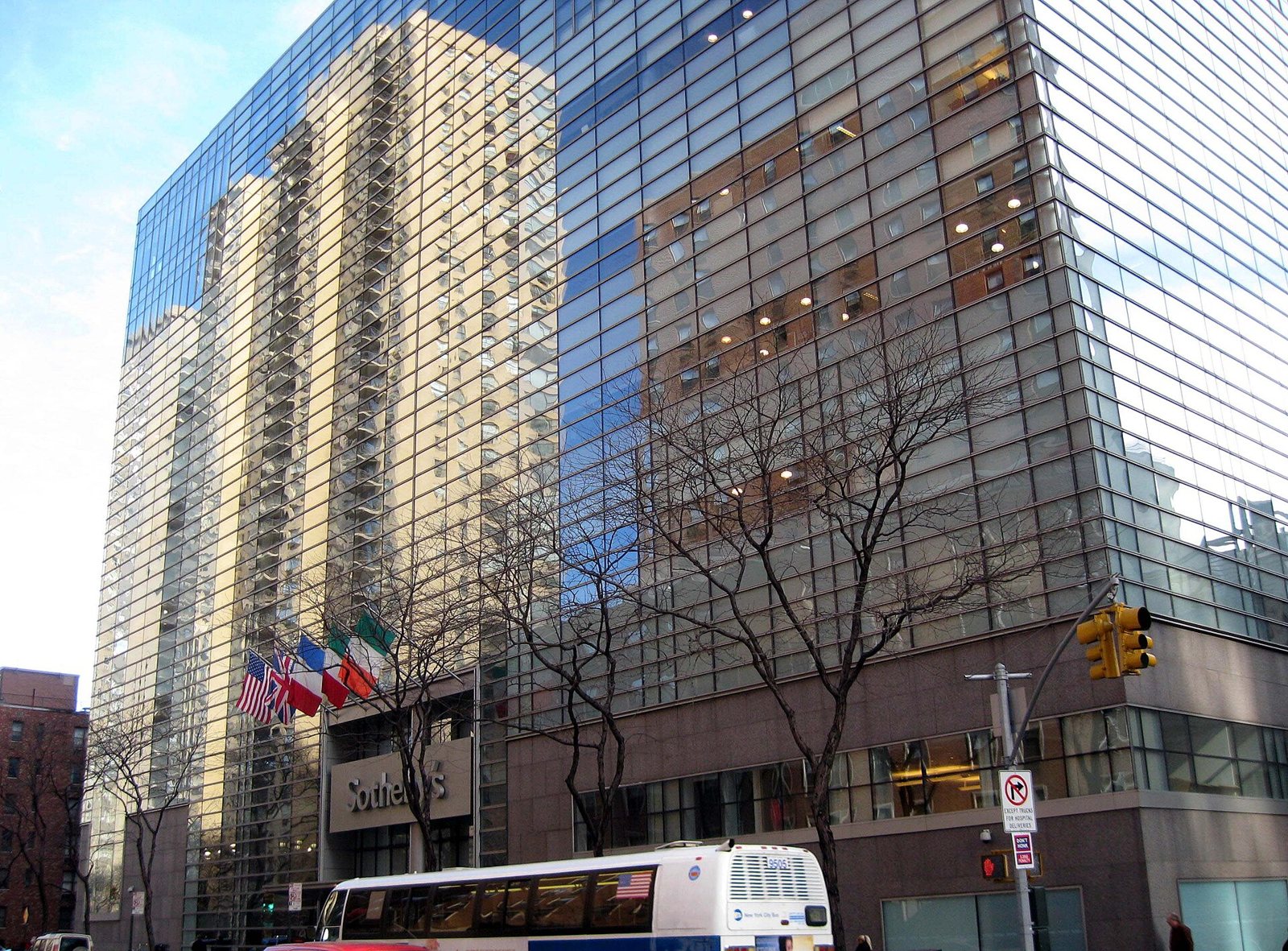
The record-breaking Basquiat is the 1982 *Untitled*, not The Broad's painting. Sotheby's sold it in New York on May 18, 2017, to Yusaku Maezawa for $110.5 million. Sotheby's described the result as the highest auction price for an American artist at that time, and said the painting led a $319 million Contemporary Art Evening Sale. Before the sale, Sotheby's records, the 1982 painting was on display at the Barbican in London in 2017.
So, if a headline about the $110.5 million skull brought you here, it was talking about the 1982 head. The 1981 head stays in The Broad's collection in Los Angeles. Skulls and very large sums have met before: Damien Hirst's diamond-covered cast is told in Hirst's diamond skull.
Tap or hover a row to highlight it.
| Detail | Untitled, 1981 | Untitled, 1982 |
|---|---|---|
| DetailOften called | Untitled, 1981Untitled (Skull) | Untitled, 1982The $110.5 million Basquiat |
| DetailWhere it is | Untitled, 1981The Broad, Los Angeles | Untitled, 1982Bought by Yusaku Maezawa at Sotheby's New York, May 18, 2017 |
| DetailPrice | Untitled, 1981Part of The Broad's collection | Untitled, 1982$110.5 million |
| DetailShown | Untitled, 1981Basquiat's first solo gallery exhibition in New York | Untitled, 1982The Barbican, London, in 2017 before the sale |
Basquiat's skull heads, from 1969 to 2017
Tap or hover a step to follow the order.
1969
After a car accident and a stay in hospital, Basquiat's mother gives him a copy of Gray's Anatomy, according to the Estate's chronology as reported.
1981
Basquiat paints Untitled, the head later called Untitled (Skull), in acrylic and oilstick on canvas.
1981
He begins filling paintings and drawings with oversized heads, according to the National Gallery of Victoria.
May 18, 2017
Sotheby's New York sells a separate Untitled, 1982, to Yusaku Maezawa for $110.5 million.
Where to see Basquiat's heads
The 1981 head is in The Broad's collection at 221 S. Grand Avenue in Los Angeles. Not every work in a collection is on the wall every day, so confirm with The Broad that the painting is on view before you plan a trip around it.
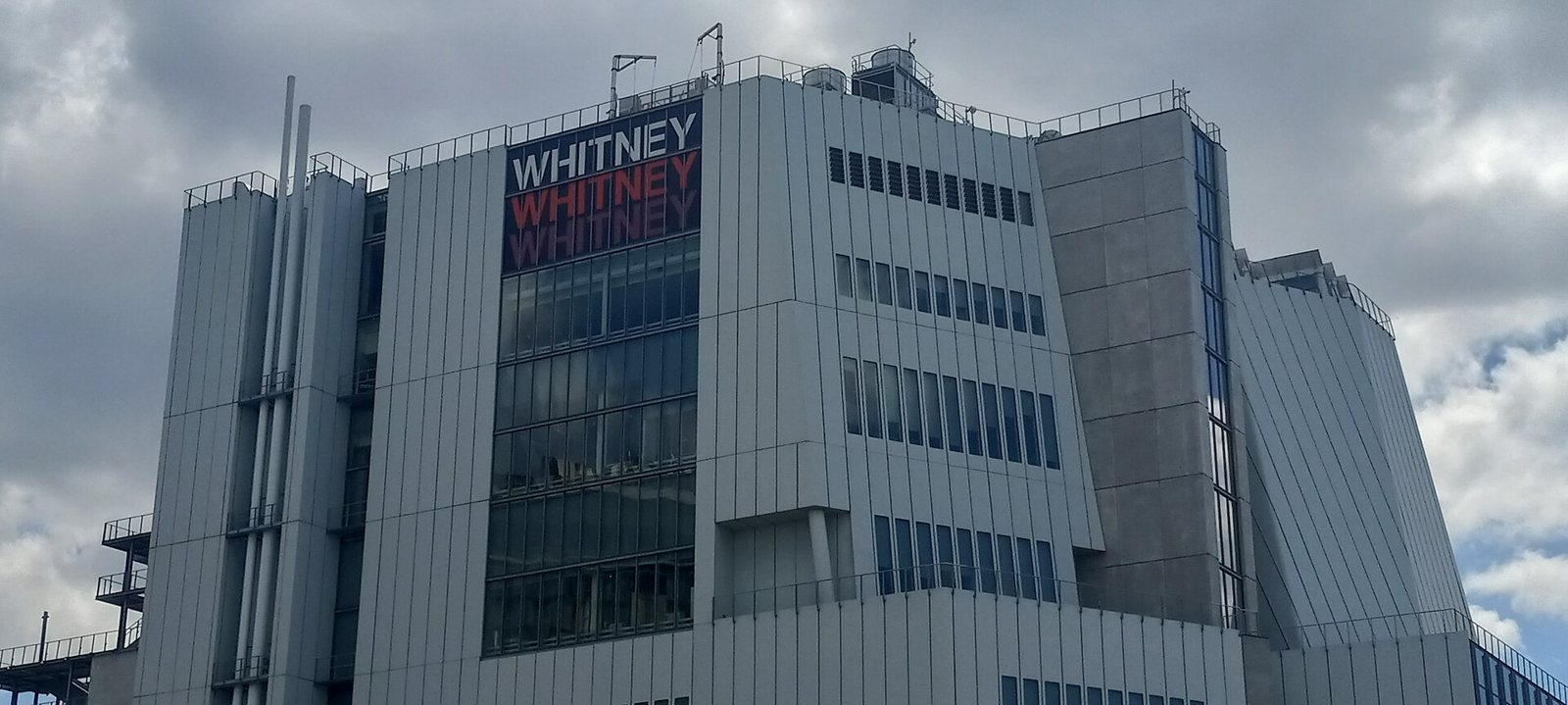
If you want to see more of his work, the Basquiat Estate lists public collections that hold it, among them the Whitney Museum of American Art in New York, the Brooklyn Museum, The Menil Collection in Houston, The Museum of Modern Art in New York, the Museum of Contemporary Art in Los Angeles and The Metropolitan Museum of Art. The Met has its own *Untitled* of 1981, a third work again and not the skull at The Broad, and its collection record currently marks it not on view.
Basquiat's skull heads quiz
Answer every question to check.
Questions about Basquiat's skull
These are the questions that come up most about the painting.
What does Basquiat's skull mean?
The Broad describes the 1981 head as a possible self-portrait between life and death, and critics read it through identity, mortality, inner life and the pressure of sudden fame. Basquiat left no single answer. Fred Hoffman, Thomas McEvilley and bell hooks each offer related but different readings.
How much did the Basquiat skull sell for?
The $110.5 million sale was a different painting, *Untitled*, 1982, sold at Sotheby's New York on May 18, 2017. The 1981 head people call *Untitled (Skull)* is part of The Broad's collection in Los Angeles.
Is Basquiat's skull a self-portrait?
The Broad calls it a possible self-portrait, which is the museum's reading rather than a statement from Basquiat. The museum ties that reading to identity and to the pressure of his sudden commercial success.
Is the painting based on a real skull?
It is a painted head, and neither The Broad nor the Estate-linked account ties it to a particular skull or medical plate. The likely background is the copy of Gray's Anatomy his mother gave him after his 1969 car accident, which helps explain his later interest in anatomical imagery.
More skull artists
Basquiat's heads make more sense beside the other painters who put skulls at the center of their work, from Holbein to Hirst, in famous skull art. His New York contemporary Andy Warhol made his own run of skull paintings in 1976, told in Warhol's skull paintings.
Terms in this story
Tap a term to see what it means.
Oilstick. A stick of oil paint that is drawn with like a crayon. Basquiat used it with acrylic on the 1981 head at The Broad.
---