

No. 125
Andy Warhol Skull Paintings: The 1976 Skulls, What They Mean and Where to See Them
Andy Warhol made his *Skulls* in 1976 at the Factory, his New York studio. Every one starts from a single photograph of a human skull taken by his assistant Ronnie Cutrone, screen-printed over brightly painted grounds, and Warhol turned it into paintings of several sizes and a four-print portfolio (National Galleries of Scotland).
The skull belongs to the old memento mori tradition, an image that asks the viewer to remember death. Art historians including Hal Foster and Vincent Fremont have also linked it to Warhol's near-fatal shooting in 1968, though that link is their interpretation; Warhol himself never said so.
You can find Warhol skulls in the collections of The Andy Warhol Museum in Pittsburgh, the National Galleries of Scotland and Tate, Museum Brandhorst in Munich, SFMOMA and MoMA, although several are listed as not on view. Below are the photograph, the formats, the meanings, the museums and what the prints fetch at auction.
One photograph, taken in the Factory
The image began as a studio still life. Ronnie Cutrone set a human skull on a table at the Factory and photographed it while changing the light, so that it threw dramatic shadows across the tabletop (National Galleries of Scotland). That lighting is why the skull looks so theatrical in every version that followed.
Warhol then painted the canvas with flat grounds of acrylic or synthetic polymer paint and screen-printed the photograph over them. Silkscreen is a printing method that pushes ink through a fine mesh screen, so the same photographic image can be laid down again and again. Museum and auction descriptions record red, yellow, blue, purple, green and black among the contrasting color fields across the series. A skull floating on a sunny yellow ground looks almost cheerful.
The many forms of one skull
People often speak of "the" Warhol skull, but the one photograph turns up in quite a few works, and they are not all the same size or kind.

The National Galleries of Scotland, which shares the work with Tate (accession AR00609), records a *Skulls* of 1976 made of six canvases, each 38.30 by 48.30 cm, hung in a grid three rows high and two across. At the other end of the scale, Christie's records a single *Skull* painted in 1976 that measures 72 by 80 inches, with a provenance through The Andy Warhol Museum and the Dia Art Foundation. It was exhibited at Galerie Heiner Friedrich in Cologne in November and December 1977 (Christie's).
The prints come next. The portfolio *Skulls*, also 1976, is a set of four color screenprints, each about 30 by 40 inches (76.2 by 101.6 cm). It is catalogued as Feldman and Schellmann II.157 to 160, printed on Strathmore Bristol paper and published by Andy Warhol Enterprises, Inc., in an edition of 50 plus 10 artist's proofs (Phillips). If you saw a bright Warhol skull on a sheet of paper rather than canvas, this portfolio is the likely family it belongs to.
The skull kept going after 1976. MoMA holds *Untitled (Skull)*, 1976, a drawing in pencil on paper (MoMA). SFMOMA holds a smaller *Skull* of 1977, 15 by 19 inches (SFMOMA). In 1978 Warhol put a skull into his *Self-Portrait with Skull*, now at The Andy Warhol Museum (The Andy Warhol Museum). His mid-1970s skull photographs were also preserved through the Andy Warhol Foundation's Photographic Legacy Project and given to university and museum collections.
What the skull means, in the words of the people around it
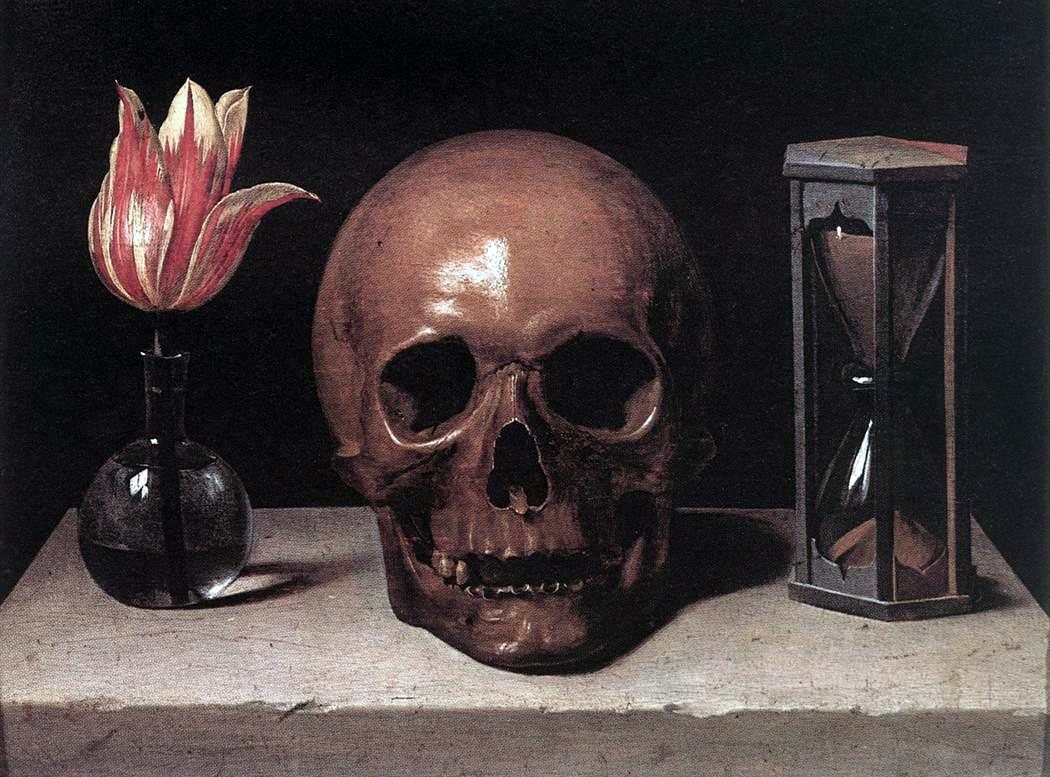
The plainest meaning is the oldest one. A skull on its own is a memento mori, an image of mortality with a long Western history, and the National Galleries of Scotland points to the tension Warhol builds between bright, cheerful color and the skull's association with death.
Ronnie Cutrone, who took the photograph, put it more simply. Painting a skull, he said, was "like doing the portrait of everybody in the world" (Christie's). An anonymous skull, in other words, stands in for every sitter at once.
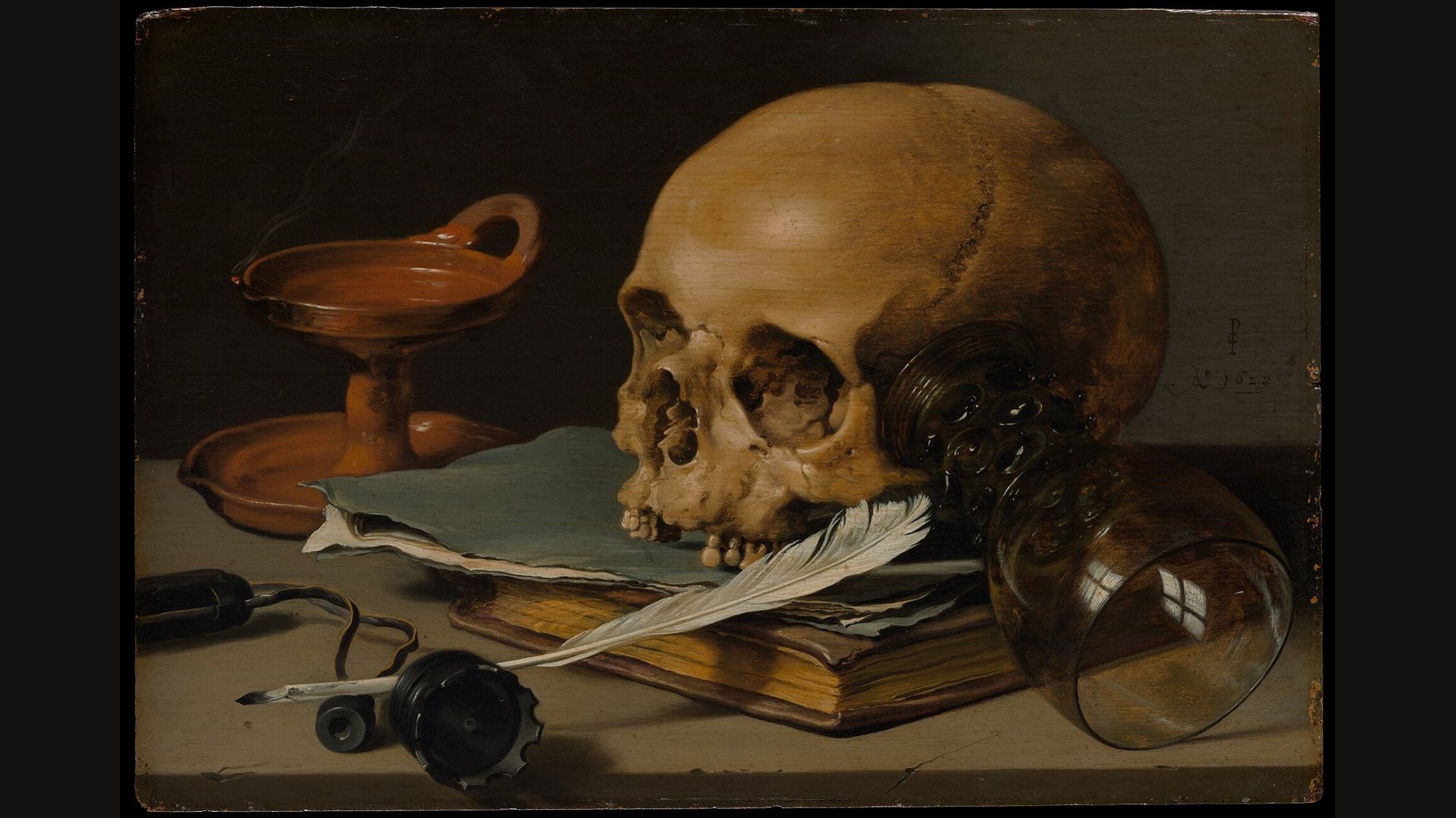
The curator Arthur K. Wheelock compared Warhol's skull with the skulls of Dutch still-life painting, which usually sit among books, glassware and other luxury objects. Warhol's skull has nothing around it, and Wheelock called it a stark confrontation with "the inevitability and mystery of death." The older tradition he had in mind is the subject of our story on vanitas paintings.
Warhol also wrote about death. In *The Philosophy of Andy Warhol* he put it this way: "I don't believe in it, because you're not around to know that it's happened." It is a dry line, and it sits oddly well beside a skull painted in yellow.
The 1968 shooting and the skull
On June 3, 1968, in New York, Valerie Solanas shot Andy Warhol, and he was critically injured. He survived.
The National Galleries of Scotland reports that the art historians Hal Foster and Vincent Fremont linked Warhol's skull motif to that experience, while noting that the connection is not proven as Warhol's own intention. It is a reasonable reading of a man who came close to death painting a skull eight years later, and it is best held as exactly that: a reading by historians.
Warhol's skull, from 1968 to 2026
Tap or hover a step to follow the order.
June 3, 1968
Valerie Solanas shoots Warhol in New York, and he is critically injured.
1976
The Skulls paintings and four-print portfolio are made at the Factory, from Ronnie Cutrone's photograph.
November to December 1977
A large Skull is exhibited at Galerie Heiner Friedrich, Cologne.
1978
Warhol makes Self-Portrait with Skull, now at The Andy Warhol Museum.
2018
A complete Skulls portfolio sells at Phillips for £95,250.
June 5 and 6, 2025
A complete set sells at Phillips for £69,850.
June 4, 2026
A complete set sells at Phillips for £96,750.
Where to see a Warhol skull
The best-known homes for Warhol's skulls are museums, though not all of them keep a skull on the wall at any given time.

The Andy Warhol Museum in Pittsburgh holds a *Skull* of 1976, accession 2002.4.24, along with the 1978 *Self-Portrait with Skull* (The Andy Warhol Museum). The six-canvas *Skulls* shared by Tate and the National Galleries of Scotland is listed as in storage. Museum Brandhorst in Munich has a 1976 *Skull* in collage and screenprint, inventory UAB 549, not currently displayed (Museum Brandhorst). SFMOMA's 1977 *Skull* and MoMA's 1976 pencil drawing are both listed as not currently on view.
Display changes with rehangs and loans, so check the museum's own collection page before you travel. If you do find one on view at The Warhol Museum, its galleries allow private, noncommercial photography.
Tap or hover a row to highlight it.
| Work | Date | Format | Collection | Status or number |
|---|---|---|---|---|
| WorkSkull | Date1976 | FormatPainting | CollectionThe Andy Warhol Museum, Pittsburgh | Status or numberAccession 2002.4.24 |
| WorkSelf-Portrait with Skull | Date1978 | FormatPainting | CollectionThe Andy Warhol Museum, Pittsburgh | Status or numberHeld by the museum |
| WorkSkulls | Date1976 | FormatSix canvases | CollectionTate and National Galleries of Scotland | Status or numberIn storage |
| WorkSkull | Date1976 | FormatCollage and screenprint | CollectionMuseum Brandhorst, Munich | Status or numberNot currently displayed |
| WorkSkull | Date1977 | Format15 by 19 inches | CollectionSFMOMA | Status or numberNot currently on view |
| WorkUntitled (Skull) | Date1976 | FormatPencil on paper | CollectionMoMA | Status or numberNot currently on view |
What the Skulls prints sell for
The prices most people meet are for the four-print portfolio, and Phillips publishes them. A complete *Skulls* set sold for £95,250 at Phillips in 2018 (Phillips), for £69,850 on June 5 and 6, 2025 (Phillips), and for £96,750 on June 4, 2026 (Phillips).
Those are results for the complete print set, not for the paintings, and they move up and down from sale to sale. The large canvases are a different market altogether. For the price of a particular painting, ask the auction house that sold it.
Warhol's skull beside Basquiat's and Hirst's
Warhol, Basquiat and Hirst all made famous skulls, and putting them side by side shows how differently it can be used.
Warhol's is a mechanically repeated, theatrically lit still life: one anonymous skull turned into a Pop image through silkscreen, repetition and intense color. Jean-Michel Basquiat's skull-like heads, especially his *Untitled* of 1982, are made with acrylic, spray paint and oilstick, full of gestural marks, words and anatomy, with references to Black culture, street life and power (Seattle Art Museum). That 1982 painting is a different work from Basquiat's 1981 *Untitled* at The Broad, and both are in our story on Basquiat's skulls.
The two men knew each other well. Basquiat and Warhol became close collaborators in New York in the 1980s and made more than 100 paintings together (The Andy Warhol Museum).
Damien Hirst's *For the Love of God*, 2007, takes the skull somewhere else again, covering it in platinum and diamonds and pointing it toward luxury, spectacle and the value system of the art market. Its full story is in Hirst's diamond skull. Put simply, Warhol's skull is about repetition and mass imagery, Basquiat's about identity and social pressure, and Hirst's about luxury and price.
How well do you know Warhol's Skulls?
Answer every question to check.
Questions about Warhol's skulls
Short answers to the questions that come up most.
Why did Andy Warhol paint skulls?
Warhol's skulls are read as a memento mori, an image of mortality, set against bright Pop color. Historians including Hal Foster and Vincent Fremont also connect them to his near-fatal shooting in 1968, but Warhol never gave that as his reason for the series.
When did Warhol paint the Skulls series?
Warhol made the main *Skulls* paintings and the four-print portfolio in 1976 at the Factory in New York. Related works followed, including a 1977 *Skull* at SFMOMA and the 1978 *Self-Portrait with Skull*.
How many skulls did Andy Warhol paint?
He made the skull in many works and formats rather than one fixed set. They include the six-canvas *Skulls*, large single canvases such as the 72 by 80 inch *Skull*, smaller canvases like SFMOMA's 1977 work and the four-print portfolio; the Andy Warhol Foundation's catalogue raisonné is the place to trace individual prints.
More skulls in art
Warhol's skull is the newest of a very old line. For the skull Holbein hid in a portrait in 1533, read about The Ambassadors skull, and for a painter who kept skulls in his studio near the end of his life, Cézanne's skull paintings. The wider tour is in famous skull art, the idea behind it all in what memento mori means, and the many other meanings of the image in skull symbolism.
Terms in this story
Tap a term to see what it means.
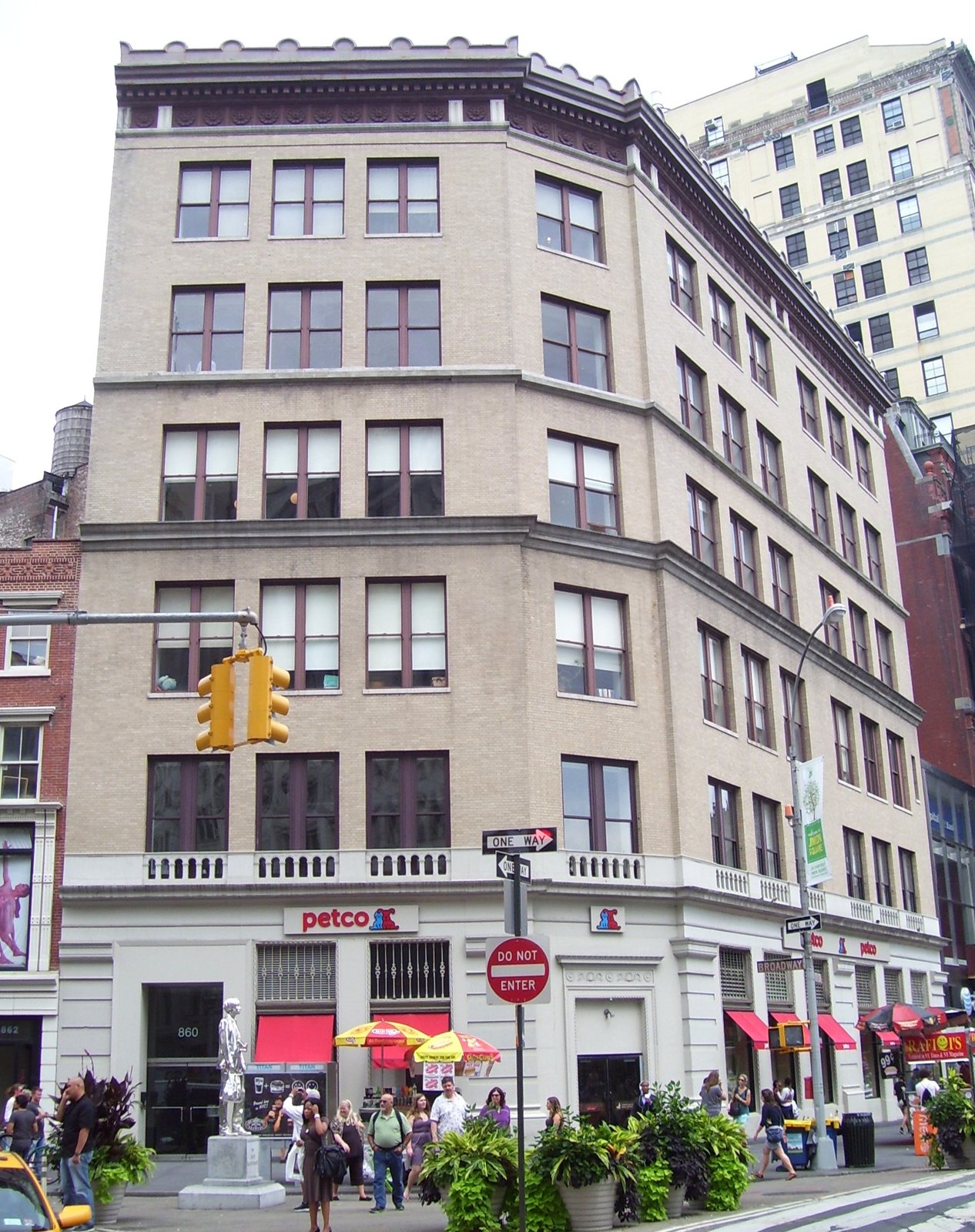
The Factory. Andy Warhol's studio in New York, where Ronnie Cutrone photographed the skull used for the 1976 Skulls.
---