No. 151
Horse Skull Meaning: The Mari Lwyd, Hidden Floor Skulls and O'Keeffe's Desert
A horse skull has no single meaning. What it stands for depends on who used it, where and when. In South Wales it is the Mari Lwyd, the "Grey Mare" carried from door to door at Christmas (Museum Wales). In parts of Ireland and Britain, real horse skulls were hidden under floors and hearths, to make the dancing ring out or, in some accounts, to protect the house (JSTOR Daily).
On the steppe and in Viking Age Scandinavia, whole horses went into the graves of the people who rode them. In American art, Georgia O'Keeffe painted *Horse's Skull with Pink Rose* in 1931, a work LACMA calls a modern vanitas. And on skin today, tattoo guides usually read a horse skull as strength and freedom joined with mortality and resilience.
So, if a horse skull caught your eye on a wall, in a tattoo shop or in a photo of a Welsh winter night, here is where each of those meanings comes from, one place at a time.
The Grey Mare at the door
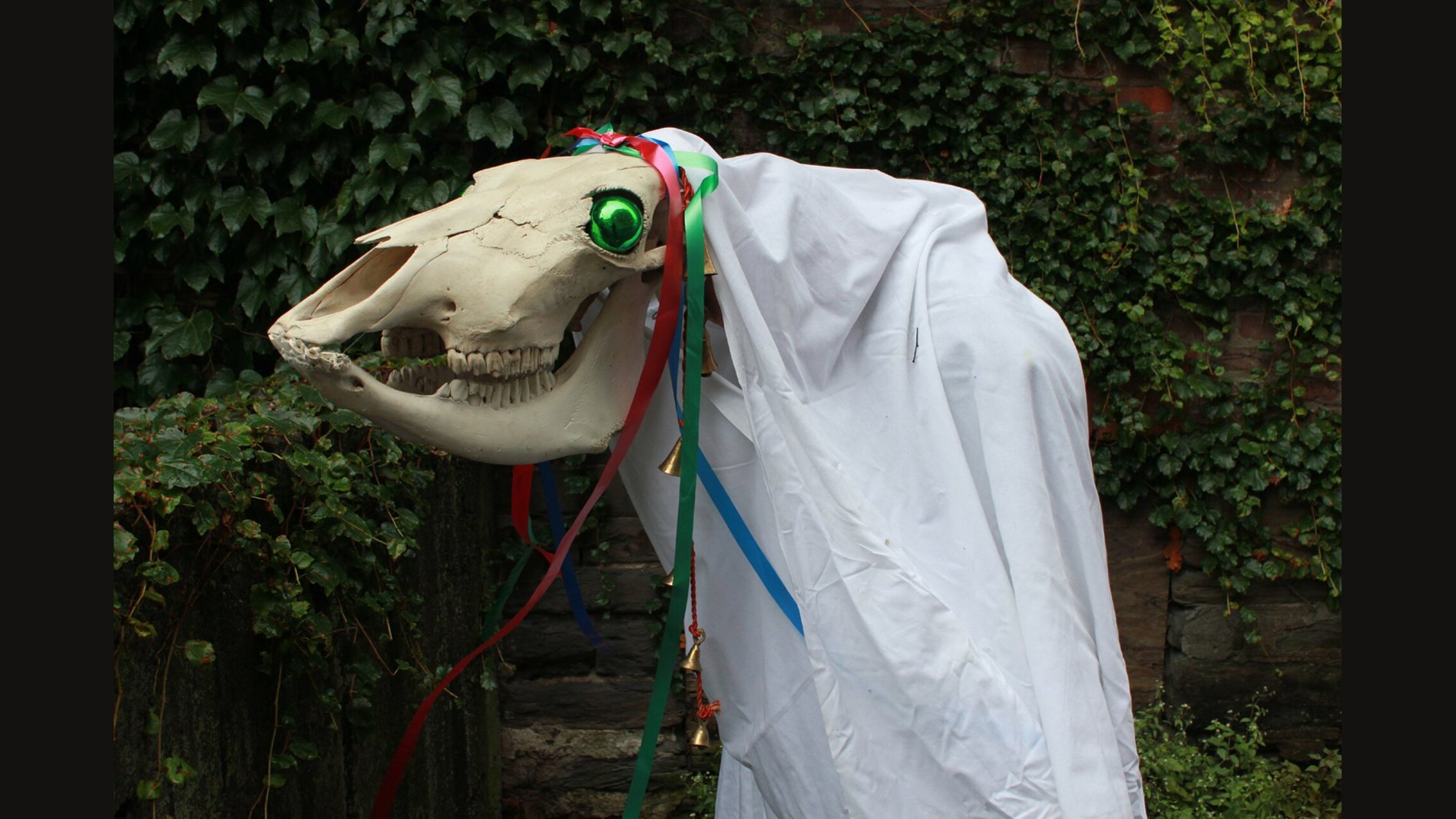
The best-known horse skull in Britain belongs to the Mari Lwyd, and it has its own full story on this site. In brief: Museum Wales describes the Mari Lwyd, meaning "Grey Mare," as a decorated horse skull carried from house to house during the Christmas season. The earliest known account dates to 1798, per Museum Wales, and the custom was especially active in Glamorgan, Monmouthshire and Carmarthenshire between about 1850 and 1920. The party sang at each door and traded improvised verses, the pwnco, with the people inside, and letting the Mari in was associated with good luck (Museum Wales).
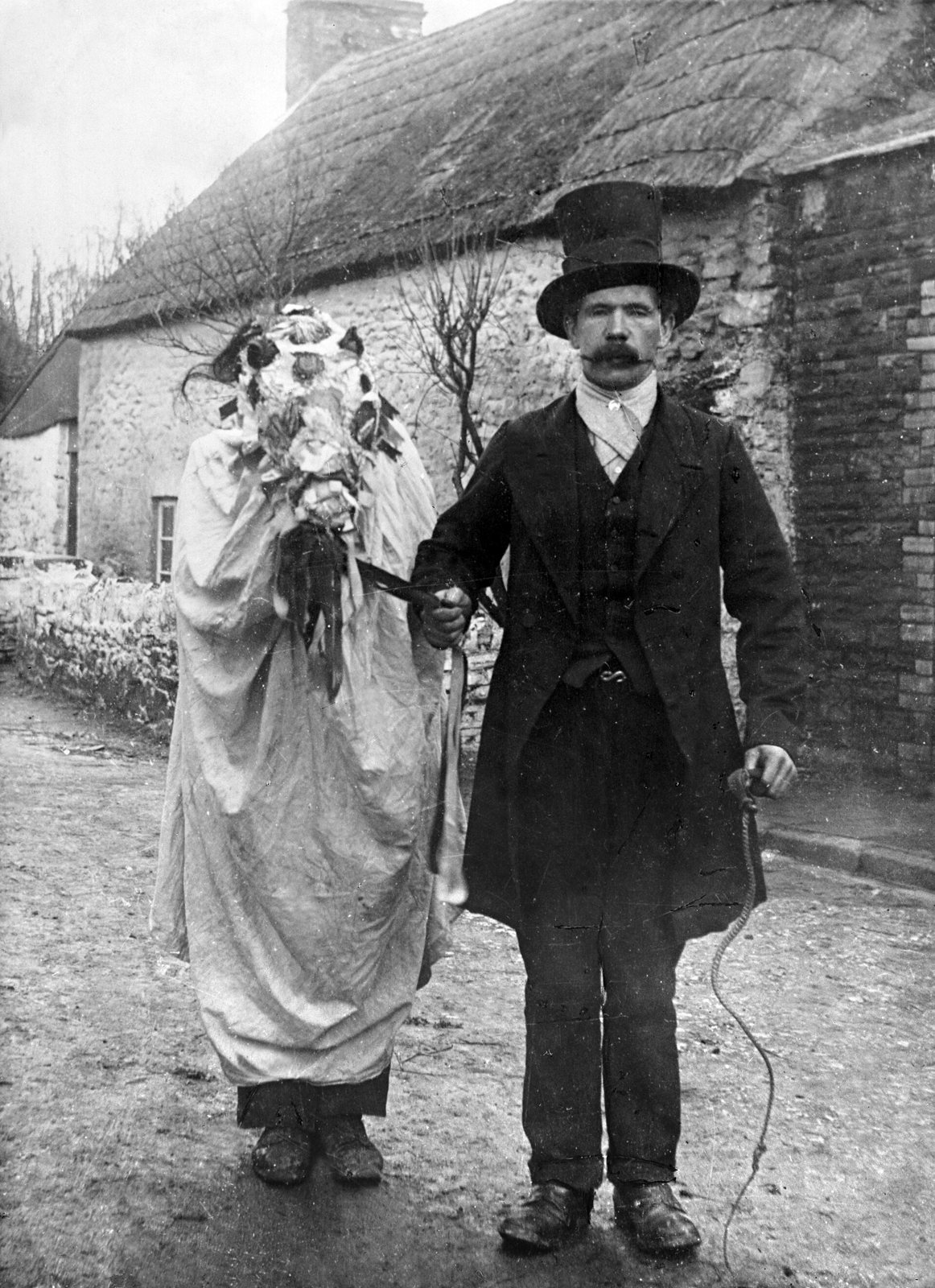
The skull itself was a working piece of kit. Museum Wales notes that its jaw could be mounted on a spring so that it snapped shut, its eyes might be made from glass bottles, and the same skull could be preserved in lime and brought out again each December. A Mari, in other words, could last for years and keep its bite.
For the people who kept it, the meaning was the visit itself: a winter house call with song, wit and good luck for whoever opened the door.
Kent's Hooden Horse, a wooden cousin
Across the border in England, East Kent had a related but different custom. In the nineteenth century, farm workers carried a Hooden Horse from farm to farm around Christmas Eve. Its head was carved from wood and usually worked by a person hidden under sacking. Percy Maylam saw the custom in Thanet during the 1880s and published his study of it in 1909 (Kent Archaeological Society).
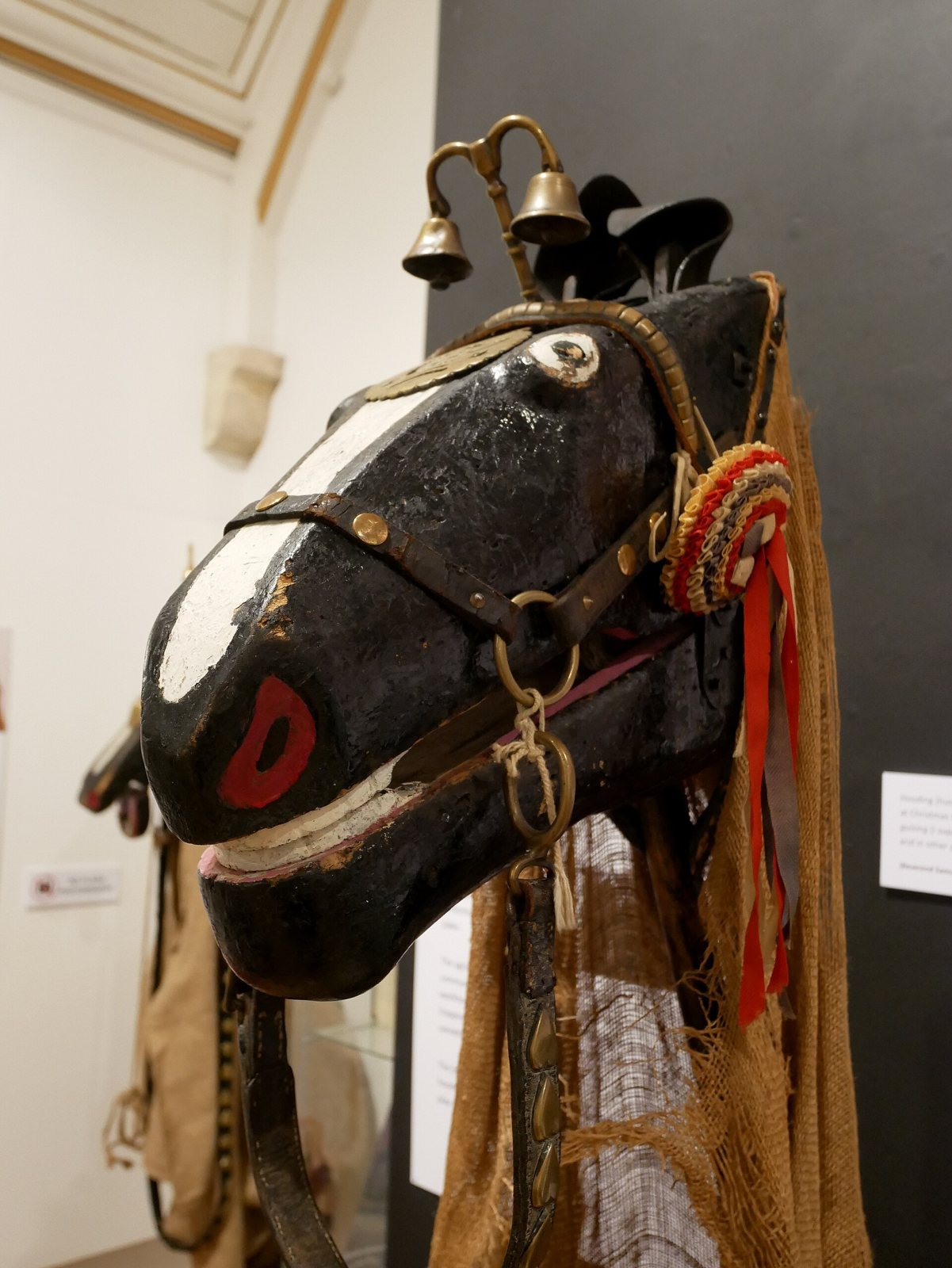
That wooden head matters. The Kent Archaeological Society account makes clear that the standard Kentish form used carved wood, not a real skull, and it treats claims of a very ancient origin with caution. So, the Hooden Horse belongs in a horse skull story as the horse-head custom without the bone. The shape and the seasonal visit, it turns out, can travel without the skull itself.
Skulls under the dance floor
Some of the most surprising horse skulls are the ones nobody was meant to see. In Ireland, horse skulls were concealed beneath floorboards, under flagstones, beside hearths, beneath church altars and sometimes even in bridges. The Irish folklorist Seán Ó Súilleabháin reported the practice in 1945, including skulls with coins placed inside them (JSTOR Daily).
The most down-to-earth explanation is sound. Barry O'Reilly proposed that the hollow skull worked as a sound box, amplifying dancing feet during a céilidhe, an evening of music and dance. Irish informants, as JSTOR Daily reports, said the skulls gave a "fine hearty echo" and made the dancing sound better. The same idea reached the church: in County Wexford, reports described horse skulls beneath church altars so that the preacher could be heard throughout the building.
It is hard not to enjoy the thought of a whole kitchen of dancers stamping over a buried skull because it made the floor sing. For the people who laid them, that was a practical choice as much as anything mysterious.
Protection, foundations and ritual deposits
There is a second reading, and it sits beside the first rather than replacing it. Some hidden horse skulls may have been foundation or protective deposits. Eamonn P. Kelly of the National Museum of Ireland recorded beliefs that horses could see ghosts and evil spirits (JSTOR Daily), which would make a horse's head a sensible guardian to place in a house.
Archaeologists have looked at the wider pattern. Maeve Sikora connected horse deposits in Norway, Iceland, Scotland and Ireland with fertility symbolism in Scandinavian mythology, while Colm Moriarty and Sonja Hukantaival discussed ritual deposits in buildings (IAC Archaeology). One concrete find gives the idea weight. At Haynestown in County Louth, archaeologists uncovered a disarticulated horse skull resting on a flat stone in a shallow pit, with charcoal, shells, horseshoes and a fish hook around it.
The evidence from Ireland, Britain and southern Scandinavia supports both the acoustic and the ritual readings. That means one hidden skull does not explain another. If you know of a horse skull found in an old house or church, its meaning is written in that building's own history and in the excavation report for that site and date.
Horses in the grave: Scythians and the Viking Age
Older still are the burials where horses went into the ground whole, the skull being only one part of the animal. Scythian burial mounds, or tumuli, built between the seventh and fourth centuries BCE across the eastern European steppe and the North Caucasus held horses buried with high-status people. The Encyclopaedia Iranica records complete horses with their harnesses, sometimes in large numbers linked to the status of the dead, and notes that the Greek historian Herodotus described royal Scythian funerals involving horses (Encyclopaedia Iranica). In 2024, Antiquity reported an early Scythian funerary site in eastern Eurasia where horse bones lay with animal-style objects and riding equipment (Antiquity).
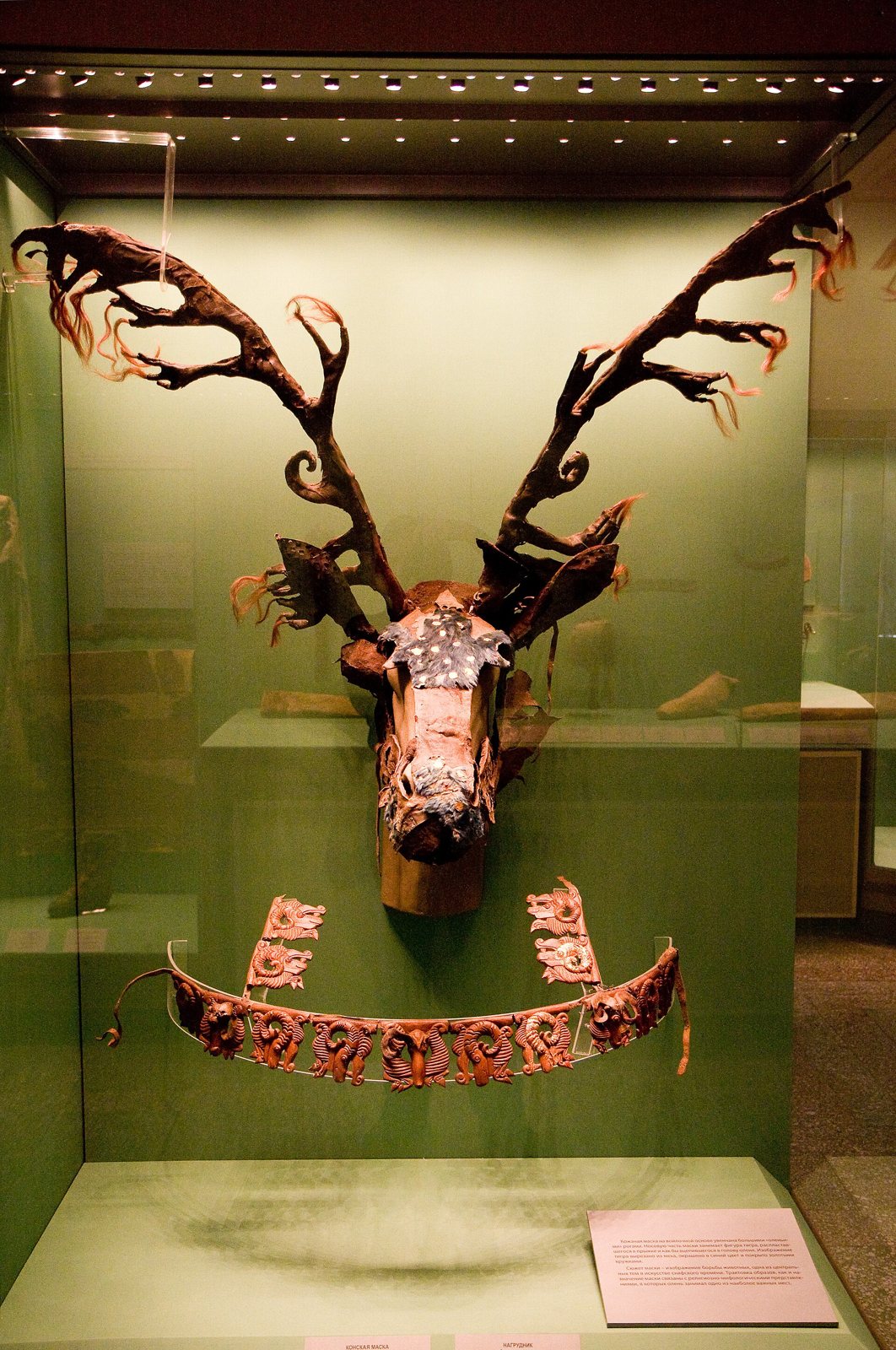
In Viking Age Scandinavia, horse burial was a regional practice rather than a universal one. Anne Pedersen's 2021 study finds concentrations in Uppland and Västmanland in eastern Sweden, in southeast Norway and in parts of western Sweden (Anne Pedersen). Work on Viking Age Iceland shows horse burial there as a specific rite practised during a limited period (University of Iceland record).
These were people burying animals they had lived and ridden with, and the burials speak of status, riding culture, sacrifice and funeral ceremony. Each grave tells its own story by region and date; together they show how much horses mattered in life and in death.
Horse skulls and horse heads through time
Tap or hover a step to follow the order.
7th to 4th centuries BCE
Scythian burial mounds include complete horses with harnesses, sometimes in numbers linked to status.
1798
The earliest account of the Mari Lwyd cited by Museum Wales.
19th century
The Mari Lwyd is especially popular in South Wales, and Hooden Horses visit farms in East Kent.
1909
Percy Maylam publishes his study of the Hooden Horse.
1931
Georgia O'Keeffe paints Horse's Skull with Pink Rose.
1945
Seán Ó Súilleabháin publishes an Irish survey of horse skulls hidden under floors.
O'Keeffe and the desert
In American art, the horse skull belongs above all to Georgia O'Keeffe. After visiting New Mexico in 1929, she gathered sun-bleached animal bones and used them as symbols of the desert. She painted horse, mule, deer and steer skulls, and the Whitney Museum describes her skulls and flowers as symbols of life and death within the natural world (Whitney Museum). The Met's record for *From the Faraway, Nearby* sets her bones in the same desert country (The Met).
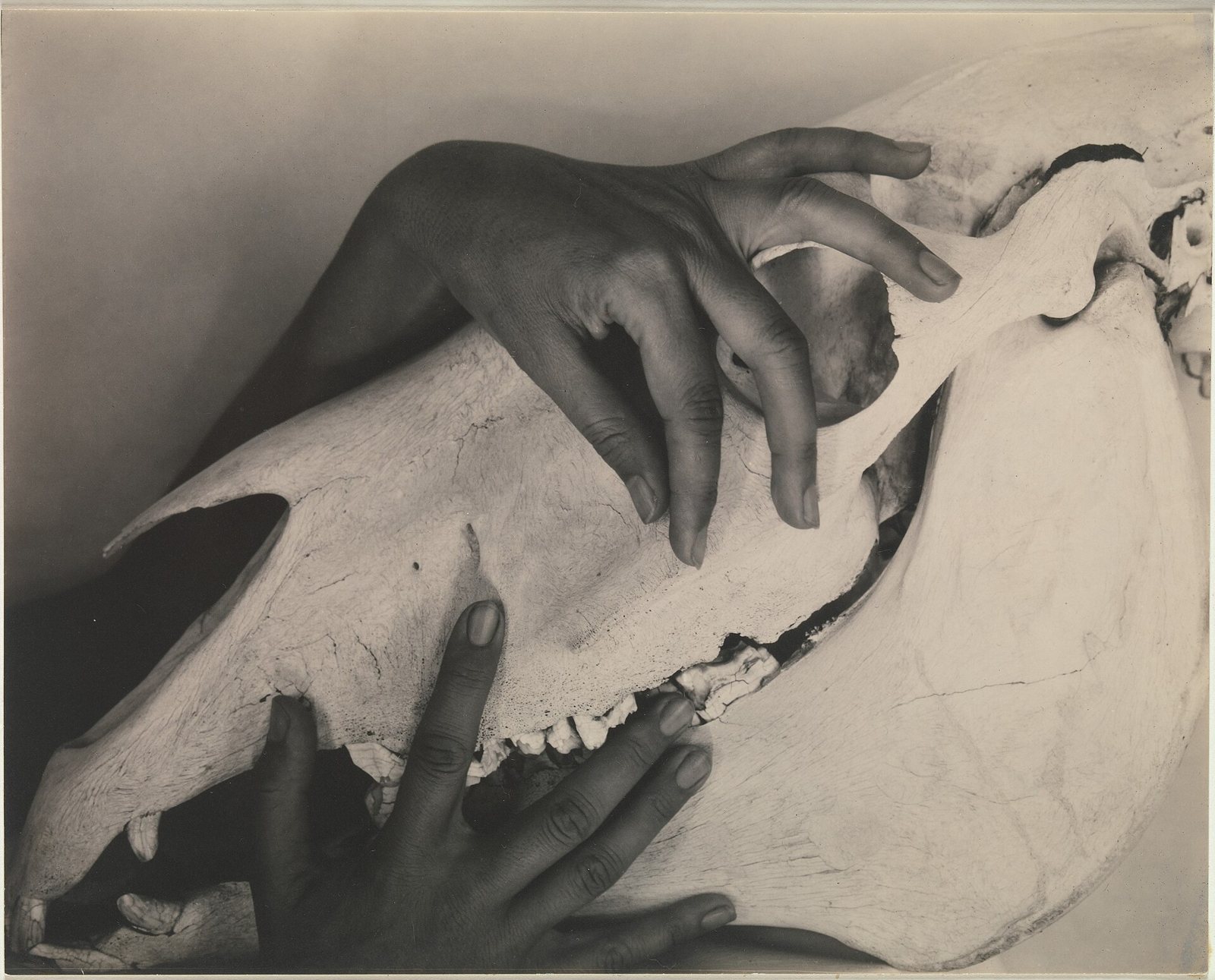
Her *Horse's Skull with Pink Rose*, from 1931, is the one to know here. LACMA describes it as a modern vanitas, joining the skull's evocation of death and fleeting beauty with a rose (LACMA). That links it to the older painting tradition told in our story on vanitas paintings, and the rose pairing has its own history in skull and roses meaning. For her skull paintings in full, see O'Keeffe's skull paintings, and for the steer skull on the Southwest wall, see cow skull meaning.
A horse skull in this tradition can suggest desert survival, mortality, beauty, time and the land itself. It is not automatically a symbol of the whole American West, and it is not an Indigenous symbol unless a specific nation, artist or community is named.
What does a horse skull tattoo mean?
Today, most horse skulls people meet are in tattoos and decor. Modern tattoo guides such as Tattoo Scribes describe a horse skull tattoo as joining the horse's associations of strength, freedom and independence with the skull's associations of mortality, change, resilience and the cycle of life. These are contemporary design readings, not historical meanings handed down from the customs above.
A horse skull tattoo can also be a memorial to a particular horse or a nod to family history, a love of Western or Gothic imagery, or simply a shape the wearer likes. What surrounds it changes the reading: flowers, desert plants, a bridle, weapons or a rider each push it in a different direction. The meaning that counts is the one the wearer gives it, so if you are admiring someone's ink, ask them. If you are planning your own, our story on skull tattoo meaning covers the wider design choices.
One skull, many places
Tap a card to bring it forward.
- South Wales: The Mari Lwyd, a decorated horse skull carried door to door at Christmas for song, verse and luck.
- East Kent: The Hooden Horse, a related Christmas custom with a carved wooden head.
- Ireland: Horse skulls hidden under floors, hearths and altars for a better echo or, in some accounts, for protection.
- Haynestown, County Louth: A horse skull set on a flat stone in a shallow pit with charcoal, shells, horseshoes and a fish hook.
- The Scythian steppe: Complete horses with harnesses buried in royal mounds of the 7th to 4th centuries BCE.
- Viking Age Sweden, Norway and Iceland: Horse burial as a regional rite of particular places and periods.
- New Mexico: Georgia O'Keeffe's Horse's Skull with Pink Rose, 1931, a modern vanitas.
- Tattoos today: Strength, freedom and mortality, read as modern design meanings.
How well do you know the horse skull?
Answer every question to check.
Frequently asked questions
Short answers to the questions that come up most about horse skulls.
What does a horse skull symbolize?
A horse skull can symbolize mortality, the passage of time, survival, the desert or the cycle of life and death in modern art and tattoo design. In documented customs its meaning depends on place and period, such as the Mari Lwyd's luck-bringing visit in South Wales or the echoing floor skulls of Ireland. On a modern print, wall piece or tattoo, the design and the person who chose it decide.
What does a horse skull mean spiritually?
There is no single spiritual meaning shared around the world. Particular practices connect horse skulls with fertility-related beliefs linked to Scandinavian mythology, as Maeve Sikora describes, with protective beliefs recorded in Ireland, where horses were said to see ghosts and evil spirits, and with ritual or funerary deposits at specific sites. A modern spiritual reading belongs to the person or community using the image.
Why were horse skulls hidden under floors?
Horse skulls were hidden under floors mainly to make dancing and voices ring out, and in some places possibly as protective or foundation deposits. Irish informants spoke of a "fine hearty echo," while archaeologists such as Colm Moriarty and Sonja Hukantaival have discussed ritual deposits in buildings. Which reason applies depends on the building and its date.
Is the Hooden Horse a real horse skull?
No, the traditional Kentish Hooden Horse used a carved wooden head rather than a real skull. That sets it apart from the Mari Lwyd of South Wales, which traditionally uses a decorated horse skull. Percy Maylam's 1909 study is the classic record of the Kent custom.
More skulls with stories
A horse skull tends to bring its place with it: a Welsh doorway at Christmas, an Irish kitchen full of dancers, a royal mound on the steppe, a New Mexico canvas. If you like reading an animal skull that way, the bison skull has a very different American story, and the ram skull and deer skull have their own. For O'Keeffe among other painters, try famous skull art, and for the wider story of what skulls have meant across the world, start with skull symbolism.
Terms in this story
Tap a term to see what it means.
Mari Lwyd. A South Wales Christmas custom in which a decorated horse skull is carried from house to house. Its name means "Grey Mare," and Museum Wales dates its earliest account to 1798.