

No. 085
Deer Skull Meaning: What a Deer Skull Has Meant in Art, Hunting and Tradition
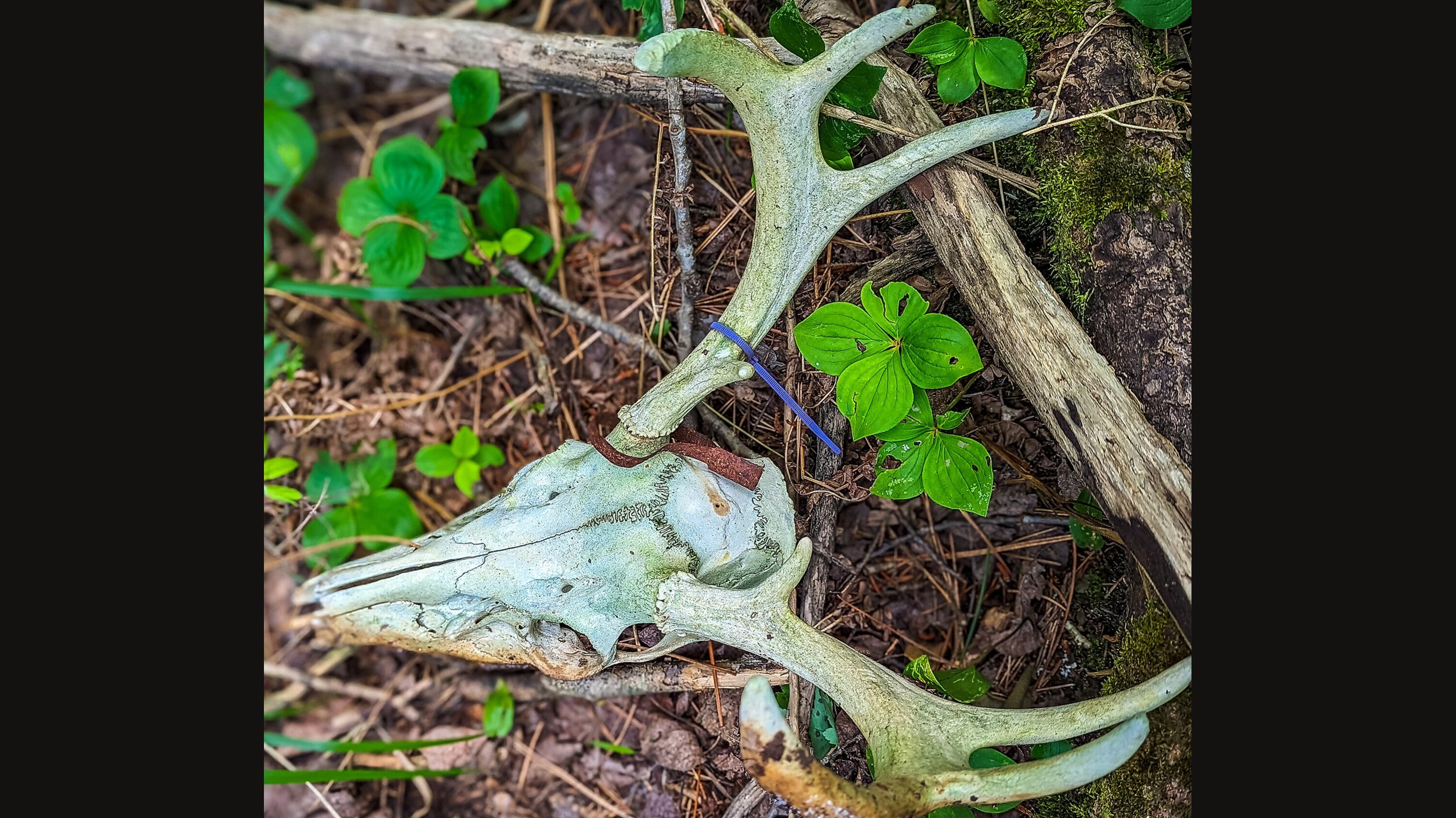
A deer skull has no single meaning, and that is good news if you are choosing one for a tattoo or a wall. Where you meet it decides what it says. On a hunter's wall it is the memory of a particular hunt. In Georgia O'Keeffe's paintings it became an emblem of the New Mexico desert. In Yoeme (Yaqui) ceremony and in Maya religion, the deer itself carries specific meanings that belong to those communities. In a tattoo shop today, a deer skull is usually about mortality, wilderness and renewal, because antlers fall off and grow back every year. Each of those settings has its own story, and they are worth keeping apart.
The short answer, one setting at a time
A deer skull is an image people fill with their own reasons, but some of those reasons are documented with names, places and dates, and some are modern readings. The table below sets them side by side, so you can see which meaning comes from where.
Tap or hover a row to highlight it.
| Setting | Place and period | Meaning or use |
|---|---|---|
| SettingGeorgia O'Keeffe's paintings | Place and periodNew Mexico, from her first visit in 1929; From the Faraway, Nearby is a 1930s work | Meaning or useAnimal bone as an art subject set in an imagined Southwest scene |
| SettingYaqui Deer Dance | Place and periodPascua, Arizona, documented in 1939 to 1940; the tradition also lives in Sonora | Meaning or useCeremonial dance, songs and community religious practice, later joined by Christian elements |
| SettingMaya "7 Deer" calendar sign | Place and periodSan Bartolo, Guatemala, about 300 to 200 BCE | Meaning or useA day sign in the 260-day Mesoamerican calendar |
| SettingHunting trophy display | Place and periodEurope and modern North America | Meaning or useMemory, skill, status, admiration for the animal, estate identity or a hunting achievement |
| SettingModern tattoo and decor | Place and periodPopular culture today | Meaning or usePersonal links to mortality, wilderness, hunting, resilience or simply the look of it |
So, if you want a one-line answer: a deer skull can stand for a hunt, a place, a ceremony, a calendar day or a thought about life and death. The rest of this story walks through each one.
Georgia O'Keeffe and the Southwest deer skull
If a bleached deer skull floating over the desert looks familiar, you are probably thinking of Georgia O'Keeffe. She first visited New Mexico in 1929, a trip The Metropolitan Museum of Art describes as changing both her life and her art. She collected animal bones from the desert around her and brought them into her paintings.
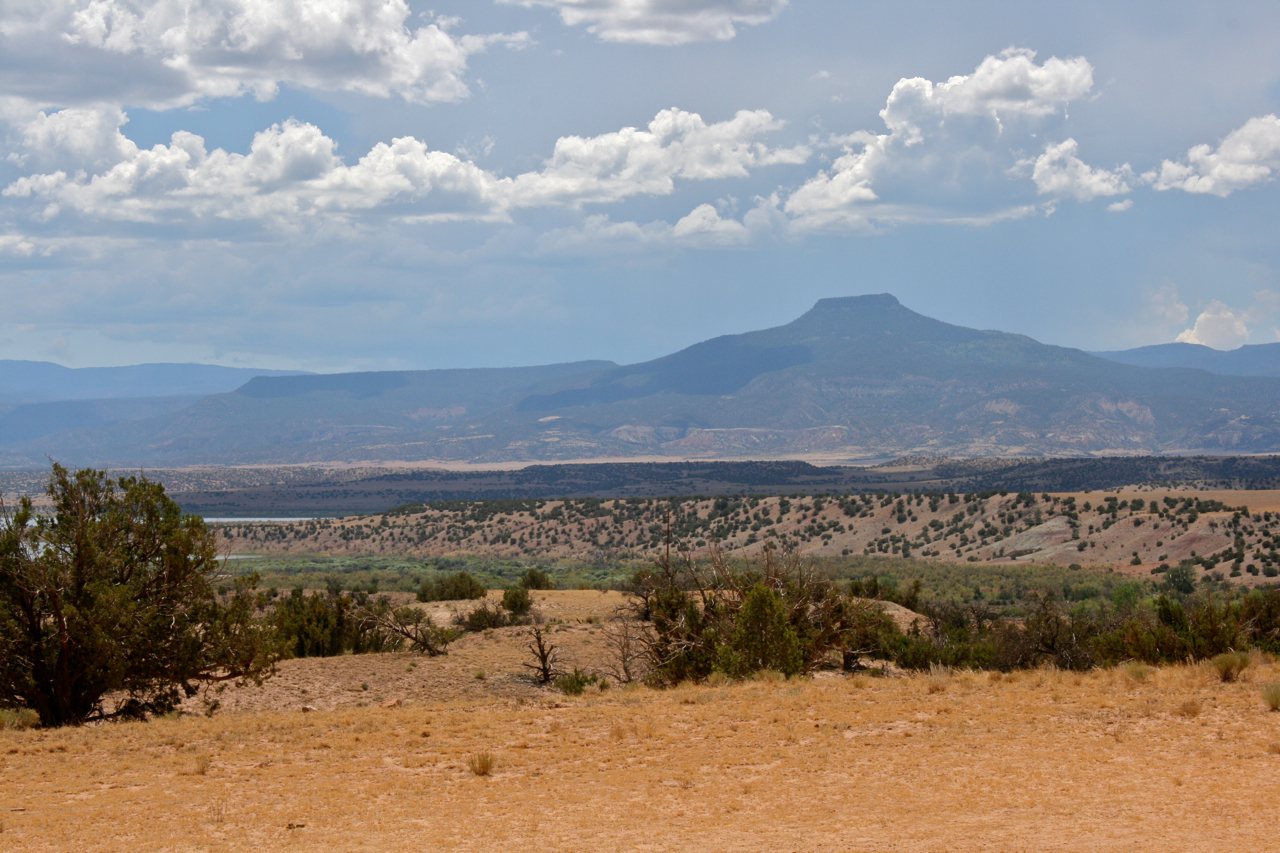
The Met's painting *From the Faraway, Nearby* shows a mule deer skull and antlers hovering above a generalized desert scene. The title sets up a deliberate tension: the skull is huge and close, the hills are small and distant, and both sit in the same frame. That pairing of bone and open country is a big part of why the deer skull still reads as "Southwest" in decor today.
The Met's curators add a second layer. Placing a skull into an imagined desert can read both as a trophy and as part of a settler relationship to Indigenous land and culture. That is a reading of O'Keeffe's work and how it has been received, not a meaning attached to every deer skull. The Georgia O'Keeffe Museum has published more on how these paintings have been shown over the years. If your deer skull is hanging over a sofa in Tucson, you are in O'Keeffe's company, whether you meant to be or not. For the cattle side of the same desert look, see our story on cow skull meaning.
Antlers on the wall: the hunting trophy
The oldest everyday meaning of a mounted deer skull is simple: somebody hunted this animal and wanted to remember it. In the article "Why on the wall?" by Tom Dickson in Montana Outdoors, the magazine of Montana Fish, Wildlife & Parks, Valerius Geist, professor emeritus at the University of Calgary, traces the habit of displaying trophy deer to medieval European noble estates. Large fallow-deer and red-deer mounts on those walls advertised that the estate's land was fertile and its owner important.
The same article describes modern Montana hunters who keep a rack as a keepsake of the time, planning and effort that went into one hunt. It also says plainly that a large rack can work as a status symbol. Both things can be true on the same wall.
The Museum für Naturkunde Berlin puts it broadly: antlers and horns have served as hunting trophies, status symbols and objects of worship. So, if you hang a deer skull at home, the honest meaning is the one you bring to it: a hunt, a walk where you came across it, admiration for the animal, or a love of the shape. Our skull home decor story has more on living with skulls indoors.
Antlers are bone, and they grow back
One detail gives the stag skull much of its modern symbolism. Deer antlers are not horns. The Museum für Naturkunde Berlin explains that antlers are bone, and deer normally shed them and regrow them each year. Horns, the kind a ram or a cow carries, are a different structure and stay on the animal.
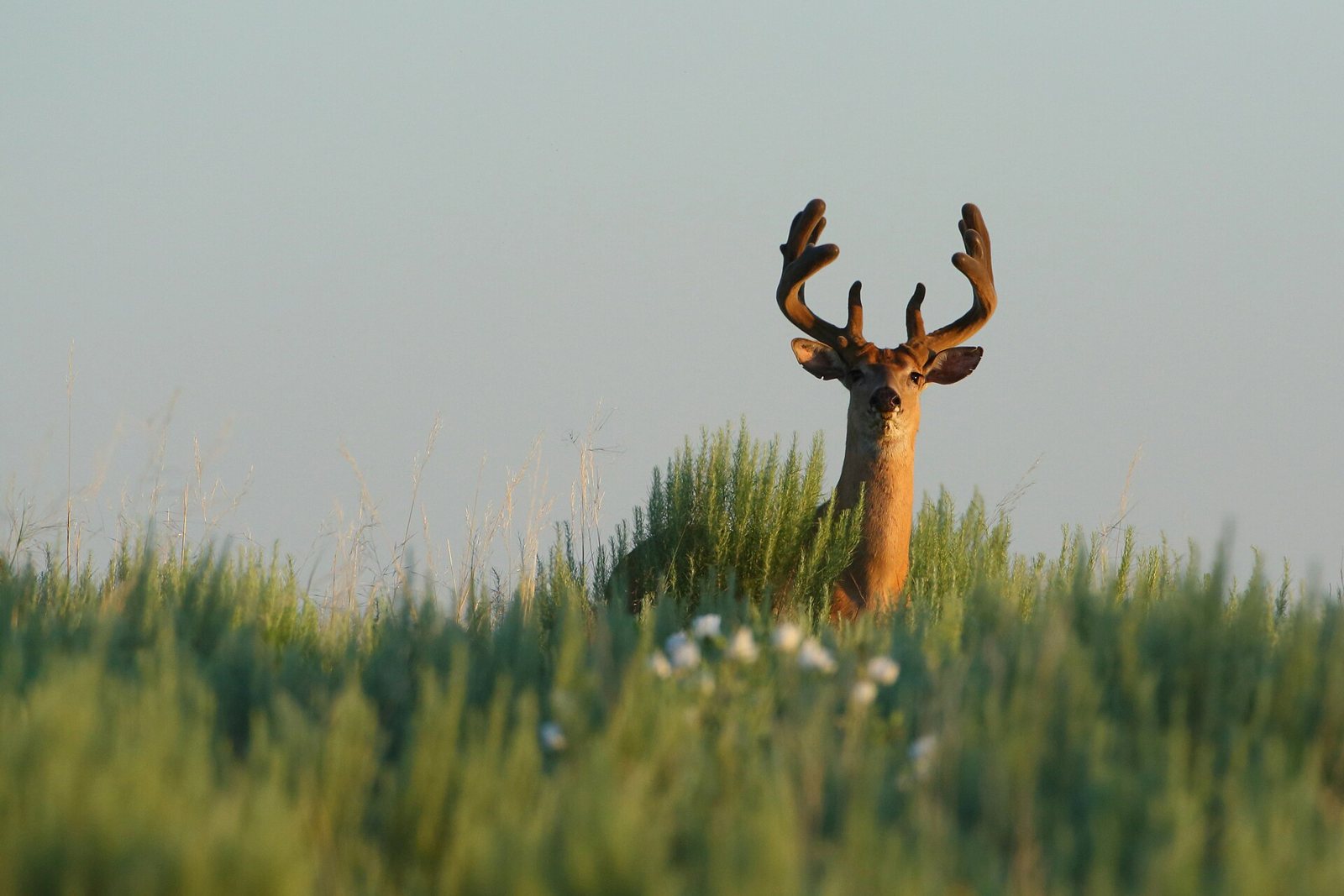
That yearly loss and regrowth is why tattoo guides so often tie a stag skull to renewal and starting over. It is also why a hunter, a hiker and a tattoo artist may look at the same set of antlers and see three different things. If you are curious how this compares with horned animals, our ram skull meaning story covers the horned side of the family.
The deer in Yoeme (Yaqui) ceremony
One of the deer's best-documented roles in North America is in the ceremonies of the Yoeme, or Yaqui, people of southern Arizona and Sonora. Here it matters to describe the practice the way the community and the scholars who worked with it do, rather than as a general "deer spirit" symbol.
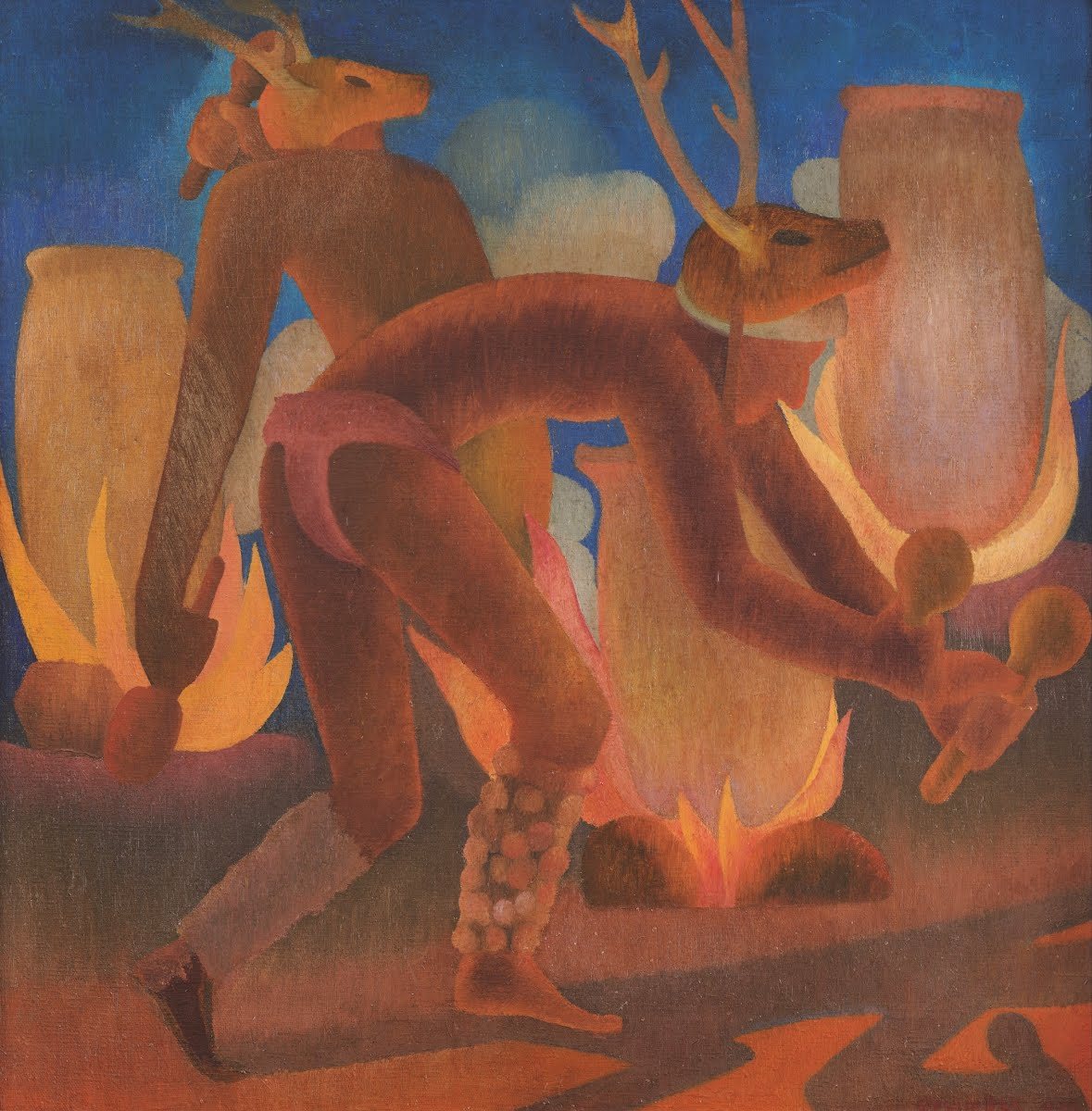
The Smithsonian's National Museum of the American Indian explains that Yaqui and Yoreme traditions developed among Indigenous hunters and gatherers in what is now northwestern Mexico and southern Arizona. The Deer Dance was part of ceremonies of appeal and thanks to Itom Achai Taa'a, Our Father the Sun. After conversion to Catholicism began in the 1620s, the ceremonies took in Christian devotional elements as well. The museum presented Yoreme and Yoeme dance traditions in its *Circle of Dance* exhibition from 2012 to 2017.
Anthropologist Carleton S. Wilder documented the Yaqui Deer Dance in Pascua, Arizona, in 1939 and 1940, recording its songs, costume and performance, and noting that its form and meaning were changing. His study, *The Yaqui Deer Dance: A Study in Cultural Change*, was published by the Smithsonian. Later, the University of Arizona Press book *With Good Heart* recorded that deer hunting had become less common, while the deer remained highly valued in Yaqui songs and dance.
This is a living ceremonial practice of a named people. If a Yaqui deer image draws you, the respectful step is to learn about it from Yaqui voices and the institutions they work with, rather than borrowing it as a general symbol.
The deer in the Maya calendar and Maya religion
Further south, the deer appears in Maya writing more than two thousand years ago, and in a role of its own. At San Bartolo, Guatemala, a Maya mural fragment dated to about 300 to 200 BCE includes a "7 Deer" sign, a day in the 260-day calendar. The find is described in Science Advances under the title "An early Maya calendar record from San Bartolo, Guatemala."
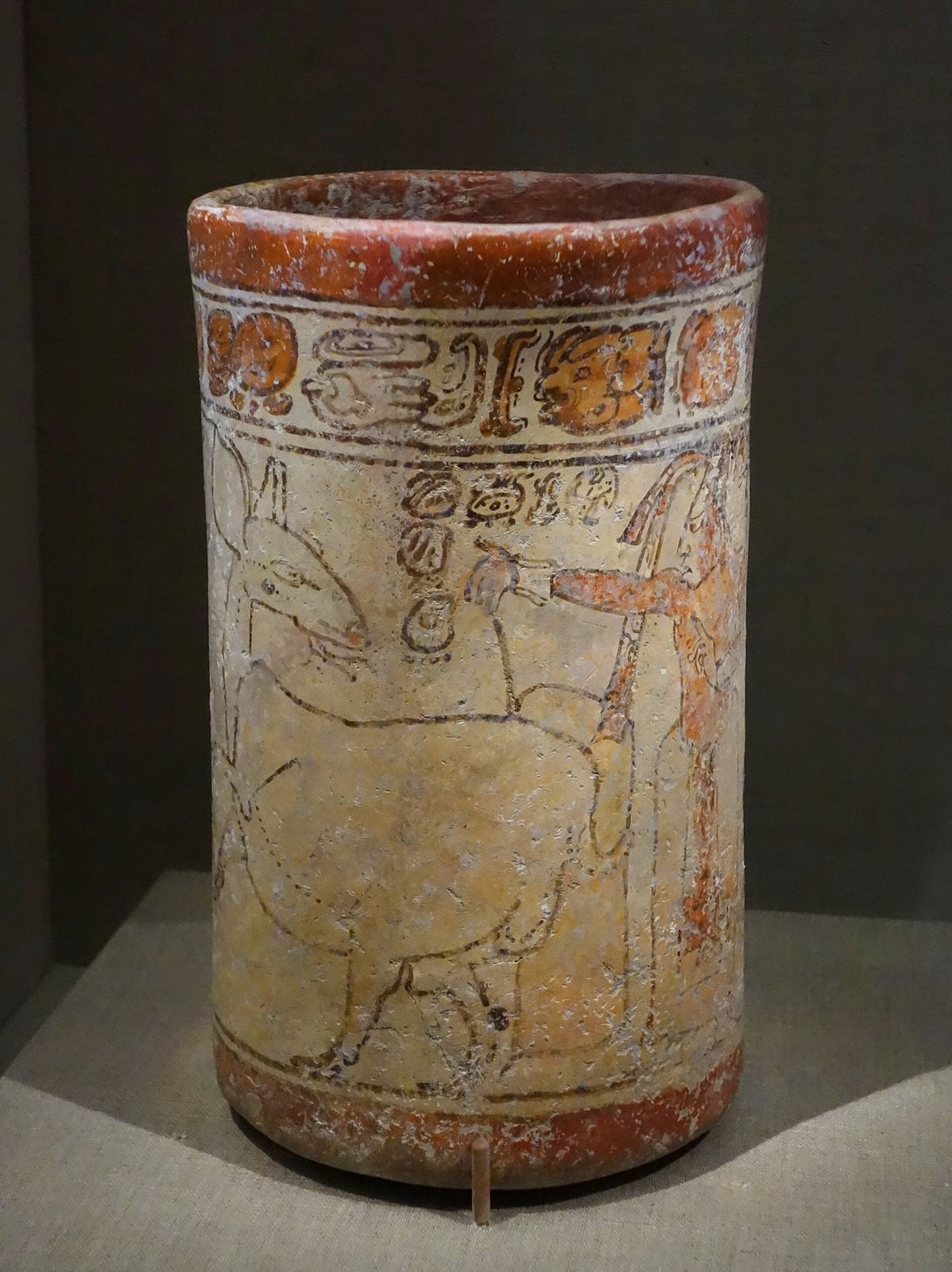
The Maya scholar María Montolíu wrote about the deer in ancient and present-day Yucatec Maya religion in her study "Algunos aspectos del venado en la religión de los mayas de Yucatán". She connects the deer with hunting, ritual sacrifice, deities and fertility. That is a Maya story, specific to Yucatán and its history, and separate from Yaqui practice in the north. Two peoples, two places, two meanings.
The deer skull and the deer, through time
Tap or hover a step to follow the order.
About 300 to 200 BCE
A Maya mural fragment at San Bartolo, Guatemala, records the day "7 Deer."
1929
Georgia O'Keeffe makes her first trip to New Mexico.
1939 to 1940
Carleton S. Wilder documents the Yaqui Deer Dance in Pascua, Arizona.
2012 to 2017
The National Museum of the American Indian presents Yoreme and Yoeme dance traditions in its Circle of Dance exhibition.
Today
Deer skulls appear in hunting displays, home decor and tattoos, with meanings chosen by their owners and wearers.
What a deer skull tattoo means today
Most people asking about deer skull meaning have a tattoo in mind, and here the answers come from tattoo culture itself. These are modern readings, not meanings shared by every culture, and they are yours to take or leave.
Tattoo Me Now ties deer skull tattoos to hunting, food, respect for the animal and trophy imagery, and notes that some designs add bows or arrows. Tattmag and other tattoo writers describe more personal meanings: mortality, the cycle of life and death, wilderness, resilience, and change or renewal, since the antlers fall and grow again. There is also the plain contrast of the design: a graceful living animal shown as bone, which is why a stag skull often sits near memento mori imagery.
A tattoo can also mean nothing more than "I love how this looks," or carry a private memory of a person or a place. The meaning that counts is the one you decide on with your artist. For more ideas on how skull designs are read, see our skull tattoo meaning story and the wider skull symbolism guide.
How well do you know the deer skull?
Answer every question to check.
If you came across a deer skull outdoors
This part is general information, not legal advice. Laws differ by state and country, and they can depend on whether the deer was legally hunted, died naturally, was on public land or was hit by a car. A skull with antlers still attached is often treated differently from a shed antler lying on the ground.
A few examples show how much the rules vary. Missouri's Code of State Regulations requires anyone who finds a dead deer or elk with antlers attached to the skull plate, and takes the antlers, to report it to a conservation agent within 24 hours; detached shed antlers are treated differently. New Mexico Department of Game and Fish hunting guidance allows shed antlers to be possessed, but not antlers still attached to a skull found in the field under the same rule. Montana Fish, Wildlife & Parks regulations separate naturally shed antlers and certain naturally deceased animals from wildlife found in restricted areas, including state parks.
There is no single nationwide rule, so the practical step is the same everywhere: confirm the current rule with your state wildlife agency and the land manager before you take, clean, move or display the skull. Our found an animal skull story covers what to do next, and if the rules allow you to keep it, how to clean an animal skull walks through the cleaning.
Came across a deer skull? Before you take it home
Tap a card to bring it forward.
- Note where you are: Rules depend on the state and on who manages the land, and state parks can be restricted.
- Look at the antlers: A shed antler and antlers still attached to the skull plate are often treated differently.
- Think about how it died: Legally hunted, naturally deceased and road-killed animals can fall under different rules.
- Ask before you move it: Confirm the current rule with your state wildlife agency and the land manager.
- Report if your state asks: Missouri, for example, requires a report to a conservation agent within 24 hours for antlers attached to a skull plate.
Questions people ask about deer skulls
What does a deer skull symbolize?
A deer skull symbolizes different things depending on where it appears: a hunt remembered, the Southwest desert of O'Keeffe's paintings, mortality, or the contrast between a living deer and its bones. No meaning is universal. A cultural meaning belongs with the community and period it comes from.
What does a deer skull tattoo mean?
A deer skull tattoo most often means mortality, nature, hunting, resilience, renewal or the cycle of life and death, according to tattoo guides like Tattoo Me Now and Tattmag. Many people also choose it for its look alone. Your own reason is the meaning.
What does a stag skull mean?
A stag skull usually reads as a male deer trophy, a hunting or wilderness reference, or a memento mori image in modern decor and tattoos. The antlers add ideas of strength and status, and of seasonal renewal, because a stag sheds and regrows them every year.
What does a deer skull mean in Yaqui and Maya tradition?
In Yaqui and Maya tradition the deer has specific ceremonial and historical meanings rather than one general symbolism. For the Yoeme (Yaqui) of Arizona and Sonora, the deer is central to the Deer Dance and its songs; for the Maya, the deer appears as a calendar day as early as 300 to 200 BCE at San Bartolo and in religion tied to hunting, sacrifice and fertility.
Can you hang a deer skull on your wall?
Yes, people hang deer skulls and antlers as hunting keepsakes, Southwest decor or simply as beautiful objects, and Valerius Geist traces the custom of mounting deer to medieval European estates. If the skull came from outdoors rather than from a legal hunt or a store, check your state's wildlife rules first.
Does a deer skull have a spiritual meaning?
The spiritual meanings that are documented belong to named communities, such as the Yaqui Deer Dance and Maya religion, and they concern the deer in ceremony rather than a skull on a wall. Beyond that, any spiritual meaning is the one you give it.
Can you keep a deer skull you found?
It depends on your state and on the land where it lay, and this is general information, not legal advice. Missouri, New Mexico and Montana each treat attached antlers, shed antlers and protected areas differently, so confirm the rule with your state wildlife agency and the land manager before you take it.
One skull, many walls
A deer skull carries whatever setting it comes from: O'Keeffe's desert, a Montana hunter's den, a Yaqui ceremony, a Maya calendar, or the inside of your forearm. Knowing which of those stories you are joining makes the choice better, whether you are hanging it, inking it or leaving it where it lies. When you are ready for more skulls with stories, our skull symbolism guide is a good next stop.
Terms in this story
Tap a term to see what it means.
Antlers. Bony growths on a deer's head. Deer normally shed them and grow new ones every year, unlike horns.
---