No. 015
What Does a Skull With Roses Mean? From Dutch Still Lifes to Tattoo Flash
A skull with roses sets death beside beauty, the pull between what ends and what is lovely while it lasts. How that lands depends on the place, the period and the person who made the image. In seventeenth-century Dutch and Flemish painting the pairing reminded viewers that life and beauty fade. In twentieth-century tattoo shops it sat on flash sheets beside memorial lettering, and in 1966 a San Francisco poster turned it into a rock emblem. So, if you're weighing a tattoo, a shirt or a gift for a partner, the useful news is that the pairing has a long, well-documented past, and that the design alone doesn't decide what it says for you.
Skulls and roses in European art
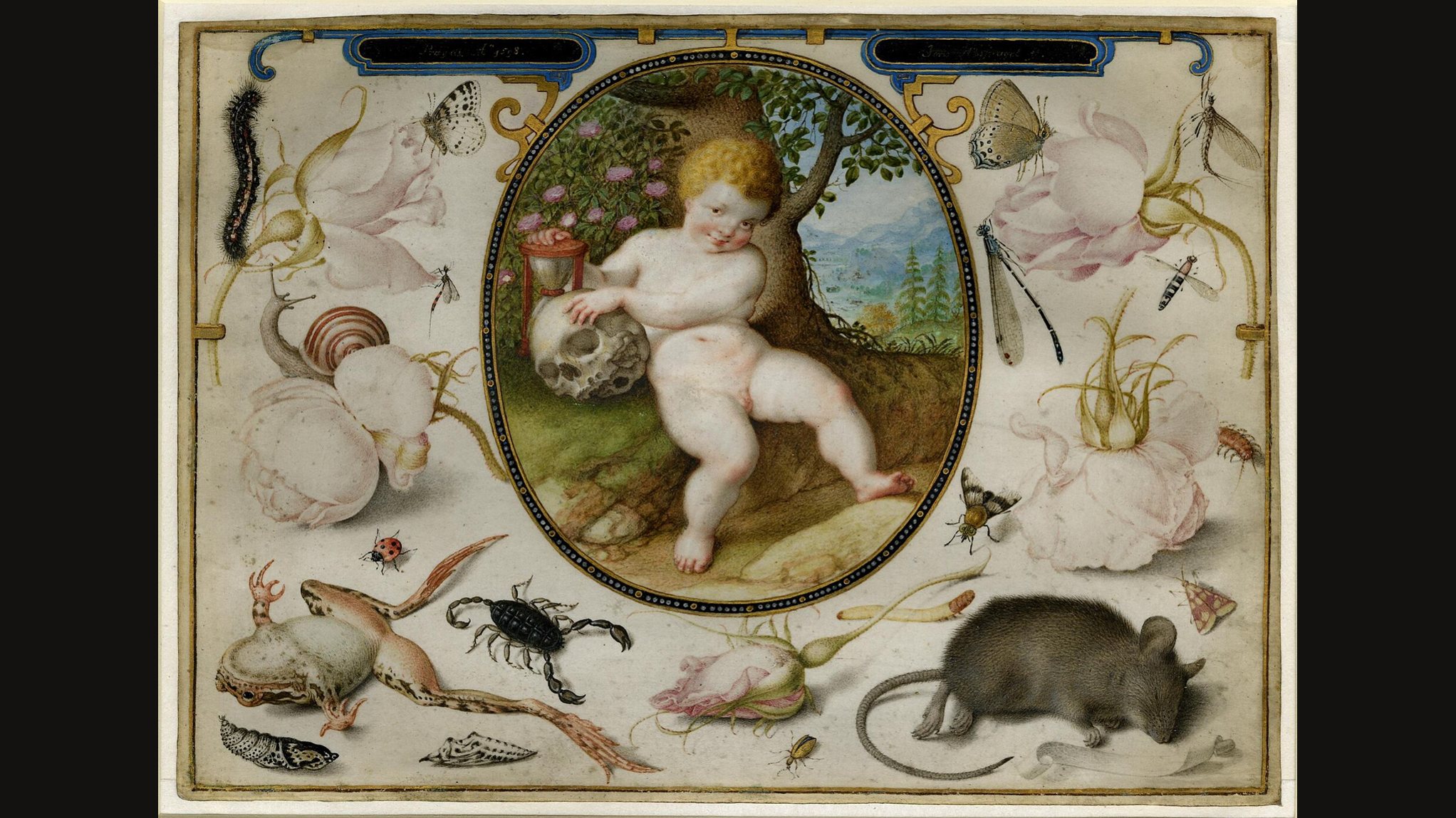
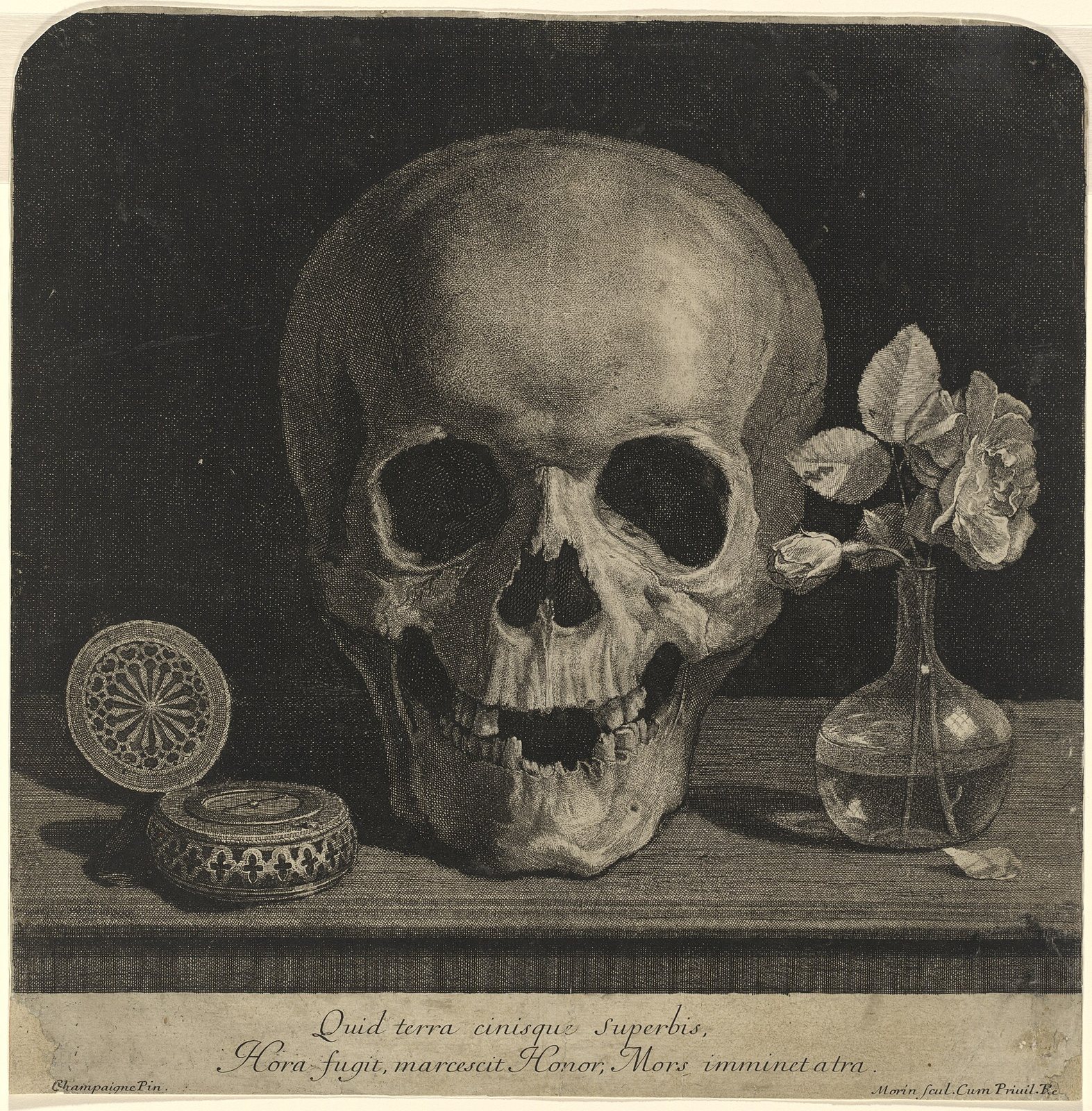
The skull-and-flower pairing shows up in European art from the late sixteenth century. In 1598 the Flemish artist Joris Hoefnagel made *Allegory on Life and Death*, now at the British Museum, in which a child holds a skull and hourglass near a rose bush, with dead roses, insects and animals around the border. In 1603 Jacques de Gheyn II painted a *Vanitas Still Life* that the Metropolitan Museum of Art reads as skull and cut flowers reminding viewers of life's brevity. Jean Morin's French print *Still Life with a Skull and a Vase of Roses*, from 1645 or 1650, puts the skull and a vase of roses at the center, according to the National Gallery of Art.
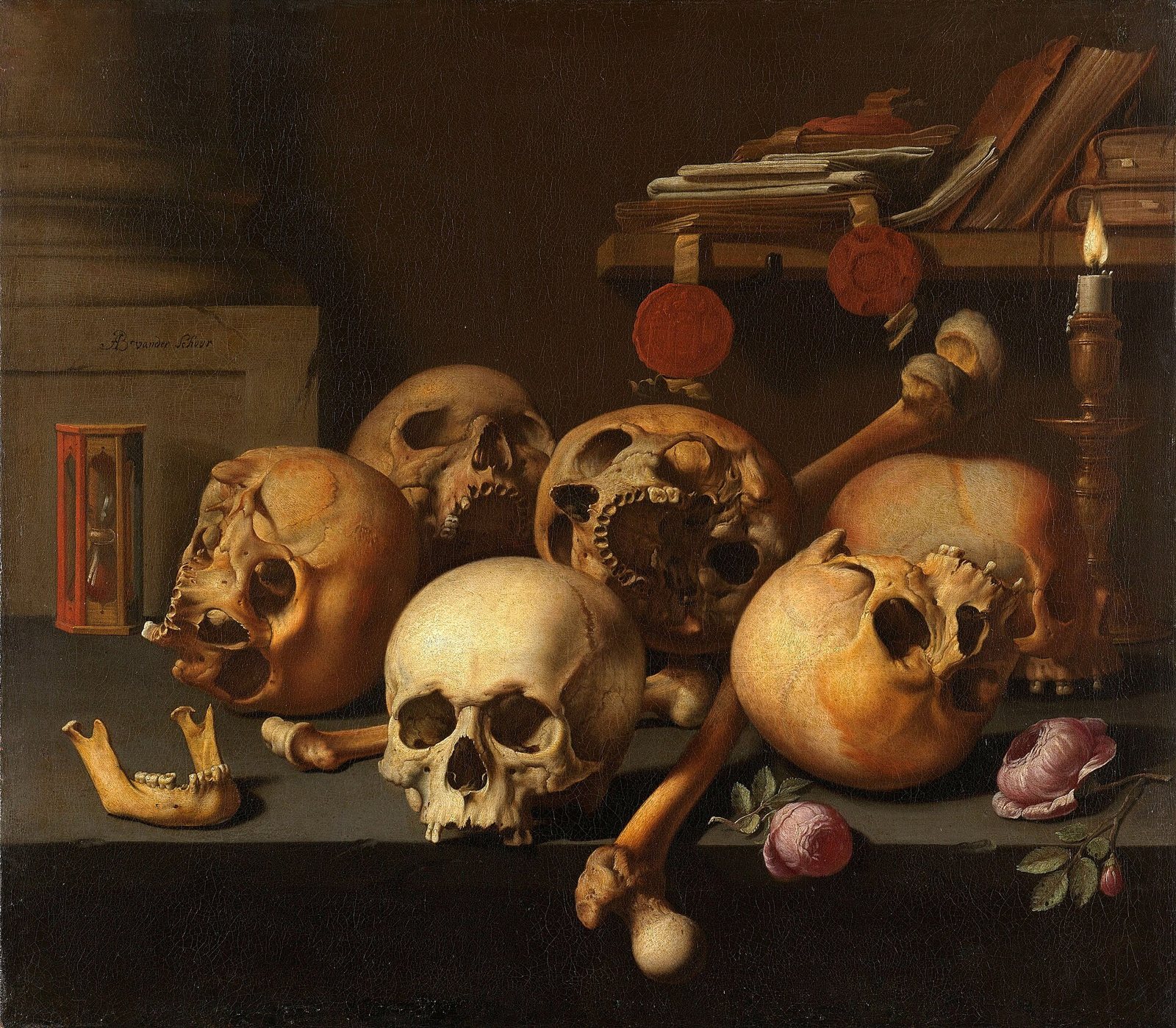
Others followed. Jan van Kessel the Elder's *Vanitas Still Life*, about 1665 to 1670 in Flanders, has a skull, roses, an hourglass, bubbles and insects. A mid-seventeenth-century Dutch vanitas attributed to Aelbert Jansz. van der Schoor, in the Rijksmuseum, shows skulls, bones, roses, a candle, books and an hourglass, and the museum treats those objects as conventional vanitas imagery. Adriaen van Utrecht's *Vanitas Still-Life with a Bouquet and a Skull*, about 1642, is another documented example.
The idea crossed the Atlantic. In 1878 the American artist Frederick Stuart Church painted *Blossom and Decay*, placing a rose beside a mummified head from his studio, and the Spencer Museum of Art connects the picture with death, fragile beauty and Church's interest in reincarnation. In 1931 Georgia O'Keeffe painted *Horse's Skull with Pink Rose* in the United States, which LACMA describes as a modern vanitas image joining death with the fleeting nature of beauty and being.
Across all of these the pairing is a recurring visual relationship within the European traditions of *memento mori* and *vanitas*, not one fixed emblem with one fixed meaning. For more on the tradition behind it, see the guides to vanitas paintings and what memento mori means.
What the rose itself carried
The rose had its own meanings before it ever touched a skull, and they shifted with the setting. In Dutch vanitas painting, the Rijksmuseum places roses among the conventional objects, and cut roses wilt, which reinforces the shortness of life. The National Gallery of Art's scholarship on van Kessel's painting adds that flowers, butterflies and wheat can carry possible resurrection and salvation as well as mortality. The Met says roses could stand for love, divine love, purity and the beauty of faith, and it connects the rose with love in European valentine traditions.
In medieval and early Renaissance art, the rose often belonged to Mary. National Galleries of Scotland links the thornless rose bower with Mary's virginity and Immaculate Conception, and the Uffizi reads the rose bush in Botticelli's *Madonna del Roseto* as an allusion to Mary as the *Rosa Mystica*, the rose without thorns. These meanings belong to named religious, artistic and historical settings. A modern red rose doesn't carry a Marian meaning on its own, and a rose beside a skull doesn't automatically mean romantic love.
Tattoo flash and memorial work
Tattoo flash is the set of pre-drawn designs that shops displayed for customers to choose from, and it's where skulls and roses became everyday imagery. Lew "the Jew" Alberts, born Albert Morton Kurzman (1880 to 1954), was a major early American flash artist, and the Contemporary Jewish Museum describes his influence on early twentieth-century tattooing and the way flash developed among artists including Charlie Wagner, Millie Hull and Bob Wicks. The Smithsonian's account of the Lyle Tuttle Tattoo Art Collection names Bert Grimm, Sailor Bill Killingsworth, Red Farrell, Owen Jensen, Sailor Jerry, Lou Normand and Milton Zeis, and describes skulls, daggers, hearts and military designs in the World War II-era vocabulary.
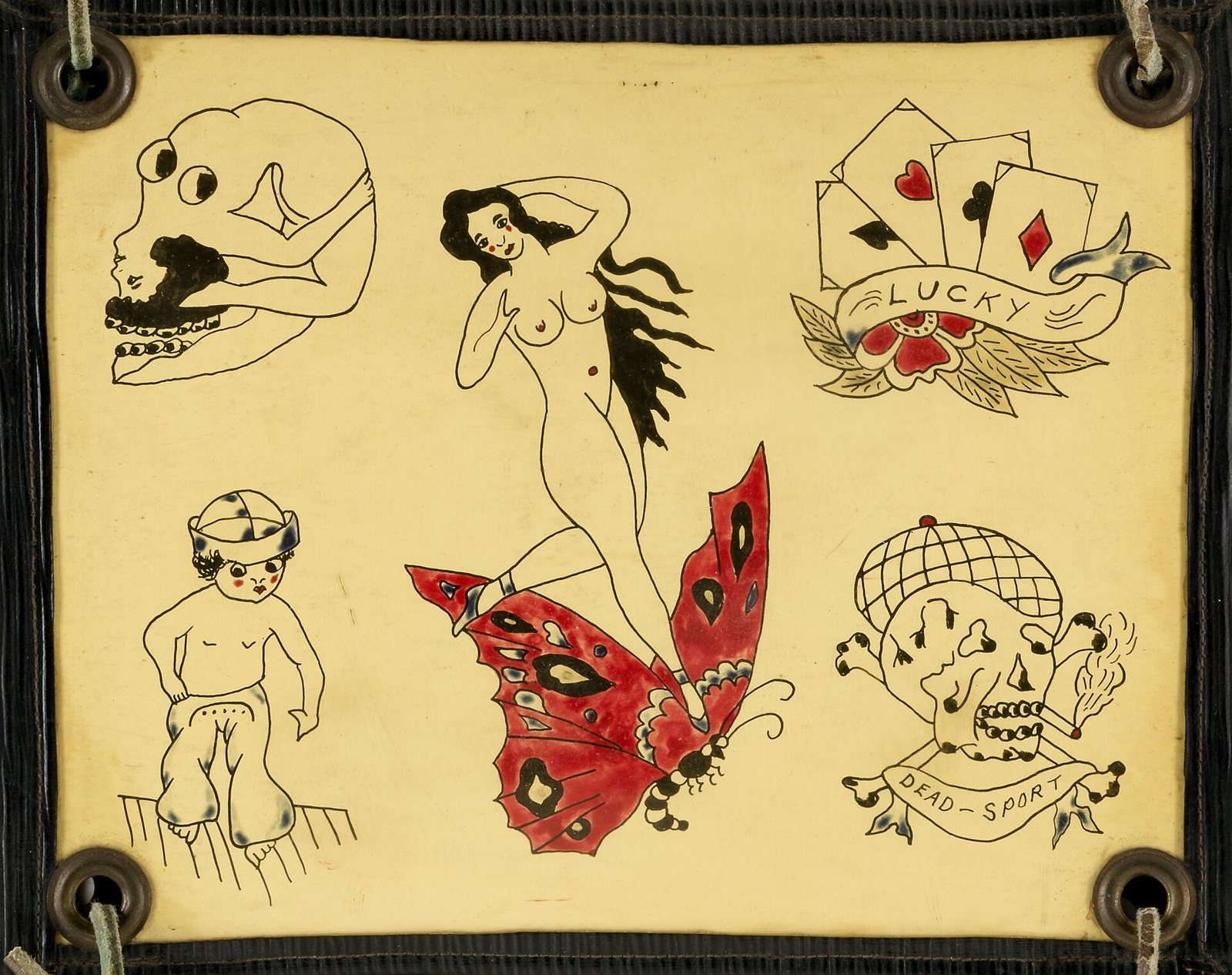
Museum Wales holds flash by Jessie Knight, who became prominent in Britain after taking over her father's shop in Barry in 1927. Her sheets include roses and crosses with the wording "IN MEMORY OF MY...," direct evidence of memorial rose imagery in twentieth-century Britain. These records show skulls, roses, memorial lettering and flash systems all in use. They don't show who first drew a skull and rose together, so any story that names the one original artist goes beyond what the record supports. If you're choosing a tattoo, skull tattoo meanings walks through styles and pairings.
The Grateful Dead and the skeleton with roses
For many people, "skull and roses" means one image. The Grateful Dead began using skull imagery in its visual identity in spring 1966, and Wes Wilson put a skeleton on the Family Dog poster for the band's Avalon Ballroom shows of June 10 and 11. On September 16 and 17, 1966, Stanley Mouse and Alton Kelley introduced the skeleton-and-roses design on the poster for the Grateful Dead and Oxford Circle at the Avalon Ballroom in San Francisco.
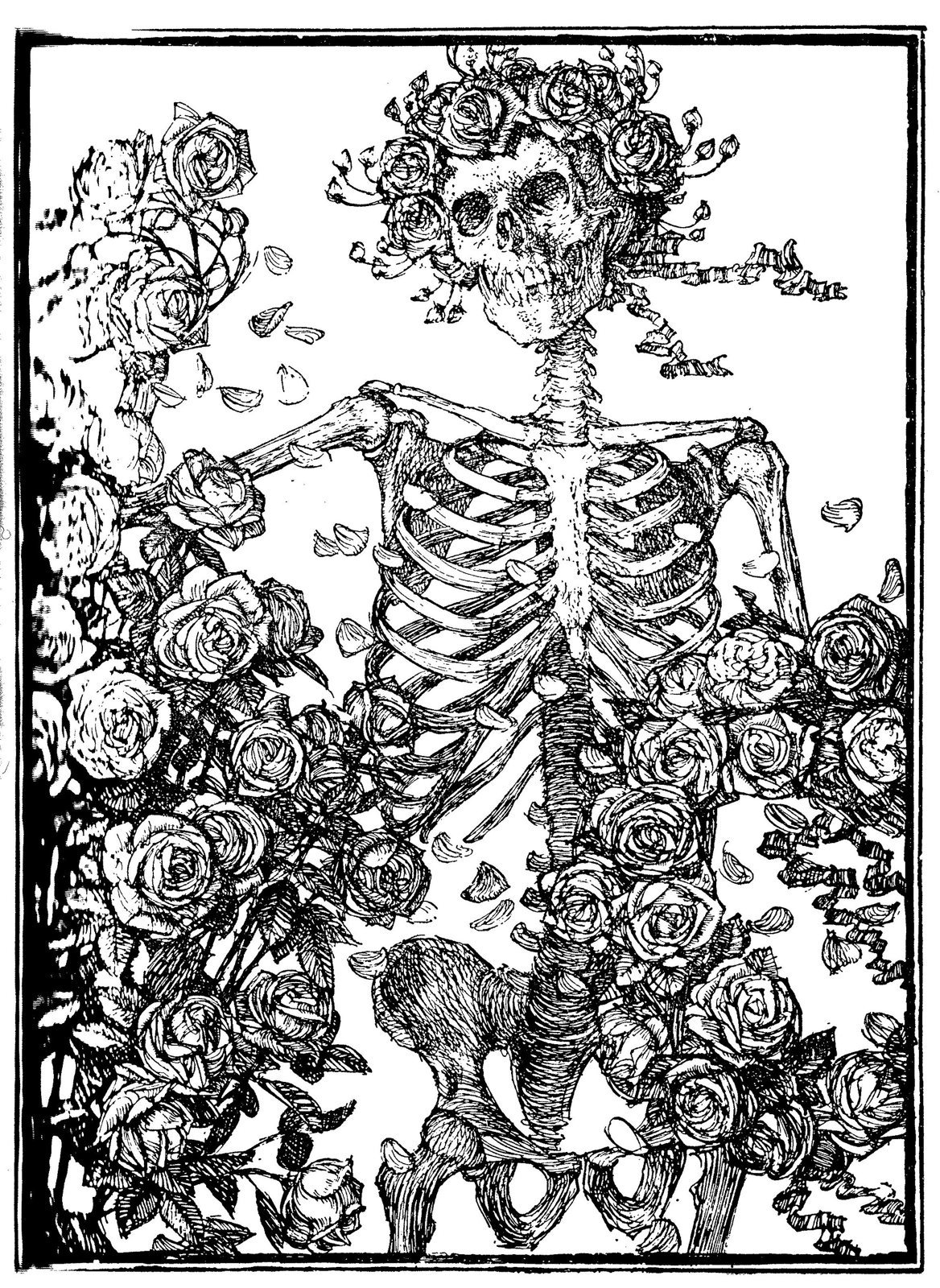
Kelley found the source in an engraving by Edmund Joseph Sullivan for an edition of *The Rubáiyát of Omar Khayyám*. Mouse added lettering, and the pair added color and a border, which the band's own biography confirms as a reworked nineteenth-century source. The image became tied to the band's 1971 live album, officially titled *Grateful Dead* and widely nicknamed *Skull and Roses*. That makes it a documented case of popularization. It isn't evidence that the band invented the motif, and the poster and album art belong to the band's own history, not to the public domain.
Love, mourning and remembrance today
People choose the pairing for different reasons now, and each one has some footing in the record. For love, the Met documents the rose as a symbol of love in European valentine traditions, and as divine love, purity and the beauty of faith in devotional art. For mourning and remembrance, Jessie Knight's memorial flash shows roses used with that language a century ago.
In Mexican Día de Muertos traditions, flowers, skulls and ofrendas are all used to honor the dead, but the flower is the marigold. The Smithsonian describes cempasúchil as the flower placed on ofrendas and around graves, and INAH describes its petals as marking the path of returning souls. A rose and skull may therefore be chosen today for romantic love, a memorial, remembrance, mortality or visual contrast. The design can't tell you which one the wearer has in mind, and it doesn't have to be any of them, since liking how the two look together is a perfectly good reason.
Variations that change the reading
Small changes to the picture can shift the message, though most of the shifts are the wearer's own. A rose beside a skull generally creates a contrast between mortality and beauty, which is an interpretive reading and not a universal code. A cut or wilted rose can sharpen a vanitas reading, since European still life used flowers to suggest that things pass. A black rose is often described in modern tattoo and commercial writing as mourning, loss, change or darkness, and those are contemporary meanings, not a historical one that a museum record establishes. A rose in the skull's teeth can feel defiant, theatrical or macabre, and no fixed historical meaning is attached to it.
Marigolds change the reference entirely. INAH identifies cempasúchil with Día de Muertos, the renewal of life and the paths that guide souls, so a skull with marigolds belongs to a different tradition than a generic rose and skull, and it isn't a sugar skull either. For that tradition, see Día de Muertos. Other flowers keep their own histories, too.
Tattoo shops sometimes assign separate "male" and "female" meanings to the design. Those are modern commercial interpretations, and the placement, color, accompanying text, portrait, date, initials or other symbols tell you more about an individual tattoo than the wearer's gender does.
Choosing it, wearing it, giving it
A good way to decide is to ask what you want the image to say. If it's remembrance, a name or date beside it makes that plain. If it's love beside mortality, the vanitas tradition is on your side, and if it's the look, that counts. Check any lettering and companion symbols, because they steer the reading more than the pair of images does. If the promise-and-roses version is what you're after, our Til Death skull tee is a T-shirt in black or sage with an engraved skull tilted toward a bone-white rose, two skeleton hands clasped around the stem, in an arched badge that reads TIL DEATH with LOVE BEYOND THE VEIL on a marigold ribbon, made for couples making a promise.
Skulls and roses through the centuries
Tap or hover a step to follow the order.
1598
Hoefnagel's Allegory on Life and Death (Flanders)
1603
de Gheyn's Vanitas Still Life (Netherlands)
1645 or 1650
Morin's Still Life with a Skull and a Vase of Roses (France)
Mid-seventeenth century
van der Schoor's vanitas (Netherlands)
About 1665 to 1670
van Kessel's Vanitas Still Life (Flanders)
1878
Church's Blossom and Decay (United States)
1931
O'Keeffe's Horse's Skull with Pink Rose (United States)
June 10 to 11, 1966
Wilson's skeleton poster at the Avalon Ballroom
September 16 to 17, 1966
Mouse and Kelley's skeleton-and-roses poster
1971
The live album nicknamed Skull and Roses
Test your skull and roses knowledge
Answer every question to check.
Quick answers
These short answers cover the questions people ask most.
What does a rose and skull symbolize?
A skull and rose commonly symbolize the tension between mortality and beauty, but the meaning depends on the place, period and maker. In seventeenth-century Northern European vanitas art, skulls reminded viewers that life and earthly accomplishments are temporary, and flowers added the idea that beauty fades. In a modern tattoo, piece of jewelry or shirt, the pairing may suggest remembrance, grief, survival, love beside mortality or simply a liking for the contrast.
What do skulls and flowers symbolize?
Skulls and flowers can symbolize mortality and the temporary nature of beauty, especially in European vanitas art of the seventeenth century, but flowers don't have one fixed meaning across cultures. In the Dutch and Flemish tradition a skull worked as a *memento mori* while flowers signaled beauty that fades. Other artists used the pairing differently, as Frederick Stuart Church did in 1878, so the meaning belongs to the specific artwork, community, place and period.
What is a skull with flowers called?
A skull with flowers is often described as a vanitas or memento mori image when it belongs to the European tradition of art about death and the brevity of life. Common descriptive names include "skull and roses," "skull with flowers" and "floral skull," and in Spanish "calavera con flores" or "calavera y rosas." The Grateful Dead's 1966 poster is known as the "skull and roses" design, and its 1971 album is nicknamed *Skull and Roses*, though the older terms don't automatically fit every modern tattoo or design.
What does a skull with roses tattoo mean for men and for women?
A skull with roses tattoo has no documented universal meaning that differs by gender. The wearer may choose it for remembrance, mortality, beauty, grief, resilience, love, identity or style. Placement, color, text, dates, initials and other symbols tell you more about a particular tattoo than the wearer's gender does.
Where to go next
If you'd like the wider picture, what a skull symbolizes across cultures puts this pairing alongside the rest.