

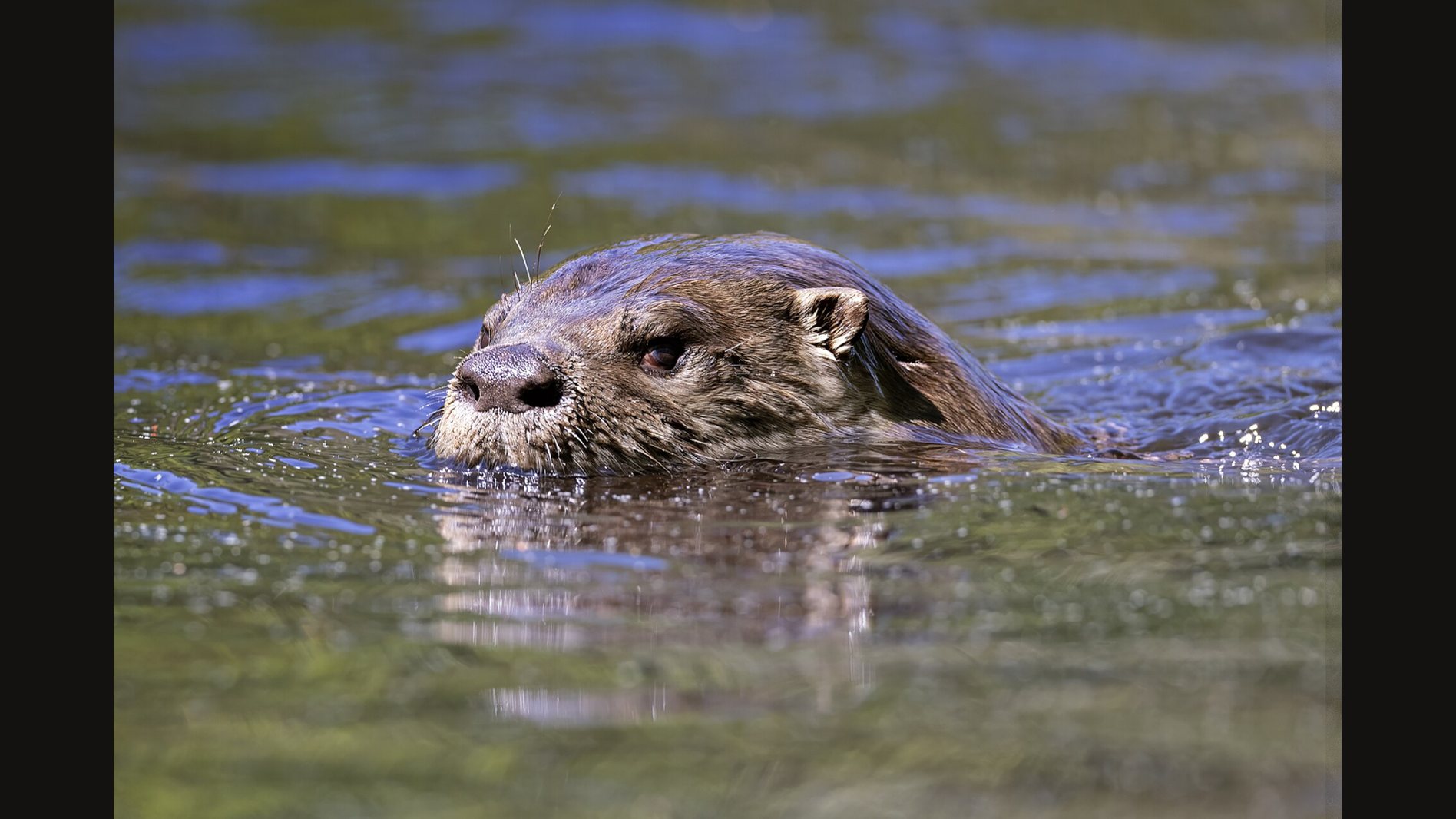
No. 117
Otter Skull: How to Identify a River Otter Skull
A North American river otter skull, from *Lontra canadensis*, is low and flat, with a short, broad snout, a long, broad braincase, big canine teeth and 36 teeth in an adult. That is how the Oregon State University Mammal Collection describes it, and the dental formula, I 3/3, C 1/1, P 4/3, M 1/2, matches the specimen record at University of Texas DigiMorph.
Two more clues come from the Maryland Department of Natural Resources skull key: a well-developed bony point behind each eye socket and a nerve opening below the eye wider than 8 millimeters. If the skull you picked up by the river ticks all of those boxes, you are very likely holding an otter.
Whether you can take it home is a separate question, and the answer depends on the species and on where you are standing. River otters are regulated furbearers in many places and sea otters are protected marine mammals, so the wildlife agency gets the final word.
What a river otter skull looks like
Lay the skull on a flat surface and look at it from the side first. A river otter skull sits low, almost like a flattened river stone with teeth. Oregon State calls it relatively flat, with a short, broad rostrum, the snout part of the skull in front of the eyes, and a long, broad braincase, the rounded back section that held the brain. The New York State Department of Environmental Conservation describes the same flattened skull with an elongated braincase.
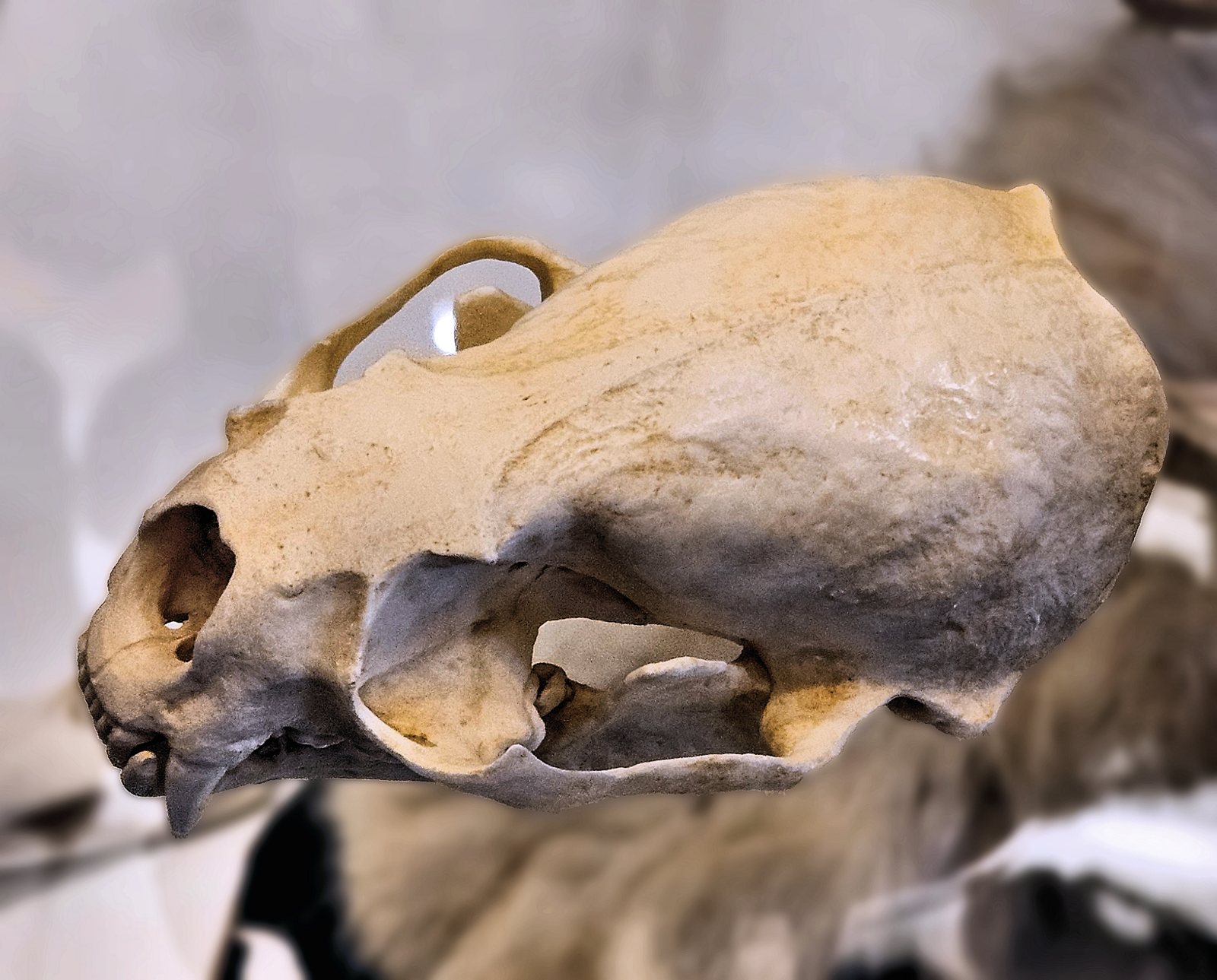
Now turn it over and look at the teeth. The upper molar, the last tooth on each side of the upper jaw, is squarish. The carnassials, the pair of shearing cheek teeth that meat-eaters use to slice food, are only moderately developed in an otter, so they are not the long blades you would see in a fox or a cat.
Then check the two features the Maryland key leans on. The postorbital process is a small bony projection just behind each eye socket, and in a river otter it is well developed and easy to see. The infraorbital foramen is a hole in the bone below and in front of each eye socket, where nerves and blood vessels pass through to the face. In a river otter it is more than 8 millimeters wide. A small ruler is enough to measure it, and that single number does a lot of the work when you are choosing between an otter and a mink.
Is it a river otter skull? A quick check
Tap a card to bring it forward.
- Flat profile: The skull sits low and flat, with a long, broad braincase behind the eyes.
- Short, broad snout: The rostrum in front of the eyes is short and wide rather than long and narrow.
- 36 teeth: An adult river otter has 36 teeth when the set is complete.
- Postorbital process: A well-developed bony point sits behind each eye socket.
- Infraorbital foramen: The opening below each eye socket is more than 8 millimeters wide.
Counting the teeth
An adult river otter has 36 teeth. The dental formula I 3/3, C 1/1, P 4/3, M 1/2 is a shorthand for one side of the mouth, with the upper jaw written above the line and the lower jaw below it.
Read it like this. On each side there are three incisors on top and three below, one canine on top and one below, four premolars on top and three below, and one molar on top with two below. Add up one side, 3 plus 1 plus 4 plus 1 in the upper jaw and 3 plus 1 plus 3 plus 2 in the lower jaw, and you get 18. Double it for both sides and you reach 36. Oregon State also points out the three lower incisors on each side, small front teeth that are easy to overlook when the skull is dirty or a tooth has dropped out. The Kansas mammal accounts give the same formula.
Teeth do fall out of old skulls, especially the small incisors, so count the empty sockets too. A socket where a tooth used to sit counts just as much as the tooth itself.
Otter, mink or raccoon?
Three skulls turn up along rivers and lakes and get mixed up more than any others: the river otter, the American mink and the raccoon. The Maryland key separates them cleanly once you know where to look.
The American mink, *Neogale vison*, is a smaller relative of the otter in the weasel family, Mustelidae. Its skull is smaller overall, with a smaller infraorbital foramen and a less-developed postorbital process. The Maryland key gives it four upper cheek teeth on each side and a prominent, elongated auditory bulla, the rounded bony capsule on the underside of the skull that houses the middle ear. If the ear capsules on your skull are long, swollen and obvious, think mink.
The raccoon, *Procyon lotor*, is not a weasel at all. It has 40 teeth, including six upper cheek teeth on each side and two upper and two lower molars on each side, according to Washington University in St. Louis. The Maryland key sorts raccoons out before it even reaches the weasel family, for exactly that reason: six upper cheek teeth and 40 teeth in all. Our raccoon skull guide goes through that skull in detail.
Tap or hover a row to highlight it.
| Feature | North American river otter | American mink | Raccoon |
|---|---|---|---|
| FeatureScientific name | North American river otterLontra canadensis | American minkNeogale vison | RaccoonProcyon lotor |
| FeatureTotal teeth | North American river otter36 | American minkSorted by cheek teeth and skull size in the Maryland key | Raccoon40 |
| FeatureSkull clues | North American river otterRelatively flat; short, broad rostrum; long, broad braincase | American minkSmaller infraorbital foramen; prominent, elongated auditory bulla | RaccoonSix upper cheek teeth per side; two upper and two lower molars per side |
| FeatureEye region | North American river otterWell-developed postorbital process; infraorbital foramen over 8 mm | American minkLess-developed postorbital process | RaccoonSix upper cheek teeth place it before the weasel family in the key |
Mustelid skulls look alike, so compare the whole skull with a regional key rather than trusting one feature. Size, tooth count, the eye region and the ear capsules together give you a far better answer than any single clue. The beaver is another animal whose skull turns up by rivers and lakes, and our beaver skull story covers that one. And if the skull came from farther from the water, a squat, heavy one with a locked jaw, our badger skull guide covers another member of the weasel family.
Built for life in the water
Once you know it is an otter, the shape starts to make sense. The New York State Department of Environmental Conservation links the flattened skull, broad head, high-set eye sockets and short, broad rostrum to a semiaquatic life. Because the eyes sit high on the head, an otter can watch what is going on above the surface while most of its body stays underwater, a little like a periscope built into the skull.
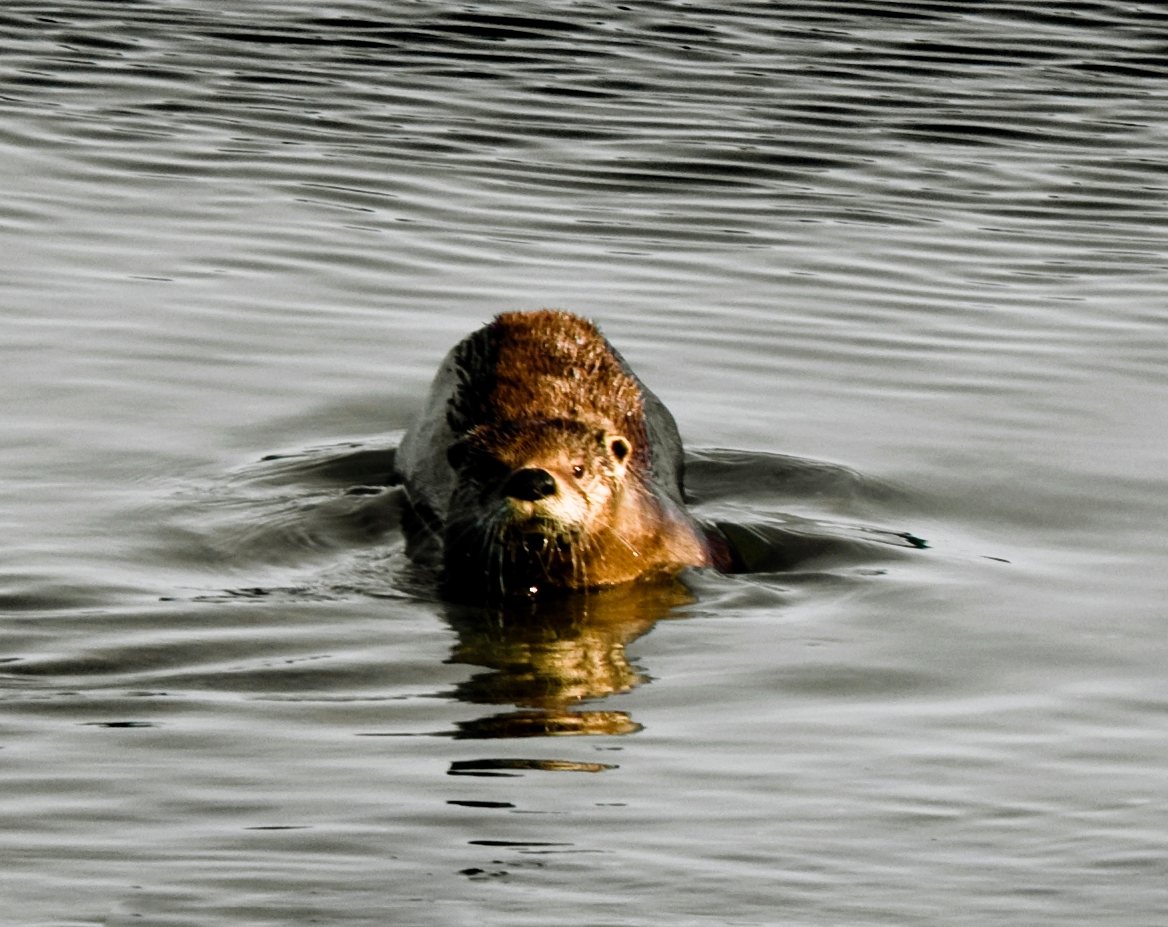
The teeth fit the menu. River otters eat fish, crustaceans, amphibians and other prey, and their canines and cheek teeth handle slippery, wriggling food. The rest of the body follows the same plan. The state's river otter profile lists a streamlined body, webbed feet, a tapered tail and nostrils and ears that close when the otter dives.
The sea otter's crushing skull
The ocean has a very different otter skull. The sea otter, *Enhydra lutris*, has a short, blunt skull and flat, fracture-resistant teeth. Its strong canines and broad cheek teeth crush and pry open hard-shelled prey such as sea urchins, crabs and clams.
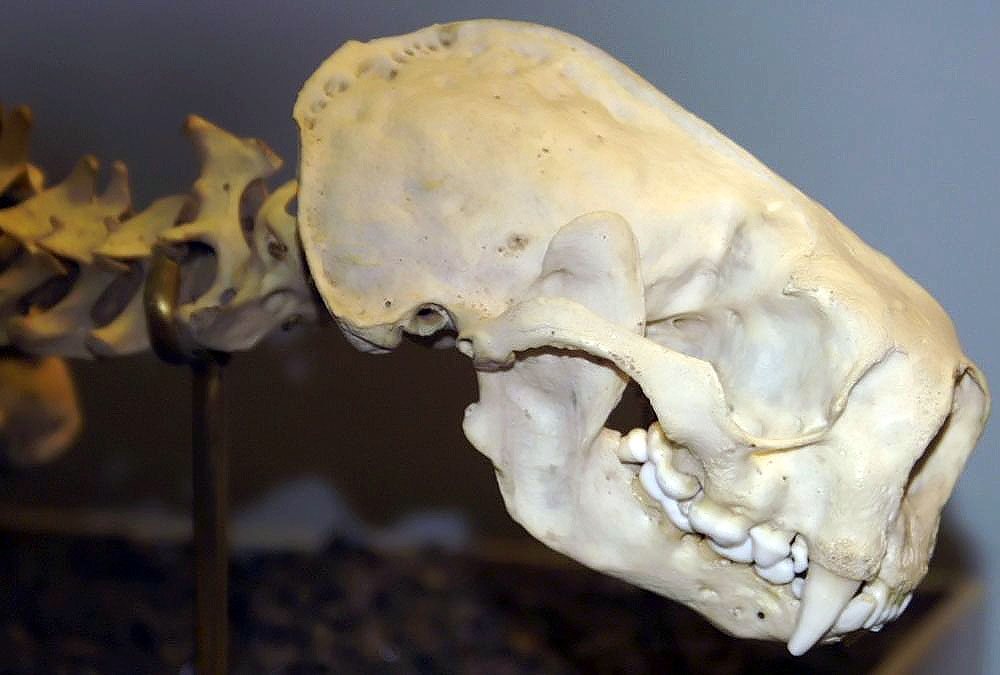
At the Burke Museum at the University of Washington, researcher Kristin Campbell and mammalogist Dr. Sharlene Santana studied more than 100 sea otter skulls. Their models estimated bite forces of nearly 80 pounds. Larger male skulls showed stronger lower jaws and larger crests where the chewing muscles attach, and the museum ties those jaws and bites to the way sea otters specialize their diets.
So, if the skull in your hand is short, blunt and lined with flat, heavy teeth, and you picked it up on an ocean beach rather than a riverbank, a sea otter is the more likely owner.
Why some otter skulls are purple
Some sea otter skulls are purple, and the reason is dinner. The Monterey Bay Aquarium says that regularly eating purple sea urchins, *Strongylocentrotus purpuratus*, can turn sea otter bones and teeth purple. The California Academy of Sciences describes the urchin pigment staining sea otter skeletons slightly purple, and the Burke Museum documents purple or reddish sea otter teeth tied to the same diet.
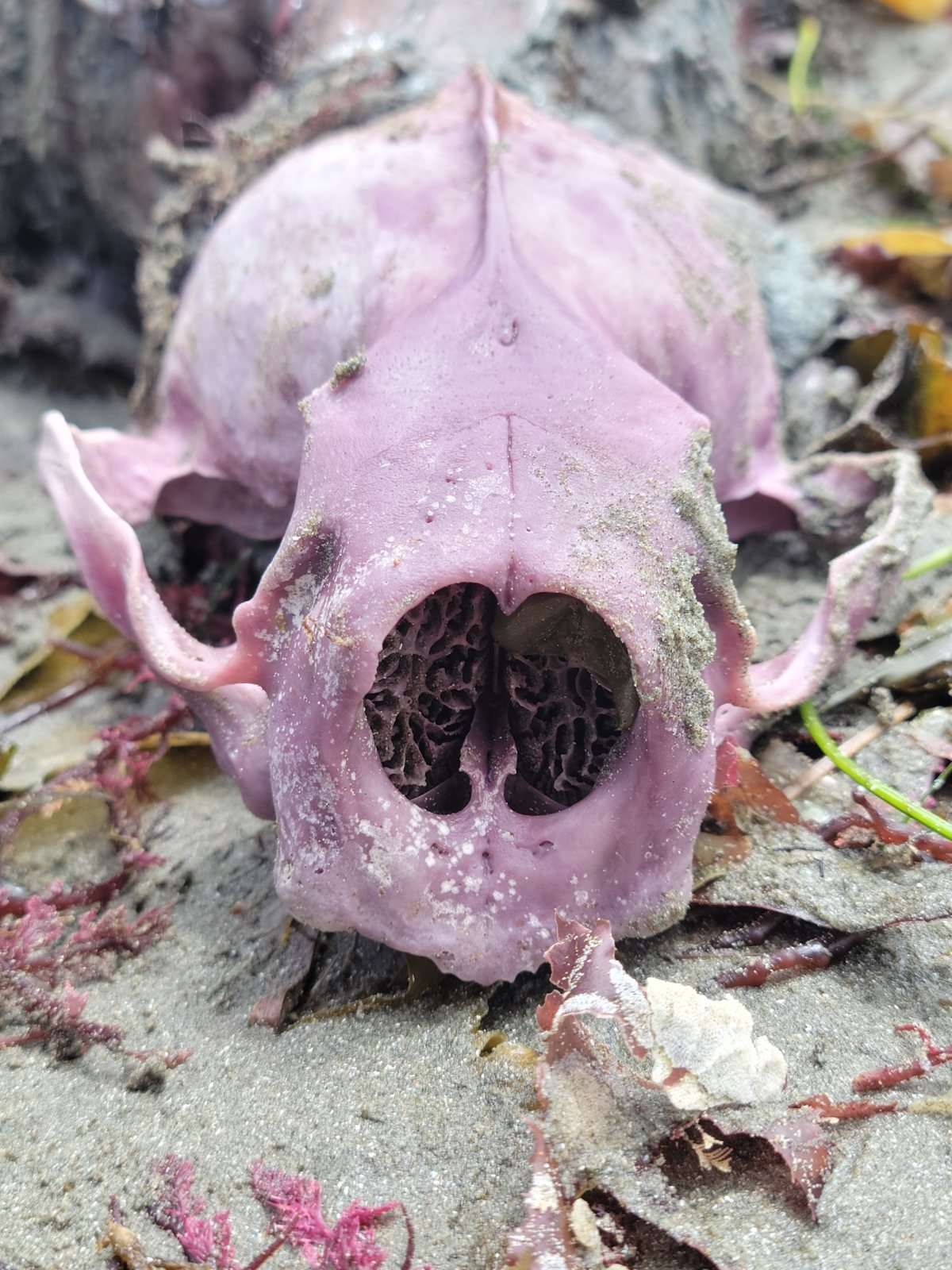
This is a sea otter story. A purple tint points to a sea otter that fed on these urchins along a coast, not to a river otter from an inland lake. Here the color of the bone tells you something about what the animal ate.
Can you keep an otter skull?
Please read this part as general information, not legal advice. Wildlife law changes from one state, province or country to the next, and only the agency where you are can tell you what applies to your skull.
The rules turn on four things: which species it is, where it lay, who owns the land and how the remains came to you. North American river otters are regulated furbearers in many places. The Wisconsin Department of Natural Resources, for example, requires prior written authorization before anyone picks up an otter carcass, and it restricts possession of protected wildlife parts. In Canada, Alberta asks people to contact a Fish and Wildlife office about any skull or bone they come across, and requires a permit for found dead wildlife.
Sea otters carry extra protection. In the United States, all sea otters are covered by the Marine Mammal Protection Act, which NOAA Fisheries helps administer. The US Fish and Wildlife Service allows limited collection of beach-found sea otter bones and teeth only in specified circumstances. It excludes the southwestern sea otter stock, requires registration and tagging within 30 days, and bars collection on National Park Service and Fish and Wildlife Service lands.
Southern sea otters, *Enhydra lutris nereis*, are also protected under the Endangered Species Act and California law, according to the Fish and Wildlife Service's southern sea otter page. Internationally, sea otters are listed under CITES, the treaty that controls trade in protected species, and a December 2024 Fish and Wildlife Service table places the southern sea otter in Appendix I.
The practical step is the same everywhere. Note the exact spot, take a photo, leave the skull where it is if you have any doubt, and call your state wildlife agency, the land manager or the US Fish and Wildlife Service before you keep anything. Our page on what to do when you find an animal skull explains who to ask. Only once an agency has said yes is it time to think about cleaning an animal skull or the dermestid beetles museums use.
Questions about otter skulls
A few more questions come up once the skull is on the table.
Why is it illegal to collect otter bones?
Collecting otter bones is restricted in many places because otters are regulated furbearers or, in the case of sea otters, protected marine mammals. Wildlife laws control who may possess the parts, whether they must be tagged, whether they can be traded and whether anything may be taken from public lands. The exact rule depends on the state, province or country.
Do sea otters and river otters have the same skull?
No, the two skulls are built for different food. A river otter skull is flat, with a short, broad snout and a long, broad braincase, while a sea otter skull is short and blunt with flat, fracture-resistant teeth for crushing urchins, crabs and clams.
What animal is this skull if it is not an otter?
Start with the tooth count and a regional skull key, then compare it with the look-alikes. Forty teeth points to a raccoon, long ear capsules point to a mink, and a skull that is not a mammal's at all is worth checking against our human vs animal skull guide or your state wildlife agency.
How well do you know otter skulls?
Answer every question to check.
Count, measure, then ask
A flat skull with a short, broad snout, 36 teeth, a clear bony point behind each eye and a wide opening below it is the river otter's signature. Count the teeth and sockets, measure that opening and check the ear capsules, and the otter, mink and raccoon sort themselves out. If the skull came off an ocean beach, think sea otter, and remember the extra federal protection that comes with it. Before anything goes home with you, a call to the wildlife agency is the step that settles it, and the whale skull story covers the rules for other marine mammals found on the shore.
Terms in this story
Tap a term to see what it means.
Lontra canadensis. The scientific name of the North American river otter, an otter of rivers, lakes and wetlands.
---