

No. 160
Beaver Skull: Why the Teeth Are Orange and How to Identify One
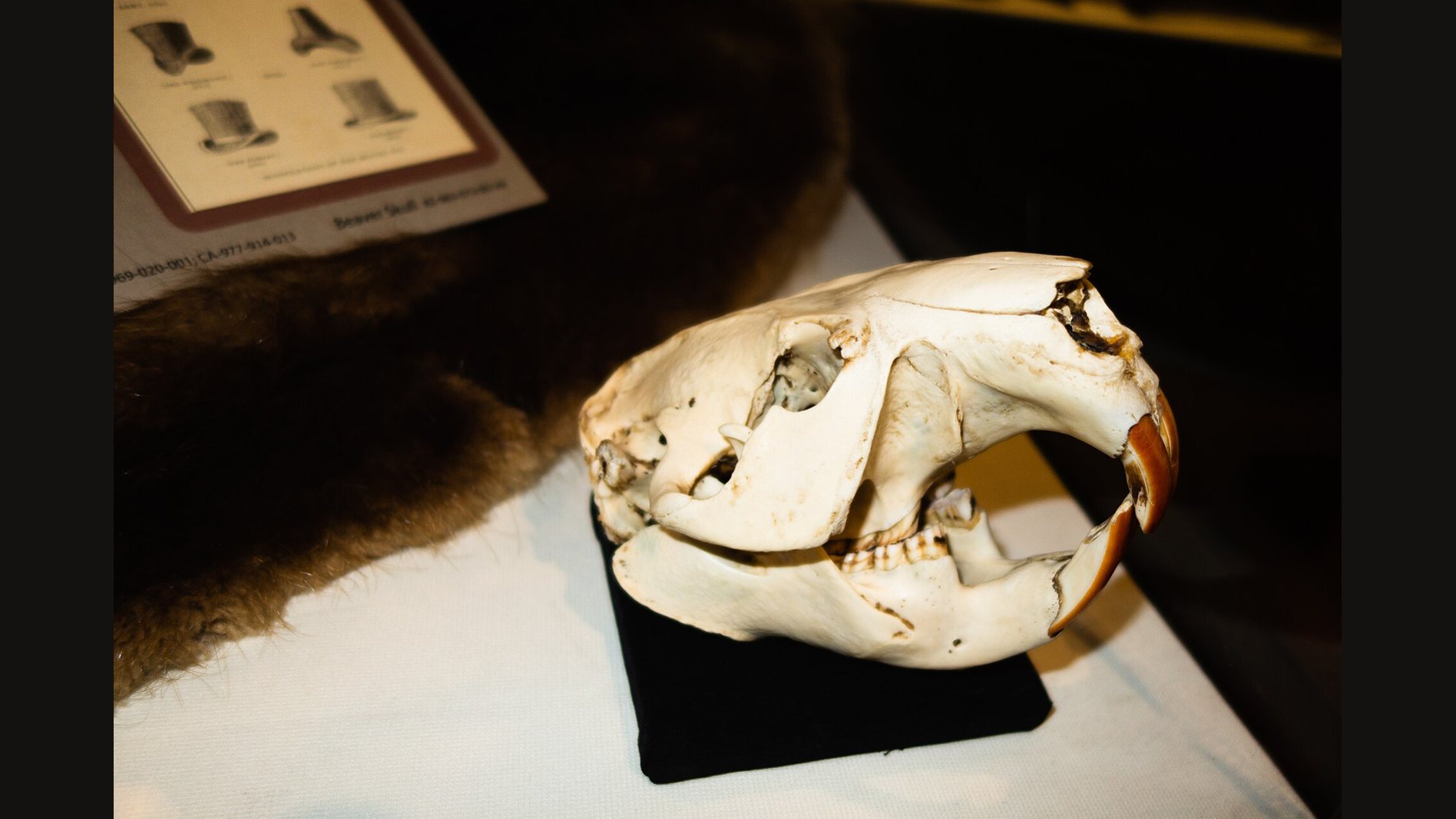
A large rodent skull with two big orange front teeth on top and two on the bottom points to a North American beaver, *Castor canadensis*. The orange comes from iron in the hard enamel on the front of each incisor. The Smithsonian National Zoo explains that the iron strengthens the enamel against cracking while the beaver gnaws.
Those teeth grow for the beaver's whole life and wear into a chisel edge that keeps itself sharp. To confirm the identification, turn the skull over and look at the ear canals. The Maryland Department of Natural Resources skull key describes them as long and pointing upward in a beaver, and short and not pointing upward in a muskrat.
Keeping one is a separate question, and the answer depends on your state and on how the animal died. Ask the state wildlife agency before the skull goes on a shelf.
> Legal note: Beavers are furbearers in most states, so their parts fall under trapping rules; this story is general information, not legal advice, and it cannot clear any one skull for keeping. For an answer about your skull, contact your state wildlife agency or the U.S. Fish and Wildlife Service.
Why beaver teeth are orange
The color is the first thing anyone notices, and it is real tooth, not stain. A beaver has two large upper and two large lower incisors, and their front faces range from orange to reddish-brown. That shade comes from iron-rich enamel. According to the Smithsonian National Zoo, the iron makes the enamel stronger and less likely to crack, which matters for an animal that spends its days chewing wood.
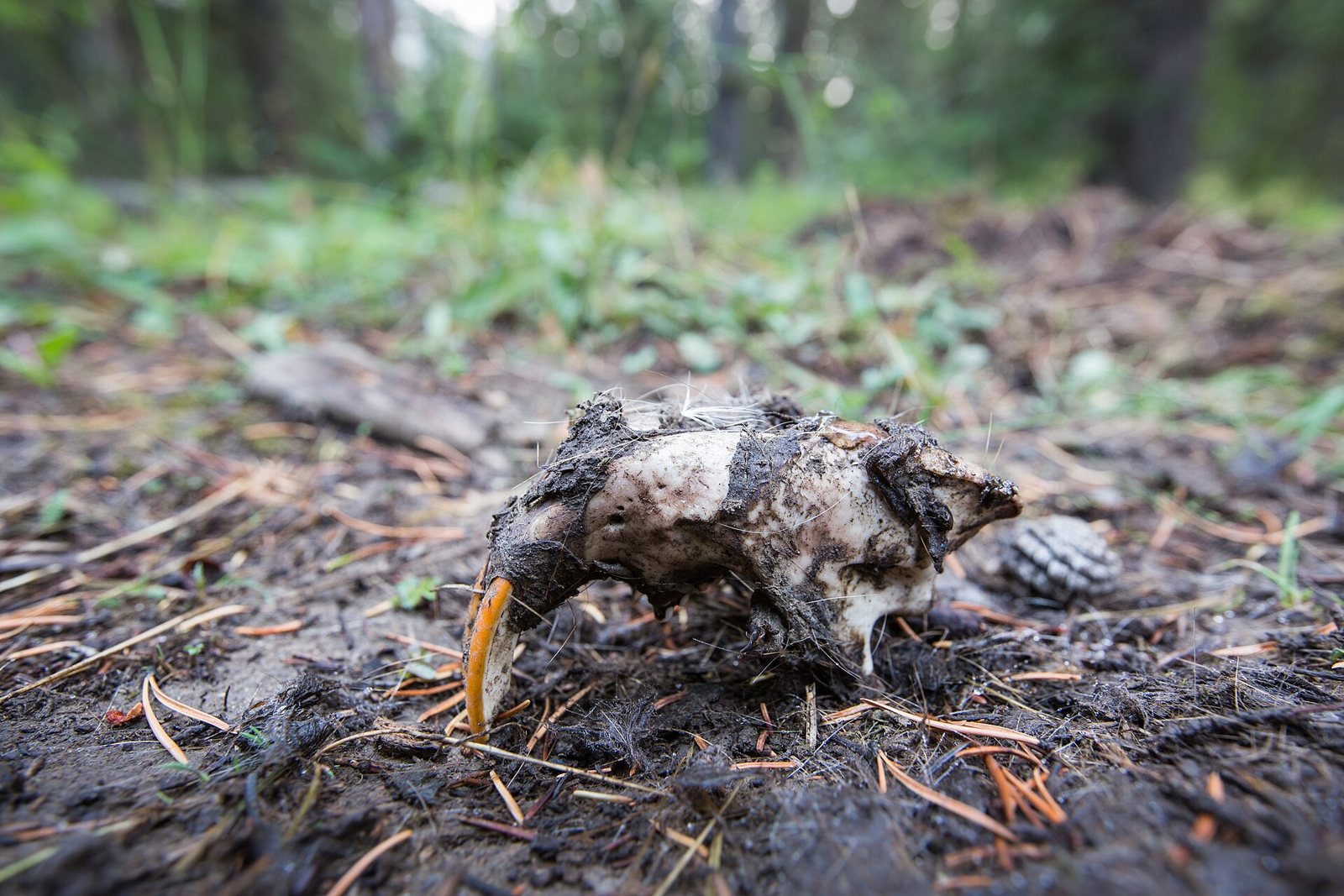
The color sits only on the front of the tooth, and that is the key to how the tooth works. Listeners asked about it on the NPR Vermont program *But Why?*, where one wanted to know why beaver teeth are orange and another asked why the front of a beaver tooth is hard while the back is soft. The answers fit together. The front is a layer of hard, iron-strengthened enamel. Behind it is softer dentine, and the difference between the two layers is what keeps the tooth sharp.
Teeth that never stop growing
A beaver's incisors grow continuously throughout its life. Virginia Cooperative Extension at Virginia Tech describes new tooth material forming at the base of each incisor while daily gnawing wears down the exposed tip. The tooth is always being built at one end and used up at the other.
The wear does more than shorten the tooth. Because the dentine behind the enamel is softer, it wears away faster, which keeps a chisel-like cutting edge on the hard enamel. The upper and lower incisors meet at an angle and grind against each other during biting, which keeps those edges sharp. The Smithsonian National Zoo's International Beaver Day facts, published April 7, 2019, call the result a self-sharpening tooth. It is a tool that maintains itself every time it is used.
Behind those incisors, a beaver skull has fewer teeth than you might expect. Its dental formula is 1/1, 0/0, 1/1, 3/3, which means one incisor, no canines, one premolar and three molars on each side of the upper and lower jaw, for 20 teeth in all.
How those teeth cut down trees
The orange incisors are working tools. Beavers use strong jaws and sharp, chisel-shaped incisors to cut woody plants and peel bark, according to Virginia Cooperative Extension. Their diet includes bark, leaves, woody stems and aquatic plants, and the trees they use most often for food and building include poplar, aspen, willow, birch and maple.
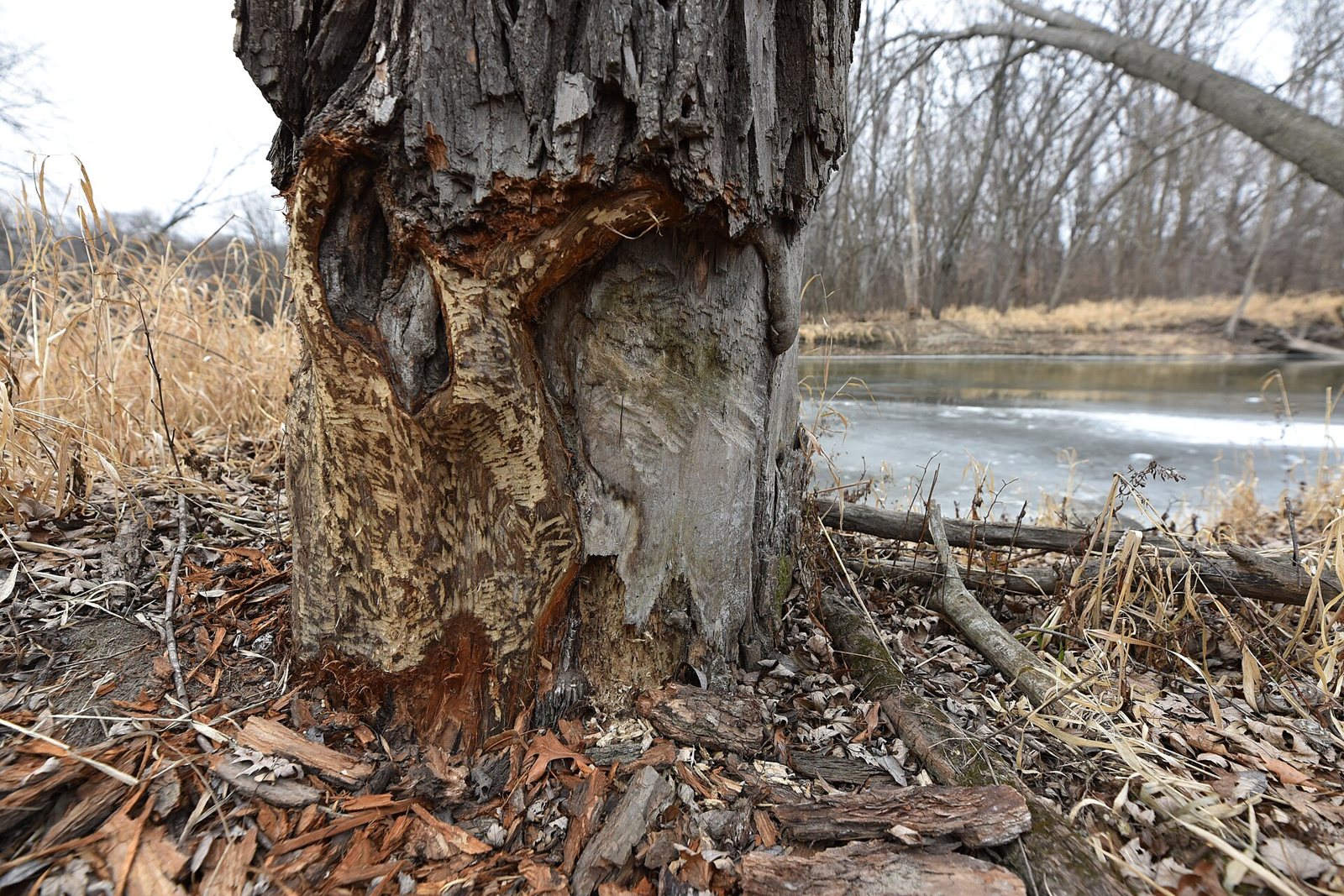
What they cut, they build with. The Smithsonian National Zoo describes beaver dams made from sticks, reeds, branches, saplings, mud and rocks. Those dams create slow-moving ponds that give other wildlife a place to live. Every one of those sticks went through the same pair of orange chisels.
Beaver, muskrat, porcupine or groundhog?
Several rodents leave skulls with big front teeth. The Maryland Department of Natural Resources key and Animal Diversity Web give clear points for telling them apart.
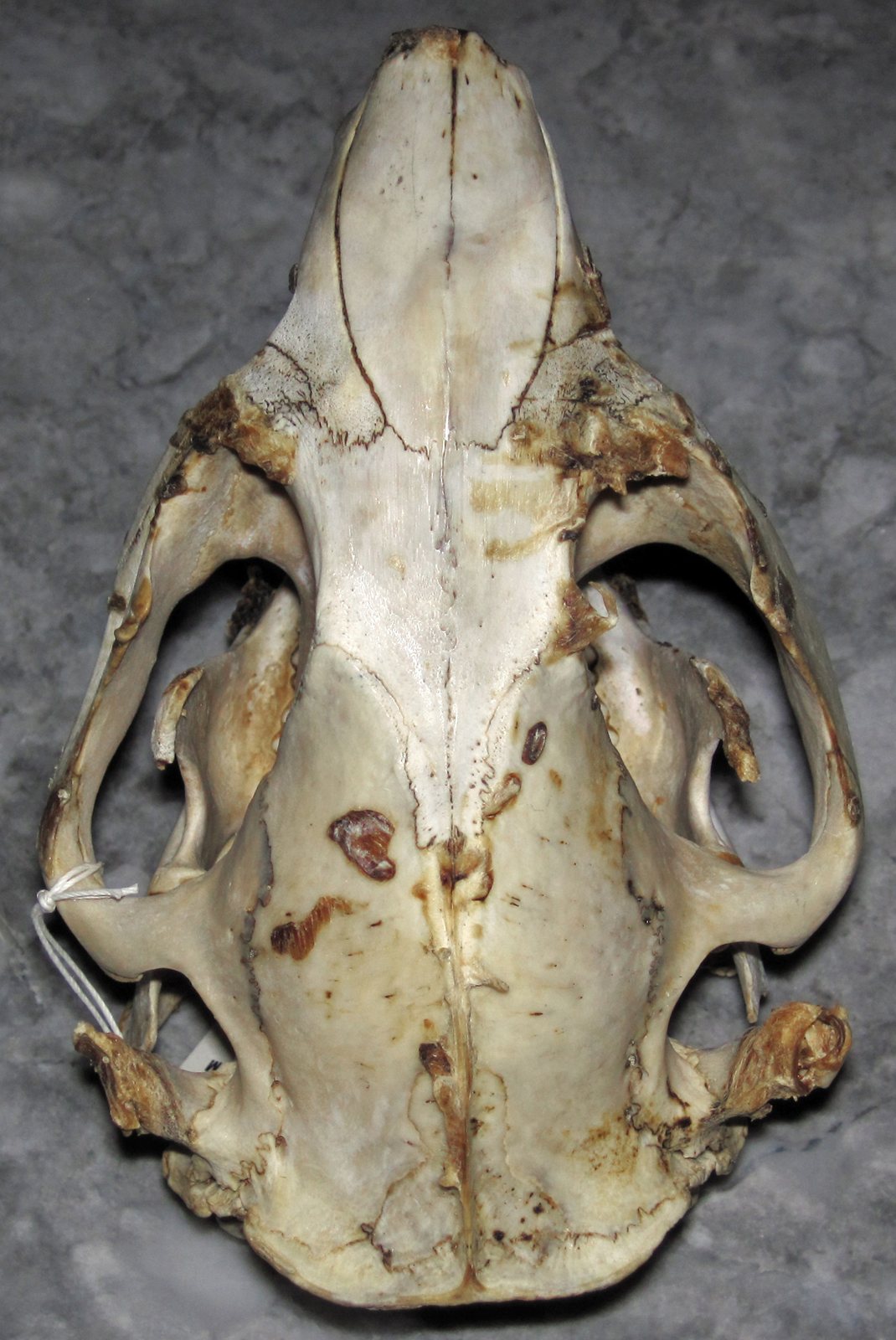
A beaver skull is generally the largest of the four, with those long, upward-pointing ear canals. A muskrat, *Ondatra zibethicus*, has a smaller skull and short ear canals that do not point upward. In the Maryland key, the ear canals are the most useful single difference between the two.
A North American porcupine, *Erethizon dorsatum*, has a large infraorbital opening associated with its distinctive chewing muscles. It also has no canines and the same 1/1, 0/0, 1/1, 3/3 dental formula as a beaver, so tooth counts alone will not separate them. The Maryland key separates porcupines from nutria by a feature called the paraoccipital process, so nutria are worth considering whenever the infraorbital opening is large.
A groundhog or woodchuck, *Marmota monax*, is easier. Its incisors are white, and Animal Diversity Web gives it 22 teeth, with the formula 1/1, 0/0, 2/1, 3/3. In the Maryland key its skull is generally longer than 76 millimeters.
Tap or hover a row to highlight it.
| Animal | Key clues |
|---|---|
| AnimalNorth American beaver, Castor canadensis | Key cluesGenerally the largest of the four; long ear canals pointing upward; orange to reddish-brown incisors; 1/1, 0/0, 1/1, 3/3, 20 teeth |
| AnimalMuskrat, Ondatra zibethicus | Key cluesSmaller; short ear canals that do not point upward |
| AnimalNorth American porcupine, Erethizon dorsatum | Key cluesLarge infraorbital opening; no canines; 1/1, 0/0, 1/1, 3/3; consider nutria too |
| AnimalGroundhog or woodchuck, Marmota monax | Key cluesWhite incisors; 1/1, 0/0, 2/1, 3/3, 22 teeth; skull generally longer than 76 mm |
One caution applies to all four. A photograph from one angle may not be enough for a confident identification, so compare overall size and the cheek teeth as well, and photograph it from the side, top and underneath. If the skull in your hands has long canines and no orange incisors, our stories on the raccoon skull and the opossum skull may be the better place to compare.
The giant beaver of the Ice Age
Modern beavers had a giant relative. The giant beaver, *Castoroides ohioensis*, was an extinct North American rodent of the Pleistocene, about the size of a modern black bear. The University of Waterloo Earth Sciences Museum places the oldest giant-beaver fossils at about 1.4 million years old and its disappearance from North America at about 10,000 years ago. In the Waterloo account it reached about 8 feet in length and weighed about 60 to 100 kilograms. If you want a sense of that size in skull terms, our story on the bear skull gives the measurements.
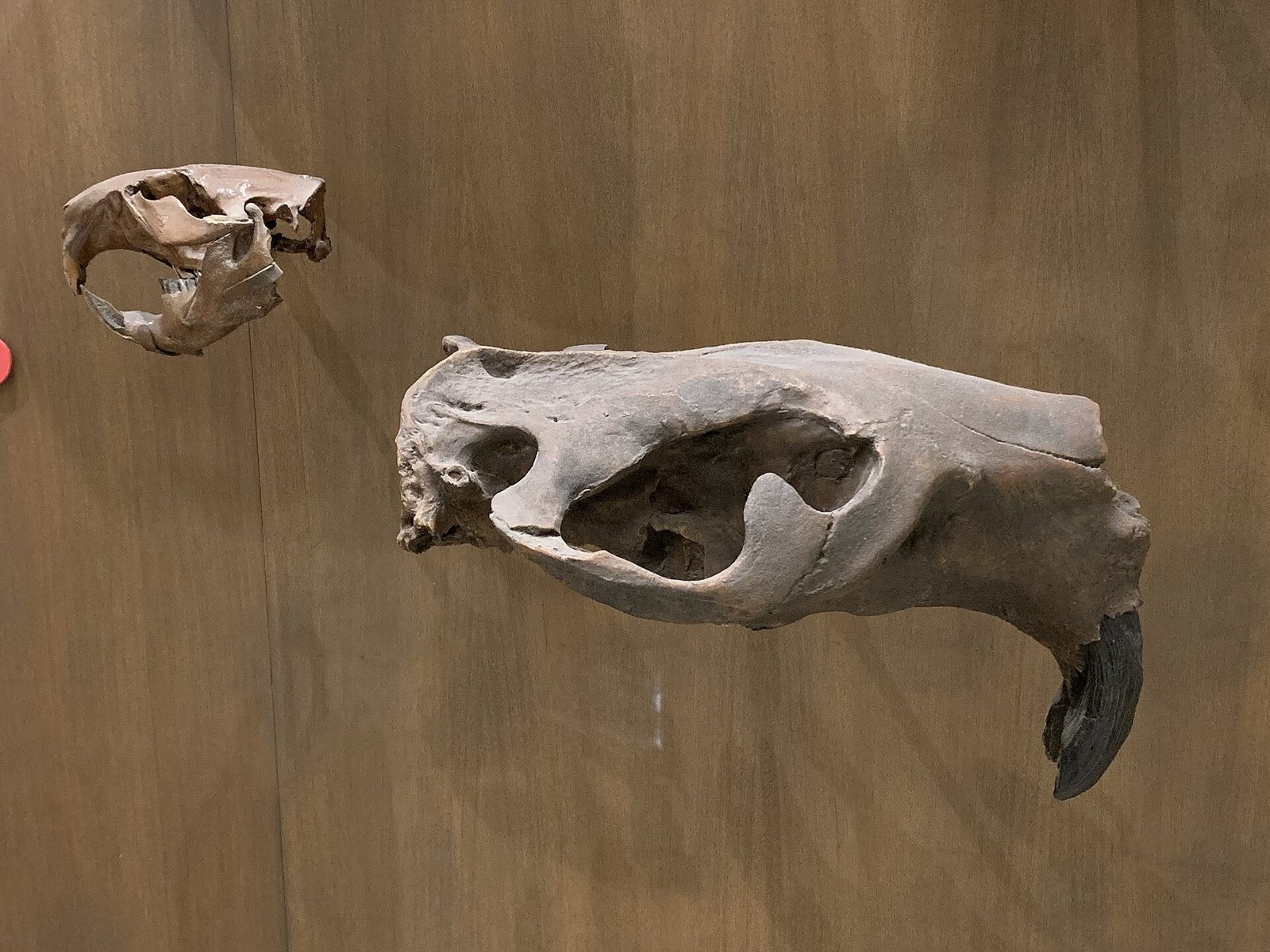
Its teeth tell a different story from its living cousin's. Giant-beaver incisors could reach about 6 inches long, with prominent ridges and blunt, rounded tips, unlike the sharp chisels of a modern beaver. The Illinois State Museum reads that shape as evidence that giant beavers gouged or ground plant material, rather than cutting trees and building dams the way beavers do now.
One of the most complete examples came out of the ground in Indiana. The Joseph Moore Museum at Earlham College reports that its most complete giant beaver was recovered by Joseph Moore in Indiana in 1889. For how scientists work out the age of fossils and old bones, see how old are these bones.
Beavers, giant and modern
Tap or hover a step to follow the order.
About 1.4 million years ago
The oldest giant-beaver fossils cited by the University of Waterloo
Pleistocene
Castoroides ohioensis, about the size of a black bear, lives in North America
About 10,000 years ago
Giant beavers disappear from North America, according to the University of Waterloo
1889
Joseph Moore recovers the Joseph Moore Museum's most complete giant beaver in Indiana
April 7, 2019
The Smithsonian National Zoo publishes its International Beaver Day facts on iron-rich, self-sharpening teeth
Can you keep a beaver skull?
Rules vary by state and by how the animal was acquired, so there is no single answer that covers every skull from every creek bank. A few official examples show the range, and they are examples, not a list for your state.
The Wisconsin DNR counts teeth, clean skulls and clean bones as animal parts, and says no approval is required to possess parts of legally taken beavers. That rule is about beavers taken legally; it does not settle the question for a skull someone comes across. North Carolina prohibits selling wildlife parts found dead, with a limited exception for licensed trappers and hunters selling certain furbearer carcasses or pelts to licensed fur dealers during the open season.
Virginia permits buying and selling beaver skulls, teeth, bones and other furbearer parts when the animal was legally taken. Michigan's Wildlife Conservation Order includes recordkeeping requirements for certain beaver parts possessed after vehicle collisions.
Before keeping a skull, identify the state it came from and contact that state's wildlife agency or wildlife law-enforcement office. Our story on what to do if you found an animal skull covers the federal laws and state examples that apply to skulls in general.
Cleaning and displaying it
Once you know the skull is yours to keep, it will probably need cleaning. Our story on how to clean an animal skull covers safe handling, soaking, degreasing and whitening, and how museums clean skulls with dermestid beetles explains the method collections use for delicate bone and teeth.
Beaver skull quiz
Answer every question to check.
Quick answers about beaver skulls
A few more questions come up once the orange teeth have been explained.
How do you identify a beaver skull?
Look for a large rodent skull with orange to reddish-brown incisors, no canines and 20 teeth, then check the ear canals. Long canals that point upward mark a beaver in the Maryland skull key, while a muskrat's are short and do not point upward.
Do beaver teeth ever stop growing?
No, a beaver's incisors grow throughout its life. New tooth material forms at the base while daily gnawing wears down the tips, and the softer dentine behind the enamel wears faster, which keeps the edge sharp.
What animal has orange front teeth?
The beaver is the classic answer, because the hard enamel on the front of its incisors is rich in iron. For contrast, a groundhog, another rodent with big front teeth, has white incisors.
Can I keep a beaver skull I found?
It depends on your state and on how the animal died, so contact the state wildlife agency before keeping it. Some states allow possession of parts from legally taken beavers, while others limit selling wildlife parts found dead; none of that settles a particular skull.
Where to go next
If your skull turned out to be a beaver, start with the rules in found an animal skull, then move on to cleaning an animal skull once you know it is yours to handle. And if a bone you have raises a bigger question, our story on telling a human skull from an animal skull explains what to look for and what to do.
Terms in this story
Tap a term to see what it means.
Incisors. The front teeth. A beaver has two large upper and two large lower incisors, orange to reddish-brown on the front.
---