

No. 024
Owl and Skull Meaning: What the Pairing Says About Wisdom and Death
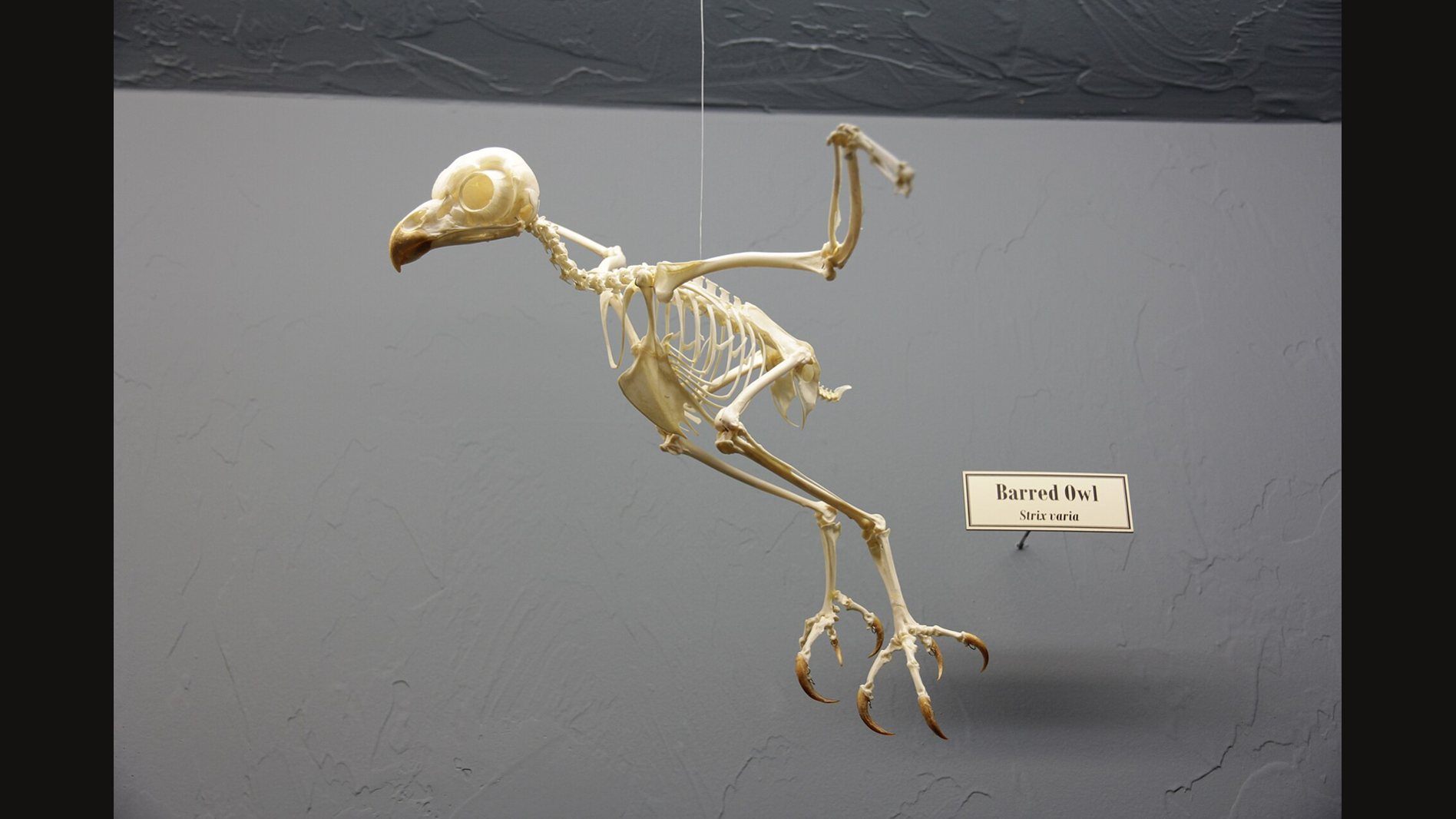
Together, an owl and a skull most often mean wisdom facing mortality. The pairing comes from European vanitas and memento mori art, where the skull stands for the limits of a human life and the owl for wisdom, watchfulness and Minerva, the Roman goddess of wisdom. Giuseppe Maria Crespi's eighteenth-century Italian painting *Vanitas with Books and an Owl* sets the two side by side on a book. The owl brings its own history too. In classical Athens it was Athena's bird and could be a lucky sign; in some Roman, Maya, Zapotec and Mexican traditions its call warned of death. On a tattoo, print or shelf today, the person who chose it decides which of those meanings leads.
The short answer: knowledge looking death in the face
A skull on its own says that life ends. An owl beside it adds someone who sees in the dark and knows things. Put them together and the image reads like a quiet conversation between knowledge and mortality: learn what you can, because time is short. That is the reading that the old vanitas paintings support, and it is still the most common one.
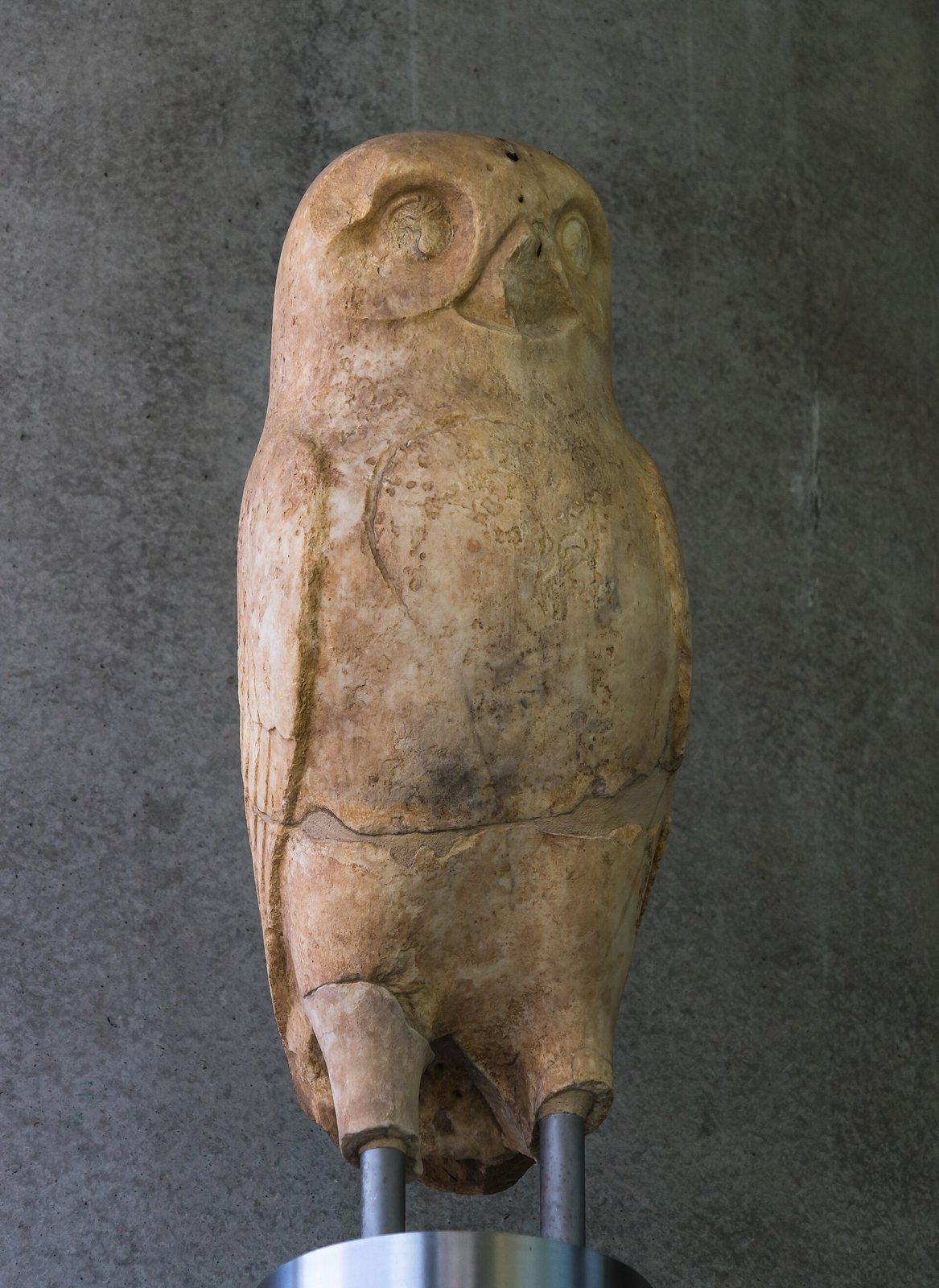
Modern owl-and-skull tattoos stretch the idea in personal directions. A design might stand for wisdom shaped by mortality, insight that came out of hard times, remembrance of someone lost, or survival and change. None of those is a single fixed code. They are reasons real people choose the design, and they all grow out of the same two old symbols.
The owl, though, is the half that changes the most from place to place. To understand an owl-and-skull design you need to know which owl you are looking at: the clever bird of Athens, or the night caller that some communities hear as a warning.
Athena's owl in Athens
The owl's best-known ancient job was as the companion of Athena, the goddess of wisdom, strategy and war, in classical Athens. A Greek bronze statuette of about 460 BCE at the Metropolitan Museum of Art shows Athena preparing to release her owl, as if sending it off on an errand. Athenian silver coins of the fifth century BCE put Athena's head on one side and an owl on the other, as the British Museum notes.
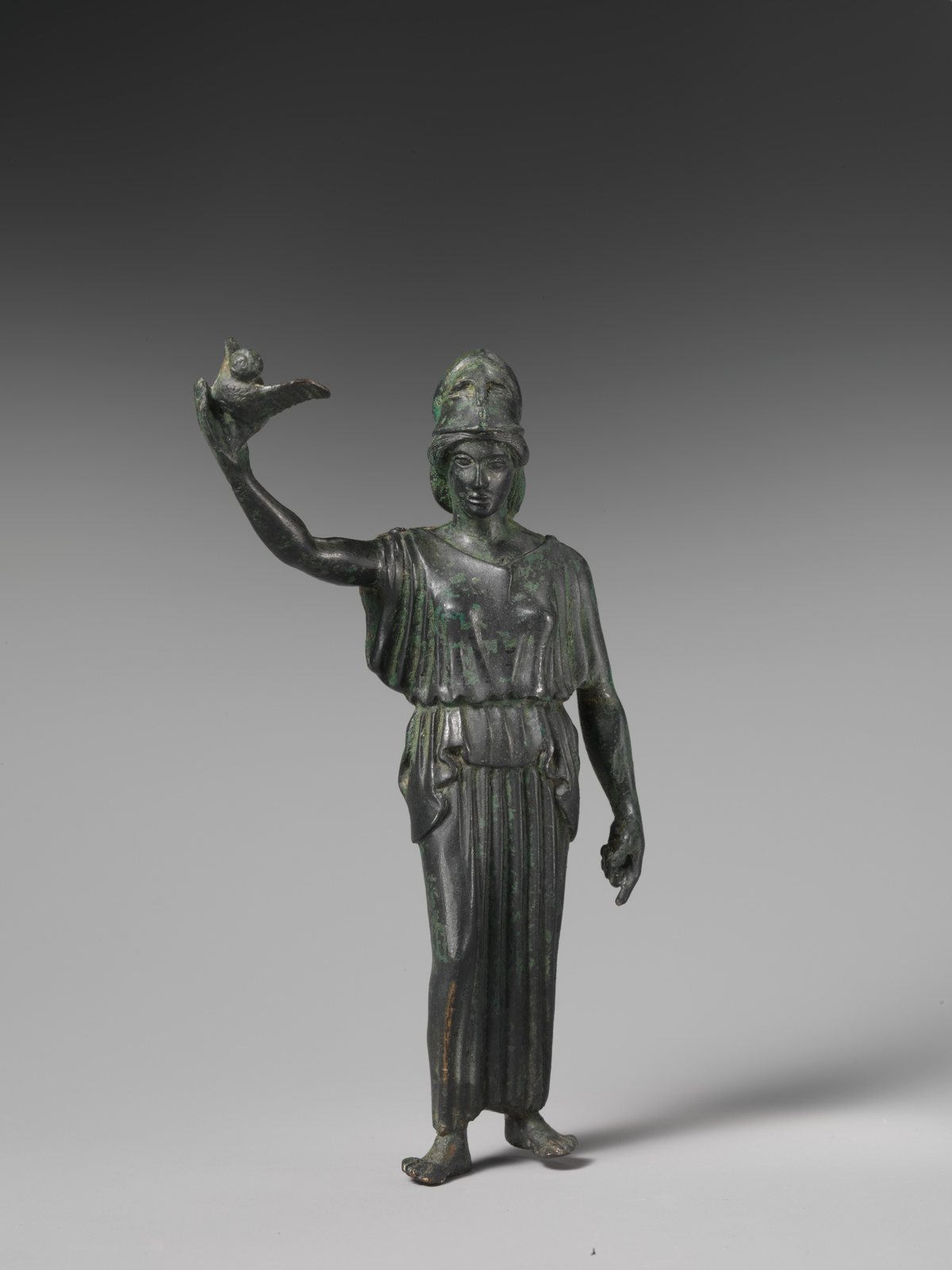
In Athens an owl could be a lucky sign. When the Romans took over Athena's role for their goddess Minerva, the owl came along with her. That is the owl that later European painters had in mind when they set one next to a skull: Minerva's bird, the emblem of wisdom.
The owl as a warning in other traditions
Not everyone heard the owl as good news. Roman literary and divinatory traditions also treated night birds as warnings, according to an account of Greek and Roman divination hosted by the University of Chicago. The same bird that brought luck in Athens could bring dread in a Roman omen.
In the Maya world, the meanings are more varied still. Harri Kettunen's 2016 study of Maya owl symbolism, recorded by the University of Helsinki, describes beliefs among Yucatec Maya, Itzaj, Mopán, Chuj, Mam, Akatek, Q'eqchi' and Tzotzil communities in which an owl's call, its flight near a house or its presence near a sick person can signal illness or death. Kettunen also records positive meanings, especially among hunters, for whom owls could be linked with a successful hunt. In other words, there is no single Maya owl; each community has its own.
In Zapotec tradition, an Oxford Academic article on bird signs records a reading of the barn owl's call as "cutting out somebody's shroud." And an INAH study, published by Mexico's national institute of anthropology and history, records the tecolote and the búho, two Spanish words for owls, as animals of bad omen that announce death in the Mexican community it describes.
These beliefs belong to the communities that hold them. They are not one Mesoamerican or Indigenous view, and they are not a reason to fear a tattoo. They do explain why an owl next to a skull can feel like a natural match to many people: in more than one tradition, the owl was already a messenger about death.
The owl and the skull through history
Tap or hover a step to follow the order.
About 460 BCE
A Greek bronze statuette from Athens shows Athena with her owl, linked with wisdom and strategy.
Fifth century BCE
Athenian silver coins carry Athena on one side and an owl on the other.
About 1581
A vanitas plaque from Limoges, France, includes an owl in an allegory of life and approaching death.
1600 to 1699
A Cologne engraving combines a skull, a skeleton, an owl and other memento mori symbols.
1766
An Italian vanitas painting places an owl and a human skull among books and medical imagery.
2016
Harri Kettunen's study records both negative and positive owl meanings in Maya communities.
Owls and skulls together in vanitas and memento mori art
The owl-and-skull pairing has documented roots in European art about death. A vanitas plaque made in Limoges, France, around 1581, now in the British Museum, includes an owl in an allegory of life and approaching death. A Cologne engraving attributed to Gerhard Altzenbach, dated between 1600 and 1699 and held by the Wellcome Collection, crowds an owl, a skull, a skeleton, an hourglass and a sundial into one memento mori composition. Every object in it is about time running out, and the owl sits in the middle of the lesson.
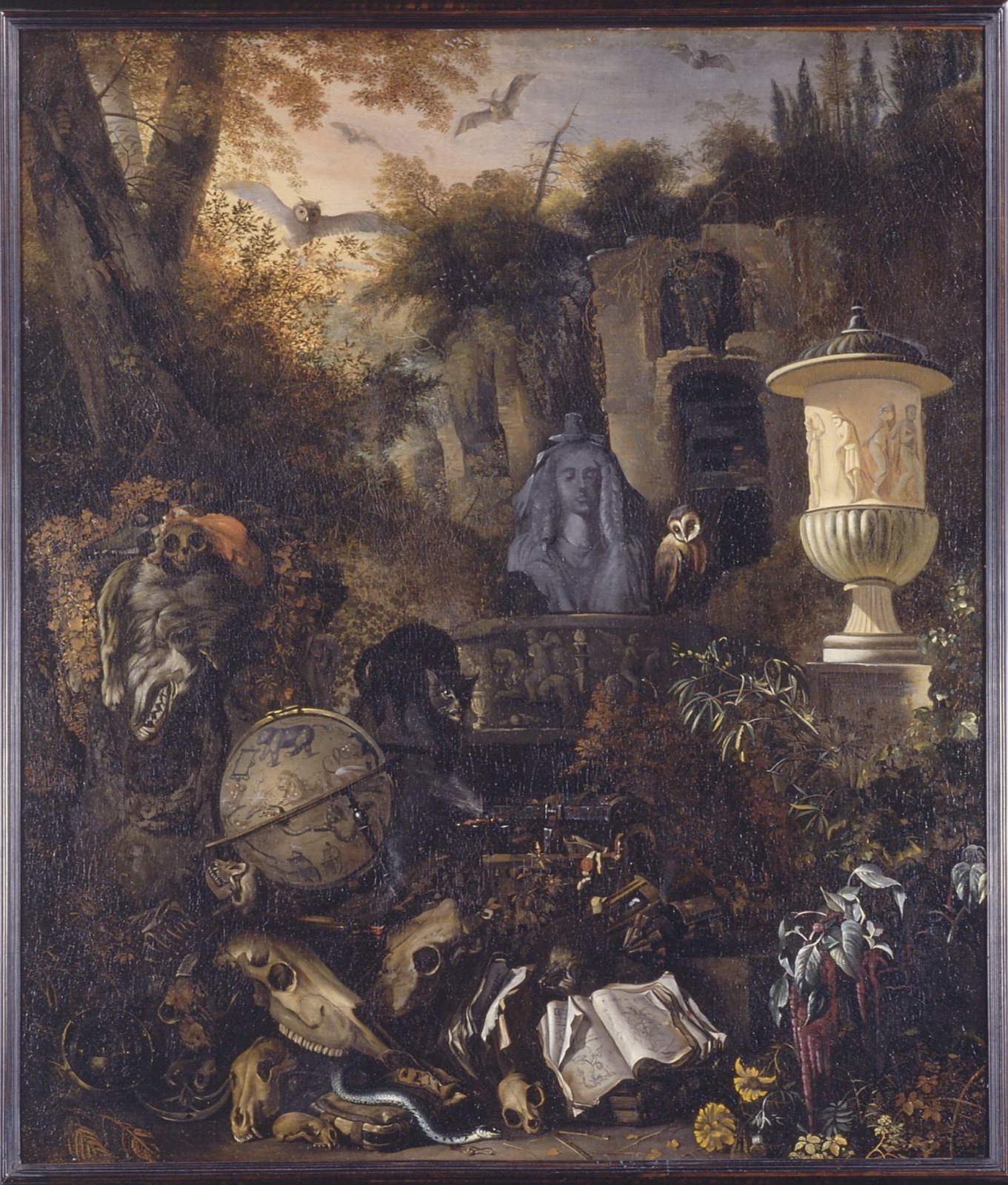
Giuseppe Maria Crespi's *Vanitas with Books and an Owl*, painted in eighteenth-century Italy, is the clearest example. The owl and the skull rest together on a book. The interpretation published with the painting connects the skull with the limits of life and the owl with Minerva and the immortality of wisdom. The body ends; what you learned and wrote down might not.
A 1766 Italian vanitas painting, also in the Wellcome Collection, places an owl on a stack of books and a human skull elsewhere in the scene, beside medical references to plague and cancer. Here the owl's learning sits in the same room as disease and death, which is about as direct as a vanitas painting gets.
The pairing turns up in stone, too. At Yale's Sterling Memorial Library in New Haven, Connecticut, a sculpture brings an owl and the figure of Death together, a fitting pair for a library.
Taken together, these works support a reading of knowledge or watchfulness facing mortality. They do not set one meaning for every modern design, but they show that an owl beside a skull has been read this way for more than four hundred years. For the bigger idea behind all of them, see what is memento mori.
The owl and skull tattoo today
Contemporary tattoo studios treat the owl and skull as a personal, custom design rather than a fixed emblem. Calgary studio Jade & Dagger describes owl tattoos through wisdom, intuition, change and protection, and says skull motifs can represent endings, new beginnings and resilience after loss. Combine those and you get the readings people most often bring to the design: wisdom facing mortality, insight shaped by hardship, remembrance or a new start after an ending.
So, does an owl and skull tattoo refer to death? Partly, yes, because the skull always does. But the owl usually tips it toward knowledge, watchfulness or memory rather than toward fear. A design with books, an hourglass or a candle leans into the old vanitas meaning. A design with a little owl that looks like the Athenian coin leans classical. A design made in memory of someone leans toward remembrance.
Some owl-and-skull designs blend the two shapes so closely that people ask whether the skull is part of the owl, for example a skull set into the owl's chest or face. There is no rule about that. It is an artistic choice, and the artist who drew it can tell you what they meant. If you are reading someone else's tattoo, ask the wearer what it represents; that answer beats any symbol dictionary. Our skull tattoo meaning story covers the skull half in more detail.
Is the owl an occult symbol?
Not in itself. In ancient Athens the owl was Athena's bird and a sign of wisdom and strategy. In some Roman, medieval European and Mesoamerican traditions, owls could instead signal danger, darkness, death or forbidden knowledge, which is where the spooky reputation comes from.
An owl in a modern occult design may be a symbol someone has adopted for their own practice, the same way a skull can be. The image alone, though, does not prove any occult affiliation. An owl on a tattoo, a poster or a coffee mug is far more likely to be about wisdom, night or simply a love of owls. If witchcraft imagery is what interests you, our story on skulls in witchcraft looks at how skulls appear there.
Real owl skulls and the law
Love of the owl-and-skull look sometimes leads to the real thing, so the legal side is worth knowing. This section is general information, not legal advice. Laws differ by state and country, and the agencies named below are the ones to ask about a particular skull.
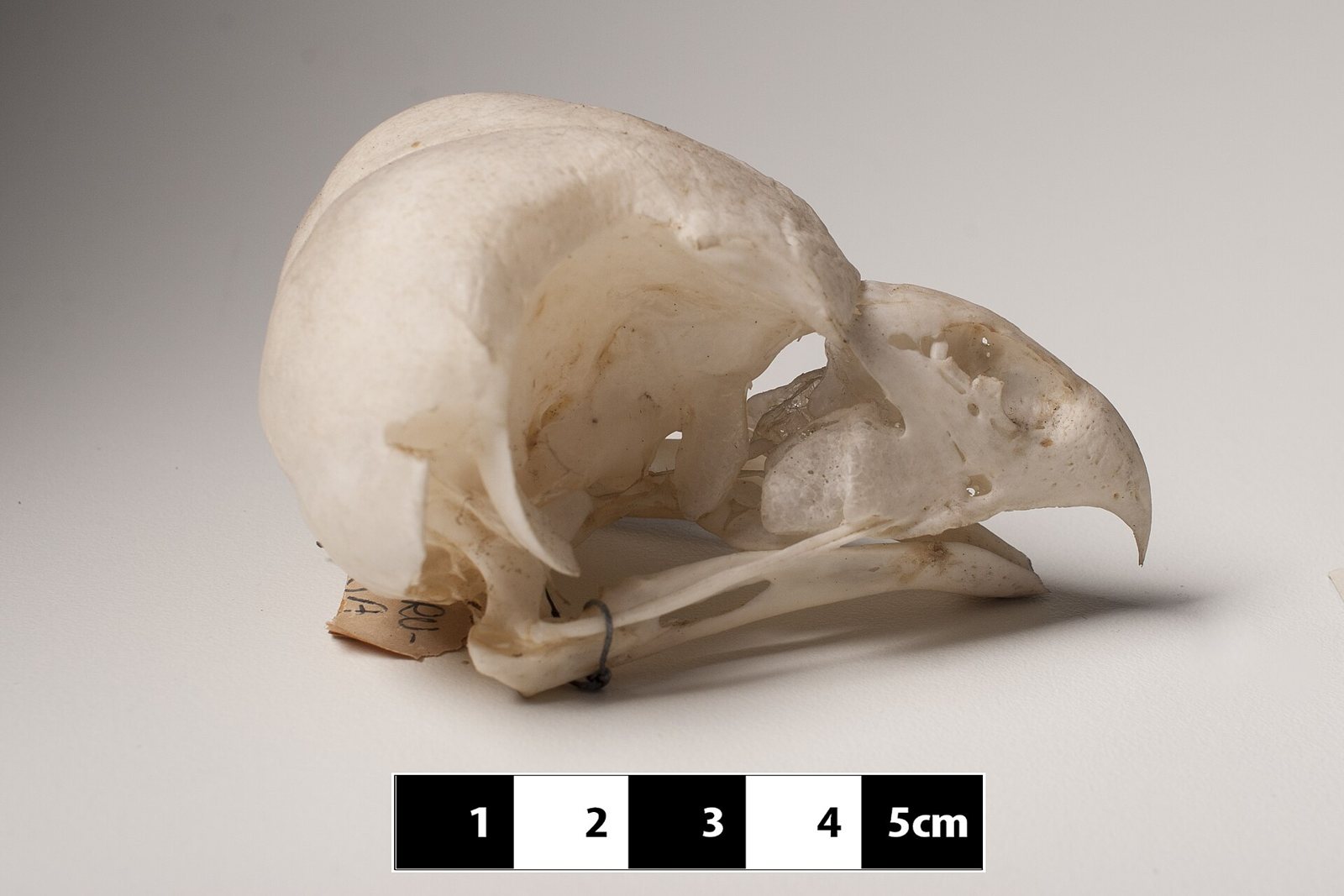
In the United States, native owl species are generally protected under the Migratory Bird Treaty Act. The U.S. Fish and Wildlife Service says the law prohibits taking protected migratory birds without authorization, and that permit rules cover possession, transportation, sale, purchase and other dealings in migratory birds and their parts. The list of protected species is published in federal regulations at 50 CFR 10.13.
Finding a dead owl does not make its skull legal to keep. The species, where the skull came from, your state's law and any permit or institutional exception all matter. People often ask how to identify an owl skull, and the species really is the first question, but the answer to whether you may keep it comes from the U.S. Fish and Wildlife Service and your state wildlife agency. Do not buy, sell, transport or keep a suspected native owl skull until they confirm its status. Our story on what to do if you found an animal skull covers the wider question.
Before you keep an owl skull
Tap a card to bring it forward.
- Do not assume: In the United States, native owl species and their parts are generally protected under the Migratory Bird Treaty Act.
- Note the species: The species, along with where the skull came from, affects its legal status.
- Check the protected list: Protected migratory birds are listed in federal regulations at 50 CFR 10.13.
- Ask the agencies: Contact the U.S. Fish and Wildlife Service and your state wildlife agency before keeping it.
- Hold off: Do not buy, sell, transport or keep a suspected native owl skull until they confirm its status.
For a design, of course, none of that applies. A drawn, printed or tattooed owl skull is art, and the history above is yours to borrow.
Choosing an owl-and-skull design
If the vanitas meaning appeals to you, look for the details the old painters used: books, an hourglass, a candle, a sundial. If you like the classical side, the compact little owl of the Athenian coins is a recognizable model. If the design is a memorial, the owl's watchfulness can stand for someone who still looks over you, and the skull for the loss itself.
Readers drawn to the owl-on-books side of vanitas may like our Book Crew skull tee: an engraved skull resting on an open book by candlelight, with READ BEYOND THE GRAVE across a ribbon. No owl, but the same scholar's desk. And if you are torn between night birds, the raven has its own story in raven and skull meaning, and the broader tattoo tradition of mortality is in memento mori tattoo meaning.
How well do you know the owl and the skull?
Answer every question to check.
Questions people ask about the owl and skull
Is the owl an occult symbol?
The owl is not an occult symbol by default; in ancient Athens it was Athena's bird of wisdom and strategy. Some Roman, medieval European and Mesoamerican traditions linked owls with danger, death or forbidden knowledge. A modern occult design may adopt the owl, but the image alone proves nothing about the wearer's beliefs.
Can you keep an owl skull?
In the United States, do not assume you can keep an owl skull, because native owl species and their parts are generally protected under the Migratory Bird Treaty Act. Permits govern possession, sale and transport. Identify the species and ask the U.S. Fish and Wildlife Service and your state wildlife agency before keeping one.
What does an owl and skull tattoo mean?
An owl and skull tattoo usually means wisdom facing mortality, drawing on European vanitas art where the skull stood for death and the owl for Minerva and wisdom. Today it can also mean remembrance, survival or insight that came from hard times. The wearer's story and the design's details decide which meaning leads.
Is the owl a symbol of death?
The owl is a death omen in some traditions but not all. Yucatec Maya, Tzotzil and other Maya communities described by Harri Kettunen, the Zapotec, and the Mexican community in an INAH study connect an owl's call with illness or death. In classical Athens, by contrast, the owl was Athena's bird and could be a lucky sign.
What does an owl mean in vanitas art?
In vanitas art, the owl usually stands for wisdom, watchfulness and Minerva, set against a skull that stands for death. Crespi's eighteenth-century *Vanitas with Books and an Owl* is a well-known example. The pairing suggests that learning may outlast the body, even though the body does not last.
Terms in this story
Tap a term to see what it means.
Vanitas. A kind of European still life that sets a skull among objects of learning, wealth or time to show that worldly things pass.