No. 025
Raven and Skull Meaning: Poe, Odin and the Gothic Look
A raven with a skull usually means mortality, mourning, remembrance or mystery. In modern Gothic art and tattooing, the pairing joins a dark, alert and clever bird with the most direct image of death there is. The skull carries the old memento mori meaning from sixteenth- and seventeenth-century Northern European art: remember that you will die. The raven brings whichever tradition the design calls on, most often Edgar Allan Poe's 1845 poem "The Raven," Odin's ravens of thought and memory, or the crow-shaped war goddess Badb of medieval Irish literature. The combination itself is modern, so the person who chose the design has the last word on what it means.
A modern pairing built from older symbols
It is tempting to imagine the raven and skull as one ancient emblem handed down from the Vikings or the Celts. The history is more interesting than that. The ravens of Norse tradition, the crows of Irish war stories and the skulls of European painting each have long, documented lives of their own, but they grew up separately. Gothic artists and tattooers put them together much later, and they did it because the two images fit so well.
That means a raven-and-skull design can carry very different moods depending on which raven it borrows. A raven on a skull with "Nevermore" written underneath is about grief and Poe. Two ravens over a skull point toward Odin and his birds of thought and memory. A crow on a battlefield skull leans toward the war goddesses of Irish literature. To read a design, start by asking which bird you are looking at.
Poe's raven and the Gothic look
The single biggest reason the raven feels Gothic is a poem. Edgar Allan Poe's "The Raven" first appeared in New York's *Evening Mirror* on January 29, 1845, and was published again in *The American Review* in February 1845, according to the Library of Congress, which describes Poe as a writer of mystery and horror and names "The Raven" among his best-known works.
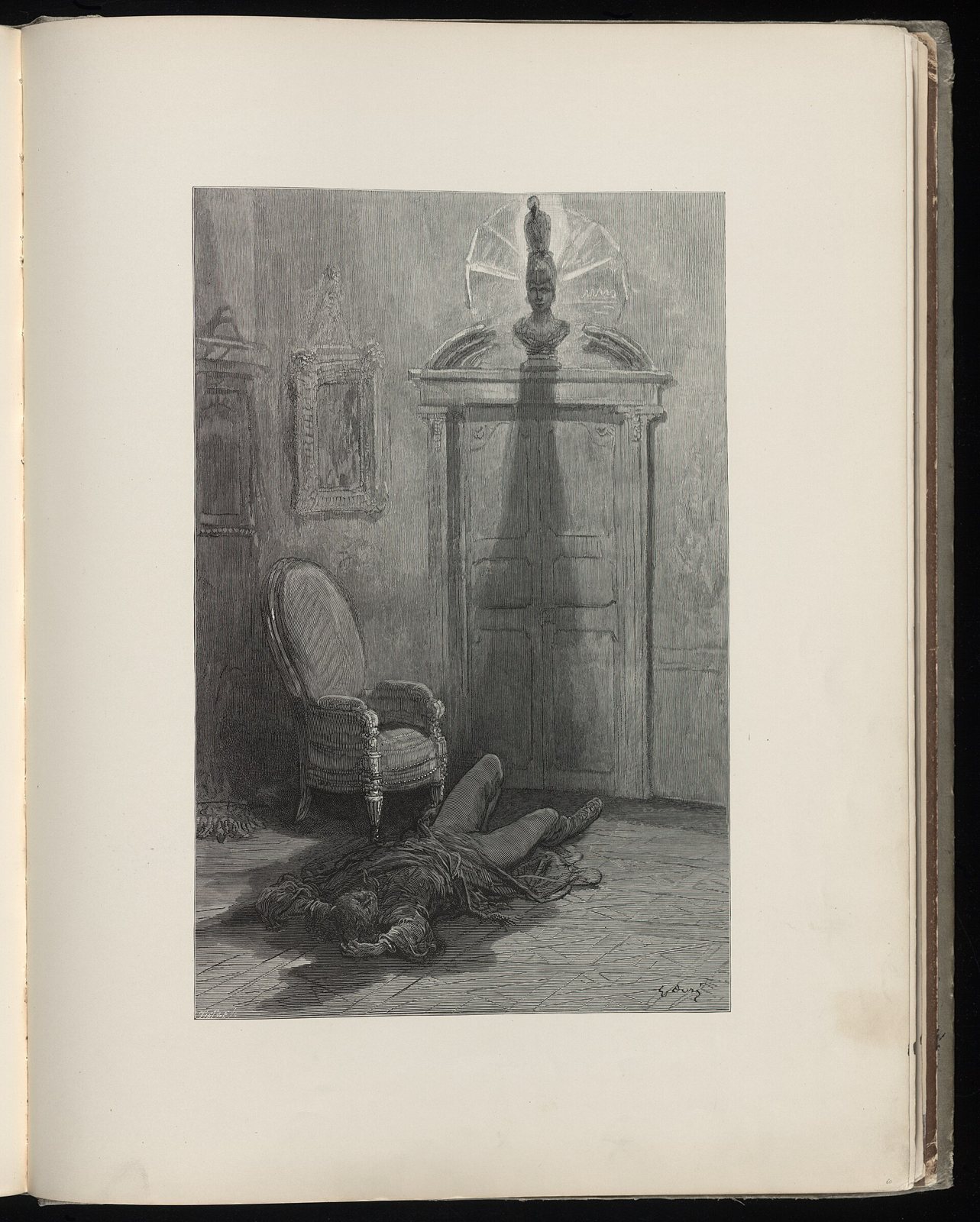
The poem follows a grieving scholar alone at midnight, mourning a woman named Lenore. A raven comes to his chamber and answers every question he asks with a single word: "Nevermore." As the night goes on, the scholar sinks deeper into grief. It may be the most famous uninvited guest in American literature, and it has never once said anything cheerful.
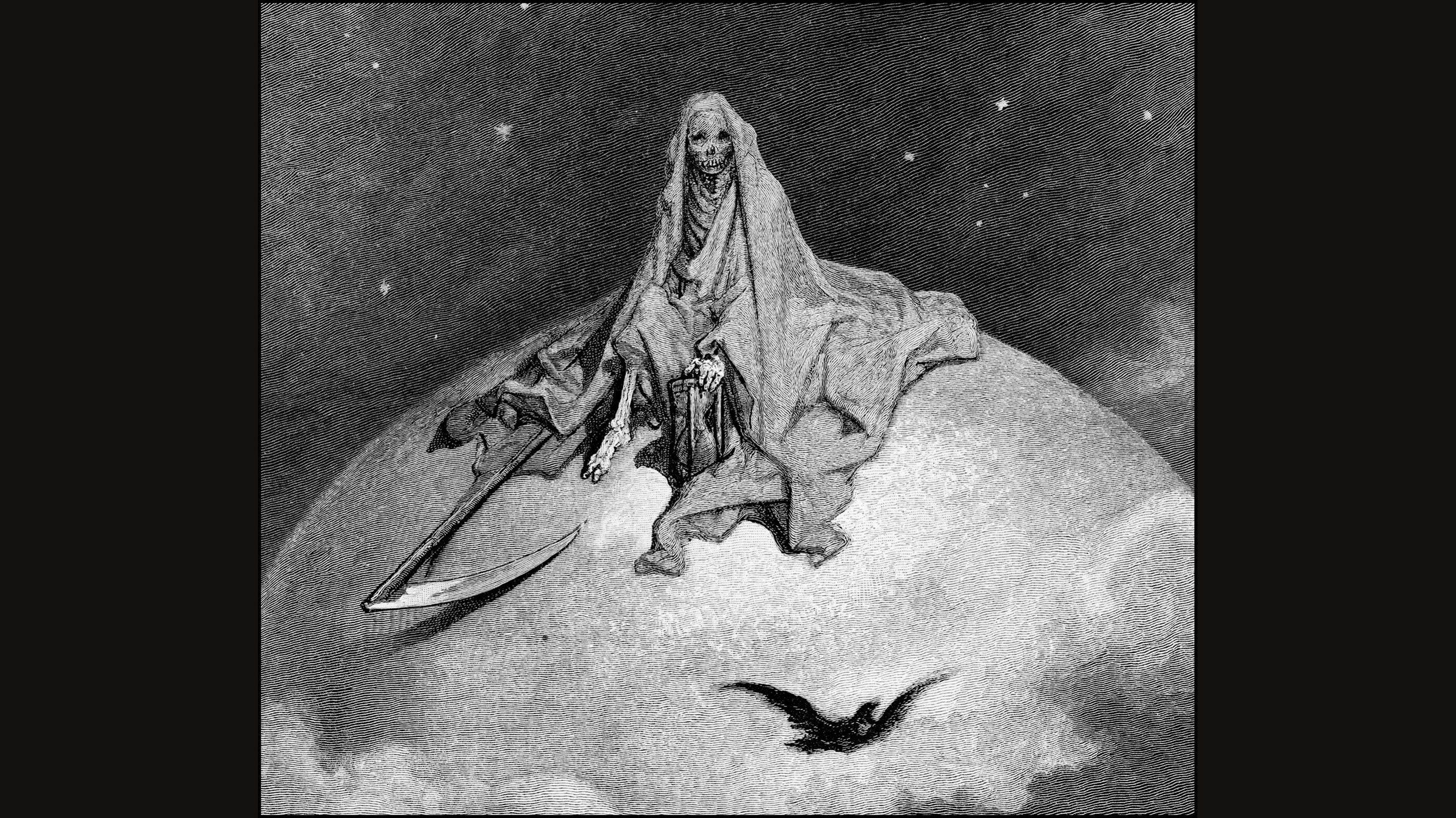
The mourning narrator, the ominous bird, the midnight setting, the death imagery and that obsessive refrain gave later artists a whole vocabulary. Gothic clothing, music, illustration and tattooing all draw on it. Gustave Doré's illustrations for an 1884 edition of *The Raven* fixed the look in print, and his images are now in the public domain, including one digitized by the Metropolitan Museum of Art and shared under CC0.
One detail surprises people: the poem has no human skull in it. A raven-and-skull design is a later visual combination, built from Poe's bird and the skull of older art, not a scene taken from the text. Doré's illustrations show where the Gothic raven came from, not a historical tradition of ravens on skulls.
Odin's ravens: thought and memory
In Norse tradition, the god Odin keeps two ravens, Huginn and Muninn. The Swedish History Museum explains that they represent thought and memory, and that they fly across the world and report back what they see. The museum places this tradition in its Iron Age and Viking Age setting.
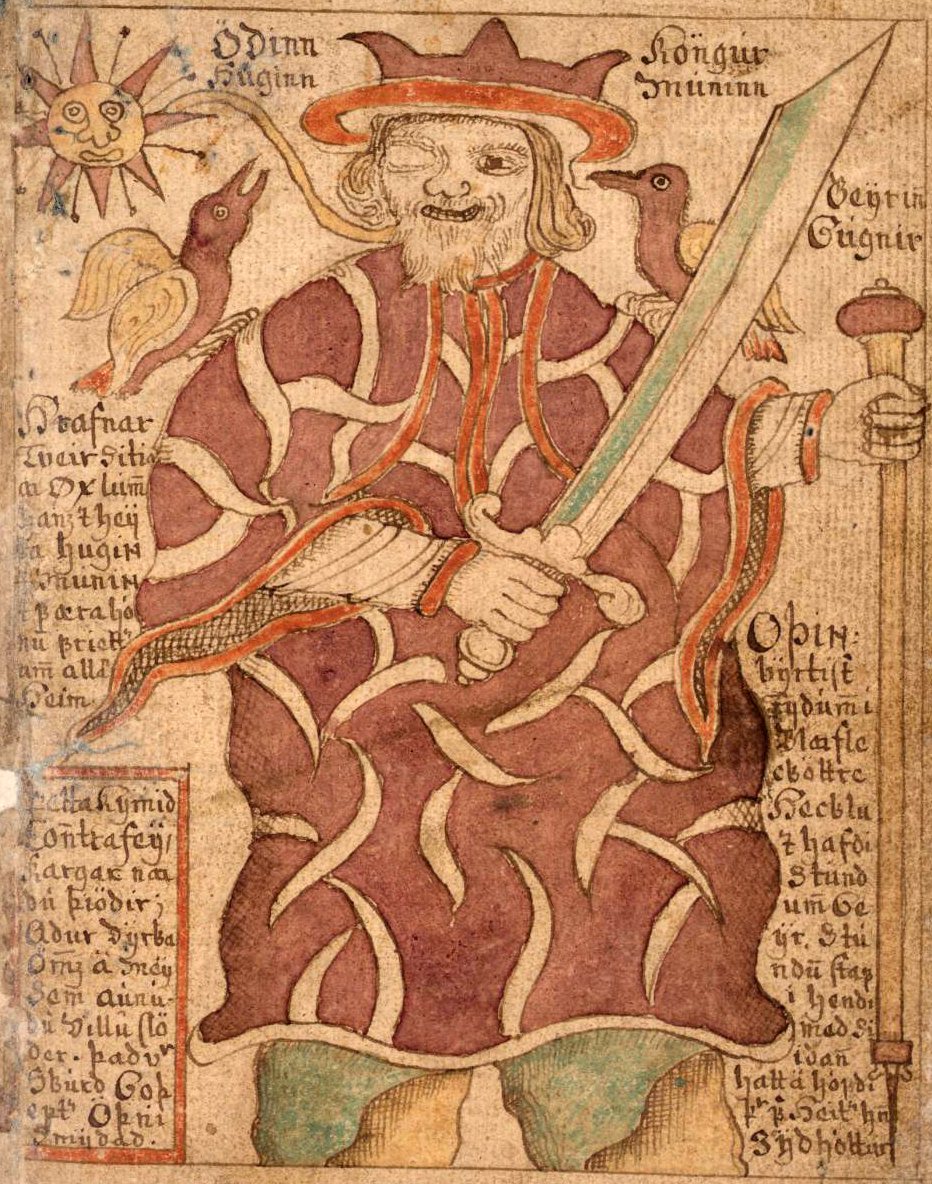
Odin was both a god of war and a god of the dead, and his ravens gathered knowledge from the whole world. That ties the raven in Norse tradition to warfare, knowledge and the dead all at once, which is part of why a raven next to a skull can feel so natural. It does not mean every raven image is an Odin reference. A Norse-inspired raven-and-skull design usually announces itself through other details, such as a pair of birds or Norse lettering, and the wearer can tell you if that is what they intended.
Crows of war in medieval Irish literature
When people ask what a raven means in Celtic mythology, the strongest documented answer comes from medieval Irish literature. Professor Ronald Hutton, speaking at Gresham College, describes Irish battle spirits and war goddesses who anticipate, encourage or enjoy slaughter. He identifies Badb, one of the war goddesses tied to the Morrígan tradition, as a figure who often appears as a crow, prophesies battles and revels in the killing.
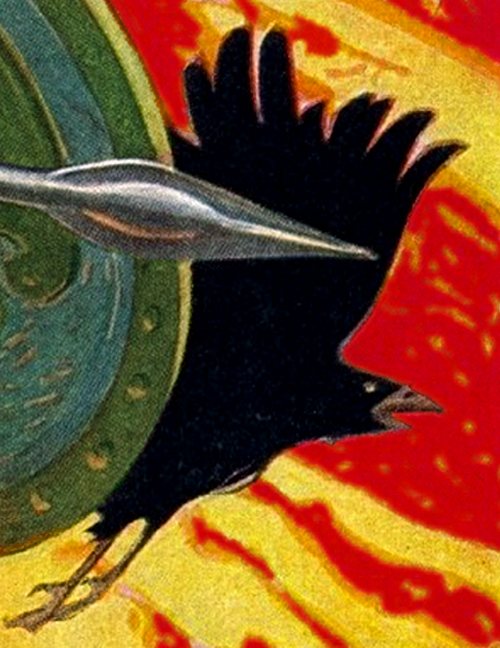
Part of the reason crows and ravens became linked with battle is simple: these birds are seen around carrion. Literary meanings, though, belong to their traditions. Hutton also points out that the modern Gothic Morrígan, the raven or crow goddess of posters and tattoos, combines several medieval figures with later interpretation, and that those Gothic trappings were not part of her medieval persona. A crow-and-skull design that calls on the Morrígan is drawing on that modern image as much as on the old Irish texts.
Raven on the Northwest Coast
Some of the deepest Raven traditions in the world belong to Indigenous Nations of the Pacific Northwest, and they have nothing to do with Gothic gloom. Among the Nuxalk of British Columbia, Raven, called Qwaxw, is a re-creator who helped shape and fix the early world and who can appear as a bird, a human or another creature, as the American Museum of Natural History describes.
In Tlingit and Haida traditions of Southeast Alaska, Raven is a trickster, teacher and benefactor and, for some groups, a creator. A U.S. Forest Service report on the cultural significance of ravens records stories in which Raven's actions helped bring the sun and stars into being and brought fire to people, and it links Raven with the creation of tides, lakes, streams and salmon. Raven is also connected with clan identity.
The Haida artist Bill Reid carved one of these stories in *The Raven and the First Men*, begun in 1978 and dedicated in 1980 at the Museum of Anthropology at the University of British Columbia. It shows Raven finding the first humans emerging from a clamshell on Haida Gwaii. There is no skull in it, and Raven here is a bringer of life, not a sign of death.
Raven crests and formline designs belong to particular Nations and their own cultural systems. They are not generic Gothic decoration, and a raven-and-skull tattoo should not be called Northwest Coast art unless its imagery and its maker actually come from that tradition.
Tap or hover a row to highlight it.
| Element | Documented meaning or role | Place and period |
|---|---|---|
| ElementHuginn | Documented meaning or roleThought | Place and periodNorse tradition, Viking Age setting (Swedish History Museum) |
| ElementMuninn | Documented meaning or roleMemory | Place and periodNorse tradition, Viking Age setting (Swedish History Museum) |
| ElementRaven, or Qwaxw | Documented meaning or roleRe-creator of the early world | Place and periodNuxalk tradition, British Columbia |
| ElementRaven | Documented meaning or roleTrickster, teacher, benefactor and, for some groups, creator | Place and periodTlingit and Haida traditions, Southeast Alaska |
| ElementBadb as a crow | Documented meaning or roleWar, prophecy and slaughter | Place and periodMedieval Irish literature |
| ElementSkull | Documented meaning or roleMemento mori, a reminder of death | Place and periodNorthern European art, especially the 16th and 17th centuries |
| ElementRaven and skull together | Documented meaning or roleGothic mourning or mortality composition | Place and periodContemporary art and tattooing; meaning varies by maker |
The skull half: memento mori
The skull in a raven-and-skull design has its own long history. The National Gallery in London explains that memento mori means "reminder of death" and identifies skulls in Northern European portraits and still lifes of the sixteenth and seventeenth centuries as major examples. In vanitas paintings of the same era, the skull sits among objects of wealth, learning and pleasure to show that worldly achievements pass.
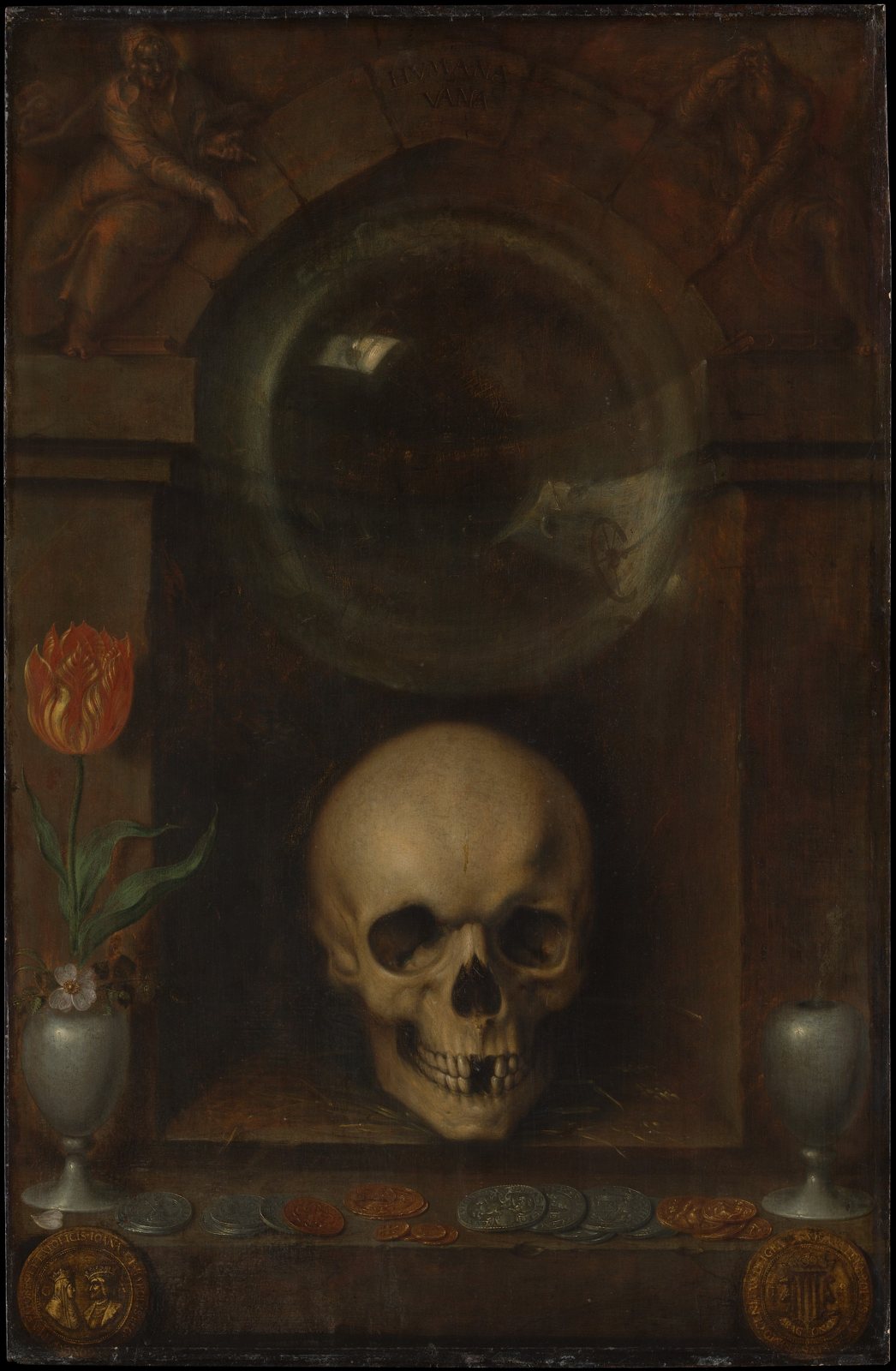
A skull has no single universal meaning, but in this European art it almost always meant mortality. That is the meaning most raven-and-skull designs borrow: the bird brings the mood, and the skull brings the reminder that life ends. For the idea in full, see what is memento mori.
Raven and skull in Gothic tattooing today
In contemporary Gothic tattooing, raven-and-skull compositions bring together a dark bird and a direct image of mortality. The Tattoo History Atlas describes modern Gothic raven designs across neo-traditional, blackwork, fine-line and realism styles, including ravens perched on skulls. So, is a raven and skull tattoo Gothic? In its usual form, yes: it is one of the classic images of the Gothic style.
In these designs, the skull can suggest death, impermanence, mourning or memento mori. The raven may suggest Poe, mystery, memory, intelligence, change or a mythology the wearer feels close to. People also ask whether the raven in a raven-and-skull piece means misfortune, intelligence, Odin or magic. Any of those can be true for a particular design, and none is true for all of them. The wearer's intended meaning is far more reliable than a one-line definition, and if the tattoo is not yours, asking is the best way to find out.
Some raven-and-skull pieces are memorials, a way of carrying grief the way Poe's scholar did. Others are simply a love of dark, beautiful imagery. Both are honest reasons, and a good tattoo artist can design for either. Our stories on Gothic skull meaning and skull tattoo meaning go further into the style.
The raven and the skull, from the Viking Age to today
Tap or hover a step to follow the order.
Viking Age
Huginn and Muninn are tied to Odin as thought and memory.
Medieval Irish literature
Badb appears as a crow, prophesying battle and slaughter.
16th and 17th centuries
Skulls appear prominently in Northern European memento mori and vanitas art.
January 29, 1845
Poe's "The Raven" appears in New York's Evening Mirror.
1884
Gustave Doré's illustrated edition of The Raven is published.
1980
Bill Reid's The Raven and the First Men is dedicated at the University of British Columbia.
Today
Raven-and-skull designs circulate in Gothic tattooing, blackwork, neo-traditional art and illustration.
Choosing or reading a raven-and-skull design
If you are designing one, decide which raven you want. A single bird with a book, a bust or the word Nevermore is Poe's. Two birds lean Norse, toward thought and memory. A crow over a battlefield skull calls on the war goddesses of Irish literature, or at least on their modern Gothic image. If a design you like uses Northwest Coast formline, ask where it comes from, because those images belong to specific Nations.
If the skull half is what draws you most, our Memento Mori skull tee sets a calm skull beside an hourglass in the manner of a seventeenth-century vanitas print, with MEMENTO MORI above and USE THE DAY WELL below. No raven, but the same old message. For another bird that has kept company with skulls, read owl and skull meaning, and for death figures across cultures, see gods of death.
How well do you know the raven and the skull?
Answer every question to check.
Questions people ask about the raven and the skull
What do the crow and skull symbolize?
A crow and skull symbolize mortality joined with an alert, intelligent or unsettling bird, mostly in modern Western Gothic art. The skull draws on memento mori, while the crow can call up battlefield death, Badb and the Morrígan of medieval Irish literature, or simply a Gothic mood. The artist and the design decide which.
What does a raven and skull tattoo mean?
A raven and skull tattoo can mean mortality, mourning, remembrance, mystery or a personal tie to Poe's "The Raven." If the design refers to Odin, the raven suggests thought and memory. If it refers to an Indigenous Raven tradition, its meaning has to come from that Nation's own culture, and the wearer's own explanation always counts most.
Is the raven in "The Raven" a symbol of death?
The raven in Poe's poem is tied more to grief and loss than to death alone. It visits a scholar mourning Lenore and answers every question with "Nevermore," deepening his despair. That mix of mourning and an ominous bird is what later Gothic art borrowed.
What is the difference between raven and crow symbolism?
The traditions name different birds: Odin's companions Huginn and Muninn are ravens, while Badb in medieval Irish literature often appears as a crow. Modern Gothic art and tattooing tend to use the two birds almost interchangeably for mood. When the difference matters to a design, the tradition it calls on tells you which bird fits.
Is a raven and skull tattoo Gothic?
A raven and skull tattoo is one of the classic Gothic designs, and the Tattoo History Atlas describes it across neo-traditional, blackwork, fine-line and realism styles. Its Gothic feel owes a great deal to Poe's 1845 poem and Doré's 1884 illustrations. The skull adds the memento mori side of the style.
Terms in this story
Tap a term to see what it means.
Huginn and Muninn. Odin's two ravens in Norse tradition, standing for thought and memory, who fly across the world and report what they see.