No. 026
What Does a Skull and Dagger Mean? Death Before Dishonor and More
A skull and dagger is usually read as an image of mortality and danger: the skull for death, the dagger for the weapon, the fight or the risk. Its best-documented American meaning comes from World War II tattoo flash. The Smithsonian's 2020 account of the Lyle Tuttle Tattoo Art Collection names "Death before Dishonor" as one of the most prominent tattoo motifs of that war, a design that stood for courage, honor, bravery, patriotism and comradeship, and that often came with a dagger, a snake, a heart or a skull. The exact meaning of any single tattoo or patch still depends on its details, its wording and the person wearing it.
The short answer: death on one side, the blade on the other
Every skull-and-dagger design is built from two simple parts. The skull is about as direct a symbol of death as exists. The dagger is a close-range weapon, the kind of thing you carry when you expect trouble. Put them together and the image says something about facing danger, or facing death itself, without flinching.
Later tattoo writing reads the combination as a confrontation with death, fearlessness, sacrifice or survival. Those readings fit a lot of people's reasons for getting the design, and a wearer is free to mean any of them. They are interpretations, though; the design never carried a single historical code. The documented history is narrower and more interesting: it runs through wartime tattoo parlors, sailor flash, military insignia and, in one specific case, Soviet prisons.
Death Before Dishonor and World War II flash
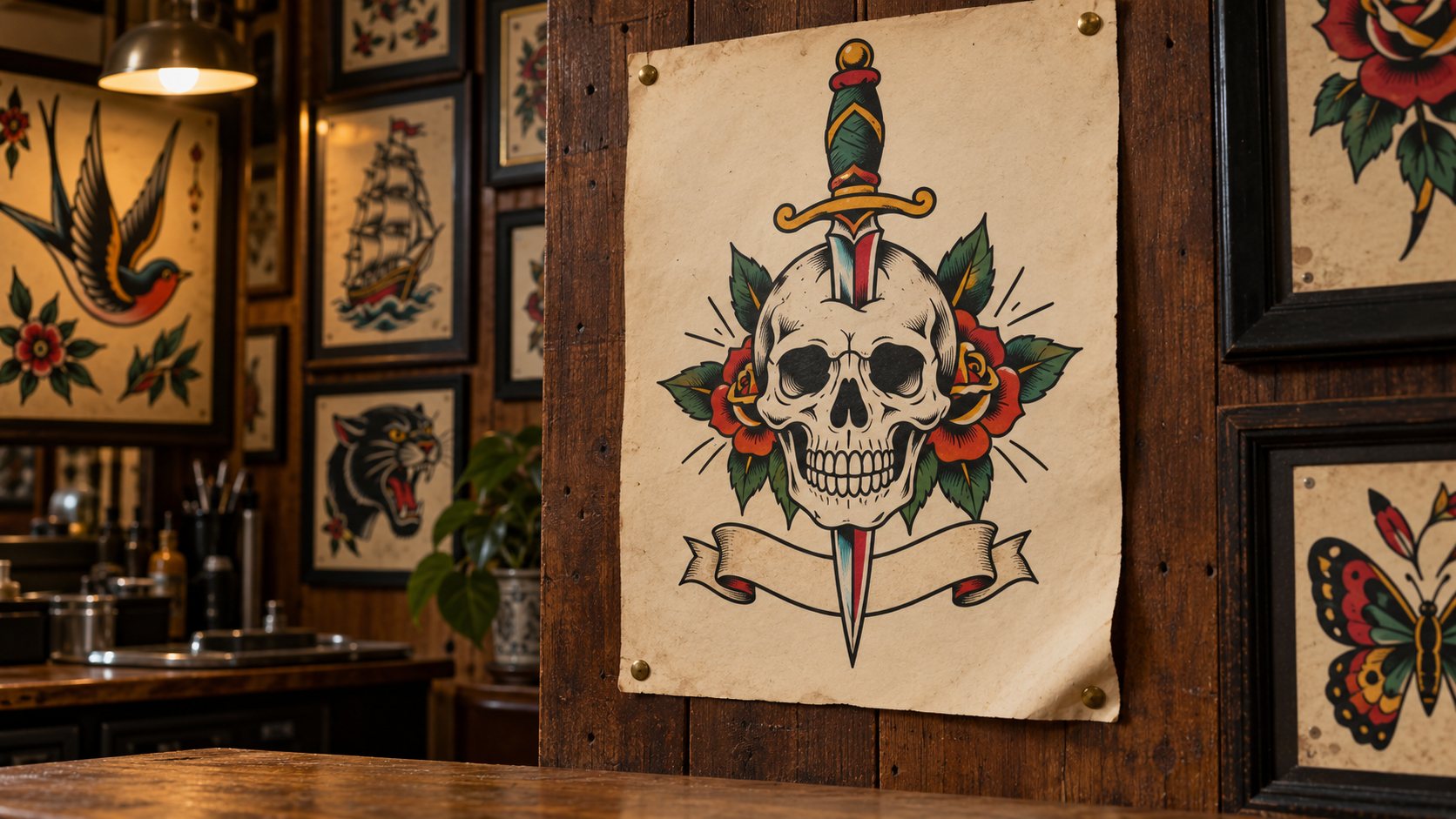
The clearest documented meaning of the skull and dagger in American tattooing comes from the Second World War. The Lyle Tuttle Tattoo Art Collection holds World War II era flash, the sheets of ready-made designs that hung on parlor walls for customers to pick from. The Smithsonian's account names the artists behind that flash: Bert Grimm, Sailor Bill Killingsworth, Red Farrell, Owen Jensen, Sailor Jerry, Lou Normand and Milton Zeis.
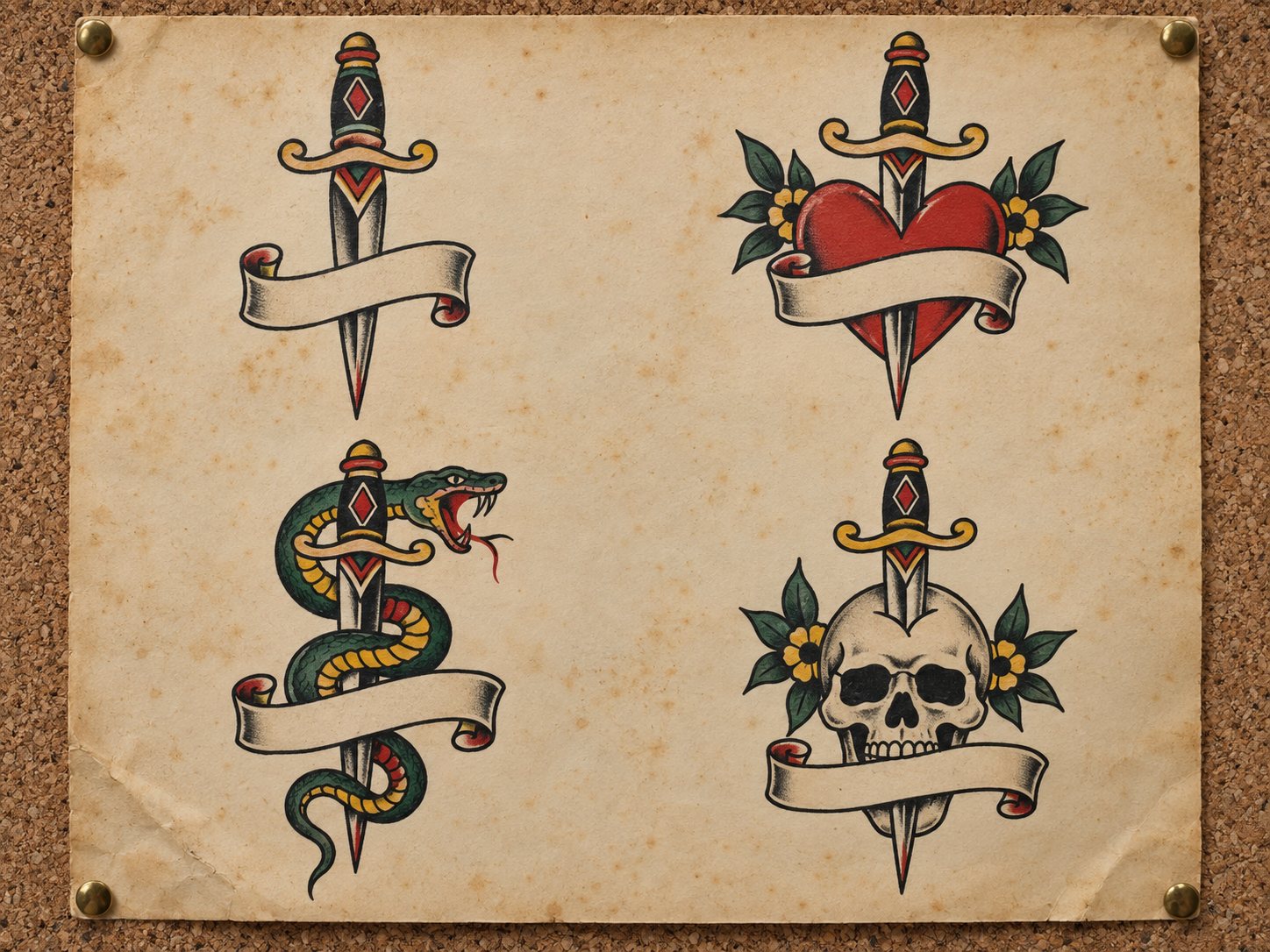
Curator Danielle Boiardi described "Death before Dishonor" as one of the most prominent World War II tattoo motifs. The phrase usually sat on a banner, and the image beside it could be a dagger, a snake, a heart or a skull. For the American servicemen and wartime workers who chose it, the design expressed courage, honor, bravery, patriotism and comradeship. The motto itself puts it plainly: death rather than dishonor.
So, if your skull and dagger carries a Death before Dishonor banner, or looks like classic wartime flash, that is the tradition it belongs to. Search phrases like "death before dishonor skull tattoo" point straight back to this era, and to the flash artists who drew the designs that servicemen and workers then wore.
Sailor flash and the American traditional style
The look of these tattoos has its own history. The National Park Service, writing about maritime tattoos, dates the simple black-line sailor flash style to designs produced during the 1930s and 1940s. Simple black lines and clear, readable symbols made these designs easy to copy and easy to recognize across a room.
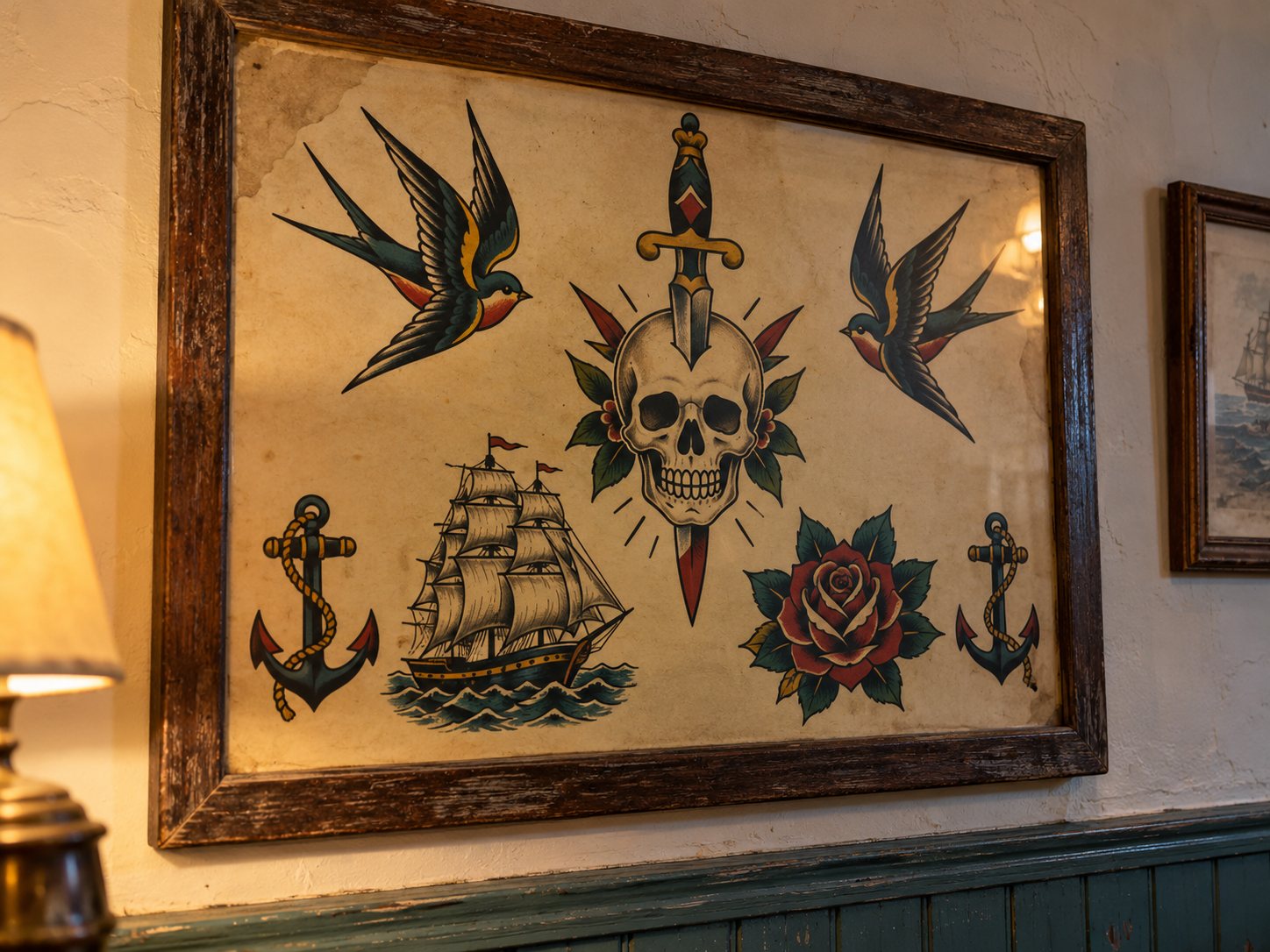
Amund Dietzel is one of the named artists behind that style. The Milwaukee Art Museum presented "Tattoo: Flash Art of Amund Dietzel" from July 3 through October 13, 2013, and described Dietzel as a Milwaukee tattoo artist who helped define the traditional or old-school style. A museum show of tattoo flash says a lot about how these designs moved from parlor walls to art history.
Flash also explains why there is no one fixed meaning for every skull and dagger. A flash sheet was meant to be copied, and each artist and customer adapted it: a different banner, a different angle for the blade. The design traveled, and each wearer put their own story on it.
The skull and dagger, 1930s to 2020
Tap or hover a step to follow the order.
1930s to 1940s
The simple black-line sailor flash style takes hold in American and maritime tattoo culture.
World War II, especially the 1940s
Death before Dishonor appears with dagger, snake, heart and skull variations among U.S. servicemen and wartime workers.
1960
The U.S. Army Special Forces crest with the V-42 dagger is adopted.
1962
The 10th Special Forces Group badge is replaced by the Special Forces distinctive unit insignia and beret flash.
1960s
A skull-and-dagger tattoo at the Zima Corrective Labor Colony, Irkutsk Region, is part of a prison system of images showing criminal history and status.
2013
The Milwaukee Art Museum exhibits Amund Dietzel's tattoo flash.
2020
A Smithsonian account documents the World War II flash tradition in the Lyle Tuttle Tattoo Art Collection and its named artists.
Variations: through the skull, behind it, with a snake or a rose
The skull and dagger can be drawn in several ways. The blade may pass straight through the skull, sit behind it, point up or down, or lie beside it. A snake may coil around the blade. In the World War II flash tradition the Smithsonian documents, the dagger on its own, the dagger with a snake, the dagger through a heart and the dagger through a skull were all related motifs under the same Death before Dishonor theme. A dagger through a skull, then, is part of the same family as the others, not a separate secret sign in American flash.
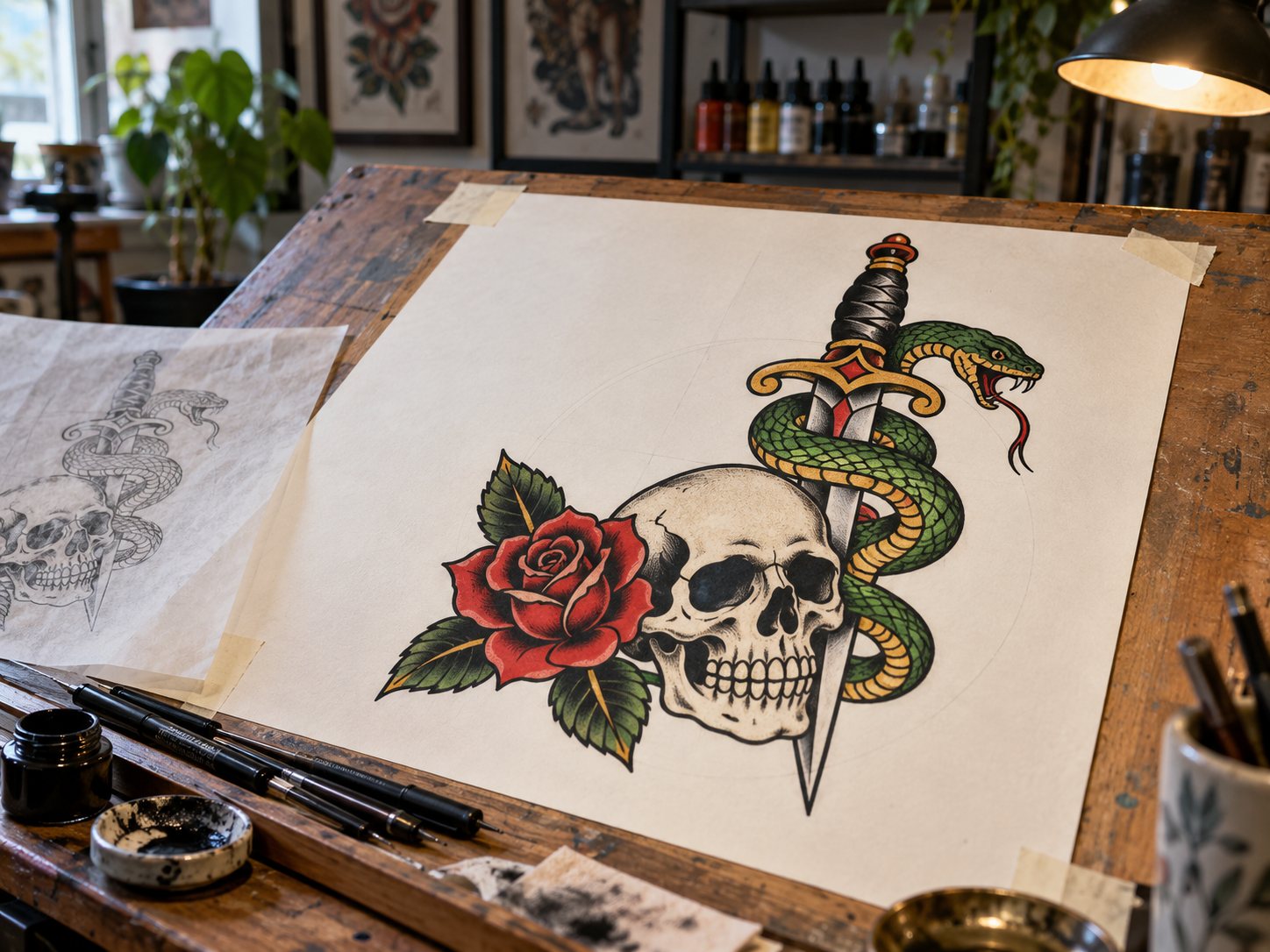
A snake adds its own long history to the design, and our story on skull and snake meaning follows that pairing. A rose shifts the emphasis toward the familiar traditional contrast between beauty, love or remembrance on one side and violence or mortality on the other. That is a later reading unless the wearer or artist explains it differently. A neo-traditional rose-and-dagger tattoo by Karolina Wilczewska, dated March 4, 2020, shows how alive the combination still is in tattooing today. For the rose and the skull on their own, see skull and roses meaning.
People also ask whether a dagger tattoo means strength or heartbreak. Both answers turn up among wearers, and both can be right for the person who chose the design. The documented history adds one detail: in the wartime flash, a dagger through a heart was one of the Death before Dishonor variations, part of the same theme of courage and honor.
Daggers in military insignia, and why the famous ones have no skull
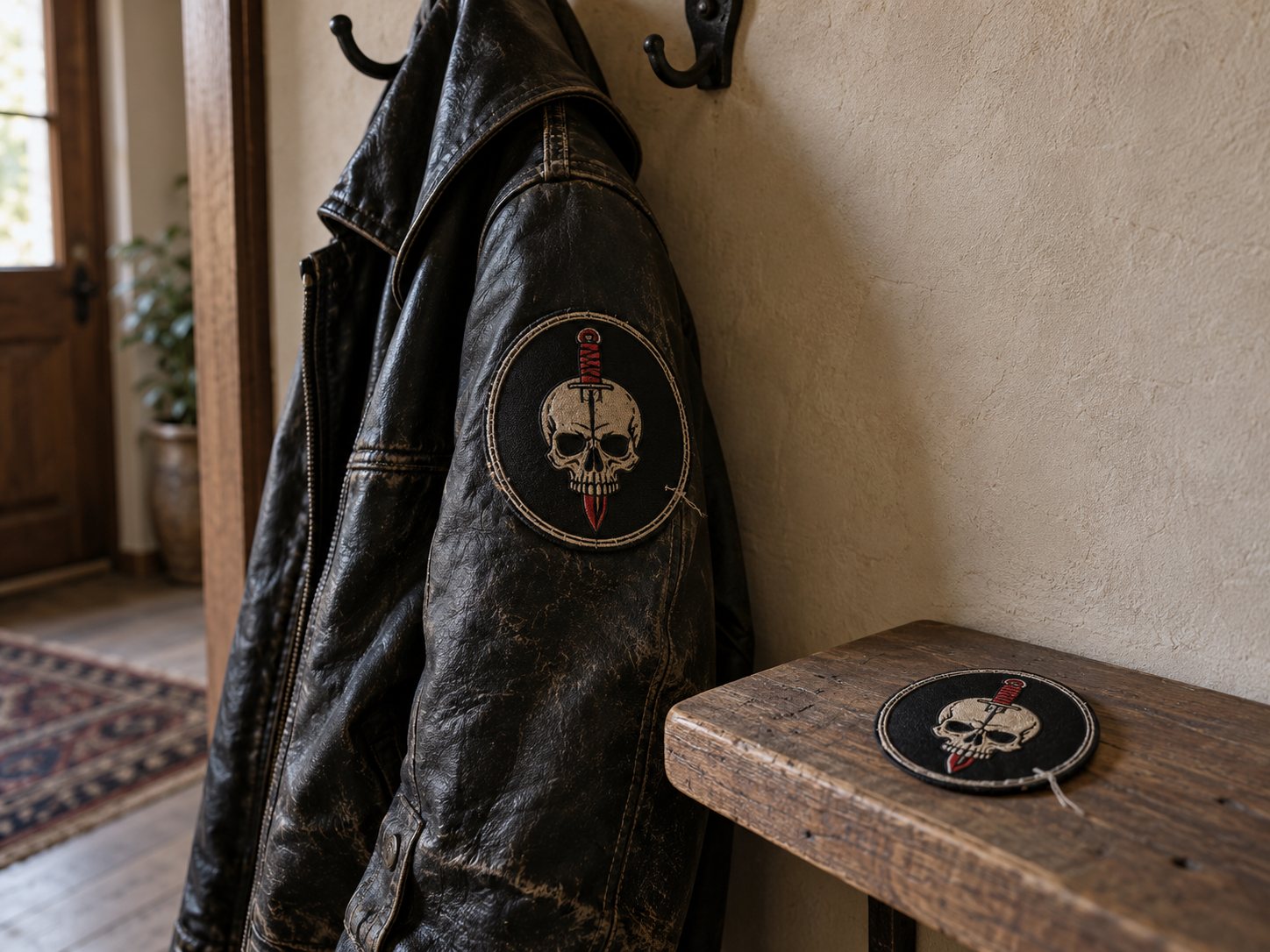
Many people with a skull-and-dagger patch wonder whether it comes from a military unit. The best-known dagger insignia in the U.S. military do not include a skull, and their meanings are official and specific to each unit.
The U.S. Army Special Forces crest is a dagger, not a skull and dagger. The U.S. Army explains that its central dagger is the V-42 stiletto, issued to the First Special Service Force during World War II, and that the dagger represents Special Forces heritage. The motto, *De oppresso liber*, means "to free the oppressed," as the Maryland National Guard notes in its history of the 1st Special Forces insignia. The 10th Special Forces Group badge was worn until 1962, when the Special Forces distinctive unit insignia and beret flash replaced it. The current crest was adopted in 1960 and approved as the Special Forces regimental designator in 1984.
The Air Force Special Operations Command emblem uses a winged dagger, which officially represents military preparedness and swift, silent mobilization. A real unit patch carries its unit's official meaning. A civilian skull-and-dagger patch borrows the general idea of readiness and nerve, but not any particular unit's history.
Is a skull and dagger a gang or criminal symbol?
On its own, no. A generic skull-and-dagger tattoo is not a universal gang sign. A U.S. Department of Justice gang-resource manual says that dice, crossbones and daggers can represent an individual gang member's specialty, and it does not give one fixed meaning to a skull pierced by a dagger. In other words, the elements can appear in gang tattoos, the way hearts and names can, without the design itself belonging to any gang.
There is one documented setting where a skull pierced by a dagger had a specific criminal meaning: Soviet and Russian prison tattoo culture. Academic discussion of Arkady Bronnikov's material on Russian criminal tattoos states that, in that prison context, a skull pierced by a dagger was associated with murderers. A study of a 1960s tattoo from the Zima Corrective Labor Colony in the Irkutsk Region shows how cupolas, wings, a skull and a dagger together conveyed a prisoner's criminal history and status within the prison hierarchy.
That meaning belongs to a particular prison culture, place and period. It does not transfer to an American traditional tattoo, a civilian patch or a modern design. The same goes for a skull with a knife: in modern tattoo writing it suggests confrontation with death, danger, fearlessness or survival, and only in that Soviet prison world did it mark a murderer. If you are reading someone else's tattoo, ask about their intended meaning before assigning a criminal or gang interpretation.
Choosing, wearing or decoding the design
If you are planning one, the details do most of the talking. A banner reading Death before Dishonor ties the design to wartime American flash and its ideas of honor and loyalty. A snake on the blade or a rose beside the skull adds its own layer. A design copied closely from Russian prison tattoo collections carries that world with it, so ask your artist where a reference image comes from before you commit to it.
What each part of a skull-and-dagger design adds
Tap a card to bring it forward.
- The skull: Death and mortality, the most direct part of the image.
- The dagger: The weapon, danger and the nerve to face it.
- A Death before Dishonor banner: Ties the design to World War II flash and its ideas of courage, honor and comradeship.
- A snake on the blade: One of the wartime flash variations under the same Death before Dishonor theme.
- A rose: A later traditional contrast of beauty, love or remembrance with violence or mortality.
- Where the design comes from: A copy of a Soviet prison tattoo carries that prison meaning; ordinary flash does not.
- The wearer: The person who chose it has the final word on what it means.
If you like the mortality side of the image more than the blade, our Memento Mori skull tee sets a calm skull beside an hourglass, with MEMENTO MORI above and USE THE DAY WELL below. For more skull tattoos and what they carry, see skull tattoo meaning, memento mori tattoo meaning and the skull and crossbones, and for skulls on motorcycle club gear, read biker skull meaning.
How well do you know the skull and dagger?
Answer every question to check.
Questions people ask about the skull and dagger
What does skull and dagger mean?
A skull and dagger usually means mortality and danger, and in American World War II tattoo culture it connects to Death before Dishonor, courage and honor. The exact meaning depends on the design, any wording on it, the community it comes from and the person wearing it. A banner or a style borrowed from wartime flash makes the honor reading the most likely one.
What does a skull with a knife mean?
A skull with a knife suggests confrontation with death, danger, fearlessness or survival in modern tattoo readings. In Soviet and Russian prison culture, a skull pierced by a knife was associated with murderers, but that meaning stayed inside that prison system. Ask about the wearer's intended meaning before assigning a criminal reading.
What does a dagger through a skull mean?
A dagger through a skull is one of the classic World War II flash designs grouped under the Death before Dishonor theme, alongside a dagger through a heart and a dagger with a snake. In that tradition it signaled courage and loyalty. Only in Soviet prison tattooing did the pierced skull mark a specific crime.
Is a skull and dagger tattoo a gang symbol?
A skull and dagger tattoo is not a gang symbol by itself. The U.S. Department of Justice notes that daggers, dice and crossbones can show an individual gang member's specialty, which means the parts can appear in gang tattoos without the design belonging to any gang. Context, other symbols and the wearer's own account matter far more than the motif.
Can a skull and dagger tattoo be mistaken for a hate symbol?
A classic skull and dagger in the American traditional style is a well-known flash design, not a hate symbol. A design that copies specific Nazi insignia, such as the SS death's head, is a different thing with a different history. Our story on the Totenkopf explains that skull and how it differs from other military skulls.
Terms in this story
Tap a term to see what it means.
Flash. Sheets of ready-made tattoo designs that hung on a parlor wall for customers to choose from and that artists copied and adapted.