

No. 325
Ouroboros Tattoo Meaning: The Snake Eating Its Own Tail
An ouroboros is a serpent or dragon eating its own tail, and as a tattoo it most often stands for cycles, renewal, continuity, change, eternity, or the way an ending feeds into a new beginning. Tattooist Ashley Tyson, of The Ouroboros studio in west London, sums it up as "self creation and self acceptance."
The image is far older than tattoo culture. The earliest classical example of the circle is on a golden shrine from Tutankhamun's tomb in Egypt, from the late 14th century BCE, as the Egyptologist Jan Assmann identifies it.
From there it moved through Greek alchemy, Gnostic writing and, by comparison, Norse myth, and each tradition read the circle its own way. Knowing those readings helps you decide which one your tattoo is about.
What does an ouroboros tattoo mean?
Most ouroboros tattoos are about cycles. Tattoo references such as the Tattoo History Atlas, Apollo Tattoo and VEILHINGE describe the closed loop as continuity, renewal, eternity, change, and the link between endings and beginnings. A snake that is always eating and never finishing makes a neat image of something that keeps going.
Ashley Tyson gives the symbol a more personal turn. In an interview with Stories & Ink, she describes the ouroboros as "self creation and self acceptance," and connects it with personal growth and with accepting one's own body. That is her reading, and it shows how a very old image can carry a very modern idea.
The circle can also point the other way. Some wearers mean it as a warning about a destructive cycle, a habit of repeating the same patterns, or a kind of self-containment. Those darker readings sit in the same loop as the hopeful ones, and only the wearer can say which is meant.
All of these meanings grew from the shape itself and from associations added much later by alchemists and by the psychologist Carl Jung. For skull designs more generally, our story on skull tattoo meaning covers the wider family.
Where does the ouroboros come from?
The earliest classical circular ouroboros comes from ancient Egypt, from the tomb of King Tutankhamun. In his study of the Egyptian myth of the sun's daily course, Jan Assmann identifies it on a golden shrine from the tomb, dated to the late 14th century BCE.
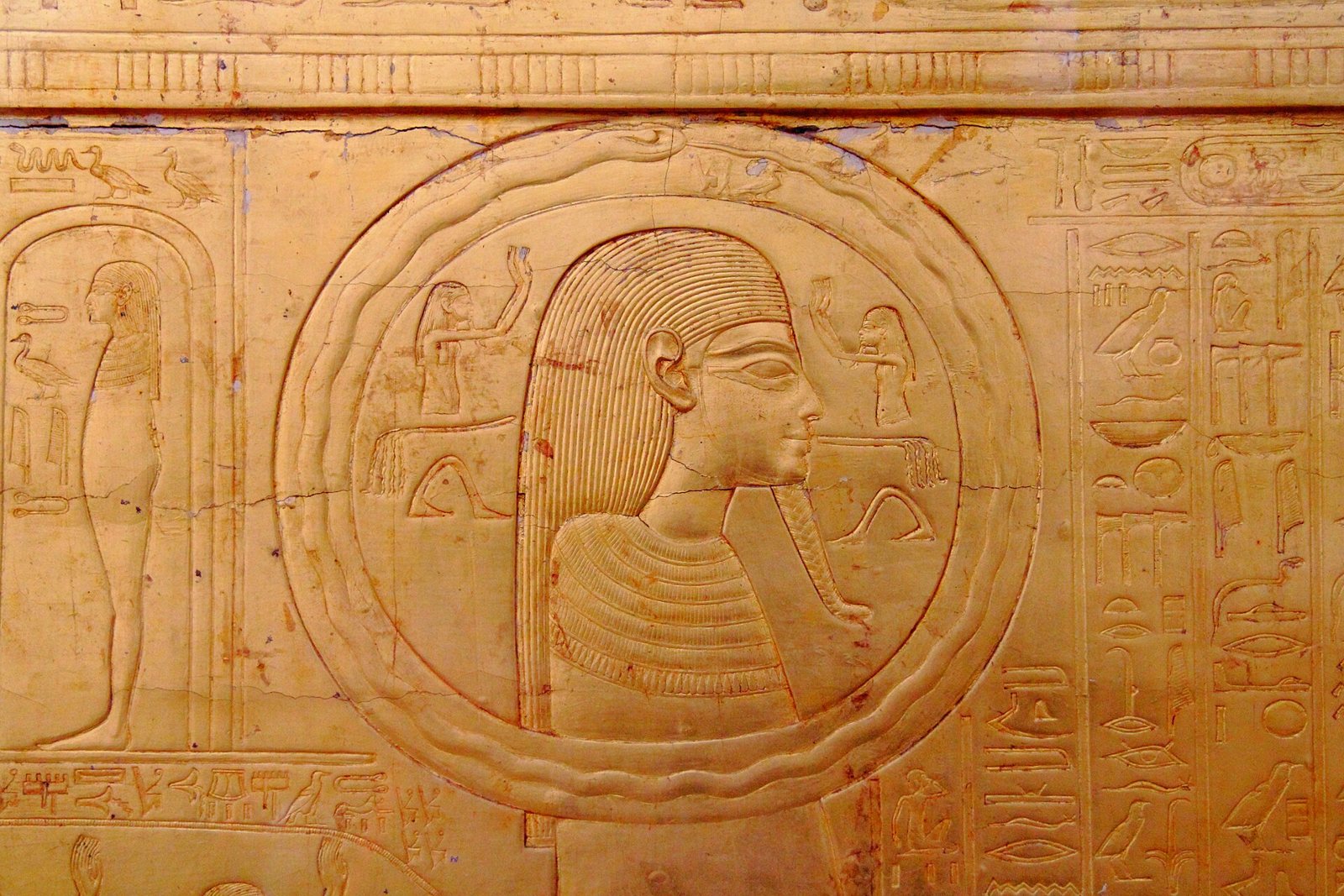
The scene is crowded with meaning. The serpent appears with the sun god and with a large figure whose head and feet are each enclosed by a snake biting its own tail. Assmann connects the image to Egyptian ideas of cyclical time, the regeneration of the sun, the yearly Nile flood and renewal. The Global Egyptian Museum records the gilded shrine as coming from the Valley of the Kings, and it is now in the Egyptian Museum in Cairo.
That setting matters for anyone choosing the design. In Egypt the circle belonged to a royal burial and to an image of how the cosmos renews itself, a funerary and cosmological meaning rather than a general sign for "infinity." Our story on Tutankhamun's mummy covers the king whose tomb held the shrine.
"The All is One" in Greek alchemy
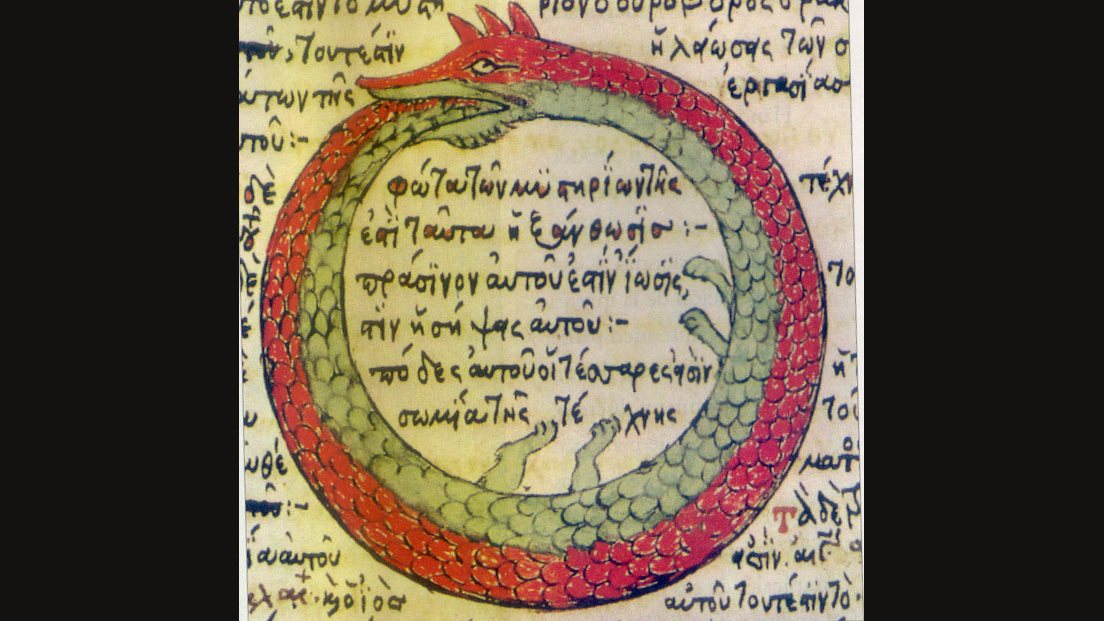
The next famous ouroboros comes from Greek alchemy. The *Chrysopoeia of Cleopatra* is a Greek alchemical work associated with Alexandria. It survives in a copy made in the 10th or 11th century, in a manuscript known as *Codex Marcianus graecus 299*, where it appears on folio 188v, according to its Wikimedia Commons record.
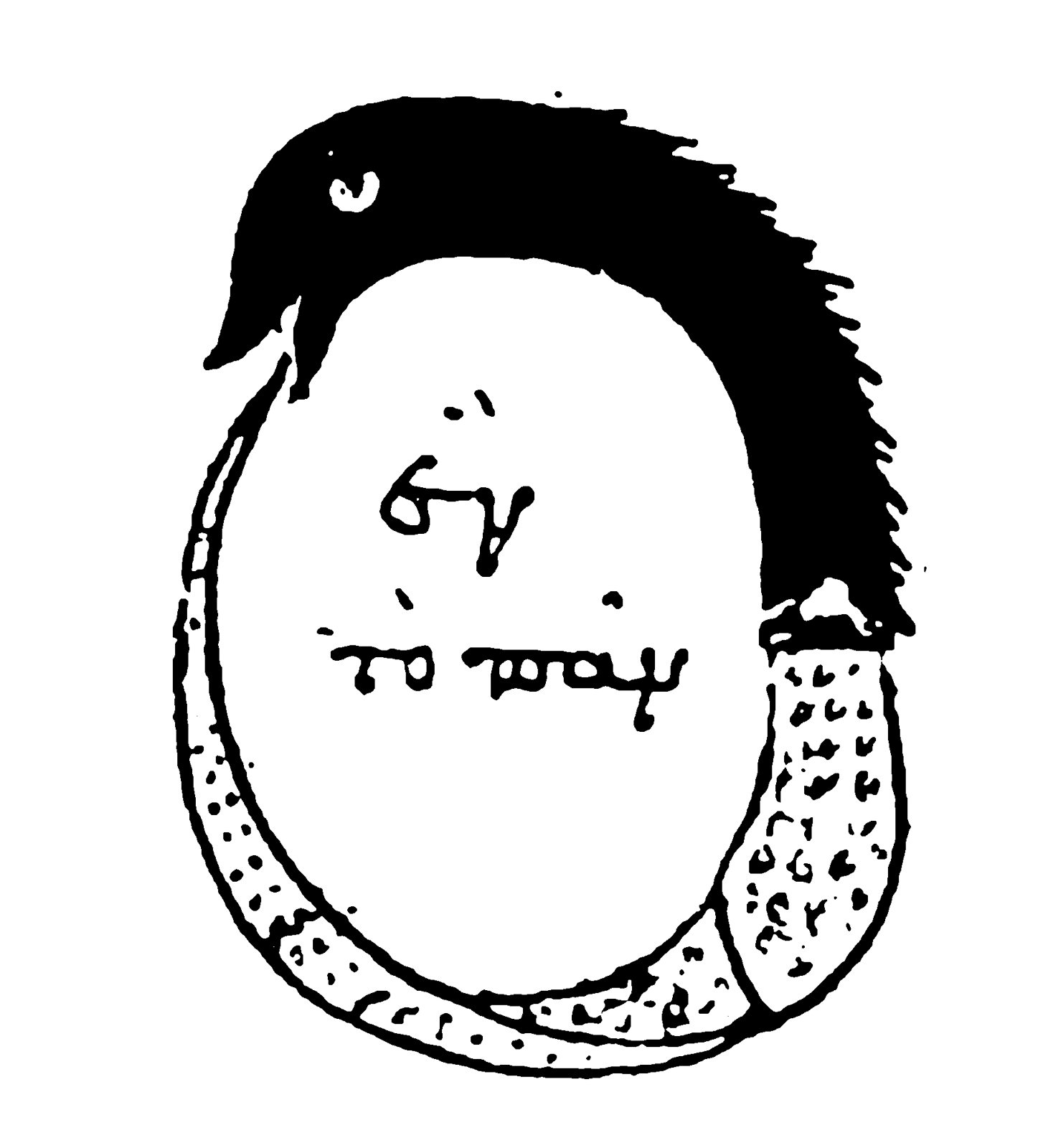
In the diagram, an ouroboros wraps around the Greek words ἓν τὸ πᾶν, "the All is One." For the alchemists who drew and copied it, the circle expressed unity, and the way all things change while remaining part of one whole. It was a statement about how the world works, not a slogan.
The name can mislead. The "Cleopatra" of the title is Cleopatra the Alchemist, and she cannot be securely identified with Cleopatra VII, the famous queen of Egypt. Alchemy has left other strange images behind, and our story on caput mortuum follows one of them.
A darker circle in Pistis Sophia
Not every ancient ouroboros is hopeful. *Pistis Sophia* is a Coptic text that scholars generally date to the third or fourth century CE, as the Cambridge University Press edition notes. In chapter 126, it describes a "great dragon" whose tail is in its mouth and which surrounds the world.
Here the circle belongs to a cosmology of outer darkness and punishment. That is a long way from the alchemists' unity and from Egypt's daily renewal of the sun. The text is usually called Gnostic, a word that covers many different texts and groups rather than one shared set of beliefs.
This is why the ouroboros is neither simply good nor simply bad. The same shape has stood for regeneration in one place and a dark boundary around the world in another.
Is the ouroboros against Christianity? Not in itself; it is an ancient serpent image that later turned up in several religious and philosophical settings, including some early Christian and Gnostic writing. Historian Dylan Burns cautions that "Gnosticism" was never one uniform religion outside Christianity, but a disputed label for diverse movements within early Christian surroundings, and David Brakke documents how Christian writers such as Irenaeus and Origen criticized Gnostic interpretations.
A Christian may see the ouroboros as neutral history, an alchemical or psychological symbol, or a sign tied to teachings their church rejects. Churches differ on symbolic imagery, so if that matters to you, ask your own clergy how they view the design you have in mind.
Jörmungandr, the Norse world serpent
Norse myth has its own encircling serpent, Jörmungandr, the Midgard Serpent. The main surviving sources are the *Prose Edda*, written by Snorri Sturluson in the 13th century (an English translation by Arthur Gilchrist Brodeur is freely available), and the *Poetic Edda*, which preserves older verse. An overview of the Jörmungandr texts dates Snorri's work to about 1220 to 1241 and the main *Poetic Edda* manuscript to about 1270.
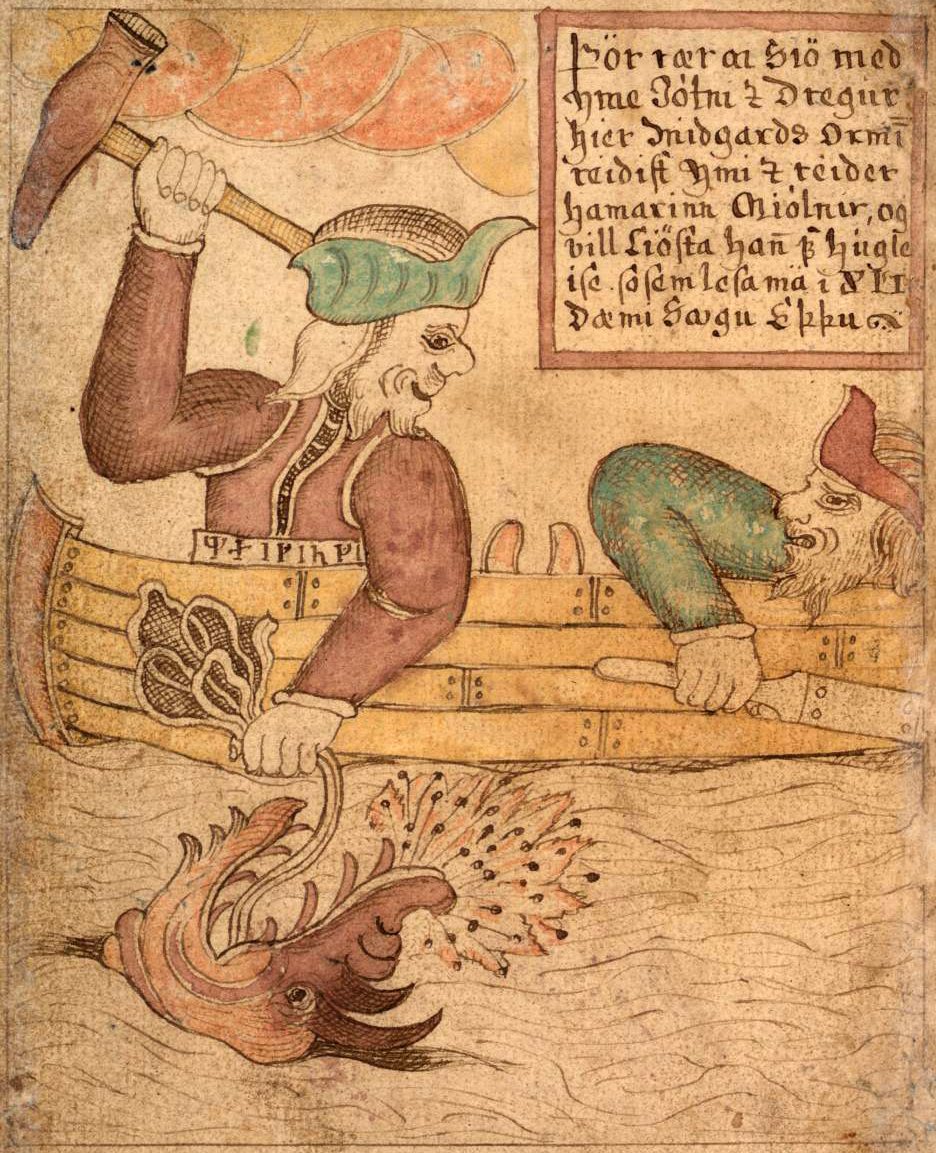
In these stories, Jörmungandr is cast into the sea and grows until it encircles the world. It is an enemy of Thor, and the two meet at Ragnarök, the end of the world. The Norse texts treat it as a boundary around Midgard and as an apocalyptic foe, a different idea from the Egyptian or alchemical circle.
Scholars note how much the serpent gripping its tail looks like an ouroboros. As Matthew Evan Davis discusses in the journal *Humanities*, the match is a later comparison, and the Old Norse texts never say that Jörmungandr is the Greek or Egyptian ouroboros. Norse myth also has other serpents with their own jobs. Níðhöggr, for one, gnaws at the roots of the world tree Yggdrasil, and it is a separate creature from Jörmungandr.
Some real bones were once taken for dragons' remains, and our story on dragon skulls follows those fossils.
Carl Jung and the circle of the mind
In the 20th century the ouroboros gained a psychological reading. In *Psychology and Alchemy*, Carl Jung treated the alchemical ouroboros as an image connected with the psyche, with unconscious processes, and with the cycle in which destruction and renewal follow each other.
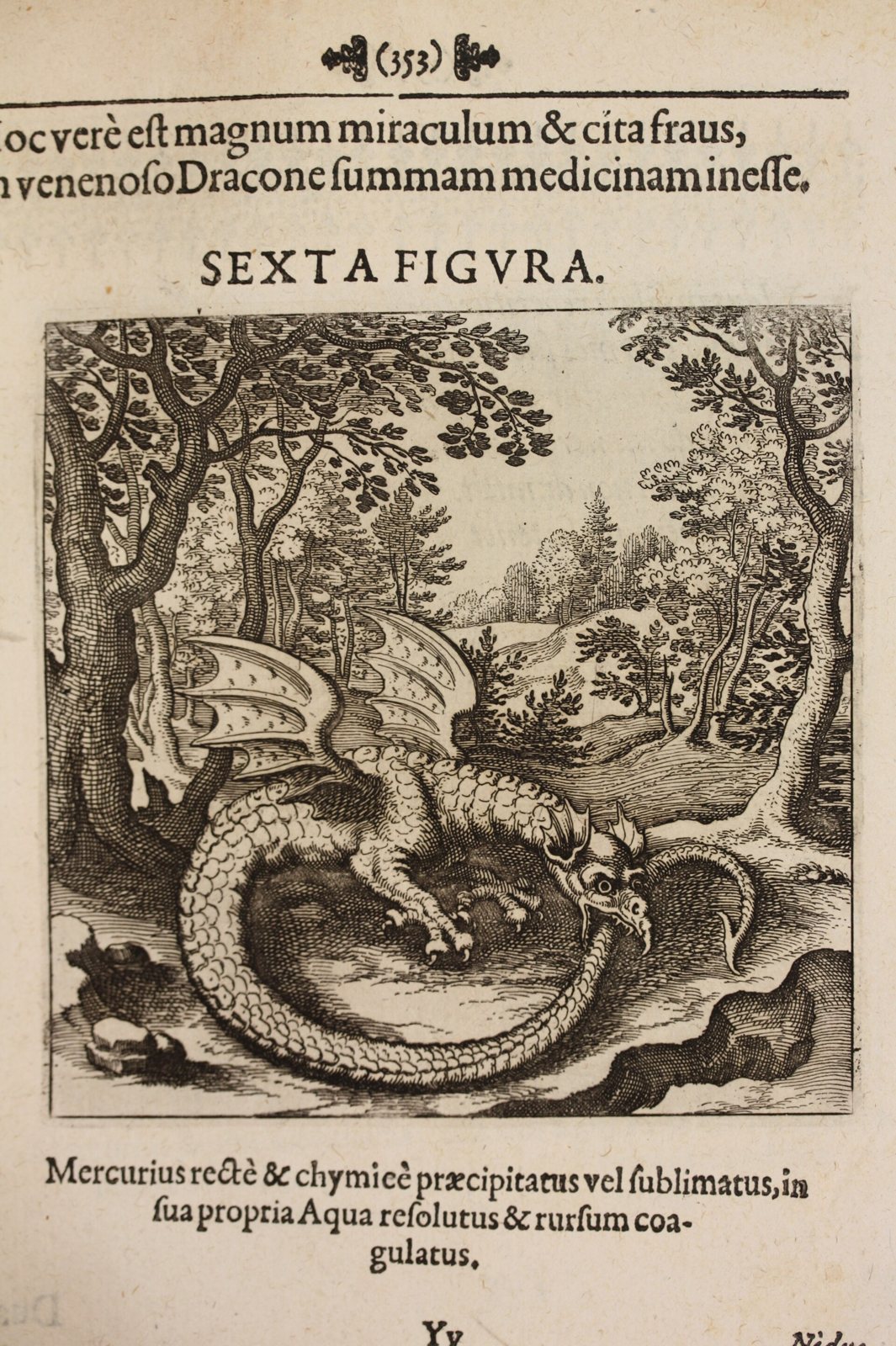
Jung's reading is modern psychology, and it belongs to him rather than to the Egyptians, the alchemists or the Gnostic writers. It has had a long life, though. Much of what tattoo writers say today about self-renewal and inner cycles echoes his approach.
The ouroboros through history
Tap or hover a step to follow the order.
Late 14th century BCE
A circular ouroboros appears on a golden shrine in Tutankhamun's tomb, in New Kingdom Egypt.
About 3rd century CE tradition
The Greek alchemical Chrysopoeia of Cleopatra, linked with Alexandria, sets an ouroboros around "the All is One."
3rd or 4th century CE
The Coptic Pistis Sophia describes a great dragon with its tail in its mouth surrounding the world.
10th or 11th century
The surviving copy of the Chrysopoeia is made in Codex Marcianus graecus 299.
About 1220 to 1241
Snorri Sturluson writes the Prose Edda, with Jörmungandr encircling the world.
About 1270
The main Poetic Edda manuscript is written.
20th century
Carl Jung interprets the ouroboros in Psychology and Alchemy.
Tap or hover a row to highlight it.
| Tradition | Place and period | What the circle stood for |
|---|---|---|
| TraditionEgyptian royal burial | Place and periodTutankhamun's tomb, late 14th century BCE | What the circle stood forCyclical time, the sun's regeneration, the Nile flood and renewal |
| TraditionGreek alchemy | Place and periodAlexandria tradition, surviving 10th or 11th century copy | What the circle stood forUnity: "the All is One" |
| TraditionPistis Sophia | Place and periodCoptic text, 3rd or 4th century CE | What the circle stood forA great dragon surrounding the world in a cosmology of outer darkness and punishment |
| TraditionNorse myth | Place and periodProse Edda and Poetic Edda, 13th century | What the circle stood forJörmungandr as the world's boundary and Thor's enemy at Ragnarök |
| TraditionAnalytical psychology | Place and periodCarl Jung, 20th century | What the circle stood forThe psyche, unconscious processes and the cycle of destruction and renewal |
| TraditionModern tattooing | Place and periodToday | What the circle stood forCycles, renewal, continuity and, for Ashley Tyson, self creation and self acceptance |
Adding a skull, and choosing a placement
Putting a skull inside or beside an ouroboros is a modern combination rather than an ancient Egyptian formula, and it can be striking. Artist Pat Fish of LuckyFish describes one design in which a coyote skull and spine form the serpent itself, with the circle standing for time cycling and all things returning to one. In that design, mortality becomes part of a symbol of return. If you like the idea of bone forming the loop, our stories on the coyote skull and the snake skull show the real anatomy behind it, and do snakes have bones answers the obvious follow-up.
What a skull ouroboros means beyond Pat Fish's design depends on the person wearing it and the artist drawing it. Skulls and serpents have their own long partnership, which our story on skull and snake meaning follows, and the skull's reminder of death has its own tattoo tradition in memento mori tattoo meaning.
Where the circle goes on the body changes how it reads. Tattoo references name forearm circles, upper-arm bands, wrist or ankle rings, the chest, shoulder, sternum, back and thigh as workable spots, because the design is round. An arm band or a wrist ring has a particular appeal: the snake's loop actually goes around you. No placement carries a fixed meaning, though. Ashley Tyson describes a collaborative way of working in which the artist responds to what the client wants to express, so bring your reason to the consultation and let the placement follow.
Ouroboros tattoo placements
Tap a card to bring it forward.
- Forearm circle: The full loop sits on the outer or inner arm.
- Upper-arm band: The serpent wraps around the arm, so the circle surrounds the body.
- Wrist or ankle ring: The loop encircles the limb, like a bracelet.
- Chest or sternum: The circle sits at the center of the body.
- Shoulder: Named by tattoo references as a workable spot for a round design.
- Back: Another workable spot named for the circle.
- Thigh: Also named as a workable spot for an ouroboros.
The deer skull is another design built on renewal, and our story on deer skull tattoo meaning follows antlers that fall and grow back.
Questions about ouroboros tattoos
A few more questions come up often.
Is the ouroboros a good or bad symbol?
Neither, universally. Egyptian funerary imagery ties it to the regeneration of the sun, Greek alchemy to the unity of all things, and *Pistis Sophia* to a darker world of outer darkness and punishment, so the meaning of a tattoo depends on the design and the wearer's intent.
Is Jörmungandr the same as the ouroboros?
No. Jörmungandr is a distinct Norse world serpent that looks similar when shown gripping its tail, and the link between the two is a later comparison. In the Eddas it is Thor's enemy and the boundary of Midgard, not a symbol of renewal.
What is the snake eating its own tail called?
It is called an ouroboros, from a Greek word meaning "tail-devouring," as the essay "The Corrupted 'Wheel of Life': An Essay on Ouroboroses" explains. The image can show a serpent or a dragon, and *Pistis Sophia*, for example, describes a "great dragon" with its tail in its mouth.
What is the exact meaning of an ouroboros tattoo?
The exact meaning is the one the wearer gives it, within the readings above: cycles, renewal, continuity, a warning about repeating patterns, or something personal. Ask the person wearing it, or tell your artist what you intend before the design is drawn.
Ouroboros quiz
Answer every question to check.
A snake with its tail in its mouth has been a sun cycle, an alchemist's statement of unity, a dragon at the edge of the world and an image of the mind. Whichever of those you carry on your skin, it helps to know which circle you chose, and the snake will not mind either way, since it has been busy with its tail for more than three thousand years.
Terms in this story
Tap a term to see what it means.
Ouroboros. A serpent or dragon shown eating its own tail, forming a closed circle.
---