

No. 203
Tutankhamun's Mummy: Where He Lies, What Killed Him and What His DNA Showed
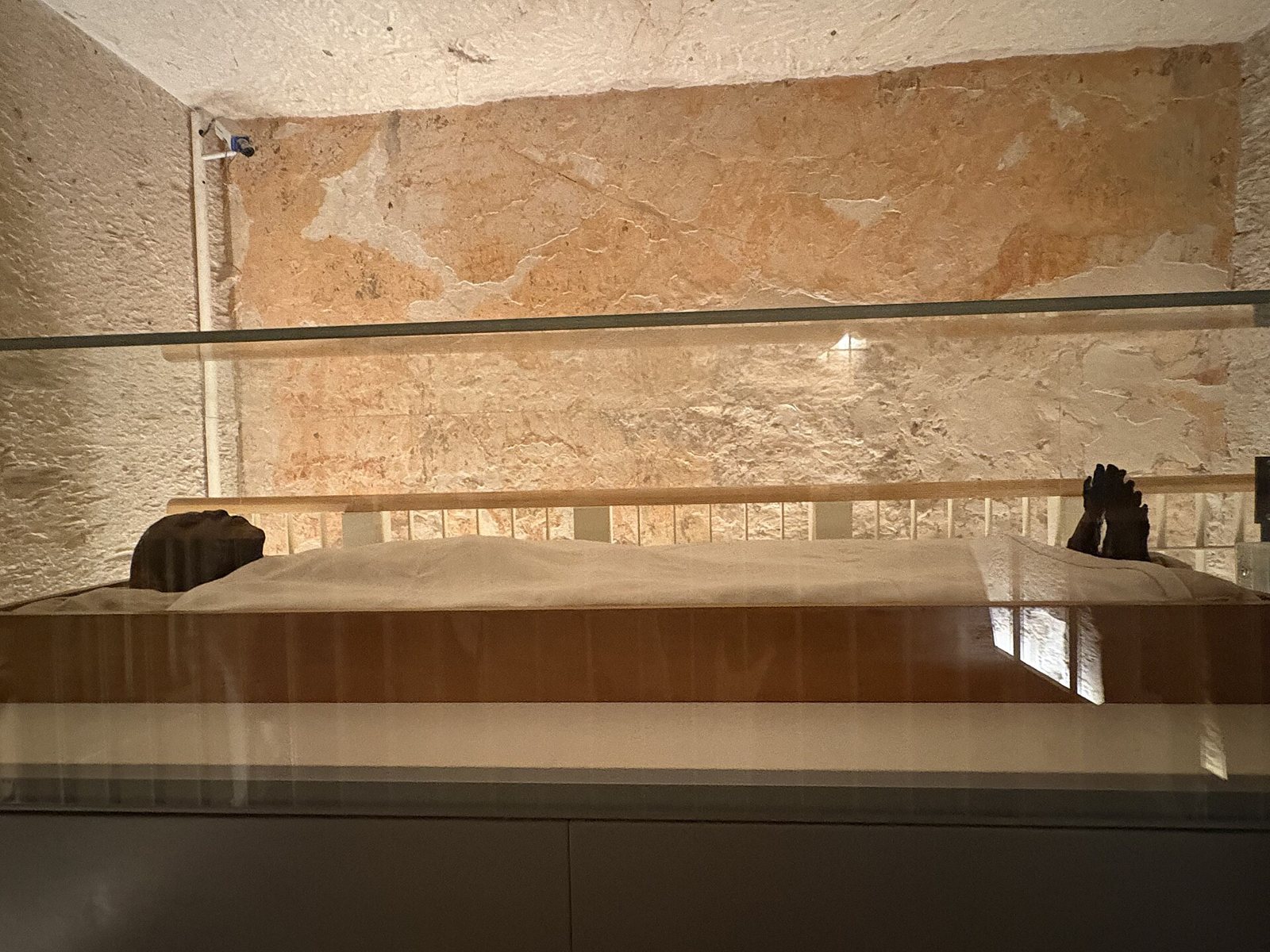
Yes, Tutankhamun's mummy still exists, and he has never left his tomb for good. He lies in KV62, in the Valley of the Kings on Luxor's west bank, where since November 2007 he has rested in a climate-controlled glass case inside the tomb (Egyptian Ministry of Tourism and Antiquities). His treasures, not his body, are what went to the Grand Egyptian Museum.
How he died is still debated. A 2010 study in JAMA, led by Zahi Hawass, judged malaria together with a bone disease to be the most likely cause, and its DNA work identified his parents and two daughters who were stillborn (Hawass et al., JAMA, 2010).
What follows is the young king's story after death: where he is, what happened to him in 1925, what the scientists concluded and how you can see him today.
Where Tutankhamun's mummy is today
Tutankhamun is in the tomb where he was buried, KV62 in the Valley of the Kings. For decades after Carter reached him he lay in his stone sarcophagus. In November 2007 Egyptian authorities moved him into a climate-controlled glass case inside the tomb, to protect him from heat and from the humidity that visitors bring into the tomb (AP report, 2007).
The confusion many people have is understandable, because a great deal of Tutankhamun did move. The Ministry of Tourism and Antiquities describes his funerary objects being transferred to the Grand Egyptian Museum, including one of his shrines (Ministry announcement). No move of the mummy itself has been announced. The objects belong to the museum's story; the king himself stays in the valley. If you are planning a trip around seeing him, confirm his current location and display with the Ministry of Tourism and Antiquities before you go.
How Howard Carter found him in 1922
Howard Carter found the entrance to KV62 in November 1922, during excavations paid for by Lord Carnarvon. The tomb held about 5,000 objects and was relatively intact compared with the other royal burials of the valley (Egyptian Ministry of Tourism and Antiquities). Carter's name is the one history remembers, but the excavation depended on Egyptian and international workers and specialists (Griffith Institute: Howard Carter).
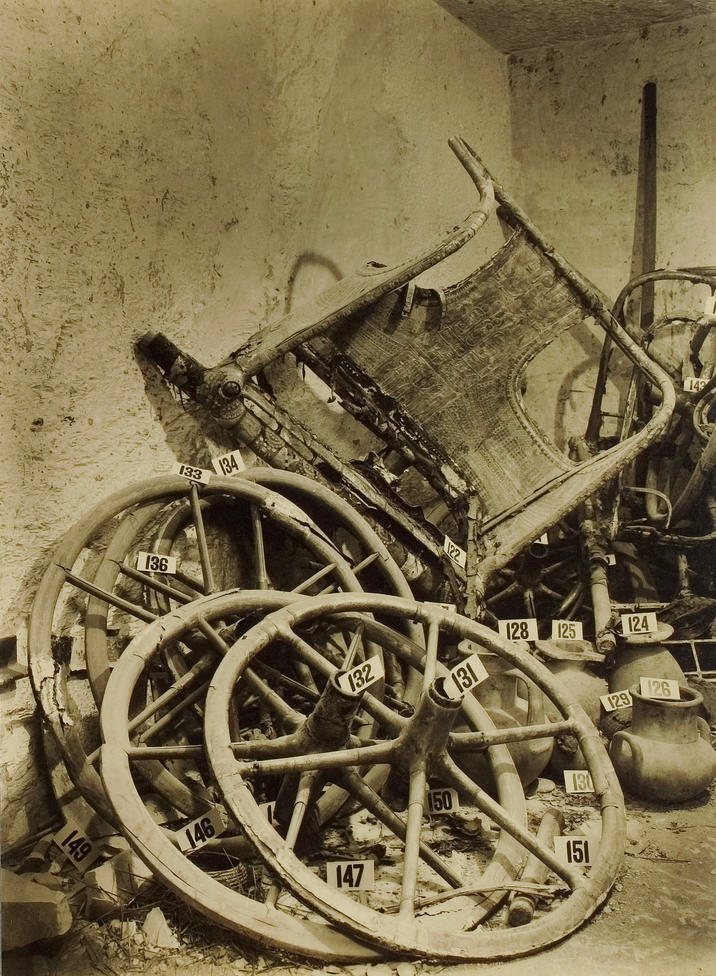
Clearing a tomb that full took Carter's team about ten years, and the king himself was not examined until the autumn of 1925. Intact royal burials are rare enough that the phrase "King Tut" has become shorthand for them elsewhere; in Peru, the Moche ruler in our story on the Lord of Sipán is often called Peru's King Tut.
The 1925 examination and the damage it left
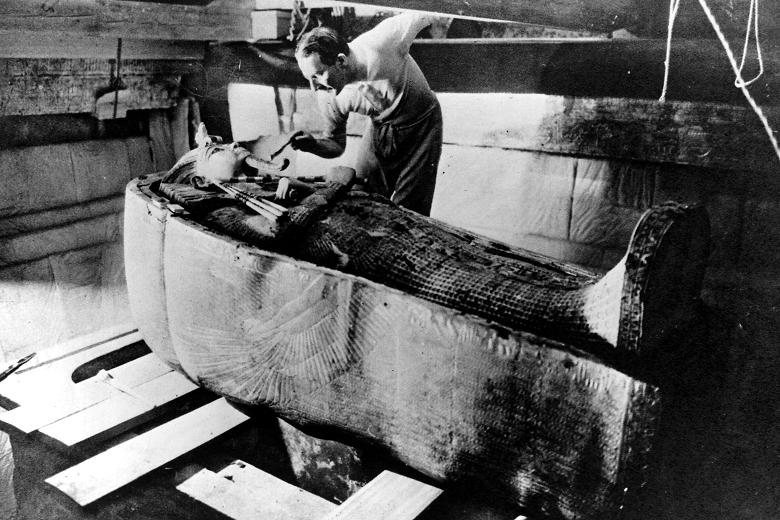
Carter's team reached the mummy in October 1925. The lid of the gold coffin was lifted on 28 October, and the unwrapping began on 11 November, with Carter, Pierre Lacau, the director of Egypt's Antiquities Service, and the anatomist Dr Douglas Derry present. The examination ended on 20 November (Griffith Institute, 4th Season, 1925 to 1926).
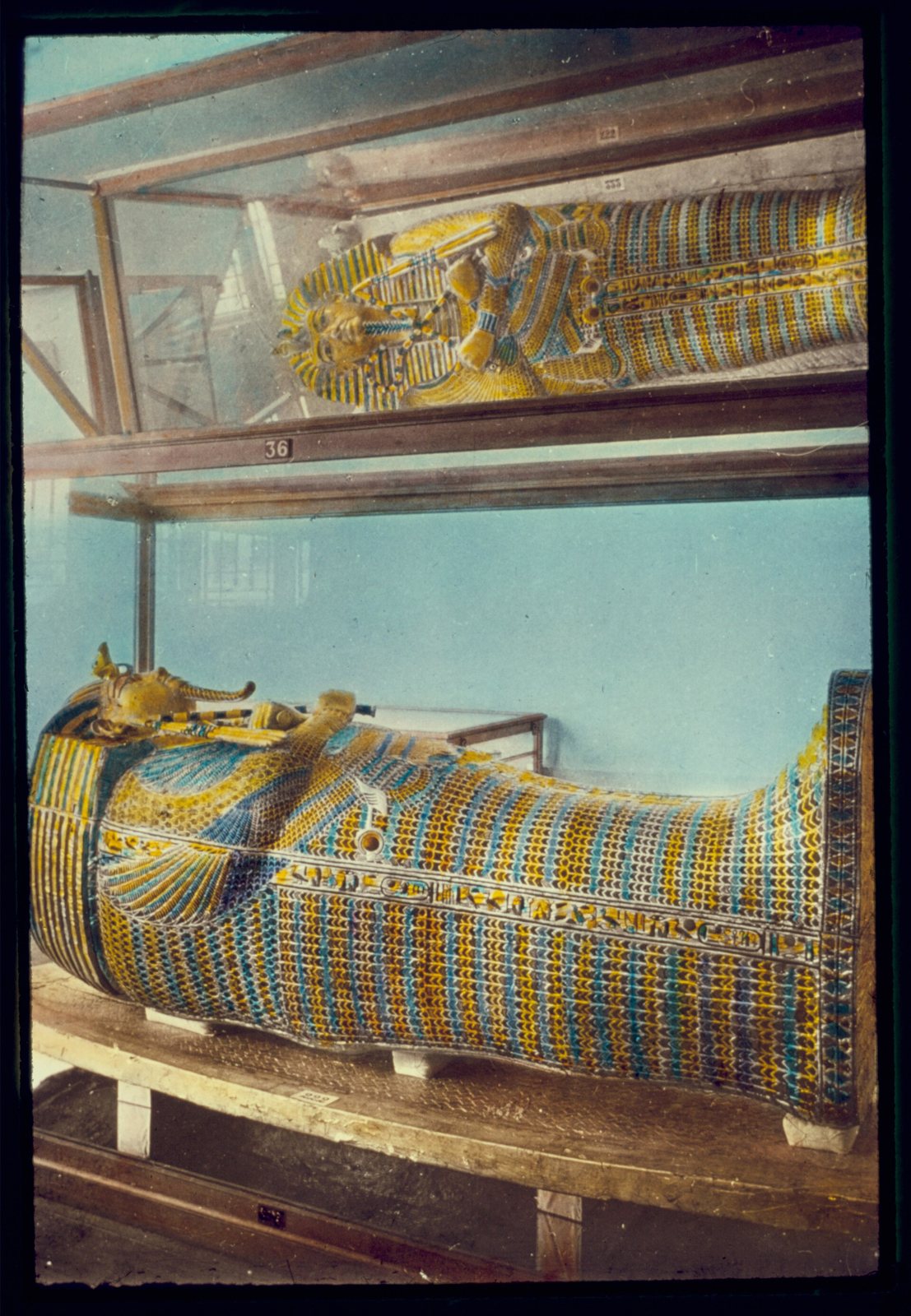
It was not a gentle process. The embalmers had saturated the body with resin, which had hardened and stuck the king to the inside of his coffin. Carter's team struggled to free him, and in the process they took apart parts of the mummy and of the funerary equipment (Griffith Institute, The Unwrapping of Tutankhamun's Mummified Body). That damage happened in 1925, at the hands of the excavators; it is not evidence of anything done to him in his lifetime or by the people who buried him. What the examination meant for his head, including the loose bone fragments that later fuelled a murder theory, is told in the story of Tutankhamun's skull.
The work was recorded closely. The Griffith Institute in Oxford keeps Carter's notes, Derry's anatomical examination, Harry Burton's photographs and the conservation records of the chemist Alfred Lucas, so the 1925 examination can still be followed day by day. For how a royal body like his was prepared in the first place, from natron to resin to linen, see how Egyptian mummies were made.
How Tutankhamun died
The most careful answer is that he probably died from several problems at once. In February 2010, Hawass and colleagues published a study of the health and family of Tutankhamun and his royal relatives. They found a severe fracture of the leg, an acute break in the right knee region; a bone disease called Köhler disease II; and genetic evidence of malaria caused by Plasmodium falciparum (Hawass et al., JAMA, 2010).
Their judgment was that avascular bone necrosis, the death of bone tissue from a lack of blood supply, in combination with malaria was the most likely cause of death. They also said that none of these conditions alone, Köhler disease II included, would have killed him. The authors suggested that impaired walking and malaria together could have been fatal. The tomb itself fits the idea of a king who walked with difficulty and was often ill: it held many walking sticks and what the authors interpreted as an afterlife pharmacy.
That is a probability. It does not settle the question. Before 2010, writers proposed a chariot accident, murder and other injuries. The 2005 CT work and later Egyptian examinations did not establish murder, and the study's authors presented malaria with bone necrosis as the most likely explanation rather than a certainty. Other scientists, including Timmann and Meyer, discussed the malaria finding after it was published (Timmann and Meyer, 2010). The exact order of illness, injury and death is still unresolved. For how scientists read illness and injury from human remains more broadly, see what bones tell archaeologists.
What his DNA showed about his parents
The same 2010 study used genetic fingerprinting to build a five-generation family tree of Tutankhamun's immediate relatives. It identified a mummy from tomb KV55 as his biological father and a mummy known as the Younger Lady, from tomb KV35, as his biological mother. Both of his parents, the study concluded, were children of Amenhotep III and Queen Tiye, which means his mother and father were closely related to each other (Hawass et al., JAMA, 2010).
The relationships are the strong part of that result. The personal names historians attach to the KV55 mummy and the Younger Lady are another matter and remain debated, so it is fairest to speak of them by their tomb names. DNA has done similar work for other royal remains; in England it helped confirm the identity of the king in our story on Richard III's skeleton.
Tap or hover a row to highlight it.
| Question | Finding |
|---|---|
| QuestionFather | FindingThe KV55 mummy |
| QuestionMother | FindingThe Younger Lady, from KV35 |
| QuestionHis parents' own parents | FindingAmenhotep III and Queen Tiye |
| QuestionChildren | FindingTwo daughters, stillborn, buried in KV62 |
| QuestionMother of the daughters | FindingNot securely identified; the KV21A mummy is possible |
| QuestionConditions found | FindingPlasmodium falciparum malaria, Köhler disease II, a severe leg fracture |
| QuestionMost likely cause of death | FindingAvascular bone necrosis together with malaria |
His two daughters
Buried with Tutankhamun in KV62 were two small mummified daughters, both stillborn. The 2010 genetic evidence supports that both were his children (Hawass et al., JAMA, 2010). They were mummified and laid to rest in their father's tomb, close to him.
Who their mother was is not settled. The study's authors suggested that the mummy known as KV21A might be their mother, but the data were not statistically strong enough to identify her securely as Ankhesenamun. Whoever their mother was, these two girls deserve to be remembered as what they were: not treasures, but a family's loss, kept beside the king.
How the curse story began
The curse began with a real death. Lord Carnarvon, who had paid for the excavation, was bitten by a mosquito in the Valley of the Kings in March 1923. The bite became infected, and he developed erysipelas, blood poisoning and pneumonia. He died in Cairo on 5 April 1923 (Griffith Institute: Lord Carnarvon).
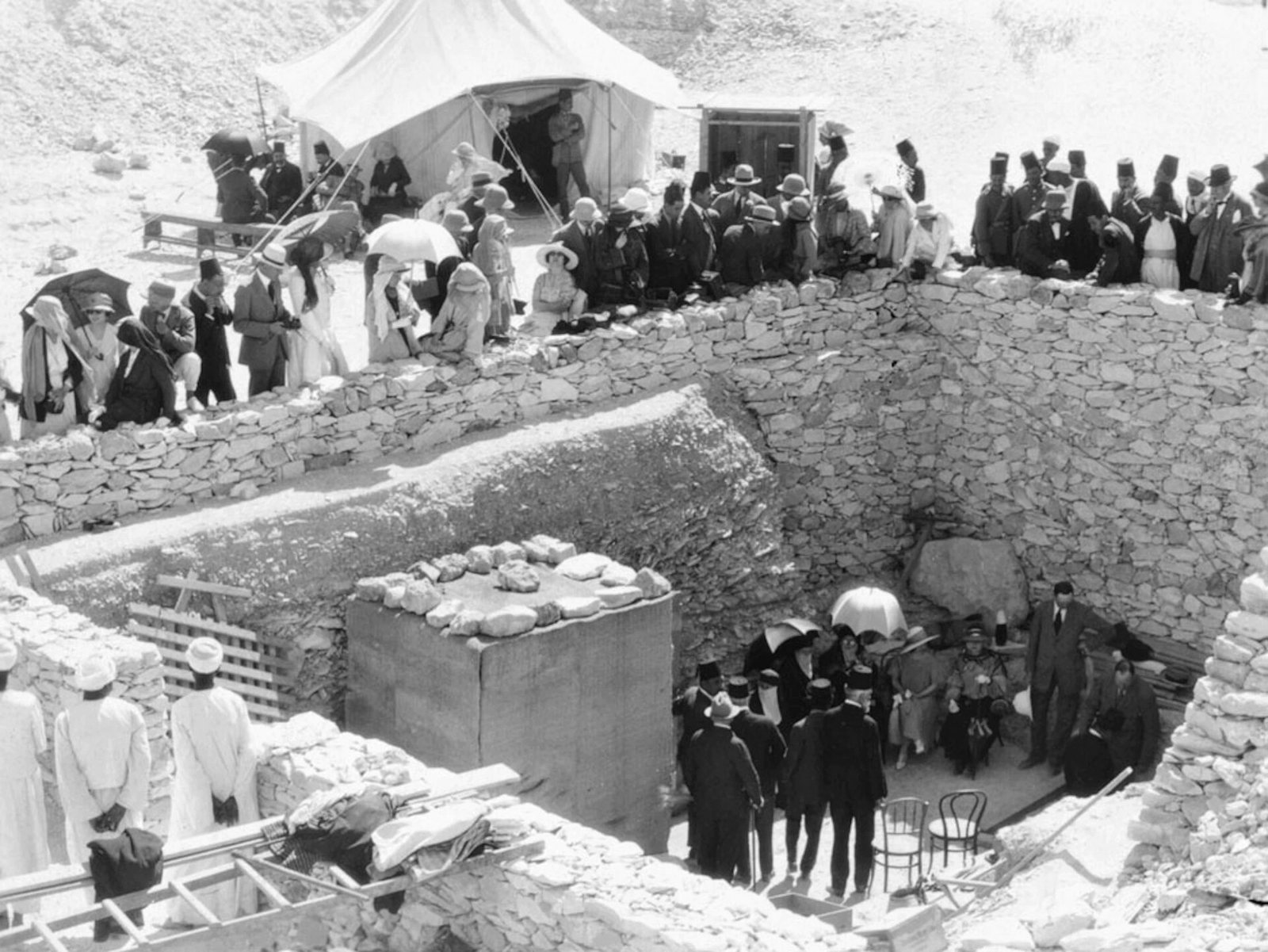
Newspapers did the rest. The Egyptologist Joyce Tyldesley of the University of Manchester argues that an exclusive arrangement between the excavation and The Times left other reporters without direct access, which encouraged sensational stories and a reliance on commentators who were not specialists (University of Manchester). There was no curse inscription in Tutankhamun's tomb. The curse, in other words, is a modern media legend that grew around Carnarvon's death, not an ancient Egyptian warning.
Seeing Tutankhamun today
You can visit the king in KV62, where he lies in his protective case. The Ministry of Tourism and Antiquities lists the tomb as open daily from 6:00 a.m. to 5:00 p.m., with admission at EGP 700 for foreign adults, EGP 350 for foreign students, EGP 40 for Egyptian adults and EGP 20 for Egyptian students (Egyptian Ministry: Tomb of Tutankhamun; Valley of the Kings). Official fees change, so confirm prices and access with the Ministry before you travel.
His treasures are a separate visit. The Grand Egyptian Museum is the home of his funerary objects, including those moved from the Egyptian Museum in Cairo. A Ministry announcement said the Tutankhamun Galleries would stay closed until the museum's official opening while its main galleries ran in trial operation (Ministry announcement). Check the current gallery status, hours, tickets and photography rules with the museum or the Ministry before you plan around them.
Tutankhamun's mummy since 1922
Tap or hover a step to follow the order.
November 1922
Howard Carter finds the entrance to KV62 in the Valley of the Kings.
5 April 1923
Lord Carnarvon dies in Cairo after an infected mosquito bite, erysipelas, blood poisoning and pneumonia.
28 October 1925
The lid of the gold coffin is lifted.
11 November 1925
The unwrapping begins, with Pierre Lacau and Dr Douglas Derry present.
20 November 1925
The anatomical examination ends.
November 2007
The mummy is moved from the sarcophagus into a climate-controlled case inside KV62.
17 February 2010
Hawass and colleagues publish their JAMA study of his family and health.
Tutankhamun's mummy
Answer every question to check.
Questions about Tutankhamun's mummy
A few short answers to finish.
Does King Tut's mummy still exist?
Yes. Howard Carter's excavation found his burial and mummy in KV62 in 1922, his team examined and unwrapped him in November 1925, and he was then returned to the tomb, where he remains (Griffith Institute, 1925 examination).
Is King Tut's mummy in the Grand Egyptian Museum?
No. The museum holds his treasures, and his mummy remains in KV62 near Luxor, while the funerary objects, including those transferred from the Egyptian Museum in Cairo, are at the Grand Egyptian Museum (Ministry announcement).
Was King Tut murdered?
The evidence does not show murder. The 2005 CT work and later Egyptian examinations did not establish it, and the 2010 study pointed instead to illness, a leg fracture and malaria (Hawass et al., JAMA, 2010).
Did Howard Carter believe in the curse?
No. Carter repeatedly rejected claims that the tomb held a curse, poisons or biological traps (University of Manchester).
A king who stayed home
A century after Carter found him, Tutankhamun still lies in the tomb where he was buried. Scientists have learned how he probably died, who his parents were and that two daughters went into the tomb with him. What the evidence cannot give is certainty about his last days, and the best of the studies say so plainly. He was a young man, a son and a father, and the people who look after him today keep him in his own tomb, in his own valley.
Terms in this story
Tap a term to see what it means.
KV62. The number given to Tutankhamun's tomb in the Valley of the Kings, near Luxor.
---