

No. 177
The Lord of Sipán: The Moche Ruler's Tomb and Who Was Buried With Him
The Lord of Sipán was a high-ranking Moche ruler, often described as a warrior-priest, who lived on the north coast of Peru and died around the third century CE. Brand Peru gives a probable death range of 240 to 310 CE (Brand Peru). His intact tomb at Huaca Rajada, near the village of Sipán in Lambayeque, was documented on 20 July 1987 by a team led by the Peruvian archaeologist Walter Alva (Ministerio de Cultura). He lay in a wooden coffin surrounded by hundreds of objects in gold, silver, gilded copper, turquoise, shell and clay, with eight other people, a dog and two llamas buried beside him.
That is why people call him "Peru's King Tut." The nickname is a fair shorthand for how much survived, but the man himself belongs to a different world: the Moche, a people of northern Peru who built in adobe, worked metal with great skill and painted their rulers on pottery long before anyone dug into Huaca Rajada. "Lord of Sipán" is also a modern name. It is what archaeologists call the principal person in Tomb 1; his own name is not known.
How the tomb came to light in 1987
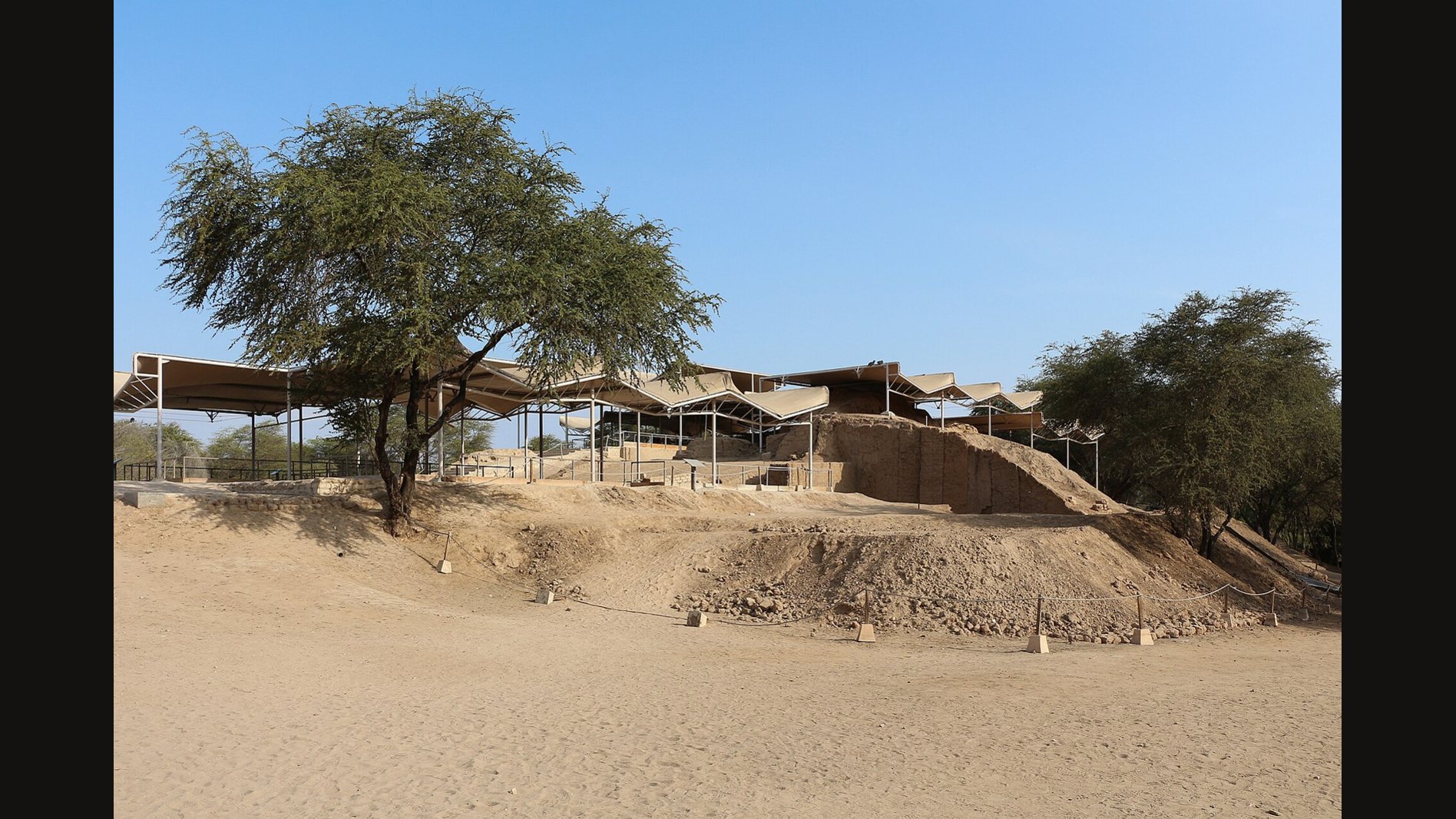
Huaca Rajada sits in the Zaña District of Lambayeque, southeast of the city of Chiclayo. The modern story of the site begins with looters. They had already reached the funerary complex before archaeologists arrived, and Walter Alva, then associated with the Brünning Museum, led the response with the archaeologists Susana Meneses and Luis Chero Zurita (Ministerio de Cultura).
One royal tomb was lost to looting before scientific excavation began, as Alva and Christopher Donnan record in their 1993 catalogue *Royal Tombs of Sipán* (Alva and Donnan). What the team could do was document and recover the tombs that remained intact. On 20 July 1987 they reached the burial now known as Tomb 1, the resting place of the Lord of Sipán. Peru's Ministry of Culture still marks that date as the anniversary of the find.
The difference between a looted tomb and an excavated one is the difference between loose objects and a story. Looters take metal and leave a hole. Excavators record where every ornament lay and who was buried nearby. Almost everything known about the Lord of Sipán comes from that careful recording, and it is the reason his burial could be read as a whole.
Who the Lord of Sipán was
He was a Moche ruler. The Moche, also called the Mochica, were an ancient culture of northern Peru that flourished broadly from about 100 to 800 CE (Brand Peru). They are known for painted and modeled ceramics, monumental adobe building, metalworking, irrigation, and detailed scenes of ritual, warfare and everyday life. Moche pottery shows richly dressed figures performing ceremonies, and one of the reasons the Sipán tomb mattered so much is that it held a real person dressed much like the figures in that art.
The commonly used date for him is the third century CE, with a probable death range of 240 to 310 CE. That places him centuries before the Inca Empire, a point worth keeping in mind, since the Inca are the ancient Peruvians most people know first (Brand Peru).
How old he was at death depends on whom you read. Brand Peru reports that he was approximately 30 years old. The account that follows Alva and Donnan's work is commonly summarized as an adult man of about 35 to 45. Both estimates are in circulation; either way he was an adult, younger than the Old Lord buried nearby. He stood approximately 1.65 metres tall, about 5 feet 5 inches. For more on how archaeologists estimate age and stature from a skeleton, see our story on what bones tell archaeologists, and for dating methods in general, how old are these bones.
What was in the tomb
The ruler was laid in a wooden coffin, and the burial around him held hundreds of objects (Brand Peru). The reported pieces include:
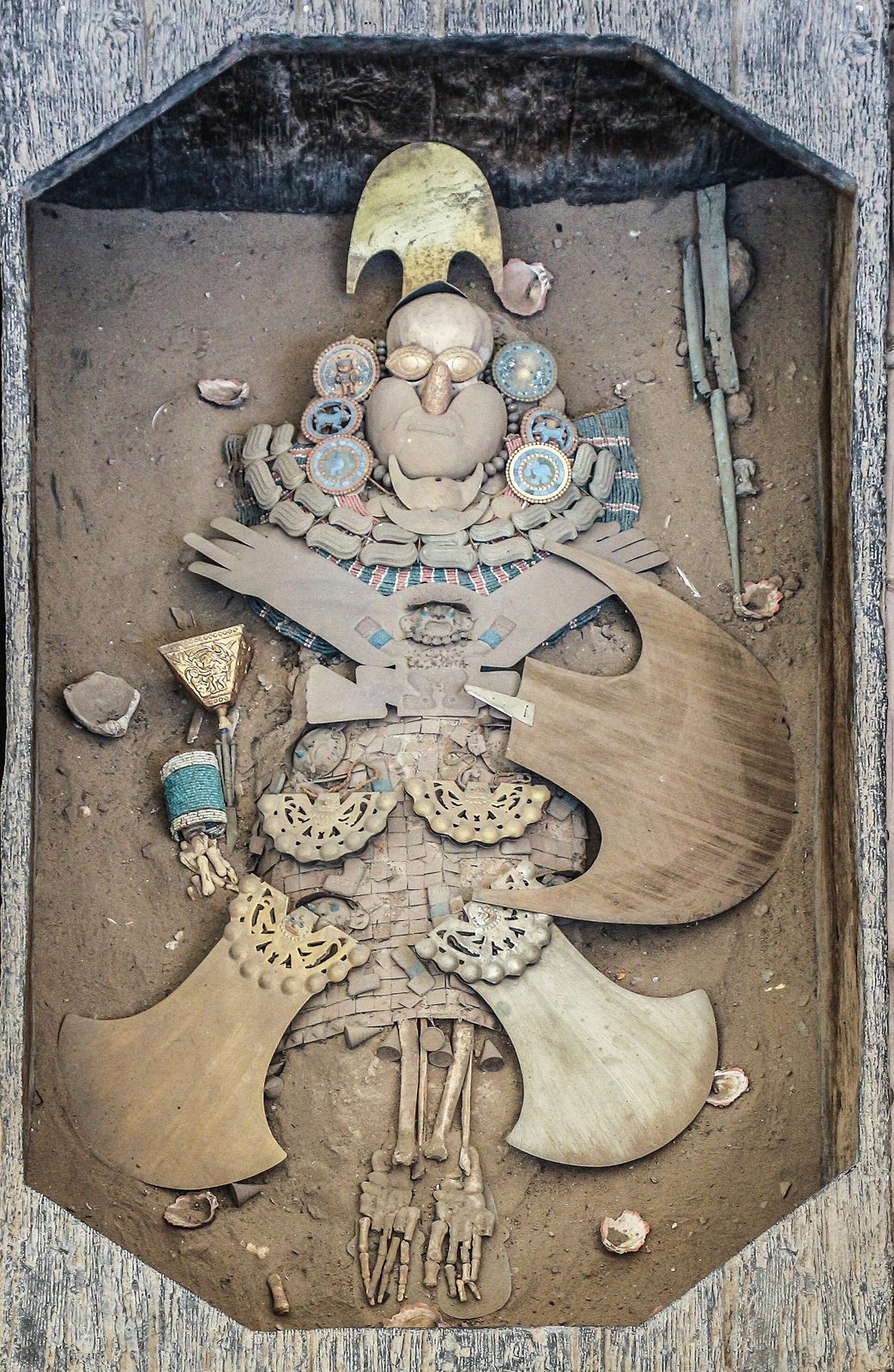
- Ornaments and regalia in gold, silver and gilded copper, many set with turquoise or shell
- Pectorals, the broad ornaments worn across the chest
- Necklaces
- Ceremonial weapons and a scepter
- Nose ornaments and headdresses
- Three pairs of gold and turquoise ear ornaments
- Ceramic vessels
The ear ornaments are among the best-known pieces from Sipán. They signaled the wearer's elite rank, and three pairs with one man show how much status was gathered around him.
One necklace stands out for its subject. It is made of twenty beads in the shape of peanuts, ten in gold and ten in silver (Brand Peru). Brand Peru identifies the peanut as a Moche symbol associated with beginning or rebirth. It is a good example of how Moche jewelry takes ordinary things from the coastal valleys, a crop from the fields, and turns them into objects of power.
Who was buried beside him
Eight other people were buried with the Lord of Sipán: four men, three women and a child, according to Brand Peru (Brand Peru). Archaeologists have described them as attendants, military personnel, guards and women associated with the ruler. Those roles are interpretations drawn from where each person lay and what was placed with them. Their names, like his, are not known.
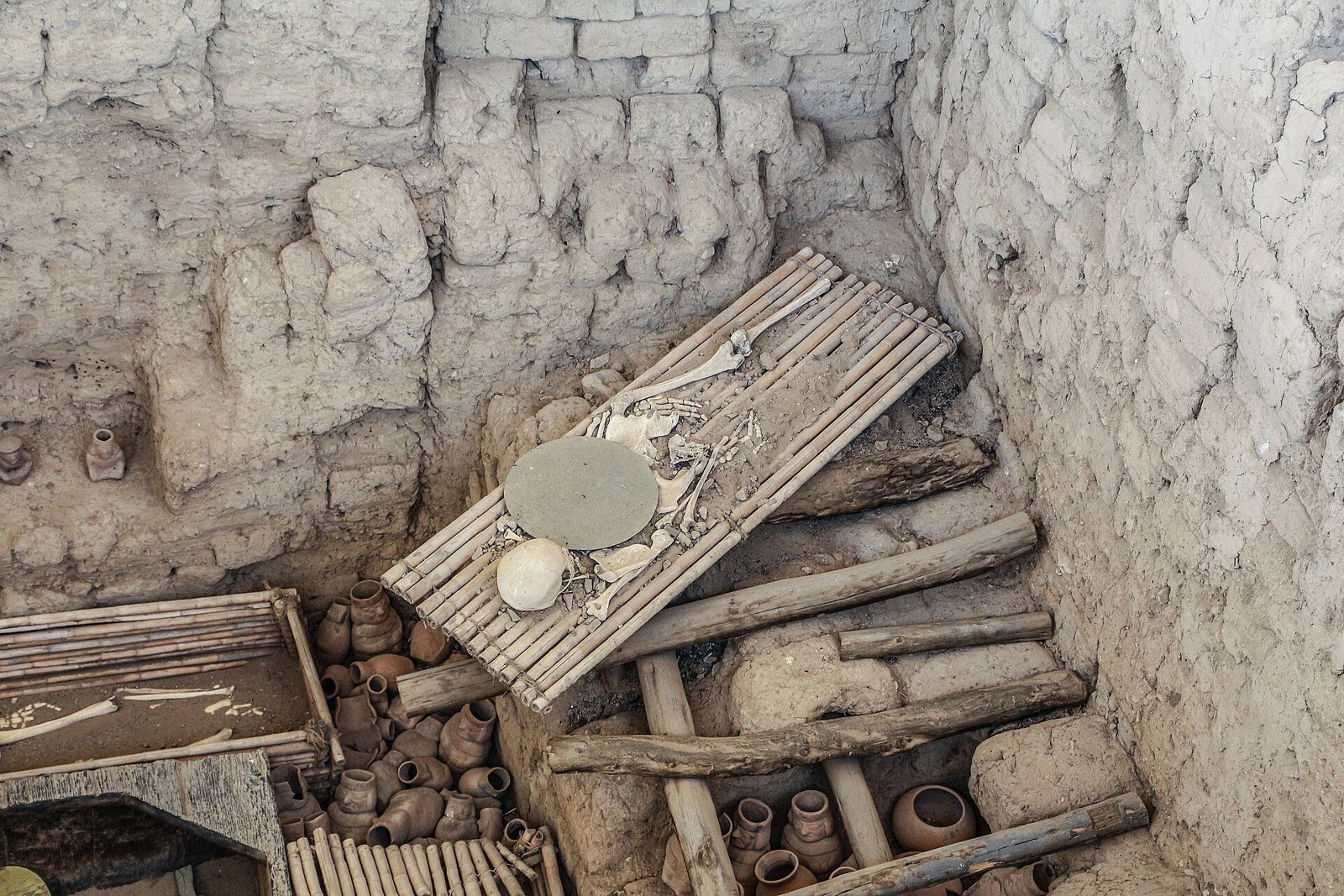
That makes nine human individuals in the tomb in total: the ruler and the eight people around him (Arqueología del Perú). The tomb also held the remains of one dog and two llamas, which are counted separately from the people.
It is worth pausing on the child and the three women in particular, because popular retellings tend to rush past them on the way to the gold. They were members of a Moche community who were laid in the same burial as their ruler, and they are as much a part of this tomb as he is. The care given to the Lord of Sipán belongs to everyone who was buried with him.
Who lay in Tomb 1 at Huaca Rajada
Tap a card to bring it forward.
- The Lord of Sipán: A high-ranking Moche ruler, adult man, about 1.65 metres tall, in a wooden coffin.
- Four men: Described by archaeologists as attendants, military personnel and guards.
- Three women: Described as women associated with the ruler.
- One child: Buried with the group in Tomb 1.
- Animals: One dog and two llamas, counted separately from the nine people.
The Old Lord of Sipán and the other royal tombs
Tomb 1 was only the beginning. Between 1987 and 1990, excavations at Huaca Rajada recovered three scientifically excavated royal tombs (Alva and Donnan; Bourget, "The Third Man").
Tomb 2 contained another high-ranking man, commonly identified by the excavators as the Priest or Warrior-Priest. Tomb 3 held an older high-ranking individual now called the Old Lord of Sipán. He was buried in an earlier construction phase of the funerary platform, so his burial is chronologically older than the Lord of Sipán's, and he is generally estimated to have been 45 to 55 years old when he died.
The Old Lord's burial included metal, shell, ceramic and feather objects. Its most famous piece is a gold pectoral made of ten biconvex beads, each bearing spider imagery (JSTOR, "Spiders and Spider Decapitators"). Brand Peru notes that his burial lacked the group of companions found in Tomb 1 (Brand Peru). Together the three tombs show that Huaca Rajada was used for elite burials over more than one generation, not for a single ruler.
Tap or hover a row to highlight it.
| Tomb | Who was buried there | Details |
|---|---|---|
| TombTomb 1 | Who was buried thereThe Lord of Sipán | DetailsWooden coffin, hundreds of objects, eight other people, a dog and two llamas |
| TombTomb 2 | Who was buried thereA high-ranking man known as the Priest or Warrior-Priest | DetailsIdentified by the excavators by his role |
| TombTomb 3 | Who was buried thereThe Old Lord of Sipán | DetailsEarlier building phase, about 45 to 55 years old, gold spider pectoral, no group of companions like Tomb 1 |
Huaca Rajada and the Moche pyramids
Did the Moche build pyramids? Yes, in their own way. Moche communities built large adobe ceremonial platforms and pyramid-like structures called huacas, including the monumental Huaca del Sol and Huaca de la Luna (Brand Peru). They were built of adobe, sun-dried mud brick, rather than cut stone.
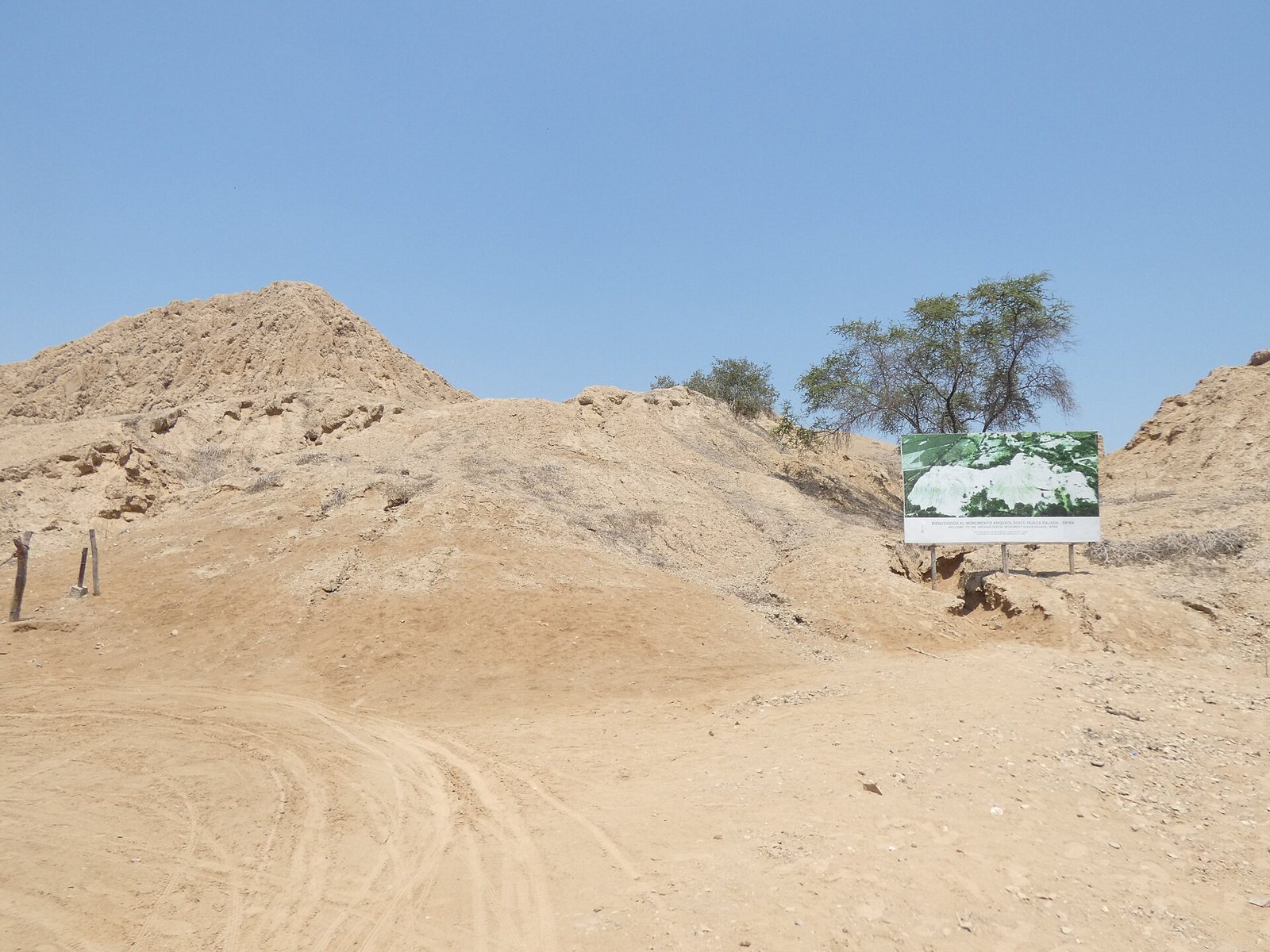
Huaca Rajada itself is a funerary complex made up of monumental adobe structures. The royal tombs were set into a funerary platform there, and the Old Lord's tomb lies in an earlier phase of that platform than the Lord of Sipán's. The building grew over time, with new burials placed into new layers.
If you are interested in other ways ancient Andean peoples cared for their dead, the Chinchorro mummies come from a very different Andean coastal tradition. A closer neighbor in time and culture is the Lady of Cao, a Moche woman buried with the regalia of a ruler.
Where to see the Lord of Sipán's treasures
The finds from the royal tombs are shown at the Museo Tumbas Reales de Sipán, the Royal Tombs of Sipán Museum, at Avenida Juan Pablo Vizcardo y Guzmán 895 in the city of Lambayeque (Museos del Ministerio de Cultura). The museum opened in 2002, and its building was designed with Moche truncated pyramids in mind (Brand Peru). Inside, it presents the ruler's ornaments, ceramics and funerary objects together with the other material from the royal tombs.
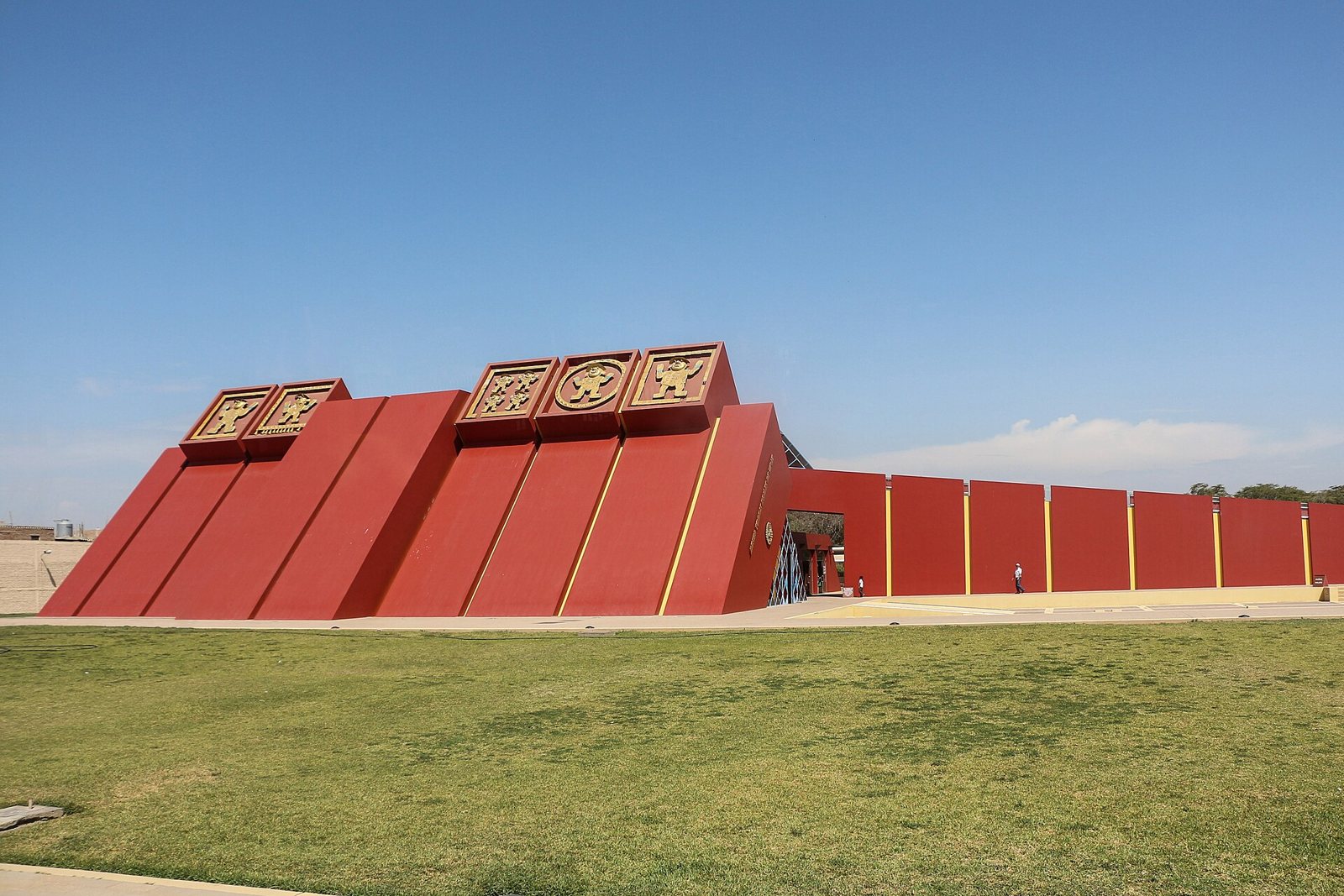
The museum's official page on the Ministry of Culture museums site lists, as of 2025, opening hours of Tuesday through Sunday, 9:00 a.m. to 5:00 p.m. Adult admission is listed at S/10 and higher-education students pay S/4. School students, children aged 3 to 17, older adults and people with disabilities who are Peruvians or foreign residents enter free under a 2025 ministerial resolution. The page also lists guided visits, a shop, restrooms and a cloakroom (Museos del Ministerio de Cultura).
Schedules and fees can change, so confirm hours, prices and photography rules with the museum before you go.
The Lord of Sipán, from burial to museum
Tap or hover a step to follow the order.
About 240 to 310 CE
Probable death range given for the Lord of Sipán.
20 July 1987
Tomb 1 at Huaca Rajada is documented and recovered by Walter Alva's team.
1987 to 1990
Three royal tombs are scientifically excavated at Sipán.
1993
Walter Alva and Christopher Donnan publish Royal Tombs of Sipán.
2002
The Museo Tumbas Reales de Sipán opens in Lambayeque.
2025
The official museum page lists hours of Tuesday to Sunday, 9:00 a.m. to 5:00 p.m.
Questions people ask about the Lord of Sipán
Short answers to the questions that come up most.
What is so special about the Lord of Sipán?
His tomb was an intact royal Moche burial, with the ruler, the people and animals buried with him, and an unusually rich set of metal, shell and ceramic objects all still in place. It gave direct archaeological evidence for the elite figures shown in Moche art (Brand Peru).
Who was the Lord of Sipán?
He was a Moche ruler of Peru's north coast, buried around 240 to 310 CE at Huaca Rajada in Lambayeque. "Lord of Sipán" is the modern name for the principal person in Tomb 1; his own name is not known (Brand Peru).
What is Moche culture?
Moche, or Mochica, is an ancient culture of northern Peru that flourished broadly from about 100 to 800 CE. It is famous for its painted and modeled pottery, adobe huacas, metalwork and irrigation canals (Brand Peru).
Where was the Lord of Sipán's tomb found?
It was found at the Huaca Rajada archaeological complex near the village of Sipán, in the Zaña District of Chiclayo Province, in the Lambayeque region of Peru (Ministerio de Cultura).
What was found in the Lord of Sipán's tomb?
Hundreds of objects, including gold, silver and gilded copper pieces, gold and turquoise ear ornaments, pectorals, necklaces, headdresses, nose ornaments, a scepter, ceramics, shell and wooden items. Human and animal remains were found in the tomb as well (Alva and Donnan).
Who was the Lord of Sipán buried with, and how many people were in the tomb?
He was buried with eight other people, four men, three women and a child, plus a dog and two llamas. That makes nine people in the tomb in total, counting the ruler (Arqueología del Perú).
Who found the royal tombs of Sipán?
The excavation was led by the Peruvian archaeologist Walter Alva, with Susana Meneses, Luis Chero Zurita and other workers and specialists. The first tomb was recorded on 20 July 1987 (Ministerio de Cultura).
Lord of Sipán quiz
Answer every question to check.
A ruler remembered in Lambayeque
The Lord of Sipán is a rare thing in archaeology: a ruler found where his people placed him, with the companions, animals and regalia they chose for him. The gold is what draws crowds to Lambayeque, but the lasting value of Huaca Rajada is that it was recorded whole, so the ruler, the eight people around him and the two other royal burials nearby can still be understood together. If his story has caught your interest, the Lady of Cao is the next Moche ruler to meet, and our story on what bones tell archaeologists explains how a skeleton gives up its age and height.
Terms in this story
Tap a term to see what it means.
Moche. An ancient culture of northern Peru, also called Mochica, that flourished broadly from about 100 to 800 CE and is known for its pottery, adobe huacas and metalwork.
---