

No. 169
The Chauchilla Cemetery Near Nazca: Who the Seated Mummies in the Desert Were
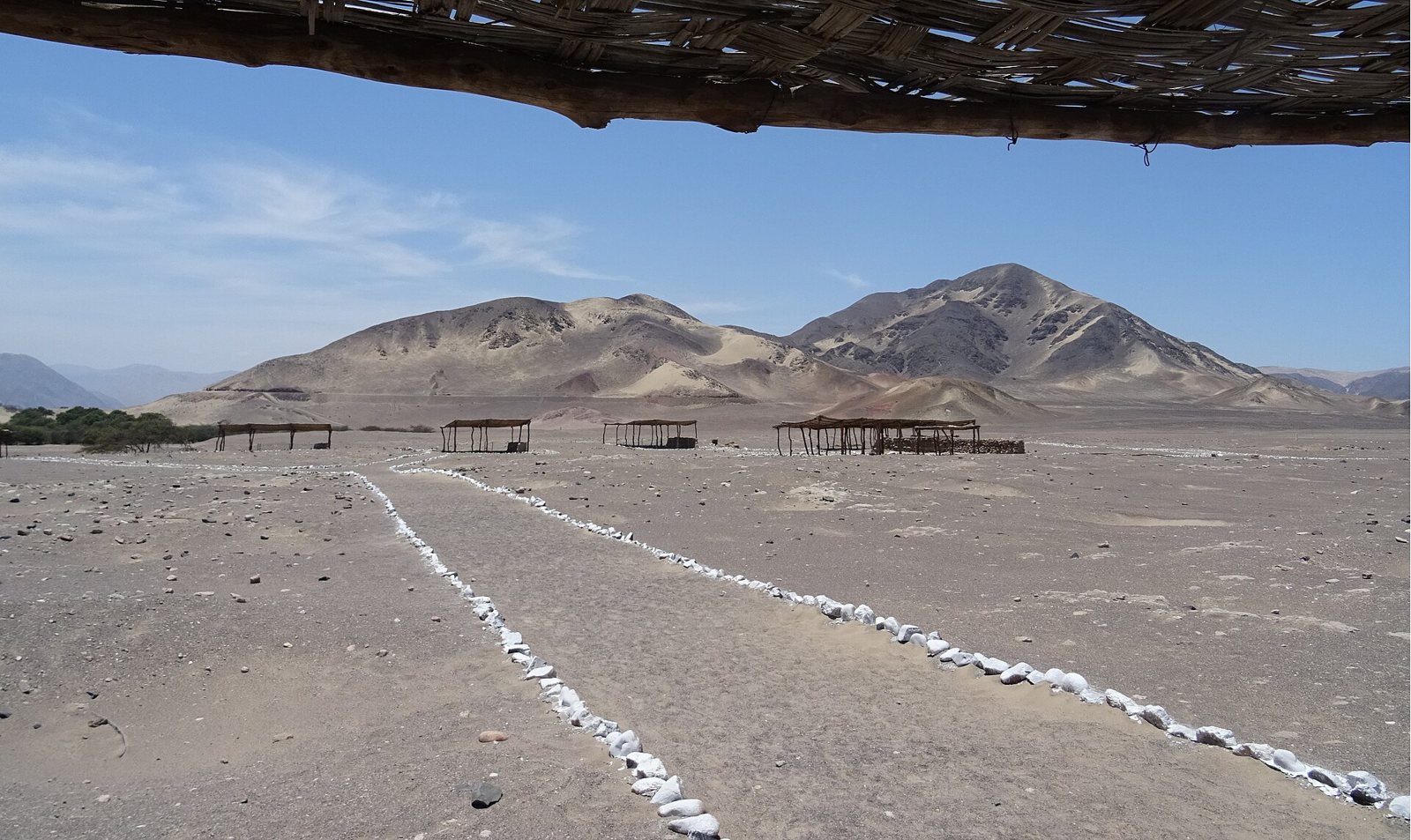
The Chauchilla cemetery is a pre-Hispanic burial ground about 30 km south of Nazca, beside the Las Trancas River in the Vista Alegre District of Peru's Ica Region. The people buried there belonged mainly to the Nasca cultural tradition, and they were laid to rest in wrapped funerary bundles, seated with their knees drawn up, inside pits and adobe-walled tombs. The cemetery is commonly dated to about 200 to 900 CE, with later burials as well (Guido Casaverde Ríos). The dry desert preserved their hair, their cotton wrappings and much of their remains. Looters, called huaqueros in Peru, disturbed many tombs; archaeological work in 1996 and 1997 cleaned and restored part of the site, and Peru's Ministry of Culture protects it today (Ministerio de Cultura).
The photographs that bring most people here show figures sitting in open graves, long hair falling over their wrappings, looking out at the desert. Each of them was someone's relative, buried with care by a community that lived in these valleys for centuries.
Where Chauchilla is and who was buried there
Chauchilla sits in the Vista Alegre District of Nasca Province, in the Ica Region of southern Peru, about 30 km south of the town of Nazca and beside the Las Trancas River (Wikimedia Commons). The archaeologist Guido Casaverde Ríos describes a funerary area of about 14 hectares east of the Pan-American Highway (Guido Casaverde Ríos).
The cemetery was not filled in one generation. Casaverde identifies burials from earlier Nasca phases and later funerary contexts linked to the late Middle Horizon and to the Poroma occupation of the area (Guido Casaverde Ríos). So, the people of Chauchilla are best understood as many families across several periods, using the same ground to bury their dead, rather than one population buried at one time.
How old the cemetery is
The age usually given for Chauchilla is about 200 to 900 CE, a broad archaeological period that corresponds roughly to the Nasca cultural tradition (Guido Casaverde Ríos). That span covers several funerary phases, so it describes the use of the cemetery as a whole rather than the date of any one person buried there. Some burials come from later centuries still.
Individual tombs can be older or younger than the centre of that range. A more precise age for a particular burial would come from a named excavator's or institution's published dating study, and it is worth looking for one before repeating an exact figure.
How the dead were laid to rest
The people of Chauchilla were buried in several kinds of tomb. Casaverde documents circular and rectangular pits, adobe walls and roofs of huarango wood, with the beams covered in mud. Inside, the dead were placed as funerary bundles, wrapped tightly in textiles (Guido Casaverde Ríos).
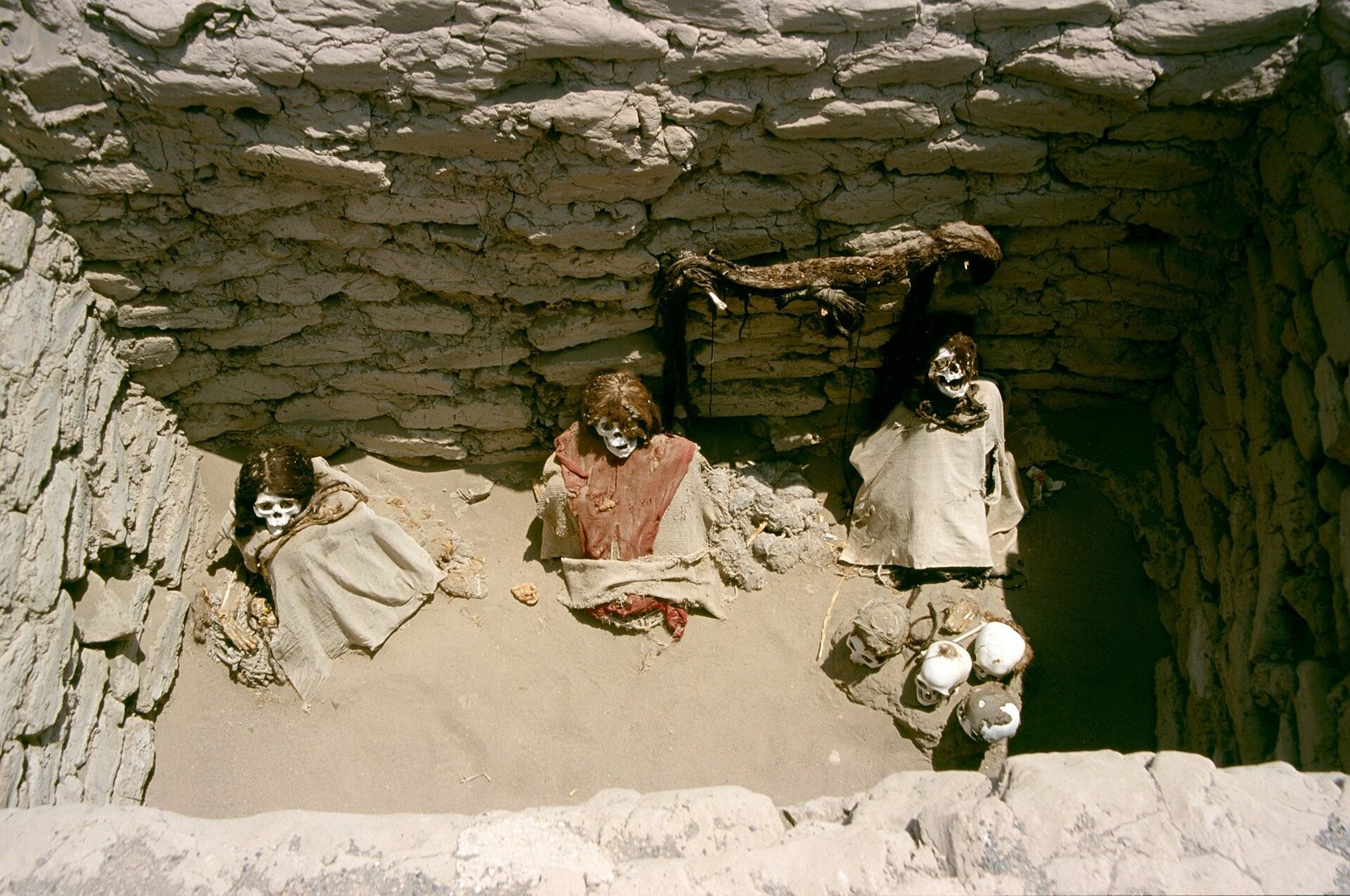
Some tombs were opened again after the first burial and modified, probably to add gifts for the dead or more bundles. Why each tomb was reopened remains an open question, but the pattern suggests the living went on returning to their dead (Guido Casaverde Ríos).
The seated posture that appears in every photograph comes from the bundles themselves. Bodies were placed with the limbs flexed, knees drawn toward the chest, in compact bundles that fit well in relatively small pits (Guido Casaverde Ríos). Archaeologists have not settled on one symbolic meaning for the position, so any claim that it proves a particular belief goes beyond the evidence. What is clear is that each person was folded, wrapped and set in place deliberately.
Why the bodies survived
The main reason the dead of Chauchilla are so well preserved is the desert. The air and ground in this part of Peru are extremely dry, and that dryness removes the moisture that many bacteria and fungi need to break a body down. The result is natural desiccation: the body dries out instead of decaying (El Peruano, 2019).
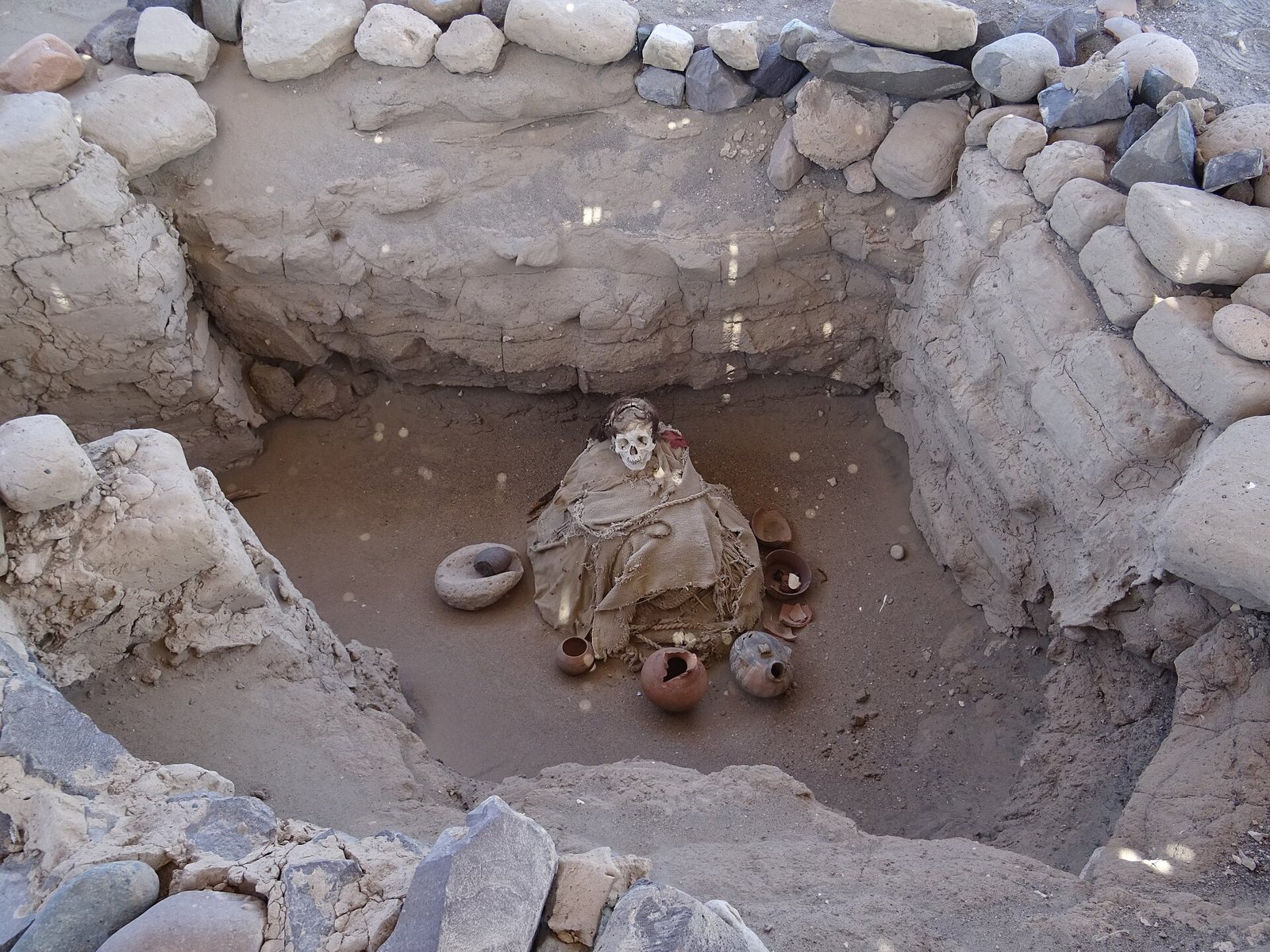
The wrappings helped too. Cotton textiles and tightly bound bundles shielded the bodies from abrasion and exposure, and because the climate slowed decomposition, hair and some soft tissue survived alongside the bones (El Peruano, 2019).
The long hair often draws the most comments. It is the person's own hair, preserved by the desert, and not hair that kept growing after death. You may also read that resin preserved the Chauchilla mummies. Resin is mentioned in popular accounts of Nasca burial, but it is not established as what preserved these bodies; the dry desert is the explanation archaeologists give first. If you are curious how other dry places preserved their dead, our stories on the Chinchorro mummies of northern Chile and the Guanajuato mummies of Mexico tell two very different versions of that story.
Looters, and the work of 1996 and 1997
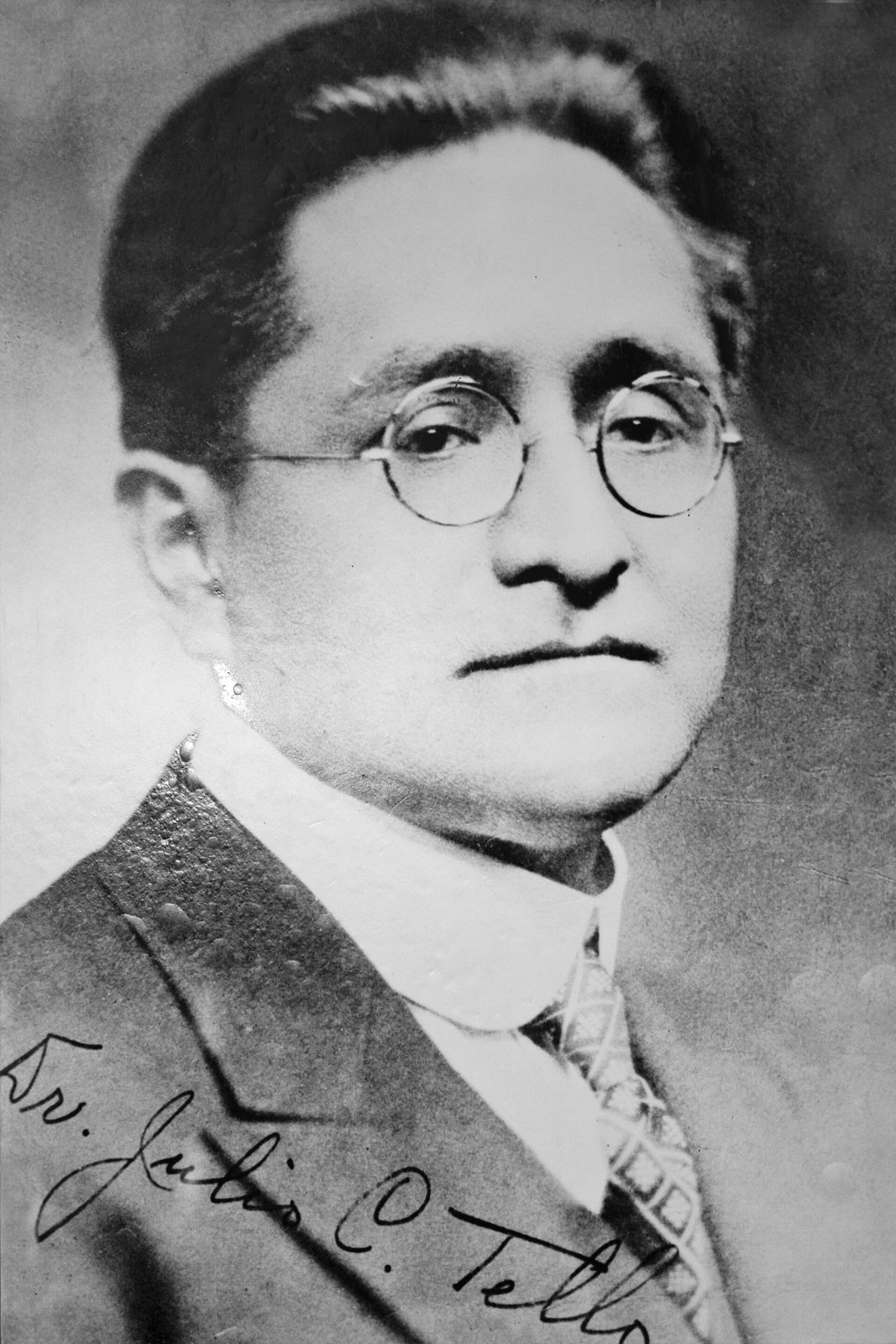
Archaeologists have worked at Chauchilla for a century. The archaeologist Julio C. Tello carried out early work there in 1926 (Guido Casaverde Ríos).
The site has also suffered badly from looting. Huaqueros dug repeatedly into the tombs looking for objects to sell, and the damage is still visible. Peru's Ministry of Culture, in a 2022 provisional-protection resolution, recorded holes and damage across the site, with exposed textiles, pottery fragments and human remains, and continuing harm from windblown sand, temperature changes, dust, light and microorganisms (Ministerio de Cultura, 2022). Every looted tomb is a family grave broken open.
In 1996 and 1997, projects of puesta en valor, the Peruvian term for conserving a heritage site and preparing it for the public, cleaned and documented about 18 funerary structures that had already been disturbed (Guido Casaverde Ríos). That work was protection, cleaning, documentation and restoration of the visitor area. It could not return the tombs to their original state, and Casaverde cautions that objects found in disturbed tombs cannot always be tied securely to the person or tomb they came from. In 2022 the Ministry of Culture also moved to secure the legal registration of the land that makes up the archaeological site (Ministerio de Cultura).
Chauchilla, from Nasca burials to protected site
Tap or hover a step to follow the order.
About 200 to 900 CE
The broad period commonly given for the Nasca-associated cemetery, with later burials as well.
1926
Julio C. Tello carries out early archaeological work at Chauchilla.
1996 to 1997
Puesta en valor projects clean and document about 18 disturbed funerary structures.
2022
Peru's Ministry of Culture issues a protection resolution recording looting damage and natural deterioration.
What visitors see today
The tombs you see at Chauchilla are selected funerary structures, with their openings, adobe walls and funerary bundles that have been reconstructed or arranged after cleaning (Guido Casaverde Ríos). A 2019 report in El Peruano also describes a museum or site display (El Peruano, 2019). Because so many tombs were disturbed before the restoration, the bundles on view are not untouched burials in their original positions. They are the people of Chauchilla, cared for and shown again after the looters left.
If Chauchilla is on your itinerary, confirm opening status, capacity, fees and rules with Peru's Ministry of Culture or the authorized site operator before you travel. A few habits of respect apply wherever human remains are shown to the public:
Visiting Chauchilla with respect
Tap a card to bring it forward.
- Confirm before you go: Opening status, admission and rules come from the Ministry of Culture or the authorized site operator.
- Stay on the paths: Authorized paths and barriers protect fragile tombs that have already been damaged by looting.
- Touch nothing: Do not touch, move, climb on or remove remains or artifacts; the site is still under threat from human and natural damage.
- Ask before photographing: Check with staff before photographing museum displays or human remains.
- Follow staff instructions: The people who care for the site know its current rules.
- Remember who they are: The burials are human ancestors and archaeological heritage, not props.
Chauchilla and the Nazca Lines
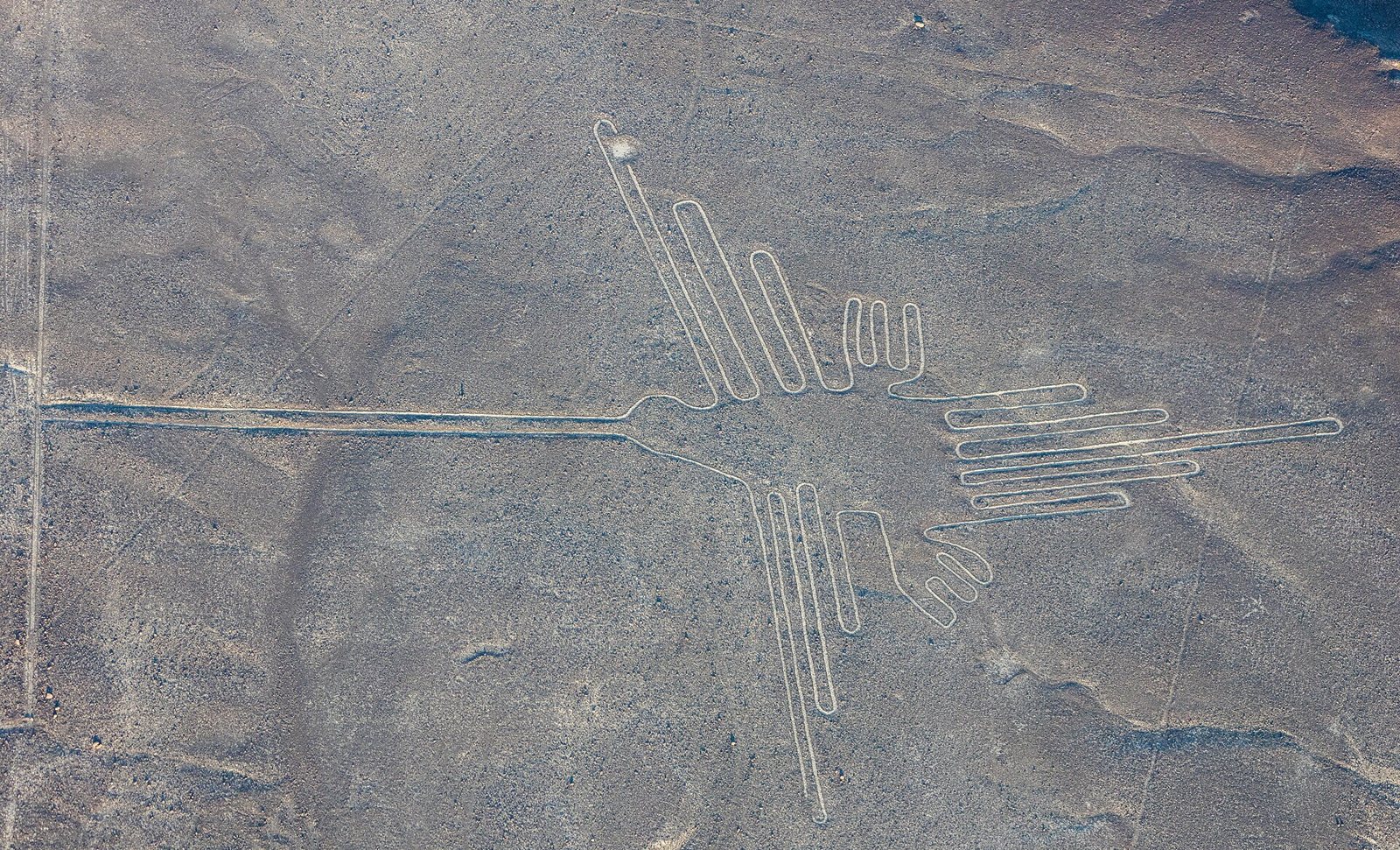
Chauchilla and the Nazca Lines often share a travel day, and both belong to the wider world of the Nasca culture in southern Peru. They are different kinds of place. Chauchilla is a funerary area, where people were buried. The Nazca Lines are geoglyphs, huge designs made by modifying the surface of the desert (Ministerio de Cultura). Chauchilla is not a tomb beneath the Lines, and the cemetery does not by itself explain why the geoglyphs were made.
Chauchilla was also one cemetery among many. Casaverde places it within a wider network of Nasca burial grounds in the valleys and quebradas, the dry ravines, of the region, including Trancas, Kopara, Taruga, Palpa, Ingenio and Acarí (Guido Casaverde Ríos). Peru's long tradition of caring for the dead runs well beyond Nazca; on the north coast, the Moche burials of the Lady of Cao and the Lord of Sipán show another culture's way of honouring its leaders.
Questions people ask about the Chauchilla cemetery
Short answers to the questions that come up most.
What is the Chauchilla cemetery?
It is a pre-Hispanic funerary area near Nazca in Peru's Ica Region, known for desert-preserved funerary bundles, tombs, pottery and human remains of mainly the Nasca cultural tradition. Peru's Ministry of Culture manages and protects it as an archaeological site (Ministerio de Cultura).
How old is the Chauchilla cemetery?
The range commonly used is about 200 to 900 CE, which covers several funerary phases rather than one burial event. Some burials belong to the later Middle Horizon and Poroma periods (Guido Casaverde Ríos).
Why are the mummies at Chauchilla sitting?
They sit because they were buried as compact funerary bundles with the limbs flexed, a position suited to wrapped burial in relatively small pits. No single symbolic explanation for the posture has been established (Guido Casaverde Ríos).
Did the hair of the Chauchilla mummies keep growing?
No, the long hair is the person's own hair, preserved by the dry desert along with textiles and some soft tissue. It is not evidence of growth after death (El Peruano, 2019).
Where is the Chauchilla cemetery?
It is a pre-Hispanic burial area near Nazca, in the Ica Region, with tombs, funerary bundles, human remains and objects of the Nasca tradition. The Ministry of Culture refers to it as the Necrópolis de Chauchilla (Ministerio de Cultura).
What is the history of the Chauchilla cemetery?
Julio C. Tello studied it in 1926, looters disturbed many tombs, and cleaning and puesta en valor work took place in 1996 and 1997. Today it is an archaeological site protected by Peru's Ministry of Culture (Guido Casaverde Ríos; Ministerio de Cultura).
How much does a Chauchilla tour cost?
A tour price is not the same as the official site admission fee, and it varies with the operator, transport and guide. Peru's Ministry of Culture sets admission fees for archaeological sites by resolution, such as its 2024 tariff resolution 451-2024-MC, so confirm the current admission and tour price with the authorized operator or the Ministry before booking (Ministerio de Cultura).
Chauchilla cemetery quiz
Answer every question to check.
The people of the Las Trancas valley
The seated figures of Chauchilla were people of the Nasca valleys, buried with care in tombs their families sometimes reopened to leave gifts or add another bundle. Looters broke into many of those graves, and the desert wind still wears at them. What survives does so because Peruvian archaeologists, from Julio C. Tello to Guido Casaverde Ríos, and the Ministry of Culture have worked to document, protect and show them with respect. For more on how museums and nations decide how ancestral remains are cared for, see our story on the repatriation of human remains, and for what specialists can read from bones like these, what bones tell archaeologists.
Terms in this story
Tap a term to see what it means.
Nasca. The ancient culture of Peru's southern coast, around Nazca and the Ica Region, to which most of the people buried at Chauchilla belonged.
---