

No. 171
Luzia: The 11,000-Year-Old Woman Whose Skull Survived a Museum Fire
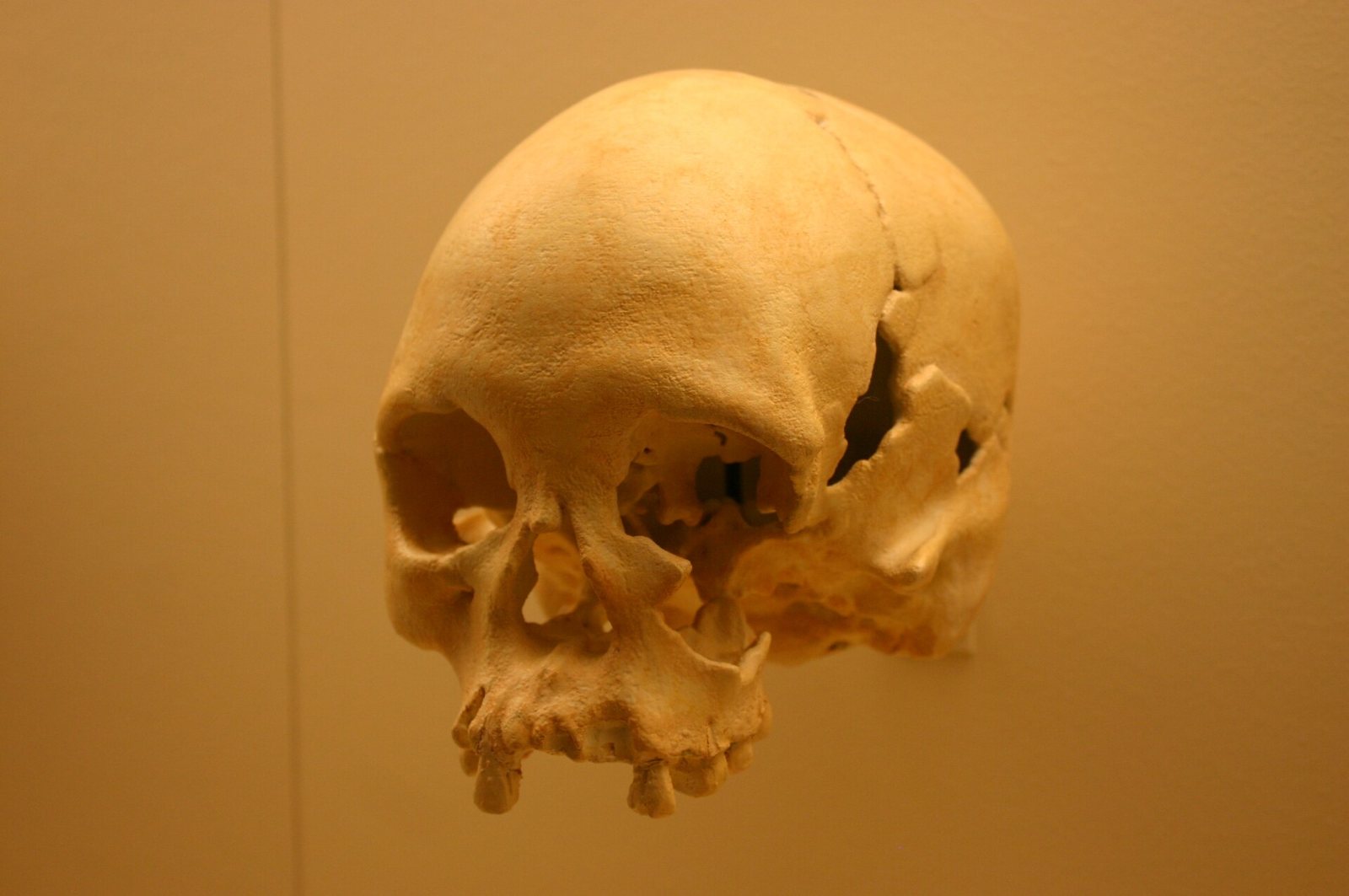
Luzia is the nickname of Lapa Vermelha IV Hominid 1, a young woman of about 20 to 25 whose skeleton was excavated in 1974 and 1975 at the Lapa Vermelha IV rock shelter near Pedro Leopoldo, in the Lagoa Santa region of Minas Gerais, Brazil (Neves et al., 1999). Charcoal found near her skull is radiocarbon dated to 11,243 to 11,710 calendar years before present, which places her among the oldest people known from the Americas (Fontugne, Radiocarbon). Her skull was in the Museu Nacional in Rio de Janeiro when the building burned on 2 September 2018. Rescue teams later recovered fragments that make up about 80 percent of it (Museu Nacional UFRJ).
Her face is the other reason many people know her name. Two famous faces are linked to her, made almost twenty years apart, and the story of how they differ is also the story of how scientists came to understand the first people of South America.
The rock shelter at Lapa Vermelha IV
Lapa Vermelha IV is a rock shelter in the Lagoa Santa karst, the cave country of central Minas Gerais, close to the town of Pedro Leopoldo. In the 1970s it was excavated by a French-Brazilian team led by the archaeologist Annette Laming-Emperaire, over several seasons between 1971 and 1976 (Neves et al., 1999).
In the 1974 and 1975 seasons the team uncovered a human skeleton lying beneath layers that held charcoal. The bones were disarticulated, meaning they were no longer joined together in the position of a body. Scientists catalogued the find as Lapa Vermelha IV Hominid 1. The name Luzia came later, and it stuck: the Smithsonian's Human Origins program lists her under both names (Smithsonian).
How old she is, and how scientists know
Luzia's age is usually given as about 11,000 years, and the details behind that number are worth knowing, because nobody has dated her bones directly.
Walter Neves and colleagues accepted an age of roughly 11,000 to 11,500 years before present, based on where the skeleton lay in the layers of the shelter and on the charcoal found with it (Neves et al., 1999). They reported charcoal dates of 10,220 and 12,960 radiocarbon years BP, figures that had not been calibrated into calendar years. An attempt to date the skeleton itself in that 1999 study failed, because the bone sample lacked collagen, the protein radiocarbon dating needs.
A later radiocarbon study by Michel Fontugne gave a narrower answer. Charcoal near the skull dated to 10,030 plus or minus 60 radiocarbon years BP, which calibrates to 11,243 to 11,710 calendar years BP (Fontugne, Radiocarbon). That range is the best-supported estimate, and it is still a date for the charcoal beside her rather than a direct date for Luzia. If you want to know how archaeologists turn charcoal, layers and bone into years, our story on how old are these bones walks through the main methods.
Tap or hover a row to highlight it.
| Sample | Method | Result |
|---|---|---|
| SamplePosition in the shelter's layers, with charcoal | MethodStratigraphy, Neves and colleagues | ResultAbout 11,000 to 11,500 years before present |
| SampleCharcoal reported by Neves | MethodRadiocarbon, uncalibrated | Result10,220 and 12,960 radiocarbon years BP |
| SampleLuzia's own bone, 1999 | MethodRadiocarbon | ResultNo date; the sample lacked collagen |
| SampleCharcoal near the skull | MethodRadiocarbon, Fontugne | Result10,030 plus or minus 60 radiocarbon years BP, calibrated to 11,243 to 11,710 calendar years BP |
What her bones say about her
Walter Neves, Joseph Powell and colleagues concluded that the bones belonged to one woman, between 20 and 25 years old when she died (Neves et al., 1999). Because the skeleton was disarticulated, the excavation cannot say how she died or how her body was first laid down. The studies give her sex, her approximate age and the shape of her skull, and they stop there. Anything more personal would be a guess.
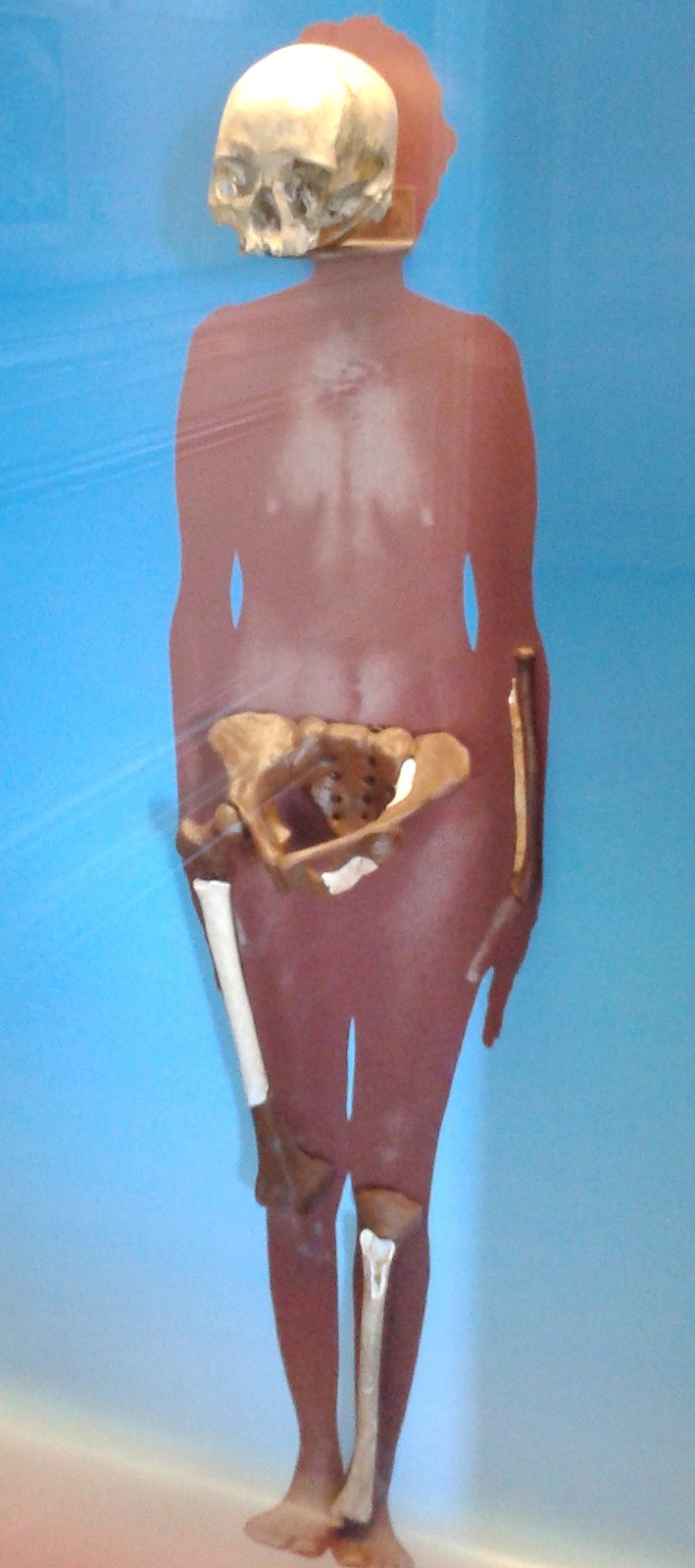
What scientists can describe is the world she lived in. The ancient people of Lagoa Santa are described as hunter-gatherers who lived by hunting, gathering and fishing (Neves et al., 1999). That describes the region's way of life, not a record of Luzia's own days, but it is the closest anyone can come to them. For more on what a skeleton can and cannot reveal, see what bones tell archaeologists.
The Lagoa Santa people and Peter Lund
Luzia belongs to a much larger story. "Lagoa Santa people" is a broad label archaeologists use for the ancient human remains recovered from the caves and shelters of the Lagoa Santa region. Those sites were used in the early Holocene and in later periods too, so the label does not describe one community living at one moment (Lagoa Santa municipality).
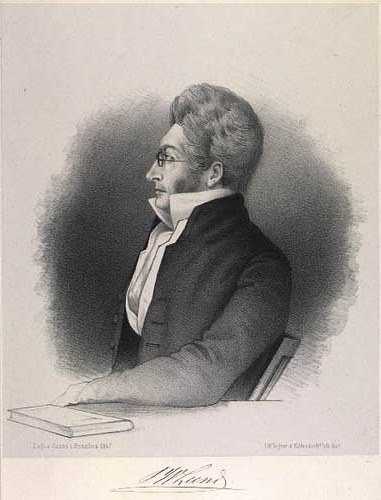
The first person to study those caves seriously was the Danish naturalist Peter Wilhelm Lund, who worked in the Lagoa Santa karst in the nineteenth century. In 1844 he came upon human skeletons in a flooded cave, and he also documented the bones of extinct megafauna, the giant animals of the Ice Age (Lagoa Santa municipality). His collections helped make the region one of the main centres of Brazilian prehistory. Luzia was excavated more than a century after Lund's work, during Laming-Emperaire's twentieth-century digs (FAPESP).
The 1999 face
The face most people associate with Luzia was made in 1999 by the British anatomical artist Richard Neave. He worked from the shape of her skull and from the model of early American population history then linked to Walter Neves's work (FAPESP).
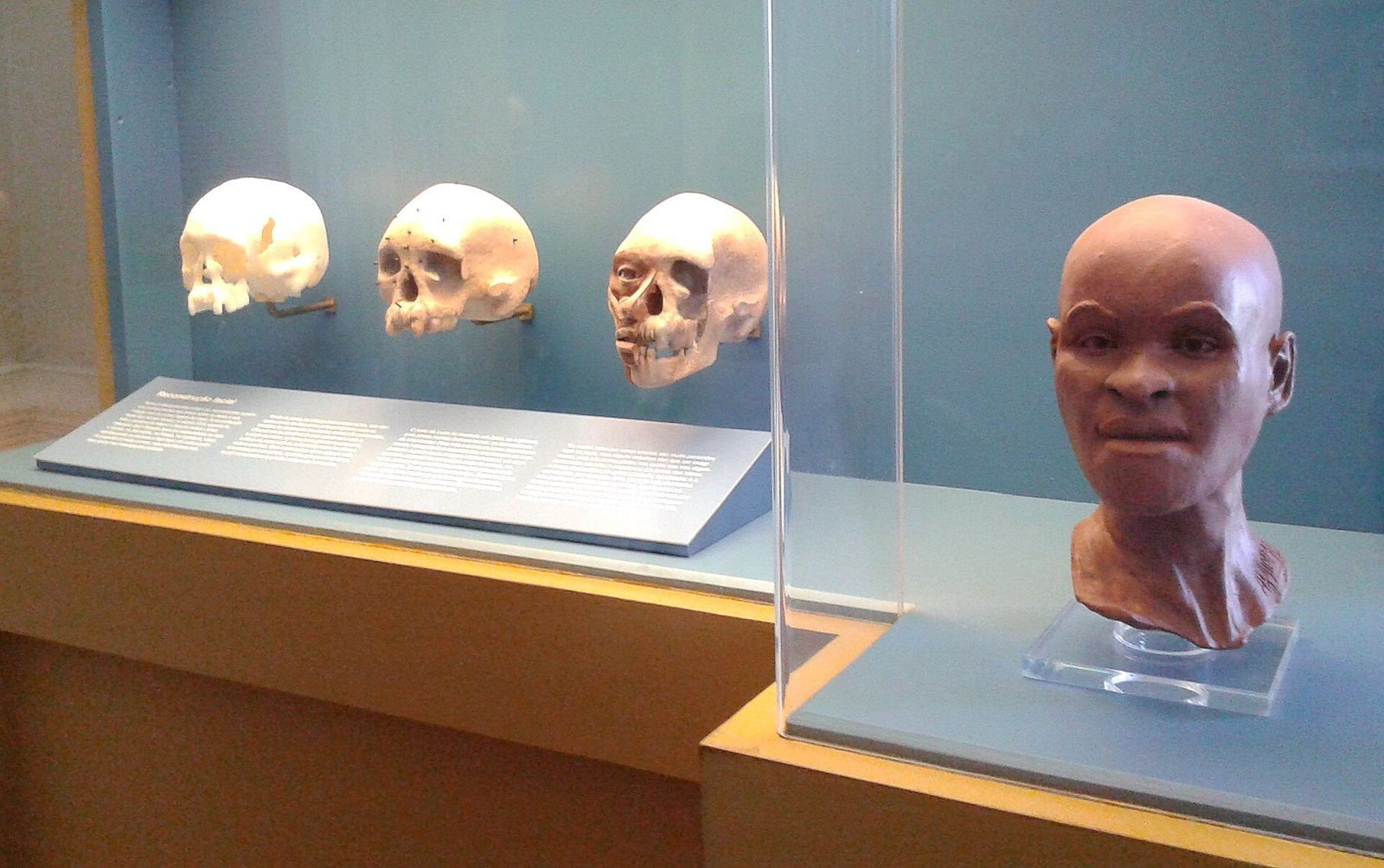
At the time, the features of that face were interpreted as resembling populations outside the ancestry of present-day Indigenous Americans. Facial reconstruction always combines the skull's measurements with the artist's and scientists' assumptions, a point our story on facial reconstruction covers in more detail. In Luzia's case, the assumptions were about to be tested.
What the 2018 DNA study changed
On 8 November 2018, the journal Cell published a study by Cosimo Posth, André Strauss, David Reich and colleagues of ancient DNA from 49 individuals in Central and South America, seven of them from Lapa do Santo, another site in the Lagoa Santa region (Posth et al., Cell). The study found ancestry connecting the Lagoa Santa individuals to the broader population history of Indigenous Americans, and it found no support for a separate African or Australian source population (Pesquisa FAPESP).
One detail matters a great deal here: Luzia herself was not genetically sequenced. FAPESP notes that the DNA came from related and contemporary Lagoa Santa individuals (Pesquisa FAPESP). The study changed how scientists understand her regional population, but it did not produce a DNA portrait of Luzia.
That is also true of the newer face. Caroline Wilkinson produced a digital facial reconstruction for the 2018 study, but it shows a man from Lapa do Santo, not Luzia. It was built on a digitally retrodeformed skull, one corrected on a computer for the distortion of burial, together with the genetic results for the regional population (FAPESP).
Scientists still differ over how much the genetic evidence changes the older skull-based model. André Strauss argued that skull shape is not a reliable guide to geographic ancestry and that the 1999 reconstruction reflected a population model that has since been disproven. Mark Hubbe, quoted by FAPESP, said the Lagoa Santa skull shape is not highly specific and that a more complex history of how South America was settled remains possible (FAPESP).
If you are following the wider debate about the first Americans, our stories on Naia of Hoyo Negro and Kennewick Man cover two other early skeletons at the centre of it.
The night the Museu Nacional burned
On the night of 2 September 2018, fire severely damaged the Museu Nacional in Rio de Janeiro (Museu Nacional). Luzia's skull was kept in the museum's biological anthropology collection, and at first it was feared lost.

It was not. Rescue teams working through the debris recovered fragments of the skull, and by the end of 2018 the museum reported that about 80 percent of it had been identified, including pieces of the frontal and side portions. A fragment of a femur associated with the collection was recovered as well (Museu Nacional UFRJ; Museu Nacional, Resgate pós-incêndio).
The skull survived damaged and in pieces, but it survived. Recovering, cleaning, stabilizing and cataloguing the fragments became part of the museum's long conservation work after the fire (Museu Nacional UFRJ).
Luzia, from Lagoa Santa to the Museu Nacional fire
Tap or hover a step to follow the order.
1844
Peter Wilhelm Lund comes upon human skeletons in a flooded cave in the Lagoa Santa region.
1971 to 1976
Annette Laming-Emperaire's French-Brazilian team excavates Lapa Vermelha IV over several seasons.
1974 to 1975
Lapa Vermelha IV Hominid 1, later nicknamed Luzia, is recovered.
1999
Richard Neave makes the well-known reconstruction of her face.
2 September 2018
Fire severely damages the Museu Nacional in Rio de Janeiro.
8 November 2018
Posth, Strauss, Reich and colleagues publish the ancient DNA study in Cell.
End of 2018
About 80 percent of Luzia's skull is identified among the recovered fragments.
Questions people ask about Luzia
Short answers to the questions that come up most.
Who was Luzia?
Luzia was a young woman of about 20 to 25 who lived in the Lagoa Santa region of Minas Gerais, Brazil, roughly 11,000 years ago. Her formal name is Lapa Vermelha IV Hominid 1, and she is one of the oldest people known from the Americas (Neves et al., 1999).
Where was Luzia found?
She was excavated at the Lapa Vermelha IV rock shelter near Pedro Leopoldo, in central Brazil, during excavations led by Annette Laming-Emperaire. Her skeleton was recovered in the 1974 and 1975 seasons (Neves et al., 1999).
How old is Luzia?
The best estimate is 11,243 to 11,710 calendar years before present, from radiocarbon dating of charcoal found near her skull. Her bones have not been dated directly, because the 1999 sample lacked collagen (Fontugne, Radiocarbon).
Was Luzia's skull destroyed in the fire?
No, the 2018 Museu Nacional fire damaged her skull, but rescue teams recovered fragments representing about 80 percent of it. The pieces include parts of the frontal and side portions (Museu Nacional UFRJ).
What did the Luzia DNA show?
Luzia herself was not sequenced; the 2018 study used DNA from other ancient Lagoa Santa individuals. Their DNA linked them to the broader population history of Indigenous Americans and gave no support to a separate African or Australian source population (Pesquisa FAPESP).
Which reconstruction of Luzia is accurate?
Only the 1999 reconstruction by Richard Neave was made from Luzia's own skull, and André Strauss describes the population model behind it as disproven. The 2018 face by Caroline Wilkinson shows a man from Lapa do Santo, so neither is a DNA-based portrait of Luzia (FAPESP).
Where was Luzia's skull found?
It came from the Lapa Vermelha IV rock shelter near Pedro Leopoldo, in the Lagoa Santa region of the state of Minas Gerais, Brazil. It was later kept at the Museu Nacional in Rio de Janeiro (Neves et al., 1999).
Luzia quiz
Answer every question to check.
Luzia, still with us
Luzia lived and died in the shelters of Lagoa Santa more than 11,000 years ago, a young woman whose people were among the first to make South America home. Her bones have since passed through an excavation, a reconstruction of her face, a DNA study of her neighbours and a fire that severely damaged Brazil's national museum. What remains of her skull is in the care of the Museu Nacional, and scientists still differ over what her skull can say about where her people came from. That she is still part of the conversation is the best answer to the question of whether she survived. For other ancient people who changed what we know about human history, see our story on the oldest human skull.
Terms in this story
Tap a term to see what it means.
Lapa Vermelha IV. A rock shelter near Pedro Leopoldo, in the Lagoa Santa region of Minas Gerais, Brazil, where Luzia's skeleton was excavated in 1974 and 1975.
---