

No. 104
Facial Reconstruction: How Experts Rebuild a Face From a Skull, and How Accurate It Is
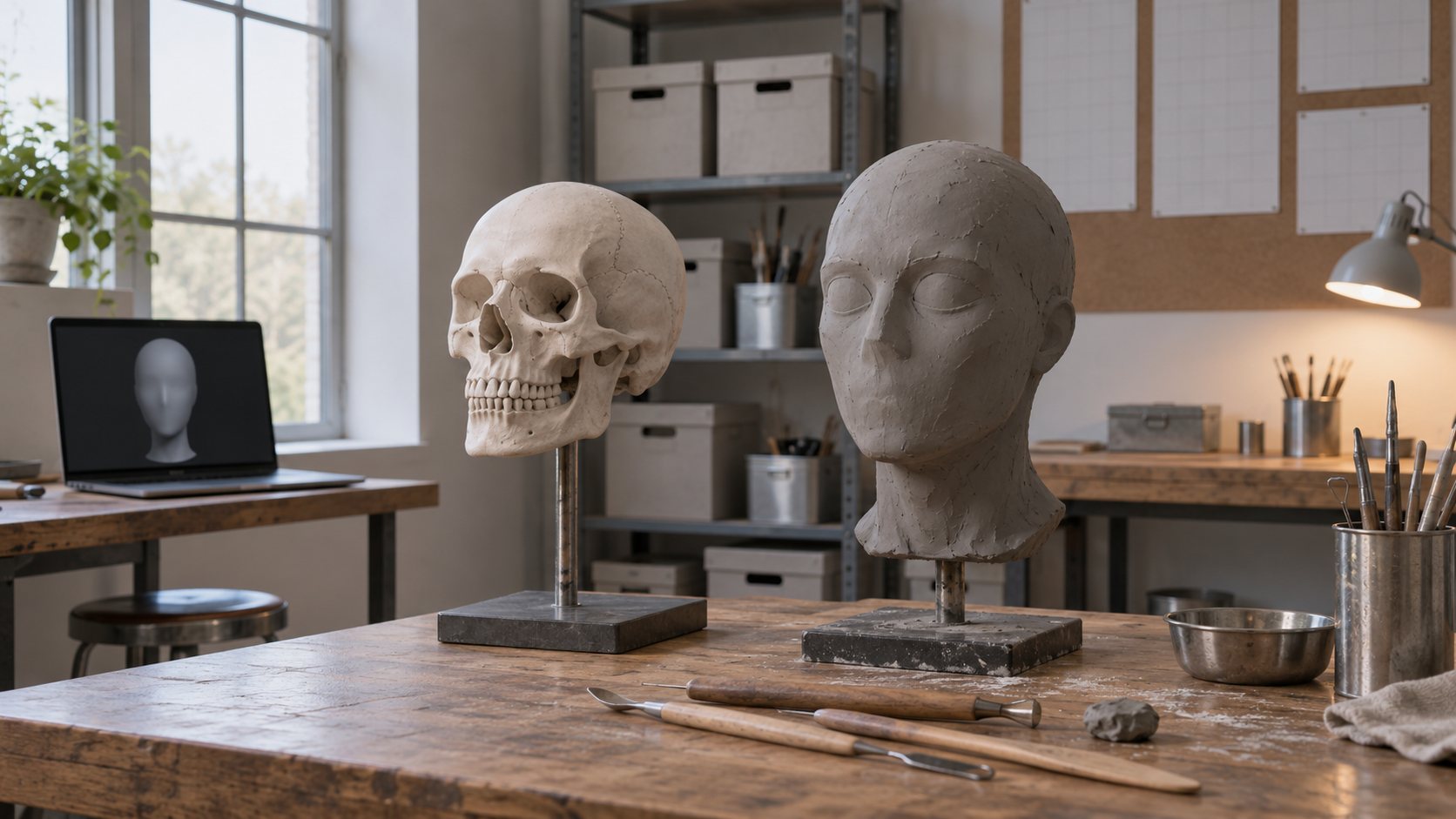
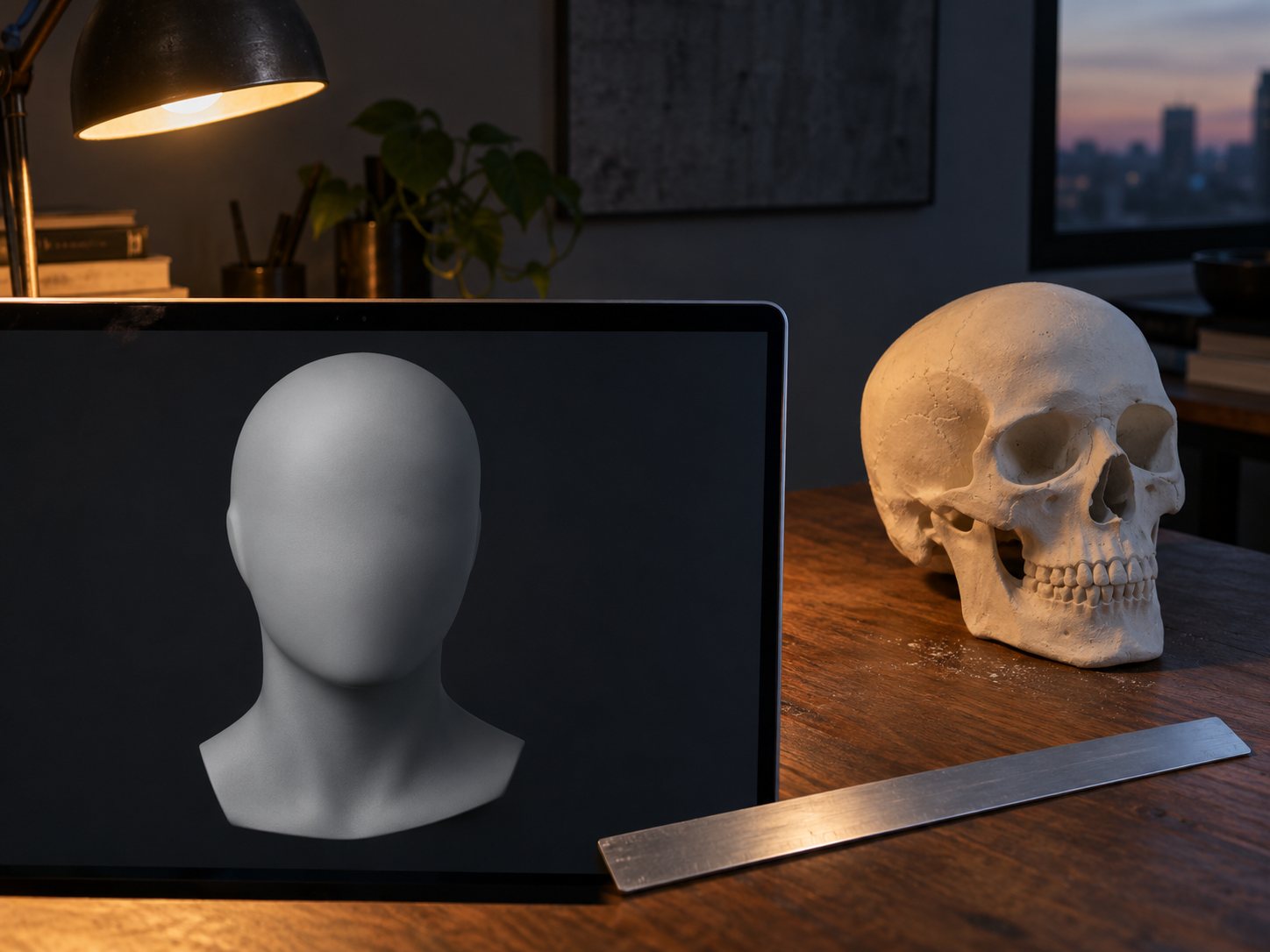
Yes, experts can rebuild a face from a skull, and the face you saw in that museum case or news story was made with a careful, tested method. The artist reads the skull's anatomy, places markers for the average depth of soft tissue at set points, then builds muscles and skin over a cast or a 3D scan, by hand in clay or on a computer. The result is an approximation. The broad structure, meaning the forehead, chin, jawline, eye position and nose, tends to come out well. The lips, ears, facial fat, hair and the colour of skin and eyes are informed estimates, unless DNA or a preserved body supplies them.
That is why a rebuilt face can feel both convincing and slightly uncertain at the same time. Here is how the work is done, what a skull can and cannot tell an artist, and what the published tests say about accuracy.
What a skull gives the artist
Every reconstruction starts with the skull itself. Before any clay goes on, the practitioner assesses the person's likely sex and age, the ancestry indicators forensic specialists look for, and the proportions of the face. They study where the muscles attached to the bone, the shape of the nasal aperture (the opening for the nose), the eye sockets, which specialists call orbits, and the cheekbones, jaw and chin.
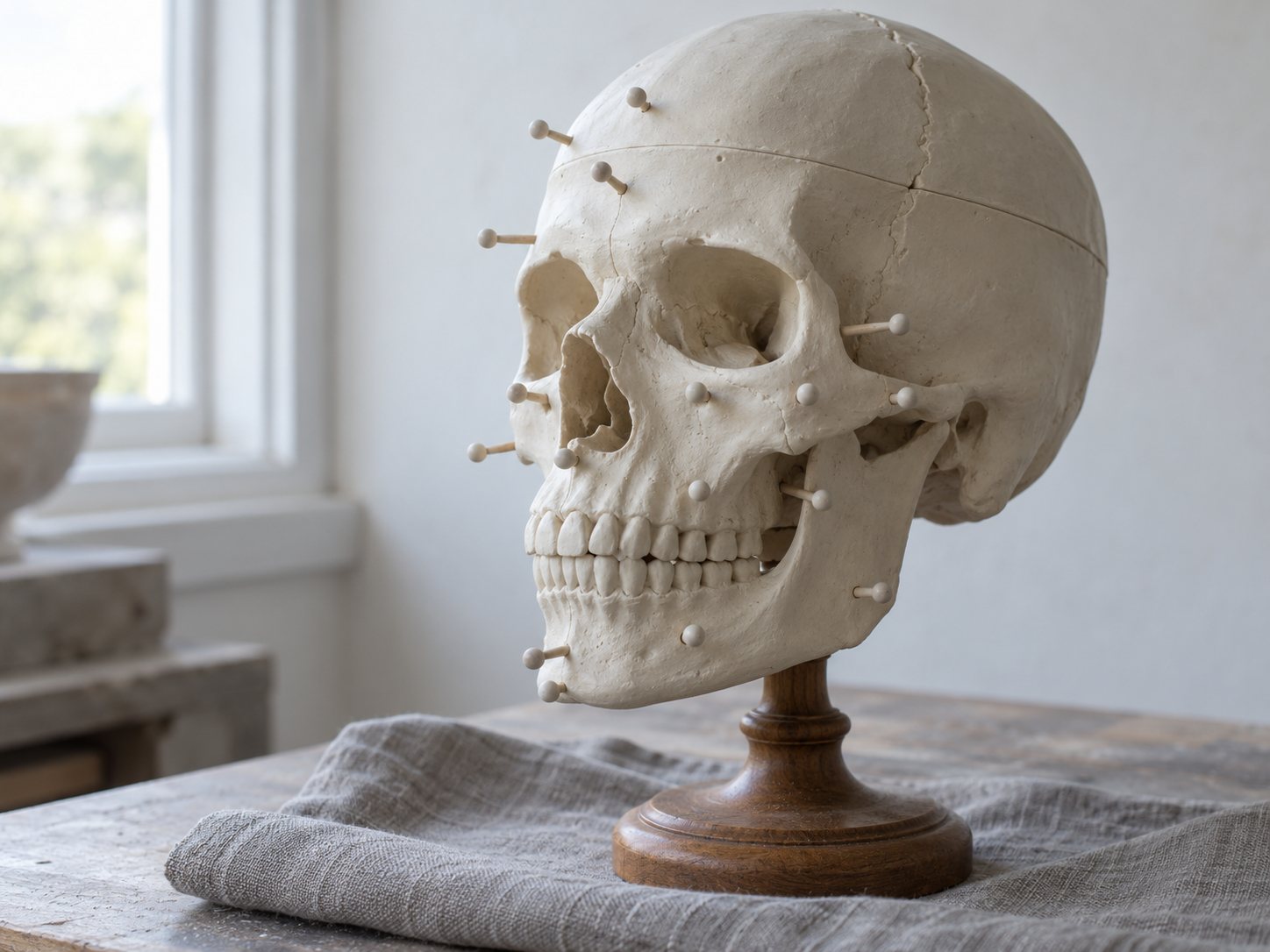
Each of those features constrains the face. According to Caroline Wilkinson, the orbits help set the position of the eyes, and the nasal aperture helps estimate the general width and projection of the nose. The jaw, chin, cheekbones and forehead set the overall shape of the face. A skull can also carry personal details: a healed injury, signs of disease, lost teeth or an unusual bone feature can give a reconstruction something individual.
If you are curious about the bones involved, our page of human skull facts covers the parts of the skull, and what bones tell archaeologists explains how age and sex are read from a skeleton.
How is a face rebuilt from a skull? The three main methods
There are three main approaches, and modern work often combines them.
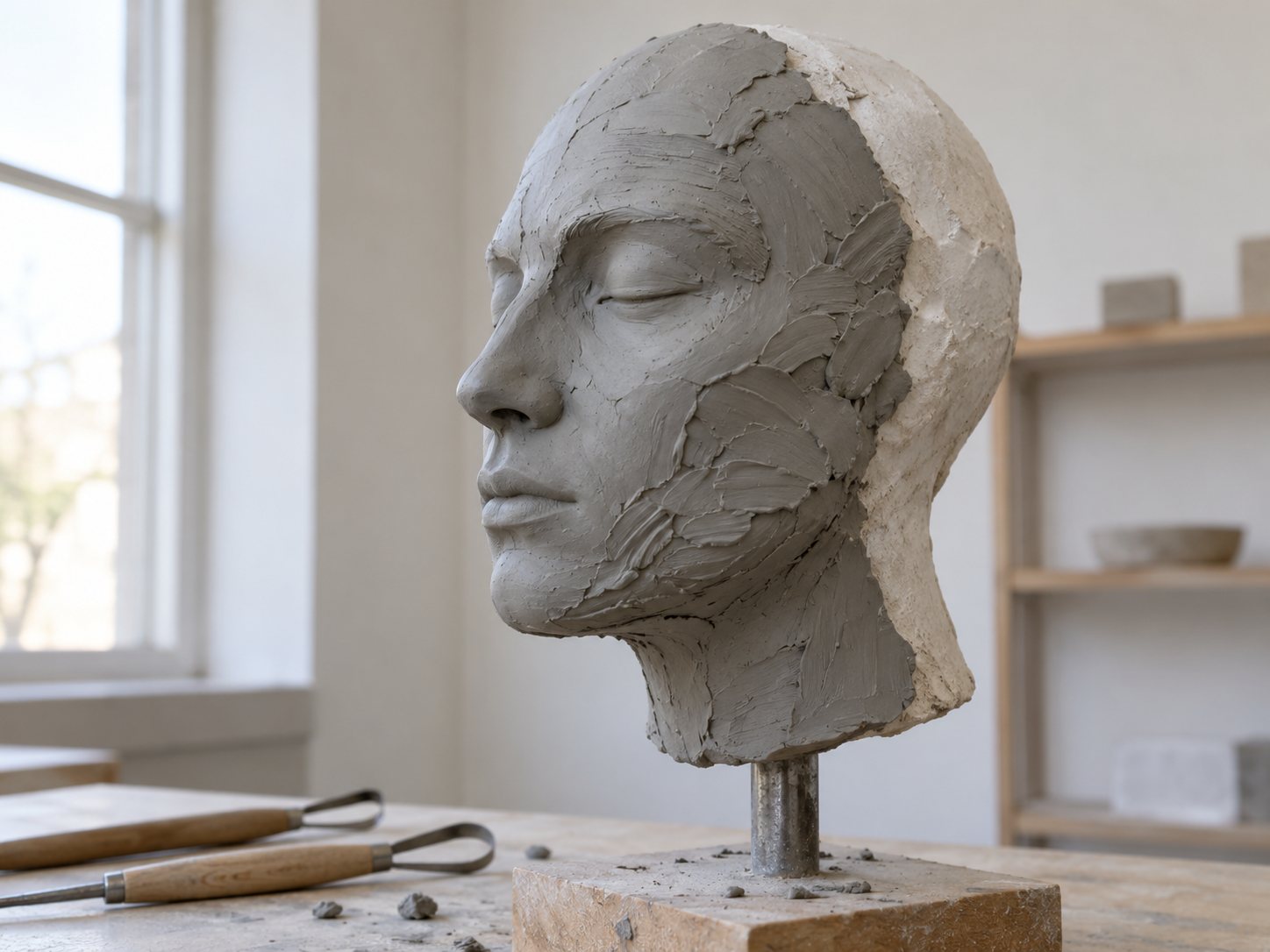
The tissue-depth method. Small markers are fixed at anatomical landmarks on a cast or digital copy of the skull. Each marker is cut to the average thickness of soft tissue at that point. Muscle, connective tissue and skin are then built up until they meet the tips of the markers. The average values change with age, sex, population and body mass, so the data have to suit the person being rebuilt.
The Manchester method. This approach grew out of the work of Richard Neave and Caroline Wilkinson. It combines the skull's anatomy, the muscle attachments, tissue-depth markers and anatomical standards that predict features such as the nose and eyes. Where the bone gives no firm answer, the practitioner uses artistic judgement. In her paper "Facial Reconstruction: Anatomical Art or Artistic Anatomy?", Wilkinson describes it as a combination of anatomical interpretation, tissue-depth data and artistic modelling.
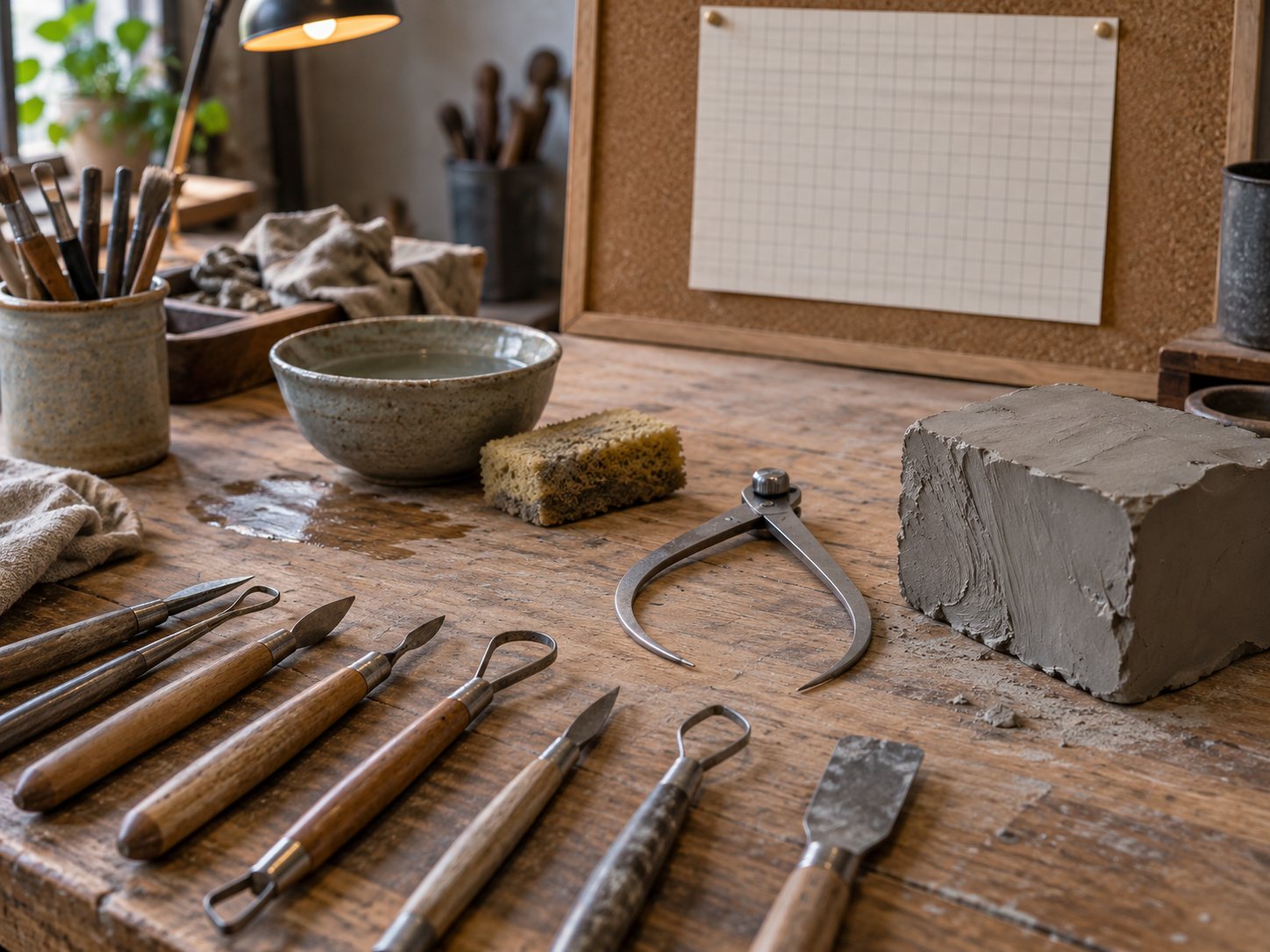
Digital sculpting. CT or laser scans turn the skull into a three-dimensional computer model. Software then fits tissue-depth data, anatomical landmarks or statistical face models to it. Claes and colleagues described such a statistical method in 2006 and validated it with a database of 118 individuals. A digital face can be rendered as an image or printed as a physical model.
In every method, the same sequence holds: read the bone, add tissue to known depths, shape the features the bone supports, and make careful choices about the rest.
What a skull cannot tell you
A skull does not hold an exact portrait. It cannot directly reveal the precise shape of the lips, the ears or the eyelids, a person's expression, their hairstyle, how much fat they carried, or many of the finer details of the nose.
Facial fullness is especially hard. Bone does not show how much soft tissue or fat covered the face. In a 2015 study, Lindsay notes that facial approximation normally assumes an average body weight, while body mass index changes how thick the soft tissue of the face really is.
Colour is another limit. Skin, hair and eye colour cannot normally be read from the shape of a skull. Ancient DNA can sometimes give probabilities for pigmentation, but that depends on how well the DNA has survived and which genes can be analysed. Other evidence can help, such as the archaeological setting, a mummified body, portraits, preserved hair or historical records. Unless one of those directly preserves the detail, it stays an estimate.
People often ask whether the ears and nose are just guesswork. The nose is partly guided by the bone, because the nasal aperture gives its general width and projection, but its finer shape is not. The ears are among the least reliable parts of any reconstruction. Ancient mummies are a special case. When soft tissue survives, the artist has much more to work from, as the Ötzi reconstruction below shows.
What the skull shows, and what has to be estimated
Tap a card to bring it forward.
- Overall face shape: Set by the jaw, chin, cheekbones and forehead.
- Eye position: Guided by the orbits, the eye sockets.
- Nose width and projection: Guided by the nasal aperture, though finer details are estimated.
- Personal details: Healed injuries, disease or lost teeth can show on the bone.
- Lips, ears and eyelids: Not preserved in bone; estimated.
- Facial fat: Unknown from the skull; usually an average body weight is assumed.
- Skin, hair and eye colour: Not readable from bone; sometimes given as probabilities by ancient DNA.
How accurate is facial reconstruction?
Reconstructions have been put to the test, more than once, and the results are mixed. Broad structure is reproduced fairly well. Recognizing a specific person from a reconstruction alone is harder.
In Wilkinson and colleagues' evaluation of the Manchester method, 67 percent of the reconstructed facial surface was within 2 millimetres of the real face, in tests involving two adults. The nose, eyes, jawline, forehead and chin matched more reliably than the mouth and ears. Wilkinson also reports a blind recognition study in which Manchester reconstructions scored more than 50 percent above chance.
Other tests are less encouraging. In a double-blind study published in 1989, Helmer and colleagues reconstructed 12 skulls. Most results showed an approximate to strong general likeness to the real person, and the authors noted that information about hair colour, hair length and hairstyle made the faces more useful. A 2017 study of computerized approximations, by Richard and Monson for the FBI, found that people who knew the subjects picked the correct reconstruction in 10.5 percent of 220 tests, against a random-chance rate of 9 percent.
Scientists disagree about what these numbers mean for identifying people. Some laboratory tests produce recognizable likenesses, while others show that a reconstruction on its own performs poorly. An early forensic evaluation by Snow and colleagues warned that a restored face should not establish identity by itself. In practice, a reconstruction is used to produce leads and public recognition, and other evidence confirms who someone was.
Tap or hover a row to highlight it.
| Study | What was tested | Result |
|---|---|---|
| StudyWilkinson and colleagues | What was testedManchester method on two adults | Result67 percent of the face surface within 2 mm; nose, eyes, jaw, forehead and chin most reliable |
| StudyWilkinson | What was testedBlind recognition of Manchester reconstructions | ResultMore than 50 percent above chance |
| StudyHelmer and colleagues, 1989 | What was tested12 skulls, double-blind | ResultMostly approximate to strong general likeness; hair information helped |
| StudyRichard and Monson, 2017 (FBI) | What was testedComputerized approximations, 220 tests with familiar assessors | ResultCorrect choice 10.5 percent of the time, against 9 percent by chance |
Famous faces rebuilt from skulls
Some reconstructions are famous in their own right. Each shows a different mix of bone, scans, DNA and preserved evidence.
Richard III
After the skeleton found under a Leicester car park in 2012 was identified as Richard III, it was CT-scanned at Leicester Royal Infirmary. Professor Caroline Wilkinson used the scans to create a reconstruction commissioned by the Richard III Society. Later genetic analysis gave a 96 percent probability that he had blue eyes and a 77 percent probability that he had blond hair, and the reconstruction's colouring was revised to match. It is on display at the King Richard III Visitor Centre in Leicester. It is a good example of DNA filling in what bone cannot.
The Jericho skull
At Jericho in 1953, the archaeologist Kathleen Kenyon excavated human skulls that had been covered in plaster. The Ashmolean Museum dates its example, the skull of an adult man with plaster and cowrie shells set into the eye sockets, to about 7300 to 6300 BCE, roughly 9,000 years ago. The plastered face is itself an ancient representation of the dead person, made by the people who kept the skull. Much later, modern CT work and 3D printing allowed researchers to create a separate scientific approximation of one of these Neolithic skulls. The two faces come from very different hands, thousands of years apart. Our story on the plastered skulls of Jericho tells the older one in full.
Ötzi the Iceman
For Ötzi the Iceman, the South Tyrol Museum of Archaeology commissioned the artists Adrie and Alfons Kennis. According to the museum, they worked from a stereolithograph of the skull, a precise 3D-printed copy, along with CT images of the mummy and physical information from the preserved body itself. The finished figure is made of silicone rubber, synthetic resin, pigments and real hair. Because Ötzi's body survived, his reconstruction rests on far more than bone alone.
Neanderthals
The Smithsonian's Neanderthal faces were made by the paleoartist John Gurche, who spent two and a half years creating the museum's early-human busts. One of them is based on the Neanderthal fossil known as Shanidar 1. The Smithsonian Human Origins Program describes these as artistic reconstructions informed by forensic techniques, fossil evidence and the anatomy of humans and apes. The face, hair and colouring are informed interpretations of a species, built with care. For the bones behind them, read about the Neanderthal skull.
Faces for the missing
Facial reconstruction also has a quieter, more personal use. Forensic teams turn to it when someone's remains have been recovered but there is no usable photograph, dental record or DNA match to name them. The skull is analysed, scanned or cast, and a possible face is shared with investigators, entered in missing-person databases or released in a public appeal.
Its value is in starting a conversation. A face may prompt a relative or witness to recognize someone, suggest a possible identity, or help rule out people who are not a match. It is not normally enough on its own. Confirmation comes from stronger evidence, such as DNA, dental comparison, fingerprints, medical records or a distinctive feature of the skeleton.
Caroline Wilkinson notes that reconstruction can help when remains are badly decomposed or otherwise hard to recognize. Success depends on the condition of the skull, the population data used, the skill of the practitioner, the information available about hair and colouring, and how the final image is presented to the public. Each of these faces belongs to someone whose family may still be waiting for a name. If you have come across bones yourself, our page on finding human bones explains what to do first.
How to look at a rebuilt face
When you next stand in front of a reconstruction, it helps to read it in layers. Trust the overall shape of the head and face, the set of the jaw and the position of the eyes, because those come from the bone. Treat the nose as well guided in outline and estimated in detail. Read the lips, ears, the fullness of the cheeks, the hairstyle and the expression as the artist's best informed choices. Check where the colour came from: in Richard III's case it came from DNA, and in Ötzi's case from a preserved body, while in many ancient faces it is an estimate.
Seen that way, a reconstruction is a meeting point between a real person's bones and the careful judgement of the person rebuilding them.
Facial reconstruction, from Jericho to today
Tap or hover a step to follow the order.
1953
Kathleen Kenyon excavates plastered human skulls at Jericho.
1989
Helmer and colleagues publish a double-blind test of 12 reconstructed skulls.
2006
Claes and colleagues validate a statistical digital method using a database of 118 individuals.
2012
Richard III's remains are found in Leicester and later CT-scanned for his reconstruction.
2015
The Richard III Society reports updated eye and hair probabilities from genetic analysis.
2017
An FBI study tests whether familiar people recognize computerized approximations.
2024
Wilkinson and colleagues review craniofacial identification standards and their reliability.
Frequently asked questions
The questions people ask most about rebuilding faces from skulls, answered briefly.
Can you reconstruct a face from a skull?
Yes, experts can produce a facial approximation from a skull. They combine the skull's anatomy, soft-tissue depth data and muscle placement with CT scanning and physical or digital sculpting, and the result is a scientifically guided estimate of the face.
How accurate is facial reconstruction from a skull?
It is accurate for broad structure and less reliable for soft details. In Manchester-method tests, 67 percent of the face surface fell within 2 millimetres, while an FBI study found familiar people picked the right computerized face only slightly more often than chance.
Are the nose and ears just guesswork?
The nose is partly guided by the bone and partly estimated, and the ears are mostly estimated. The nasal aperture shows the nose's general width and projection, while the ears, like the lips, are among the least reliable features of any reconstruction.
Can DNA show what someone looked like?
DNA can sometimes give probabilities for eye, hair and skin colour. Richard III's reconstruction was updated after genetic analysis gave a 96 percent probability of blue eyes and a 77 percent probability of blond hair.
Can a facial reconstruction prove who someone was?
No, a reconstruction alone does not prove identity. It can lead investigators or relatives toward a name, and confirmation then comes from DNA, dental comparison, fingerprints or medical records.
Facial reconstruction quiz
Answer every question to check.
More faces and skulls to read about
Every face in this story belongs to someone with a history of their own. Read about Richard III's skeleton and how it was identified, meet Ötzi the Iceman and his 61 tattoos, and see how Neolithic people at Jericho gave their dead new faces in plaster in our story on the Jericho plastered skulls. For older faces still, read about the Neanderthal skull and the oldest human skull.
Terms in this story
Tap a term to see what it means.
Facial approximation. The forensic term for a face rebuilt from a skull, used because the result is an estimate.