

No. 124
Found Human Bones? What to Do Right Now and Who to Call
If you are standing over a bone or skull and wondering whether it could be human, here is what to do, in order. Official guidance from state agencies comes down to the same short list.
- Stop. Do not dig, clean, pick up or move anything, and do not walk over the spot.
- Leave the bone and the soil around it exactly where they are. Keep people and animals away.
- Photograph it from a safe distance, with a few wide views. Add a ruler or a pen for scale only if that disturbs nothing.
- Call your local police or the sheriff. Call 911 if the remains could be recent or connected to danger.
- The county medical examiner or coroner will be brought in. If the remains look old, the state historic preservation office or state archaeologist comes next.
- Do not start work again until the responsible authority tells you that you can.
This is general information, not legal advice; the rules differ by state and country.
You do not have to decide whether the bone is human, recent, ancient or an animal's. That call belongs to the people trained to make it, and the rest of this page explains how it works.
The first hour, step by step
The steps above come from state guidance such as the Illinois Department of Natural Resources, which tells people who uncover possible skeletal remains to stop work, photograph the bones if possible, and report them. Erosion, flooding, construction and clearing brush are all ways unmarked burials come to light, so a yard project or a storm can be enough.
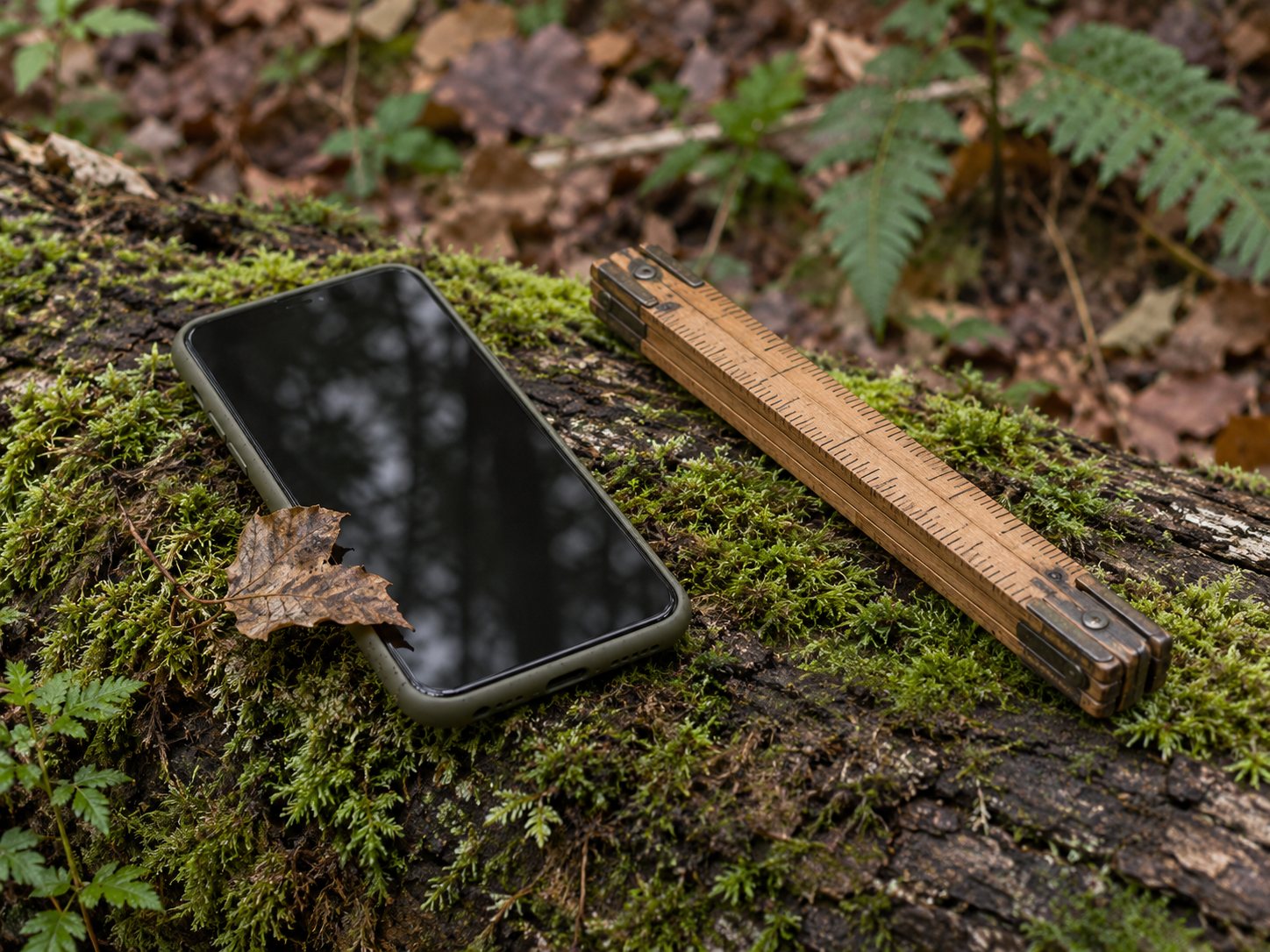
Leaving things in place matters because the position of a bone and the soil around it tell investigators a great deal. Moving even one piece can change what investigators are able to work out, whether the find turns out to be recent or very old. If you can mark a boundary without touching the remains, that helps keep people away until help arrives.
The checklist below puts the same steps in one place you can read on a phone.
If you find bones: eight steps
Tap a card to bring it forward.
- Stop work: Do not dig, clean, collect or move anything, and leave the area undisturbed.
- Keep people and animals away: Mark a boundary without touching the remains.
- Photograph from a safe distance: Wide views first, and a scale only if it disturbs nothing.
- Call police or the sheriff: Local law enforcement secures the scene.
- Call 911 if it could be recent: Use 911 when the remains could be recent or connected to danger.
- Contact the coroner or medical examiner: In Illinois the county coroner must be notified within 48 hours.
- Contact the state archaeologist or preservation office: This is for an older find.
- On federal or tribal land, notify the agency or tribe: Document the discovery within 24 hours.
Who decides what happens next
Local law enforcement secures the scene and looks into any possible crime or recent death. The county medical examiner or coroner decides whether the remains are forensic, meaning they may involve a recent death that needs further investigation. If they are, the coroner or medical examiner and law enforcement keep the case.
If the remains are old and not forensic, responsibility moves to a state archaeologist, a state physical anthropologist or a historic preservation office. Washington's Department of Archaeology and Historic Preservation, known as DAHP, takes jurisdiction over non-forensic remains on non-federal and non-tribal land. It consults affected tribes, cemeteries and other parties about preservation, excavation and what happens to the remains afterward. In Illinois, remains that appear to be more than 100 years old go to the Illinois Department of Natural Resources under the Human Remains Protection Act, and disturbing a grave there requires a permit.
Owning the land does not decide any of this. Whether bones may be moved, or by whom, depends on what they turn out to be.
Is it even human?
A casual glance cannot reliably tell. Size is misleading, because young animals, pigs, deer, sheep and other mammals can have bones that resemble human ones. Specialists compare anatomy, proportions, joint surfaces, tooth shape, skull features and bone texture along with the surroundings, and they sometimes add measurements, microscopy, DNA or collagen analysis. Even trained experts have to allow for weathering, scavenging, root damage and animal chewing, which can hide or change a bone's features. The Royal Society's primer on forensic anthropology for courts lays out those limits.
So, treat any bone you are unsure about as possibly human. Leave it where it is, photograph it, and call. If the authorities decide it came from a deer or a dog, you have lost nothing but a few minutes, and the stories on found animal skulls will help from there.
Federal and tribal land
The rules shift when a find is on land that belongs to the federal government or a tribe. The Archaeological Resources Protection Act, or ARPA, regulates archaeological investigation and prohibits unauthorized excavation, removal, damage or trafficking in archaeological resources. The National Park Service says that excavating human remains on federal or tribal land requires written authorization, and an ARPA permit may be required as well.
The Native American Graves Protection and Repatriation Act, or NAGPRA, covers Native American human remains and cultural items found or excavated on federal or tribal land. Under the National Park Service's NAGPRA guidance, the person who finds them must notify the responsible federal agency or tribal authority immediately, take reasonable steps to secure and protect the discovery, and provide written documentation within 24 hours. Activity stops until an official certifies that it may resume. When remains are Native American, priority for their return goes first to lineal descendants and then to culturally affiliated tribes or Native Hawaiian organizations.
On private or state land, local and state law applies first. NAGPRA can still matter there if a museum, agency or other covered institution later holds remains or cultural items taken from those lands.
State rules vary in their details. Texas, for example, requires that notice be given when an unknown or abandoned cemetery is discovered, and it requires that authorized removal be supervised by a cemetery keeper, a licensed funeral director, a medical examiner, a coroner or a professional archaeologist, as set out in Chapter 711 of the Texas Health and Safety Code. Whatever the state, the people involved are caring for someone's ancestor, and the process is built around that.
Reporting windows after a find
Tap or hover a step to follow the order.
Right away
Stop activity, protect the area and report to the police or sheriff.
Within 24 hours on federal or tribal land
Written documentation goes to the responsible agency or tribal authority under NAGPRA procedures.
Within 48 hours in Illinois
The county coroner is notified if the bones are human.
After the first determination
Forensic cases stay with the coroner or medical examiner and law enforcement; non-forensic cases may pass to state archaeological or preservation authorities.
Later
Responsible authorities consult tribes, descendants, cemeteries, land managers and other parties about preservation and what happens to the remains.
Can you keep, sell or show what you found?
Do not assume that you can. There is no single nationwide rule that makes every human bone transaction legal or illegal, and the answer can depend on the state and on whether the remains are recent, archaeological, Native American, stolen or connected to a burial. For that reason, the first answer to "can I keep this skull?" is to leave it where it is and call.
A few examples show how seriously the law takes it. Florida Statutes section 872.01 makes buying, selling or possessing a human body for the purpose of trafficking a first-degree misdemeanor, with an exception for appropriate university teaching and research. Louisiana's legislature has stated that human remains are not ordinary property. NAGPRA prohibits unauthorized trafficking in the Native American remains and cultural items it covers, and archaeological remains taken from federal or tribal land can bring ARPA and NAGPRA violations.
So, do not buy, sell, ship, display or keep suspected human remains until local law enforcement, the medical examiner or coroner, and the relevant state or tribal authority have said what they are and which law applies. If you are unsure about a particular state, confirm the rule with that state's authority before you move, keep, buy, sell or ship anything.
If you are in Mexico or Latin America
Readers in Mexico, and in other Spanish-speaking countries, will find the same basic order with different offices. In Mexico, call the nearest civil authority or the Ministerio Público if the find could be recent or criminal, and notify the Instituto Nacional de Antropología e Historia, known as INAH, or the local Centro INAH. Article 29 of the Ley Federal sobre Monumentos y Zonas Arqueológicos, Artísticos e Históricos requires a person who finds archaeological goods to notify the nearest civil authority, and that authority must inform INAH within 24 hours. Archaeological human remains and the setting around them are protected under the federal heritage law, so do not remove, buy, sell or transport suspected archaeological remains without official direction.
If the bones turn up in your house, the advice is the same as anywhere. Do not pick them up and do not keep digging. Step away, take photographs without moving anything, and call the local police or the Ministerio Público.
Rules differ across Latin America. Colombia's ICANH has a protocol for chance archaeological finds that treats bones and burial contexts as possible archaeological heritage. Anyone who makes a chance discovery must notify ICANH or the nearest civil or police authority within 24 hours, protect the area, and document the find without digging it up or taking it away. In 2026, ICANH responded to a possible pre-Hispanic burial reported during sewer-expansion work in San Agustín, Huila, working with local officials, public-security personnel and community members.
In Brazil, IPHAN asks citizens who discover archaeological goods to send a description and the location to the state IPHAN office. In Peru, the Ministry of Culture administers the procedure for reburying human remains recovered during archaeological work, with attention to relatives, descendants, and Indigenous and campesino communities. For any current find in these countries, contact the local police or the Ministerio Público first if the remains may be recent, then the country's official heritage authority. A private property line does not make archaeological remains yours to keep.
Fossils and animal bones
Not every old bone is human, and not every old human bone is a crime scene or a burial. A fossil is a different matter from recent or archaeological human remains, but the first move is the same: do not take it. In a national park, photograph the fossil, note where it is, leave it in place and tell a ranger. The National Park Service explains that a fossil's original position and surrounding material are scientific information that disappears once it is moved.
That is how ordinary visitors have helped science. In 2010, seven-year-old Kylie Ferguson spotted a rare nimravid, a saber-toothed cat-like mammal, in Badlands National Park and reported it to park staff instead of carrying it away. Fossils from US federal land are protected by federal law, and removing or selling them may be prohibited. Rules for state, private and international land differ, so confirm ownership and collection rights with the land manager or a qualified paleontology authority before offering a fossil for sale. If you suspect the bone belonged to an animal, our story on a found animal skull covers what to do next, and our guide to human skull facts shows what a skull is made of.
How long do bones last in the ground?
People often ask this after a find, hoping the answer will say how old a bone is. There is no universal lifespan. Soil acidity, moisture, temperature, burial depth, roots, bacteria, insects, scavengers, weather and the structure of the bone itself all affect preservation. Bones can stay recognizable for years, centuries or much longer in favorable conditions, while acidic soils can destroy them within a few hundred years. Alkaline conditions, as the Delaware Department of Transportation notes, can preserve bone for centuries. Because of that, the time since death has to be estimated from the whole situation and not from how a bone looks. If you are curious how scientists put dates on old bones, the story of how archaeologists date bones walks through the methods.

After your call, the process moves more slowly than the first hour. Authorities consult tribes, descendants, cemeteries, land managers and other parties about preservation and what happens to the remains.
Check what you know
Answer every question to check.
Questions people ask
These are the questions readers bring most often, answered briefly.
What happens if you find bones on your property?
Stop digging and leave the bones and the area around them undisturbed. Photograph the location if you can, then call local law enforcement or the sheriff. The medical examiner or coroner decides whether the remains are recent or forensic, and a state archaeologist or historic preservation office may take over older, non-forensic remains. Owning the land does not decide whether the remains may be moved or kept.
Is it illegal to keep human remains?
It can be, depending on the state, the age and setting of the remains, whether they are Native American or archaeological, and how they were obtained. Florida prohibits buying, selling or possessing a human body for trafficking, and NAGPRA and ARPA restrict unauthorized handling of covered remains and archaeological resources. Confirm the rule with your state authority before you move or keep anything.
Can I keep a skull I found?
Do not assume that you can. Leave it where it is and call local authorities. A skull may be recent evidence, an archaeological burial, Native American ancestral remains or an animal bone, and the responsible authority has to settle which before any decision is made about custody.
How long do bones last in soil?
There is no single answer. Acidic soils can destroy bone within a few hundred years, while alkaline soil, cold, dry conditions and burial depth can preserve it for centuries or longer. Time since death has to be estimated from the full setting, not from appearance.
What should I do if I find a fossil?
Leave it in place, photograph it, note the location and tell a park ranger or the agency that manages the land. Do not remove it, and avoid posting the exact location if it is in a protected area.
Is it legal to sell fossils?
It depends on the country, state, land manager and type of fossil, and on whether it was collected lawfully. Fossils from US federal land are protected by federal law, so removal or sale may be prohibited. Confirm ownership and collection rights with the land manager or a qualified paleontology authority first.
Where to go next
Once the authorities have the find, the story of a skull or skeleton is theirs to tell. If you want to understand more about what you saw, start with our guide to human skull facts, count along in the story of how many bones are in the human body, or read how burial places such as ossuaries around the world have cared for the dead across centuries.
Terms in this story
Tap a term to see what it means.
Medical examiner or coroner. The county official who decides whether remains are forensic, meaning they may involve a recent death that needs investigation.