

No. 122
Richard III's Skeleton: How a King Was Found Under a Car Park
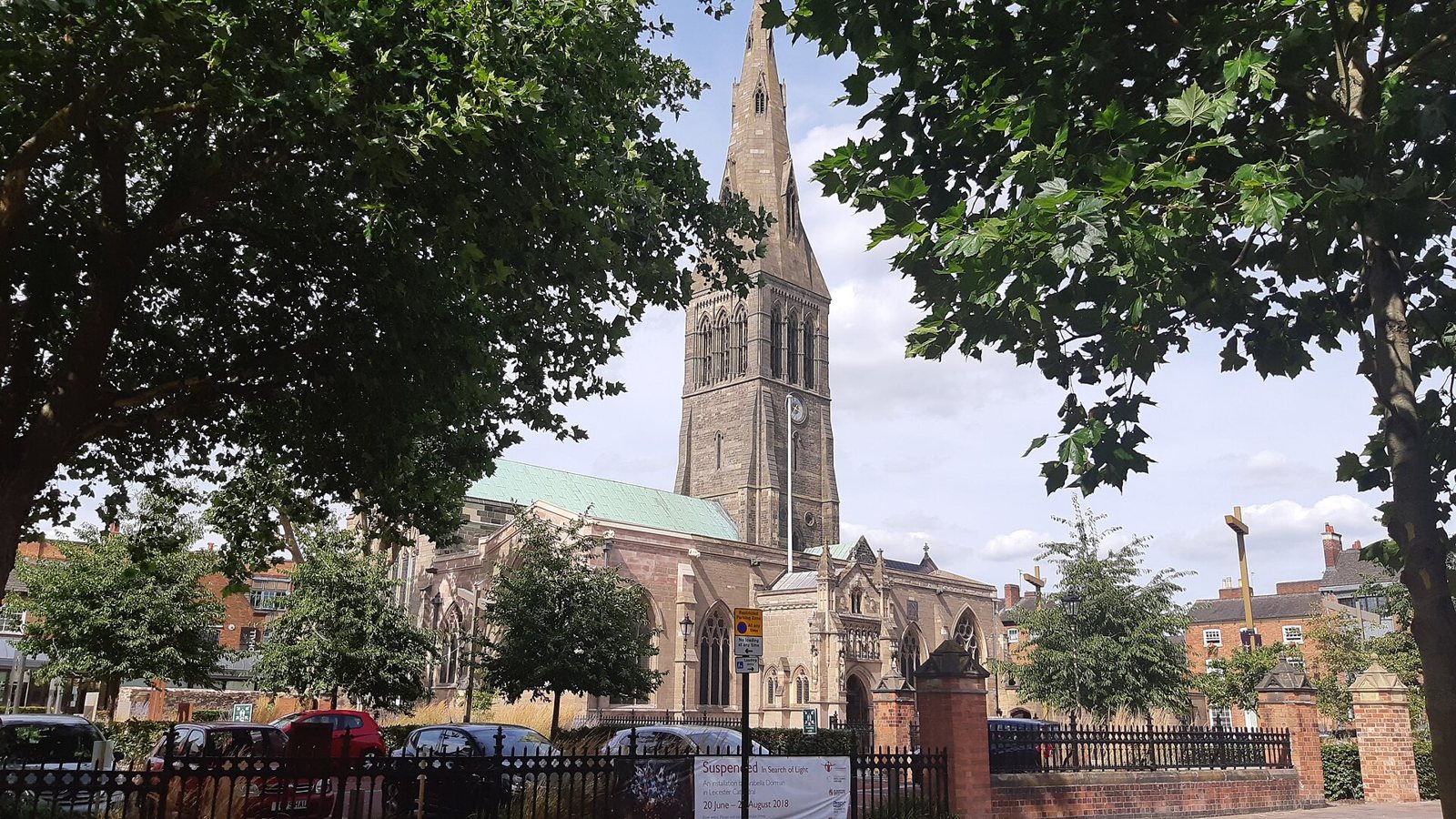
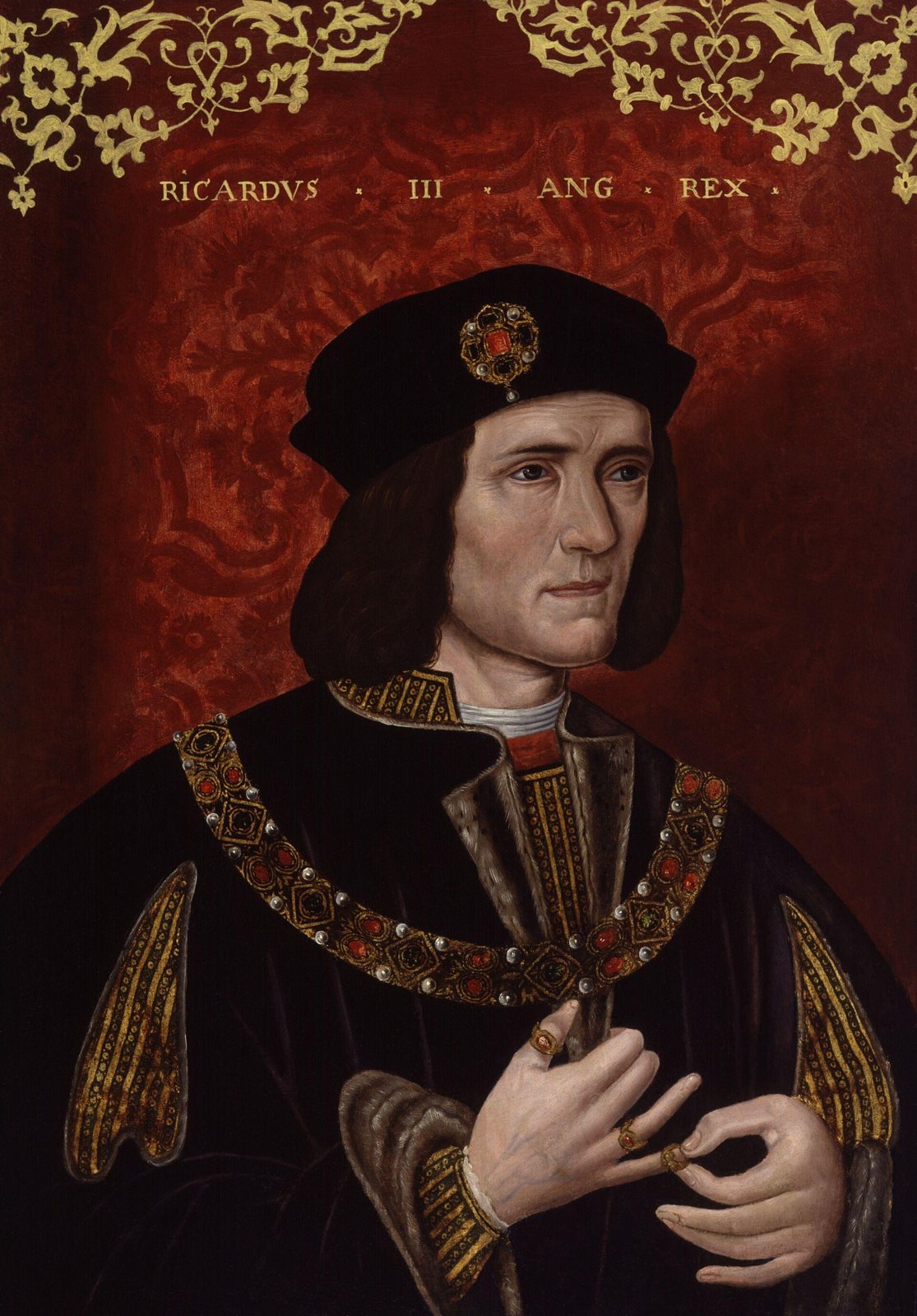
Richard III was found in Leicester, England, in the late summer of 2012. Archaeologists from the University of Leicester, working with the Looking for Richard Project, cut trenches through a Social Services car park that sat over the site of the medieval Grey Friars church, and they found a skeleton buried in the church's choir. On 4 February 2013 the University announced that the bones were those of Richard III, the king killed at the Battle of Bosworth on 22 August 1485. They knew it was him from DNA shared with living relatives, from radiocarbon dating, from his curved spine and from the wounds on his bones. On 26 March 2015 he was reburied in Leicester Cathedral.
That is the short version. The long version has a too-short grave, a living relative who ended up making the king's coffin, a spine that explains an old description, and an argument over which city should keep a king.
Why anyone dug under a car park
Nobody set out to bury a king under parked cars. Richard III was buried at Grey Friars, a Franciscan friary in Leicester, after he died at Bosworth in 1485, at least according to the long tradition the searchers followed. The friary church did not survive, and centuries later the ground where it had stood was covered by a car park.
The search began with Philippa Langley. In 2011 she approached University of Leicester Archaeological Services after historical research suggested that the choir of the Grey Friars church lay beneath the Social Services car park. The University of Leicester describes how the team first scanned the tarmac with ground-penetrating radar. It picked up pipes, cables and rubble, but no clear plan of a building. The only way to know was to dig.
The questions were simple to state and hard to answer. Was Richard still buried at Grey Friars? Where exactly had the church stood? And if a body turned up, how could anyone prove who it was? The Richard III Society frames the project around those same three questions.
The dig: bones within hours
The University gives 24 August 2012 as the date the project launched. The Richard III Society dates the start of excavation, and the first human remains, to 25 August. Either way, the first trench produced human bones within hours of digging, which is extraordinary luck for an archaeological search.
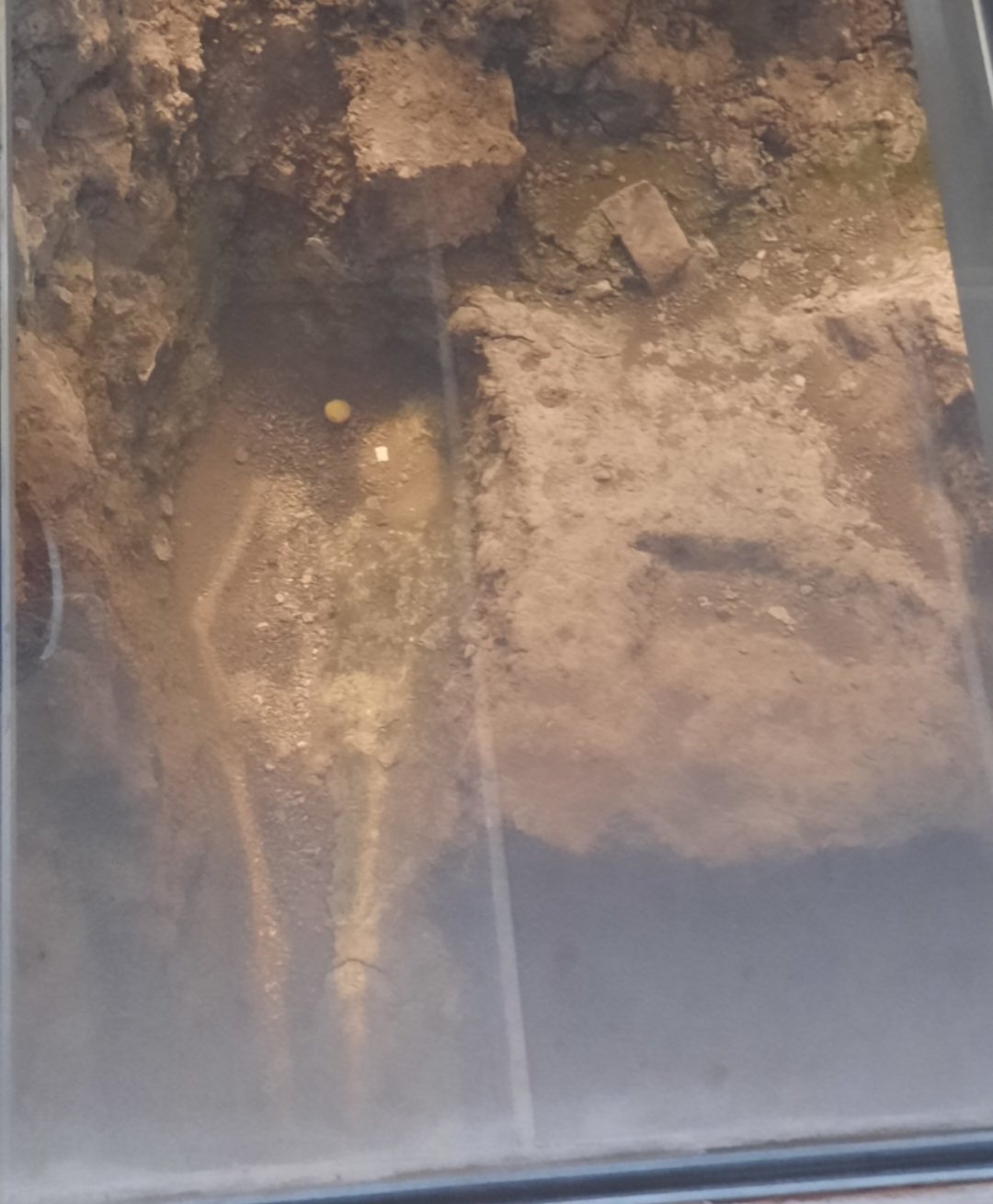
Over the following days the team worked out the layout of the friary and established that the grave lay inside the choir of the Grey Friars church, the part of a friary church near the altar. The skeleton, known to the team as Skeleton 1, was lifted from the ground on 5 September 2012.
The grave told its own story. According to the University's account of locating the remains, the skull lay higher than the rest of the body because the head had been propped against the end of a grave that was slightly too short. The body's position was consistent with a hurried burial.
The skeleton was an adult man with a curved spine and battle injuries. That made him a strong candidate from the start. On 12 September 2012 the University announced that it had found a probable candidate for Richard III, and the scientific work of proving it began.
How scientists knew it was Richard
People often ask how the team could be so sure, and so quickly. The answer is that no single test did it. The University combined archaeology, the study of the bones, radiocarbon dating, chemical analysis of the bones, family history and DNA, and each line of evidence pointed the same way.
The skeleton was male and aged about 30 to 34. Richard was 32 when he died. Radiocarbon dating placed the remains in the right period: the University's published radiocarbon report gives a modelled date of AD 1460 to 1540 at 95% probability, with the burial constrained to before the Dissolution of the Monasteries in 1538. If you are curious how that kind of date range is worked out, our story on how old bones are dated walks through it.
The DNA is the part most people remember. Genealogists traced an unbroken line through the women of the family, from Richard's sister Anne of York down to a living man, Michael Ibsen. Mitochondrial DNA passes from mother to child, so a line that runs only through mothers keeps it. The University's DNA results show that the skeleton's complete mitochondrial genome matched Ibsen's exactly. It differed by one base from another living female-line relative, Wendy Duldig.
There was one result that did not match. The Y chromosome, which passes from father to son, did not match the male-line relatives who were tested. The researchers explained that a false-paternity event, a child whose recorded father was not the biological father, could have happened somewhere in the many generations between. Combining all the evidence, the 2014 paper by King and colleagues calculated a probability of at least 99.999% that Skeleton 1 was Richard III. The University had already announced the identification beyond reasonable doubt on 4 February 2013.
Tap or hover a row to highlight it.
| Evidence | What it showed |
|---|---|
| EvidenceSex and age | What it showedMale, about 30 to 34; Richard was 32 at death |
| EvidenceRadiocarbon dating | What it showedAD 1460 to 1540 at 95% probability, burial before 1538 |
| EvidenceSpine | What it showedSevere scoliosis, matching descriptions of unequal shoulders |
| EvidenceInjuries | What it showedAt least eleven injuries around the time of death, consistent with Bosworth |
| EvidenceMitochondrial DNA | What it showedExact match with Michael Ibsen; one base different from Wendy Duldig |
| EvidenceCombined probability | What it showedAt least 99.999% (King et al., 2014) |
Did Richard III have a hunchback?
Richard III had scoliosis, a sideways curve of the spine. "Hunchback" is the old popular word for him, but it is not how the researchers describe his condition. The University of Leicester diagnoses severe adolescent-onset idiopathic scoliosis, which means a curve that developed during his teenage years without a known cause. The curve was balanced and is estimated at 70 to 90 degrees.
What would that have looked like? The curve probably raised his right shoulder above his left, and his torso would have looked a little short for his limbs. That matches descriptions from the late fifteenth century that mention Richard's unequal shoulders. The bones show no evidence of a withered arm or of an obvious limp, and the leg bones were symmetrical and well formed.
His intact thigh bone suggests he stood about 1.74 metres tall, though the curve in his spine would have made him look shorter.
How Richard III died at Bosworth
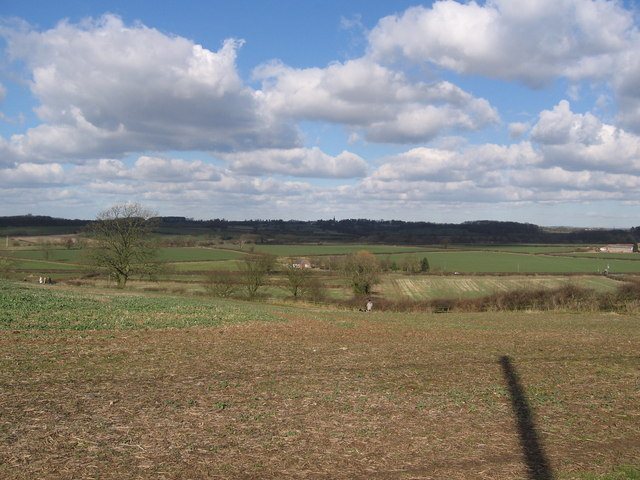
Richard III died at the Battle of Bosworth on 22 August 1485, from blows to the head. The University's study of his injuries counts at least eleven wounds made around the time of death.
Several were cuts or blows to the skull. The injuries to the base and underside of the skull are the ones the researchers consider fatal, and the University's account of how he died identifies a large injury at the base of the skull as potentially fatal on its own. The head wounds suggest that he had lost his helmet, or that it had been forcibly removed. Other injuries affected his jaw, cheek, a rib and his pelvis.
Some of the wounds were probably made after he died, including a wound through the buttocks that may have been an insult injury, a blow meant to humiliate a defeated enemy. Taken together, the injuries are consistent with battle trauma at Bosworth. Our story on what bones tell archaeologists covers how injuries around the time of death are told apart from older ones.
What a king ate
Bones also keep a record of a person's diet. Stable-isotope analysis, which reads chemical signatures in bone, showed that Richard ate a high-status diet with varied sources of protein, including a significant amount of food from the sea.
His teeth were less royal. The researchers found dental calculus, which is hardened plaque, minor cavities and teeth that had been lost before he died.
Reburial in Leicester, and the argument over York
Where should a king be buried when his lost grave turns up? Leicester had been the planned answer from the beginning. Leicester Cathedral was the nearest consecrated ground to the Grey Friars grave, and Richard had real historical connections with the city.
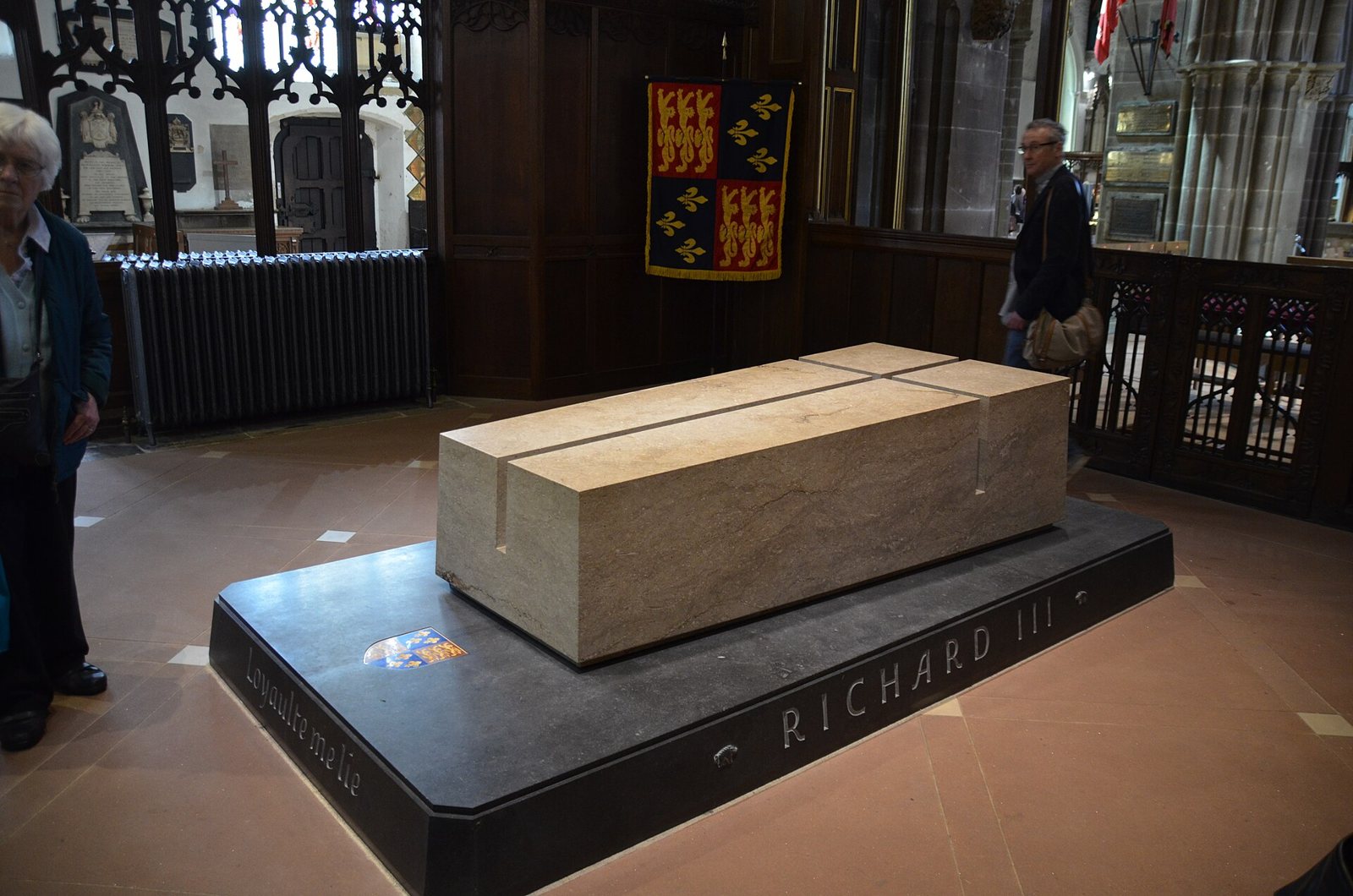
Not everyone agreed. Supporters of York argued that Richard had strong northern and Yorkist ties and belonged in York Minster. Westminster Abbey was proposed too. A group called the Plantagenet Alliance challenged the exhumation licence and asked for a judicial review. In May 2014 the High Court upheld the licence issued to the University of Leicester, according to the University's account of the controversy, and the reburial in Leicester went ahead.
Michael Ibsen, the relative whose DNA had helped identify the king, made the English oak coffin. The University describes how Richard's remains were placed in a lead ossuary, a box for bones, inside it. After six days of public commemorative events, he was reinterred in Leicester Cathedral on 26 March 2015. His tomb is a slab of Swaledale fossil limestone on a plinth of Kilkenny marble.
His face, and where to learn more in Leicester
After the bones came out of the ground they were CT-scanned at Leicester Royal Infirmary. From those scans, Professor Caroline Wilkinson built a craniofacial reconstruction, a model of Richard's face built up from the shape of his skull. The Richard III Society commissioned and paid for it and placed it on permanent loan with the King Richard III Visitor Centre. Later genetic analysis gave a 96% probability that he had blue eyes and a 77% probability that he had blond hair, and the reconstruction was updated to match. Our story on facial reconstruction explains how faces are rebuilt from skulls.
The King Richard III Visitor Centre opened in July 2014 in the former Alderman Newton School, right beside the place where he was found and across from the cathedral. Its displays cover his life, death, burial, the 2012 excavation and his DNA identification, along with the archaeology of Grey Friars. Check current opening hours on the visitor centre's own site before you go.
Richard III, from Bosworth to Leicester Cathedral
Tap or hover a step to follow the order.
22 August 1485
Richard III dies at the Battle of Bosworth.
24 August 2012
The Grey Friars Project is formally launched.
25 August 2012
Excavation begins and the first skeletal remains are uncovered.
5 September 2012
The skeleton is lifted from the grave.
12 September 2012
The University announces a probable candidate for Richard III.
4 February 2013
The University announces the identification beyond reasonable doubt.
July 2014
The King Richard III Visitor Centre opens.
26 March 2015
Richard III is reinterred in Leicester Cathedral.
Frequently asked questions
The questions people ask most about the king under the car park, answered briefly.
Where was Richard III found?
He was found in Leicester, England, beneath a Social Services car park on the site of the medieval Grey Friars church. His grave lay in the choir of the church, and the excavation began in August 2012.
How did they identify Richard III's skeleton?
They combined several kinds of evidence: the skeleton's age and sex, radiocarbon dating, his scoliosis, his battle wounds and DNA. His mitochondrial DNA matched Michael Ibsen, a living relative descended through the female line from Richard's sister Anne of York, and the 2014 study put the probability at no less than 99.999%.
Did Richard III have a hunchback?
He had severe scoliosis, a sideways curve of the spine of about 70 to 90 degrees. It probably made his right shoulder sit higher than his left, but the bones show no withered arm and no obvious limp.
How did Richard III die?
He died at the Battle of Bosworth on 22 August 1485 after several blows to the head, with an injury to the base of his skull considered potentially fatal. His wounds suggest he had lost his helmet, and some were made after his death.
Why is Richard III buried in Leicester and not York?
Leicester Cathedral was the nearest consecrated ground to his original grave and was the planned resting place from the start. A legal challenge from supporters of a different burial place ended in May 2014, when the High Court upheld the University's exhumation licence.
Richard III quiz
Answer every question to check.
More stories of bones that were searched for
Richard III is one of the few people in history whose lost grave was found, named and given a second burial. For another English head with a long afterlife, read about Oliver Cromwell's head. To see what else a skeleton can reveal, our stories on what bones tell archaeologists and human skull facts are good next reads, and the people of Pompeii and Herculaneum show what scientists learn when DNA meets an old story. If you have come across bones yourself, our page on finding human bones covers what to do first.
Terms in this story
Tap a term to see what it means.
Grey Friars. The Franciscan friary in Leicester where Richard III was buried in 1485; its church site later lay beneath a car park.