

No. 006
The Jericho Plastered Skulls: Faces Made Over the Dead 9,000 Years Ago
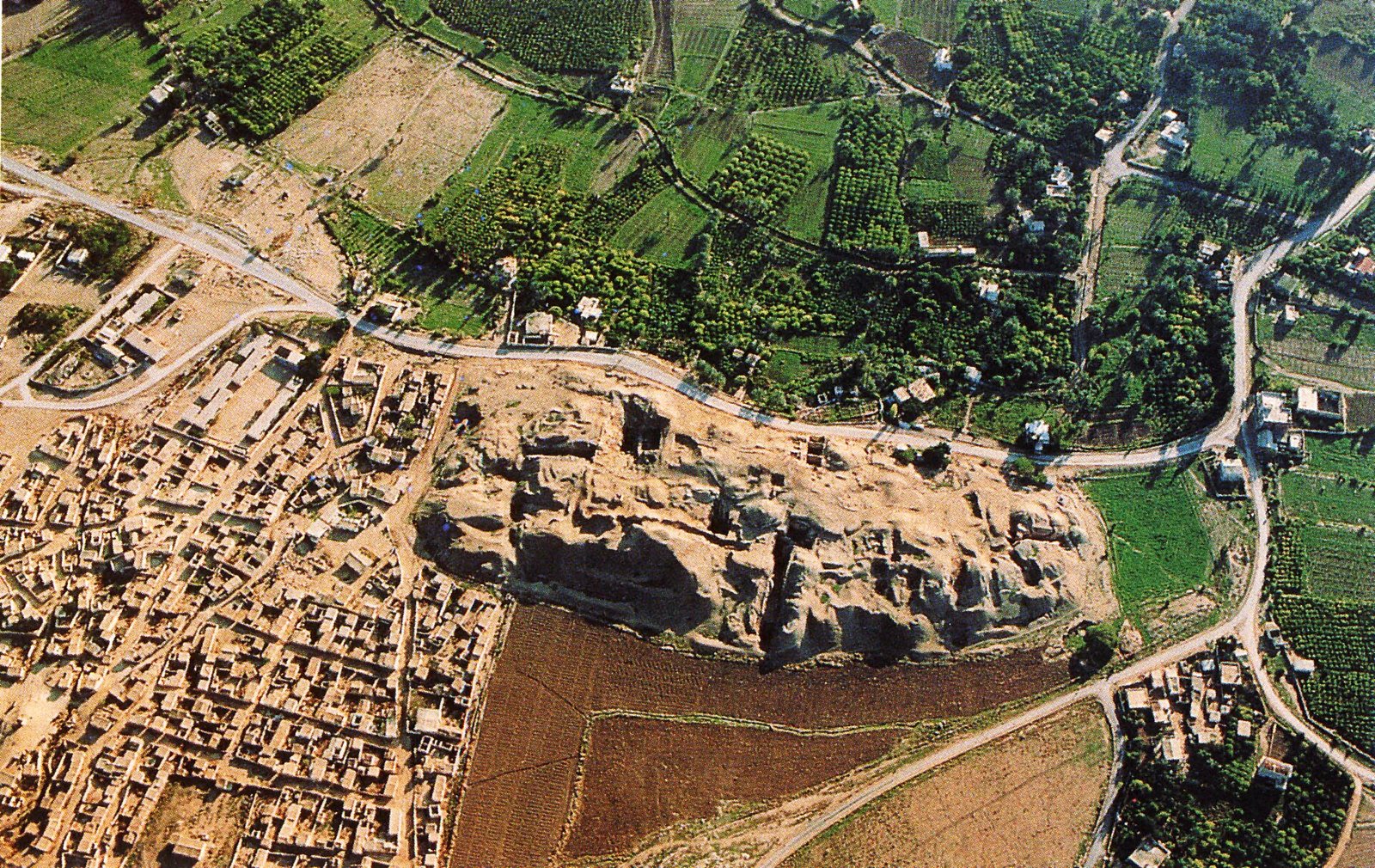
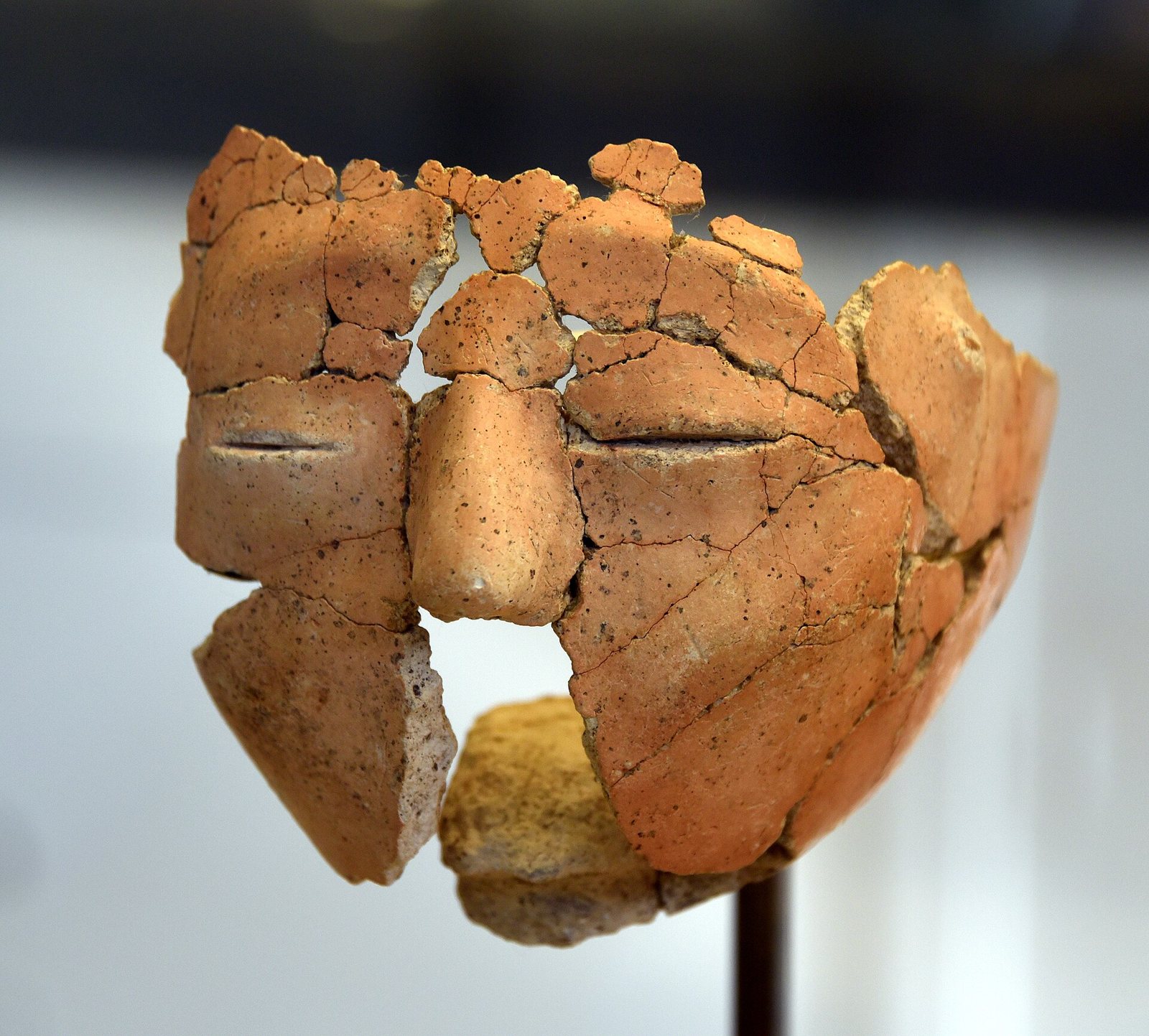
The plastered skull you saw was made by people living at Jericho, the Neolithic settlement now called Tell es-Sultan, in the period archaeologists call the Pre-Pottery Neolithic B. Museums date their examples to between about 8200 and 6300 BCE, roughly 9,000 to 10,000 years ago. After a person died and the body had decomposed, the skull was taken up, the lower jaw was usually removed, and a new face was modeled in plaster over the bone, with shell set in the eye sockets. The archaeologist Kathleen Kenyon excavated seven of these skulls at Jericho in 1953. Most archaeologists connect them with remembering the dead, possibly with honoring ancestors, though no single explanation is proven.
That is the short answer. The longer one involves a man with a broken nose, a skull filled with soil, and a tradition that stretched across the Levant.
Seven skulls at Jericho, 1953
In 1953 Kathleen Kenyon was digging at Tell es-Sultan, the ancient mound of Jericho, for the British School of Archaeology in Jerusalem. Her team uncovered seven plastered human skulls together, each with a face built over the bone. They belong to the Pre-Pottery Neolithic B, often shortened to PPNB, a name that marks a time before these communities made pottery.
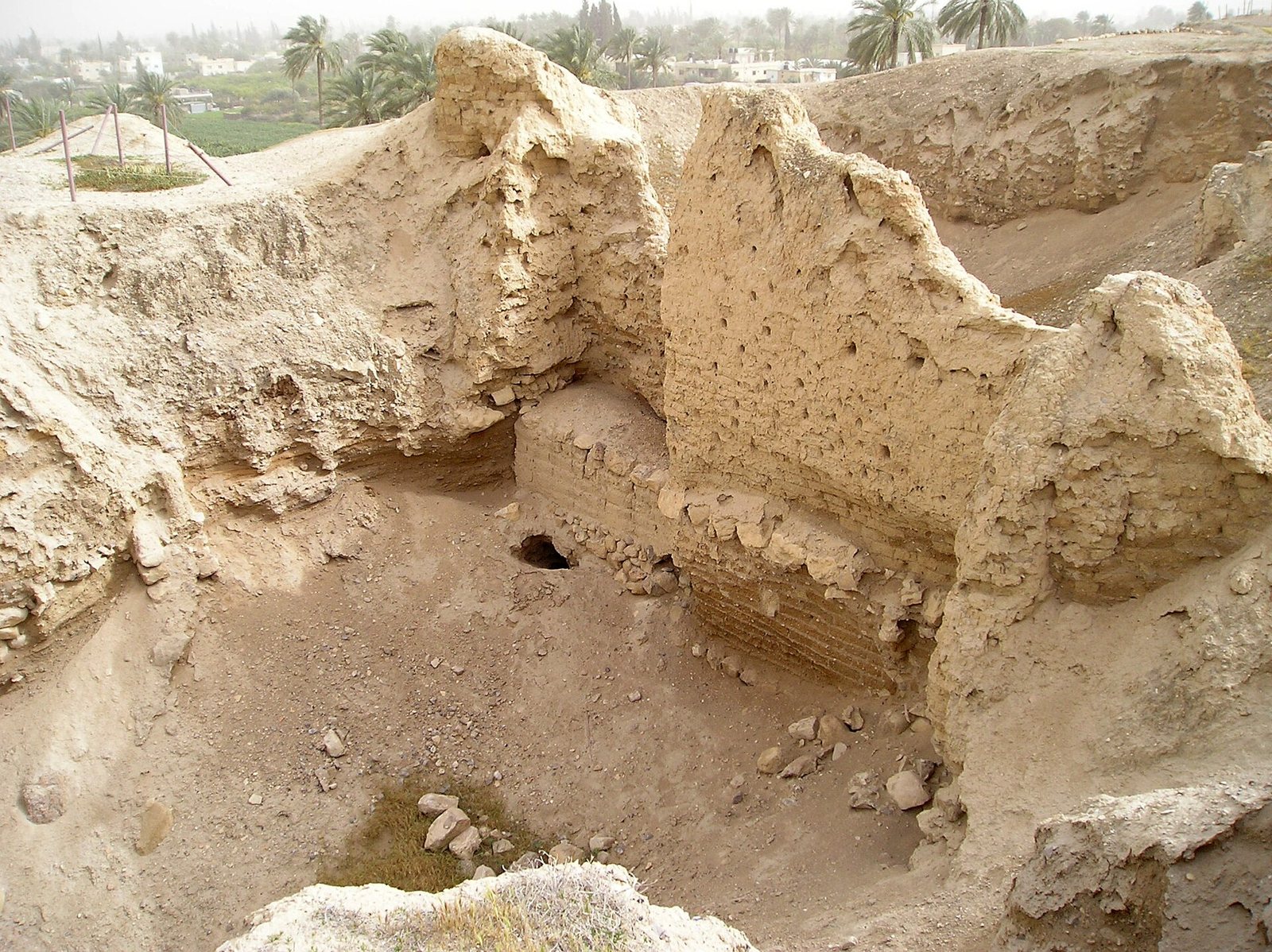
The seven did not stay together. Today they are spread among several collections, and each museum dates its own example.
Tap or hover a row to highlight it.
| Museum | City | What the museum records |
|---|---|---|
| MuseumBritish Museum | CityLondon | What the museum recordsObject 1954,0215.1, dated 8200 to 7500 BCE |
| MuseumAshmolean Museum | CityOxford | What the museum recordsAN1955.565, dated 7300 to 6300 BCE |
| MuseumRoyal Ontario Museum | CityToronto | What the museum recordsA plaster-filled and painted human skull excavated at Tell al-Sultan |
| MuseumJordan Museum | CityAmman | What the museum recordsHolds a Jericho example |
Other examples are held in further collections. You can read the Ashmolean's own page on its Jericho skull, and the Royal Ontario Museum skull is described in a virtual exhibit from Queen's University's Museum of Near Eastern Archaeology.
How a face was built on a skull
The process began after the body had decomposed. The skull was separated, and the lower jaw, the mandible, was commonly removed. Then plaster was modeled directly over the cranium to recreate the features of a face: the brow, nose, cheeks, lips and even the ears. The eyes were made with shell. On the Ashmolean skull they are cowrie shells, set into the eye sockets where the living eyes had been.
The work was done in stages, filling and modeling layer by layer. Plaster recipes and building methods were not identical everywhere; technical studies show that they varied between Jericho and other sites. The Ashmolean skull carries plaster over the front but not the back, and the museum suggests that the back may once have been covered with another material representing hair.
These were not masks made to be worn. The face was built onto the person's own skull, so every one of these objects is both a work of craft and the remains of a particular human being.
Inside the British Museum skull
In 2009 the British Museum's Jericho skull was examined with micro-CT scanning, a way of seeing inside an object without damaging it. As National Geographic Historia reports, the scans showed that soil had been packed inside the cranium through an opening at the back. The soil supported the bone while the plaster face was added on the outside.
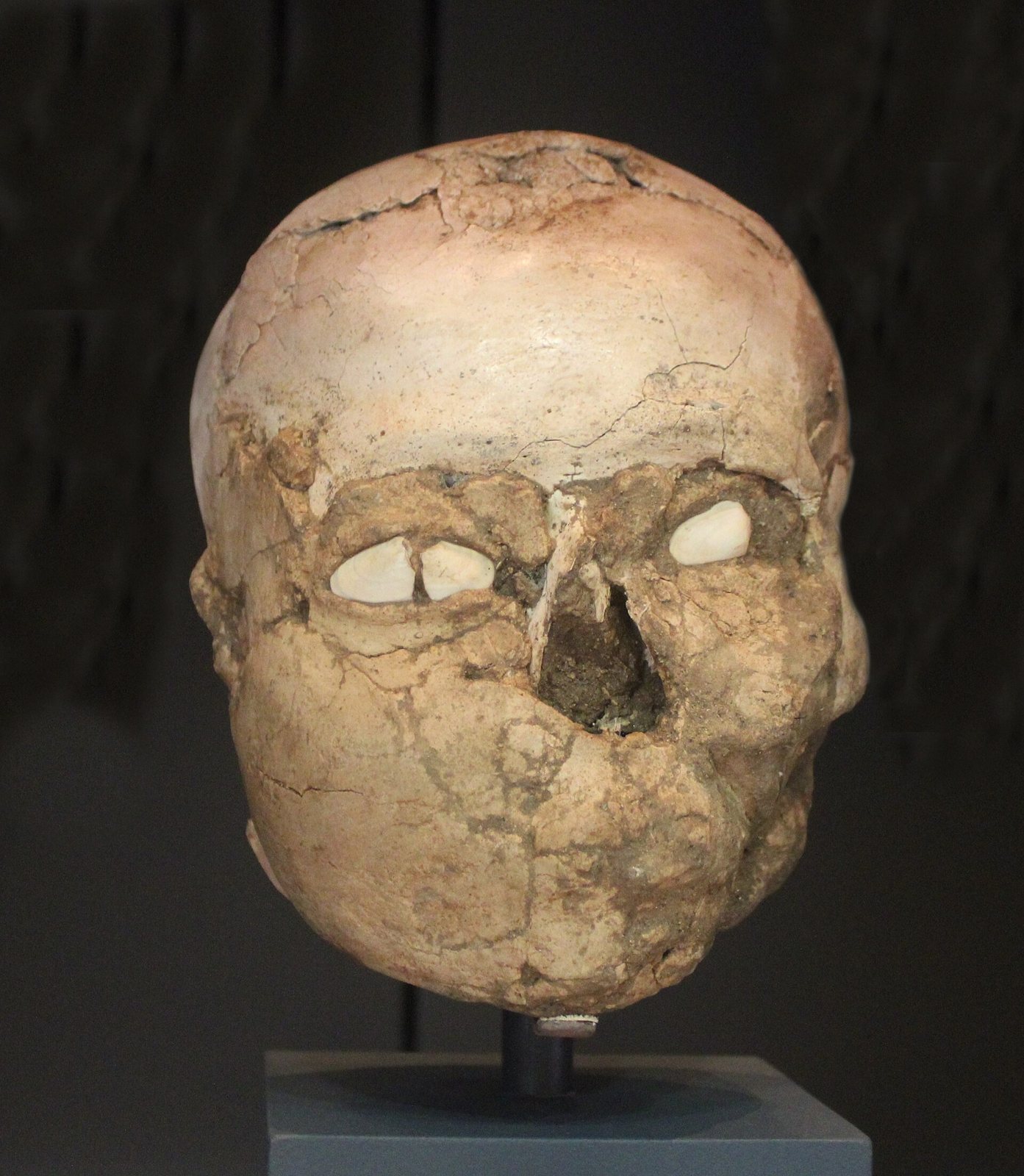
The scans also gave a glimpse of the man himself. He was a mature man, over 40 when he died. His teeth were badly damaged, and he had a healed injury to his nose. His lower jaw is missing, so what survives is the cranium alone with its plaster face. For a temporary exhibition, the British Museum displayed a facial reconstruction beside the original, letting visitors see a modern estimate of the face next to the one his community made for him.
The Ashmolean skull
The skull in Oxford belonged to an adult man as well. The Ashmolean notes evidence of artificial head shaping, possibly from binding the head during infancy, a practice that changes the shape of the skull as a child grows. The museum presents the skull as a possible early portrait of the dead individual and as a way the community may have remembered its ancestors.
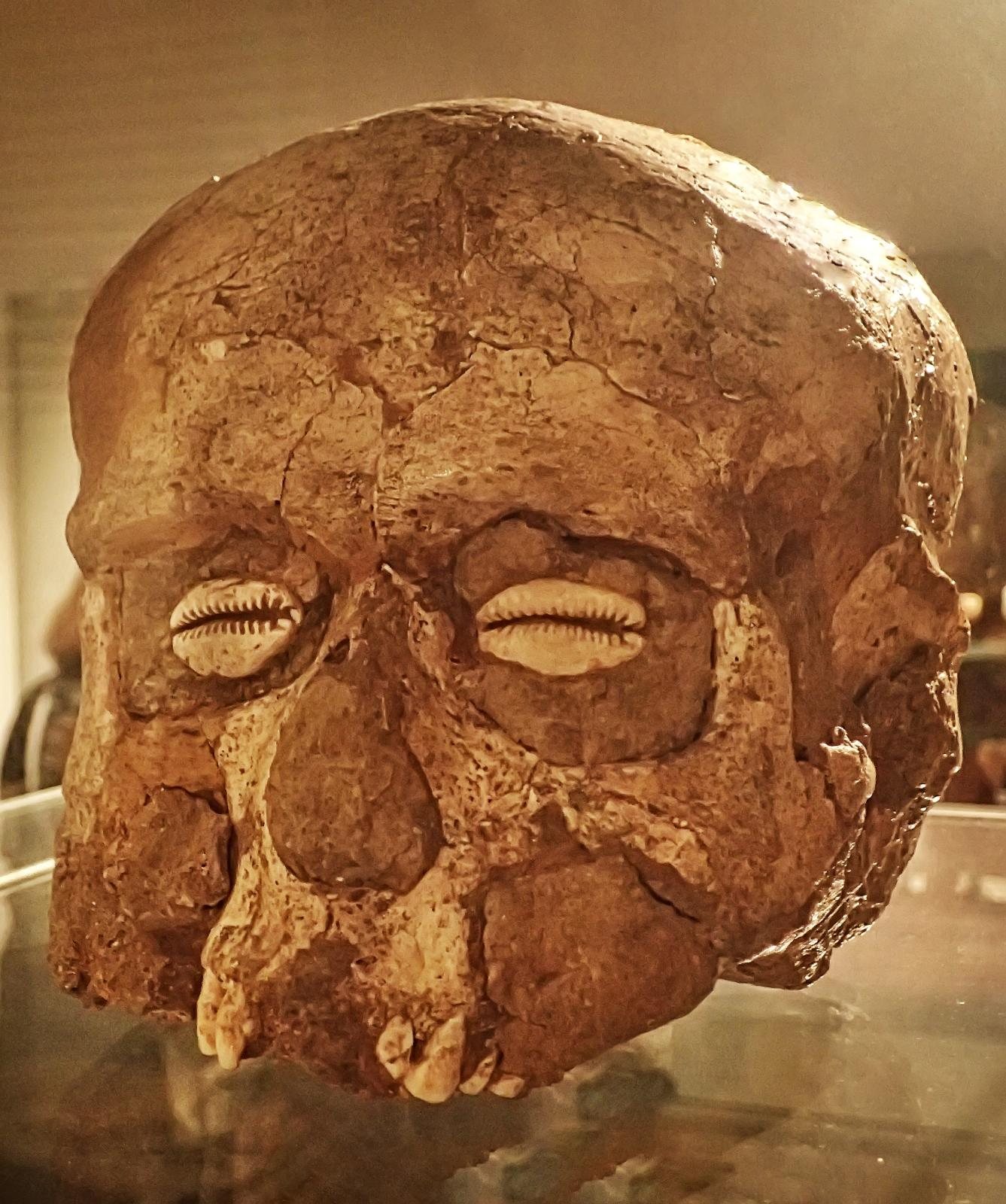
That word "possible" matters. A plaster face shaped over a real skull follows the bone underneath, so it may preserve something of how the person looked. Whether the makers were aiming for a likeness, or for a more general idea of a face, cannot be read from the plaster alone.
Why did they make them?
The strongest interpretation is that plastered skulls were part of Neolithic practices for remembering the dead and, perhaps, venerating ancestors. Different scholars have weighed the evidence in different ways.
Kathleen Kenyon herself read the Jericho skulls as portraits of important people who had died. The Ashmolean, as above, presents its skull as a possible representation of the dead person and a way the community may have kept ancestors present. Alexandra Fletcher of the British Museum describes several competing interpretations: the worship of elder males, selection based on skull shape or social status, and portraits of revered members of the community. She says ancestor worship may be involved, but that no single explanation is proven. The archaeologist Karina Croucher has written about these skulls as part of the wider materiality of "ancestors" in Neolithic mortuary practice.
What all these readings share is the idea that death did not end a person's place in the community. Some PPNB villages chose certain skulls, gave them faces and kept them in a continuing social or ritual role. Who was chosen, and exactly why, is still open.
A tradition across the Levant
Jericho is the most famous site, but it was not alone. Plastered and modeled skulls have been recovered at a number of Neolithic sites in the Levant and beyond.
Tap or hover a row to highlight it.
| Site | Today in | What was recovered |
|---|---|---|
| Site'Ain Ghazal | Today inJordan | What was recoveredFourteen decapitated heads, including six plastered skulls |
| SiteTell Aswad | Today inSyria | What was recoveredNine modeled skulls in two deposits |
| SiteKfar HaHoresh | Today inNorthern Israel | What was recoveredSeveral plastered skulls in a mortuary setting |
| SiteBeisamoun and Yiftahel | Today inIsrael | What was recoveredFurther examples of the tradition |
| SiteTell Ramad | Today inSyria | What was recoveredFurther examples of the tradition |
| SiteKöşk Höyük | Today inCentral Turkey | What was recoveredFurther examples of the tradition |
At 'Ain Ghazal, the archaeologist Denise Schmandt-Besserat describes Skull 88-1, found in 1988 in a pit beneath a Middle Pre-Pottery Neolithic B building dated to about 7000 to 6700 BCE. At Tell Aswad, near Damascus, the group of nine modeled skulls is described by the Laboratoire Archéorient as an exceptional funerary find; Danielle Stordeur, who worked on the site, places it within the PPNB sequence but cautions that the precise phase of the skulls is uncertain. At Kfar HaHoresh, technical study found several layers of plaster, with four different plaster mixtures identified on a single skull.
Taken together, these sites show a shared idea carried out with local differences, in recipes, in methods and in how the skulls were kept.
The plastered skulls, from the Neolithic to the CT scanner
Tap or hover a step to follow the order.
7300 to 6300 BCE
The Ashmolean's Jericho skull is dated to this period.
7000 to 6700 BCE
Skull 88-1 is deposited in a pit below a building at 'Ain Ghazal.
1953
Kathleen Kenyon excavates seven plastered skulls at Jericho.
1988
Skull 88-1 is excavated at 'Ain Ghazal.
2009
The British Museum's Jericho skull undergoes micro-CT scanning.
Seeing them in museums today
Museums treat these skulls as the remains of people and as archaeology, not as curiosities. The Ashmolean shows its skull in the setting of the ancient Middle East and names it as a possible early portrait. The British Museum has displayed its Jericho skull in Room 59, Ancient Levant, presented as human remains and ritual equipment. The online records name the objects directly and give their archaeological setting.
If you want to see one in person, check the museum's own website before you go. Displays change, objects travel for exhibitions or rest in storage, and each museum publishes its own current hours and ticket details.
How much do you know about the Jericho skulls?
Answer every question to check.
Questions about the Jericho skulls
These are the questions visitors ask most often after meeting one of these faces in a museum case.
What was the purpose of the Jericho skulls?
They were probably part of Neolithic practices that preserved and represented the dead, perhaps turning known individuals into remembered ancestors. Archaeologists do not agree on one exact purpose; suggestions include portraits of important people, the worship of elder males and selection by status. The same answer covers the Spanish question *propósito de los cráneos enyesados*.
Where was the Jericho skull found?
It was found at Jericho, in the Neolithic settlement mound of Tell es-Sultan, during Kathleen Kenyon's excavations in 1953. Seven plastered skulls were uncovered there together and are now held by several museums.
What is the significance of the Neolithic human skull overlaid with plaster?
It shows that some PPNB communities gave selected human skulls a continuing social or ritual role after death. The plaster face and shell eyes were deliberate work, and ancestor remembrance is a major interpretation, though the exact meaning is still debated.
Who made the plastered skulls?
They were made by the people of Pre-Pottery Neolithic B communities in the Levant, at Jericho and at sites such as 'Ain Ghazal, Tell Aswad and Kfar HaHoresh. The makers left no names, so what we know of them comes from the skulls and the places they were kept.
How was the skull prepared, and was the jaw removed?
The lower jaw was commonly removed after the body decomposed, and plaster was modeled over the cranium in stages, with shell pressed into the eye sockets. In the British Museum skull, soil was packed inside through an opening at the back to support the bone; this also answers *cómo se preparó el cráneo de Jericó*.
Where to go next
People in many places have kept the skulls of the dead close as a way of keeping them present. For another living tradition of ancestor skulls, read Asmat ancestor skulls, and for places where whole communities' bones are gathered and honored, see ossuaries around the world. The wider story of what skulls have meant across cultures begins with skull symbolism.
Terms in this story
Tap a term to see what it means.
Pre-Pottery Neolithic B (PPNB). The period of the Jericho skulls, named for a time before these Levant communities made pottery.