

No. 003
Ma'Nene: How the Toraja of Sulawesi Care for Their Dead
Ma'Nene' (also written Ma'nene) is an ancestor-care ritual of the Toraja people of South Sulawesi, Indonesia, practiced especially in Baruppu and the wider North Toraja area. Families go to the graves of their relatives, open or lift out the coffin, clean the remains and the tomb, groom the body and dress it in fresh clothes, then return it to its resting place. The whole extended family gathers to do it. Torajan families and the scholars who study the ritual describe its meaning in the same few words: remembrance, love, respect and kinship that does not end when someone dies.
The photos that travel around the internet show the moment of re-dressing, often a relative standing beside a carefully clothed body in the sun. What they rarely show is everything around that moment: the harvest calendar, the long Torajan funeral that comes years before, the cliff graves, and the way Christianity and tourism have each changed how families talk about what they are doing.
What families do during Ma'Nene'
At its center, Ma'Nene' is a family visit to the grave that turns into a day of work and reunion. According to studies by Sumiaty and by Parrang at Universitas Negeri Makassar, relatives open the burial place, take out or open the coffin, and clean both the remains and the tomb itself. They groom the body, replace worn or old clothing with new garments, and put everything back in order. The work is shared, and the gathering is part of the point: relatives who live far away come home for it.
Sumiaty's paper on the ritual meaning of Ma'nene' describes the practice as an expression of remembrance and love for the dead. It is a way of keeping a relationship going, not ending one. When detikTravel reported from Kalimbuang, North Toraja, in 2024, a local resident explained the ritual in exactly those terms, as remembering the family members who came before.
So, when you see a photo of Torajan relatives dressing an ancestor in a new shirt or a fresh sarong, you are looking at care. The clothes are new because the family wants their relative to be clean and properly dressed, the same impulse that leads families in many places to tidy a headstone or lay fresh flowers.
A 2024 ethnographic study by Putra at Universitas Hasanuddin, based on interviews, follows how the meanings of Ma'Nene' have shifted over time. That shift is a large part of the story, and it comes up again below.
When Ma'Nene' takes place
Ma'Nene' traditionally follows the rice harvest, and it is strongly associated with August. In Baruppu, Parrang's research records August 1 through August 31 as the customary period.
That said, there is no single calendar that every Torajan community follows. Some hold Ma'Nene' every year. Others hold it every three years, every five years, or at even longer intervals. Families decide together, and the timing depends on what relatives agree, what the family can afford, and when the people who have moved away for work or study can come back. The often-repeated idea that Ma'Nene' always happens "every three years" is true for some families and not for others.
If you hope to learn whether a ceremony is happening in a particular village, the people to ask are the family, the customary authority or a licensed local guide. They are the ones who know.
Before Ma'Nene': the dead who stay at home
To understand why Torajan families feel comfortable caring for a body years after death, it helps to know how the Toraja traditionally think about death in the first place.
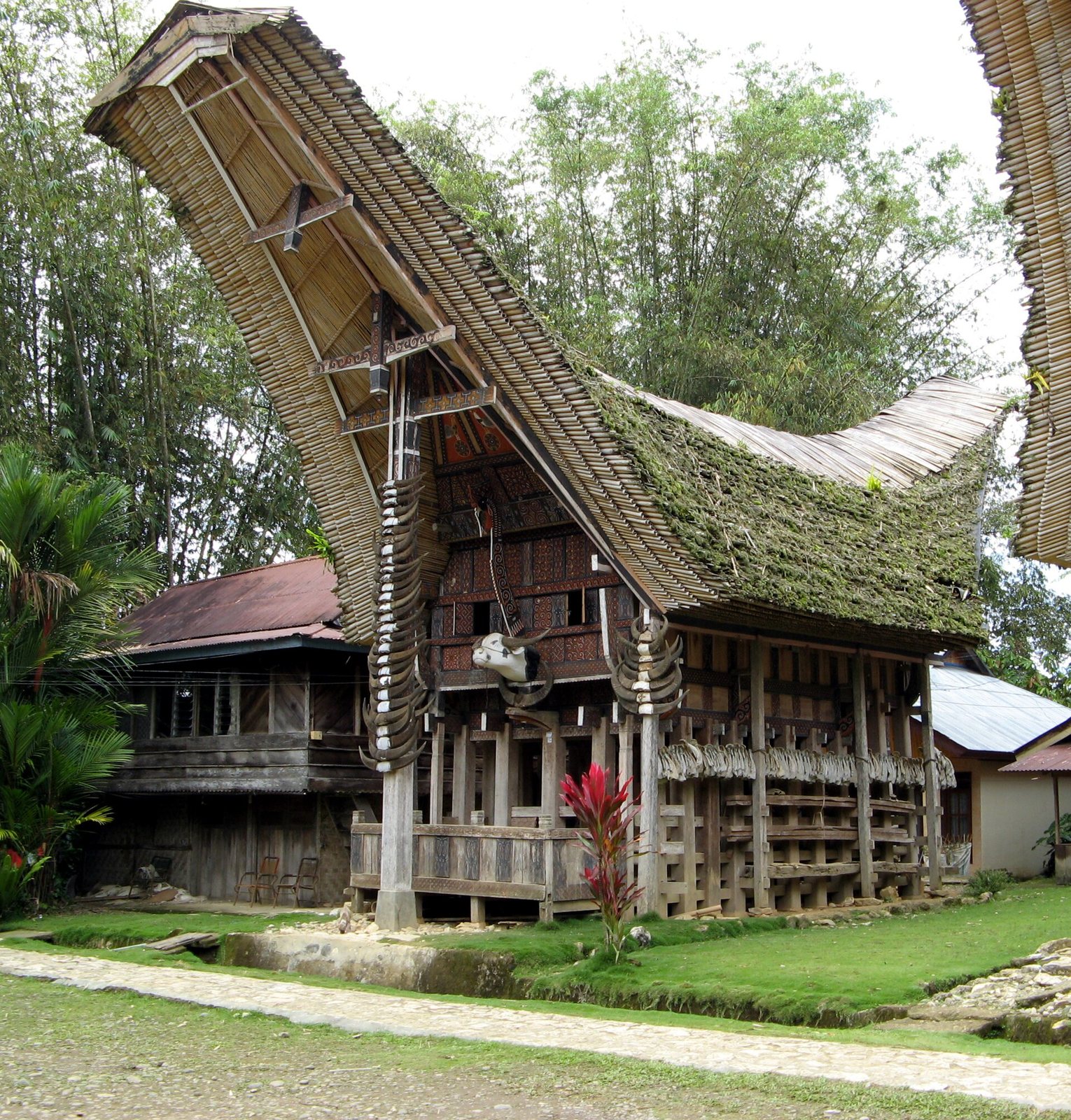
Torajan funerary tradition separates biological death from the completion of a person's social and ceremonial passage. In accounts of Aluk To Dolo, the older Torajan religion, a person who has died may be called to makula, literally a sick person, until the funeral has been held. Until then, the person is still treated as part of the household.
That is why families may keep the body at home, sometimes for months or even years. A 2021 theological and anthropological study by Panuntun, titled "Sleeping soul", cites the work of Hollan and Wellenkamp, among others, in describing bodies kept in the family house, and records Torajan informants describing food being placed near the body before the funeral. The body is preserved and dressed while relatives gather and the family assembles what the funeral will need.
This is the answer to a question many people type into a search bar: do Torajans keep dead relatives at home? Some families do, in the time before the funeral, as part of a long and deliberate process of saying goodbye.
Rambu solo' and Aluk To Dolo
The funeral that ends that waiting period is rambu solo', the major Torajan death and funeral ceremony. Its timing depends on family decisions, kinship obligations and the resources a ceremony requires, which is why it can come long after the death itself. Only after rambu solo' is the person's passage complete and the body laid to rest in the family grave.
Ma'Nene' belongs to the time after that. If rambu solo' is the farewell, Ma'Nene' is the return visit, the moment years later when the living come back to look after the people they buried.
Under Aluk To Dolo, older interpretations tied the care of ancestors to the welfare of the living. Looking after the dead was connected with protection, fertility, family health and prosperity. The ancestors were not simply remembered; the relationship ran both ways.
Torajan funerals today often mix several layers. A 2023 study by Maulana, Karomi and Arman Ahyadi in Harmoni, the journal of Indonesia's Ministry of Religious Affairs, describes contemporary funerals that combine Christian practice with rambu solo' and elements of Aluk To Dolo. The mix varies from family to family and from one community to the next.
Ma'Nene' and Toraja traditions over time
Tap or hover a step to follow the order.
Before widespread Christian conversion
Aluk To Dolo shaped ancestor care, funerals and Ma'Nene'
Early twentieth century onward
Christianity becomes a major influence, and older rituals are adapted in Christian communities
Late 1960s
Indonesian government policy promotes tourism in Tana Toraja as a source of foreign exchange
1981
Toraja sculpture is exhibited in major North American museums
Today
Ma'Nene' continues in some communities, held anywhere from every year to every several years or longer
Cliff graves and tau tau at Londa and Lemo
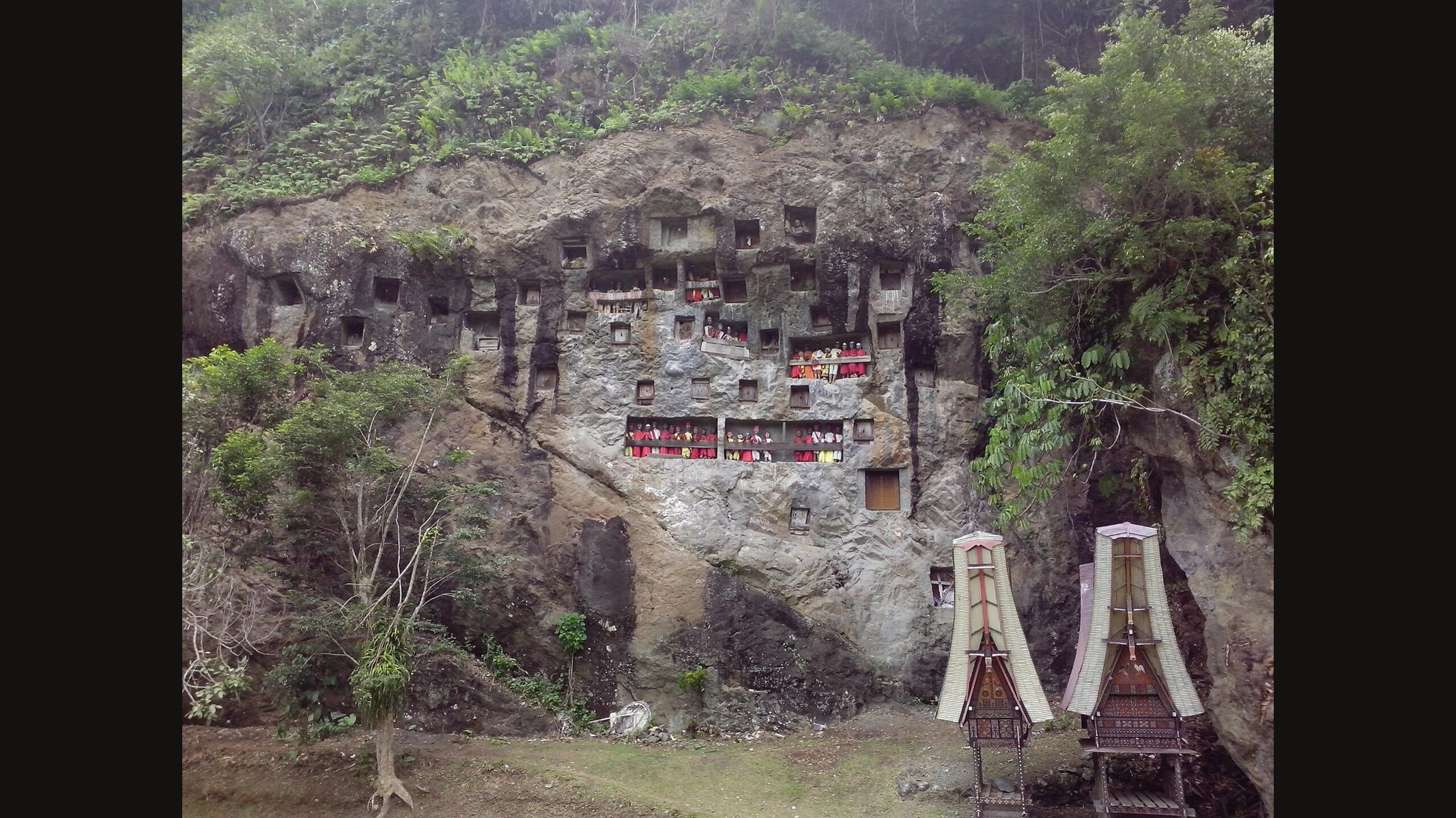
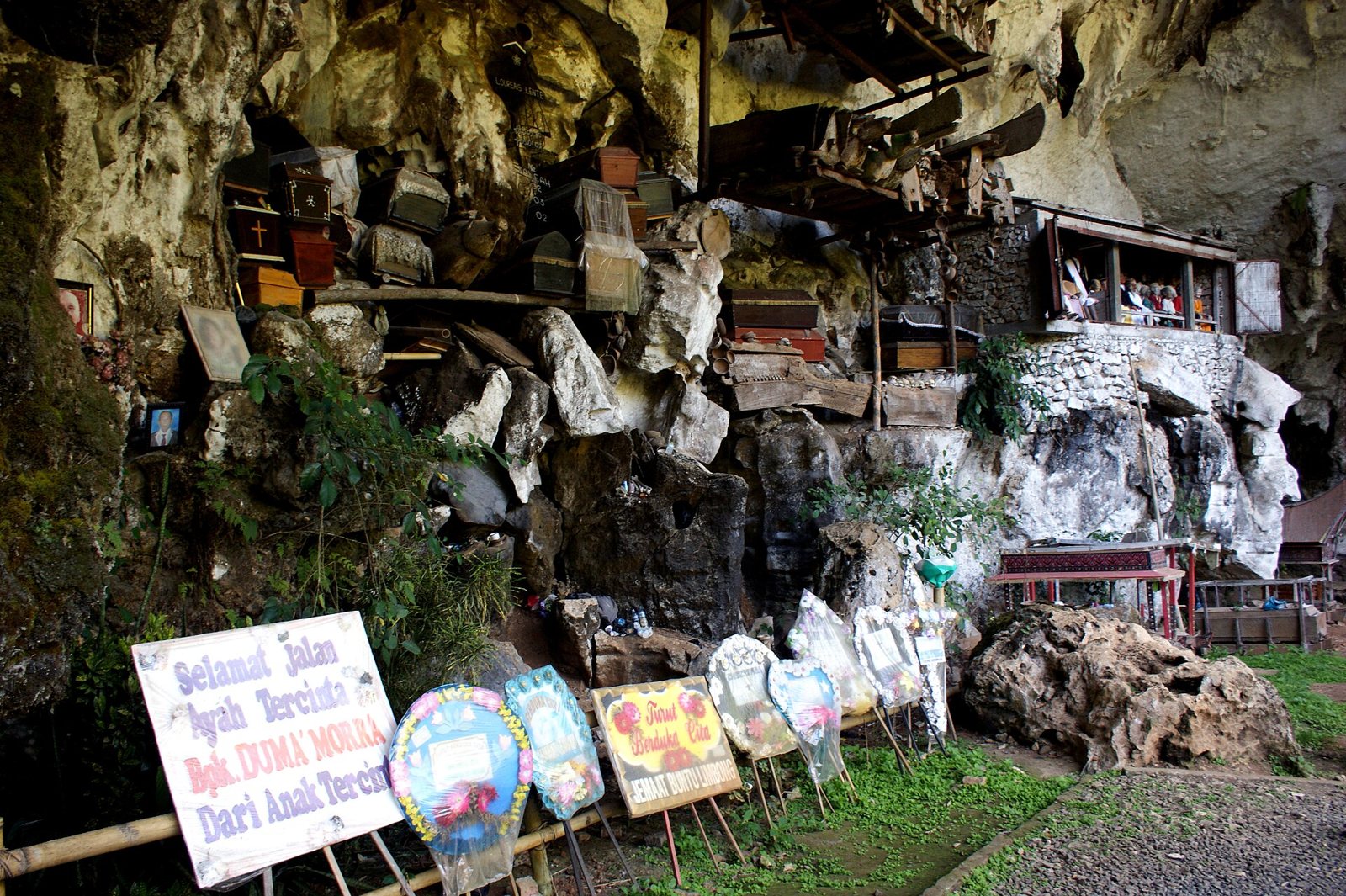
Many of the photos that come up alongside Ma'Nene' show something else: rows of carved wooden figures looking out from balconies cut into a cliff. These are tau tau, and the places best known for them are Londa and Lemo.
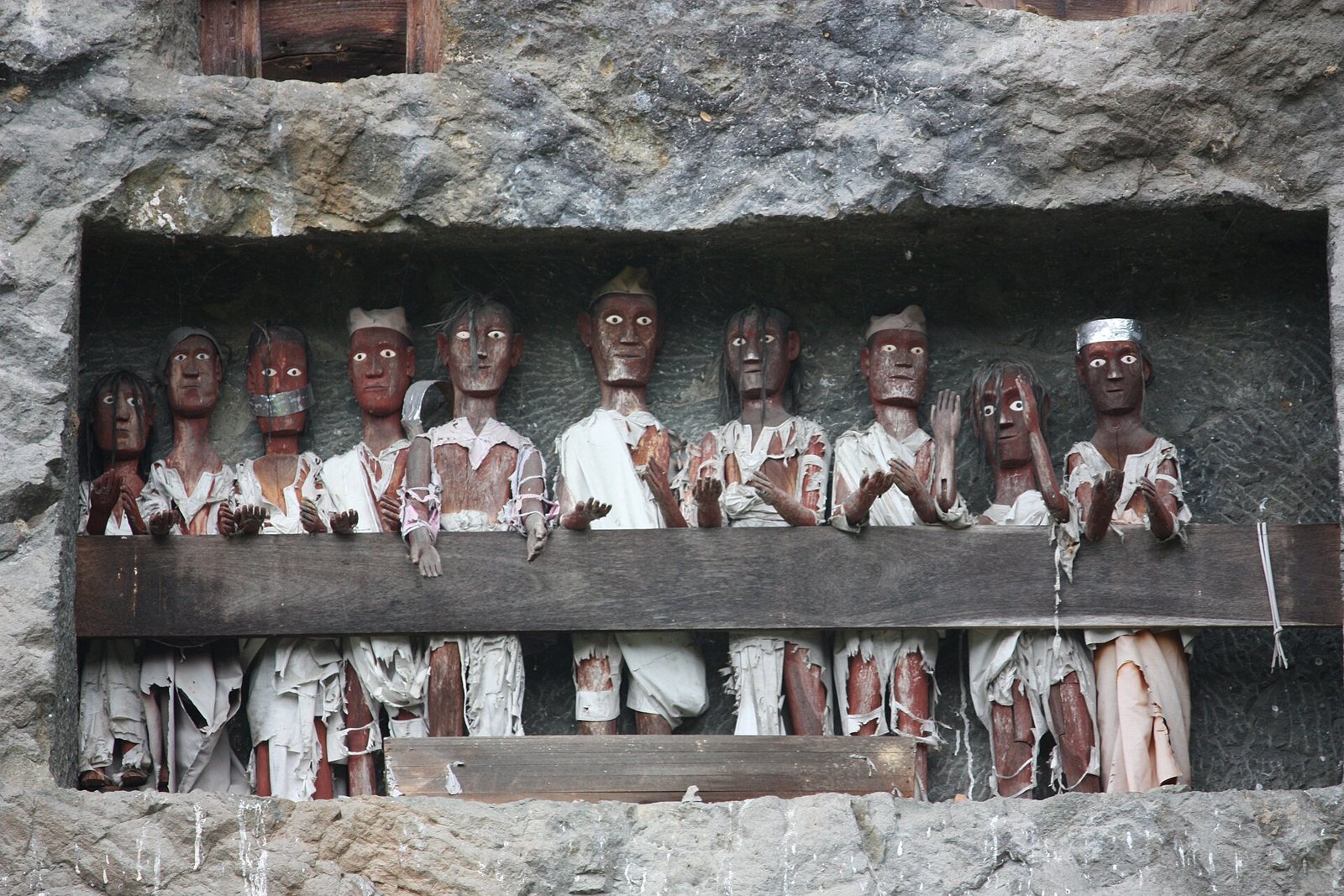
Londa, near Rantepao in North Toraja, is a burial site of natural caves and rock chambers. UNESCO's tentative-list description of the Tana Toraja Traditional Settlement records two customary arrangements there. The coffins of ordinary people were placed in caves or crevices at the foot of the hill, while people of higher rank were laid in chambers carved higher into the limestone cliff. Tau tau stand near those higher chambers. The North Toraja Regency government describes Londa as a Toraja burial cave holding coffins, bones, skulls and remains.
Lemo, described on Visit Toraja, is another cliff-burial site with galleries of ancestor statues. The tau tau are wooden figures that represent the deceased and are placed near the burial chambers. Their position, their clothing and how realistic they look can reflect the status of the person represented and changes in Torajan carving over the years.
Londa and Lemo are visited by travelers, but they are first of all graves. The skulls and coffins in the caves belong to families, and the tau tau stand for particular people.
How Christianity changed the meaning
Christianity became an important force in Toraja during the twentieth century, and the Toraja are predominantly Christian today. Conversion did not end Ma'Nene', but it did change how many families understand it.
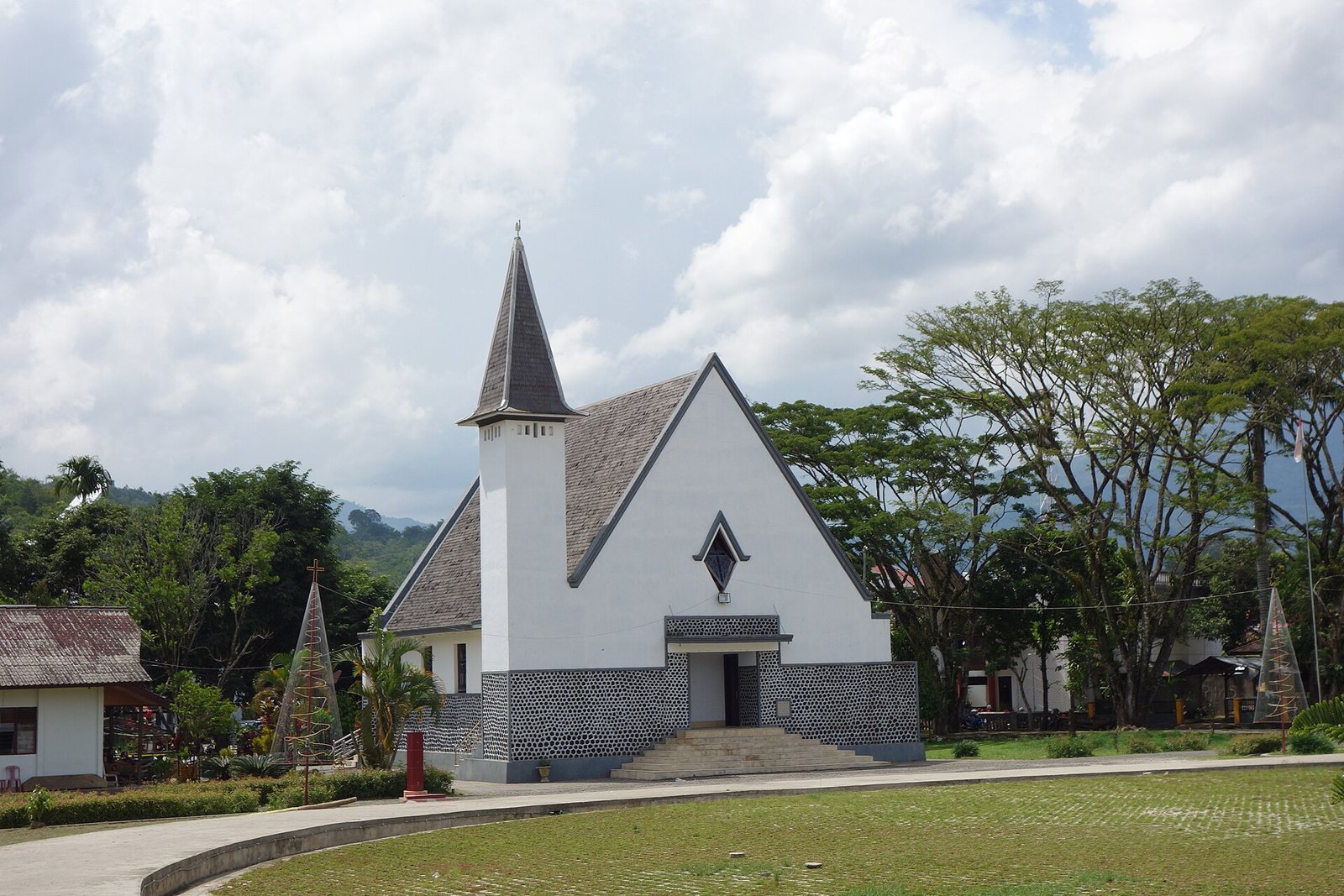
Sumiaty's study records that Christianization changed the ritual's meaning and removed or altered some practices considered incompatible with Christian teaching. After conversion, what had been given to the spirits of the dead was no longer given in the same way. What stayed was the care: cleaning, dressing, gathering, and respect for the people who came before. In Christian communities, some families now describe Ma'Nene' as remembrance, gratitude, care and cultural continuity rather than as a gift to spirits.
That is why the common question "is Ma'Nene' religious or cultural?" does not have one answer. For some families it carries the older meanings of Aluk To Dolo, for others it is a Christian act of remembrance, and for many it is part of what it means to be Torajan. Families answer that question for themselves.
Tourism and the camera
Much of what the wider world knows about Ma'Nene' comes from photographs, and that is part of a longer history of Toraja and tourism.
Cultural Survival records that Indonesian government policy in the late 1960s promoted tourism in Tana Toraja as a way to earn foreign exchange, and that Toraja sculpture was being exhibited in major North American museums by 1981. The anthropologist Kathleen Adams, whose long-term work is collected in Art as Politics, describes how Toraja people have used art, museums, monumental sites, UNESCO heritage ideas and the internet to negotiate their identity and the changes around them.
Tourism has brought income and visibility. It has also put pressure on families to balance their own authority over a ceremony with religious change, cultural continuity and the expectations of visitors with cameras. A family ritual photographed by a stranger and shared worldwide can lose its names, its village and its reasons along the way.
Some viral posts also attach claims to Ma'Nene' that have no local support, such as families routinely taking bodies to shopping malls or on public transport. The practice described by Torajan scholars and families takes place at the family grave.
If you visit Toraja
Londa is an official tourism site, and the Indonesia Travel page for Londa sets out what visitors are asked to do there. Visitors must not move bones, skulls, coffins or other objects in the tomb area. If a coffin or remains fall from the cliff, they may not be moved without customary approval and traditional ceremonies. Visitors should ask permission before bringing betel nut or flowers into the site, and a flashlight or a locally rented lantern may be needed inside the caves.
Ma'Nene' itself is a family ceremony, not a public event. There is no universal schedule to look up. Ask local families, the customary authority or a licensed local guide whether a ceremony is taking place and whether visitors are welcome, and do not enter a family ritual uninvited. Before photographing people, bodies or any part of the ritual, ask the family or the person representing the ceremony.
Visiting Toraja burial places with respect
Tap a card to bring it forward.
- Ask first: Ask before entering a family Ma'Nene' ceremony
- Follow your host: Follow the local guide or customary representative
- Leave everything in place: Do not touch, move or remove bones, skulls, coffins or grave objects
- Gifts need permission: Ask permission before bringing betel nut or flowers to Londa
- Timing comes from locals: Use a local guide or family contact for current ceremony timing
- These are ancestral places: Treat tau tau, caves and remains as ancestral places, not props
Questions people ask about Ma'Nene'
What is the Ma'Nene ritual?
Ma'Nene' is a Torajan ritual in which families clean, groom and re-dress the remains of their ancestors and tend their tombs. It is practiced in South Sulawesi, Indonesia, especially in Baruppu and North Toraja, and brings the extended family together.
Why do the Toraja dig up their dead?
Families open the graves to remember, care for and show love and respect to relatives who have died. Under Aluk To Dolo, ancestor care was also connected with family welfare, fertility and protection, and the practice is not the same in every Toraja community.
What happens to the corpse during the Toraja death ritual?
Before the funeral, some families preserve the body, dress it and keep it in or near the home, calling the person to makula, "sick," until rambu solo' is held. Later, during Ma'Nene', relatives may open the grave, clean and groom the remains, change the clothing and return the body to the tomb.
Is Ma'Nene' every three years?
Ma'Nene' is every three years for some families but not for all. It traditionally follows the rice harvest in August, and communities hold it yearly, every three or five years, or at longer intervals.
What are tau tau?
Tau tau are wooden figures that represent the dead and stand near Torajan cliff burial chambers, as at Londa and Lemo. At Londa, UNESCO records them beside the chambers carved high in the cliff for people of higher rank.
How much do you know about Ma'Nene'?
Answer every question to check.
Where to go next
The Toraja are far from the only people who keep a close, hands-on relationship with the bones of the dead. In La Paz, Bolivia, families carry their named skulls to the Cementerio General every November 8 for the Fiesta de las Ñatitas, and chapels and crypts across Europe and beyond keep the bones of whole communities, as in ossuaries around the world. For a remembrance tradition built around welcoming the dead home each year, read about Día de Muertos.
Terms in this story
Tap a term to see what it means.
Ma'Nene'. A Torajan ancestor-care ritual in which families clean, groom and re-dress the remains of their relatives and tend the tomb. It is practiced especially in Baruppu and North Toraja.