

No. 010
Fiesta de las Ñatitas: The Named Skulls of La Paz, Bolivia, and the Families Who Keep Them
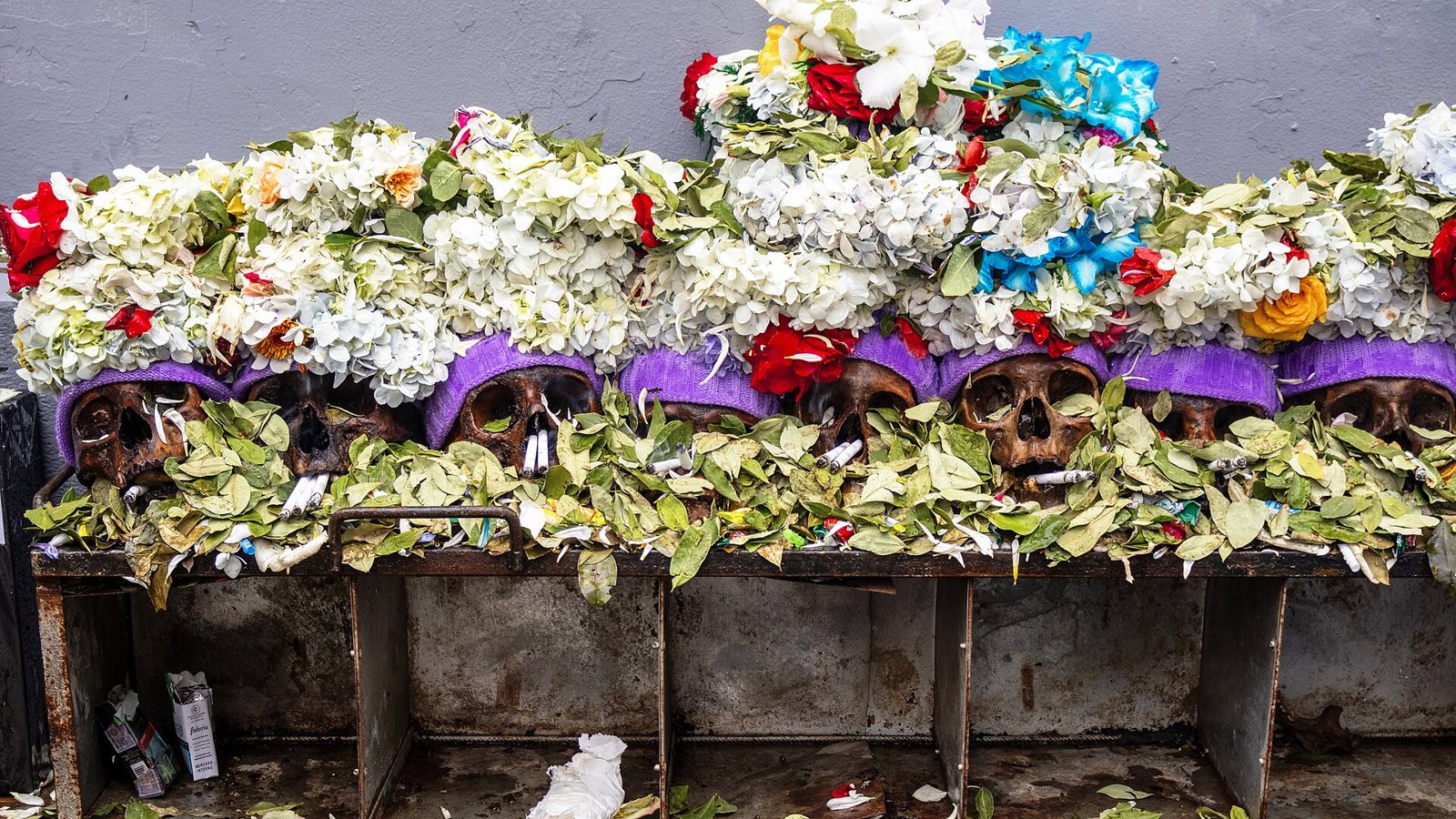
The skulls in flower crowns and sunglasses that you may have seen in photos from Bolivia are ñatitas, and the day they gather is the Fiesta de las Ñatitas. It is held in La Paz, chiefly at the Cementerio General, usually on November 8, a week after Todos Santos. Ñatitas are human skulls that families, many of them Aymara, keep at home, give names and care for as members of the household. On the festival day they carry them to the cemetery dressed in flowers, hats and sunglasses, bring them coca leaves, cigarettes, candles, food and drink, and pray, sing and ask them for protection and favors.
For the families, the skulls are not decorations. Each one is somebody.
What a ñatita is, and where the name comes from
The word itself is affectionate. *Ñatita* is a diminutive related to *ñato*, a Spanish word for someone with a short or flat nose; *ñata* is its feminine form. In Bolivia the affectionate word became the name for these skulls, as Atlas Obscura and National Geographic explain.
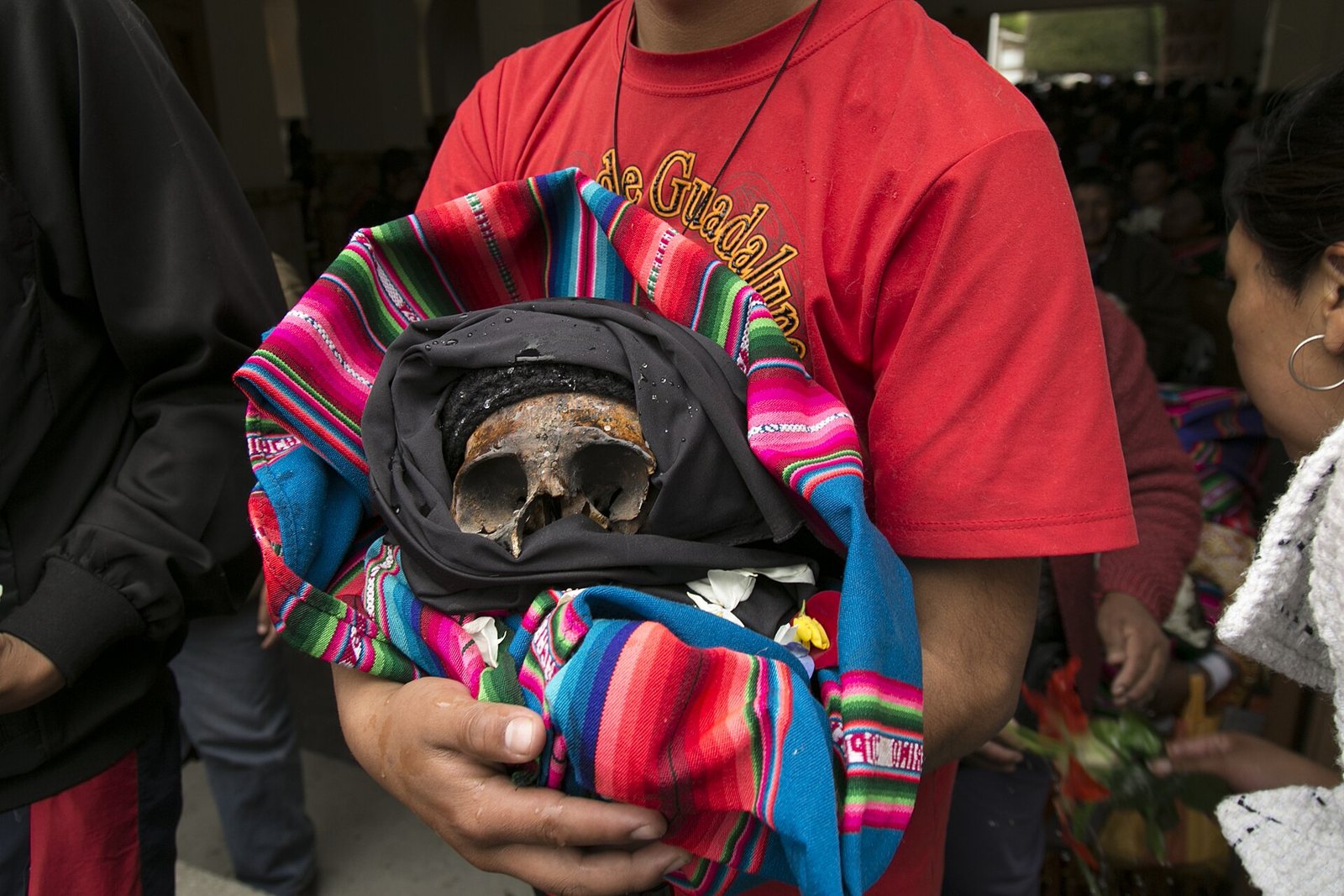
In practice, a ñatita is a skull cared for as a named, socially active dead person, especially among Aymara families in La Paz. The researcher Milton Eyzaguirre describes each skull as having its own identity within family and community relationships. A ñatita has a name, a place in the home and a relationship with the people who look after it.
A day at the Cementerio General
On the morning of the festival, families bring their ñatitas from household shrines to the Cementerio General in La Paz. The skulls arrive dressed for the occasion: flower crowns, hats, sunglasses and other personal touches chosen by the family. Around them people set out coca leaves, cigarettes, candles, food and drink. Devotees pray to the ñatitas, sing to them and ask them for protection or for favors in the year ahead.
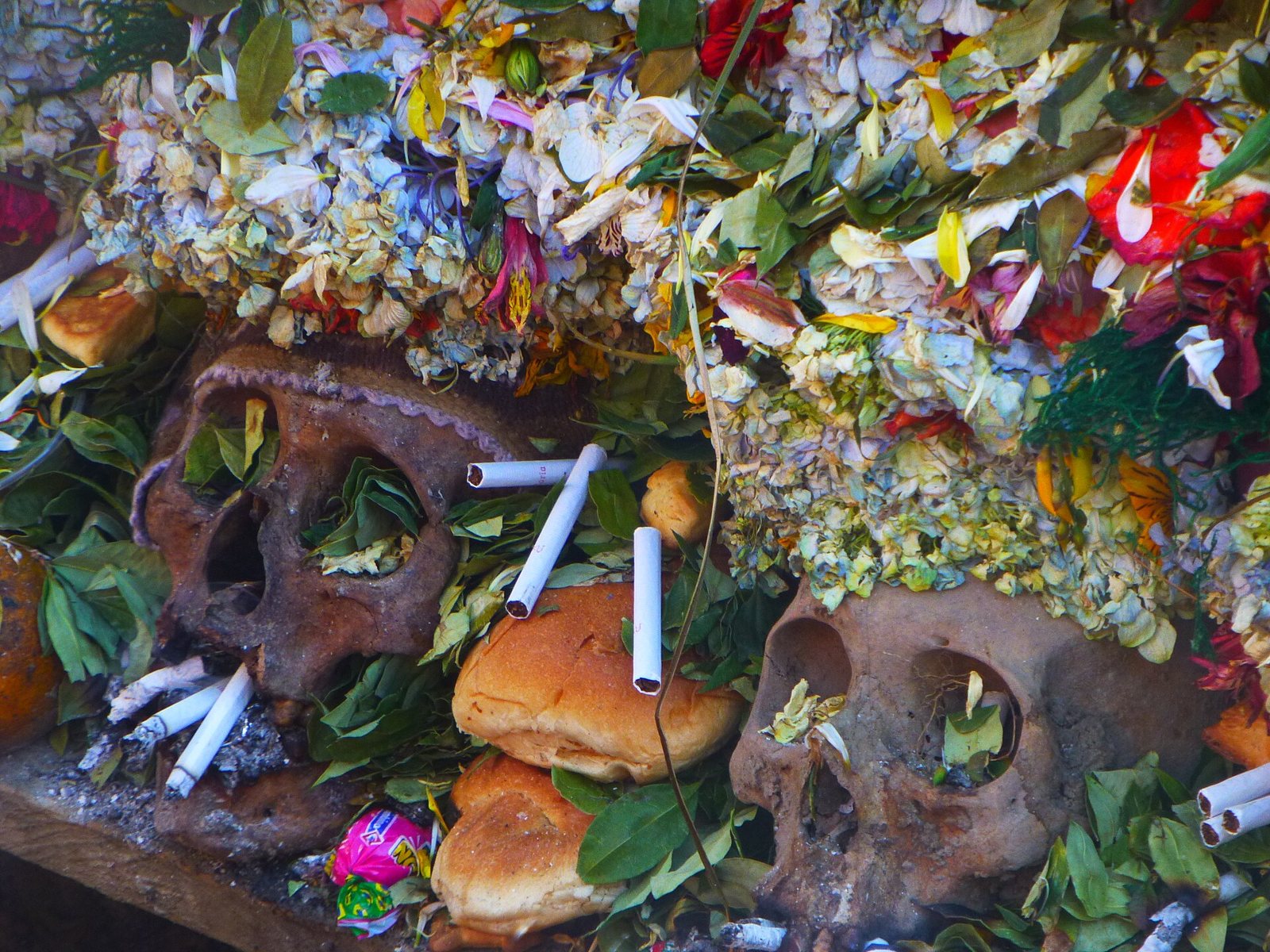
The anthropologist Gerardo Fernández Juárez, in his study "La revuelta de las ñatitas", describes the celebration as the concluding public rite of the Aymara cycle of Todos Santos, the early-November observances for the dead, which is why it falls after them. Most accounts give the date as November 8; some academic descriptions place it on the Sunday after November 1, so you may see it reported as November 8 or 9.
The crowd changes from year to year. On November 8, 2024, the Associated Press reported hundreds of devotees at La Paz's municipal cemetery, with skulls crowned in flowers and offered coca and cigarettes.
Whose skulls are they?
Some ñatitas are believed to be relatives or ancestors of the families who keep them. Many others are not. Reported examples include unidentified skulls and skulls with no family connection that came from old cemeteries, from medical schools or from other families. Devotees may give an unknown skull its name after a dream or another personal experience, as Atlas Obscura reports.
The practice varies from family to family, and there is no single story behind every skull. What the families share is the relationship: whoever the person once was, the ñatita now belongs to a household that cares for it.
Caring for a ñatita through the year
The festival is one day; the care goes on all year. Families commonly keep their ñatitas at home in a household shrine or a glass urn. They clean and arrange the shrine, light candles, set out flowers, coca leaves, cigarettes, food or drink, pray to the skull and speak to it by name. Fernández Juárez, in his ethnographic essay "Ñatitas", records Monday observances through the year.
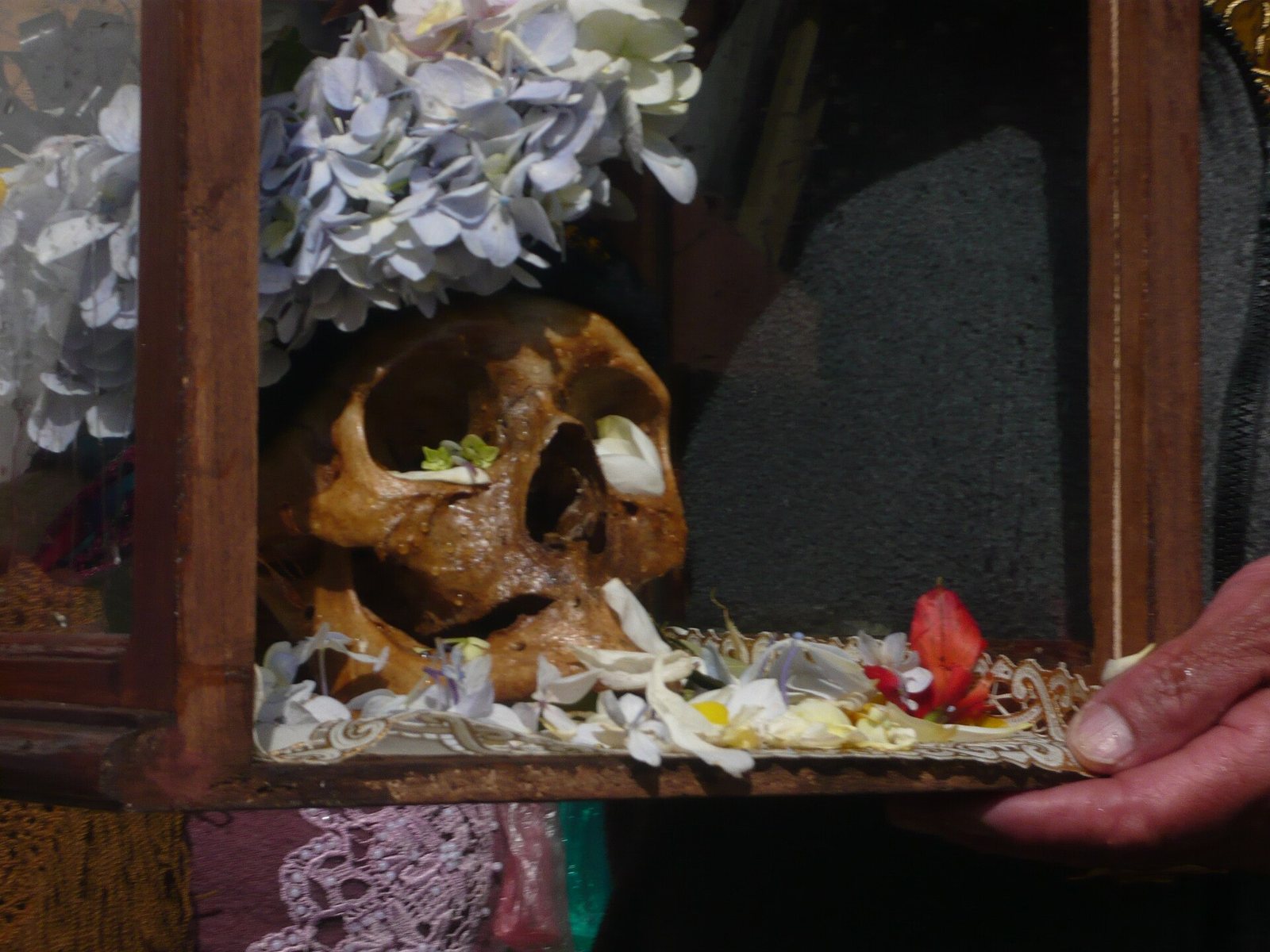
Some households keep many. In 2020, the news agency Anadolu described one La Paz family caring for 23 ñatitas in a room set aside for them, each with its own name and its own gifts. After the festival day at the cemetery, the ñatitas go back to their usual home or shrine until the next November.
Andean and Aymara roots
Scholars place the ñatitas within a long Andean history of relationships with the dead. Fernández Juárez connects the festival to Aymara communities and to the wider cycle in which the dead remain part of social and family life, including the ritual exhumation and movement of remains recorded in colonial documents and the Todos Santos practices of today. Eyzaguirre links the practice to Andean ideas in which death is bound up with life, fertility, the earth and continuing relationships between the living and the dead.
Catholic influence runs through it too, in the November calendar, Catholic prayers, chapels, Masses and blessings. Spanish colonial authorities tried to suppress Indigenous practices they considered non-Christian, and some elements carried on in altered or less public forms.
Exactly when the present festival began is unclear, and National Geographic reports Eyzaguirre's own caution on that point. Americas Quarterly reports that the earliest documented celebrations resembling it took place in Potosí in the early twentieth century, and National Geographic notes that rural-to-urban migration in the 1970s made ñatita rituals more visible in La Paz. The fairest summary is that today's festival brings together Aymara and wider Andean relationships with the dead, Catholic calendar and ritual, and the changes of city life, rather than continuing one ancient ceremony unchanged.
What the Catholic Church has said
The Church's leaders in La Paz have not accepted the practice. On November 7, 2008, Archbishop Edmundo Abastoflor of La Paz said that bringing skulls to Mass and making gifts to them was contrary to Catholic teaching, as ACI Prensa reported. In his words, such practices "no están de acuerdo con la fe y el actuar cristianos" (are not in keeping with Christian faith and conduct). He told priests not to accept Mass intentions for the ñatitas, asked them to teach that remains should not be taken from graves into churches, and said the dead should be left to "descansen en paz," to rest in peace.
The devotees' practice and the Church's position have met at the cemetery chapel ever since. In 2008 a cemetery priest eventually celebrated a service after devotees protested. In 2009 the chapel announced that Masses for ñatitas were prohibited. In 2017 the Bolivian news agency ANF reported that no Mass was held for the skulls, and devotees used holy water themselves. In 2024 the AP described the custom as one the Catholic Church does not recognize.
How the festival has changed
Over the twentieth century the celebration grew more visible in La Paz, and by the 2000s and 2010s journalists, photographers, scholars and city cultural officials were documenting it often. Crowd sizes are reported estimates rather than official counts: a 2016 account put attendance above 10,000, and Americas Quarterly cited an estimate of 12,000 for an earlier festival.
The COVID-19 pandemic interrupted the public gathering. In 2020, Anadolu reported, the cemetery celebration was suspended and a smaller religious observance was held elsewhere. In November 2022, Red Uno reported the public festival back after two years with thousands attending, and Radio Integración described the city's restrictions that year on alcohol, food, furniture and crowding.
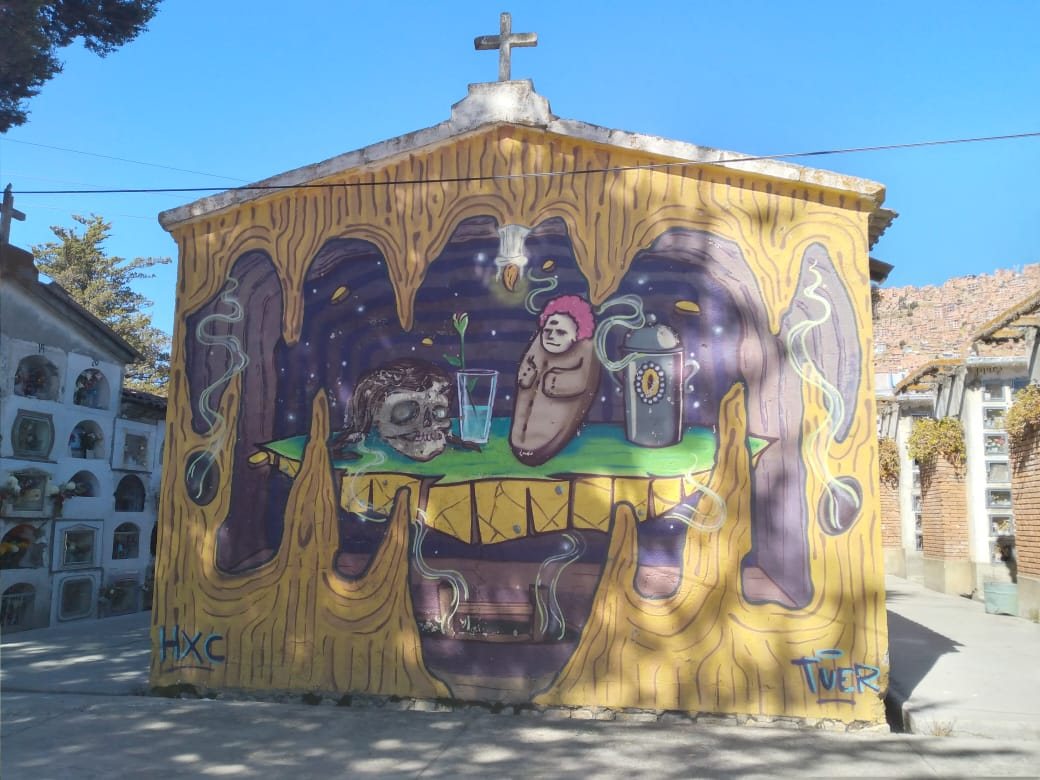
The city has also begun to present the cemetery itself as heritage. On October 31, 2023, the La Paz municipal government announced 14 new murals at the Cementerio General, with themes from gifts for the dead to the ñatitas, and presented the cemetery as a cultural and tourist site.
Tourism and cameras have grown, but the festival is still kept by families and devotees who have cared for their ñatitas all year. If you hope to attend, confirm the current cemetery schedule, capacity, photography rules and any fees with the Cementerio General or the La Paz municipality before you go.
The ñatitas of La Paz through time
Tap or hover a step to follow the order.
Sixteenth and seventeenth centuries
Colonial records document efforts to suppress Andean exhumation and mortuary practices
Early twentieth century
The earliest documented celebrations resembling the festival take place in Potosí
1970s
Rural-to-urban migration makes ñatita rituals more visible in La Paz
November 7, 2008
Archbishop Edmundo Abastoflor calls the practice contrary to Catholic teaching
2020
The cemetery gathering is suspended during the COVID-19 pandemic
November 2022
The public festival returns after two years, with city restrictions
October 31, 2023
La Paz presents 14 new murals at the Cementerio General, including the ñatitas
November 8, 2024
The AP reports hundreds of devotees at the cemetery
Questions people ask about the ñatitas
These answers add a few details to the story above.
What is a ñatita?
A ñatita is a human skull that a family or community in Bolivia, especially in La Paz, names, cares for and treats as a presence connected with the living. The Fiesta de las Ñatitas brings these skulls to the Cementerio General each November with flowers, coca, cigarettes, candles and prayers.
What does ñata mean in Bolivia?
*Ñata* is the feminine form of *ñato*, a Spanish word or nickname for someone with a short or flat nose. In the affectionate diminutive *ñatita*, it is the name Bolivians use for the human skulls honored in this devotion.
When is the Fiesta de las Ñatitas?
The Fiesta de las Ñatitas is usually held on November 8 at the Cementerio General in La Paz, one week after Todos Santos. Some academic descriptions place it on the Sunday after November 1, so it may be reported as November 8 or 9.
Are the skulls real?
Yes, ñatitas are real human skulls. Some are believed to be family members or ancestors, while others are unidentified skulls that came to a family from an old cemetery, a medical school or another household.
Are ñatitas family members?
Some are, and many are not, but every ñatita is treated as part of the household that keeps it. Families give unknown skulls names, sometimes after a dream, and care for them the way they would care for a relative.
The Fiesta de las Ñatitas
Answer every question to check.
Where to go next
Other traditions keep their dead close in November too, each in its own way. Our guide to the Day of the Dead by region follows how Mexican communities mark the season. For another tradition of named and adorned remains, read the story of Europe's catacomb saints, and for places where bones are kept and arranged with care, see ossuaries around the world.