No. 009
Catacomb Saints: Who the Jeweled Skeletons of Europe Were and Why They Were Decorated
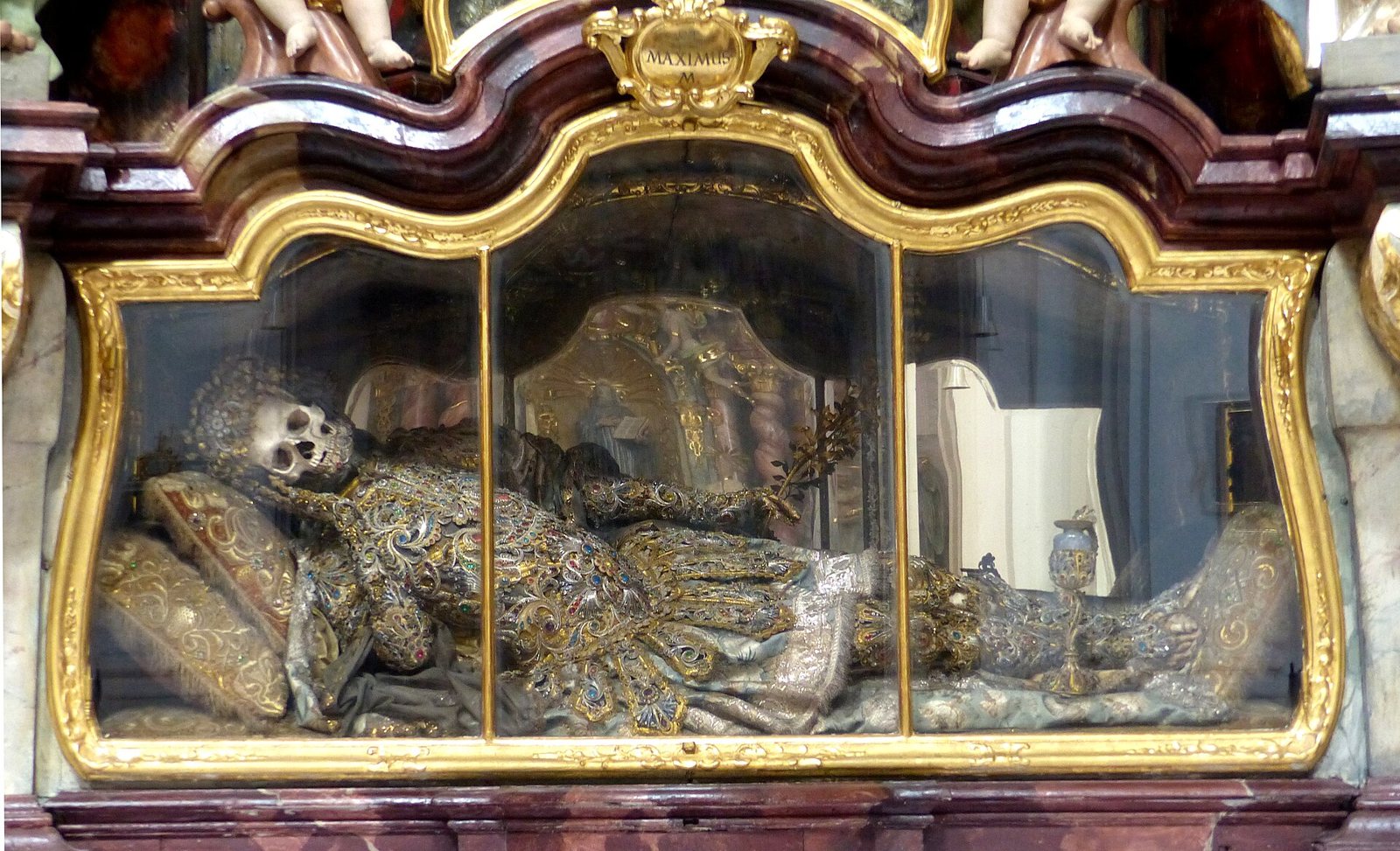
The jeweled skeletons you may have seen in photos of European churches are the catacomb saints, in German *Katakombenheilige*. They are ancient human remains taken from the catacombs of Rome after news of their rediscovery spread in 1578, then sent north, mostly to Catholic churches and religious houses in German-speaking Europe, where they were honored as early Christian martyrs. Most of the people are anonymous; the Church gave them their names. They were dressed in silk, gold, gems and armor for two reasons: to show them as glorified bodies after the resurrection, as the historian Günter Dippold explains, and to give churches that had lost their relics in the Reformation visible saints of their own again.
What a catacomb saint is
A catacomb saint is a set of remains from one of Rome's ancient underground burial places, identified by Church authorities as the body of an early Christian martyr and given to a community elsewhere in Europe. According to the publisher's description of Paul Koudounaris's book *Heavenly Bodies*, the movement began after news spread in 1578 of an underground Roman burial complex. Church authorities and local Catholic communities treated many of the remains found there as martyrs, gave them names and sent them north, especially to German-speaking lands. The practice lasted from the late sixteenth century into the nineteenth.
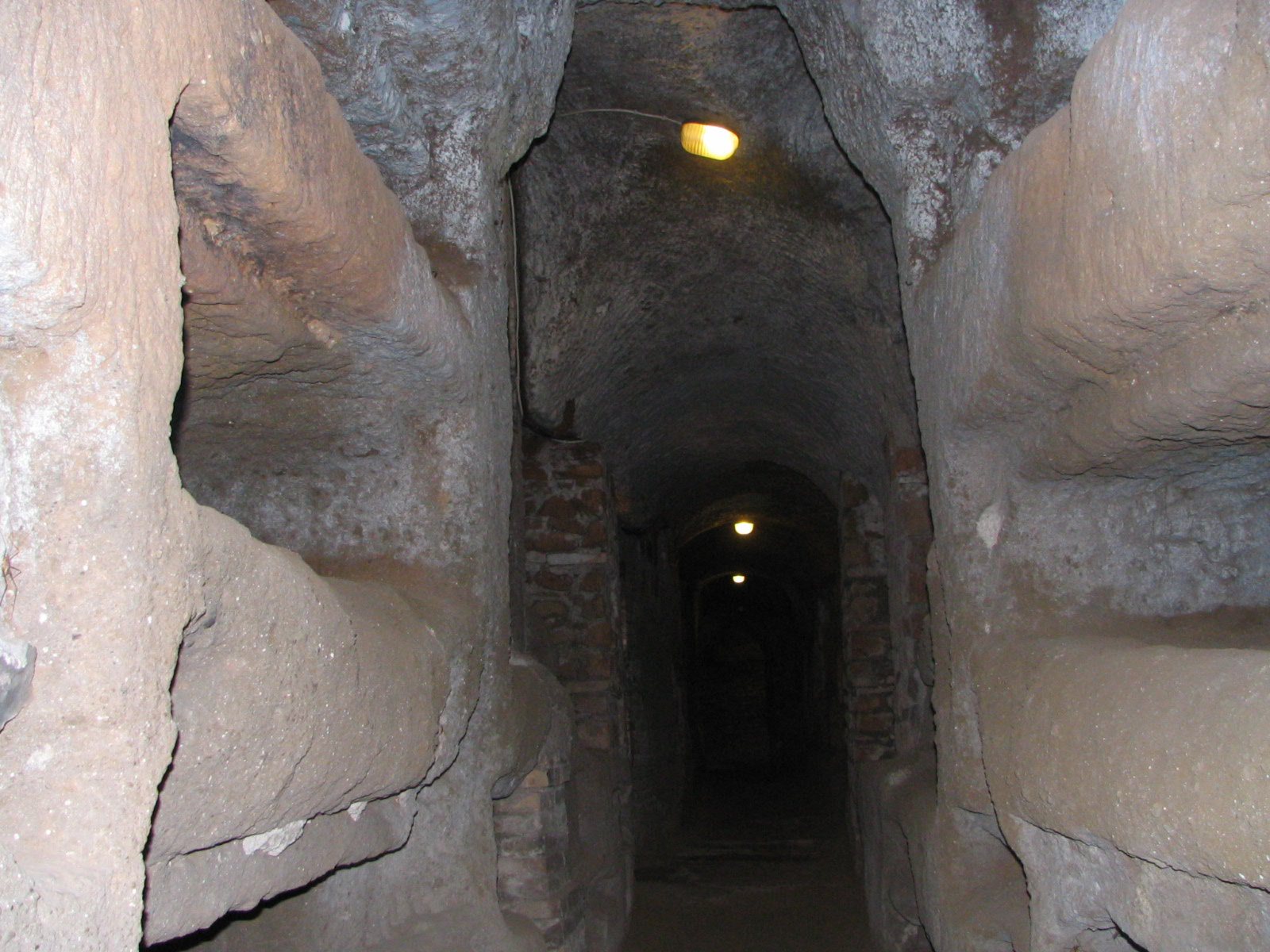
The numbers were large. The historian Trevor Johnson documented their distribution across Bavaria in his article "Holy Fabrications", and Noria Litaker, in her book *Bedazzled Saints*, traces nearly 400 "holy bodies" sent from the Roman catacombs to Bavaria alone between 1590 and 1803.
Who these people were in life is, for most of them, unknown. Koudounaris, as the Rijksmuseum's summary of his book notes, emphasizes that many identities were never established historically. The names they carry today were given to them as relics.
Why towns wanted them after the Reformation
To understand why a town in Bavaria or Switzerland would send to Rome for a skeleton, it helps to remember what the sixteenth century had done to northern European churches. Protestant reformers and iconoclast movements had removed or destroyed many images, shrines and relics. For Catholic communities, a complete body from Rome could restore a church's sacred standing, connect the local people directly to the first Christians and give them a focus for processions, feast days and pilgrimage. During the Counter-Reformation, the Holy Bodies also became a visible statement of Catholic identity.
Getting one was a religious act and a civic one. Communities welcomed the bodies with processions, set them on prominent altars and sometimes adopted them as local patrons. Litaker shows that Bavarian religious and secular communities alike invested a great deal of labor and money in turning incomplete remains into whole-body saints, and an Associated Press report from Banz, quoting Walter Ries, follows the same story in one Bavarian church. A major relic could raise a church's status and draw pilgrims.
Arrivals that felt like festivals
The arrival of a Holy Body was a public event. In 1647 the remains called Leontius were carried from Rome to the Benedictine abbey church at Muri, in Switzerland, in a solemn procession that the historian Urs Amacher documents in his book *Der Katakombenheilige Leontius von Muri*. On September 26, 1694, parish groups processed to Vornbach to welcome the catacomb saint Clarus into Bavaria, as Litaker describes in her chapter on translation processions.
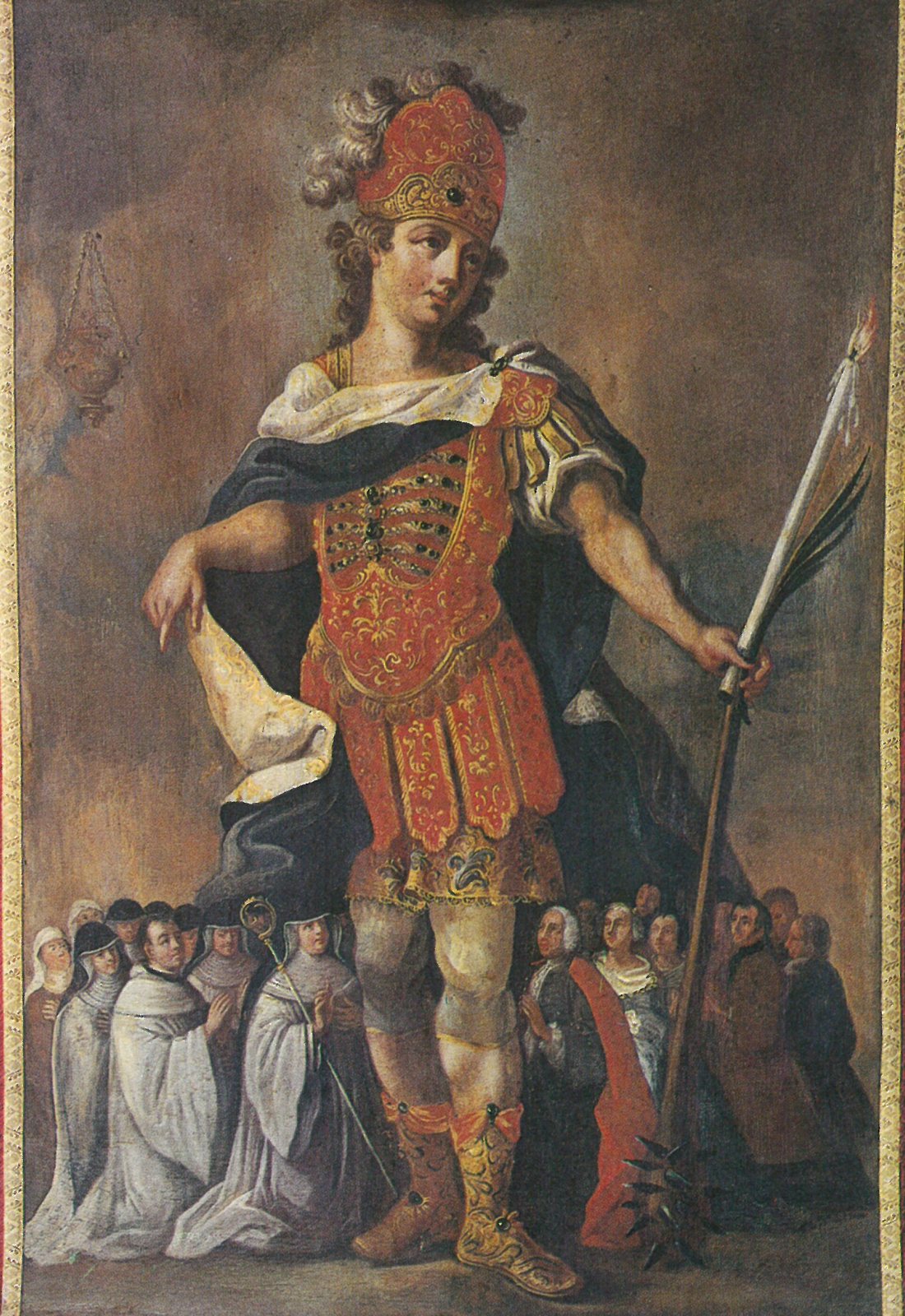
Some churches gathered their saints over generations. At Waldsassen, in Bavaria, the first Holy Body arrived in 1688 and the tenth in 1765, according to a study of the basilica by Koudounaris hosted by Duke University. That is nearly eighty years of waiting, receiving and decorating.
The catacomb saints, 1578 to 1803
Tap or hover a step to follow the order.
1578
News spreads of the rediscovery of Roman catacomb burial chambers
1590 to 1803
Nearly 400 holy bodies are transferred to Bavaria
1647
Leontius is brought from Rome to Muri, Switzerland, in a solemn procession
1688
The first Holy Body arrives at Waldsassen
September 26, 1694
Parish groups process to Vornbach to welcome Clarus
1756
Waldsassen's Holy Bodies celebration is approved
1765
The tenth Waldsassen body arrives
1802 to 1803
Bavarian secularization closes monasteries and disrupts many relic displays
Who decorated them, and how
The bones did not arrive looking like the figures in the photographs. Turning them into saints was careful, collaborative work, much of it done by nuns trained in preparing relics. As Angela Hesson describes in her essay "Catacomb Saints", they stabilized and assembled the bones using animal glue, wire, gauze, wax, wood and papier-mâché. The Dominican sisters of Ennetach, in southern Germany, were especially skilled at it, articulating the bones and applying the textiles.
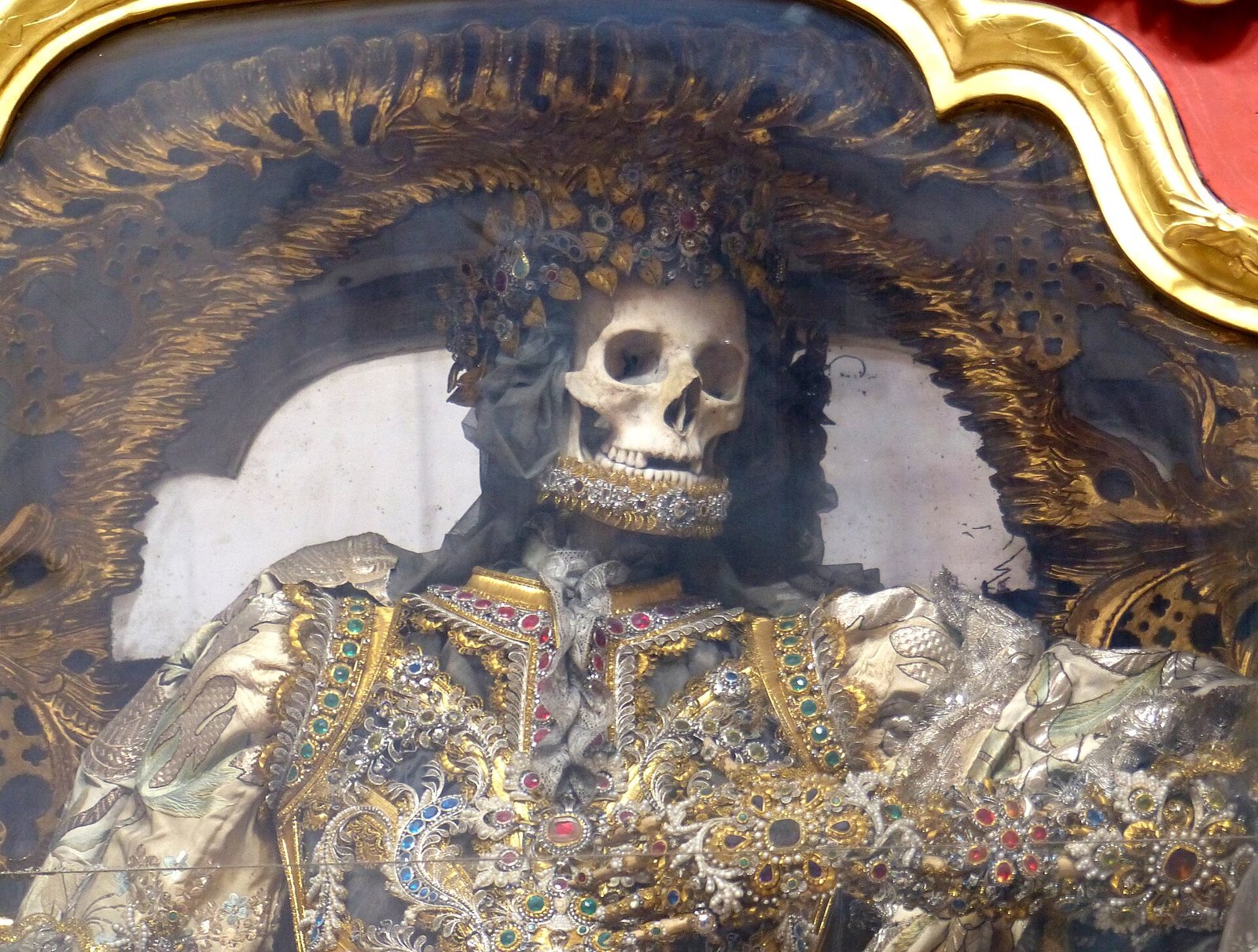
Goldsmiths and metalworkers then added filigree, textiles, crowns, armor, glass, pearls and gemstones. At Waldsassen, a trained goldsmith and lay brother named Adalbart Eder decorated ten bodies with jewels, embroidered finery and metalwork. At Banz, in Bavaria, nuns from nearby Bamberg decorated four skeletons brought from Rome in the late seventeenth and eighteenth centuries, the AP reports.
The finished saints were posed as complete figures rather than left as loose bones.
How a Holy Body was dressed
Tap a card to bring it forward.
- Animal glue, wire and gauze: Used by trained nuns to stabilize and join the bones
- Wax, wood and papier-mâché: Used to build up and support the figure
- Silk or brocade with gold and silver thread: The saint's clothing
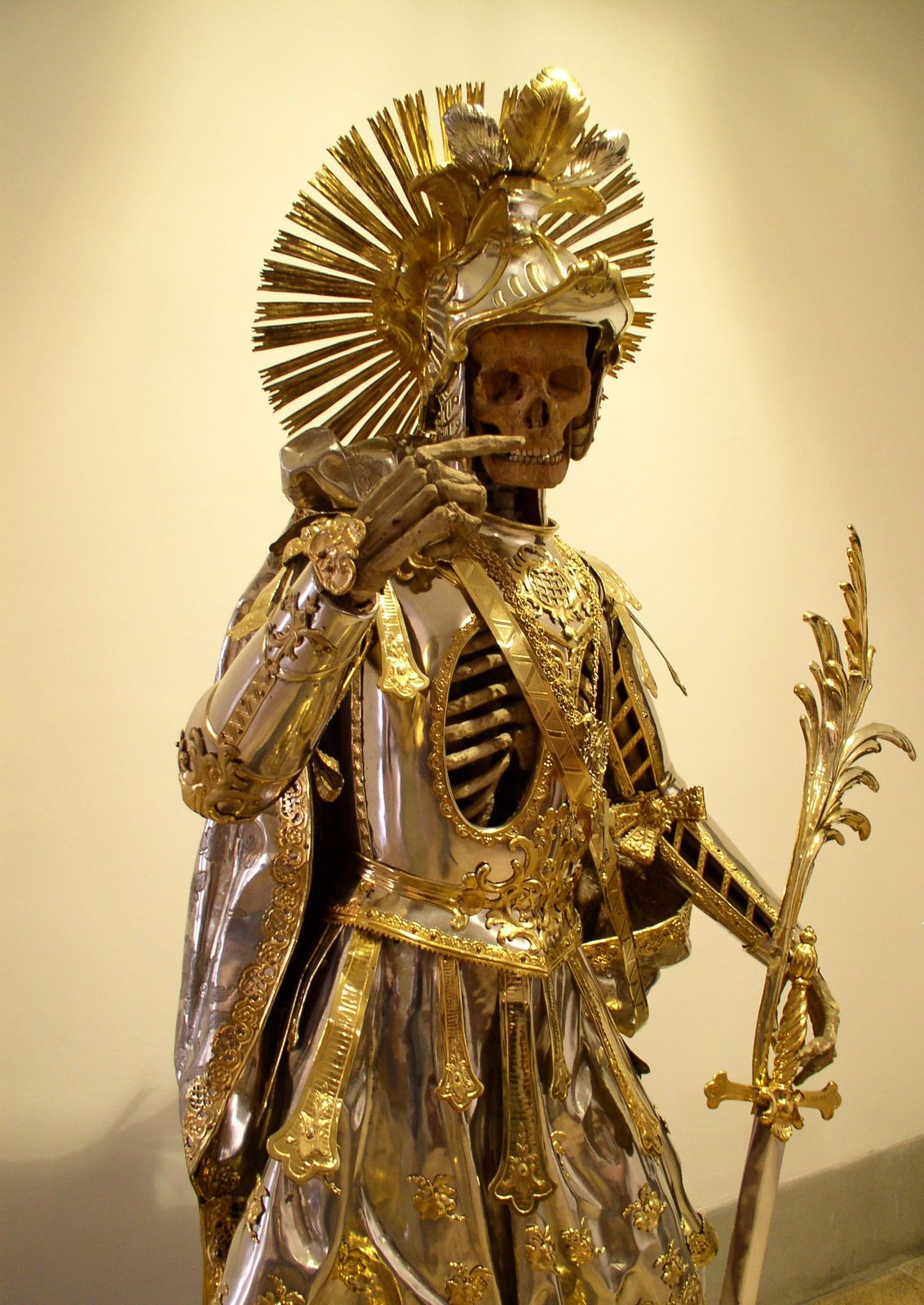
- Wigs, crowns, swords and armor: Marks of a glorified, courtly figure
- Jeweled eyes, glass, pearls and gemstones: Added by goldsmiths and metalworkers
- Martyr's palm: The traditional sign of a martyr
What all the finery meant
The jewels can look like extravagance to modern eyes, but they carried a religious message. The historian Günter Dippold explains, in the AP's report from Banz, that the richly adorned bodies were meant to represent glorified bodies after the resurrection, not corpses dressed up for spectacle. The silk, gold and armor showed the saint as Catholics believed the saint now was: complete, honored and in glory. The martyr's palm marked each one as a martyr.
Decline in the eighteenth and nineteenth centuries
Taste and belief shifted. Enlightenment criticism, Catholic reform, secularization and changing attitudes toward relics all challenged the practice of presenting anonymous bones as named saints. Some Holy Bodies were taken down from their altars, hidden in crypts or vaults, stripped of their decoration, sold, buried or destroyed.
In Bavaria, the secularization of 1802 and 1803 closed monasteries and led to the sale or removal of many church furnishings, as Litaker describes in her chapter on the modern era. At Rottenbuch in 1803, state officials recommended removing or selling shrines containing "purportedly holy bodies, bones, heads."
Not every community gave them up. Some local devotions continued, and surviving bodies remain in churches in Bavaria, Austria, Switzerland, Czechia and Italy. Waldsassen kept its collection, and its Holy Bodies celebration, approved in 1756, continued into the modern period.
Where some can be seen today
The Waldsassen Basilica in Bavaria holds one of the best-known groups. The town's official tourism page says the basilica contains twelve relics of early Christian martyrs from the Roman catacombs, displayed as richly dressed Holy Bodies, and that the church is open daily. Koudounaris's study of the basilica counts ten full-body relics in the nave. A photograph of one of the Waldsassen saints by K.Baas is available on Wikimedia Commons under a CC BY-SA 4.0 license.
At the former monastery church of Banz, in Bad Staffelstein, Bavaria, four Holy Bodies named Vincenzius, Valerius, Benedictus and Felix Benedictus remain on display, the AP reported in 2026. Wooden panels cover their cases for much of the year, and the bodies are shown on special occasions such as All Saints' Day.
In Switzerland, the parish church of St. Kolumban and Konstantius in Rorschach is another church to ask about, and in Wil, a parish document identifies the baroque silver reliquary of the catacomb saint Pankratius in St. Nikolaus as part of the city's religious art collection.
These are working churches and places of prayer, and some keep their saints covered except on feast days. Confirm access, display status, hours and photography rules with each parish or basilica before you visit.
Questions people ask about the catacomb saints
These questions follow naturally from the story.
Who were the Catacomb saints?
The catacomb saints were ancient human remains taken from Roman catacombs from the late sixteenth century onward and given as relics to Catholic communities, especially in German-speaking Europe. Church authorities and local communities treated them as early Christian martyrs, gave them names and displayed them as complete, richly decorated bodies. Who they were in life is, in most cases, unknown.
Are the jeweled skeletons real saints?
The skeletons are real human remains, and the jewels, textiles, wax and metalwork are real historical craftsmanship, but whether each person was a known early Christian martyr is a separate question. Many came from unidentified Roman burials, so a name, life and martyrdom cannot be established from the bones alone. The Church identified them as relics, which is why they are called catacomb saints or Holy Bodies; the Vatican's instruction *Relics in the Church: Authenticity and Conservation* sets out the Church's current approach to relics.
Why are the skeletons covered in jewels?
The jewels presented each saint as a glorified body after the resurrection, according to the historian Günter Dippold. They also showed how much a community valued its saint, since towns and religious houses invested heavily in the decoration.
Where can you see the catacomb saints?
Surviving Holy Bodies remain in churches in Bavaria, Austria, Switzerland, Czechia and Italy. Well-known examples include the Waldsassen Basilica and the former monastery church of Banz in Bavaria, where the saints are usually covered and shown on special occasions.
The catacomb saints
Answer every question to check.
Where to go next
The catacomb saints are one of several ways Catholic Europe has kept its dead in view. The friars' bone chapel in Rome is told in the story of the Capuchin Crypt, and our guide to ossuaries around the world visits other places where bones are arranged with care. For the skull's long role in Christian art and devotion, read skulls in Christianity.