

No. 152
San Bernardino alle Ossa: Whose Bones Line Milan's Bone Chapel, and How to Visit
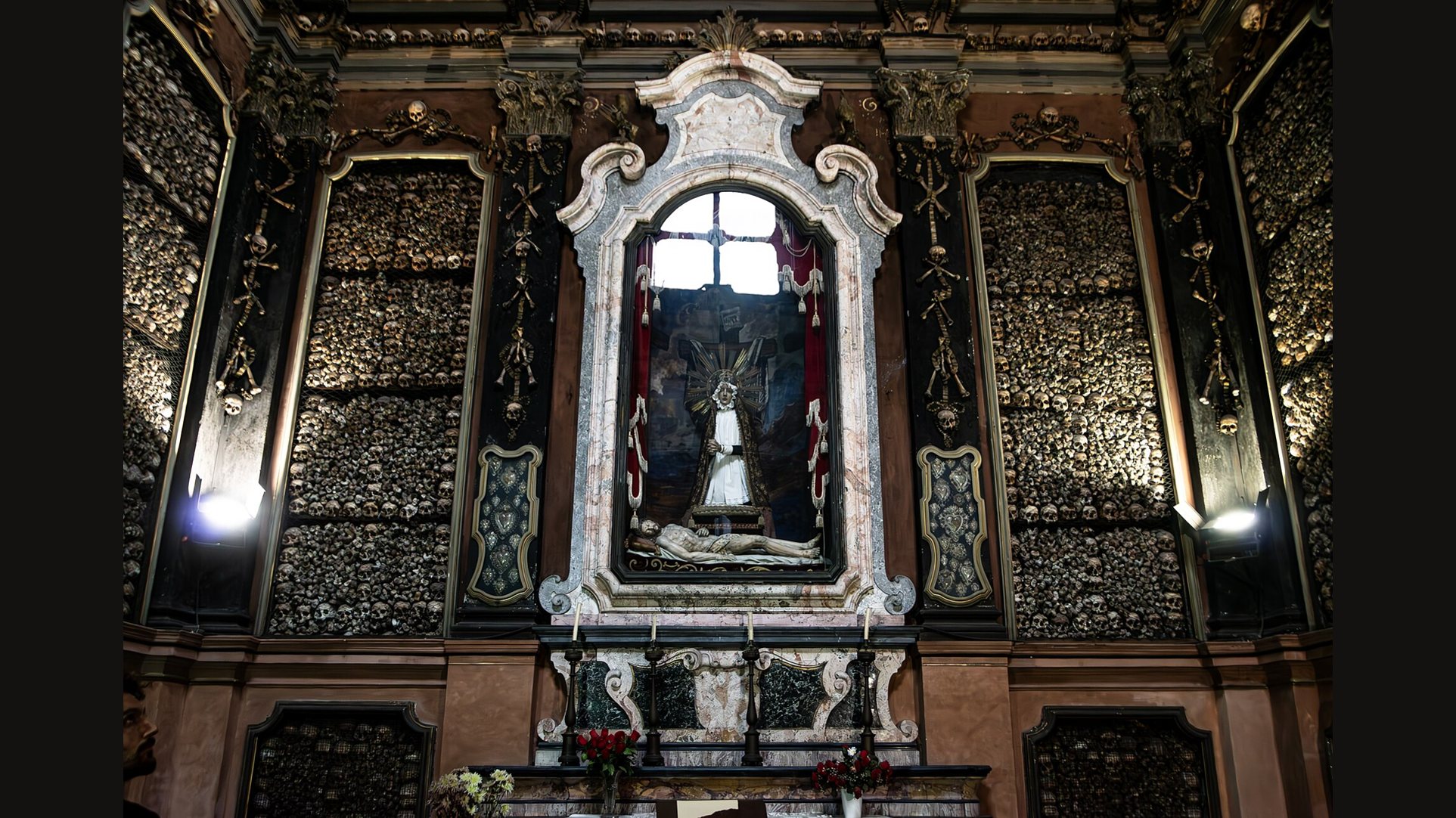
Milan's bone chapel is the ossuary of the Sanctuary of San Bernardino alle Ossa, on Piazza Santo Stefano. Its walls are decorated with human remains from several local burial grounds: people who died in the old hospital near Santo Stefano, the priors and brothers who ran that hospital, people executed by beheading, prisoners, members of Milanese noble families and canons of the church of Santo Stefano (San Bernardino alle Ossa official history). It began in 1210 as a chamber for bones from the hospital's overcrowded cemetery, and its ceiling is a Baroque fresco by the Venetian painter Sebastiano Ricci. Admission is free, and the ossuary is closed on Sundays.
That is the short answer for anyone who has heard about "the church with skulls" and wants to know what they are about to see. The longer story runs through more than five hundred years of the city's history, and it explains why the bones sit where they do, who painted the souls rising overhead and why a little girl's skeleton has a legend of her own.
A hospital, a cemetery and a room for bones
The story starts with care for the sick. According to the sanctuary's official history, a hospital was founded near Santo Stefano in 1145 by the Milanese benefactor Gotifredo da Busserò. Its cemetery soon became too small, and in 1210 a chamber was built to hold the bones exhumed from that cemetery (official history).
A small church followed beside the ossuary in 1268. In 1340 the Disciplini, a lay confraternity, received permission to build an oratory above it. From then on, the bone chamber, the church and the confraternity grew up together on the same site.
Collapse and rebuilding, 1642 to 1696
In 1642 the bell tower of Santo Stefano collapsed, and its fall damaged both the ossuary and the church. What visitors see today is largely the result of the rebuilding that followed.
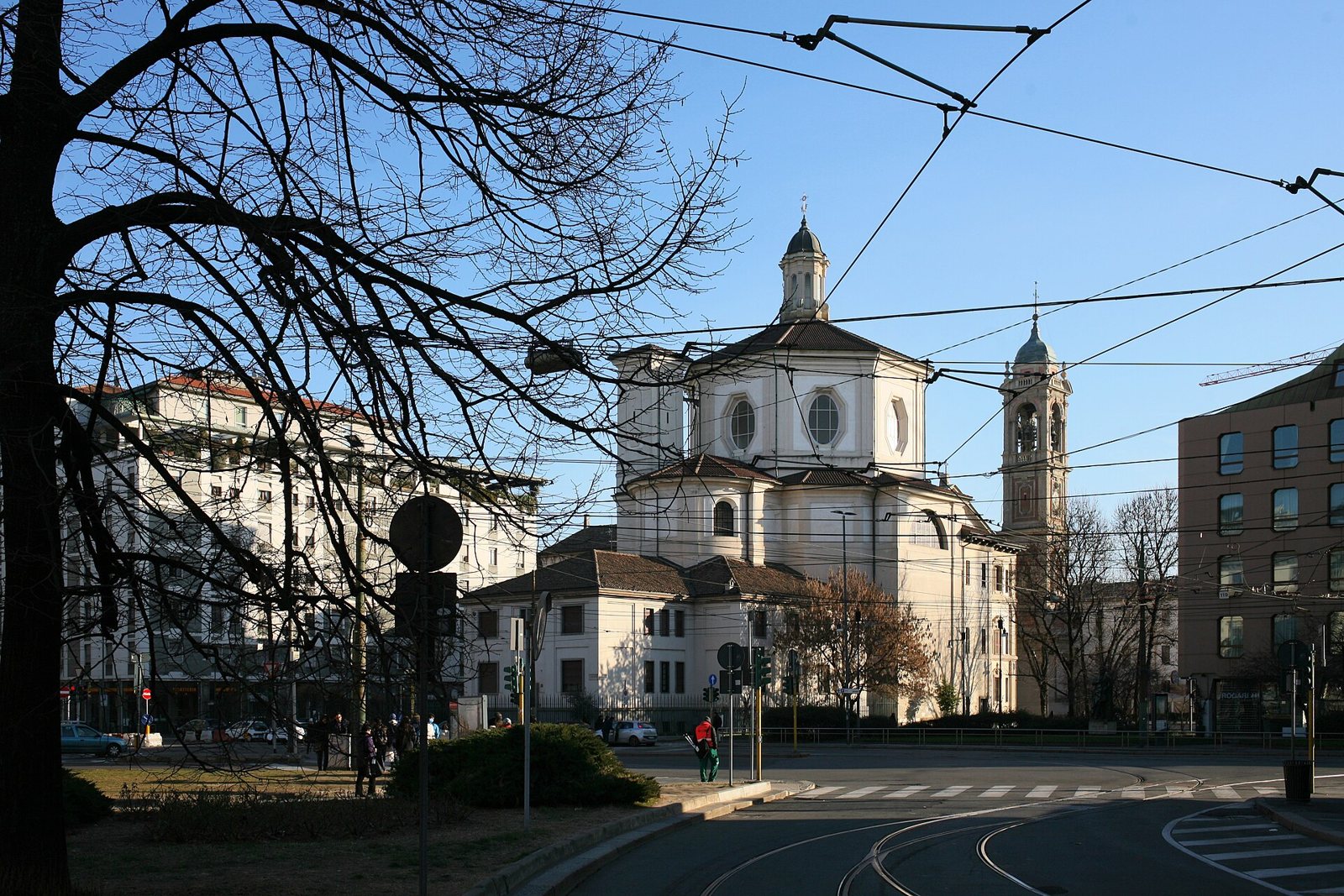
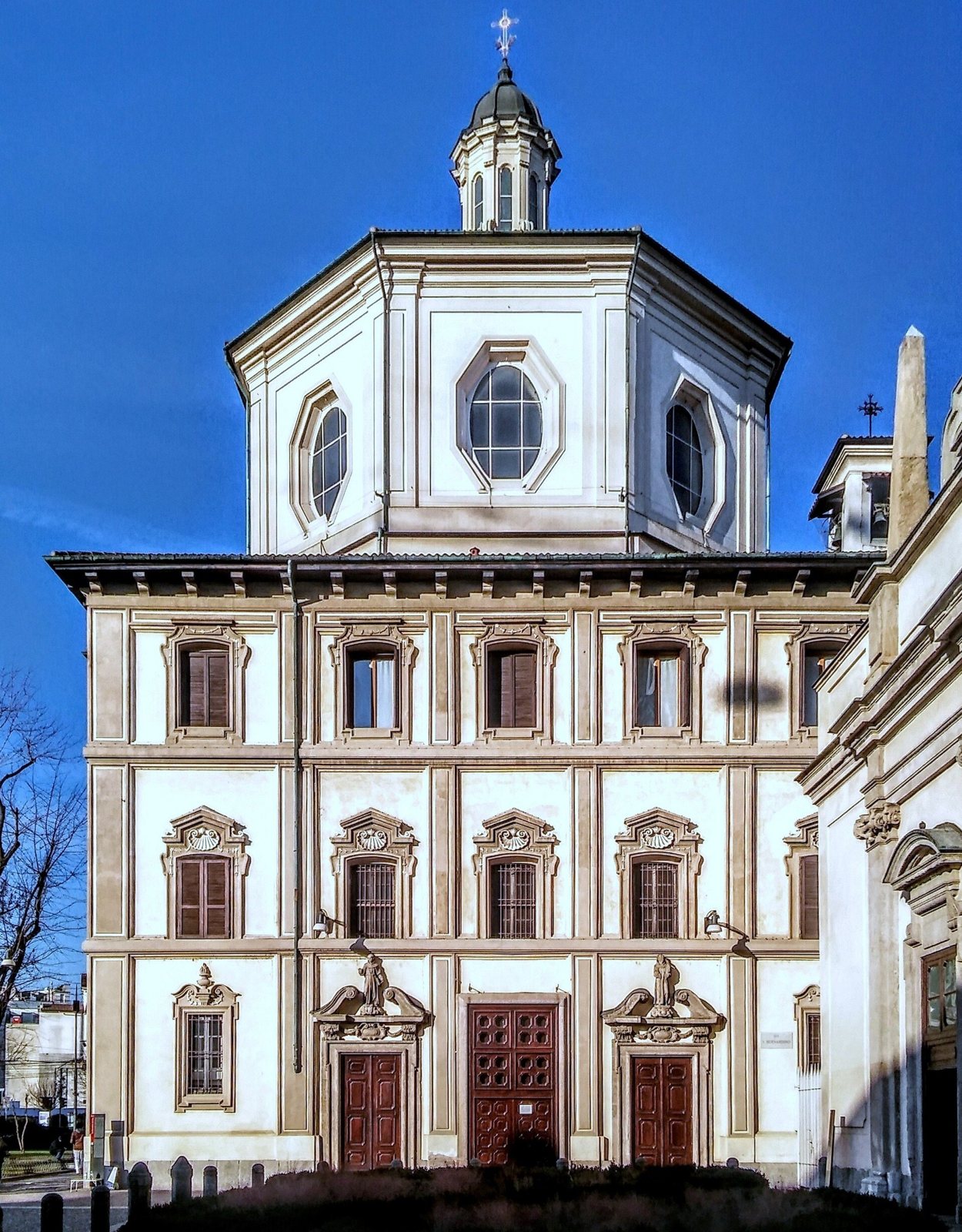
The church was rebuilt. The Italian Catholic Church's inventory of its buildings dates the church facade and the confraternity headquarters, designed by Andrea Biffi, to 1679 to 1680. That is the date often quoted for the "rebuilt" chapel, and it belongs to the facade project. The ossuary itself was reconstructed from its foundations and completed in 1695, according to the sanctuary's history; the inventory dates its reconstruction to 1695 to 1696 (Italian Catholic Church inventory). Between 1750 and 1754 a larger church was built, and the earlier church was incorporated as its atrium.
San Bernardino alle Ossa, 1145 to 1754
Tap or hover a step to follow the order.
1145
Hospital founded near Santo Stefano by Gotifredo da Busserò, according to the sanctuary's official history.
1210
Bone chamber built beside the cemetery after the cemetery became too small.
1268
Small church built beside the ossuary.
1340
The Disciplini confraternity receives permission to build an oratory above the church.
1642
The Santo Stefano bell tower collapses, damaging the ossuary and church.
1679 to 1680
Church facade and confraternity headquarters built under Andrea Biffi.
1693 to 1694
Sebastiano Ricci paints the cupola and pendentives.
1695 to 1696
Ossuary reconstructed.
1750 to 1754
Larger church built, with the earlier church incorporated as its atrium.
Whose bones line the walls?
The bones belong to many people, gathered from several burial places around Santo Stefano. The sanctuary's official account names the groups represented in the ossuary:
- people who died in the hospital;
- the priors and brothers who administered the hospital;
- people executed by decapitation;
- prisoners who died after the prison cemetery became too small in 1622;
- members of Milanese noble families buried in nearby family tombs;
- canons of Santo Stefano.
When the hospital closed in 1652, its cemeteries were closed too, and the bones exhumed from them were combined with the remains already in the earlier ossuary (official history). So, the walls hold a cross-section of old Milan: the sick and those who ran their hospital, the condemned and the noble, priests and prisoners, side by side.
They are not the remains of a single event, a battle or a plague, and they are not martyrs. They are the ordinary and not-so-ordinary dead of one neighborhood, moved here over centuries so that the living had room to bury their own.
How the bones are arranged
The bones were placed with care. According to the sanctuary, they were set in niches, along the cornice that runs around the walls, around the pillars and around the doors (official history). The Italian Catholic Church inventory describes the wall decoration as deliberate patterns worked into the chapel's design, so that the bones follow the lines of the room itself (Italian Catholic Church inventory). One arrangement sets skulls in the shape of a crucifix.
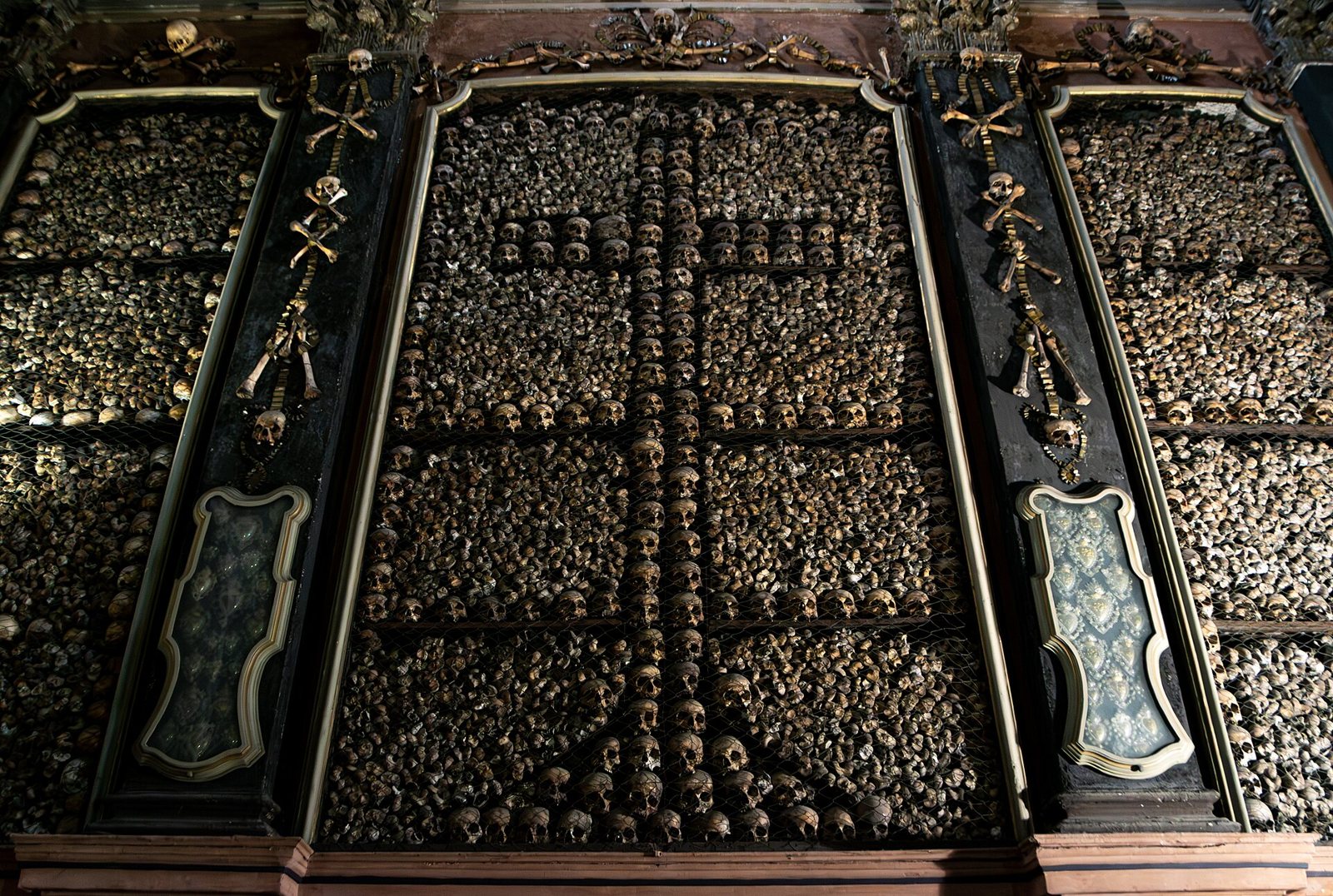
People often ask why the bones were arranged like this rather than simply stored. The answer lies in what the room was for. The remains had to be kept somewhere, and setting them into the niches, cornice, pillars and doorways made the chapel's own structure part of a memorial, inside a place of worship. Rome's Capuchin Crypt, the Sedlec Ossuary and the Chapel of Bones in Évora are other chapels where bones became part of the decoration, and the thought they share has a name of its own: memento mori.
Sebastiano Ricci's ceiling
Look up, and the mood of the room changes. The Venetian painter Sebastiano Ricci decorated the ossuary's cupola and its pendentives, the curved triangles that carry the dome, in 1693 and 1694 (official history).
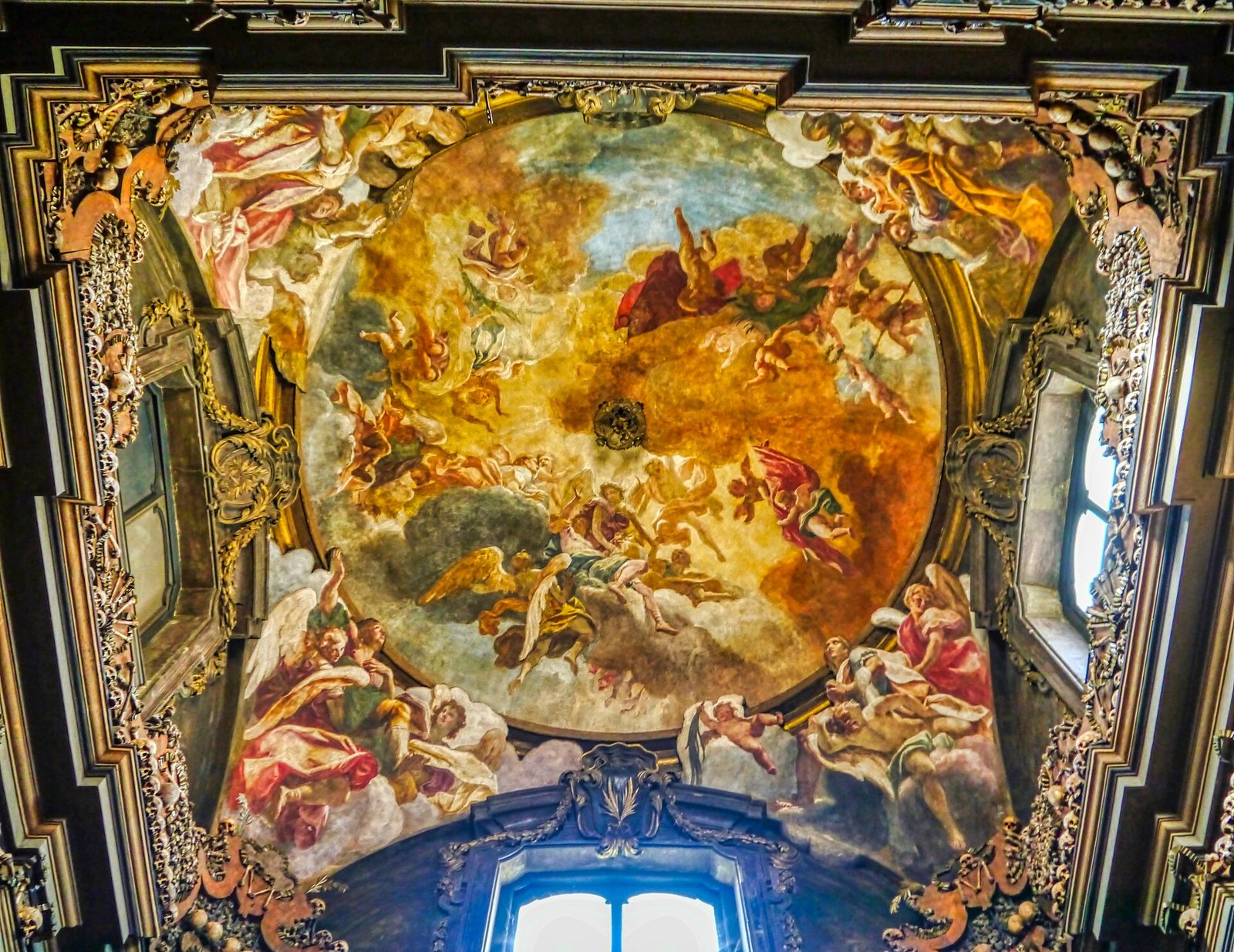
The sanctuary describes the central scene as souls in Purgatory rising toward the glory of Paradise among angels, with the pendentives showing the apotheoses, the glorification in heaven, of four saints. The Italian Catholic Church inventory calls the fresco a triumph of souls in a flight of angels and notes the vivid colour and luminosity associated with Venetian Baroque painting.
The pairing matters. Below are the bones of the dead; above, souls rise toward salvation. The painted ceiling ties the two together, so that a visitor stands between the remains and the hope of heaven that Catholic devotion places beyond them.
The legend of the dancing girl
San Bernardino alle Ossa also has a legend. According to Milanese local folklore, the skeleton of a little girl near the altar comes to life on 2 November, All Souls' Day. She begins to dance, and the other skeletons follow her in a procession, a danse macabre of their own (Secret Places Atlas).
It is a story, not a piece of history, and the Milanese cultural guides who repeat it tell it as a legend. It does not identify the child, and it says nothing about who the bones in the chapel belonged to. Enjoy it for what it is: a tale told about a room of the dead on the day the Church sets aside to remember them.
Visiting San Bernardino alle Ossa
The sanctuary stands on Piazza Santo Stefano in Milan. Its official visiting page, as published in October 2026, lists these hours (official visiting page):
- Monday to Friday: 8:00 to 18:00;
- Saturday: 9:30 to 18:00;
- Sunday: 9:30 to 12:00 for the sanctuary, with the ossuary closed.
Yes, the bone chapel is free. There is no ticket; visitors may leave an optional donation in the candle boxes. The sanctuary describes both the church and the ossuary as places of worship rather than museums and asks visitors to show strict respect. Wear clothing suited to a Catholic church and follow any instructions given on site. If you would like photographs, ask the sanctuary first and follow any posted instructions. Hours can change, so confirm them with the sanctuary before you plan your day around a visit (official contact page).
Before you visit Milan's bone chapel
Tap a card to bring it forward.
- Pick a weekday or Saturday: The ossuary is open Monday to Saturday and closed on Sunday.
- No ticket needed: Admission is free; an optional donation may be left in the candle boxes.
- Dress for church: Wear respectful clothing suitable for a Catholic place of worship.
- Treat the remains with respect: The bones are human ancestors and memorial material, never props.
- Ask before photographs: Ask the sanctuary before photographing and follow posted instructions.
- Confirm the hours: Check the sanctuary's official site before you go.
If Milan's bone chapel has caught your interest, two more chapels from the same tradition make good company: the relic chapel of Otranto Cathedral in southern Italy and Spain's osario de Wamba. Further north, the Brno Ossuary and Poland's Czermna Skull Chapel are part of the same story, and our guide to ossuaries around the world gathers many more.
Questions people ask about San Bernardino alle Ossa
Each answer below opens with the short version.
Is the bone chapel in Milan free?
Yes, admission to San Bernardino alle Ossa is free. Visitors may leave an optional donation in the candle boxes, and the ossuary is open Monday to Saturday but closed on Sundays.
Whose bones are in San Bernardino alle Ossa?
The bones come from several burial places around Santo Stefano: people who died in the medieval hospital, the hospital's priors and brothers, executed people, prisoners, members of Milanese noble families and canons of Santo Stefano. Bones from the hospital's cemeteries were added after the hospital closed in 1652.
What is the history of the bone church in Milan?
It began in 1210, when a chamber was built to hold bones from the overflowing cemetery of a hospital founded in 1145. After the Santo Stefano bell tower collapsed in 1642, the church facade was rebuilt in 1679 to 1680 and the ossuary in 1695 to 1696, with Ricci's ceiling painted in 1693 and 1694.
What is the chapel of bones in Milan?
"La capilla de huesos de Milán," as Spanish speakers call it, is the ossuary of the Sanctuary of San Bernardino alle Ossa on Piazza Santo Stefano. Its walls are decorated with human remains from local burial grounds, and its dome carries Baroque frescoes by Sebastiano Ricci.
Why were the bones arranged on the walls?
The bones were set in niches, along the cornice and around the pillars and doors in deliberate patterns, so that the remains became part of the chapel's design. The arrangement turns a place for storing bones into a place of prayer and remembrance.
When is San Bernardino alle Ossa open?
The official visiting page lists Monday to Friday 8:00 to 18:00 and Saturday 9:30 to 18:00. On Sunday the sanctuary opens 9:30 to 12:00, but the ossuary is closed.
Can you take photographs inside?
Ask the sanctuary before photographing and follow any instructions posted on site. The sanctuary treats the ossuary as a place of worship and asks all visitors for strict respect.
San Bernardino alle Ossa quiz
Answer every question to check.
A neighborhood's dead, kept in plain view
San Bernardino alle Ossa grew out of a practical problem, a hospital cemetery with no more room, and became a place of prayer. The people on its walls were hospital patients and the brothers who cared for them, prisoners and nobles, canons and the condemned, and the chapel keeps them together under a ceiling of rising souls. Go on a weekday, go quietly, and look both down and up.
Terms in this story
Tap a term to see what it means.
Ossuary. A room or building where the bones of the dead are kept; in Milan, the bone chapel of San Bernardino alle Ossa.
---