

No. 157
El Osario de Wamba: Whose Bones Fill Valladolid's Bone Room, and How to Visit
The osario de Wamba is an ossuary, a room for the bones of the dead, inside the church of Santa María de la O in Wamba, a small municipality in Valladolid province, Castile and León, about 17 to 20 kilometres west of the city of Valladolid. It holds more than 3,000 skulls and many other bones, gathered over several centuries from burials around the church and the monastery that once stood beside it. They are the remains of religious members of that community and of local men, women and children (Ayuntamiento de Wamba; El País, 2023). The municipal tourism listing gives admission at €2 per person.
If you are planning a visit, or simply heard about the bone room in a village church near Valladolid, this is its story: the town and its king, the church that holds the ossuary, how many people rest there and how old their bones are, the words written over them, and the practical details for seeing it.
Wamba, the town with a king's name
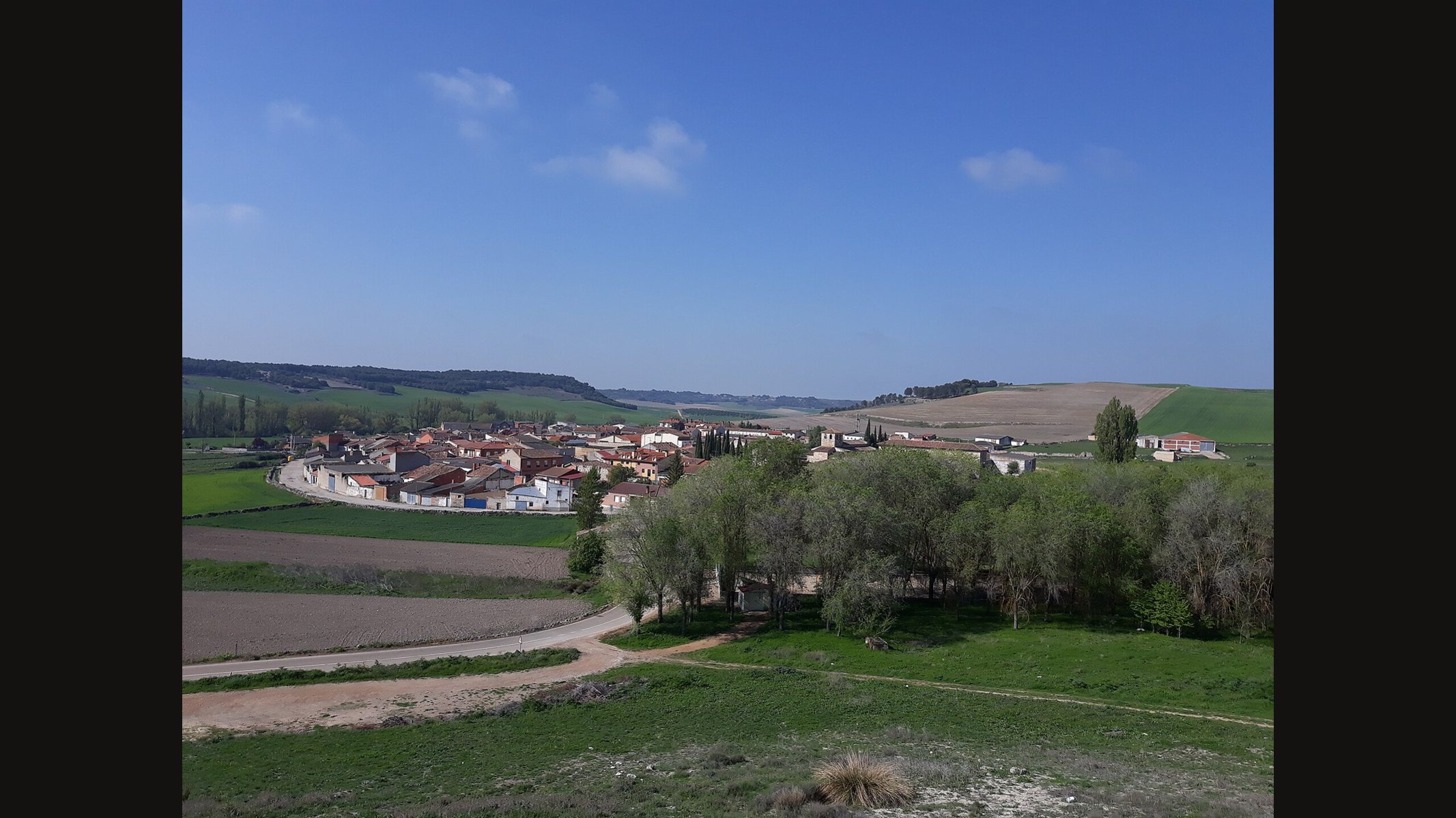
Wamba is a municipality in Valladolid province, in the region of Castile and León. The town once had another name: in the Visigothic period it was called Gérticos. According to El País, King Recesvinto died there, and on 1 September 672 Wamba was chosen in Gérticos as his successor (El País, 2023). The town later came to carry the name of the king chosen there.
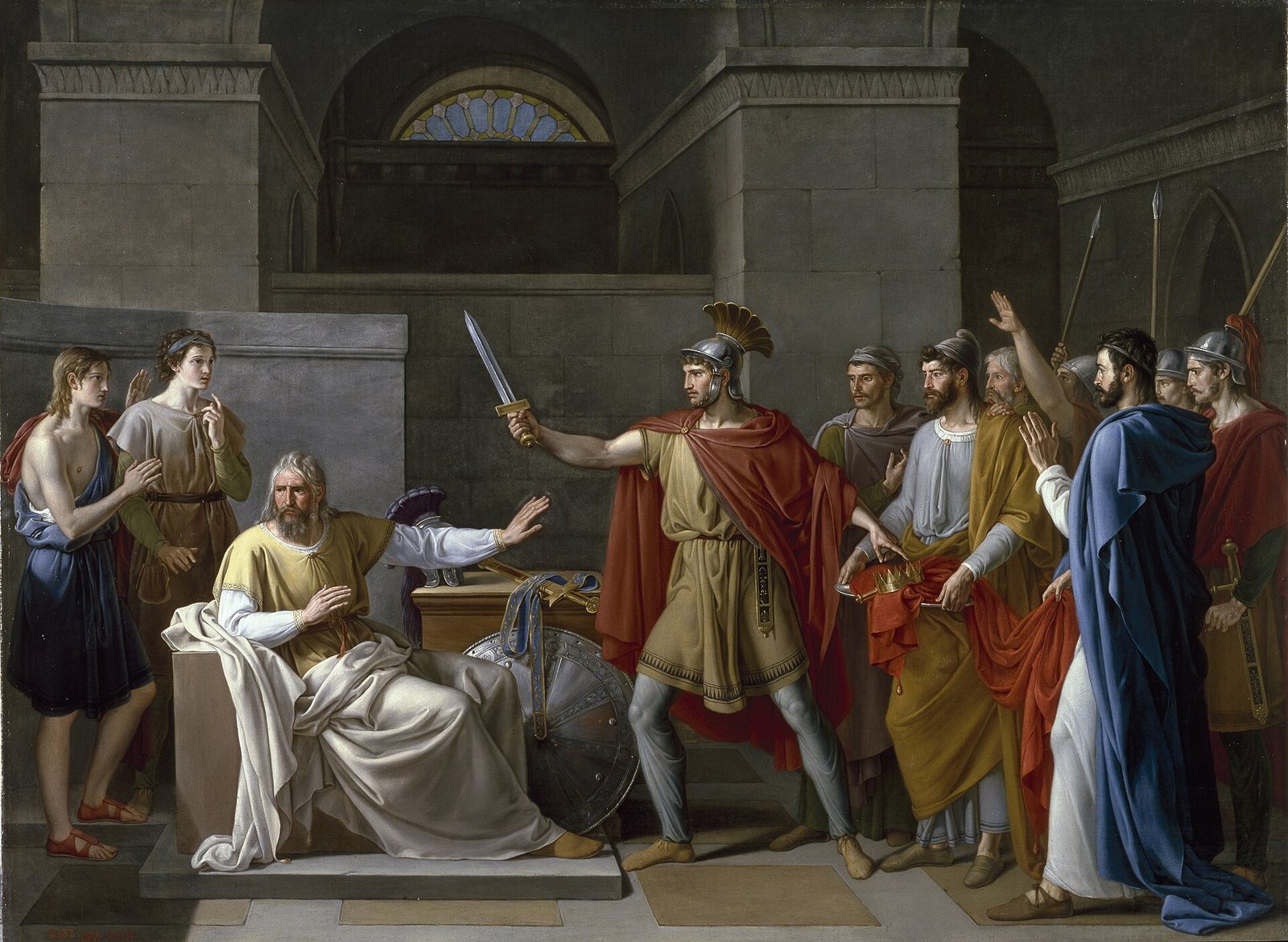
It is a quiet place to find a story of kings, and a quieter one to find a room of skulls, but both stories lead to the same church.
The church of Santa María de la O
The ossuary is part of the church of Santa María de la O, and its history runs through the building's long life. El País reports that around 928 Fruminius, bishop of León, rebuilt the church and established the monastery described in later accounts (El País, 2023).
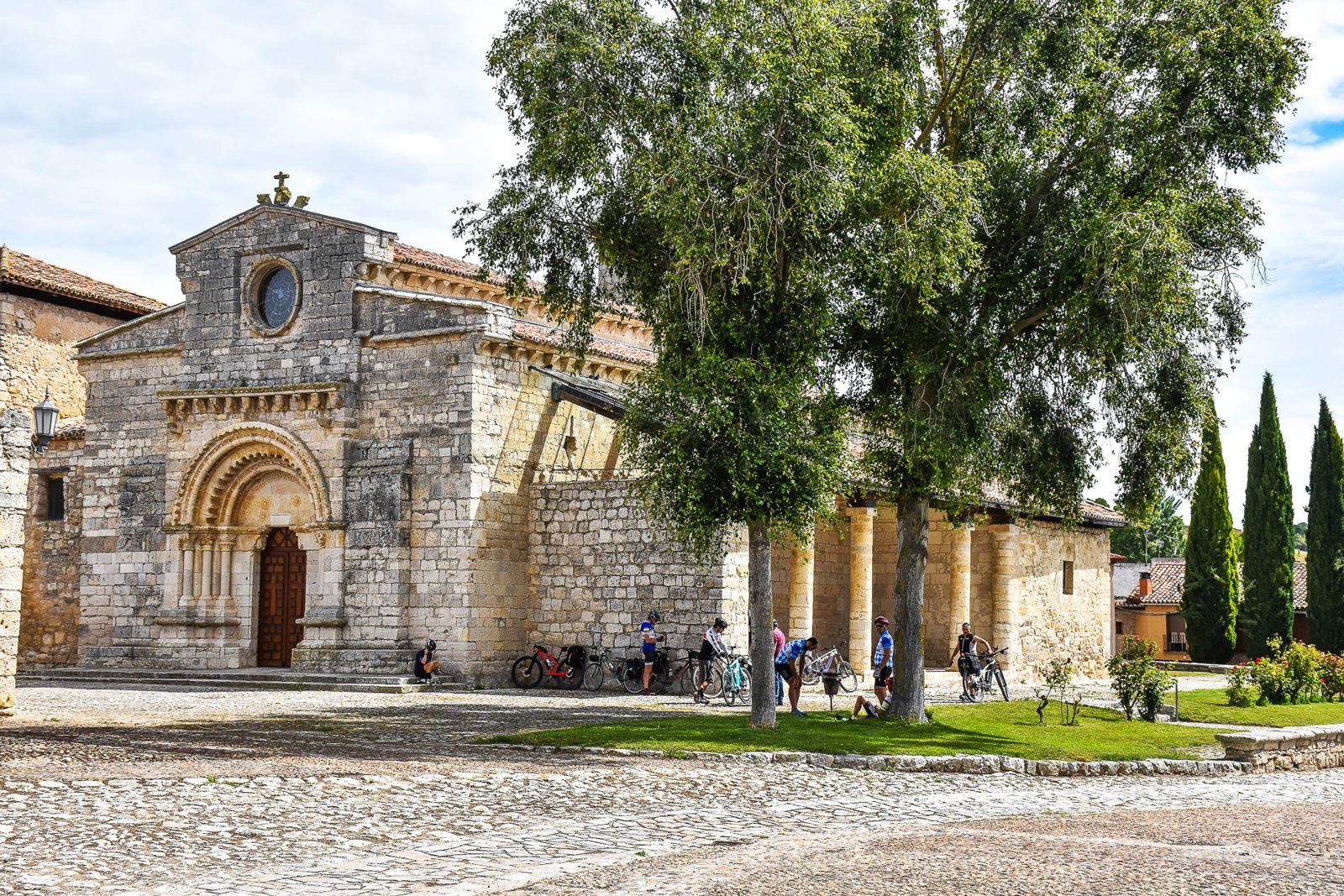
The church still preserves a 10th-century sanctuary associated with Visigothic and Mozarabic traditions. Its three naves and much of the rest of the building are Romanesque, dating mainly from the 12th century, when the site became associated with the Hospitallers of the Order of Saint John of Jerusalem. Today the church is a protected Spanish heritage monument (Portal de Turismo de Castilla y León).
So, when visitors ask about the "iglesia de Santa María de Wamba," this is the building they mean: a church of several ages, with a Romanesque body around an older heart, and the ossuary within it.
Tap or hover a row to highlight it.
| Field | Data |
|---|---|
| FieldLocation | DataWamba, Valladolid province, Castile and León |
| FieldChurch | DataSanta María de la O |
| FieldMain church phases | Data10th-century Mozarabic or Visigothic sanctuary and 12th-century Romanesque structure |
| FieldVisible remains | DataMore than 3,000 skulls, according to tourism descriptions |
| FieldMain deposit period | DataCommonly described as the 13th to 18th centuries, with university studies covering narrower periods |
| FieldAdmission | Data€2 per person, €1 per person for groups of more than 15 (municipal listing, 2026) |
How many people rest in the ossuary
Yes, the ossuary is inside the church: it is a room of Santa María de la O, not a separate building. It holds skulls and other bones, and the number of people they represent is large enough that every account gives it as an estimate.
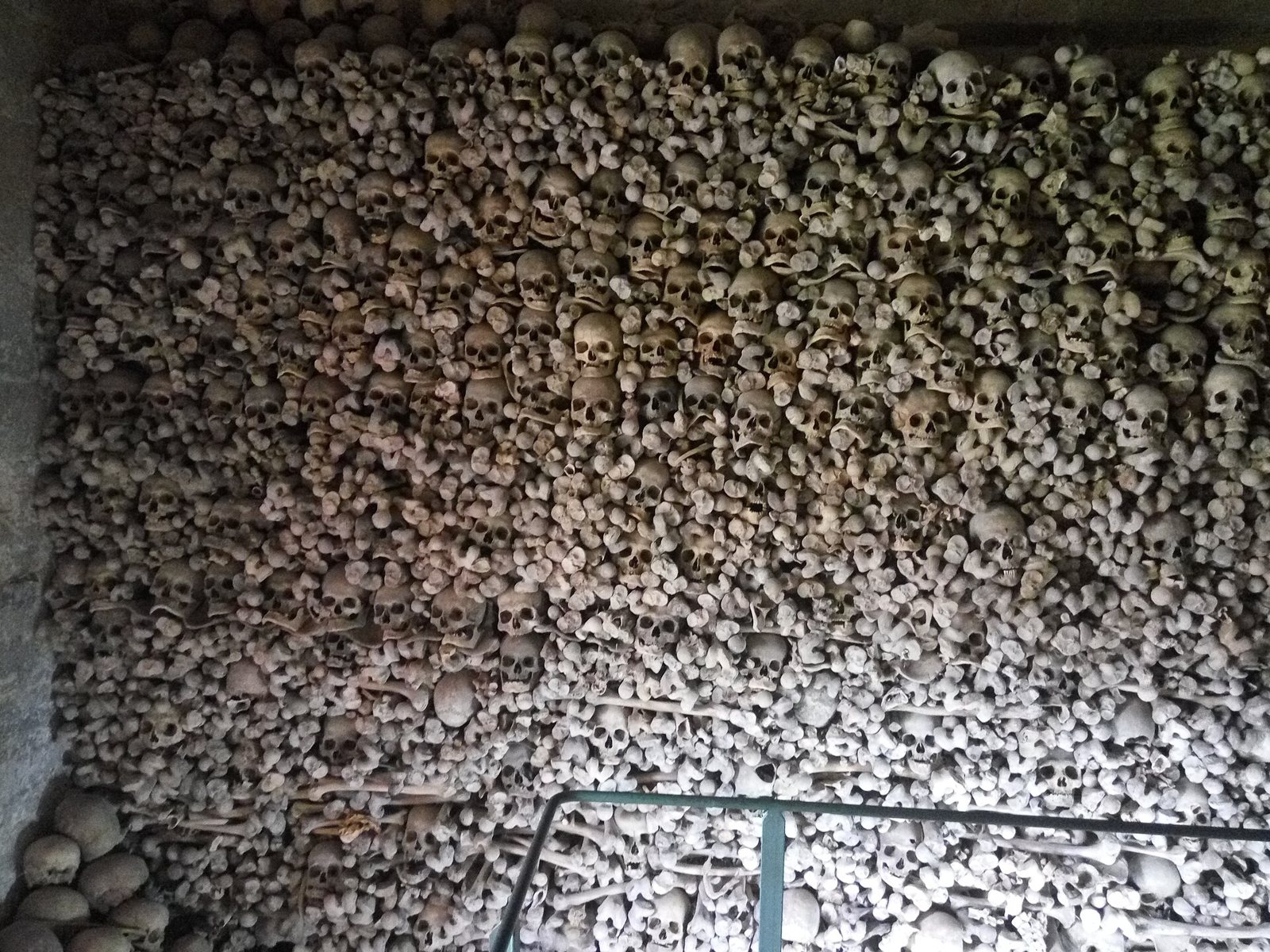
The surviving collection is commonly described as holding more than 3,000 skulls. A local tourism technician quoted by Idealista News in 2022 put the figure at between 3,000 and 3,500 skulls (Idealista News, 2022). El País gives a longer view: an estimated 6,000 individuals were represented in the ossuary before 1950, when Gregorio Marañón came to Wamba and removed bones for medical teaching and study. About 3,000 people's remains stayed in Wamba (El País, 2023).
These figures come from different counts and different moments, so they are best read side by side rather than as one number. What they agree on is the scale: thousands of people from this one parish, kept together in one room.
How old the bones are
The bones were not placed all at once. They gathered over centuries, and accounts of the period differ from one to another. Tourism descriptions and accounts of the building place the deposits mainly between the 13th and 18th centuries. A University of the Basque Country study by Uxue Perez-Arzak describes material from the 12th to the 17th centuries, and a Complutense University of Madrid study examines remains dated to the 15th to 17th centuries (Perez-Arzak study; Universidad Complutense de Madrid).
The plain answer, then, is that the osario de Wamba holds people who lived and died between the Middle Ages and the early modern period, roughly from the 1100s or 1200s into the 1600s or 1700s, depending on the account. The university studies cover the samples they examined; the tourism dates describe the room as a whole.
Wamba and its ossuary through the centuries
Tap or hover a step to follow the order.
672
Wamba is chosen as Visigothic king at Gérticos, later named Wamba (El País).
Around 928
Fruminius, bishop of León, rebuilds the church and establishes the monastery described in later accounts (El País).
12th century
The church is expanded in Romanesque forms and becomes associated with the Hospitallers.
13th to 18th centuries
The period most commonly assigned to the ossuary's deposits.
1950
Gregorio Marañón removes bones for medical study and teaching (El País).
Whose bones are they?
They belong to the people buried around the church and monastery of Santa María, and they were not only monks. Named local accounts describe a mixed population: religious members of the community, local residents, men, women and children. Some accounts also suggest that soldiers and pilgrims connected with the monastery's hospital are among them (El País, 2023; Idealista News, 2022).
The remains were collected from burials around the church, the monastery and its immediate surroundings, which means the individuals cannot be named. The people of the osario de Wamba are known together, as a community, rather than one by one.
Their bones still tell scientists something about how they lived. The Complutense University study looked at 132 tibias, the shinbones, from the Wamba collection; in that sample, 107 were identified as male and 25 as female. Uxue Perez-Arzak's study at the University of the Basque Country examined 214 humeri, the upper arm bones, and 152 ulnae, from the forearm, and identified evidence compatible with physically demanding rural work (Universidad Complutense de Madrid; Perez-Arzak study). Our story on what bones tell archaeologists explains how a life can be read from a skeleton.
The words over the bones
An inscription at the entrance of the ossuary speaks to everyone who comes in. It is usually transcribed like this:
> "Como te ves, yo me vi. > Como me ves, te verás. > Todo acaba en esto aquí. > Piénsalo y no pecarás."
In a literal English rendering: "As you see yourself, I once saw myself. As you see me, you will see yourself. Everything ends here. Think about it and you will not sin." The wording and punctuation vary slightly from one transcription to another (RTVE; El País, 1987).
The verse speaks in the voice of the dead to the living, and it turns the room into a meditation on mortality. The same thought runs through memento mori, "remember that you will die."
Visiting the osario de Wamba
The official municipal tourism listing gives these opening times: Fridays from 17:00 to 19:30; Saturdays, Sundays and public holidays from 11:00 to 13:30 and from 17:00 to 19:30; other days by appointment. Admission is €2 per person, or €1 per person for groups of more than 15 (Ayuntamiento de Wamba).
The Castilla y León tourism portal gives the same summer pattern, describes winter visits as by appointment only, and lists 672 538 649 for appointments. The municipal listing adds 679 142 730 as another appointment number (Portal de Turismo de Castilla y León). These details are from 2026 listings and can change with the season, so confirm the schedule, the fee and any photography rules with the Ayuntamiento de Wamba or the appointment number before you travel.
Wamba lies about 17 to 20 kilometres west of Valladolid. The ossuary is part of a church and a Christian funerary space, so treat it as one: follow the parish's instructions, keep the visit quiet and never touch or move the remains.
Before you visit the osario de Wamba
Tap a card to bring it forward.
- Confirm the opening time: Hours change with the season; winter visits are by appointment.
- Confirm the fee: The 2026 municipal listing gives €2 per person, €1 for groups of more than 15.
- Book outside opening hours: Call the appointment number for days outside the published periods.
- Respect the space: Treat the chapel as a Christian funerary space and follow the parish's instructions.
- Leave the remains as they are: Do not touch or move human remains.
- Ask about photographs: Confirm photography rules before you take any photographs inside.
Other bone chapels in Spain and Portugal
Wamba is not the only place in Iberia where the dead are kept in view. The clearest nearby comparison is the Capela dos Ossos, the Chapel of Bones attached to the Church of São Francisco in Évora, Portugal. The Évora municipality dates the chapel to the 17th century and describes three naves formed from human bones. It lists opening hours of 09:00 to 18:30 from June through September and 09:00 to 17:00 from October through May, with adult admission at €5; confirm before you go (Municipality of Évora). Our story on the Chapel of Bones in Évora tells its history.
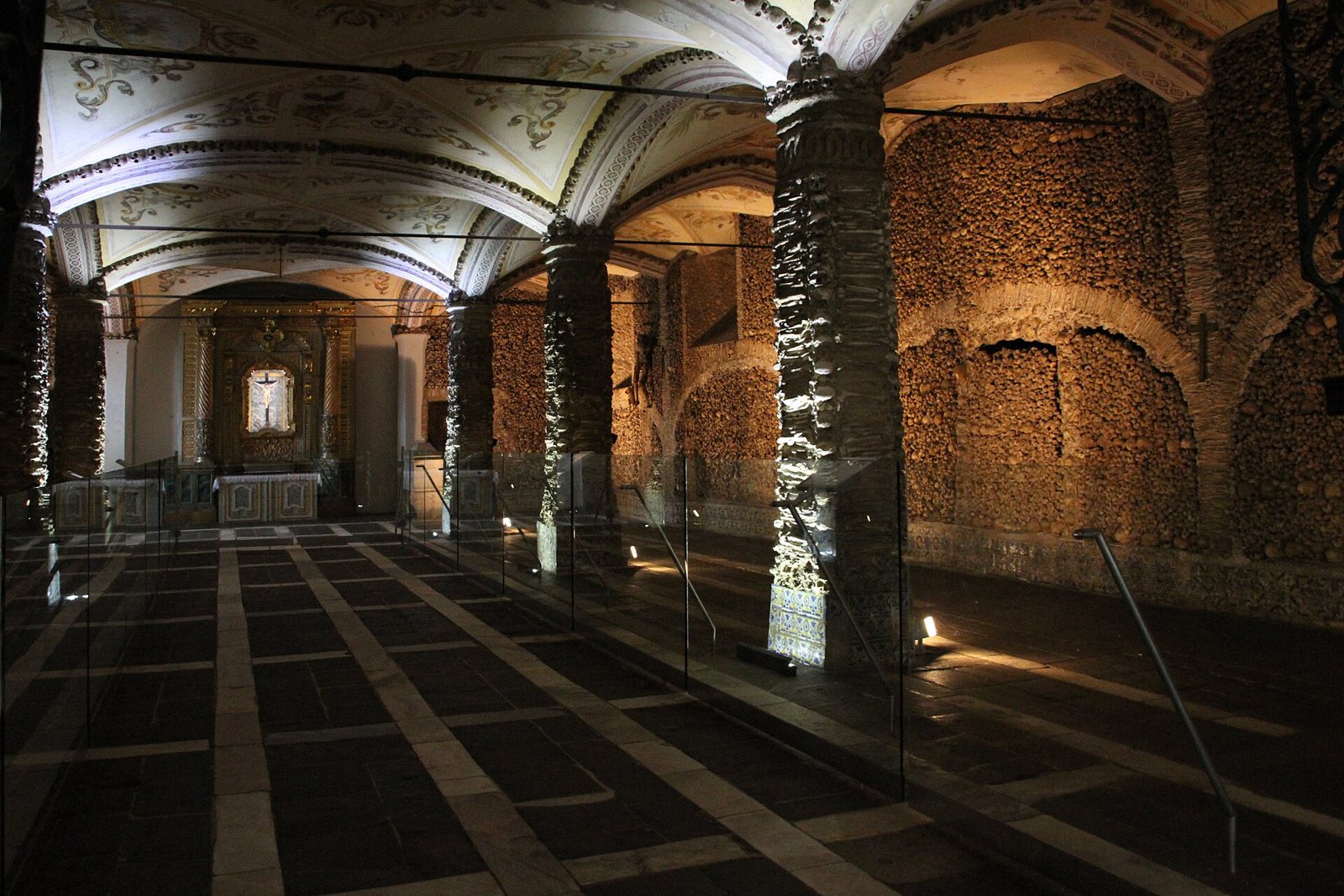
Spain has other ossuaries too, including those at Benissa, Boiro and Salazar de Amaya, and one at the former British cemetery in Cartagena (Wikimedia Commons, Ossuaries in Spain). Each has its own history and its own visiting arrangements. Further afield, Milan's San Bernardino alle Ossa, the relic chapel of Otranto Cathedral, the Hallstatt bone house and the Sedlec Ossuary show how differently communities across Europe have cared for the bones of their dead. Our guide to ossuaries around the world gathers many more.
Questions people ask about the osario de Wamba
Each answer below starts with the short version.
What is the osario de Wamba?
It is an ossuary chapel inside the church of Santa María de la O in Wamba, Valladolid, holding thousands of skulls and other bones from earlier burials around the church and monastery. Most of the remains date from the medieval and early modern periods, and the church itself combines a 10th-century sanctuary with a 12th-century Romanesque building.
How much does it cost to visit the osario de Wamba?
The municipal tourism listing gives €2 per person, or €1 per person for groups of more than 15. Fees can change, so confirm the current price with the Ayuntamiento de Wamba before you go.
What is the history of the osario de Wamba?
The ossuary grew over several centuries as bones were moved from burials around Santa María de la O, a church rebuilt around 928 by Fruminius, bishop of León, and later linked to the Hospitallers. In 1950 Gregorio Marañón removed many bones for medical teaching, and El País estimates that about 3,000 people's remains stayed.
Whose bones are in the osario de Wamba?
They are the remains of people buried around the church and monastery, including religious members and local men, women and children, and not only Hospitaller monks. The individuals cannot be named, but a study of their arm bones showed evidence compatible with physically demanding rural work.
When is the osario de Wamba open?
The municipal listing gives Fridays 17:00 to 19:30, and Saturdays, Sundays and public holidays 11:00 to 13:30 and 17:00 to 19:30, with other days by appointment. In winter, the regional tourism portal lists visits by appointment only, on 672 538 649.
How do you get to the osario de Wamba?
Wamba is about 17 to 20 kilometres west of the city of Valladolid, and the ossuary is inside its church of Santa María de la O. Confirm the visiting arrangements with the Ayuntamiento de Wamba before you set out.
Osario de Wamba quiz
Answer every question to check.
A village that keeps its people close
The osario de Wamba is, in the end, a parish's memory of itself: the religious members, residents, men, women and children of one Castilian town, gathered over hundreds of years into a single room of the church they all knew. The verse over them asks only that the living stop and think. If you go, go quietly, and give them the few minutes they ask for.
Terms in this story
Tap a term to see what it means.
Osario. Spanish for ossuary, a room or building where the bones of the dead are kept after being moved from their graves.
---