No. 007
Chapel of Bones in Évora: Who Built It, and What Its Sign Says
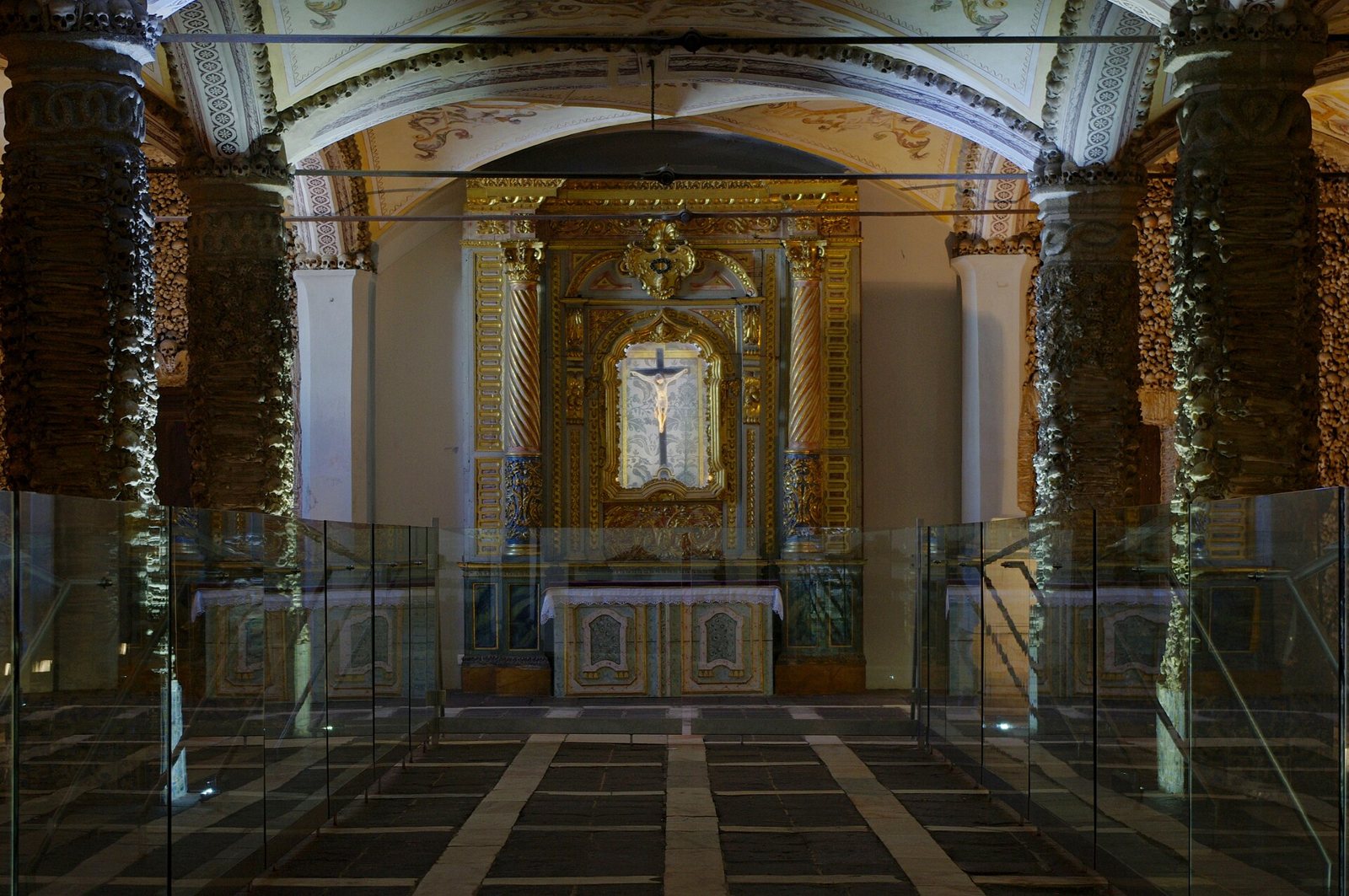
The Chapel of Bones in Évora, Portugal, the Capela dos Ossos, was built by Franciscan friars of the Igreja de São Francisco and is generally dated to the seventeenth century. Its walls are lined with the skulls and bones of roughly 5,000 people, taken from burial grounds of the convent and of Évora's churches and cemeteries. The church says the chapel was made to help visitors reflect on how short human life is and on Christian life. Over the door, a sign says so directly: "Nós ossos que aqui estamos, pelos vossos esperamos," which Rev. Carlos A. Martins translates as "We bones that are here await yours."
It is a sentence that tends to stop people in the doorway, which is exactly what it was meant to do. Here is who built the chapel, what the sign and the poem inside are asking, whose bones fill the walls and what is known about the two bodies that draw so many questions.
The Franciscans of São Francisco
The Franciscans have a long history in Évora. According to the Igreja de São Francisco's own history, the friars arrived in the city in 1224. The Chapel of Bones belongs to that Franciscan complex.
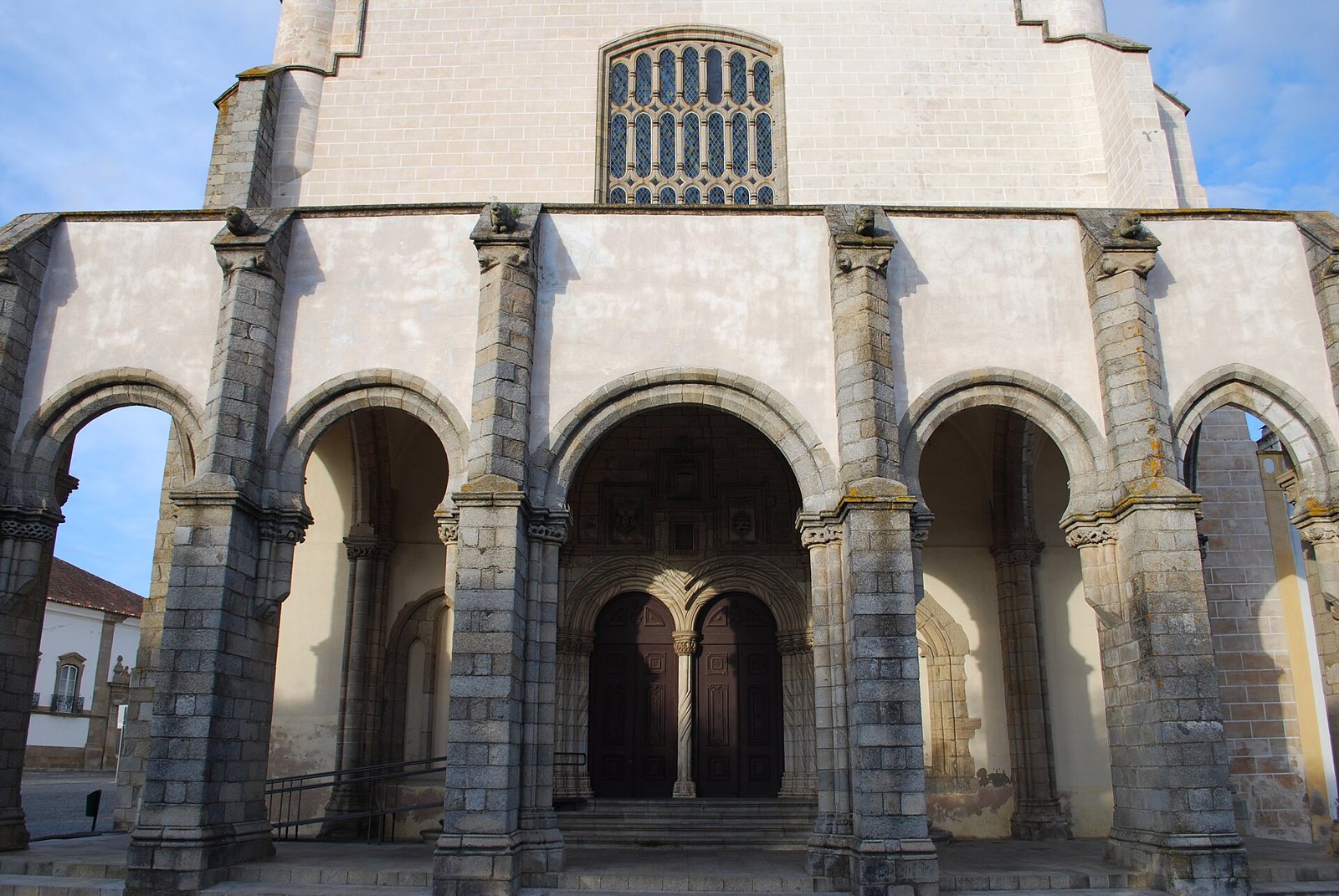
The church's official page on the chapel dates it to the seventeenth century. Some accounts place the building's structure in the sixteenth century, but the chapel as a bone chapel is generally placed in the seventeenth. A study by Fernando Magalhães of the Universidade Nova de Lisboa, "Capelas dos Ossos e Património Macabro," cites historian José António Falcão in crediting its construction to three Franciscan friars.
Why build a chapel out of bones? The church's answer is that it was designed to make visitors think about human transience and about how to live a Christian life. For friars, a room of skulls was a sermon without a preacher. It belongs to the same Christian tradition of keeping death in view that you can read about in our guides to memento mori and skulls in Christianity.
Tap or hover a row to highlight it.
| Fact | Detail |
|---|---|
| FactLocation | DetailIgreja de São Francisco, Praça 1º de Maio, Évora, Portugal |
| FactPeriod | DetailGenerally dated to the seventeenth century |
| FactBuilders | DetailThree Franciscan friars, per Fernando Magalhães citing José António Falcão |
| FactEstimated remains | DetailAbout 5,000 people, especially skulls |
| FactPurpose | DetailReflection on mortality and Christian life |
The sign over the door
The inscription above the entrance reads:
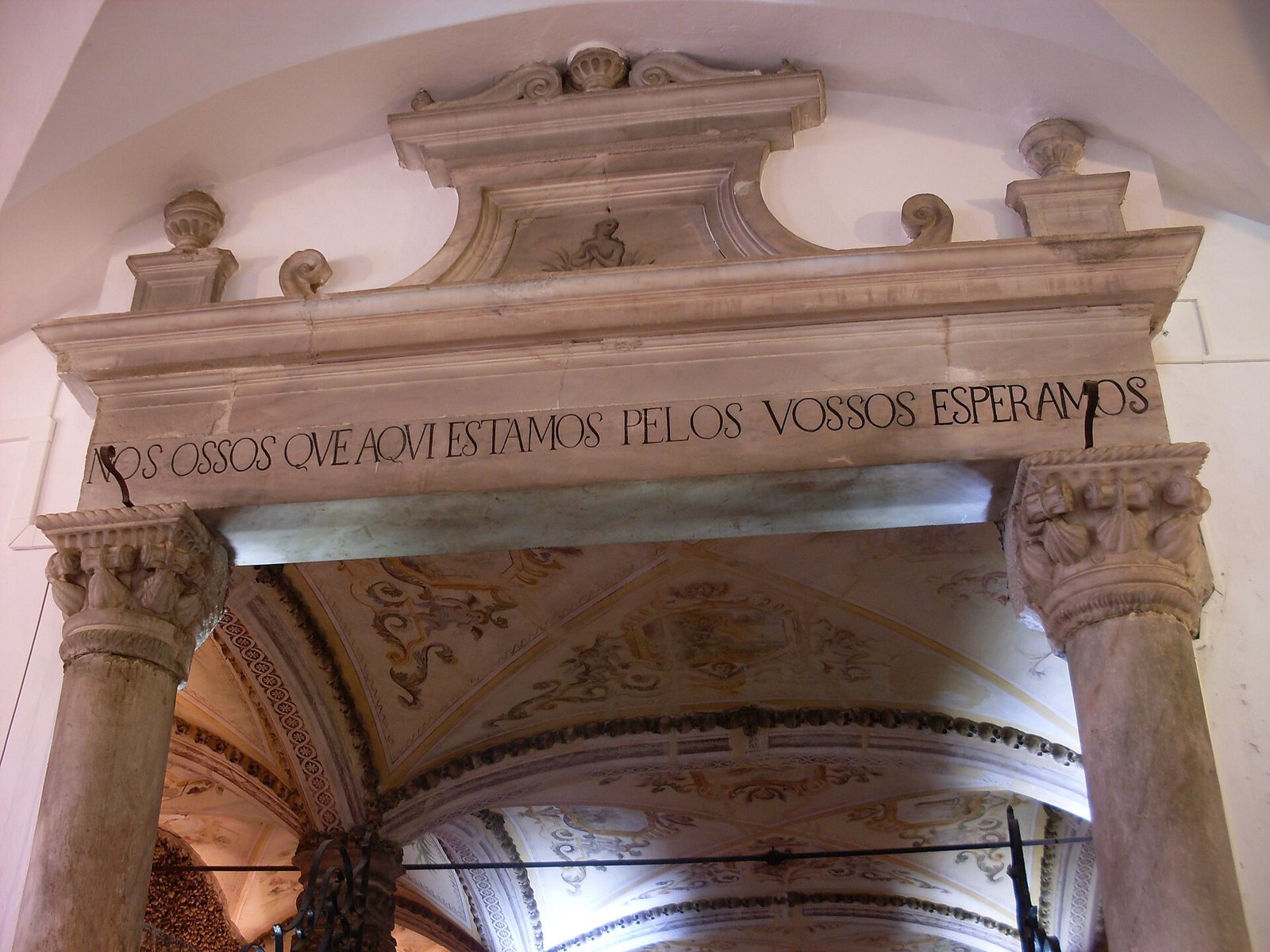
> "Nós ossos que aqui estamos, pelos vossos esperamos."
Rev. Carlos A. Martins translates it as "We bones that are here await yours." The Portuguese rhymes, ossos with vossos, which gives it the snap of a proverb, and it speaks in the first person. The bones are talking.
What they say is simple. Everyone who walks through the door will one day be bones too. The line is not a threat and not a joke, though it has a dry wit that is hard to miss. It is an invitation, in the voice of the dead, to take that fact seriously before going inside.
The poem inside
Inside the chapel hangs a sonnet that picks up where the sign leaves off. It begins:
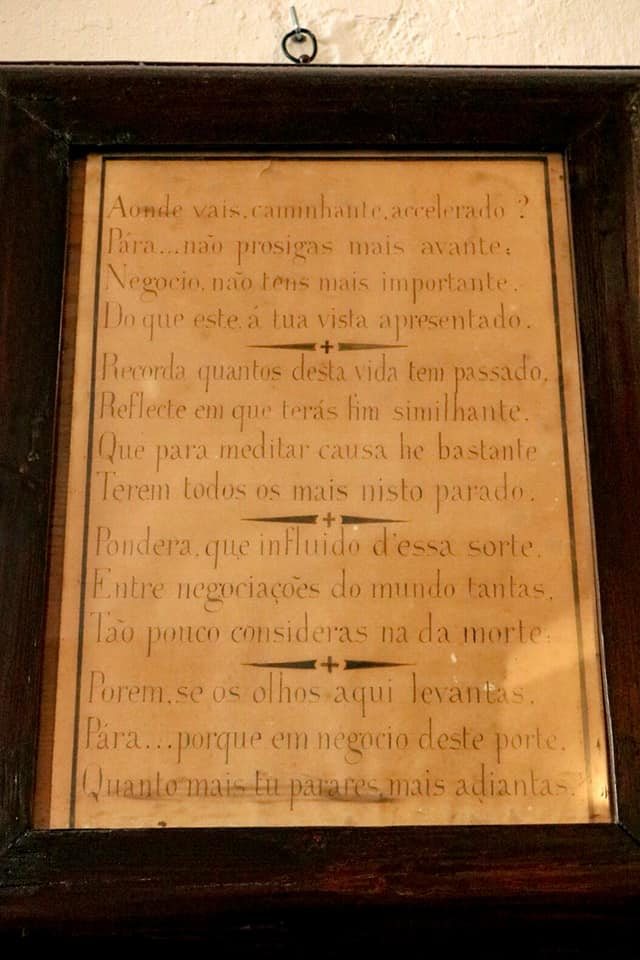
> "Aonde vais, caminhante, acelerado?"
In plain English, that first line asks, "Where are you going, traveler, in such a hurry?" The poem asks the hurried visitor to stop, to remember the dead and to reflect on mortality. Its message is that pausing to think about death is not a delay; it moves the soul forward on its spiritual road.
The sonnet is attributed to Father António da Ascensão Teles, who served as parish priest of São Pedro from 1845 to 1848, according to the Portuguese Wikipedia entry on the chapel. That attribution is the usual one, and it places the poem two centuries after the chapel itself, a later voice joining the conversation the friars started.
Whose bones line the walls
The number you will see most often is about 5,000 people, counted mainly by their skulls. That figure is an estimate, not an exact count, and it is the one Magalhães gives. The church's own description speaks more loosely of "some thousands" of bones and skulls.
The remains came from burial spaces connected with the convent and from Évora's churches and cemeteries. Magalhães says they probably came especially from São Francisco itself, one of the city's principal burial places. In other words, these were the people of Évora, buried in and around their churches, whose bones were gathered from those burial grounds into the chapel.
Look up: the painted ceiling
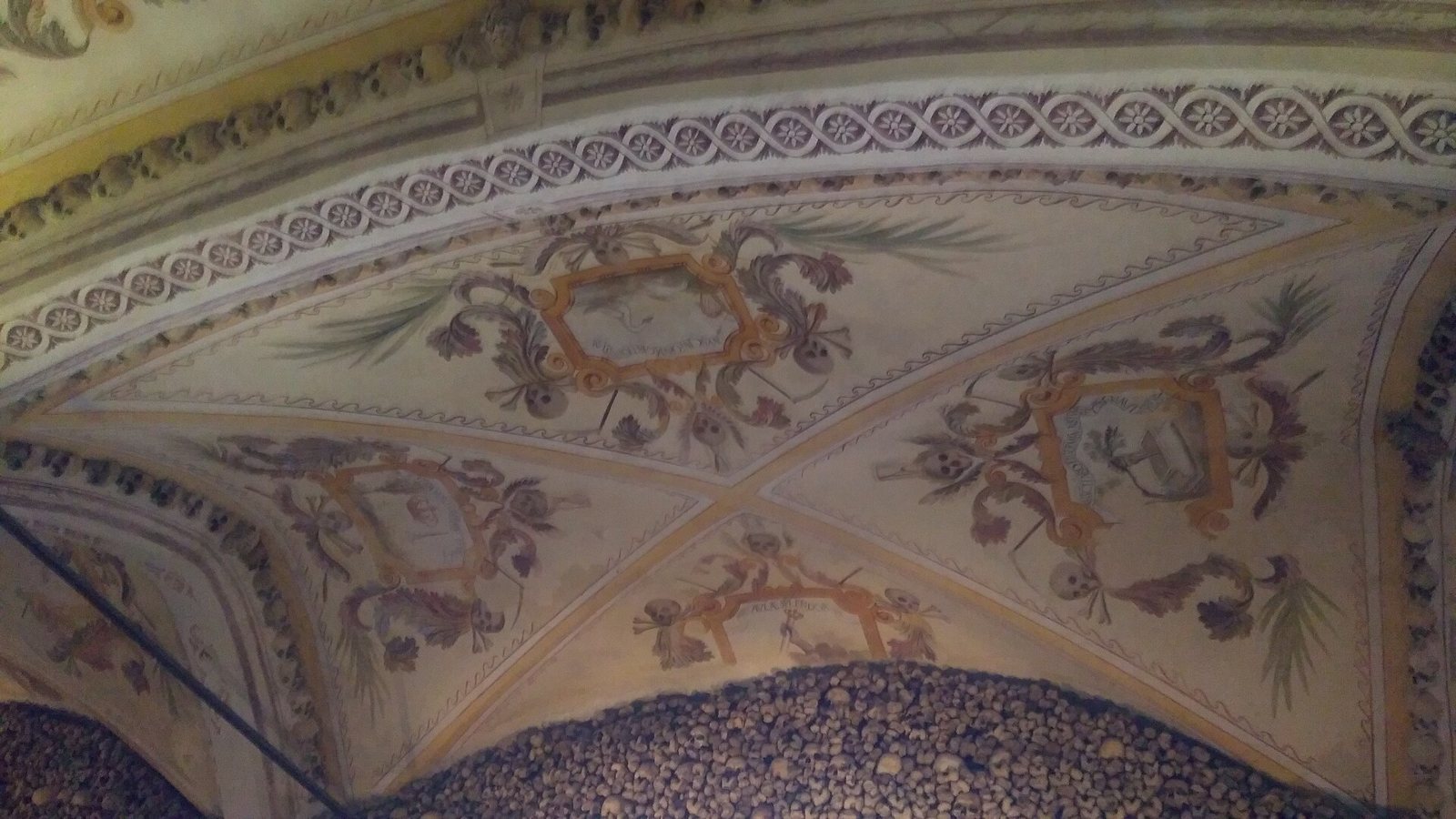
Visitors often spend so long on the walls that they forget the ceiling. The church dates its frescoes to 1810. They include biblical symbols and the instruments of the Passion of Christ, the objects linked to his crucifixion. The ceiling ties the bones below to the Christian story the chapel was built to tell: death is real, and for the friars, it was not the end.
The Capela dos Ossos through the years
Tap or hover a step to follow the order.
1224
Franciscans arrive in Évora, according to the church's history
Sixteenth century
The chapel's building structure is sometimes dated to this period
Seventeenth century
The bone chapel is generally dated to this period
1750
Mummified bodies are documented in the chapel
1810
The ceiling frescoes are painted
1845 to 1848
Father António da Ascensão Teles, to whom the poem is attributed, serves as parish priest of São Pedro
2016
Rehabilitation changes how the two bodies are displayed
2019
The University of Évora reports findings on the two bodies
The two bodies
Among the skulls are two whole bodies, naturally dried and partly mummified: an adult and a child. They have been in the chapel a long time; the University of Évora notes that mummies were documented there in 1750. Where they came from is unknown.
A legend grew up around them. In the popular story, they were an unfaithful father and son, cursed by the woman they had betrayed, who was wife to one and mother to the other. It is a legend, not history.
In 2019, the University of Évora reported what scientific study of the bodies showed. The adult is a woman, aged roughly 30 to 50, and the child is a girl no older than about two and a half. For many years the bodies hung on the chapel wall. During the chapel's rehabilitation they were moved into glass cases, which is how visitors see them now.
Other bone chapels in Portugal
Évora's chapel became a model for later bone chapels in southern Portugal, according to Magalhães, who identifies chapels or ossuaries at Campo Maior, Alcantarilha, Faro, Lagos, Monforte and elsewhere in the region.
The best documented of these is in Campo Maior. Its municipality says the chapel was probably promoted by the Confraria das Almas, a religious confraternity, around 1766. A popular story links its bones to the victims of a 1732 powder-magazine explosion, but the municipality says the bones are associated with the churchyard of the Igreja Matriz and that archaeological and anthropological evidence does not support the explosion story. The municipality lists the chapel as open Tuesday to Sunday, 10:00 to 13:00 and 14:00 to 17:00, with closures on certain holidays.
Faro has its own Capela dos Ossos at the Igreja do Carmo. Bone chapels also exist well beyond Portugal, from Austria's painted skulls in the Hallstatt Bone House to Sedlec in Czechia, and our guide to ossuaries around the world gathers many of them in one place.
Visiting the chapel
The Capela dos Ossos is at the Igreja de São Francisco, Praça 1º de Maio, Évora. The church describes itself as a private religious institution, and the chapel is part of a combined visit with the church's museum areas.
The church's official site lists a combined ticket at 7 euros for adults, 5 euros for visitors up to 25 and seniors over 65, and 15 euros for a family ticket. Évora's municipal page, updated 21 July 2023, lists opening hours of 09:00 to 18:30 from June through September and 09:00 to 17:00 from October through May, with closures on the afternoon of 24 December, on 25 December, 1 January and Easter Sunday. Confirm current hours and prices with the church before you go.
Inside, you are in a chapel and a burial place. The people in its walls came from the city's own burial places, and the space was built for quiet thought.
Chapel of Bones in Évora quiz
Answer every question to check.
Frequently asked questions
What is the history of the Chapel of Bones in Évora?
The Capela dos Ossos is a seventeenth-century Franciscan bone chapel inside the Igreja de São Francisco in Évora. Three Franciscan friars are credited with building it from human remains gathered from the convent's and the city's burial places, as a place to meditate on death and Christian life. Its ceiling frescoes were added in 1810.
What does the sign in the Chapel of Bones say?
The sign says, "Nós ossos que aqui estamos, pelos vossos esperamos," translated by Rev. Carlos A. Martins as "We bones that are here await yours." It reminds everyone entering that they will share the same end as the people in the walls.
Where is the largest bone chapel in the world?
Évora's Capela dos Ossos, at the Igreja de São Francisco on Praça 1º de Maio, is Portugal's best-known bone chapel and one of its largest historic ones. If a worldwide size comparison matters to you, ask the church or a local heritage authority, and see our guide to ossuaries around the world for other major sites.
How many skeletons are in the Chapel of Bones?
The chapel holds the remains of an estimated 5,000 people, counted mainly by their skulls. The church itself speaks of "some thousands" of bones and skulls, so the figure is an estimate rather than an exact count.
What are the two bodies in the Chapel of Bones?
They are the naturally mummified bodies of an adult woman, aged about 30 to 50, and a girl no older than about two and a half, according to a 2019 University of Évora report. A legend calls them a cursed father and son, but their real identities and origin are unknown.
Where to go next
If the sign over the door stayed with you, the same idea runs through the friars' chapel in Rome, the Capuchin Crypt, and through the remains gathered in the Paris Catacombs. For the thinking behind all of them, start with memento mori.