

No. 149
Brno Ossuary: How It Was Found, Whose Bones They Are and How to Visit
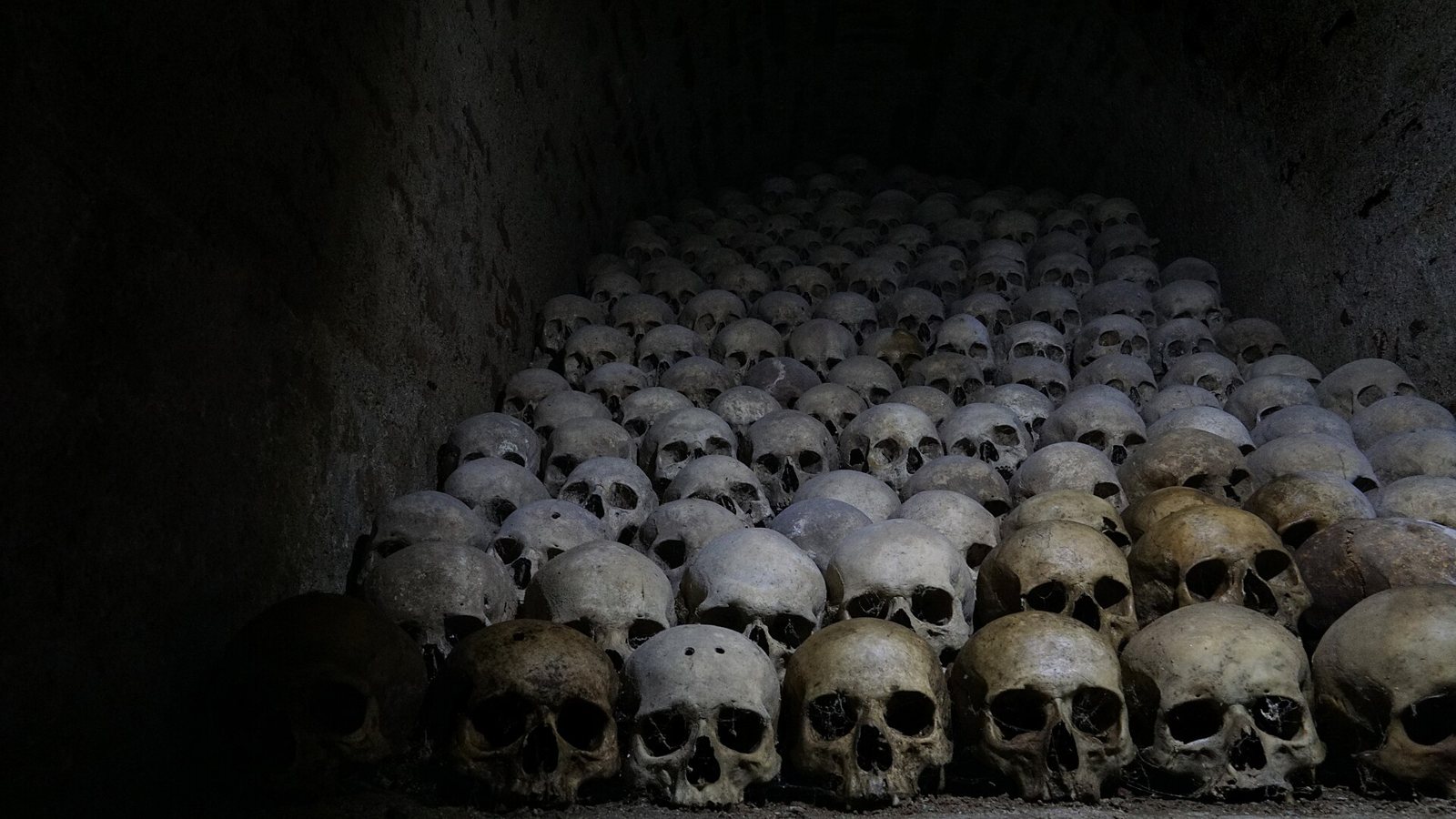
Beneath Jakubské náměstí, the square beside St. James's Church (kostel svatého Jakuba) in Brno, lie the remains of an estimated more than 50,000 people. They are the townspeople of Brno who were buried in the church's old cemetery and moved underground, over centuries, when their graves were reused. Archaeological work on the square in 2001 showed how large the ossuary really was, and after a long restoration it opened to the public on 22 June 2012. Today it is run by TIC BRNO and is open Tuesday to Sunday (TIC BRNO).
That is the short answer. The longer one runs from a medieval churchyard inside the city walls, through plague years and wars, to an imperial reform that closed the cemetery and let the ossuary slip out of memory, and then to a survey under a city square that brought it back. If you are planning a visit, the practical details are further down, dated, along with how Brno compares with Sedlec and the other Czech ossuaries.
The churchyard that came before the ossuary
St. James's Church stands in the historic centre of Brno, and for most of its history it was surrounded by its own cemetery, inside the city walls. That cemetery was in use from the early 13th century (City of Brno).
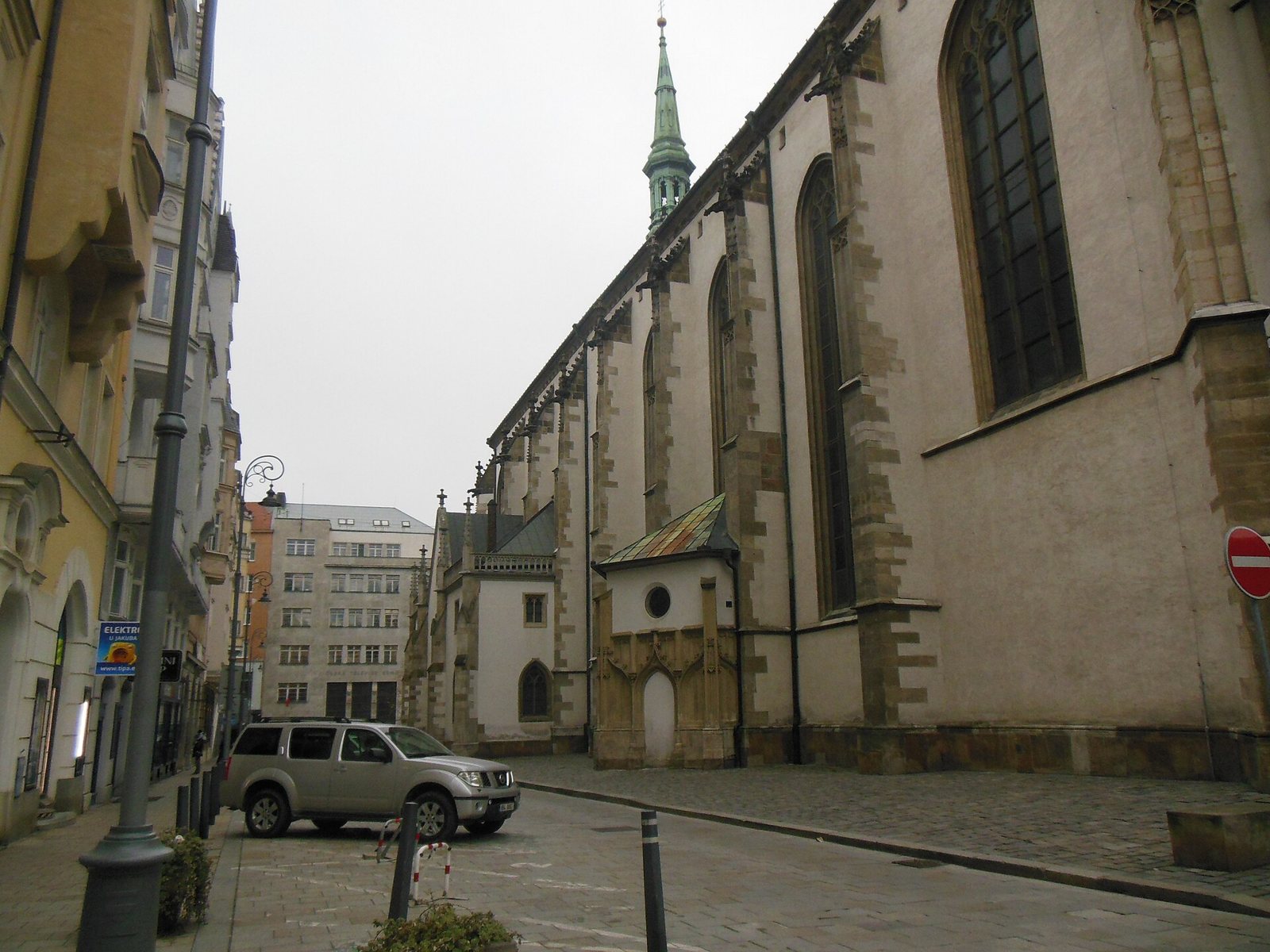
A churchyard in a walled town has a simple problem: the town keeps growing, and the ground does not. Brno solved it the way many European towns did. Graves were reopened after roughly 10 to 12 years, and the earlier remains were carried down into underground chambers so the plot could take a new burial (TIC BRNO). Repeat that for more than five centuries in a busy city and the chambers fill with the bones of generations of neighbours. The City of Brno also records that the cemetery saw heavy use during epidemics, when the need for space came faster.
The system ended with a change in law. In 1784 the Josephine reforms ended burials in churchyards for health reasons. The St. James cemetery was cleared, its wall was removed, and the ossuary beneath it gradually disappeared from public memory (TIC BRNO). The square kept its name and its church, while the people under it were largely forgotten above ground.
The Brno ossuary, from churchyard to public memorial
Tap or hover a step to follow the order.
Early 13th century
A cemetery is established at St. James's Church inside Brno's walls.
About 10 to 12 years after each burial
Graves are commonly reopened and earlier remains moved into underground ossuaries.
1784
The Josephine reforms end churchyard burials for health reasons; the cemetery is cleared.
2001
Archaeological research in Jakubské náměstí reveals the ossuary's full extent.
2011 to 2012
Anthropological research and reconstruction take place.
22 June 2012
The ossuary opens to the public.
Whose bones are in the Brno ossuary?
The people in the ossuary are mostly ordinary residents of Brno. The City of Brno describes the remains as those of adults and children, along with some animal remains, and says they are primarily people buried in the St. James churchyard and moved underground when graves were reused (City of Brno). Together they are the population of a city across more than five centuries.
Some of them died in the hardest years the city lived through. Official CzechTourism material says anthropological analyses associate some of the remains with plague and cholera epidemics, the Thirty Years' War and the Swedish siege of Brno (CzechTourism). That is an interpretation by anthropologists about parts of the collection, not a record that names how each person died. Most of the people here are anonymous, and the ossuary is a memorial to them as a community rather than as individuals.
It also helps to be clear about the famous number. The figure of more than 50,000 is an estimate of people, not a count of bones. Masaryk University researchers were able to examine only a sample of the collection, so nobody has an inventory of individual bones, and the accurate phrasing is "the remains of more than 50,000 people" (Masaryk University). If you want to know what anthropologists can read from a sample like this, our story on what bones tell archaeologists walks through it. For the wider history of plague burials in Europe, see our story on Black Death mass graves.
How the ossuary was found again in 2001
The ossuary came back into view because of planned works on the square. In 2001, Brno authorities commissioned archaeological research in Jakubské náměstí before structural changes were made to it. The survey showed that the old cemetery beneath the square connected with a large crypt and ossuary beneath St. James's Church (TIC BRNO).
It was not a complete surprise. Parts of the site had been known, but its full extent, and the estimated number of people whose remains were there, became clear only through this work. Aleš Svoboda, speaking to Radio Prague, described the research, the old system of reusing graves and the way the cemetery joined the church crypt. The Czech heritage project record for the later reconstruction gives the same estimate of about 50,000 people (EEA Grants project record).
Restoring the ossuary and opening it in 2012
Finding the chambers was one thing; making them safe to visit and stable enough to last was another. The research and conservation connected with the public opening took place in 2011 and 2012. During that time, Masaryk University researchers examined an eight-cubic-metre sample of skeletal remains in 14 days of fieldwork, because the entire collection could not be examined under the technical conditions available underground (Masaryk University).
The restoration had to deal with dampness, mould, structural stability, access and ventilation. Bones were removed where necessary, cleaned or conserved, and returned with attention both to airflow and to reverence for the dead. The City of Brno says the remains now on display are the best-preserved material. Damaged bone fragments, soil and bone dust were not thrown away; they were reburied at Brno Central Cemetery (City of Brno). The contractors named by the city were IMOS and FIRESTA (City of Brno reconstruction report).
On cost, the city's own figures differ. Its opening announcement reported construction costs of 33 million CZK, while a later city report gives 27 million CZK for the reconstruction. Both numbers come from the City of Brno. The reconstruction was supported by the city and by European regional funding, and the ossuary opened to the public on 22 June 2012.
What you see inside
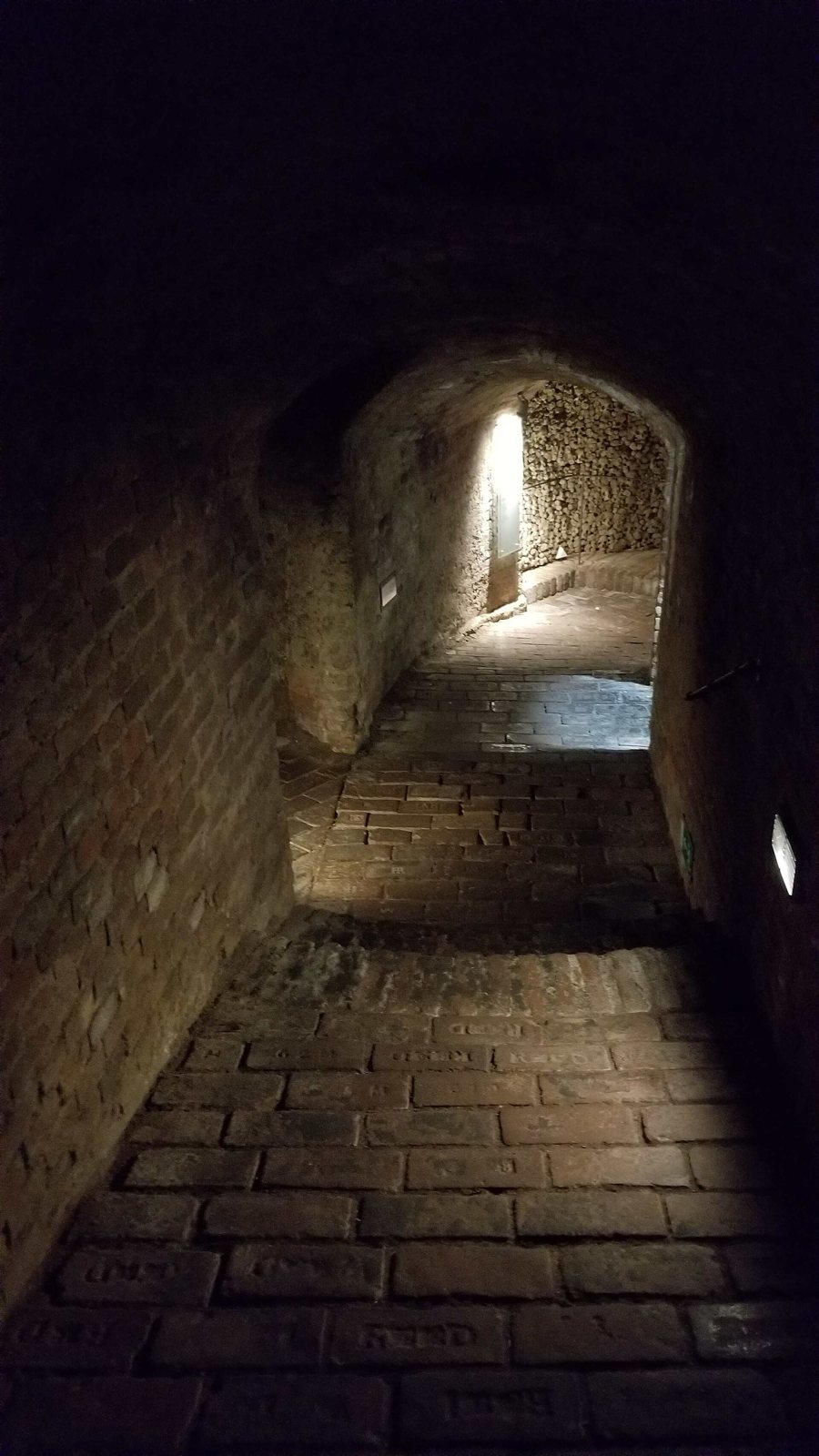
The public route starts at a newly created entrance from Jakubské náměstí, so you go down from the square itself. Below, there are three historical chambers, along with lighting, information panels, artworks and a Chapel of the Dead (City of Brno).
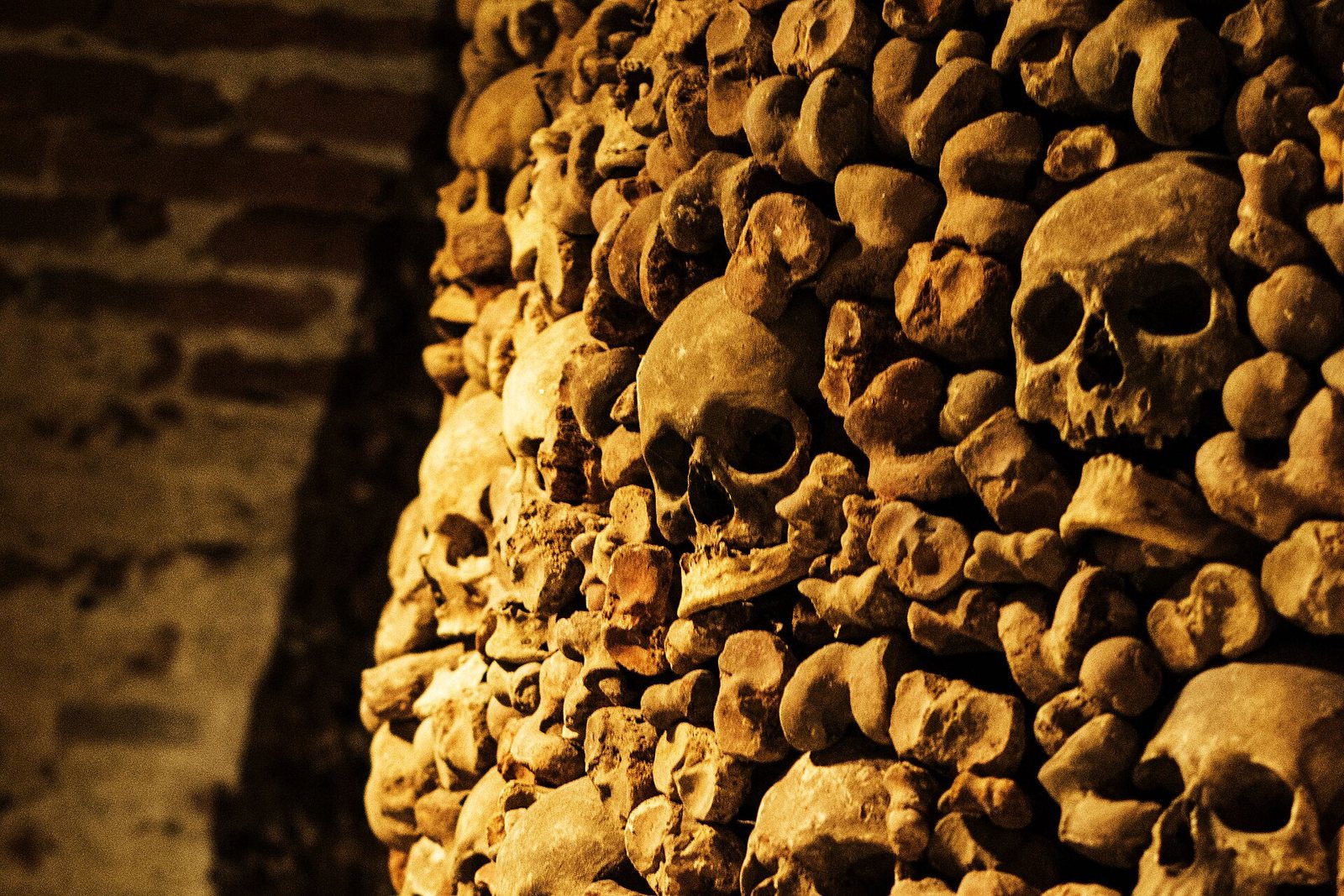
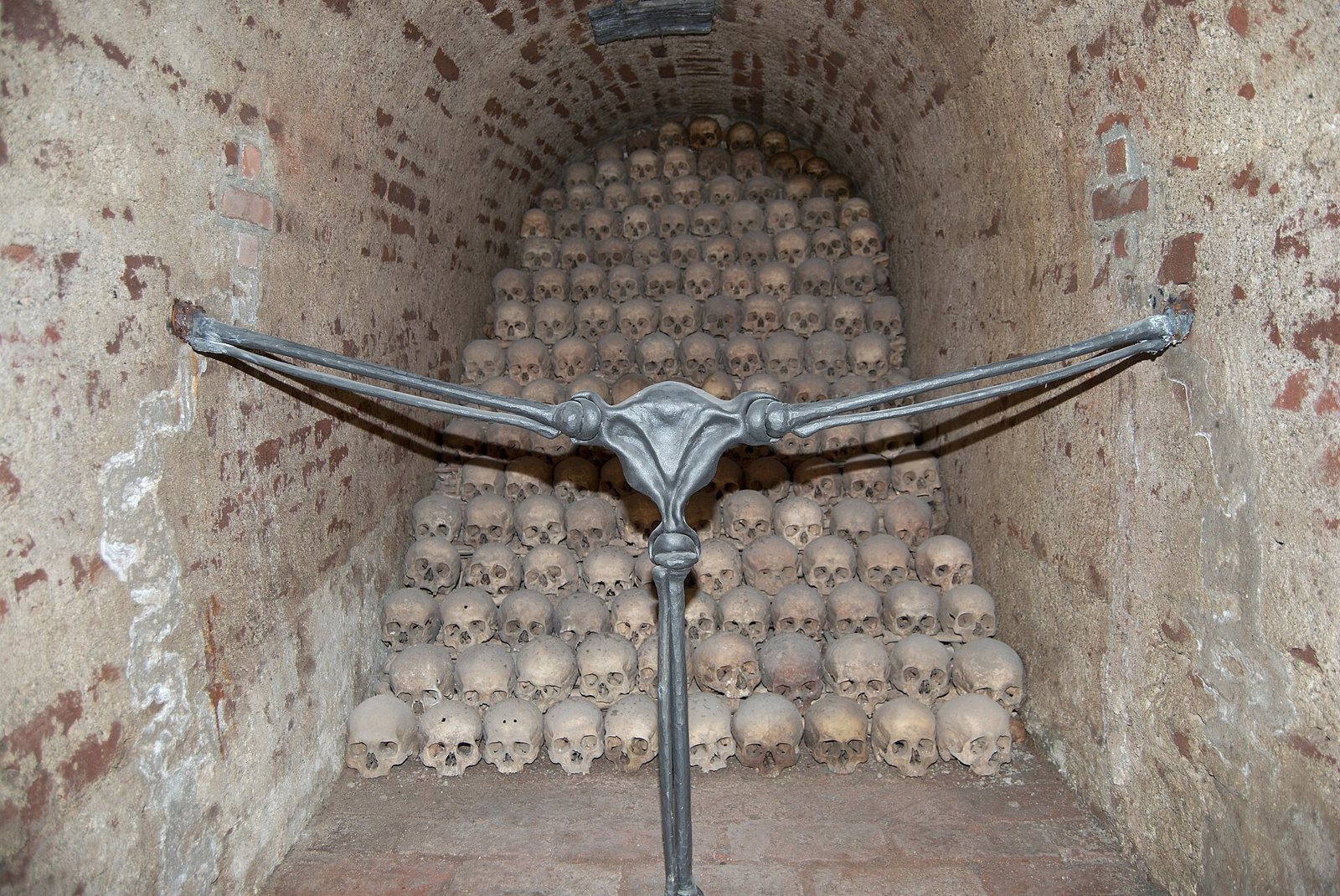
One chamber matters more than the rest for understanding what the place was. It was conserved in its original layered arrangement, the form associated with the way remains were stored when graves were cleared, so it shows how the old ossuary chambers held the dead. That is the main difference between Brno and the famous decorated bone chapels elsewhere in Europe. Nobody built chandeliers or coats of arms out of these bones. What you see is the scale of a city's dead, stacked carefully in the dark, with a chapel set aside for remembering them.
Visiting the Brno ossuary
The ossuary is open to visitors and run by TIC BRNO, Brno's tourist information centre. The details below are as shown on the official TIC BRNO page on 18 October 2026 (TIC BRNO). Hours and prices can change, so confirm them on that page before you go.
- Address: Jakubské náměstí, 658 78 Brno.
- Open Tuesday to Sunday, 9:30 to 18:00, with last entry at 17:30.
- Tickets can be bought online or at the door.
- Groups of six or more must reserve at kostnice@ticbrno.cz.
- Contact: kostnice@ticbrno.cz, +420 725 518 113.
Tap or hover a row to highlight it.
| Ticket | Price |
|---|---|
| TicketFull admission | Price180 CZK |
| TicketDiscounted (students up to 26, seniors 65 and over, disabled visitors, children up to 15) | Price90 CZK |
| TicketFamily (two adults and two children under 15) | Price420 CZK |
| TicketEach additional child | Price60 CZK |
| TicketChildren under six | PriceFree |
| TicketBRNOPAS holders | PriceFree |
Ask TIC BRNO about photography before your visit. It is also worth remembering what the place is. These are the remains of real people, the ancestors of families who may still live in Brno, and the ossuary is a place of remembrance. Quiet voices and a little patience in the narrow chambers suit it.
Brno, Sedlec and the other Czech ossuaries
Most people who know one Czech ossuary know Sedlec, near Kutná Hora, so the comparison comes up often. Sedlec is the lower chapel of the Cemetery Church of All Saints and holds the remains of medieval inhabitants of Kutná Hora and its surroundings. Its official history describes a large cemetery, the storage of exhumed remains in the lower chapel, a restoration by Jan Santini-Aichel in the early 18th century, and a major bone decoration by František Rint, completed in 1870 (Sedlec Ossuary). Our story on the Sedlec Ossuary tells it in full.
The two places feel different. Sedlec is known for deliberate arrangements, including a bone chandelier and the Schwarzenberg coat of arms. Brno's significance lies in the scale of a former urban cemetery and the preserved arrangement of its underground chambers (CzechTourism). CzechTourism also names other Czech ossuaries worth knowing about.
Tap or hover a row to highlight it.
| Ossuary | What CzechTourism notes |
|---|---|
| OssuaryBrno, St. James | What CzechTourism notesAbout 50,000 remains; the scale of a former city cemetery and its preserved chambers |
| OssuarySedlec, Kutná Hora | What CzechTourism notesMore than 40,000 remains; bone decorations by František Rint, completed 1870 |
| OssuaryMělník | What CzechTourism notesAn estimated 10,000 to 15,000 remains |
| OssuaryKřtiny | What CzechTourism notesAbout 1,000 sets of remains |
| OssuaryKolín | What CzechTourism notesBone columns and a Baroque altar |
Ossuaries like these exist across Europe, among them the Hallstatt bone house, the Czermna skull chapel and the Capuchin Crypt. Our overview of ossuaries around the world puts Brno among them.
Brno ossuary FAQ
These are the questions people ask most about the ossuary, answered briefly.
How many bones are in the Brno ossuary?
There is no count of bones; the official figure is an estimate of the remains of more than 50,000 people. Anthropologists from Masaryk University examined only an eight-cubic-metre sample, so the right way to put it is "more than 50,000 people," not "50,000 bones" (Masaryk University).
How many people are buried in the Brno ossuary?
The City of Brno estimates the remains of more than 50,000 people, adults and children, with some animal remains among them. They are mostly people buried in the St. James churchyard between the early 13th century and 1784.
How was the Brno ossuary found?
It came to light again in 2001, during archaeological research the city commissioned before structural work on Jakubské náměstí. The survey showed that the cemetery under the square connected with a large crypt and ossuary beneath St. James's Church, and revealed how large it was.
What is the Brno ossuary?
The Brno ossuary is a set of underground burial chambers by St. James's Church in Jakubské náměstí, holding the estimated remains of more than 50,000 people from the church's former cemetery. Their remains were moved there when graves were reused, and the ossuary opened to the public on 22 June 2012.
Can you visit the Brno ossuary, and do you need to book?
Yes, it is open Tuesday to Sunday, 9:30 to 18:00, with last entry at 17:30, as listed by TIC BRNO on 18 October 2026. Individual visitors can buy tickets online or at the door, while groups of six or more must reserve at kostnice@ticbrno.cz.
Is the Brno ossuary worth visiting?
For anyone interested in city history, archaeology and how European towns cared for their dead, it offers a documented look at more than five centuries of Brno's burials, right in the historic centre. Go knowing it is a place of remembrance.
What is the difference between the Brno Ossuary and Sedlec Ossuary?
Sedlec, near Kutná Hora, is famous for František Rint's bone decorations, completed in 1870, including a chandelier and the Schwarzenberg coat of arms. Brno has no such decoration; its importance is the scale of a former city cemetery and its preserved underground chambers.
Test yourself on the Brno ossuary
How well do you know the Brno ossuary?
Answer every question to check.
The people under Jakubské náměstí
The Brno ossuary is a city's own memory, kept underground. For five centuries the people of Brno buried their dead around St. James's Church, made room for new graves by moving the old remains below, and then, after 1784, stopped and forgot. The 2001 survey brought those people back into view, and the restoration that followed treated them as what they are: Brno's ancestors, cleaned, steadied and set back in place, with the damaged remains reburied at the Central Cemetery. If you go, check the hours with TIC BRNO, take the stairs down from the square, and give the layered chamber a long, quiet look.
Terms in this story
Tap a term to see what it means.
Ossuary. A place where the bones of the dead are kept, usually after they have been moved from graves that are needed for new burials.
---