

No. 124
Corpse Bride's Land of the Dead: Skeletons, Bonejangles and the Folktale Behind It
The Land of the Dead in *Corpse Bride* (2005) is the underworld where Emily and the film's other dead characters live, and it is the liveliest place in the movie. It mirrors the grey Land of the Living above it, but every stiff rule, building and monument up there turns musical, chaotic and celebratory down below. Tim Burton described it as the more emotional and liberated side of life, a feeling he wanted on screen rather than a claim about what happens after we die (The Guardian). The story itself was inspired by Howard Schwartz's retelling "The Finger," a Jewish tale of a ring, a vow and a bride who rises from the ground.
That is the short answer. The longer one involves more than 200 puppets, a skeleton band with a very good name, and a folktale whose family tree reaches back to the twelfth century.
Why the dead get all the color
Most films would make the afterlife the gloomy half. Burton flipped it. He described the Land of the Living as a place of bureaucracy, repression and emotional restraint, and the Land of the Dead as more colorful, musical and fun (The Guardian). The dead have been freed from the rules that boxed them in while they were alive, so they sing and dance at full volume.
Burton connected that reversal to his interest in cultures that treat death as part of life, including Day of the Dead imagery in Mexico (Los Angeles Times). If you know Día de Muertos and its cheerful calacas, the skeletons going about their business in a busy town, you can see the kinship in the film's crowded bars and streets. The film borrows a mood from that imagery; the celebration itself belongs to the communities in Mexico who keep it.
The design team built the contrast into every frame. For the living world they used muted, near-monochrome colors and Victorian photographic references, so Victor's town looks like an old photograph that has never once smiled. Production designer Alex McDowell said the Land of the Dead used stronger blues, purples, oranges, yellows and greens, with buildings designed to resemble bone and decay (Animation World Network). Even the buildings look a little skeletal.
Two worlds in Corpse Bride
Tap a card to bring it forward.
- Land of the Living: Muted, near-monochrome colors and Victorian photographic references; Burton tied it to bureaucracy, repression and emotional restraint.
- Land of the Dead: Stronger blues, purples, oranges, yellows and greens; colorful, musical and fun.
- Buildings below: Designed to resemble bone and decay.
- The idea behind it: The dead are freed from the restrictions that governed their lives.
- Burton's inspiration: Cultures that treat death as part of life, including Day of the Dead imagery in Mexico.
Who made Corpse Bride
Tim Burton and Mike Johnson directed *Corpse Bride*, released in 2005, with screenplay credits for John August, Caroline Thompson and Pamela Pettler (MoMA programme notes). It is a stop-motion film, which means every movement on screen was made by hand: animators shifted each puppet a fraction, shot a single frame, then shifted it again. Production lasted roughly three years (Los Angeles Times).
Looking back with Cartoon Brew, co-director Mike Johnson talked through the two visual worlds, the puppet mechanics and the Land of the Dead itself, with the dead town given room to be loud while the living town stays buttoned up (Cartoon Brew).
How the skeleton puppets were built
The puppets came from Mackinnon & Saunders, who made more than 200 of them for the film (Mackinnon & Saunders). Inside each one sat an articulated armature, a small metal skeleton of its own, covered with silicone and foam skin. The puppets had ball-and-socket eyes and miniature costumes designed to survive thousands of tiny adjustments.
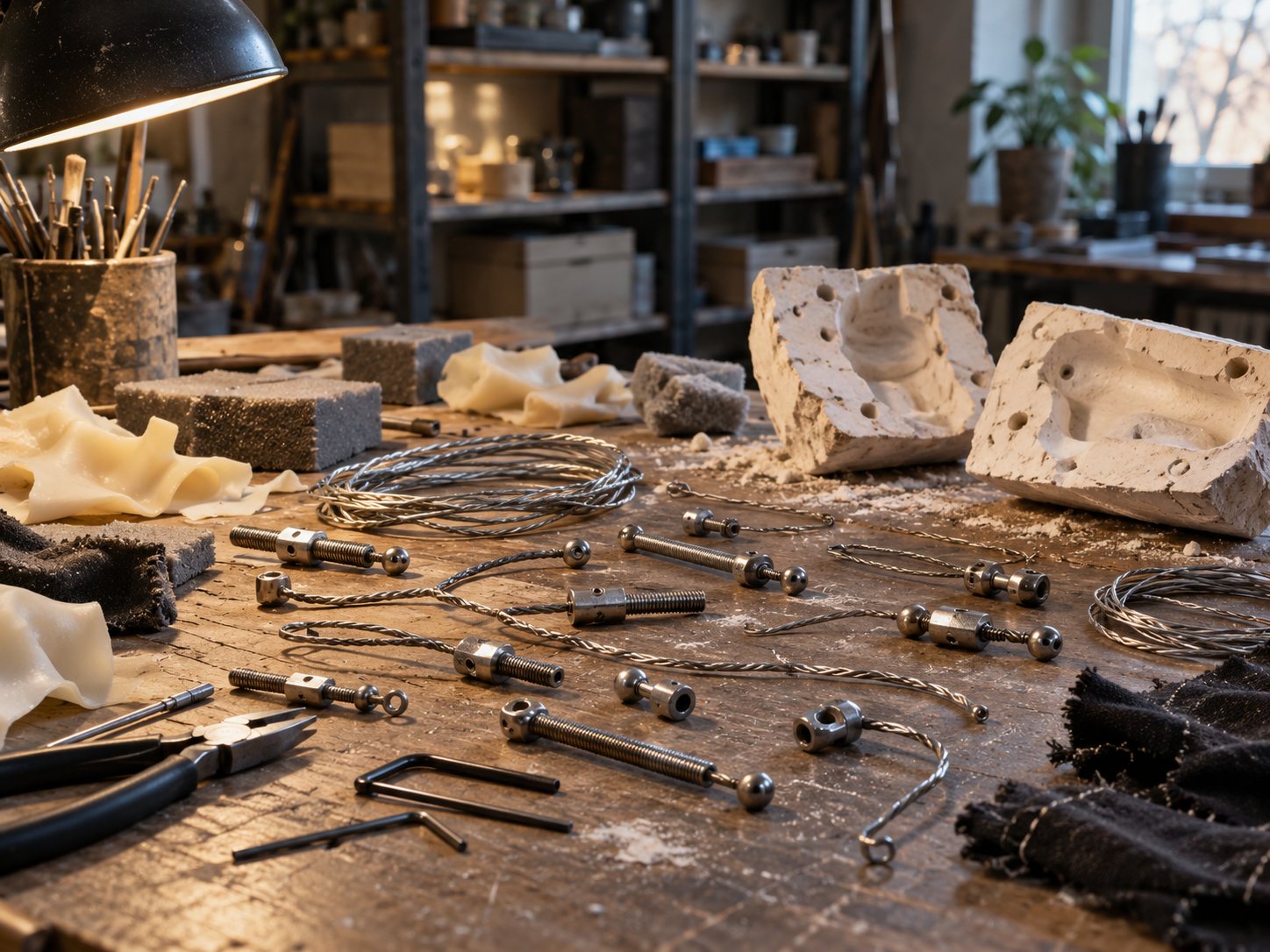
The lead characters needed spares. Graham G. Maiden said the team made fourteen Corpse Bride puppets, twelve Victors and twelve Victorias (Animation Art Conservation). Their heads were cast in translucent silicone, and hidden gears inside them worked the smiles, eyebrows and mouths. Animators turned those gears through Allen-wrench access points, so a raised eyebrow on screen was really a small twist of a tool (Animation World Network; Los Angeles Times).
The skeletons of the Land of the Dead were simpler. They used hinged jaws, and some of the dancing figures were built as flexible wire puppets so they could leap and bend in ways a stiffer armature would fight. The props got the same care. A wedding cake in the Land of the Dead was decorated with fifty skulls and bones, and it took four craftsmen about seven days to build (Los Angeles Times). A week of work for a cake, which is a fair amount of devotion for something nobody gets to eat.
Tap or hover a row to highlight it.
| Detail | Figure |
|---|---|
| DetailPuppets made by Mackinnon & Saunders | FigureMore than 200 |
| DetailCorpse Bride (Emily) puppets | Figure14 |
| DetailVictor puppets | Figure12 |
| DetailVictoria puppets | Figure12 |
| DetailSkulls and bones on the Land of the Dead wedding cake | Figure50 |
| DetailCraftsmen who built the cake | Figure4, over about seven days |
| DetailLength of production | FigureRoughly three years |
Bonejangles and "Remains of the Day"
Bonejangles is the skeleton bandleader of the Land of the Dead, and his big number, "Remains of the Day," is the film's fast, theatrical account of how Emily died. The screenplay calls the group "Bonejangles and the Skeletones," a name that deserves a round of applause on its own (Corpse Bride screenplay).
Danny Elfman wrote the song. He explained that the original lyrics did not give enough of Emily's backstory, so he expanded it into an old-fashioned storytelling number, a tale told in song by a crowd of the dead who clearly enjoy a good story (Danny Elfman). That is why the scene works as both a party and a plot point: Victor arrives confused, and the skeletons fill him in with a band behind them.
The leaping and dancing were animated entirely in stop motion. Mike Johnson said some of the skeletons were built from flexible wire instead of ball-and-socket armatures, which let them bounce around the bar with more snap (Cartoon Brew).
The sequence also tips its hat to the animated skeletons that came before it. Johnson pointed to Disney's early "Skeleton Dance," which you can read about in our story on The Skeleton Dance of 1929, and to Ray Harryhausen's stop-motion work, best known to skeleton fans from the sword fight in Jason and the Argonauts. Bonejangles stands in a long line of cartoon and puppet skeletons, the same line that runs back through older images of the dead dancing, like the medieval danse macabre.
The folktale behind the story
The film's immediate literary source is Howard Schwartz's story "The Finger," published in *Lilith's Cave: Jewish Tales of the Supernatural* in 1991 (Mackinnon & Saunders). Schwartz's version is associated with the sixteenth-century Jewish mystic Isaac Luria. In it, a young man places a wedding ring on what he thinks is a root or a finger and recites the Jewish wedding formula. A dead bride rises and claims him as her husband. A rabbi later annuls the accidental union (Syfy Wire).
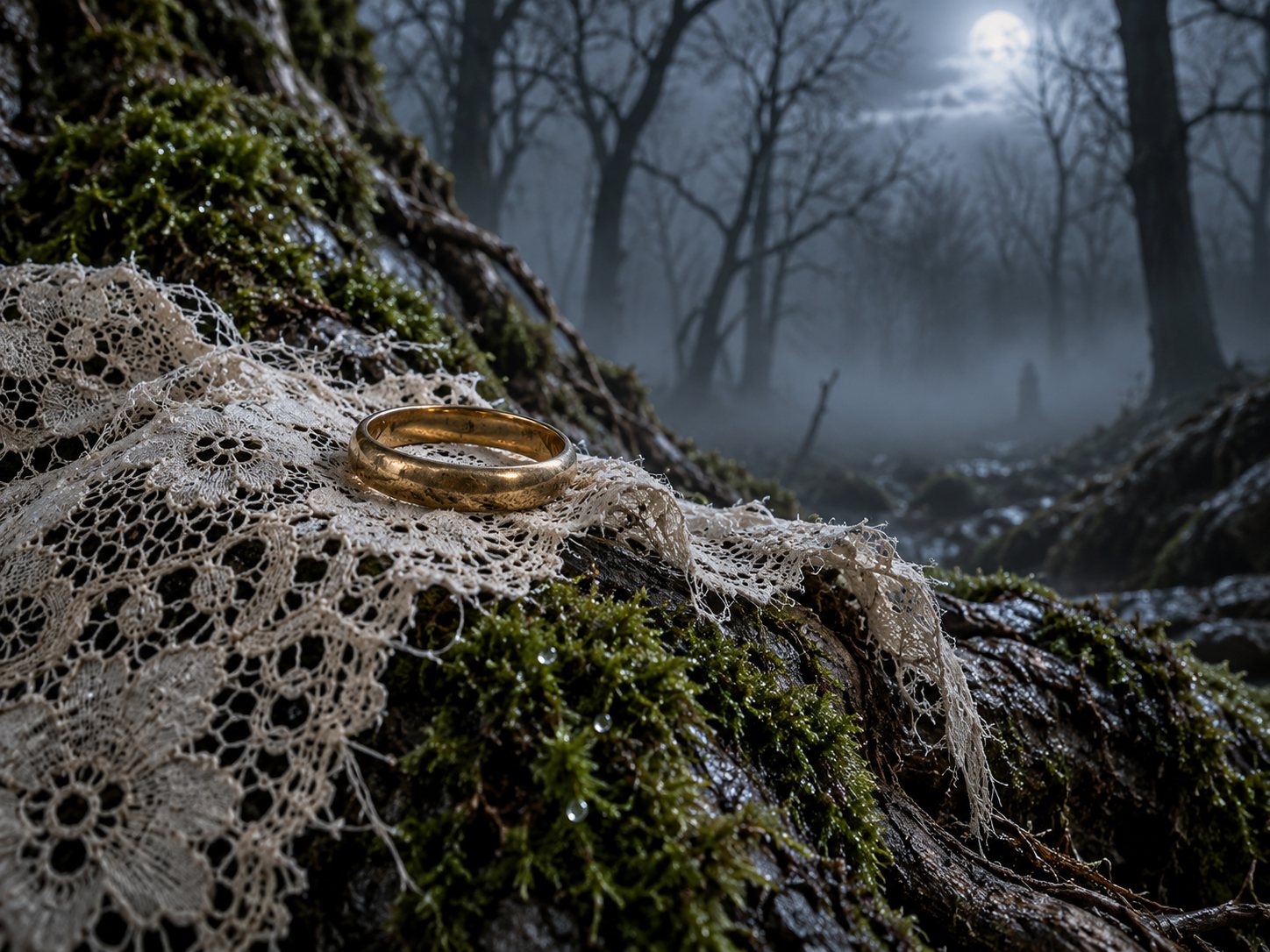
You can hear the film's spine in that summary: the ring, the spoken vow and the bride who takes it seriously.
Where the tale comes from before Schwartz is a debated question. BFI programme notes describe the film as rooted in a Russian folktale (BFI). Schwartz's own account treats "The Finger" as a later adaptation of a much older demon-bride tradition. The discussion of Schwartz in the book *Fairy Tale Films* connects the story to tale type ATU 365 and to the medieval European "Venus-ring" motif, in which a man puts a ring on a statue and finds himself supernaturally bound to it (Fairy Tale Films).
The clearest way to put it: Burton's film was inspired by Schwartz's Jewish retelling, and that retelling belongs to a wider European family of supernatural bride and ring stories. The family is old. Around 1125, William of Malmesbury recorded a story of a ring placed on a statue of Venus, and a 1629 collection about Isaac Luria preserves a Jewish demon-bride story built on an accidental supernatural marriage.
From ring legend to stop-motion film
Tap or hover a step to follow the order.
1125
William of Malmesbury records an early European ring-and-supernatural-bride story involving a statue of Venus.
1629
A collection about Isaac Luria preserves a Jewish demon-bride story involving an accidental supernatural marriage.
1991
Howard Schwartz publishes "The Finger" in Lilith's Cave: Jewish Tales of the Supernatural.
2005
Tim Burton and Mike Johnson release Corpse Bride, inspired by Schwartz's retelling and made in stop motion.
2005
The National Board of Review names it Best Animated Feature.
2006
It receives an Academy Award nomination for Best Animated Feature and wins the Ub Iwerks Award for Technical Achievement and the British Animation Award for Best European Feature Film.
The lines people remember
The film's famous short line is Emily's "I do." Victor is practicing his wedding vows when he places the ring on what turns out to be Emily's skeletal finger. Her answer is two words long, and it changes everything (Corpse Bride screenplay).
The vow that sets it off is Victor's "With this ring, I ask you to be mine." Does Emily reply with a longer bridal verse? The two lines the scene is quoted for are his vow and her "I do."
The other line people carry away is Emily's farewell, "I love you, Victor, but you are not mine" (IMDb quotes). If you have not seen the film, it is enough to know that the line comes late and lands softly.
How the film was received
Critics were broadly warm toward the stop-motion craft, the visual design and the film's bittersweet tone. The Rotten Tomatoes critics consensus calls it macabre, "visually imaginative, and emotionally bittersweet" (Rotten Tomatoes), and Metacritic lists a score of 83 from 35 critics (Metacritic). Roger Ebert called it a sweet and visually lovely tale of love lost (Roger Ebert).
The awards followed the craft. The National Board of Review named it Best Animated Feature of 2005 (National Board of Review). It was nominated for the 2006 Academy Award for Best Animated Feature (Academy Awards). It won the 2006 British Animation Award for Best European Feature Film (British Animation Awards) and the Annie Awards' Ub Iwerks Award for Technical Achievement, with further Annie nominations for Best Animated Feature, Best Character Design and Best Direction (Mackinnon & Saunders). For a film whose faces ran on hidden gears, a technical award feels just right.
If Burton's skeletons are your favorite part, his earlier pumpkin king is the natural next stop: our story on Jack Skellington covers the other famous bony hero in his films.
How well do you know the Land of the Dead?
Answer every question to check.
Corpse Bride questions, answered
Short answers to the questions fans of the film ask most.
Is Corpse Bride based on a true story?
No, it is based on a folktale. The film was inspired by Howard Schwartz's "The Finger," a Jewish tale associated with Isaac Luria and published in *Lilith's Cave* in 1991, which belongs to a much older family of European stories about rings and supernatural brides.
Who is Bonejangles, and who sings "Remains of the Day"?
Bonejangles is the skeleton bandleader who sings "Remains of the Day" in the Land of the Dead with his band, which the screenplay names Bonejangles and the Skeletones. Danny Elfman wrote the song and turned it into a storytelling number about how Emily died.
Why is the Land of the Dead colorful while the living world is grey?
Burton made the dead world colorful because he saw it as the freer, more emotional side of life, while the grey living world stood for bureaucracy and restraint. Alex McDowell's team lit it with blues, purples, oranges, yellows and greens, and Burton linked the idea to Day of the Dead imagery in Mexico.
How were the Corpse Bride puppets made?
Mackinnon & Saunders built more than 200 puppets with metal armatures, silicone and foam skin, ball-and-socket eyes and tiny costumes. The lead faces moved through hidden gears turned with an Allen wrench, while many skeletons had simple hinged jaws or flexible wire bodies for dancing.
What is the most famous line from Corpse Bride?
Emily's "I do" is the most famous line, spoken when Victor slips the ring onto her finger while rehearsing his vows. Her farewell, "I love you, Victor, but you are not mine," is the other line fans quote most.
Where the story leads next
*Corpse Bride* takes skeletons, a ring legend and a palette borrowed from celebration, and turns them into a love story where the dead are better company than the living. If the singing skeletons are what stayed with you, follow them back to The Skeleton Dance of 1929 and forward to Jack Skellington. If it was the color and warmth of the dead, the cheerful skeletons of Día de Muertos are the tradition Burton had in mind, and they are worth knowing on their own terms.
Terms in this story
Tap a term to see what it means.
Stop motion. Animation made by moving a physical puppet a tiny amount, photographing one frame, and repeating. Corpse Bride took roughly three years to make this way.