

No. 118
Jason and the Argonauts Skeleton Fight: How Ray Harryhausen Made It
The skeleton fight in *Jason and the Argonauts* (1963) was made by one man, Ray Harryhausen, moving seven miniature skeletons one frame at a time. The models were articulated figures only about 8 to 10 inches tall. The three actors had already rehearsed and filmed their sword fight against stunt performers standing in for the skeletons, and Harryhausen then animated each skeleton by hand to match every swing, block and stumble in that footage. Some frames needed 35 separate adjustments. The whole sequence took about four and a half months and produced only a few minutes of finished film (TCM).
That is the short answer. The longer one is a story about patience, a ballet-like duel from an earlier film, a Greek epic more than two thousand years old, and a handful of small skeletons that still exist today.
Seven skeletons, each smaller than a ruler
The warriors that rise out of the ground near the end of the film look like full-size soldiers, shields up and swords ready. On the workbench they were tiny. Harryhausen's skeleton models stood roughly 8 to 10 inches tall, with joints that could be bent and locked into a new pose for every exposure (TCM).
Six of them were built new for *Jason and the Argonauts*. The seventh was a veteran. It was the same skeleton that had already fought a hero on screen five years earlier in *The 7th Voyage of Sinbad* (1958), brought back to join a larger squad (TCM). So, if one of the seven ever looks especially sure of itself with a sword, it had the experience.
Among the original models that survive are skeletons carrying a Medusa shield and an octopus shield (Ray and Diana Harryhausen Foundation).
The actors fought first, against nobody
Stop-motion creatures cannot share a set with actors in real time, so Harryhausen worked in two stages. First came the live action. The sword fight was rehearsed and filmed with stunt performers standing in for the skeletons, so the three actors had real bodies to aim at, dodge and parry. Seven numbered stunt performers helped keep the choreography straight during rehearsal (National Galleries of Scotland; British Entertainment History Project).
Then the stunt performers' places were handed over to the models. Harryhausen studied the live-action footage frame by frame and animated the miniature skeletons to match the actors' movements, replacing each stand-in's position with a skeleton (National Galleries of Scotland).
Some moments needed more than posing. For the shot in which a skeleton jumps over the falling Andros, Harryhausen used a wire rig (TCM). The skeletons and the live footage were then composited, combined into a single image, so that the finished scene reads as one fight in one place.
Frame by frame, 35 moves at a time
Film runs at 24 frames per second. Every one of those frames in the skeleton fight was a separate photograph of the models, each pose a tiny step on from the last. With seven skeletons in the shot, all of them moving, all of them matching three actors, a single exposed frame could take 35 separate movements of arms, legs, skulls, swords and shields (TCM; British Entertainment History Project).
On days when all seven were on screen, Harryhausen averaged about 13 or 14 frames. At 24 frames per second, that is less than one second of finished film for a full day's work (TCM). Keep going at that pace for weeks and the numbers add up to roughly four and a half months for the sequence, which lasts only a few minutes when you watch it.
Tap or hover a row to highlight it.
| Detail | Figure |
|---|---|
| DetailSkeleton warriors in the fight | Figure7 |
| DetailLive actors fighting them | Figure3 |
| DetailHeight of each model | FigureAbout 8 to 10 inches |
| DetailModels newly built for the 1963 film | Figure6 |
| DetailModels reused from The 7th Voyage of Sinbad | Figure1 |
| DetailMovements for a single frame, at most | Figure35 |
| DetailFrames per day with all seven on screen | FigureAbout 13 or 14 |
| DetailTime to animate the sequence | FigureAbout four and a half months |
The duel that came first: a single skeleton in The 7th Voyage of Sinbad
The seven warriors had a rehearsal of their own, in a different film. In *The 7th Voyage of Sinbad* (1958), Harryhausen animated one sword-fighting skeleton against the actor Kerwin Mathews as Sinbad (National Galleries of Scotland).
The method was the same in miniature. The fight was choreographed like a ballet and rehearsed with a stunt performer playing the skeleton's part. For the final live-action take the stunt performer stepped out, Mathews fought the empty space, and Harryhausen later animated the skeleton into the same positions. He analyzed the footage frame by frame so the skeleton's sword would anticipate and answer each of Sinbad's attacks (National Galleries of Scotland).
That lone skeleton worked so well that it led directly to the bigger idea: seven skeletons instead of one, and three heroes instead of a single swordsman (TCM). If you have ever half-remembered a different skeleton swordfight from an old fantasy film, this is very likely the one.
The myth behind the scene: soldiers sown from dragon's teeth
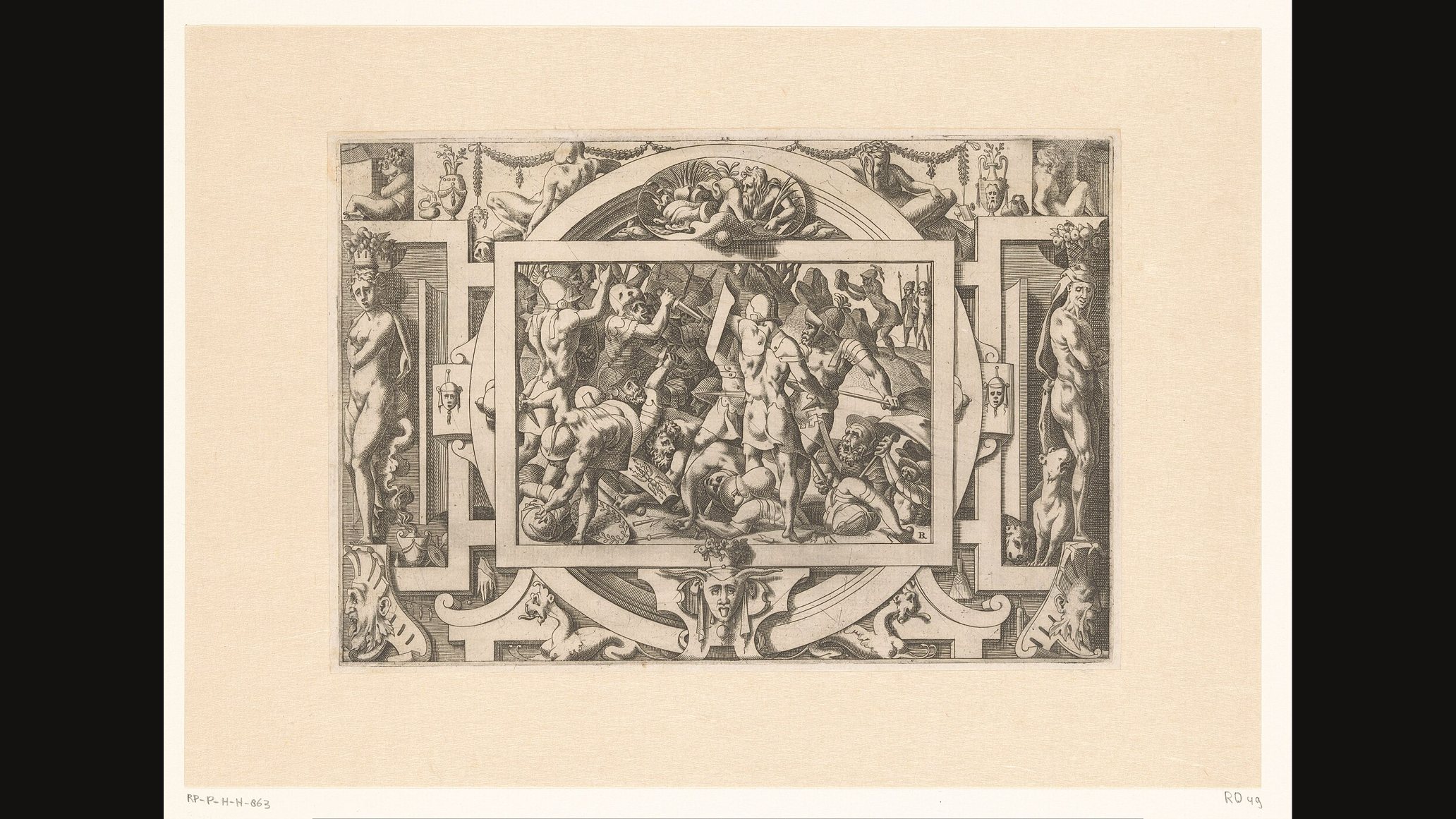
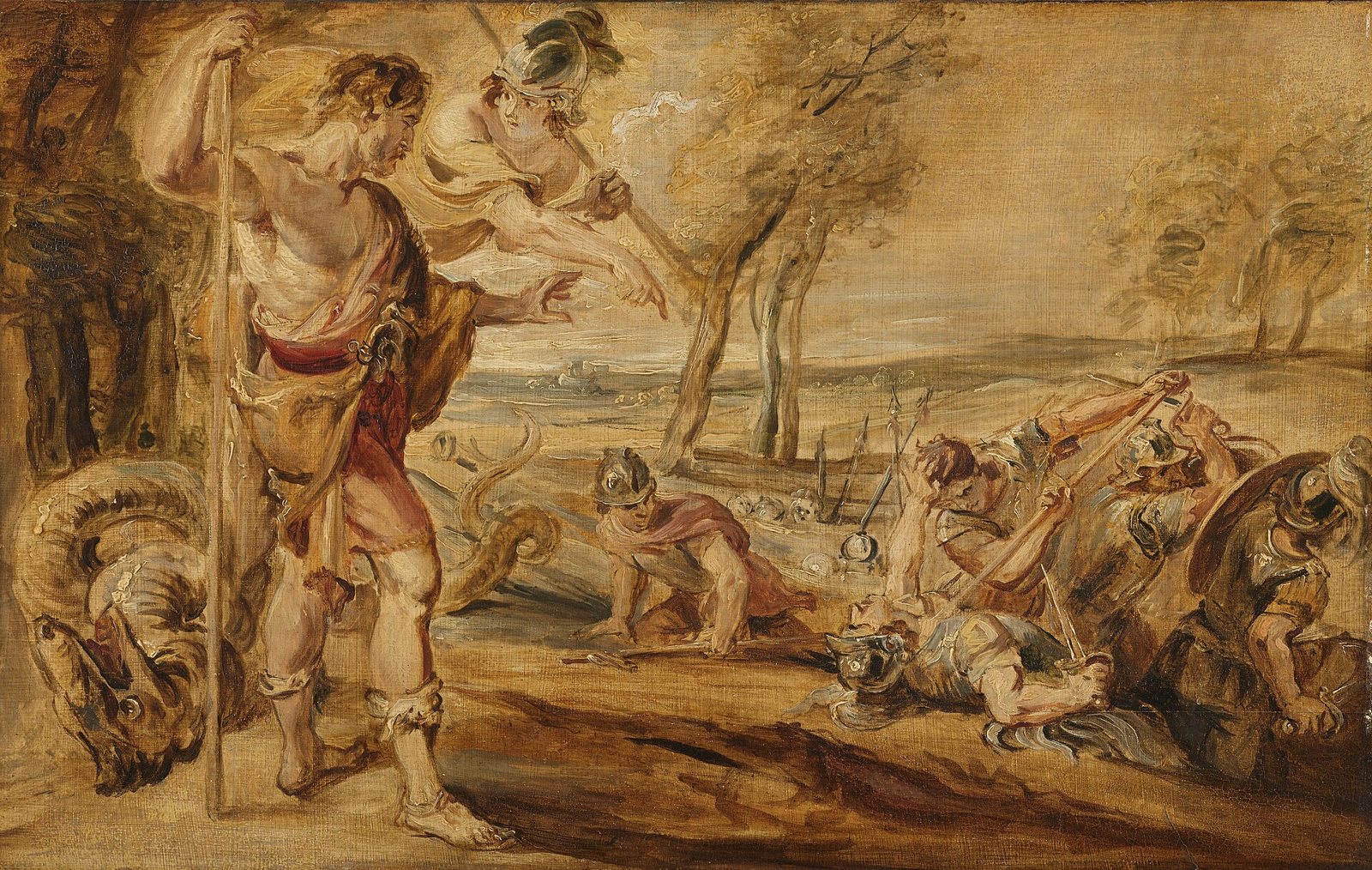
The skeletons have an ancient ancestor. In the *Argonautica* of Apollonius Rhodius, a Hellenistic Greek epic from the third century BCE, King Aeëtes sets Jason a task in Book 3. Jason must sow dragon's teeth in the Field of Ares at Colchis. Armed warriors spring up from the soil. Medea, who is helping him, tells him to throw a stone among them, and the earth-born men turn on one another; Jason then kills the survivors (Theoi Classical Texts Library; MIT Internet Classics Archive).
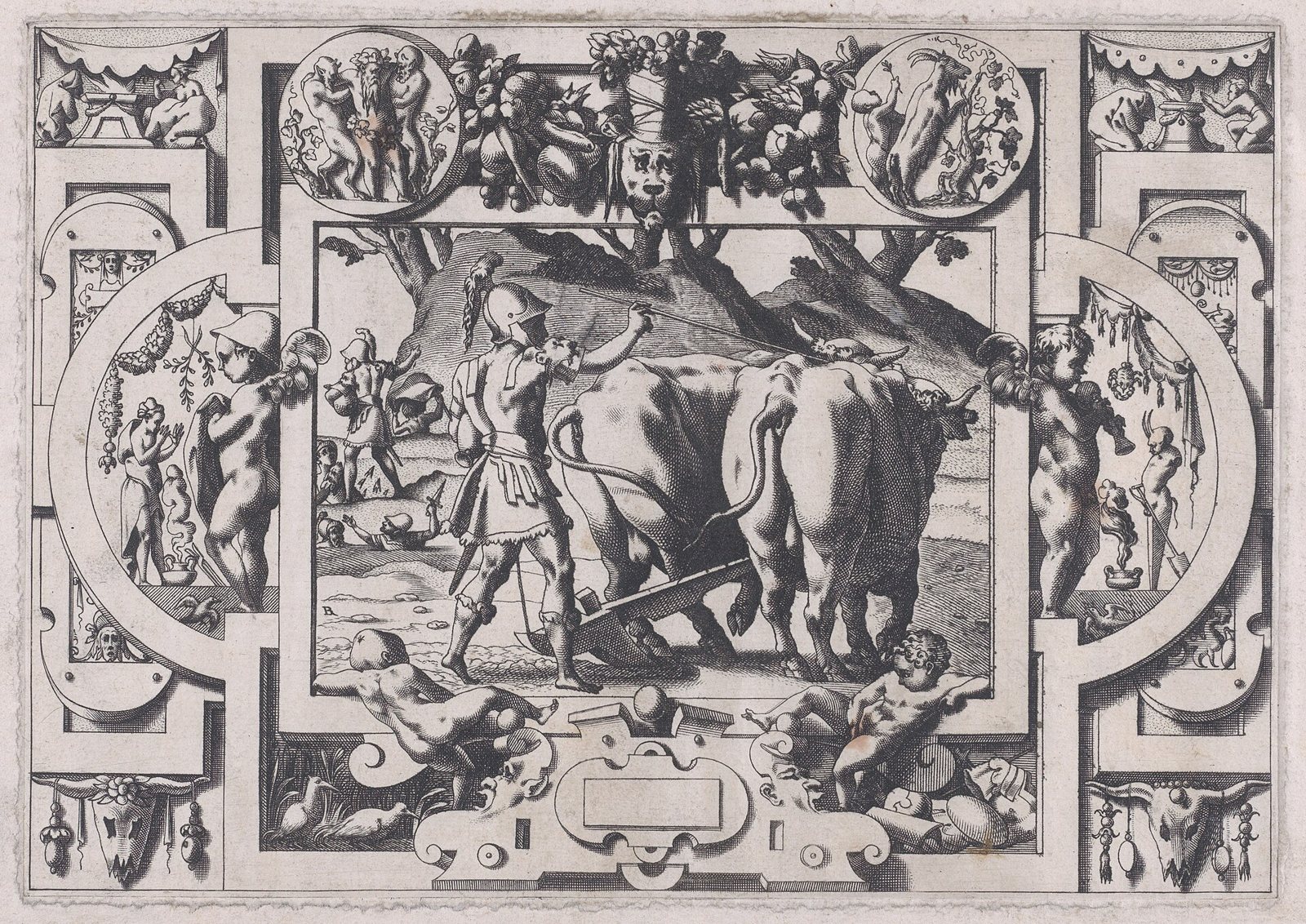
These warriors belong to the family of the Spartoi, the "sown men," who also appear in the Theban myth of Cadmus. In Apollonius they are earth-born armed men or giants rising from the ground (Theoi Classical Texts Library).
The 1963 film keeps the core image of soldiers grown from teeth and changes much around it. In the film, the teeth come into Aeëtes's hands through a ritual involving Hecate and the Hydra, and the warriors that rise are seven skeletons. Jason does not rely mainly on the stone trick either. He stands and fights them with two companions (RTVE; Theoi Classical Texts Library).
From dragon's teeth to stop-motion skeletons
Tap or hover a step to follow the order.
Third century BCE
Apollonius Rhodius tells of Jason sowing dragon's teeth and facing earth-born armed men in the Argonautica, Book 3.
1958
The 7th Voyage of Sinbad shows Harryhausen's single skeleton in a sword fight with Sinbad.
1963
Jason and the Argonauts expands the idea to seven skeletons fighting three live actors.
1986
Ray Harryhausen establishes the Ray and Diana Harryhausen Foundation to preserve his collection.
2020
Original skeleton models appear in the Ray Harryhausen: Titan of Cinema exhibition in Edinburgh.
Why skeletons, and why such clean ones
Harryhausen gave a practical reason for the look. As he told the British Entertainment History Project, the myth's warriors suggested rotting corpses, and censorship concerns about showing that on screen pushed the production toward clean skeletons instead (British Entertainment History Project).
The choice gave the film its most famous image. A clean skeleton with a shield and a sword is unmistakably dead and yet oddly tidy, a figure that belongs as much to the old danse macabre of dancing dead as to a war story. It also joins a long line of skeletons on screen, from the cartoon The Skeleton Dance (1929) to the Pirates of the Caribbean skeleton crew.
The filmmakers it inspired, in their own words
The skeleton fight has a long reach, and the clearest evidence comes from the people who say so themselves. James Cameron said in a 2010 interview that his childhood inspiration for *Avatar* included Ray Harryhausen's films, and he described their stop-motion worlds as "dream-like" and "otherworldly" (Seattle Post-Intelligencer).
The director John Landis said Harryhausen had a powerful effect on him from childhood, and he described the image of Harryhausen animating a skeleton fight as a pure form of cinema (That Shelf). Harryhausen himself named Industrial Light & Magic and Peter Jackson among those influenced by his work (Stop Motion Works). His influence also runs through animators such as Phil Tippett and Henry Selick, who carried stop-motion and creature effects forward after him. Fans of another famous stop-motion skeleton may enjoy our story on Jack Skellington.
Where the skeletons are now
The skeletons were kept. The Ray and Diana Harryhausen Foundation, which Ray Harryhausen established in 1986 to preserve his collection, holds his film models today. Original skeleton models from *Jason and the Argonauts*, including the ones with the Medusa shield and the octopus shield, were restored and conserved for the 2020 exhibition *Ray Harryhausen: Titan of Cinema* at the Scottish National Gallery of Modern Art in Edinburgh (Ray and Diana Harryhausen Foundation; National Galleries of Scotland).
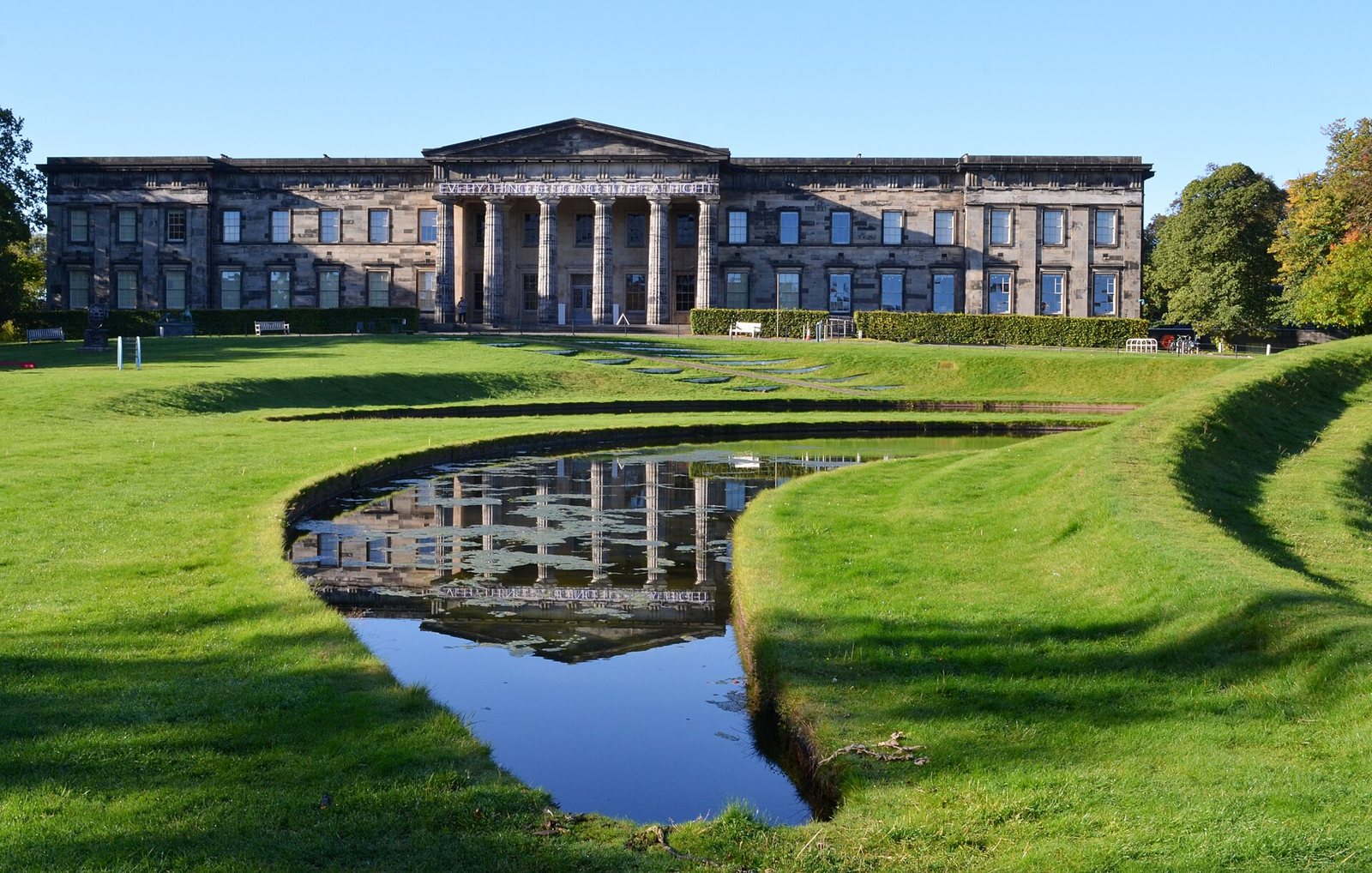
The Foundation has its registered office in Edinburgh and lends models to museums and galleries, so where any one skeleton is displayed can change from year to year. If you would like to see them in person, confirm the current display location with the Ray and Diana Harryhausen Foundation before planning a visit.
Questions people ask about the Jason and the Argonauts skeletons
Short answers to the questions that come up most follow.
Who did the skeletons in Jason and the Argonauts?
Ray Harryhausen created and animated the seven skeleton warriors for the 1963 film. He handled the stop-motion effects himself and matched the miniature figures to footage of the live actors (TCM).
Are there skeletons in Jason and the Argonauts?
Yes. Seven animated skeleton warriors fight Jason and two other Argonauts near the end of the 1963 film, rising from the ground after dragon's teeth are sown (RTVE).
What is an old movie with stop-motion skeletons, and where else is there a skeleton swordfight like this?
*Jason and the Argonauts* (1963) is the best-known old film with stop-motion skeletons. The other famous skeleton swordfight is Harryhausen's earlier duel in *The 7th Voyage of Sinbad* (1958), where a single skeleton fights Sinbad, played by Kerwin Mathews (National Galleries of Scotland).
Were the skeletons actors in costumes?
No, the skeletons were miniature articulated models about 8 to 10 inches tall, animated one frame at a time. Stunt performers stood in for them while the live-action fight was rehearsed and filmed, and Harryhausen then replaced those positions with the animated models (TCM; National Galleries of Scotland).
How long did the skeleton fight take to make?
The skeleton sequence took about four and a half months to animate. On days when all seven skeletons were on screen, Harryhausen finished only about 13 or 14 frames, less than a second of film (TCM).
Jason and the Argonauts skeleton quiz
Answer every question to check.
More skeletons on screen and in art
Harryhausen's seven warriors are one chapter in a much older habit of making skeletons move. For the art history behind the dancing dead, read about the danse macabre. For more animated skeletons, start with The Skeleton Dance (1929), then visit the Pirates of the Caribbean skeleton crew. And if skeletons on screen get you thinking about October, our story on skeletons and Halloween is a good next stop.
Terms in this story
Tap a term to see what it means.
Stop-motion. A way of animating in which a model is moved a tiny amount and photographed, over and over, so the frames play back as movement.