
No. 001
Shrunken Heads: What Tsantsa Meant to the Shuar and Achuar, and Where They Are Now
Shrunken heads, called tsantsa, were made by Shuar and Achuar communities in the Amazonian forests of Ecuador and northern Peru. They were ceremonial objects. The Pitt Rivers Museum in Oxford explains that a genuine tsantsa was meant to capture the power of a dead enemy's avenging soul, the muisak, and turn that power toward the strength of the group and good harvests. From the 1870s, outsiders created a trade in these heads that led to more violence and to many counterfeits, some made from animal skin. Today, many museums keep tsantsa off display, test them to learn what they are, and have returned some to Ecuador.
If you saw one in a glass case or a photo and wondered what you were looking at, the answer has three layers: a Shuar and Achuar ceremonial practice, a foreign market that copied and distorted it, and the museums now trying to sort one from the other.
What a tsantsa meant to the Shuar and Achuar
The Pitt Rivers Museum is careful on this point: a ceremonial tsantsa was not simply a war trophy. It was tied to Shuar and Achuar ideas about spiritual power. The muisak, the avenging soul of a slain enemy, was dangerous, and making a tsantsa was a way to contain that power and redirect it so that it strengthened the community and supported productive harvests. The Matson Museum of Anthropology at Penn State and the Museo de América in Madrid describe the same spiritual purpose.
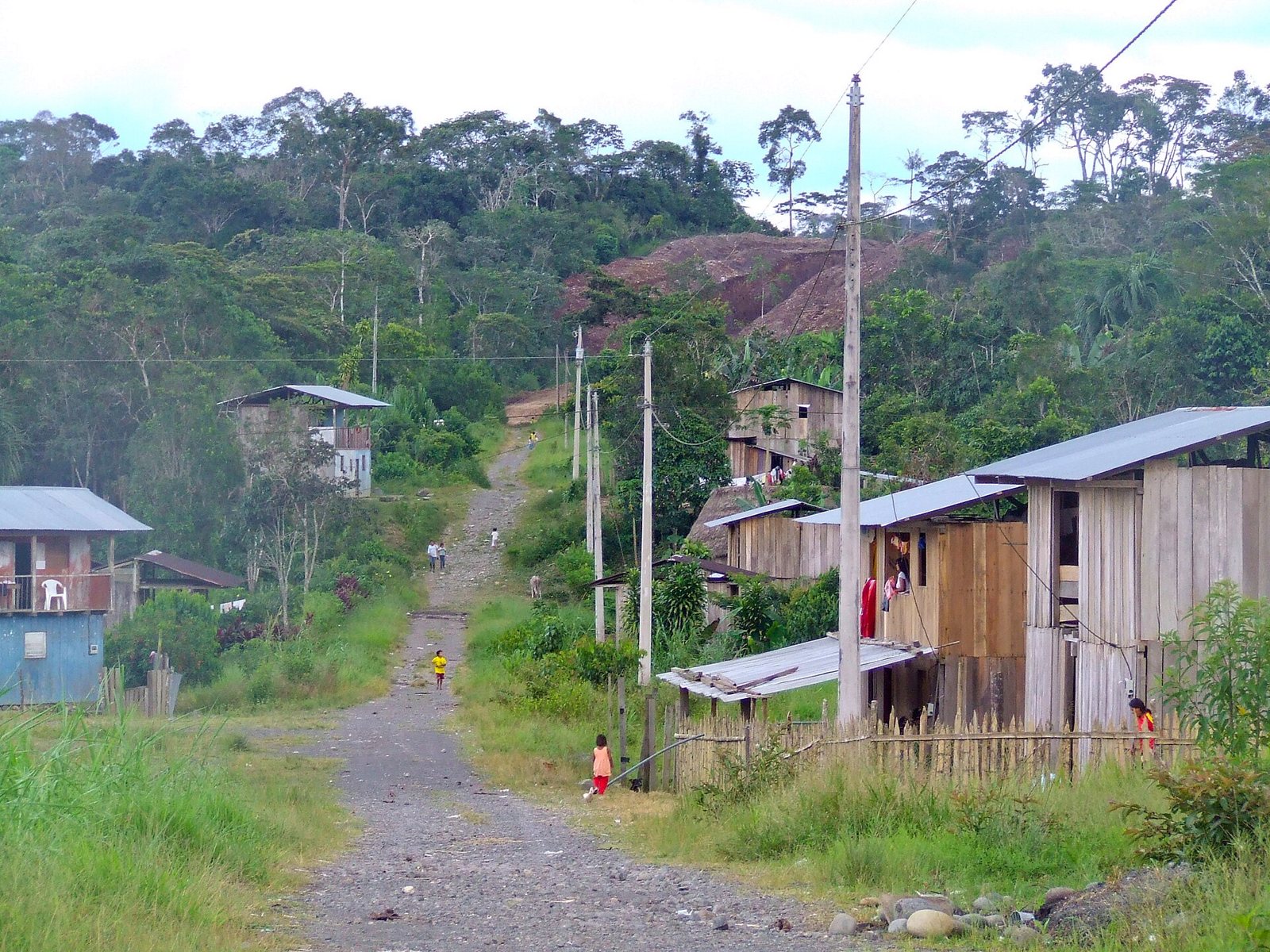
The practice belonged to specific communities in a specific region, the Shuar and Achuar of Amazonian Ecuador and northern Peru. It was not a general custom of "the Amazon."
Much of what was written about tsantsa came from foreign observers who did not speak Shuar. That matters, because Shuar people have their own account of the practice. Shuar leader Jefferson Pullaguari has stressed that tsantsa were a sacred practice and that Shuar people should be the ones to explain their history and its meaning. The Pitt Rivers Museum also records that Achuar representatives have joined discussions about tsantsa collections, and that their views on the objects' significance differ.
According to the Pitt Rivers Museum, Shuar production largely ended around 1960, after missionary intervention.
How a tsantsa was made
Recorded accounts, summarized by the Pitt Rivers Museum and the Museo de América, describe a careful sequence of steps. The skin and hair were removed from the skull, and the skull itself was discarded. The skin was soaked briefly in hot water, then filled again and again with hot sand. After each treatment the maker reshaped the face by hand so the features kept their form as the skin grew smaller.
The eyes, the mouth and the opening at the neck were sewn closed. Charcoal or another darkening substance could be rubbed into the skin, and the finished head was shaped around hot stones or other material. The skull was never part of a tsantsa, which is why a shrunken head keeps a face but has no bone inside it.
So, the question "how do shrunken heads shrink?" has a plain answer: heat and handwork. Hot water, hot sand and repeated reshaping reduced the skin and preserved the face.
The trade that followed
The Pitt Rivers Museum dates the major trade in tsantsa to the 1870s. European and North American traders, collectors and museums wanted them, and guns were among the goods exchanged for them. The museum states that this demand contributed to increased violence among the Shuar.
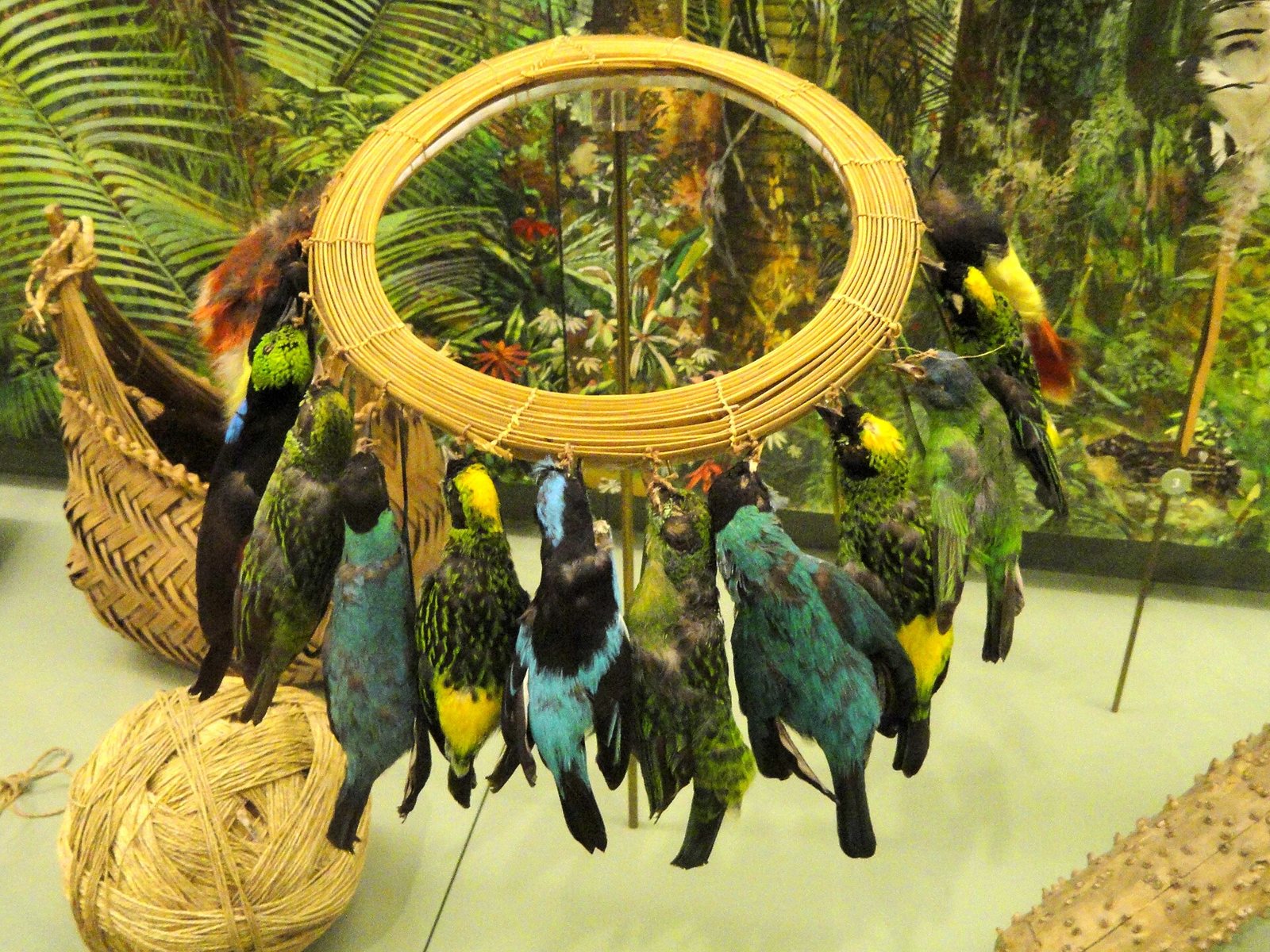
Once heads had a price, production changed. Some tsantsa were made to sell rather than for ceremony, and many were not human at all. Makers used animal skin, especially sloth or monkey skin, to meet the demand. The Museo de América says fakes became abundant from the nineteenth century onward. A 2021 genetic study by Verónica Baquero-Méndez, Karla Rojas-López and colleagues, published in Forensic Science International and recorded by Universidad San Francisco de Quito, notes that demand in the first half of the twentieth century encouraged counterfeit production.
That trade is how so many shrunken heads ended up in museums, sideshows and private collections far from Ecuador.
Tsantsa from the 1870s trade to today
Tap or hover a step to follow the order.
1870s
Tsantsa become trade items in exchanges involving foreign traders, collectors and guns
First half of the 20th century
Demand encourages commercial counterfeits
Around 1960
Shuar production largely ends after missionary intervention, per the Pitt Rivers Museum
1999
Nine tsantsa returned by the Smithsonian, now in Shuar territory, as recorded by the Pitt Rivers Museum
2019
Mercer University delivers an authenticated tsantsa to Ecuadorian authorities
2020
The Pitt Rivers Museum removes its tsantsa from public display
2021
A DNA study examines 14 tsantsa from Ecuadorian museums
2022
A PLOS ONE study scans the Chatham-Kent tsantsa with clinical CT and micro-CT
Are shrunken heads real?
Some are human, some are animal, and some are commercial reproductions. A head in a museum case could be any of the three.
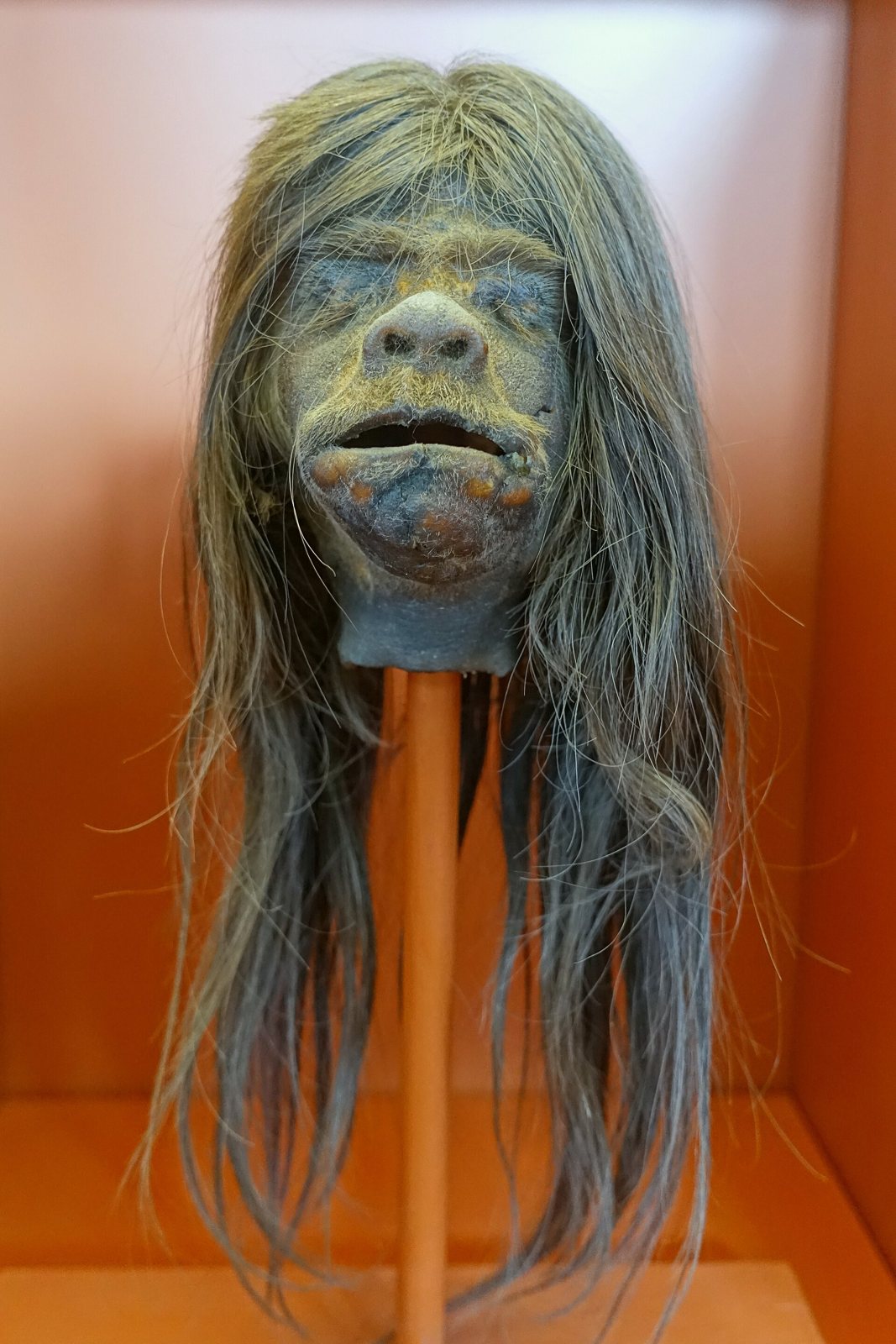
The Pitt Rivers Museum says that more than half of the tsantsa in museums are thought to be counterfeit or made for commercial profit. You may see a figure of about 80 percent repeated online; it is an estimate, not a measurement, and every collection has to be tested on its own.
Museum records include clear examples of animal tsantsa. The British Museum holds a tsantsa made from a sloth, and the Science Museum Group catalogs the "tsantsa of a female sloth."
Other studies have confirmed human remains. The 2021 study by Baquero-Méndez and colleagues tested 14 tsantsa from three Ecuadorian museums and identified all 14 as human, 13 of them genetically male and one female. Being human did not settle everything, though; the study did not establish that each specimen was ceremonial or made by Shuar people.
A 2022 study in PLOS ONE shows why. Researchers used clinical CT and micro-CT scanning on the Chatham-Kent tsantsa. The scans confirmed human remains, but modern thread and other features suggested it was made for the commercial trade. The authors describe ceremonial and commercial making as a possible continuum rather than a simple split between real and fake.
How museums tell them apart
When a museum studies a tsantsa, it is really asking three separate questions: is it made from human remains or animal material, was it made by Shuar or Achuar people, and was it made for ceremony or for the trade? The answer to one does not answer the others.
Visual clues help: the stitching, the shaping of the face, the anatomy of the ears and eyes, the cut at the neck, the materials inside and the structure of the skin. Researchers caution that looking alone is not conclusive. CT and micro-CT scans, DNA analysis and provenance research, meaning the documented history of who collected the object and how it moved, may all be needed for a single head. Mercer University's team, for example, combined anatomical examination, CT-based study and comparison with ceremonial examples before deciding what their tsantsa was.
A label that says "human" tells you what the head is made of. It does not by itself prove ceremonial origin, Shuar manufacture or a clear history of ownership.
Three questions museums ask about a tsantsa
Tap a card to bring it forward.
- Human or animal?: DNA testing and anatomy can show whether the skin is human or from an animal such as a sloth or monkey
- Made by Shuar or Achuar people?: Making techniques and the object's documented history help answer who made it
- Ceremonial or commercial?: Details such as modern thread can point to a head made for the trade
- Looking is not enough: Stitching, facial shaping and the neck cut give clues, but researchers do not treat them as conclusive alone
- The tests used: CT, micro-CT, DNA analysis and provenance research
Off display and on the way home
In 2020 the Pitt Rivers Museum removed its tsantsa from public display, as part of a wider decision to take human remains out of its galleries. The museum said its old display had encouraged stereotyped and racist interpretations of Shuar culture. Its current work with Shuar representatives covers care, interpretation, authenticity research and possible future returns. Taking the heads off display was not, by itself, a return to Ecuador.
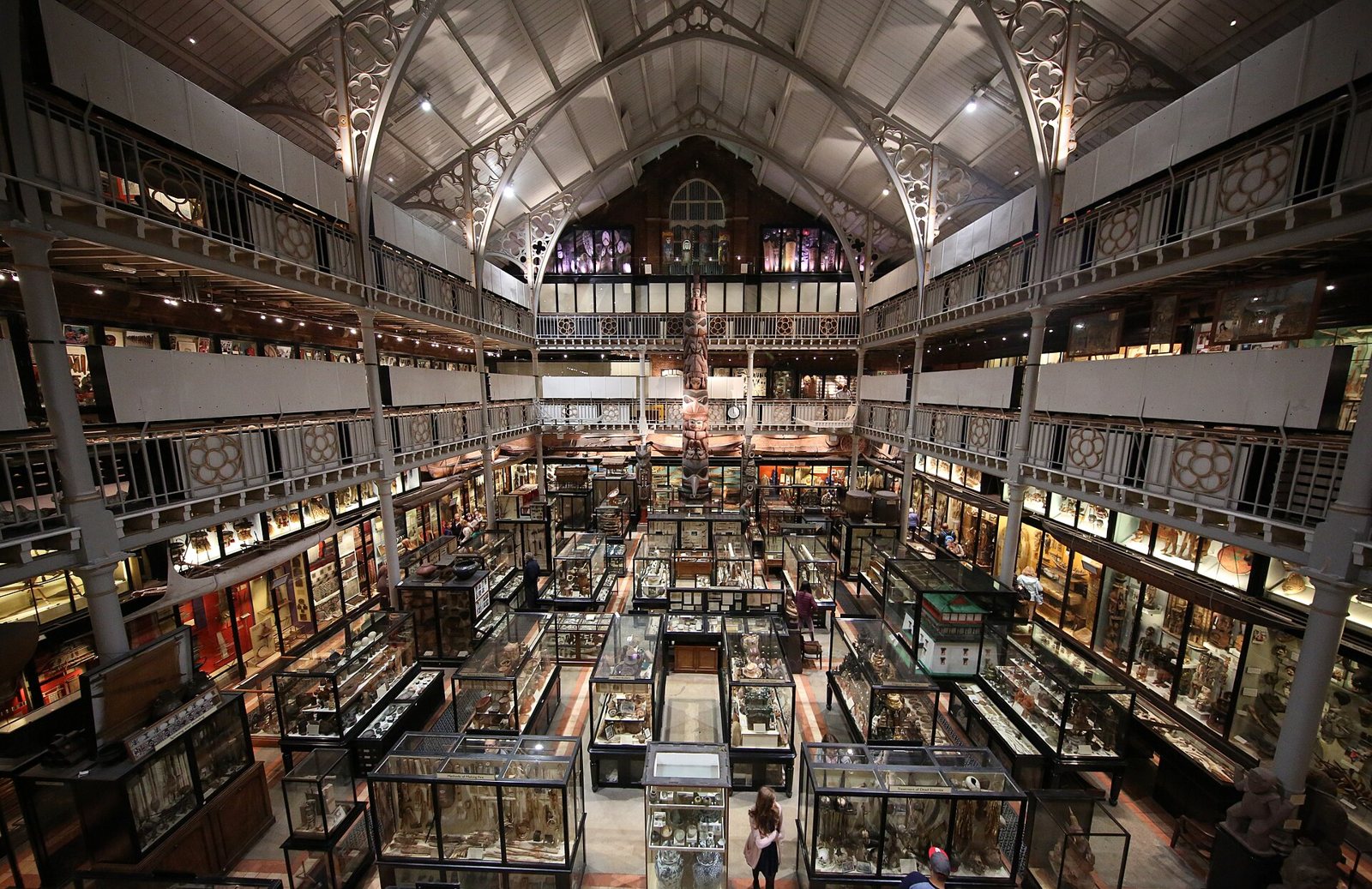
Some tsantsa have already gone home. The Pitt Rivers Museum records that nine tsantsa were returned by the Smithsonian in 1999 and are now in Shuar territory. The Smithsonian's National Museum of the American Indian handles international repatriation requests case by case, and the National Museum of Natural History's international repatriation policy recognizes return to communities of origin as a priority.
Mercer University offers a detailed example. A tsantsa had been at the university for decades. Mercer researchers authenticated it through anatomical examination, CT-based study and comparison with ceremonial examples, and in 2019 delivered it to the Consulate General of Ecuador in Atlanta for return through Ecuador's cultural-heritage authorities. The team published the case in Heritage Science.
Can you buy a shrunken head?
There is no single international rule, and the answer depends on where you are and on the object itself. The law that applies can turn on the country, state or province; the object's provenance; whether it is human at all; and whether cultural-property, export, customs or human-tissue rules apply. This is general information, not legal advice.
In England, Wales and Northern Ireland, the Human Tissue Authority explains that section 32 of the Human Tissue Act 2004 prohibits commercial dealings in human material intended for transplantation. The Act does not generally prohibit the sale of human remains as artefacts, though the public display of human remains less than 100 years old needs a licence and appropriate consent.
In the United States, the Smithsonian's repatriation FAQ explains that US repatriation law covers specific Native American human remains and cultural objects, and cautions that US law does not provide a general rule for every sale of human remains.
A seller's claim that a head is "authentic" is not proof of legal ownership or lawful export. Anyone facing a specific case should confirm the rules with the relevant cultural-heritage, customs or legal authority before any transaction.
Questions people ask about shrunken heads
What is a tsantsa?
A tsantsa is a shrunken head made by Shuar or Achuar people of Amazonian Ecuador and northern Peru. The skin of the head was removed from the skull, shrunk with heat and reshaped into a small face, and ceremonial tsantsa were tied to spiritual power rather than simple trophy-taking.
Why did the Shuar shrink heads?
The Shuar made tsantsa to capture the power of an enemy's avenging soul, the muisak, and use it for the strength and prosperity of the community. Shuar leader Jefferson Pullaguari has described the practice as sacred and says Shuar people should tell its history themselves.
Are museum shrunken heads fake?
Many are, though not all. The Pitt Rivers Museum says more than half of museum tsantsa are thought to be counterfeit or made for commercial profit, while a 2021 DNA study confirmed 14 human tsantsa in three Ecuadorian museums.
What happened to shrunken heads in museums?
Many have been taken off display or returned. The Pitt Rivers Museum removed its tsantsa from view in 2020, the Smithsonian returned nine in 1999 according to the Pitt Rivers Museum, and Mercer University handed one to Ecuadorian authorities in 2019.
Can you legally buy a shrunken head?
It depends on the jurisdiction and on what the object is, and no single rule covers every country. Human-tissue, cultural-property, customs, export and repatriation rules may all apply, so a specific case has to be confirmed with the relevant authority.
How much do you know about tsantsa?
Answer every question to check.
Where to go next
Tsantsa are one of several ways people around the world have kept and honored human heads and skulls. The skull racks of Mesoamerica are explained in tzompantli, and Himalayan ritual vessels made from skulls appear in the kapala skull cup. For the bone itself, the part a tsantsa leaves behind, read human skull facts.
Terms in this story
Tap a term to see what it means.
Tsantsa. A shrunken head made by Shuar or Achuar people of Amazonian Ecuador and northern Peru. Ceremonial tsantsa were tied to spiritual power.