

No. 137
The Skeletons in Coco: How Pixar Built the Land of the Dead
The skeletons in *Coco* started in anatomy class. Before anyone drew a dancing grandmother, Pixar's character team studied the human skeleton, then tested body types, teeth, wigs and face-paint designs to find bony characters that could still act. They gave the skeletons eyeballs and eyelids so audiences could read their thoughts, and built flexible rigs that let animators move jaws, ribs and eyes one bone at a time. The look grew out of research trips to Mexico City, Morelia, Oaxaca and Guanajuato. And the film found its warmest audience in Mexico, where *El País* reported about 21 million viewers; it was the country's most-seen film at that point.
How Pixar built a skeleton that can act
A skeleton is a hard character to animate. It has no flesh, no muscles and no tendons, which are the very things that let a face frown, smile or hesitate. According to Pixar Post's account of the production, Pixar began with anatomy research, concept sketches and animation tests. The character team tried out different body types, different sets of teeth, wigs and face paint, looking for skeletons that read as individual people and as members of one family.
To keep them expressive, the animators worked with flexible rigs, the digital armatures that move a character. These rigs had controls for eye movement, rib motion, jaw movement and the small personal gestures that make one skeleton walk, shrug or fuss differently from the next.
The biggest decision was about the eyes. Pixar usually sticks closely to how materials behave in the real world, and real skulls have empty sockets. The filmmakers broke that rule on purpose and gave the skeletons eyeballs and eyelids, because so much of a character's thought and emotion lives in the eyes. Without them, a bony face would have had very little to say.
The scale of the job was large. Pixar Post reports that the Land of the Dead holds approximately 80 designed skeletal characters, including Miguel's deceased relatives. The living cast needed care too: the team studied how aging skin moves so that Abuelita, Miguel's grandmother, would carry her years convincingly.
Rubber bands, a limp and a dance from 1929
Bones need something to hold them together, even in a cartoon. Story supervisor Dean Kelley told The Credits that the animators imagined "rubber bands" holding each skeleton's bones in place, and that those bands were tighter for characters who were more strongly remembered by the living. It is a neat idea, because it ties the way a character moves to the film's central theme of memory.
For movement, the animators looked back almost a century. Kelley pointed to Disney's 1929 short *The Skeleton Dance* as an important movement reference, so the dead of *Coco* have a dancing ancestor of their own.
Héctor, the scrappy musician who becomes Miguel's guide, got his own film-history reference. His uneven, hobbling walk was inspired by Ratso, the character Dustin Hoffman played in *Midnight Cowboy*, according to Pixar Post. Once you know that, it is hard to unsee it.
Brighter when remembered
The skeletons also change color with their fortunes. Character supervisor Christian Hoffman explained to The Observer that he developed shading around a simple idea: souls who are more remembered appear whiter, brighter and more refreshed. A well-loved skeleton glows. One whom the living have begun to forget looks duller and more worn.
That choice gives viewers a visual cue they can feel before they can explain it. Héctor, an under-remembered soul, carries that fading in his bones, while the celebrated dead shine.
The research trips and the places behind the film
The world of *Coco* was built from travel. Christian Hoffman's 2017 account dates the start of the research trips to Mexico to 2010, years before the film's release. Pixar's RenderMan story on the film names Mexico City, Morelia, Oaxaca and Guanajuato among the places the team visited.
Director Lee Unkrich traveled with Jason Katz, Harley Jessup and Darla K. Anderson. Later, co-director Adrian Molina and Layout and Animation Manager Jesús Martínez visited Oaxaca, as Disney News reported. Molina said the team recorded details about clothing, music, dancing, buildings and family life, so that the film's invented settings could grow out of what they had seen and heard.
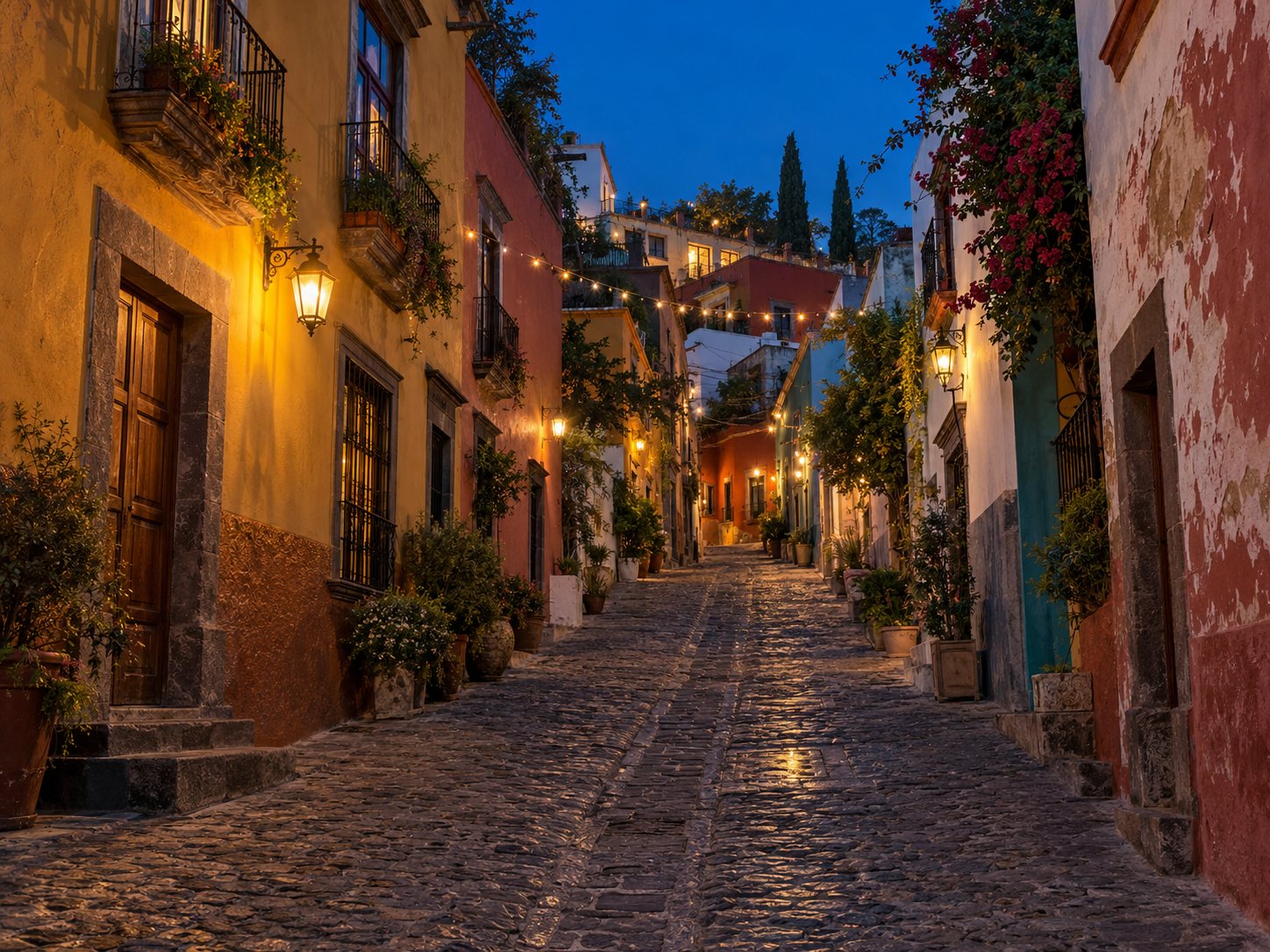
Those trips left clear fingerprints. The Land of the Dead itself is based partly on Guanajuato, whose stacked, vertical streets climb the hillsides, and the film piles its towers of the dead upward in the same spirit. Miguel's hometown of Santa Cecilia, meanwhile, draws on real Mexican villages. Neither is a portrait of one place; each is a composed setting built from many.
The Día de Muertos traditions in the film
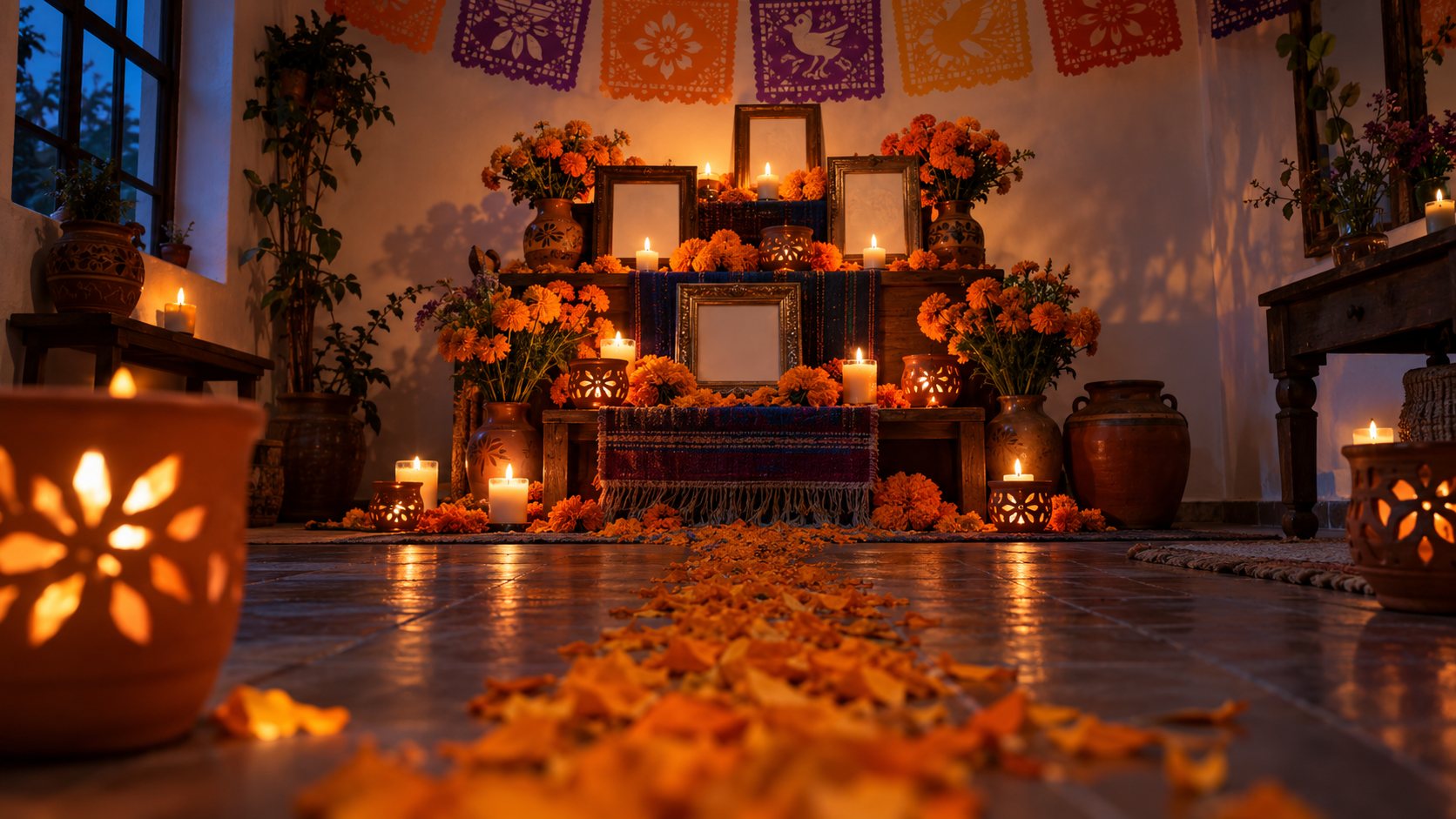
*Coco* draws on practices documented in particular Mexican communities and regions: ofrendas at home and in the cemetery, photographs of deceased relatives, their favorite foods and drinks, candles, flowers and paths of cempasúchil petals. UNESCO describes the Indigenous festivity dedicated to the dead as a time when deceased relatives return for a while, and notes that families may lay flowers, candles and gifts for the dead along paths from cemeteries to homes.
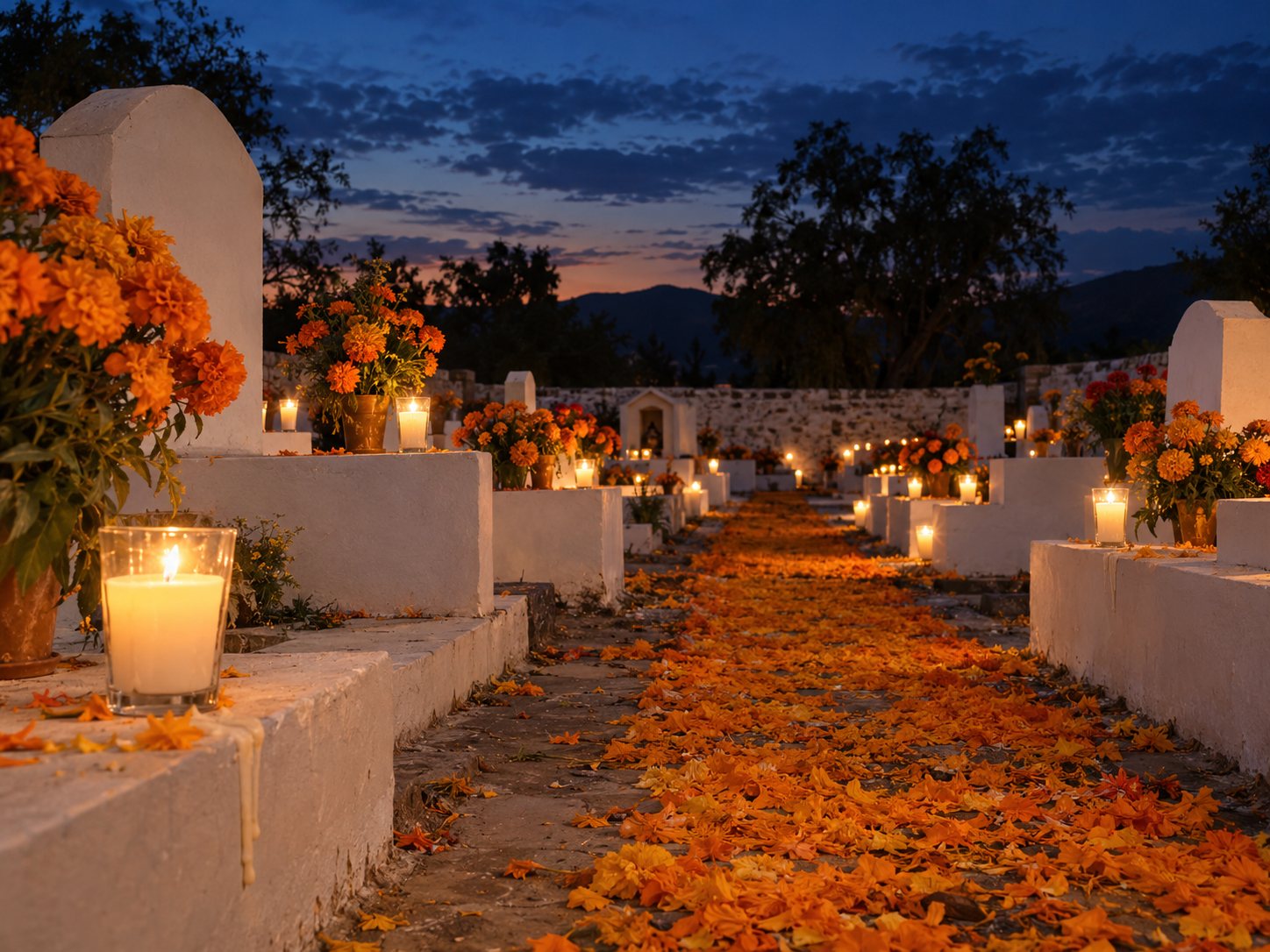
The glowing marigold bridge that links the two worlds in the film is Pixar's own image, built on those petal paths. So is the rule that a spirit can cross only if a living person has placed their photograph on an ofrenda. Families do place photographs of their dead on the altar, and the Mexico City government describes ofrendas with cempasúchil at their heart; the checkpoint and the paperwork belong to the film's fictional afterlife.
Día de Muertos is a living tradition, and it differs by state, town, Indigenous community and family. What one family in Oaxaca does may look different in Guanajuato, in Mexico City or in a Mexican American home in the United States. *Coco* gathers details from many of those places into a single fantasy world, which is part of why so many viewers recognized pieces of their own families in it. If you want to see how the celebration varies, our guide to Day of the Dead by region is a good next read, and the main Día de Muertos story covers the holiday itself.
Alebrijes, the bright spirit guides
The glowing winged creatures that follow the dead around the Land of the Dead are called alebrijes. In real life, alebrijes are a Mexican folk art, and the film's versions draw especially on the carved and painted animal figures associated with Oaxaca.
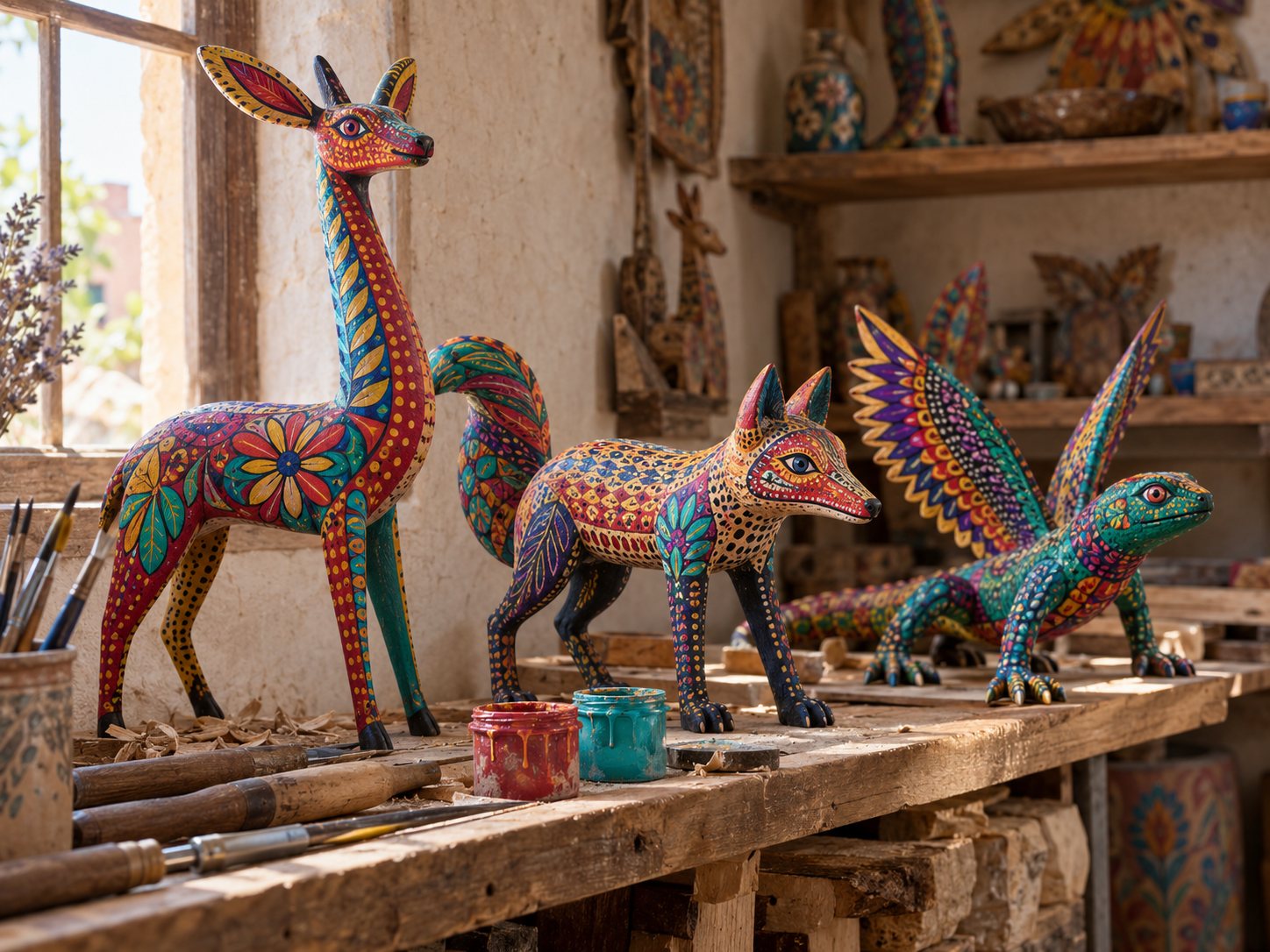
According to Disney News, a visit to an alebrije workshop in Oaxaca helped inspire Molina's decision to make these creatures spiritual guides in the Land of the Dead. That supernatural role is the film's invention. The art, with its bold patterns and impossible animals, is real, and the film borrowed its colors and spirit for a new job.
The skeletons people ask about
Most viewers come away with questions about a handful of the dead. Here is who they are, with spoilers kept to a minimum.
Héctor is the under-remembered musician who guides Miguel through the Land of the Dead. The film eventually reveals him as Miguel's great-great-grandfather. He is a fictional character.
Ernesto de la Cruz is the celebrated singer whose public legend hides a betrayal of Héctor. He is fictional too, though Mexican critics in *Excélsior* pointed to the real musical model behind him.
The clerks at the desks run the film's afterlife bureaucracy. The film's credits list Gabriel Iglesias as the voice of the Head Clerk and Octavio Solis as the Arrival Agent. Their job is to check whether each spirit has a photograph on a living person's ofrenda before they can cross the marigold bridge.
Frida Kahlo appears as a fictionalized skeleton cameo, voiced by Natalia Cordova-Buckley according to the credits. In one scene Héctor briefly disguises himself as Kahlo to slip past the departure checkpoint. The cameo draws on the real artist's identity and public image, while the scene and her dialogue are inventions of the film.
The skeleton lady people ask about could be one of several. Female skeletons in the film include Mamá Imelda, Mamá Coco, Tía Rosita and Frida Kahlo. If you mean the famous artist seen at the checkpoint and in the performance sequence, that is the film's Frida Kahlo. If you are thinking of the stylish skeleton woman in a feathered hat seen on posters everywhere, that is La Catrina, a figure from Mexican prints and murals with her own long story.
How Mexico received Coco
*Coco* premiered at the Morelia International Film Festival in October 2017 and opened in Mexican theaters on October 27. Audiences turned out in huge numbers. *El País* reported that the film reached approximately 21 million viewers in Mexico and became the country's most-seen film at that point. Box Office Mojo lists it as the top Mexican release of 2017, with approximately $57.7 million in gross.
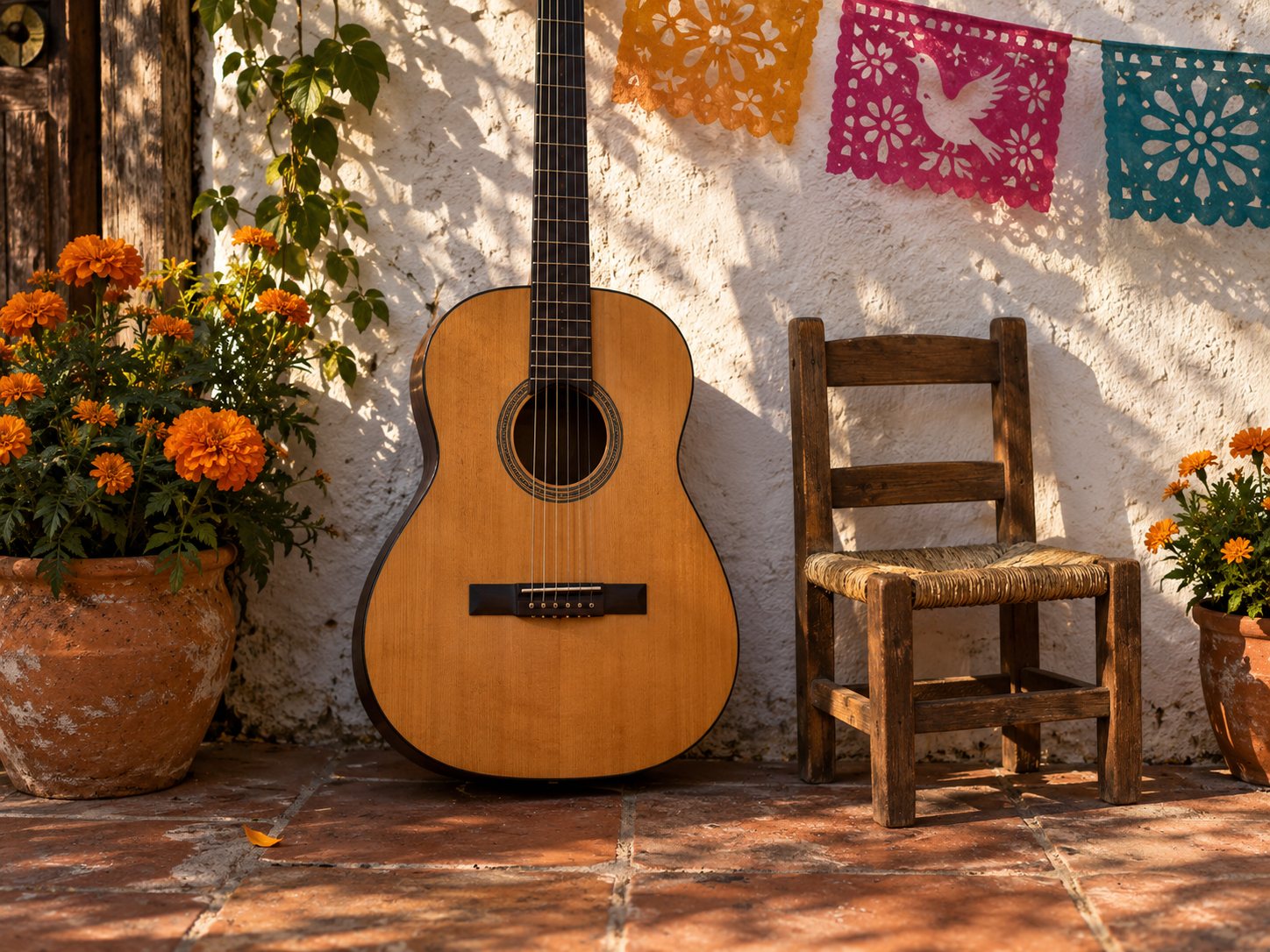
Critics responded warmly as well. *El Universal* headlined its review "Coco, un brillante homenaje a México," a brilliant homage to Mexico. *Excélsior* singled out the details that felt like home: chanclas, family life, Mexican food and the musical model behind Ernesto de la Cruz. Much of the praise centered on family memory, music and the film's Día de Muertos imagery.
The reception was broadly enthusiastic, though Mexican criticism was not completely uniform, and no single film speaks for every community in a country as varied as Mexico.
The 2013 trademark filing
The film had a bumpy start before it ever had a name. In May 2013, Disney filed ten U.S. trademark applications for "Día de los Muertos," covering possible uses such as toys, cereals and jewelry, ahead of an untitled animated film inspired by the holiday, as the Los Angeles Times reported.
Criticism came quickly from Mexican and Mexican American commentators, including an online petition and accusations that the company was trying to privatize the name of a living cultural tradition. KPBS reported that Disney withdrew the applications within days and said the film's title would change. The project became *Coco*. The withdrawn filings never gave Disney any ownership of Día de Muertos as a practice; the holiday belongs to the families and communities who keep it.
Coco, from research trips to record crowds
Tap or hover a step to follow the order.
2010
Lee Unkrich and Pixar production staff begin research trips to Mexico, according to Christian Hoffman's 2017 account.
May 2013
Disney files ten U.S. trademark applications for "Día de los Muertos."
May 2013
After public criticism, Disney withdraws the applications and says the film's title will change.
October 2017
Coco premieres at the Morelia International Film Festival and opens in Mexico on October 27.
December 2017
Reports describe it as Mexico's most-seen film at that point, with approximately 21 million viewers.
Tap or hover a row to highlight it.
| Detail | Figure |
|---|---|
| DetailDesigned skeletal characters in the Land of the Dead | FigureAbout 80 |
| DetailTrademark applications filed by Disney in May 2013 | Figure10 |
| DetailReported viewers in Mexico | FigureAbout 21 million |
| Detail2017 Mexican gross (Box Office Mojo) | FigureAbout $57.7 million |
| DetailResearch cities named by Pixar | FigureMexico City, Morelia, Oaxaca, Guanajuato |
Frequently asked questions
These are the questions viewers most often bring away from the film.
How were the skeletons in Coco made?
Pixar's character team started from human anatomy, then tested body types, teeth, wigs and face paint for each skeleton. Animators used flexible rigs with controls for eyes, ribs and jaws, and the skeletons received eyeballs and eyelids so they could show emotion.
What are the mythical creatures in Coco called?
They are called alebrijes. Pixar adapted them from Mexican alebrije folk art, especially the carved and painted animal figures associated with Oaxaca, and gave them a spirit-guide role invented for the story.
Who is the skeleton lady in Coco?
It depends on the scene, since Mamá Imelda, Mamá Coco, Tía Rosita and Frida Kahlo all appear as skeletons. The famous artist at the checkpoint and in the performance sequence is the film's fictionalized Frida Kahlo, voiced by Natalia Cordova-Buckley according to the credits.
Is Frida Kahlo in Coco?
Yes, as a fictionalized skeleton cameo. The character draws on Kahlo's real identity and public image, while her scenes and dialogue were written for the film.
How do Mexicans feel about the movie Coco?
Mexican audiences and critics broadly welcomed it, especially its treatment of family remembrance, music and Día de Muertos imagery. About 21 million reported viewers saw it in Mexico, and reviews in *El Universal* and *Excélsior* praised its cultural detail, though no one film earns identical feelings everywhere.
Is Coco culturally accurate?
It draws on real practices from specific Mexican communities, such as ofrendas, family photographs, favorite foods, candles and cempasúchil petal paths, and gathers them into a fantasy world. The marigold bridge, the photograph checkpoint and the alebrijes as spirit guides are the film's own inventions.
Why do the skeletons need photos on the altar?
In the film's afterlife, a spirit can cross the marigold bridge only if a living person has placed their photograph on an ofrenda. The rule builds on a real custom, since many families place photographs of their dead on the altar during Día de Muertos.
Who is the clerk at the bridge in Coco?
The film's credits list Gabriel Iglesias as the voice of the Head Clerk and Octavio Solis as the Arrival Agent. They staff the afterlife's checkpoints, where spirits must show that their photo is on a living person's ofrenda.
What happens to the skeletons after Día de Muertos?
In the film, they return to the Land of the Dead, where how well the living remember them shapes how they look and whether they can cross the bridge on the holiday. The animators even made remembered souls brighter and imagined their bones held by tighter "rubber bands."
Where to go next
The skeletons of *Coco* sit on top of a much older story. For the holiday the film celebrates, start with our Día de Muertos story, then see how to build an ofrenda and why cempasúchil lights the way. For the folk skeletons that fill markets and altars, read about calacas. And if you want more animated dead, see how *The Book of Life* imagined La Muerte, or how a James Bond film set off Mexico City's Day of the Dead parade.
How well do you know the skeletons of Coco?
Answer every question to check.
Terms in this story
Tap a term to see what it means.
Ofrenda. The altar families set up for their dead during Día de Muertos, with photographs, favorite foods and drinks, candles and flowers.