

No. 133
The Book of Life: La Muerte, Xibalba and the Skeletons of the Land of the Remembered
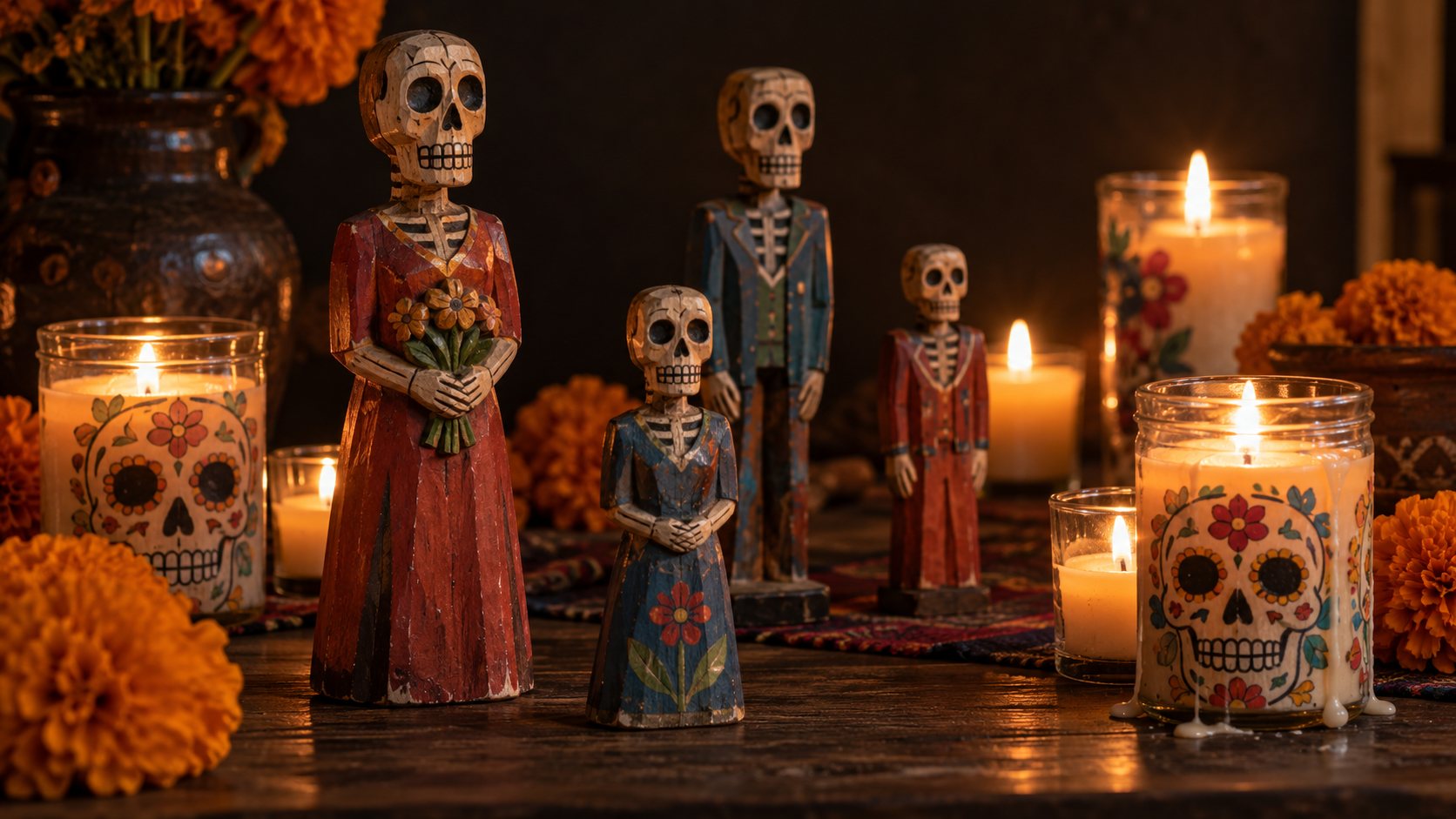
La Muerte, the candle-crowned ruler of the Land of the Remembered in *The Book of Life* (2014), is the film's own character, and the figure her makers tie her to is La Catrina. Director Jorge R. Gutiérrez imagined Kate del Castillo in the role, and del Castillo showed him a photograph of herself painted as a skeleton "like a Catrina." Her huge hat, decorated skeleton face, flowers, candles and bright colors all draw on La Catrina and Día de Muertos imagery. The film's carved, puppet-like skeletons come from Gutiérrez's idea of a world made of wooden puppets, designed with artist Sandra Equihua and animated by Reel FX.
Who made The Book of Life
*The Book of Life* was directed by Jorge R. Gutiérrez, produced by Guillermo del Toro and made with Dallas-based Reel FX Animation Studios, according to 20th Century Studios. It reached theaters on October 17, 2014.
It was a long time coming. Gutiérrez first pitched the project after graduating from CalArts in 2000, and he told Animation World Network that it took 14 years to reach release. That is a lot of years to keep a skeleton world alive in your head. Gutiérrez said the story blends Mexican folklore with Mayan mythology, Greek mythology and the myth of Orpheus.
Why everyone looks like a carved puppet
The first thing most viewers notice is that nobody in the film looks quite like a cartoon person. Everyone looks carved or painted, like a wooden puppet. That was the plan from the start. Gutiérrez told Skwigly that the film was conceived, right from the script, as a world of wooden puppets.
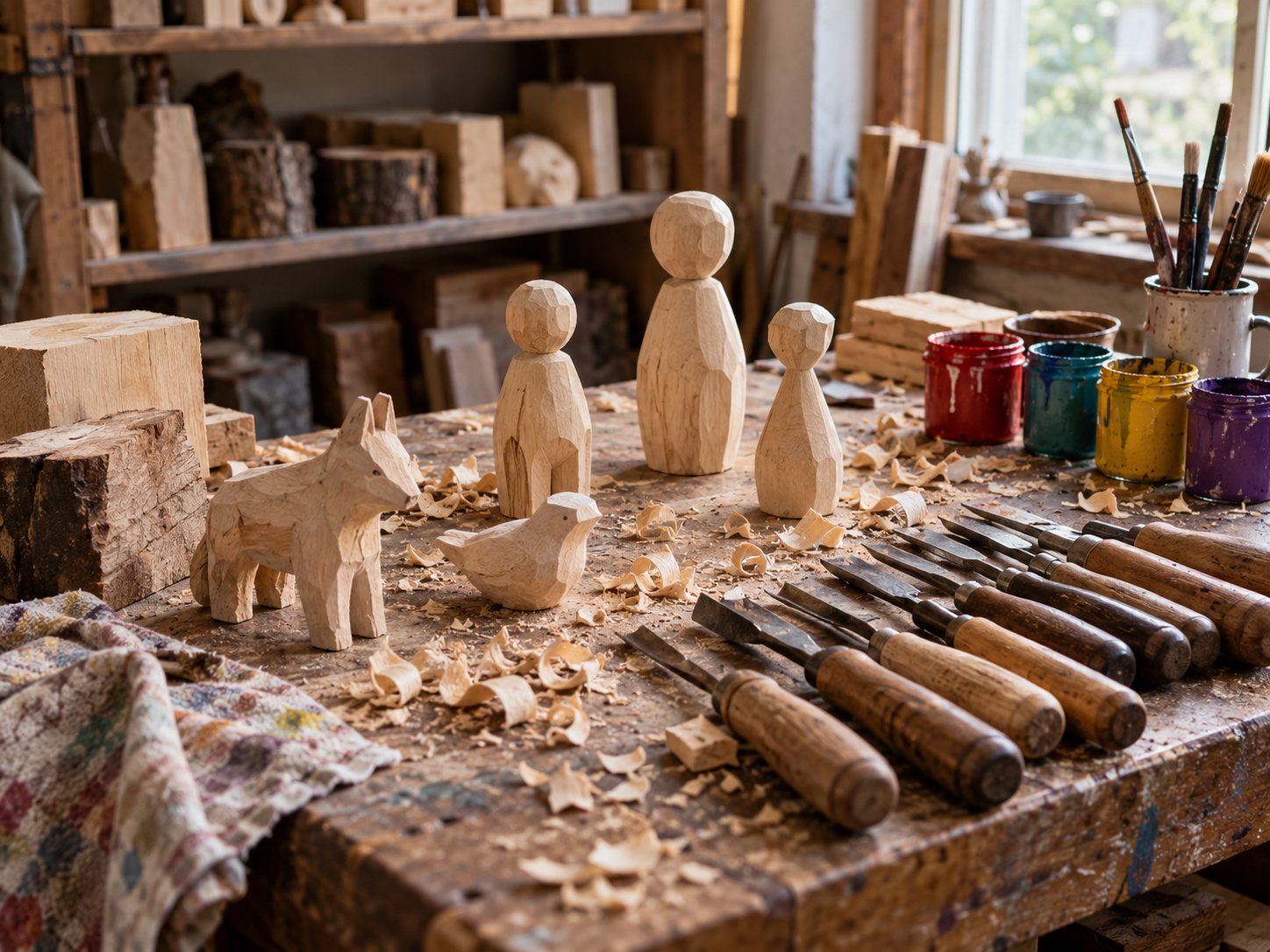
He and Sandra Equihua designed the characters together. Gutiérrez generally designed the male characters and the monsters, while Equihua designed most of the female characters. Before production began, the pair presented Reel FX with wooden maquettes, small sculpted models of the characters, along with paintings that set the look.
The influences were a wide mix. Gutiérrez named Mexican folk art, Picasso sculptures, African masks, stop-motion, rubber-hose animation, Japanese animation and del Toro's own films. He wanted to keep unusual proportions, visible imperfections, heavy ornament and, in his own list, an abundance of skulls, moustaches and sombreros. Reel FX made the film with computer animation, but kept the handcrafted feel of carved or painted puppets.
So, what are the skeletons made of? On screen, they are computer animation built to look like painted wooden figures. They are a film design grounded in Mexican folk-art references, rather than a copy of any one historical skeleton tradition, which is why they feel at once familiar and entirely new.
La Muerte and La Catrina
The clearest answer to "who is La Muerte based on" comes from the casting story. In an interview with CineSnob, Gutiérrez explained that he imagined Kate del Castillo as La Muerte, and that del Castillo showed him a photograph of herself painted as a skeleton, "like a Catrina." The filmmakers speak of her as a Catrina-like character, and the design follows: the wide hat, the decorated skeleton face, the flowers, the candles and the riot of color all belong to the visual language of La Catrina and Día de Muertos.
La Catrina has her own story. She began in the satirical calavera prints of José Guadalupe Posada, the Mexican printmaker whose skeleton images circulated in popular print culture in the early twentieth century. His *Calavera Garbancera*, created around 1913, is one of the key visual sources for later Catrina imagery. Diego Rivera later popularized her name and the gowned, high-society look most people know, as The Mexican Museum describes.
So, La Muerte is the film's invention, wearing La Catrina's style. She is a ruler of the dead with a personality, a past and a famous wager, all written for the story.
Is La Muerte Mictecacíhuatl or Santa Muerte?
When the filmmakers talk about where La Muerte comes from, the figure they name is La Catrina. Two other figures come up often when people wonder about her, and each has a separate history of its own.
Mictecacíhuatl is a goddess of Mexica religious tradition; our story on Mictlantecuhtli covers the Mexica lords of the dead. La Catrina is a different figure, born in Posada's prints. Santa Muerte is a distinct modern folk-devotional figure. It is easy to see why viewers connect a skeletal queen of the dead with both, and those connections are worth knowing about. The design story the director and his star told, though, is the Catrina one.
Xibalba and the K'iche' Maya underworld
La Muerte's rival takes his name from a much older place. Xibalba is named after the underworld in K'iche' Maya tradition. In the *Popol Vuh*, a K'iche' Maya text, Xib'alb'a is an underworld ruled by lords of death and disease. Allen J. Christenson's translation of the *Popol Vuh* glosses the name as "Place of Fear."
The film turns that place into a person: the ruler of the Land of the Forgotten. As Gutiérrez put it, the story mixes Mexican folklore with Mayan mythology, along with Greek myth and Orpheus. The film's Xibalba is a new character inspired by the K'iche' underworld, and the Popol Vuh's own lords of death are a different and much older cast.
The Land of the Remembered, the Land of the Forgotten and the Cave of Souls
The film's afterlife has three parts, and each one runs on memory. The Land of the Remembered is a colorful afterlife for the dead who are still remembered by the living, and La Muerte rules it. The Land of the Forgotten is the darker place ruled by Xibalba, where the dead fade when nobody living remembers them anymore.
Between them sits the Cave of Souls, at the edge of the Land of the Remembered. It is a dangerous passage between the worlds. Manolo and his deceased family members make their way through a labyrinth guarded by a judging figure. Inside, they meet the Candle Maker, who explains that each candle stands for an individual life, and that the Book of Life holds everyone's story. That is where the film gets its name.
All three places are the film's own fantasy world. They borrow the feeling of Día de Muertos, the idea that the dead stay close while they are remembered, and build a new map of the afterlife around it.
The real traditions behind the imagery
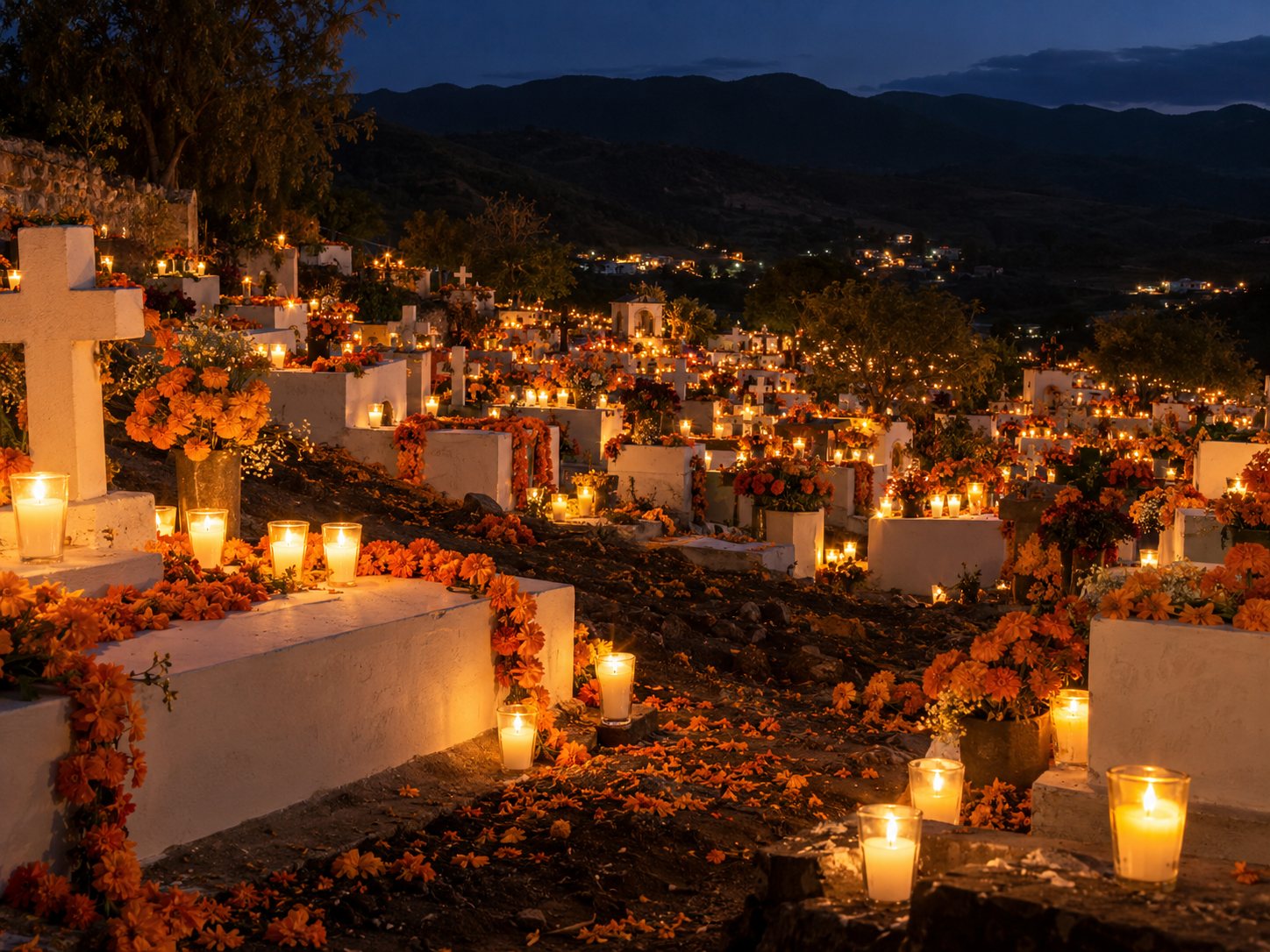
The film fills its screens with imagery tied to Día de Muertos: decorated skulls, skeletons, candles, marigolds, papel picado, altars and cemetery visits. Those elements connect with practices documented in Mexico and in Mexican diaspora communities, and the customs differ by state, town, community and family.
Sugar skulls, or calaveras de azúcar, are a good example of a real tradition with a long material history. The Mexican Museum describes them as skulls made from molded sugar paste and decorated with flowers, feathers, paint, foil and sometimes the name of a person who has died. It notes that altars can include photographs, candles, food, drinks, papel picado and marigolds. Mexico's Secretaría de Cultura also explains the place of the calaverita de azúcar on Día de Muertos altars.
Museum records put places and dates on the tradition. A sugar skull from Toluca, collected by Frederick Starr in 1898, is held by the Museum of Archaeology and Anthropology in Cambridge; it is made of sugar paste and decorated with a cross and pigments. A group of small sugar skulls from Oaxaca, collected in 1990, comes with a note that names could be added at the market, and that miniature skulls could be placed on altars for angelitos, the souls of children.
The skeletons of the film are a different kind of object. Real calacas can be made of sugar, papier-mâché, clay, wood, metal or paper, and no single national design stands for every Día de Muertos celebration. Gutiérrez's carved-puppet dead are one artist's love letter to that whole family of folk skeletons.
The skeleton bull and the heart of the film
For a film so full of skulls, its emotional center is surprisingly gentle. Gutiérrez told Rotoscopers that Manolo's confrontation with a giant skeleton bull is the heart of the film. Manolo apologizes to the bulls his family killed and meets the beast with music, love and forgiveness instead of violence. It is a skeleton scene that turns on remembering, which suits a film about the dead.
How The Book of Life was received
Critics were generally favorable, with most praise going to the visual design and animation and more mixed comments about the story. Rotten Tomatoes lists an 82% critics' score and a 77% audience score. Metacritic lists a score of 67 out of 100 from 27 critics, classed as generally favorable. Reviewers often praised the color, the handcrafted feel, the Mexican setting and the film's willingness to talk about death with a family audience.
Awards followed. The film earned a 2015 Golden Globe nomination for Best Motion Picture, Animated, and Metacritic's awards summary lists one Annie Award win from five Annie nominations.
Tap or hover a row to highlight it.
| Measure | Figure |
|---|---|
| MeasureRelease date | FigureOctober 17, 2014 |
| MeasureYears from first pitch to release | Figure14 |
| MeasureRotten Tomatoes critics' score | Figure82% |
| MeasureRotten Tomatoes audience score | Figure77% |
| MeasureMetacritic score | Figure67 out of 100, from 27 critics |
| MeasureGolden Globe nominations | Figure1 (Best Motion Picture, Animated, 2015) |
| MeasureAnnie Awards | Figure1 win from 5 nominations |
From Posada's prints to La Muerte
Tap or hover a step to follow the order.
1852 to 1913
José Guadalupe Posada creates satirical calavera imagery in Mexico.
1898
Frederick Starr collects a decorated sugar skull in Toluca, now in Cambridge's Museum of Archaeology and Anthropology.
Around 1913
Posada's Calavera Garbancera, a key source for later La Catrina imagery.
2000
Jorge R. Gutiérrez pitches the project after graduating from CalArts.
October 17, 2014
The Book of Life is released.
2015
The film receives a Golden Globe nomination for Best Motion Picture, Animated.
Frequently asked questions
A few questions come up again and again after the credits roll.
Who is La Muerte in The Book of Life based on?
The filmmakers tie La Muerte to La Catrina, the skeleton lady who began in José Guadalupe Posada's prints. Kate del Castillo, who voices her, showed Gutiérrez a photograph of herself painted as a skeleton "like a Catrina," and the character's hat, face, flowers and candles follow that look.
Is La Muerte La Catrina?
She is a new character who wears La Catrina's style. La Muerte rules the Land of the Remembered and has her own story in the film, while La Catrina is a figure from Mexican prints and murals.
Is La Muerte Mictecacíhuatl?
The figure the filmmakers name as her inspiration is La Catrina. Mictecacíhuatl is a goddess of Mexica religious tradition, a separate figure from a much older history.
What is Xibalba in The Book of Life?
Xibalba is the ruler of the Land of the Forgotten, a character named after the K'iche' Maya underworld. In the Popol Vuh, Xib'alb'a is the "Place of Fear," ruled by lords of death and disease.
What is the Cave of Souls in The Book of Life?
It is a dangerous passage at the edge of the Land of the Remembered, with a labyrinth guarded by a judging figure. Inside lives the Candle Maker, who keeps the Book of Life and explains that each candle is a life.
Is Joaquín the bad guy in The Book of Life?
Gutiérrez called Joaquín "the good" among Manolo's three antagonistic forces. He starts as Manolo's romantic rival, is caught up in the gods' wager and becomes a real hero; the destructive villain is Chakal, and Xibalba is an antagonist who changes.
Is The Book of Life based on Mexican mythology?
It mixes Mexican folklore and Día de Muertos imagery with Mayan mythology, Greek mythology and the myth of Orpheus. The Land of the Remembered, the Land of the Forgotten and the Cave of Souls are the film's own inventions.
Where to go next
La Muerte's style has deep roots. Meet the original skeleton lady in our story on La Catrina and the printmaker behind her, José Guadalupe Posada. For the holiday itself, read about Día de Muertos. And for more animated dead, see how Pixar built the skeletons in Coco, or how a James Bond film led to Mexico City's Day of the Dead parade.
How well do you know The Book of Life?
Answer every question to check.
Terms in this story
Tap a term to see what it means.
La Catrina. The stylish skeleton lady who began in José Guadalupe Posada's satirical prints in early twentieth-century Mexico and was later named and popularized by Diego Rivera.