

No. 200
How Egyptian Mummies Were Made, Step by Step
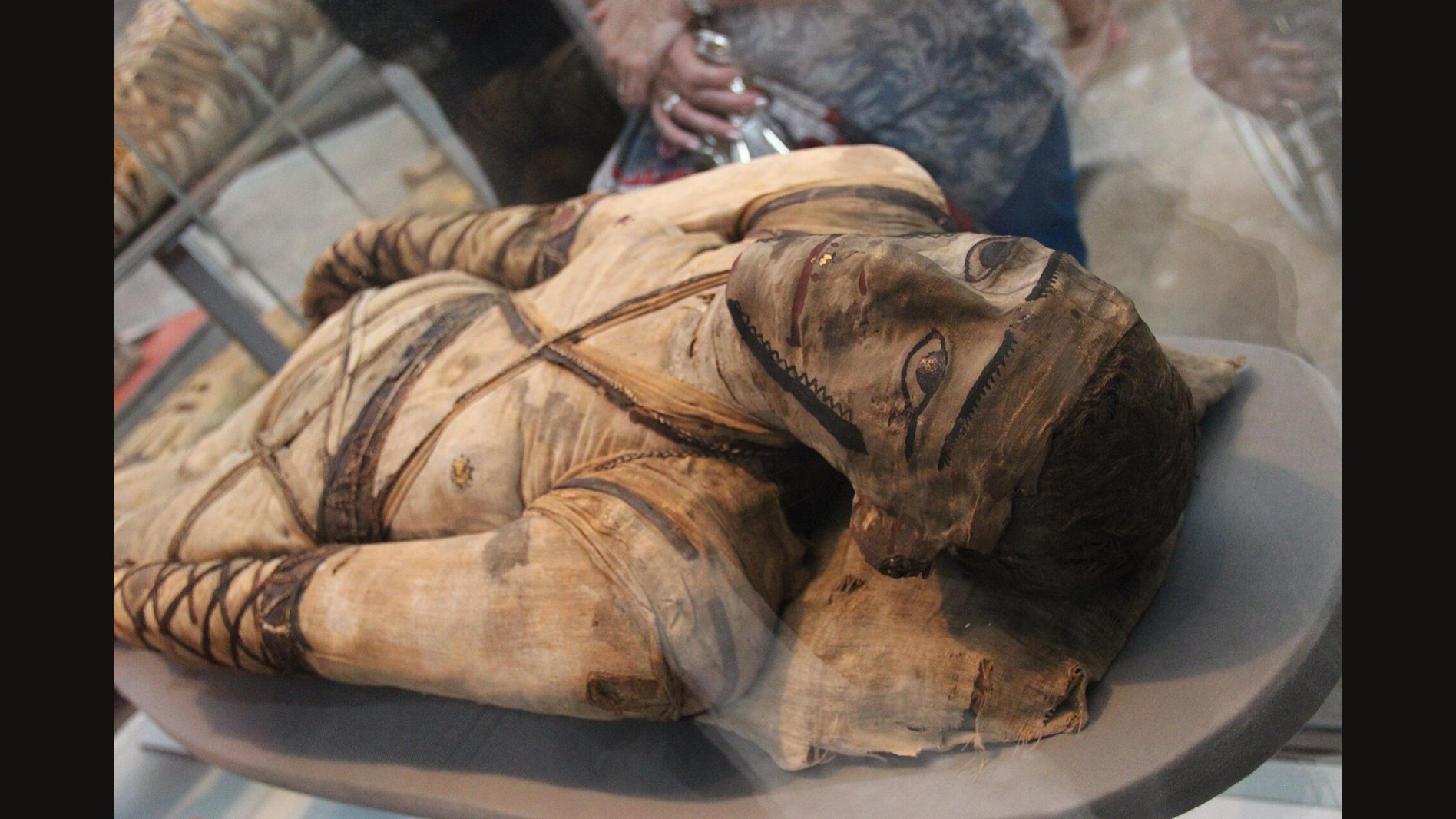
In the most elaborate Egyptian method, embalmers washed the body, drew the brain out through the nose and removed the organs of the chest and abdomen through a cut in the left side, leaving the heart in place. They dried the body under natron, a naturally occurring salt mixture, for about 40 days, then packed it, anointed it with oils and resins and wrapped it in many layers of linen. The Egyptian Ministry of Tourism and Antiquities puts the whole process at about 70 days (Ministry of Tourism and Antiquities, Mummification Museum).
It worked because natron pulled the water out of the body, Egypt's dry climate helped, and resins sealed the surface against decay. The method was never one fixed recipe, though. It varied by period, by workshop and by what a family could pay, and the steps below follow the version museums describe for people who could afford the best.
Step one: washing the body and removing the brain
The work began with washing. Then came the brain, which the embalmers did not try to preserve. Herodotus, the Greek historian who wrote about Egypt in the fifth century BCE, describes the most expensive method of his own day this way: embalmers drew out part of the brain through the nostrils with a hooked instrument and dealt with the rest by pouring in drugs (Herodotus, The History, MIT Classics Archive).
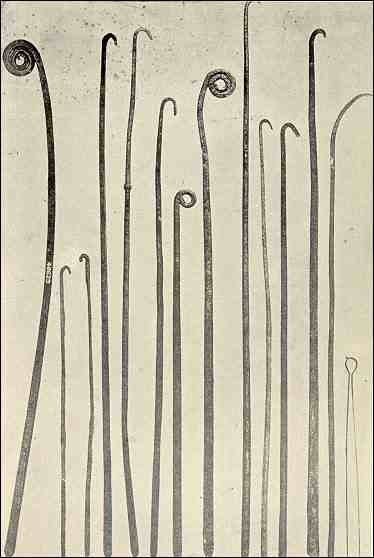
His account is the famous one, and it is an important ancient description, but it is not a description of every mummy. Archaeological evidence shows that brain-removal methods varied over the centuries (Smithsonian Institution). One royal example has been seen in detail with modern scanners: the 2005 CT scan of a young king, told in the story of Tutankhamun's skull, shows the nose route and the resin poured into the empty skull afterward.
Step two: the organs out, the heart left in
Next, the embalmers opened the body. Through an incision in the left side they removed the organs of the chest and the abdomen, which were then treated separately (Australian Museum).
One organ usually stayed where it was. The heart was left inside the body because Egyptians regarded it as the center of a person: of knowledge and emotion, of identity, and of moral judgment (Smithsonian Institution). In a process that removed so much, leaving the heart was a deliberate choice about what made the dead person who they were.
Step three: the canopic jars and the four sons of Horus
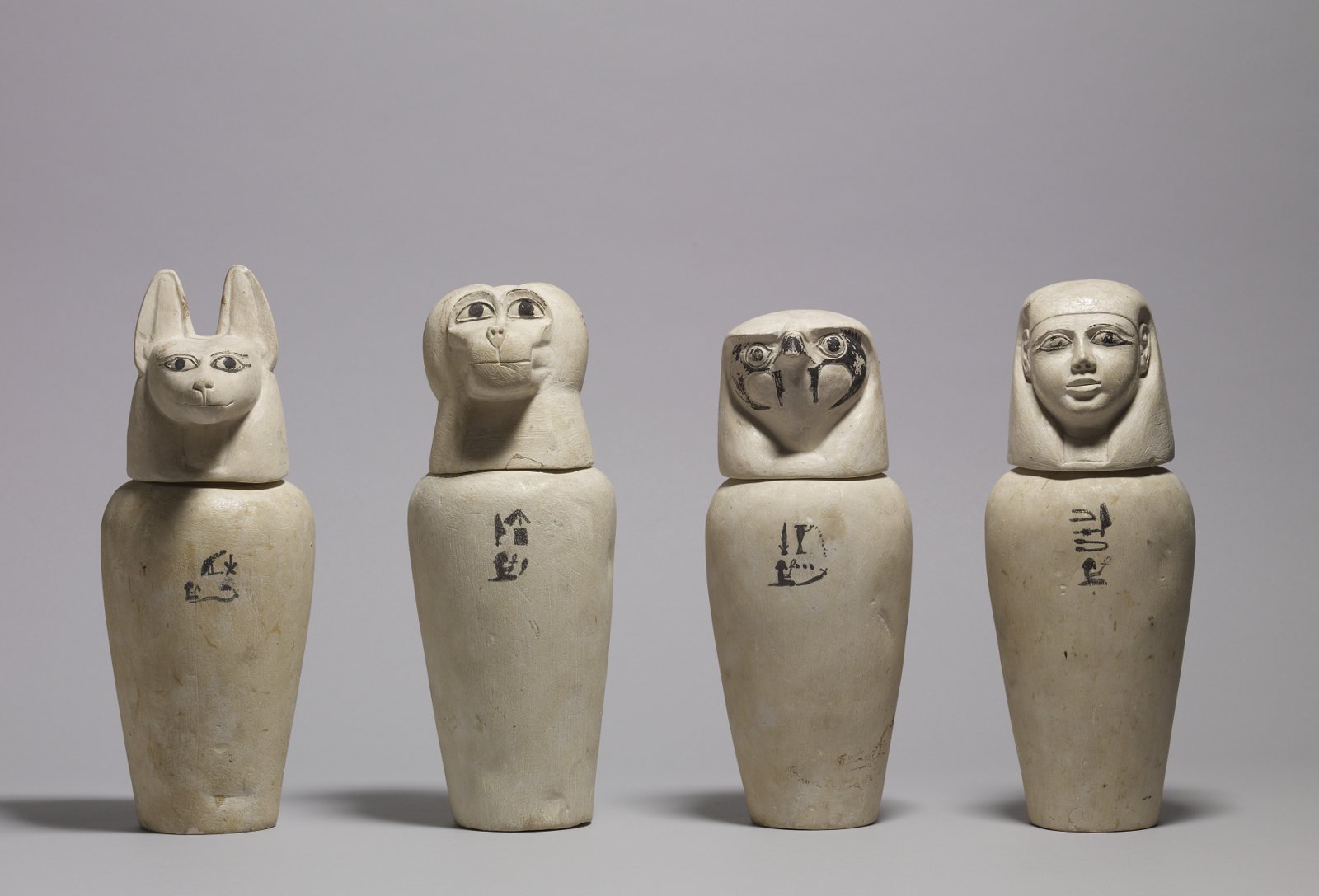
The organs that came out were not thrown away. The stomach, intestines, lungs and liver were dried and stored in four containers now called canopic jars, because the dead were understood to need them for existence in the afterlife. Each jar was associated with one of the four sons of Horus, who protected its contents (Australian Museum).
Tap or hover a row to highlight it.
| Son of Horus | Head | Organ |
|---|---|---|
| Son of HorusImsety | HeadHuman | OrganLiver |
| Son of HorusHapy | HeadBaboon | OrganLungs |
| Son of HorusDuamutef | HeadJackal | OrganStomach |
| Son of HorusQebehsenuef | HeadFalcon | OrganIntestines |
The custom changed over time. From about 1000 BCE, organs were increasingly wrapped and returned to the body, or placed in boxes, while symbolic or even empty canopic jars could still go into the burial (Smithsonian Institution). The British Museum holds canopic jars with separately mummified organs that show the practice in a real burial.
Step four: forty days under natron, and why the body did not decay
Now the body was ready for drying. It was covered and packed with natron, a naturally occurring salt mixture, for about 40 days, according to the Ministry of Tourism and Antiquities. The British Museum gives the same figure of about 40 days for drying, within a process of up to 70 days overall (British Museum mummification resource). Herodotus tells it differently: in his account the body lay in natron for 70 days. The famous 70 days survives in both versions, as the whole process in the museums' accounts and as the time in natron in his.
Why did this stop the body from rotting? Decay needs moisture and microbes. Natron drew water out of the body and its cavities, and Egypt's hot, dry environment helped. The resins, oils, waxes and other balms applied later sealed the surfaces and could hold back bacteria and fungi (Australian Museum). Long before embalming developed, bodies buried directly in desert sand could dry out naturally, which is how some of the earliest Egyptian burials were preserved. Nature can do this elsewhere too, by very different means, as in the bog bodies of peat bogs.
The combination did not work the same way for everyone. Some bodies were preserved naturally, some received incomplete treatment, and some Roman-period mummies are poorly preserved inside very elaborate wrappings (UCL Digital Egypt).
Step five: packing, anointing and wrapping
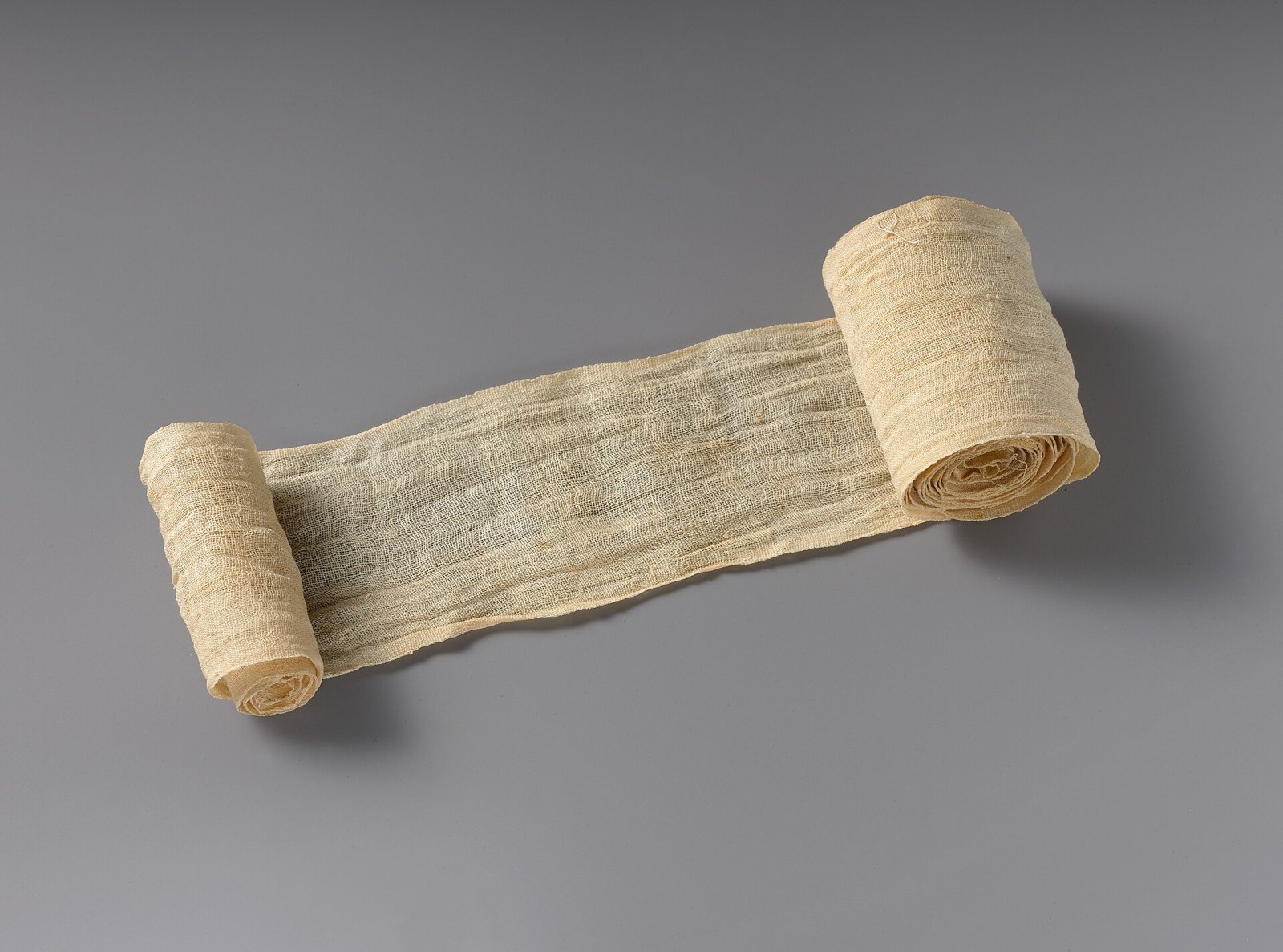
When the drying was done, the embalmers removed the natron and washed the body again. They filled the empty cavities with linen, plant material, sawdust, sand or packets of natron, and applied oils, ointments and resins. Then came the wrapping: many layers of linen, often with amulets placed among them, a mask and sometimes false eyes, before the mummy went into its coffin and tomb (The Met, "Tutankhamun's Funeral"). Herodotus, for his part, describes linen wrapping with gum.
All of this resin could be applied generously. In Tutankhamun's case it hardened so firmly that it stuck the king to his coffin, as the story of Tutankhamun's mummy tells.
What did it smell like? Embalming was meant to create and keep pleasant scents, which were associated with purity, so the workshop's materials included oils, resins, waxes, balms and herbs. A modern non-invasive study of Egyptian mummies in a museum collection, reported by AP, detected woody, spicy and sweet notes rather than signs of decay (AP). Any particular mummy's smell depends on its ingredients, its age and how it has been conserved since.
The steps, in order
Tap a card to bring it forward.
- Wash: The body was washed first.
- Remove the brain: In the most elaborate method, it was drawn out through the nose.
- Remove the organs: The chest and abdominal organs came out through a cut in the left side and were treated separately.
- Leave the heart: The heart usually stayed in place.
- Dry: The body lay under natron for about 40 days.
- Fill: The cavities were packed with linen, natron packets or other materials.
- Anoint: Oils, ointments and resins were applied.
- Wrap: Many layers of linen went on, with amulets where appropriate.
- Bury: The mummy was placed in its coffin and tomb.
- Allow about 70 days: The whole process took roughly 70 days, varying by period, workshop and cost.
What an embalmer's workshop at Saqqara reveals
The embalmers' own pots have a story to tell. Rageot, Hussein, Altmann-Wendling, Stockhammer and colleagues analyzed the residues inside 31 labeled ceramic vessels from a 26th Dynasty embalming workshop there, dating to roughly the seventh century BCE, and published their results in Nature in 2023 (Rageot et al., Nature, 2023).
Because the pots were labeled, the team could match names to contents. Using gas chromatography and mass spectrometry, they linked labels to substances and to uses, including mixtures for treating the head and for treating the wrappings. The ingredients included plant oils, animal fats, beeswax, bitumen, conifer products, Pistacia resin and other resins. Some came from far outside Egypt, including materials associated with the Mediterranean and with tropical forest regions, such as dammar and elemi.
What the study shows is specialists at work: complex recipes, specialized knowledge, ingredients chosen for particular tasks and long-distance trade networks to supply them. It is also the record of one workshop at one time. The recipes were not necessarily the same in every period or every workshop.
Mummies for those who could pay less, and for animals
Mummification came in levels of quality. People with fewer resources could receive shorter, simpler or incomplete treatment, and some bodies were preserved mainly by drying in desert sand or with resin (The Met, "Tutankhamun's Funeral"). Herodotus describes cheaper methods too, in which the body was purged rather than opened and then treated with natron.
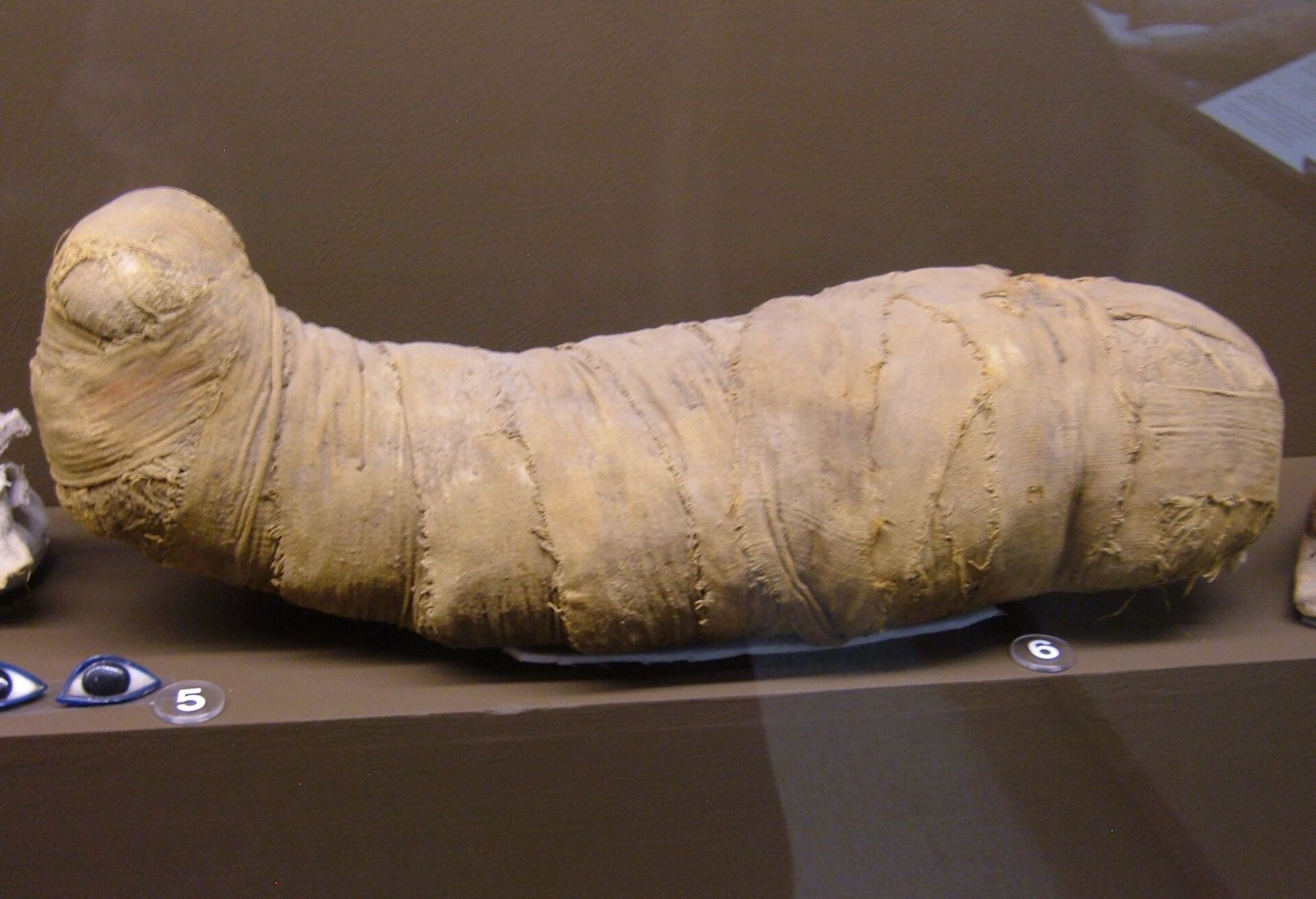
Animals were mummified as well, and in huge numbers. Animal mummification became especially widespread during the first millennium BCE. Cats, ibises, crocodiles, dogs, bulls, birds, snakes and other animals were mummified mostly as gifts dedicated to deities, while selected sacred animals were treated as divine manifestations (British Museum animal-mummy resource). Some animal cemeteries contain hundreds of thousands of bundles, including some with only partial remains or substitutes inside. The Met's cat mummy, from Egypt and dated between 664 BCE and the first century CE, is one carefully wrapped example of these religious gifts.
How the practice changed, ended, and who made mummies first
Mummification lasted for thousands of years, but it did not stay the same. During the Roman period, roughly the late first century BCE to the early fourth century CE, the thoroughness of embalming declined in many communities even as wrappings could become more elaborate. Mummification continued into Byzantine Egypt, including among some Christians, but many Christian burials used simple linen shrouds with little or no removal of organs (The Met, Kharga Oasis). UCL Digital Egypt records that the practice ended after the Arabic conquest (UCL Digital Egypt).
Egypt is the most famous home of mummies, but its people were not the first to make them. UNESCO identifies the Chinchorro sites of northern Chile, at Arica, the Morro de Arica and the Camarones area, as holding the oldest known artificially mummified human bodies (UNESCO World Heritage Centre). The exact dates depend on the individual and the dating method, but the Chinchorro tradition is generally more than 7,000 years old, older than Egyptian artificial mummification, and its techniques included taking bodies apart and reassembling them. Their story is told in full in our piece on the Chinchorro mummies.
Egyptian mummification through time
Tap or hover a step to follow the order.
Early Egyptian history
Bodies buried in dry desert sand could dry out naturally.
New Kingdom, about 1570 to 1075 BCE
The elaborate process of organ removal, natron, packing, resin and linen wrapping is well represented.
26th Dynasty, seventh century BCE
The Saqqara embalming workshop later studied by Rageot and colleagues is active.
First millennium BCE
Large-scale animal-mummy cults flourish at many Egyptian sites.
Roman period, late first century BCE to early fourth century CE
Mummification continues, but thoroughness often declines while wrappings grow more elaborate.
Byzantine period
Some bodies are still embalmed, but many Christian burials use shrouds and simpler preparation.
After the Arabic conquest
UCL records the end of mummification as a continuing burial practice.
How Egyptian mummies were made
Answer every question to check.
Questions about Egyptian mummies
A few shorter answers to close.
What did Egyptians put in the tomb with a mummy?
It depended on the period and on what the family could afford. Burials could include canopic jars, amulets, food, drink, coffins, masks, personal objects, funerary texts and shabtis, the small figures placed in tombs, all connected with protection, identity and the needs of the dead in the afterlife (British Museum mummification resource).
How long did it take to make a mummy?
About 70 days for the most elaborate treatment. Roughly 40 of those days were spent drying under natron, and the rest went on cleaning, packing, anointing and wrapping, though methods and timing varied by period and price (Smithsonian Institution).
Were poor Egyptians mummified?
They could be, in simpler ways. Shorter or incomplete treatments were available to people with fewer resources, and some bodies were preserved mainly by drying in sand or with resin (Australian Museum).
Which country has the oldest mummies?
Chile. The Chinchorro culture of the northern Chilean coast and the Atacama Desert made the oldest known artificially mummified human bodies, a tradition generally more than 7,000 years old (Chile National Cultural Heritage Service).
Care for the dead, recorded in linen and resin
An elaborate mummy was a person washed, emptied, dried, filled, anointed and wrapped by specialists over roughly ten weeks. The steps can sound clinical when listed, but the choices inside them, the heart left in place, the organs kept and given their own protectors because the dead would need them in the afterlife, the scented resins and the amulets among the linen, are about caring for a whole person. Modern science, from residue analysis to CT scans, keeps adding detail, and the field of what bones tell archaeologists shows how much the dead can still teach the living.
Terms in this story
Tap a term to see what it means.
Natron. A naturally occurring salt mixture that Egyptian embalmers used to dry the body, usually for about 40 days.
---