

No. 193
What Was Really Found in Lovelock Cave
Lovelock Cave in Nevada held the remains of real people, some of them partially mummified, along with more than 10,000 objects they and their neighbors left behind. It did not hold giants. The Humboldt Museum says the people recovered there were somewhat sturdier in build but within normal human size, and a 2010 federal notice describes one of them as Native American in ancestry.
The cave's most famous find is not a skeleton at all. It is a set of 11 duck decoys made from tule rushes about 2,000 years ago.
The red-haired giant story has its own history, part Northern Paiute oral tradition and part newspaper legend, and it is worth knowing too, alongside the people who were buried in the cave and the places their belongings went.
A cave near an old lake
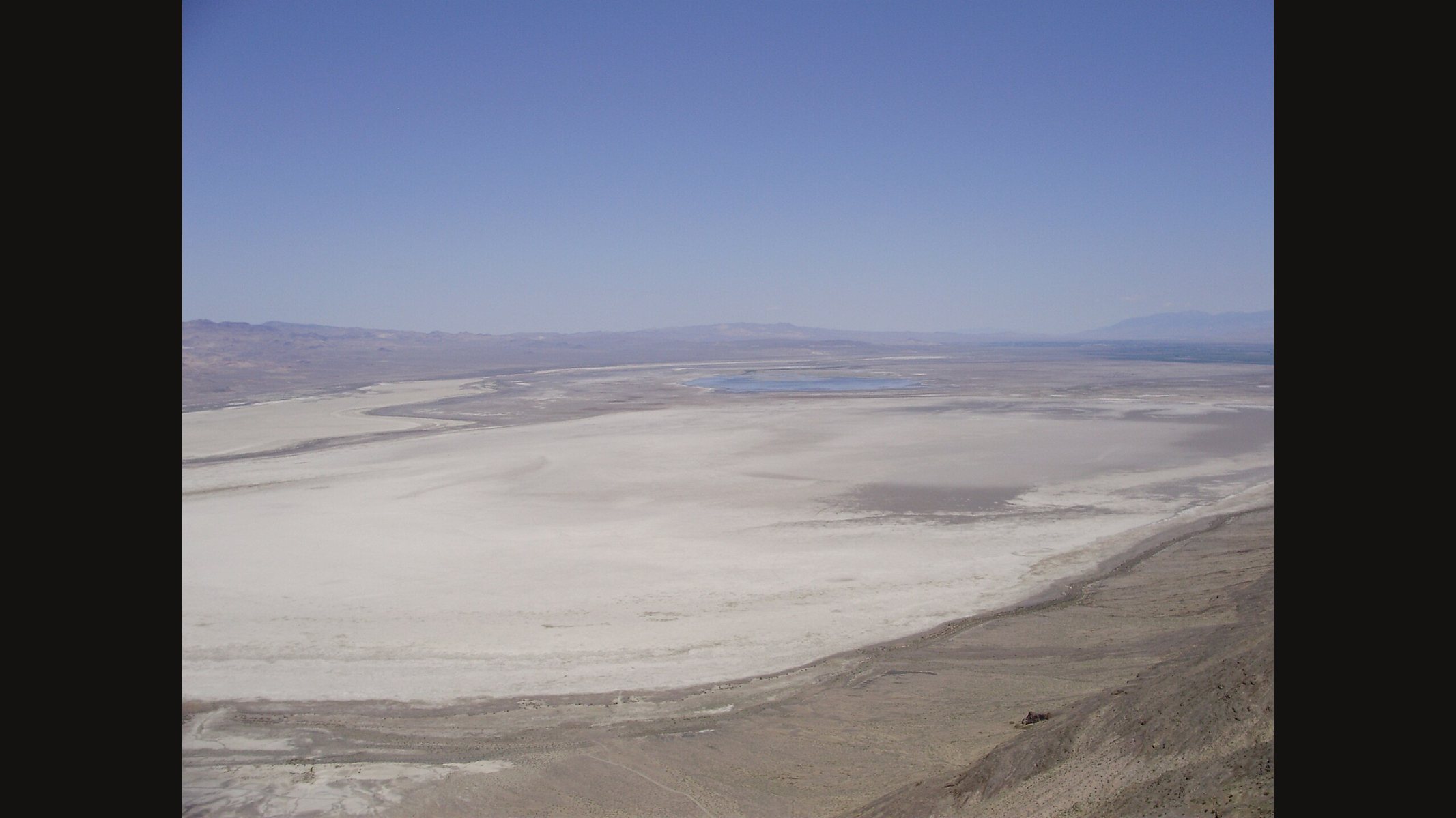
Lovelock Cave sits in Churchill County, Nevada, about 18 to 22 miles south of the town of Lovelock, on land managed by the Bureau of Land Management. It lies near the basin of the former Humboldt Lake, and for thousands of years people living around that lake used the cave for shelter, storage and other work.
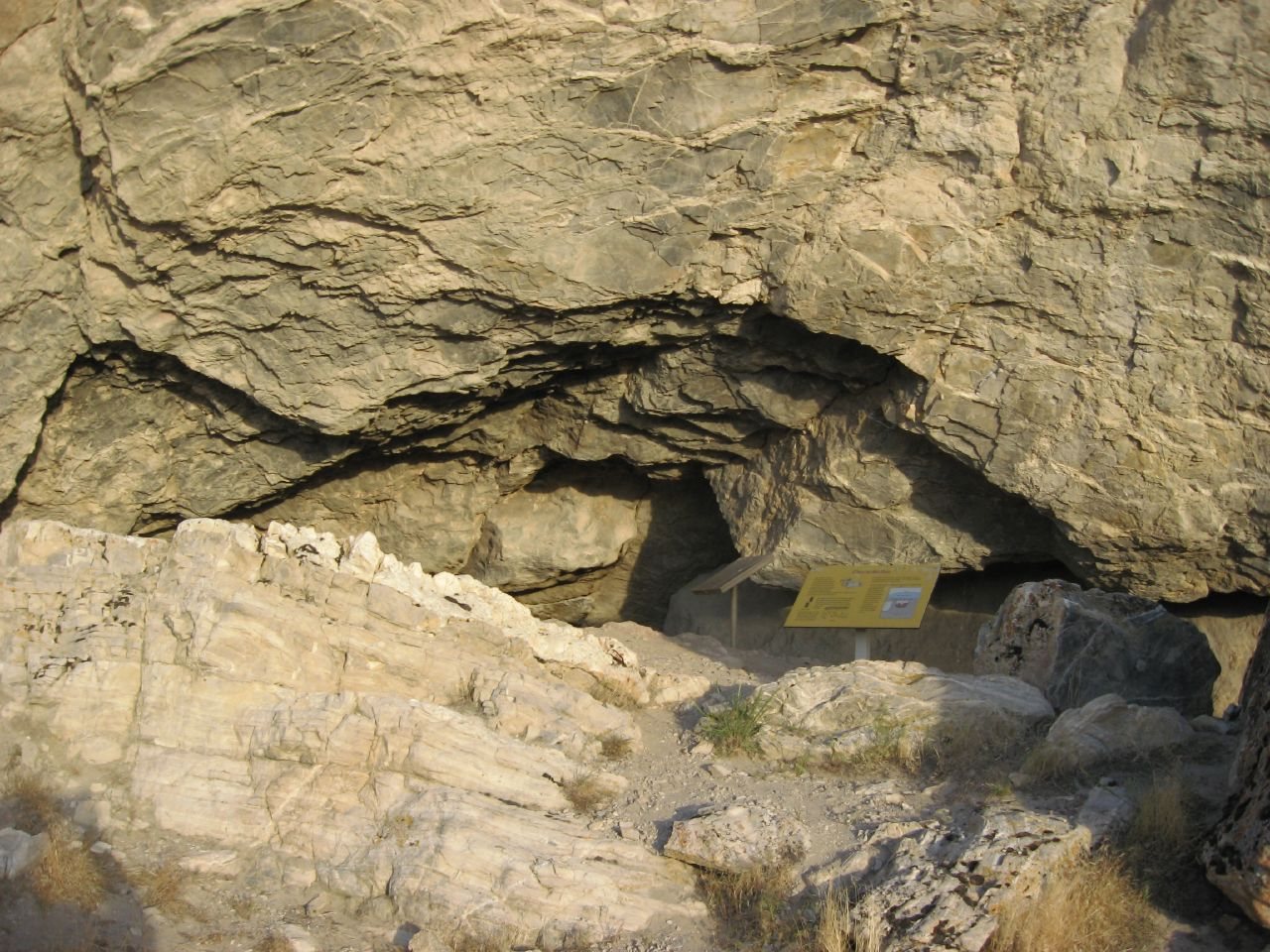
Its first modern visitors were not archaeologists. Commercial guano mining began in 1911, and the miners dug through the cave's archaeological deposits, disturbing or destroying much of what lay in them. Artifacts turned up in the diggings, and University of California archaeologists began investigating in 1912.
The big excavation came in 1924. Llewellyn L. Loud and Mark Raymond Harrington dug the cave for the University of California and the Museum of the American Indian, Heye Foundation, and published their results in 1929 as *Lovelock Cave*. The BLM calls it one of the foundational sites of Great Basin archaeology.
The duck decoys
In 1924 the excavators came upon a cache of 11 duck decoys, and they are still the objects people mean when they talk about Lovelock Cave. According to the Smithsonian's National Museum of the American Indian, the bodies were made from tule rushes, then finished with feathers, cordage and paint. One of them, a canvasback drake, is shown on Wikimedia Commons.
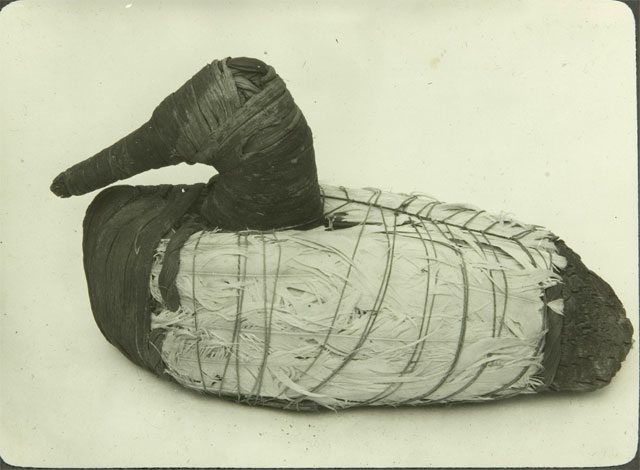
How old are they? In a study published in *American Antiquity* in 1986, Tuohy and Napton reported dates for two of the decoys from accelerator mass spectrometry, a laboratory method of radiocarbon dating. The results were 2,080 ± 330 and 2,250 ± 230 radiocarbon years before present. The Smithsonian describes comparable decoys as dating to about 400 B.C. to A.D. 100.
Those plus-or-minus figures matter. Radiocarbon dating gives a range, not a birthday, which is why each date carries its own margin. Our story on how old bones and objects are dated goes further into the method.
Baskets, nets and everyday life by the lake
The decoys sit among a much larger collection. The cave produced more than 10,000 archaeological objects: baskets and basket fragments, tule mats, cordage, nets, sandals, stone tools, atlatls (spear-throwers) and their darts, traps, feathers, animal bones, shell beads and many other fiber objects.
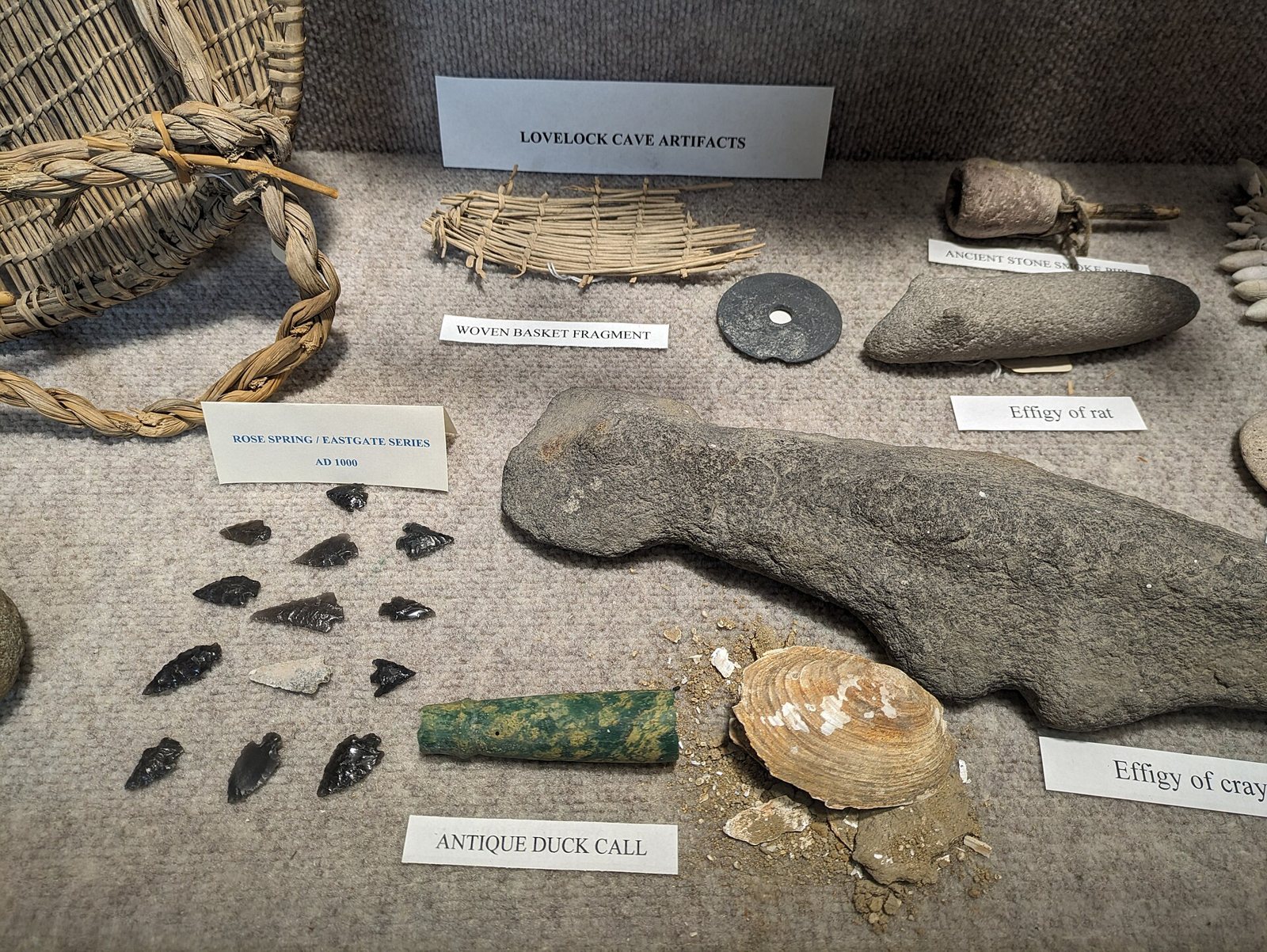
Most of that list is about food and the marsh. Nets, traps, decoys and darts are the gear of people who hunted birds and other animals around a lake, and baskets, mats and cordage are the containers, bedding and string that make daily life work. Together, the finds are why archaeologists still turn to Lovelock Cave to study how people lived in the Great Basin over thousands of years.
The people buried in the cave
Lovelock Cave was also a place of burial. Loud and Harrington's 1929 report describes human remains, some partially mummified, among them a child or infant. The excavators estimated that remains of at least 45 individuals had been removed from the cave, and guano mining had probably disturbed others before any archaeologist arrived. Later investigators described the remains as fragmentary and badly disturbed.
A 2010 notice in the Federal Register, filed under the Native American Graves Protection and Repatriation Act (NAGPRA), describes one individual Harrington removed in 1924. It records the person as Native American in ancestry and assigns the remains to the Early Lovelock I phase, approximately 2500 to 1500 B.C., which makes this person older than the decoys by well over a thousand years.
These are the people archaeologists study to learn how Great Basin communities lived and died, and they are also someone's ancestors. If you want to know what remains can reveal about age, health and diet, our story on what bones tell archaeologists is a good companion.
The red-haired enemies in Northern Paiute history
The red-hair part of the story begins with Northern Paiute history. In 1883 Sarah Winnemucca, a Northern Paiute author, published *Life Among the Piutes: Their Wrongs and Claims*. In it she described a hostile group associated with reddish hair and with conflict against her people. She did not describe ten-foot skeletons, and she did not name Lovelock Cave.
Later Northern Paiute accounts, recorded by historians and archaeologists and gathered in a BLM study of Northern Paiute cultural resources, connect enemy people called Sai-duka'a or Saiduka'a with the cave. Some versions describe them as red-haired or as cannibals. Informants quoted in Loud and Harrington's 1929 report described them as ordinary human beings. In popular retellings the name often appears as Si-Te-Cah.
This is a remembered conflict, told by Northern Paiute people, and it belongs to them first.
How the giant story grew
The giants arrived later. The "giant" framing was built up afterward by newspaper stories, tourist displays and popular retellings, and it is from those later accounts that claims of eight- or ten-foot skeletons come.
The physical record does not support them. The Humboldt Museum says archaeological surveys found the cave's inhabitants somewhat sturdier in build but within normal human size, and the 2010 federal record describes remains of Native American ancestry, not a separate giant population. Red hair remains a detail tied to oral history and later reports, not proof of a giant race.
Lovelock Cave, 1911 to today
Tap or hover a step to follow the order.
1911
Commercial guano mining begins and disturbs the cave's deposits.
1912
University of California archaeologists begin investigations after artifacts are reported.
1924
Llewellyn L. Loud and Mark Raymond Harrington excavate for the University of California and the Museum of the American Indian, and recover 11 tule duck decoys.
1929
Loud and Harrington publish their report, Lovelock Cave.
1986
Two decoys are dated by accelerator mass spectrometry to 2,080 ± 330 and 2,250 ± 230 radiocarbon years before present.
2010
A federal NAGPRA notice documents one individual removed in 1924 and authorizes disposition to the Paiute-Shoshone Tribe of the Fallon Reservation and Colony on behalf of a Great Basin coalition.
Today
The BLM manages the cave as Lovelock Cave Historic Site, with a kiosk, trail, deck and vault toilet.
Where the finds are now, and what has gone home
The decoys are associated with the Smithsonian's National Museum of the American Indian, and its collection record gives Lovelock Cave, Churchill County, Nevada, as their place of origin. The Phoebe A. Hearst Museum of Anthropology at UC Berkeley holds Nevada collections connected with Llewellyn Loud and later Berkeley archaeologists. The Hearst Museum also restricts public images of Native American human remains and funerary objects.
In Nevada, the Humboldt Museum displays replicas and other archaeological objects from the cave. It says it holds no human remains or funerary objects, that it took down its former display of human remains in line with NAGPRA, and that all human remains in its care were repatriated.
Repatriation has happened through federal channels too. The 2010 notice records the approved disposition of one Lovelock Cave individual to the Paiute-Shoshone Tribe of the Fallon Reservation and Colony on behalf of a coalition of Great Basin tribes, and the BLM says some Lovelock Cave materials have been returned to Nevada tribes. Our story on the repatriation of human remains explains how these returns work. If you hope to see a particular object in person, confirm its current display and collection status with the Nevada State Museum before you plan around it.
The cave as a historic site today
The cave is open to visitors as the BLM's Lovelock Cave Historic Site, with no admission fee listed by the BLM (October 2026). The site is reached from Lovelock by paved and unpaved roads, with parking at the end of the Lovelock Cave Back Country Byway.
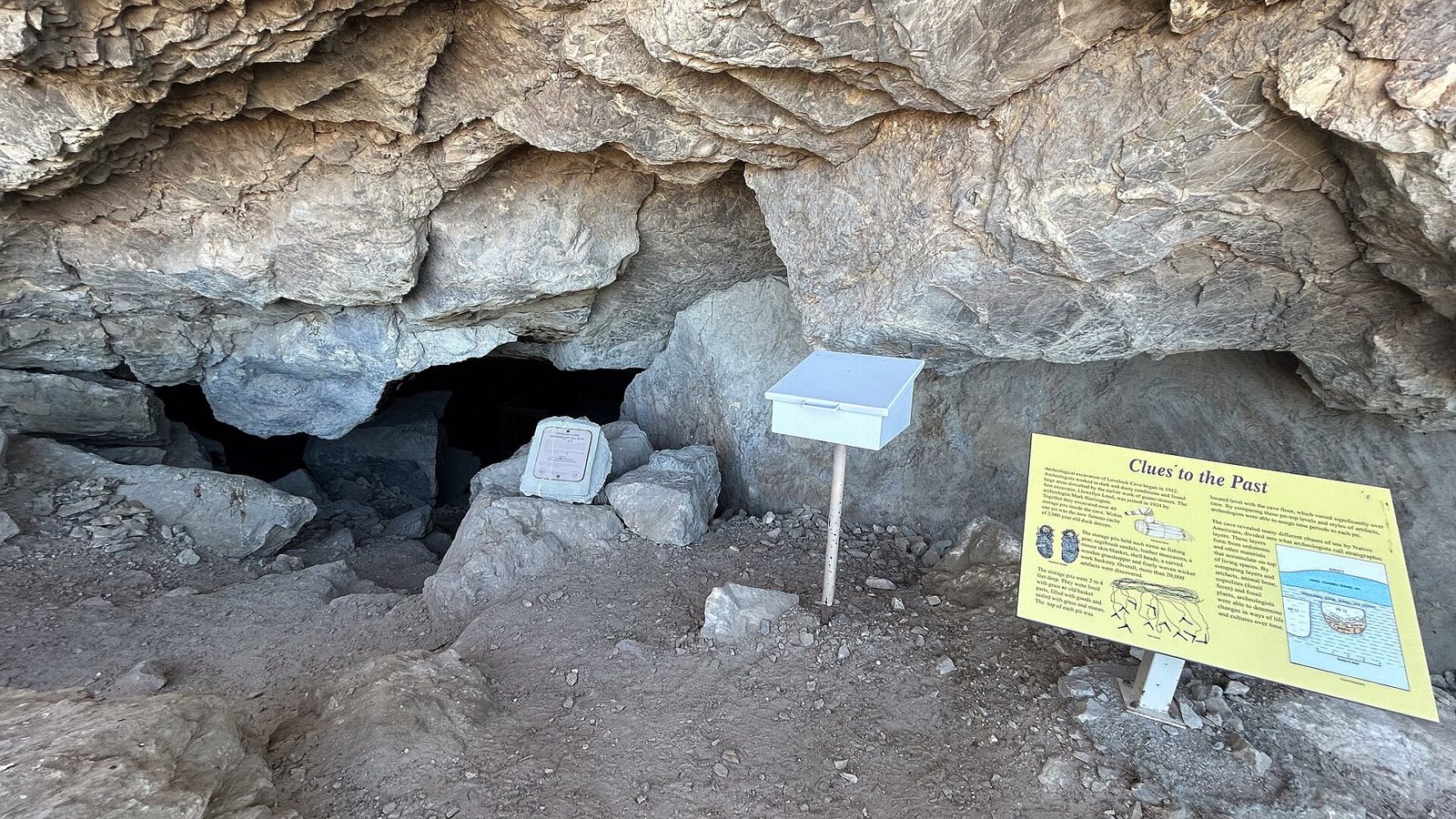
The BLM lists an information kiosk, interpretive signs, a covered picnic table, a vault toilet and a wooden deck at the cave entrance, along with a self-guided nature trail of about half a mile that has steep, narrow, rocky and uneven stretches. The original artifacts are no longer in the cave; what you see is the place itself.
BLM guidance for Lovelock Cave Historic Site
Tap a card to bring it forward.
- Sturdy footwear: The half-mile trail has steep, narrow, rocky and uneven sections.
- Water: There is no drinking water at the site.
- Flashlight: The BLM recommends bringing one.
- Phone coverage: Cell coverage is limited at this remote site.
- Leave artifacts in place: The BLM asks visitors not to remove anything and to avoid vandalism.
- Respect: The site matters to living communities.
- Road conditions: Confirm them with the BLM Winnemucca District Office before traveling.
How well do you know Lovelock Cave?
Answer every question to check.
Questions about Lovelock Cave
Lovelock Cave raises questions about giants, mummies and visiting, and each has a short answer.
Were there any giants found in Lovelock Cave?
No. The Humboldt Museum and the 2010 federal NAGPRA record describe human remains of Native American ancestry within normal human size, some of them sturdily built.
What is the story of Lovelock Cave?
It is a Great Basin archaeological site that people used for shelter, storage and burial over thousands of years. Guano miners disturbed it in 1911, and archaeologists later recovered baskets, fiber objects, tools, human remains and the famous cache of 11 tule duck decoys.
Was there a mummy found in Lovelock Cave?
Yes. Loud and Harrington's 1929 report describes partially mummified human remains, including a child or infant. They are the remains of people from an archaeological site, not evidence of a giant race.
Can you visit Lovelock Cave?
Yes. The BLM manages it as Lovelock Cave Historic Site, where visitors can walk the trail to the entrance and view the cave from a wooden deck; the site is remote and has no drinking water.
Who were the red-haired giants?
"Red-haired giants" is a later label put on Northern Paiute accounts of an enemy people known as Sai-duka'a or Saiduka'a, often spelled Si-Te-Cah in retellings. Sarah Winnemucca wrote of reddish-haired enemies in 1883, but described no giants.
What objects came out of Lovelock Cave?
Baskets, tule mats, nets, cordage, sandals, stone tools, atlatls and darts, traps, feathers, animal bones, shell beads, human remains and 11 tule duck decoys, more than 10,000 objects in all.
Were there ever giants on Earth?
People of many different heights have lived, but archaeology does not support a race of giants at Lovelock Cave. The claims of eight- or ten-foot skeletons come from later stories and are not borne out by museum collections or the archaeological record.
More stories about the ancient Americas
Lovelock Cave is one of many places where the remains and belongings of ancient people tell their own story. Kennewick Man is another ancient individual from the American West, and the story of Naia of Hoyo Negro reaches much further back in time. For a different viral tale of strange bodies, read what Peru's forensic specialists made of the Nazca mummies.
Terms in this story
Tap a term to see what it means.
Tule. A rush plant. Its stems formed the bodies of the Lovelock Cave duck decoys and were also made into mats.
---