

No. 205
Tutankhamun's Skull: Its Shape, the X-Rays and the Linen Cap
Tutankhamun's skull is long from front to back. The Egyptian team that CT scanned him in 2005, led by Zahi Hawass, called it dolichocephalic, and because the seams of the skull had not closed early, they judged the shape to be normal human variation, not a disease and not the result of head binding (2005 CT report).
The famous X-ray is a different story. In 1968 a University of Liverpool team X-rayed the mummy and saw loose pieces of bone inside the skull, and those fragments started the theory that the young king was murdered. The 2005 scan concluded the pieces broke after his death and found no sign of a fatal blow.
On his head, Howard Carter's excavation recorded a fine linen skullcap.
The shape of his skull
The 2005 CT report, dated 8 March 2005, describes Tutankhamun's skull as very elongated, using the medical word dolichocephalic. In plain terms, a dolichocephalic skull is long and relatively narrow when you look down on it from above. A head can grow that way for several reasons, and one of the things doctors look for is craniosynostosis, a condition in which the sutures, the seams between the skull bones described in our human skull facts, fuse too early and force the skull to grow in one direction. Tutankhamun's sutures had not fused early. That is why Hawass and the Egyptian CT team placed the shape within normal anthropological variation, and why the report gives no support to the idea that his head was bound in childhood (2005 CT report).
Five years later, a larger study in JAMA by Hawass, Yehia Gad, Somaia Ismail and colleagues looked again at the king and his relatives. It found no craniosynostosis and no Marfan syndrome, and it linked his physical features to a family pattern (Hawass et al., JAMA, 2010). That family link is a cautious association. Nobody has proven exactly why his skull grew the way it did.
Scientists also describe the shape itself differently. Other researchers who have measured his skull read it as a broader head than the 2005 report's wording suggests; the King Tut section of our story on elongated skulls covers that study of the Amarna royal family. Both readings agree on the part that answers the usual question: nothing in the bone shows a head that was deliberately shaped.
His skull beside the royal art of Amarna
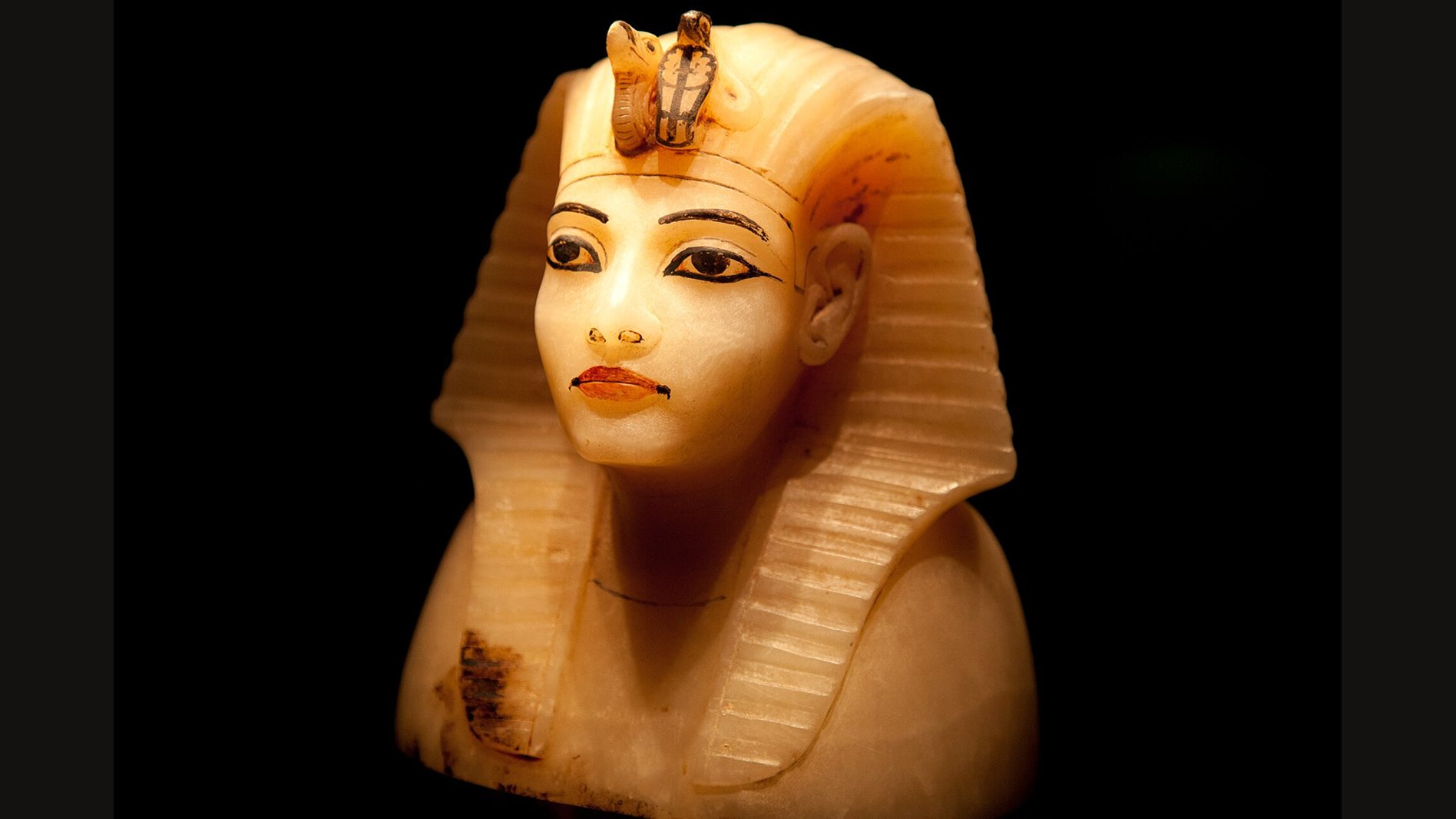
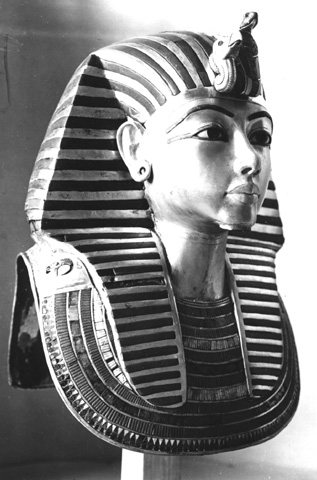
Much of the fascination starts with art rather than bone. Tutankhamun belongs to the late Eighteenth Dynasty, the period of Akhetaten, the royal city now known as Amarna. Royal statues and reliefs from Akhetaten show the king's family with dramatically long heads, long faces and other unusual proportions. The Metropolitan Museum of Art's Head of Tutankhamun gives a sense of how the young king himself was carved.
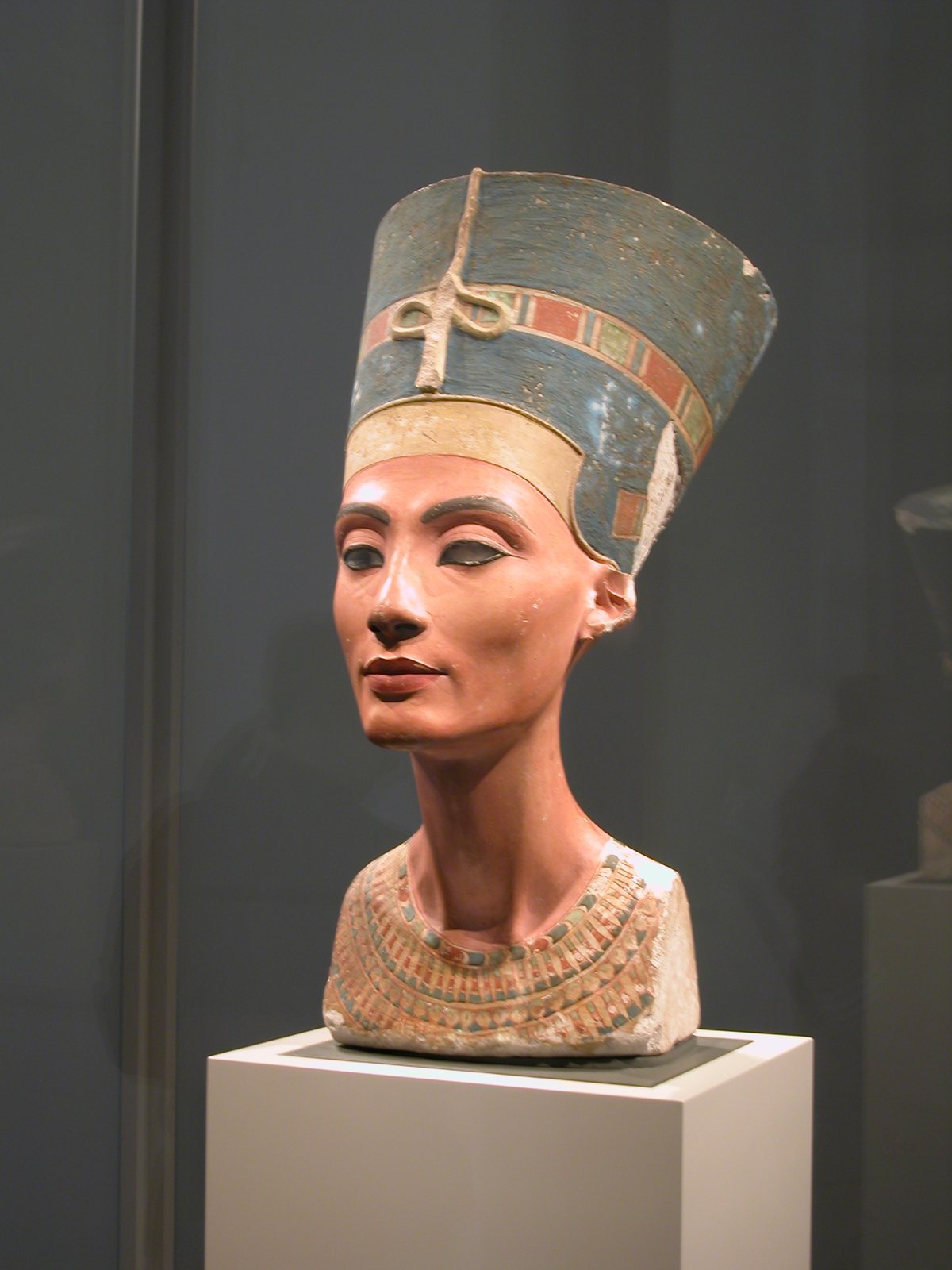
Set next to his actual skull, the art goes much further than the bone does. His skull is long, but not in the sweeping way the sculptures are. It is fair to compare the two, and many people do, but Amarna art was not a literal anatomical portrait. The real skull is a more modest version of the shape the artists drew out to such lengths.
The 1968 X-rays and the start of the murder theory
The first X-rays of the king's skull came more than forty years after Carter's team examined the mummy. In 1968 Professor R. G. Harrison of the University of Liverpool and A. B. Abdalla of the University of Cairo re-examined Tutankhamun's mummy, and their preliminary report appeared in the journal Antiquity in 1972 (Harrison and Abdalla, Antiquity, 1972). The University of Liverpool still keeps Harrison's Tutankhamun papers and X-ray photographs in its archive.
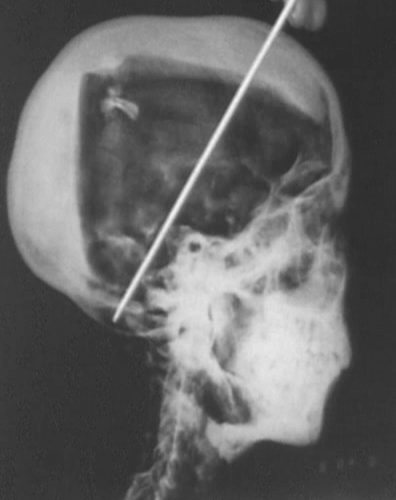
The X-rays showed loose bone fragments inside the skull. On a film, a loose piece of bone in a dead king's head is hard to look at without wondering how it got there. Writers including Bob Brier publicized the theory that the fragments pointed to a blow to the back of the head, and that Tutankhamun might have been killed (2005 CT report).
What the X-rays could not do was date the damage. A flat image shows that fragments are there; it cannot show whether they broke while the king was alive, during embalming or centuries later. That question had to wait for a scan that could see the skull in three dimensions.
What the 2005 CT scan concluded
On 5 January 2005, the mummy was carried out of his tomb, KV62, to a mobile CT scanner at Luxor. The scan took about fifteen minutes and produced more than 1,700 images, which Hawass and the Egyptian team then studied (2005 CT report).
The team found no evidence of a fatal blow or of murder. They matched the two loose fragments to damage at the first cervical vertebra, the top bone of the neck that the skull rests on, and at the foramen magnum, the large opening at the base of the skull where the spinal cord passes through. The fragments were not stuck in the embalming material inside the skull, and the team read that detail as an argument against a wound made before the embalmers did their work.
The report's view is that the fragments most likely broke either during embalming or when Howard Carter's team removed the head from the gold mask during the examination of the mummy in the 1920s. The full story of that examination, which began on 11 November 1925 with the anatomist Douglas E. Derry and Saleh Bey Hamdi, belongs to the story of Tutankhamun's mummy, along with where he rests today and what the later studies say about how he died.
The 2005 team did not agree on everything. Its members disagreed about some of the damage to the neck. They did agree on the point most readers come for: the skull shows no evidence of murder.
Tap or hover a row to highlight it.
| Detail | 1968 X-rays | 2005 CT scan |
|---|---|---|
| DetailTeam | 1968 X-raysR. G. Harrison (University of Liverpool) and A. B. Abdalla (University of Cairo) | 2005 CT scanZahi Hawass and the Egyptian CT team |
| DetailWhat it showed | 1968 X-raysLoose bone fragments inside the skull | 2005 CT scanMore than 1,700 images; fragments matched to damage at the first cervical vertebra and the foramen magnum |
| DetailWhat it meant | 1968 X-raysBecame the basis of the blow-to-the-head theory | 2005 CT scanNo evidence of a fatal blow or murder; damage most likely after death |
| DetailPublished | 1968 X-raysAntiquity, 1972 | 2005 CT scanReport dated 8 March 2005 |
Brain out, resin in: how the embalmers treated his skull
The CT images also show what the embalmers did inside the skull, and it is careful work. According to the 2005 report, they broke through the thin bones of the nasal septum and removed the brain through the nose. They then introduced embalming material into the empty skull, mainly through the same route, and they did it more than once (2005 CT report).
The scan shows that history in layers. Some of the material pooled along the back of the skull while the body lay on its back. More of it later settled near the top of the skull after the head was tilted backward. Across the body and the skull, the team identified at least five different embalming materials and repeated episodes of treatment, and concluded that the mummification involved considerable care.
Here, too, the scientists did not agree on every detail. They debated whether some of the material entered through a second route at the back of the upper neck, or whether all of it came in through the nose and flowed downward. For the full sequence of washing, drying, packing and wrapping that the embalmers followed for the rest of the body, see how Egyptian mummies were made, step by step.
The linen skullcap on his head
When Carter's team worked down to the king himself, they recorded what was on his head. The Griffith Institute's Tutankhamun archive at Oxford lists a "skull-cap of fine cambric-like linen" from the burial chamber, recorded in the fourth excavation season, 1925 to 1926, and now held under Cairo Museum number JE 62699 (Griffith Institute, object record 256.4t). Carter published it in the second volume of The Tomb of Tut.ankh.Amen in 1927, on page 113 and in plates XXXI to XXXII.
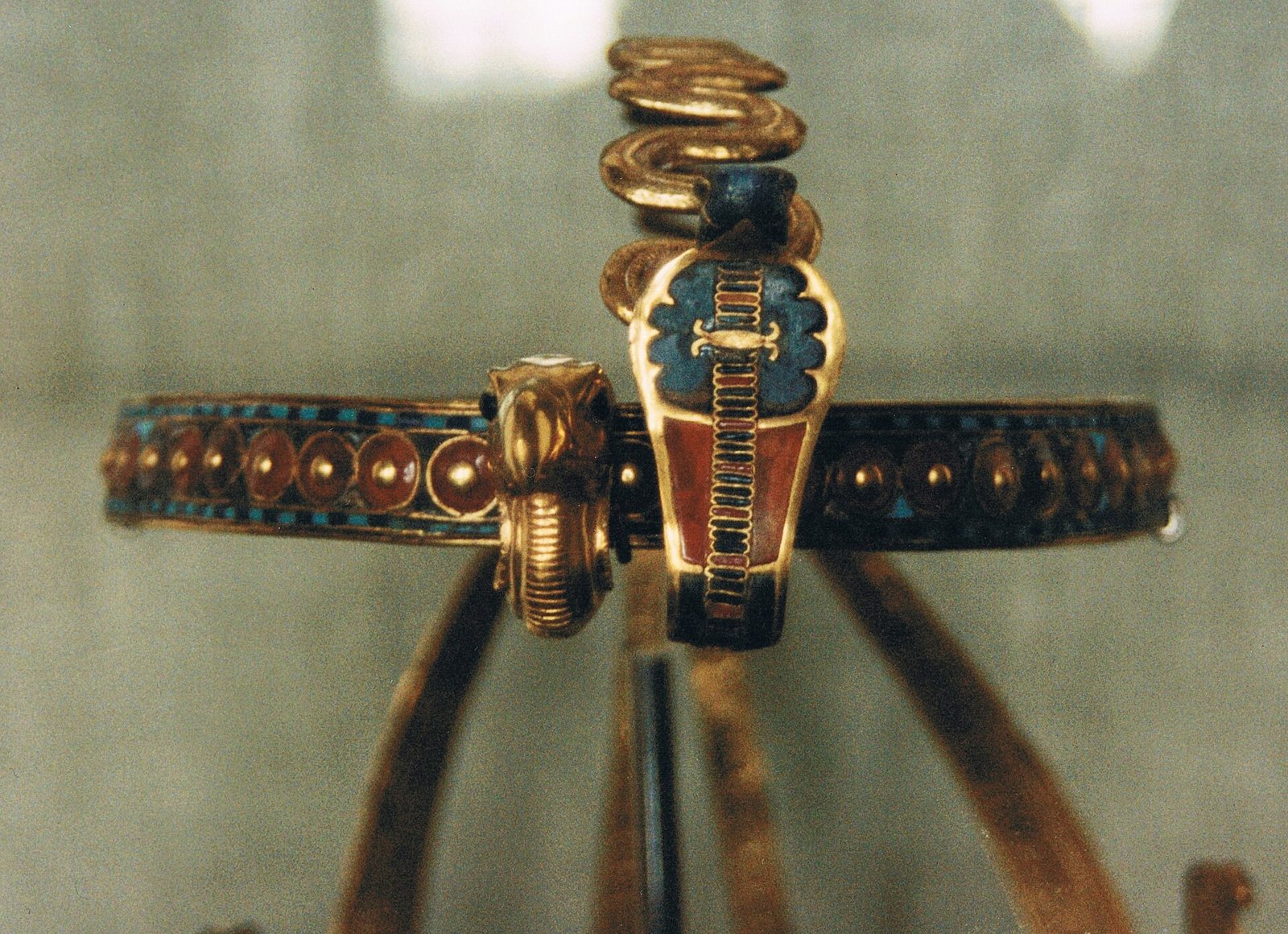
The wording, cambric-like, describes a very fine cloth, so the cap was a delicate linen head covering, part of the burial equipment found with the king. It is a different object from the gold diadem, the crown placed over his head, which is the piece most people have seen in photographs (Wikimedia Commons, gold diadem, photograph by Paul Appleyard, CC BY-SA 2.0). The archive describes the linen as a skullcap, a garment, and it has nothing to do with shaping the head.
The faces built from his skull
A skull holds the scaffolding of a face, and in 2005 three teams used the CT data to rebuild Tutankhamun's. Zahi Hawass, then Secretary General of Egypt's Supreme Council of Antiquities, announced the project: an Egyptian team, a French team and an American team, each working independently (Hawass announcement, 2005). The American team, which included Susan Anton of New York University, was not told whose skull it was working from. The Egyptian and French teams knew.
The three faces came out broadly similar, which says something about how much the bones decide. They also differed in the nose, the jaw, the chin and the lips, which says something about how much they do not (PBS NewsHour). Each face is a forensic approximation, built from the skull's structure and standard tissue depths, not a portrait recovered from ancient evidence. The method behind them is the same one explained in our story on facial reconstruction.
Tutankhamun's skull, from excavation to scan
Tap or hover a step to follow the order.
11 November 1925
Douglas E. Derry and Saleh Bey Hamdi begin examining the mummy under Howard Carter's excavation.
1925 to 1926
A fine linen skullcap is recorded from the burial chamber.
1968
R. G. Harrison's University of Liverpool team X-rays the mummy and records loose bone fragments inside the skull.
5 January 2005
The mummy is CT scanned in a mobile unit at Luxor.
2005
Egyptian, French and American teams build facial reconstructions from the CT data.
2010
Hawass and colleagues publish their JAMA study of the king's family and health.
Tutankhamun's skull
Answer every question to check.
Questions about Tutankhamun's skull
A few more questions come up often about the king's head and how he looked.
Did a blow to the head kill King Tut?
No evidence in the skull shows a fatal blow. The 2005 CT team found that the loose fragments were not fixed in embalming material, which argues against a wound made before embalming, and linked them to damage after death (2005 CT report). The 2005 work did not settle every question about the rest of his body, and his cause of death is a separate subject.
Was King Tut's skull deformed by head binding?
Nothing in the scans points to head binding. His cranial sutures had not fused early, and the 2005 team judged the long shape to be normal variation; the 2010 JAMA study also found no craniosynostosis (Hawass et al., JAMA, 2010).
What was King Tut wearing on his head?
A fine linen skullcap, recorded by Carter's team in the 1925 to 1926 season and published by Carter in 1927. Over it sat the gold diadem, a separate object and the one usually shown in photographs (Griffith Institute, object record 256.4t).
What did King Tut really look like?
Nobody can know his face exactly; the closest guides are the three 2005 reconstructions, which are forensic approximations rather than portraits (Wilkinson and Saleem). For how the artists of his own time chose to show him, the Met's Head of Tutankhamun is one well-known example, carved in the Amarna style.
Can you see the original X-ray of his skull?
A copy is widely shared. The image on Wikimedia Commons has been released into the public domain, and the page notes that the original is held by the University of Liverpool Archives.
A young king, examined with care
Tutankhamun's skull has been photographed, X-rayed, scanned and modelled since 1925, and each step answered a question the last one raised. The long shape is real and, as far as the scans can tell, natural. The loose fragments that started a murder story most likely broke after his death. The resin inside shows embalmers working carefully, more than once, to prepare a king for burial, and the linen cap on his head shows how he was dressed for it. He was a young man and someone's son, and the scientists who studied him did so to understand his life, which is the best way to read their results too.
Terms in this story
Tap a term to see what it means.
Dolichocephalic. A long, relatively narrow skull shape; the word the 2005 CT team used for Tutankhamun's skull.
---