

No. 321
Dragon Skulls: The Fossils Once Taken for Dragons, and Dragons in Art
The real skulls behind dragon stories belong to animals we know. The "dragon skull" once shown in the town hall of Klagenfurt, Austria, is the skull of a woolly rhinoceros. A "skull of a dragon" published in 1676 from the Carpathian region came from a cave bear.
In China, the "dragon bones" called longgu were fossil bones and teeth collected from the ground, and near Beijing some of them helped point scientists toward the caves where Peking Man was found. The skulls documented as dragons' remains belong to known animals, and no specimen of a mythological dragon has been authenticated.
Dragon skulls are very real as art, though. Film prop makers, sculptors and replica artists build them on purpose, and museums still gather dragons from many centuries of painting and craft.
Klagenfurt's dragon and its woolly rhinoceros skull
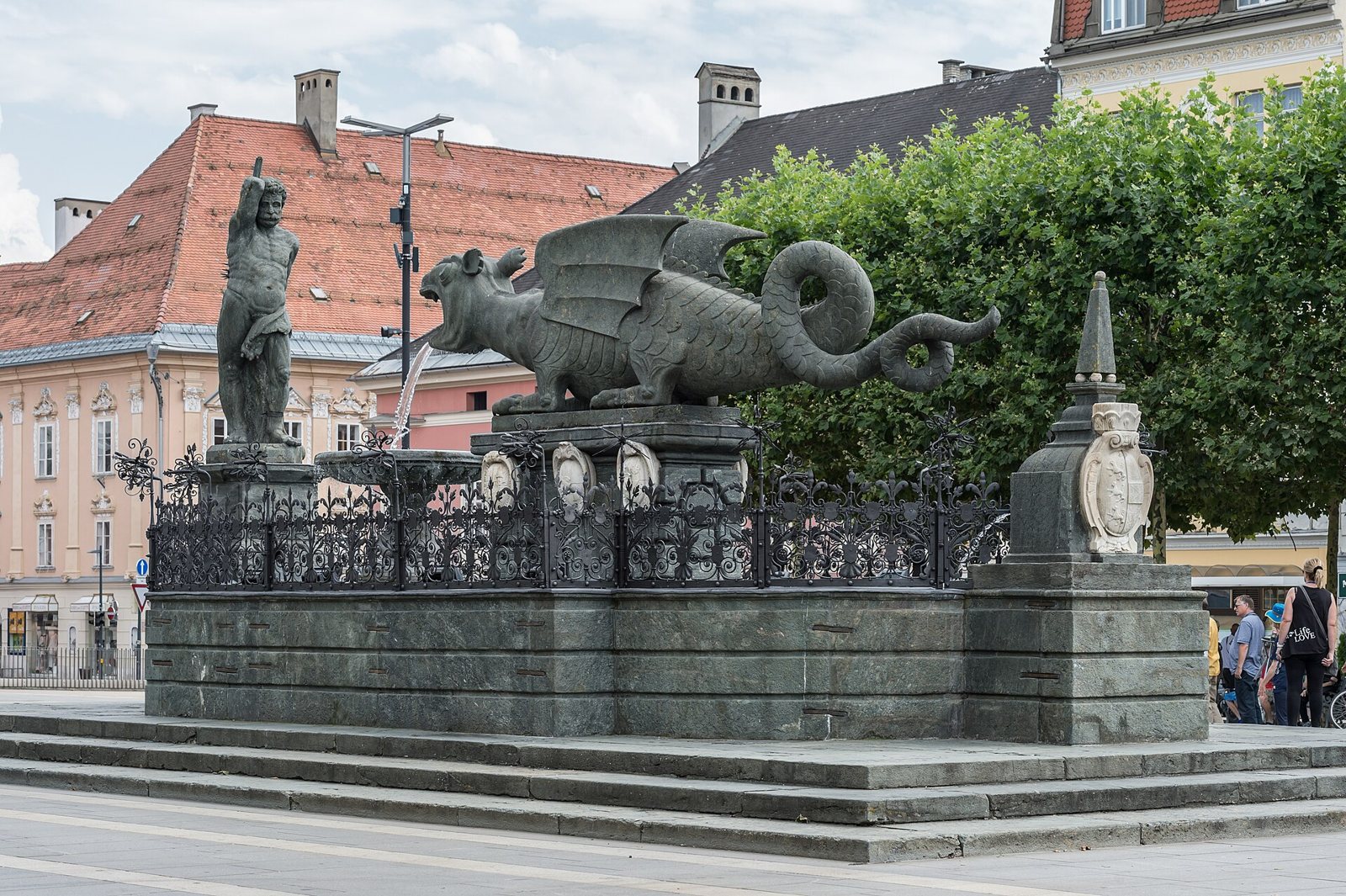
In Klagenfurt stands the Lindwurmbrunnen, a stone dragon finished in 1590 by the sculptor Ulrich Vogelsang. The Lindwurm is Klagenfurt's dragon, and for a long time the town had what looked like proof of one: a large skull displayed in the town hall as the Lindwurm's head.
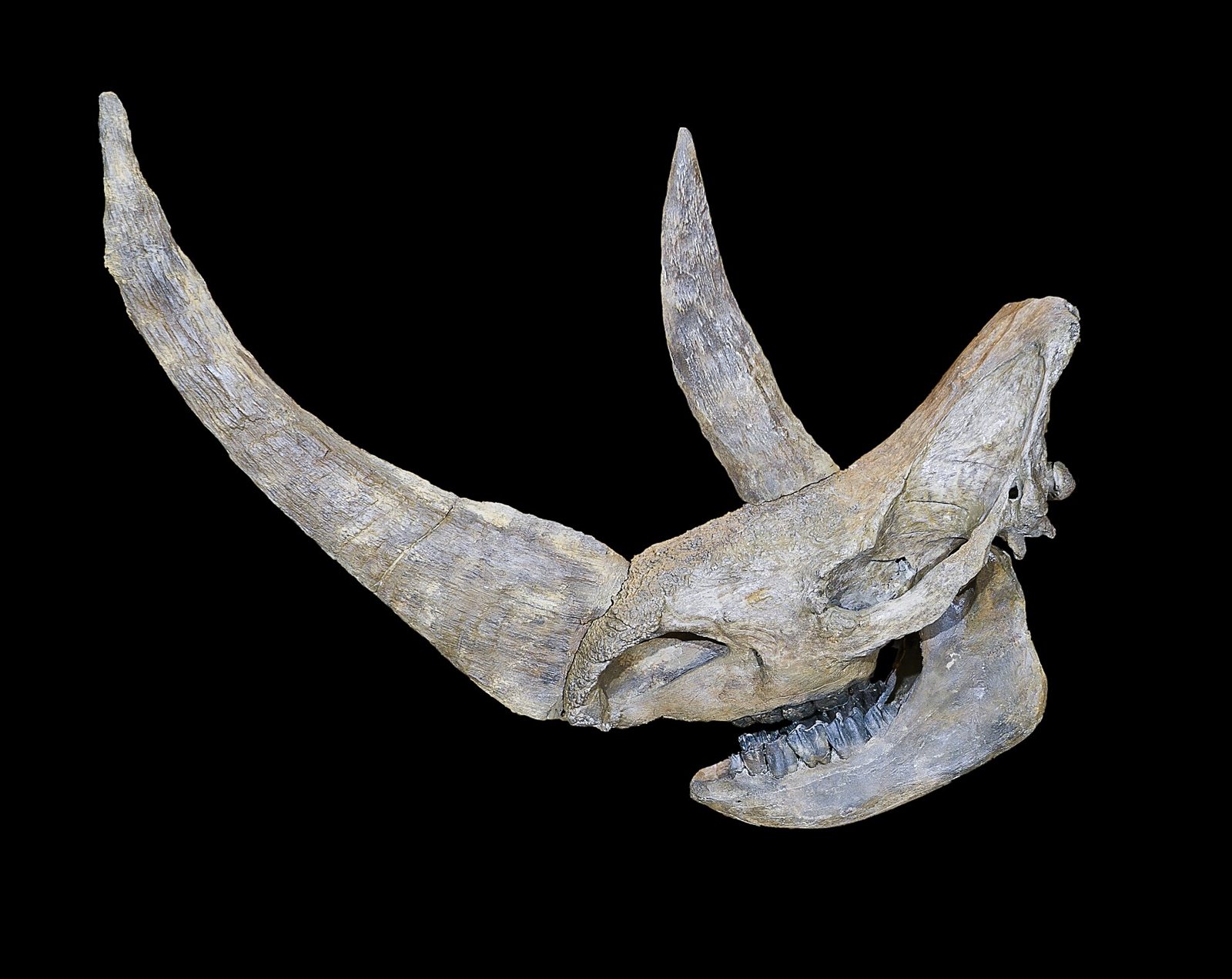
In 1840 the botanist and fossil specialist Franz Unger took a closer look. He identified the skull as that of a woolly rhinoceros, *Coelodonta antiquitatis*, an animal of the Pleistocene, the age of the great Ice Age mammals. Unger went further and argued that Vogelsang had used the skull as a model for his dragon's head. The museum's account of the Lindwurm skull treats that idea as a well-supported hypothesis rather than a documented fact.
Where and when the skull turned up is less certain. Museum tradition places the find at about 1335 near Goritschitzen, while Othenio Abel placed it in the Zollfeld in the 16th century. Today the skull belongs to the Kärnten.museum collection. Adrienne Mayor, whose work on fossils and legend runs through the rest of this story, also discusses the Klagenfurt reconstruction in her book *The First Fossil Hunters*. Our story on the mammoth skull covers another giant of the Ice Age.
The cave bear that became a Carpathian dragon
Central Europe produced its own dragon skulls in the age of printed books. In 1676 Vollgnad published an engraving of a skull from the Carpathian region and labelled it "the skull of a dragon." According to a study published by the Naturhistorische Gesellschaft Nürnberg, the illustration even added a canine tooth taken from another animal to make the skull look more monstrous.
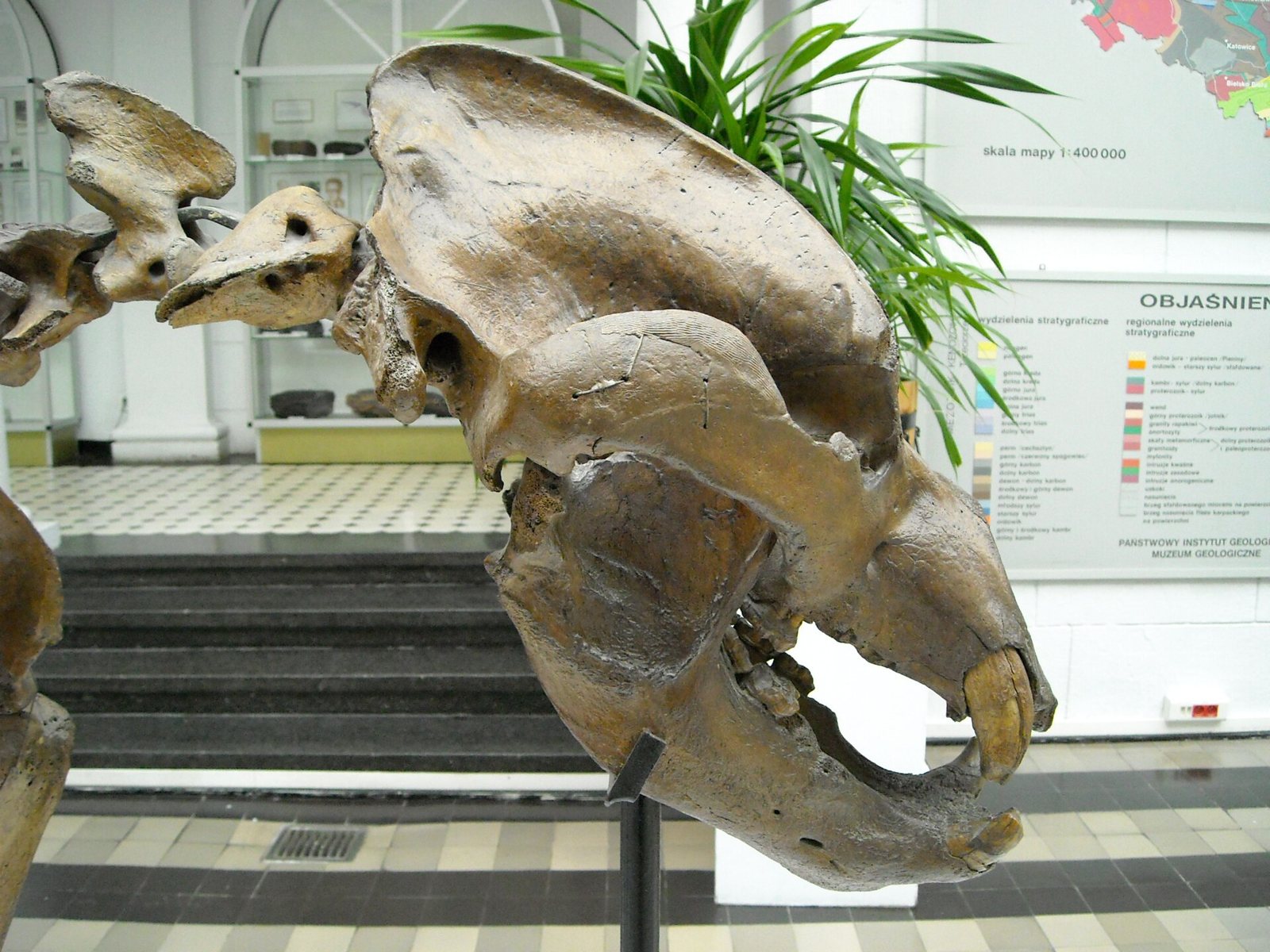
The skull underneath the borrowed fang belonged to a cave bear. A 1974 reproduction in *BCRA Transactions* identifies it plainly as a bear skull, borrowed fang aside. If you are curious how a bear's skull compares with other animals', our story on the bear skull covers the living species.
Griffins, Protoceratops and the first fossil hunters
Adrienne Mayor's best-known idea is about griffins rather than dragons, but it belongs to the same story. In *The First Fossil Hunters*, she argues that some ancient legends may preserve people's attempts to explain real fossils. Her leading example links the gold-guarding griffins described by Scythian gold-miners to *Protoceratops* and other dinosaur skeletons exposed in the Gobi Desert near the Altai Mountains.
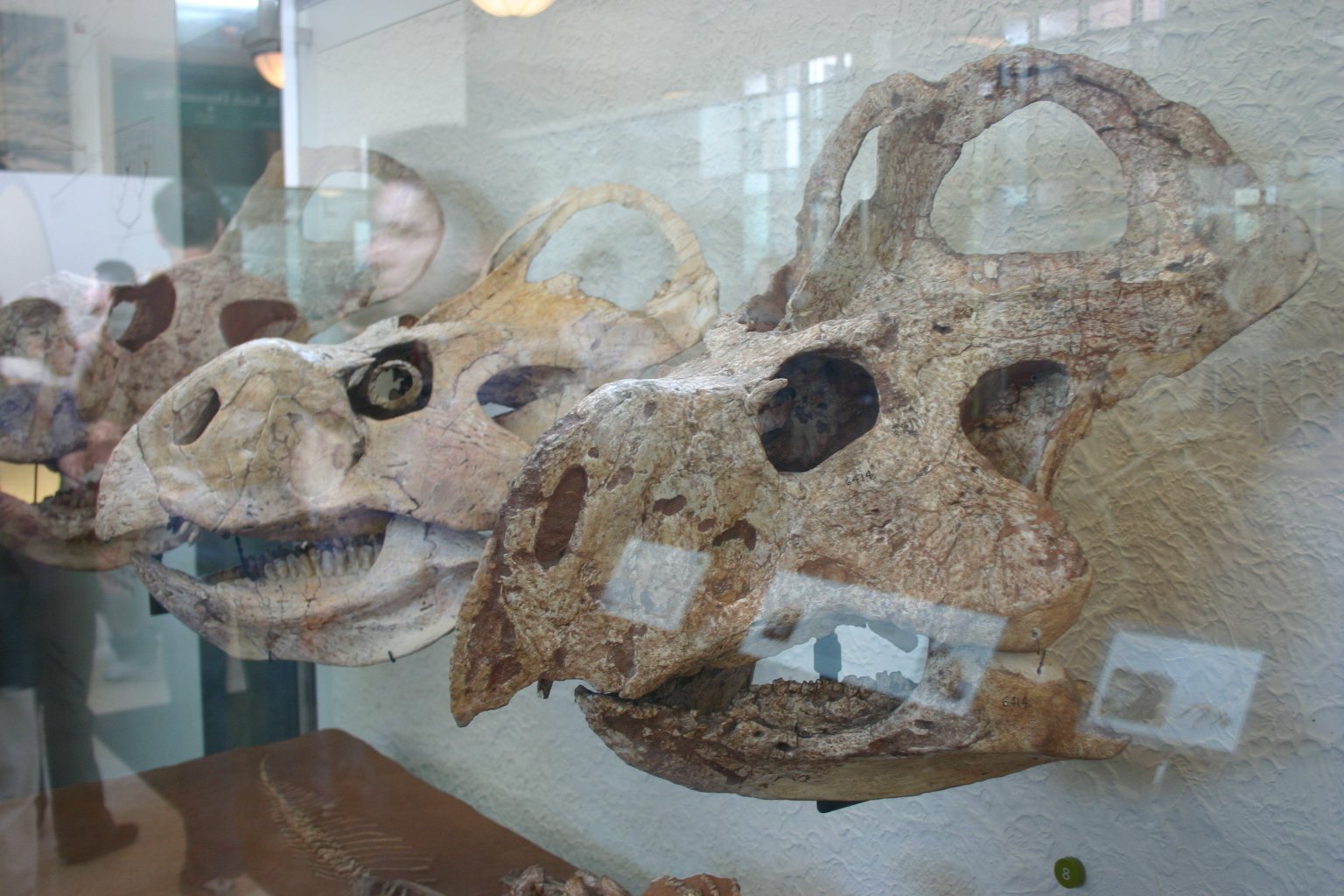
*Protoceratops* had a beaked skull and a bony frill at the back of the head. Lying in the desert rock, a skeleton like that could suggest a large, four-legged animal with a bird's beak, which is a fair description of a griffin. Mayor presents this as a historical hypothesis. It explains particular cases, and she does not claim that every griffin or dragon story began with a fossil. Other scholars are more cautious still: in their paper "Did the horned dinosaur Protoceratops inspire the griffin?", Witton and Hing stress how limited the direct evidence is for linking dinosaur fossils to the beginnings of these legends.
Her work has reached museum floors too. In 2008 she advised the "Dragons Unearthed" exhibition at The Children's Museum of Indianapolis, and in comments reported by the Stanford Humanities Center she discussed the dinosaur *Dracorex* and how people have interpreted fossils. Our story on the elephant skull and the Cyclops follows another skull once read as a monster's.
Dragon bones in China and the road to Peking Man
In China, *longgu*, meaning "dragon bones," was a historical name for fossil bones and teeth collected from the ground. People gathered them in later centuries for collecting and for traditional medicine. They are a separate thing from oracle bones, which are mainly animal shoulder blades and turtle plastrons, the flat undersides of turtle shells, from the Late Shang period, inscribed for divination. The two did cross paths, though. In early 20th-century Anyang, in northern China, farmers sold ancient ox shoulder blades and tortoiseshells as dragon bones, and some carried oracle-bone inscriptions, according to the Smithsonian's *Art and Archaeology of Ancient China*.
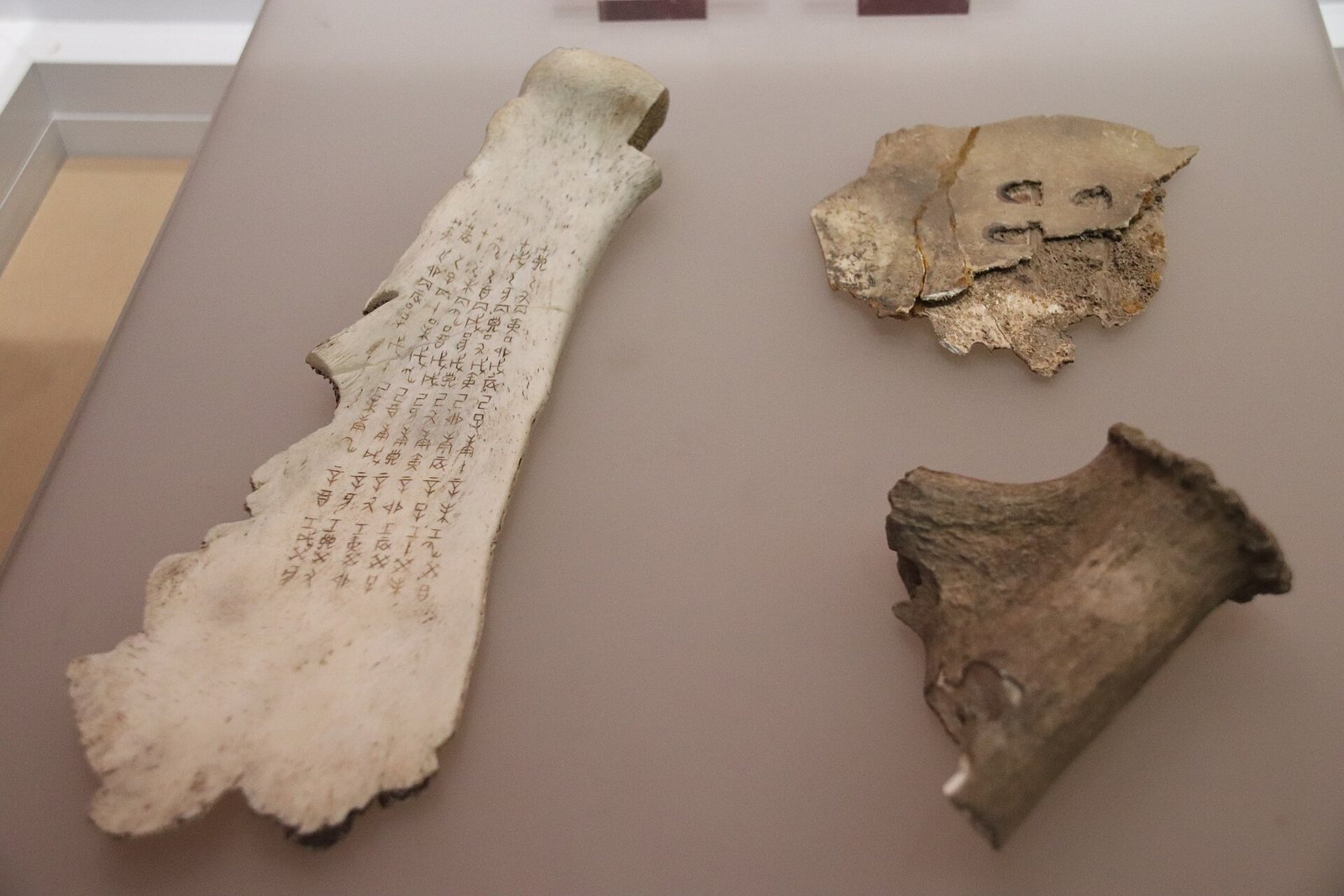
Was a dragon skull ever found in China? Not a dragon's, but "dragon bones" covered many kinds of real remains. A Smithsonian translation of a study on Sichuan's Jurassic dinosaurs notes that the *Annals of the Kingdom of Huayang*, from about 347 CE, already recorded dragon bones in Sichuan, and that remains called by that name there included fossil mammals and, in some cases, dinosaurs.
One well-known "dragon" skull from China is human. The Harbin cranium, reportedly found near Harbin in 1933 and at least 146,000 years old, was named *Homo longi* after Heilongjiang's Long Jiang, the Dragon River, and became known as Dragon Man, the Natural History Museum explains. In 2025 the museum reported evidence linking it to the Denisovans, and our story on the Dragon Man skull follows it further.
Dragon bones played a real part in one of the best-known early-human sites. At Zhoukoudian, near Beijing, local people collected fossilized bones from the caves as dragon bones before any scientific excavation. The American Museum of Natural History says this local knowledge helped direct attention to the fossil-bearing caves where researchers later uncovered the remains of Peking Man.
Excavations began in the 1920s, and a skull was found in 1929. The Beijing government's account of the site says fossils representing more than 40 individuals have been recovered there, including skulls, jaws and teeth, along with tools and traces of fire. It also records a loss: specimens found before 1949 went missing during the wartime turmoil. These are the remains of early human relatives, and our story on Peking Man tells their history in full.
The historian Sigrid Schmalzer, in her chapter "From 'Dragon Bones' to Scientific Research", describes local knowledge of longgu and modern paleoanthropology as continuing alongside each other, rather than science simply replacing the older tradition. The story has its own book as well: Penny van Oosterzee's *Dragon Bones: The Story of Peking Man*, listed in the Smithsonian's library catalogue.
Tap or hover a row to highlight it.
| What people saw | What it turned out to be |
|---|---|
| What people sawThe Lindwurm's head in Klagenfurt's town hall | What it turned out to beA woolly rhinoceros skull, identified by Franz Unger in 1840 |
| What people sawA Carpathian "skull of a dragon," 1676 | What it turned out to beA cave bear skull, with a canine added from another animal |
| What people sawLonggu, dragon bones, at Zhoukoudian | What it turned out to beFossil bones and teeth, near the caves later known for Peking Man |
| What people sawGriffin stories of the Scythian gold-miners | What it turned out to bePossibly Protoceratops skeletons in the Gobi, in Adrienne Mayor's hypothesis |
| What people sawThe "giant skeleton found in Romania" photo | What it turned out to beA doctored photo of a skeleton from a sixth-century necropolis in France |
| What people sawThe "dragon skeleton found in China" photo | What it turned out to beAn art sculpture in France |
| What people sawThe "Dragon Man" skull from Harbin | What it turned out to beAn ancient human cranium, named for the Dragon River and linked to Denisovans in 2025 |
Was the dragon skull found in Romania real?
The widely shared Romania image was a doctored photograph. On December 16, 2023, the news agency AFP reported that an image labelled as an ancient giant skeleton found in Romania had been altered. The original was an AFP photo taken in June 2008, showing a skeleton excavated from a sixth-century necropolis, a burial ground, in France. The altered version first appeared in an image-manipulation contest.
That skeleton was a real person, buried some fifteen centuries ago, and the photo was made to say something about them that was never true. Romania's fact-checkers have looked at similar posts. Factual.ro examined a viral video about giant skulls and secret tunnels in Romania and reported that it gave no verifiable location, no named finder and no archaeological record. Dragon skeletons travel online in the same way. AFP traced a photo shared as a "dragon skeleton found in China" to an art sculpture in France.
When the next "dragon skull found" post crosses your feed, a few questions sort it out quickly. Does it name the place where it was found, the person who found it, and a museum or collection record for the specimen? Has a museum or a qualified paleontologist examined it? Until a post can answer those, treat it as unverified and enjoy it as an image.
Dragon skulls made on purpose
The dragon skulls people see most often today were built by artists, and some of them are very good. The Natural History Museum's record on Google Arts & Culture identifies the dragon skull seen in *Harry Potter and the Prisoner of Azkaban* as a Warner Bros. film prop, loaned through the Warner Bros. Studio Tour London.
Replica makers work the same territory. The artist Joshua Dunlop describes his "Adolescent European Dragon Skull" as a hand-finished, 3D-printed resin replica made for his Unnatural History collection, and he states plainly that it is not a fossilized dragon skull. That kind of honesty is part of the fun: the craft is to give an impossible animal bones that look like they once held it up.
Some artists skip the skull and build the whole beast. In Detroit in 2013, Ryan Doyle and Teddy Lo created *Gon KiRin*, a dragon 20 feet tall and 60 feet long, made from sheet metal, tires and discarded Detroit materials. According to Michigan Public, it breathed fire and used its flames to spell "Save the Art," which is more than any fossil has managed. For more skulls made as art, our story on famous skull art gathers the best-known pieces.
Dragons in museums
Museums keep dragons from many centuries of art. The exhibition "Dragons. Myth and Reality," presented in Darmstadt and Cologne across 2026 and 2027, brings together medieval Christian art, Japanese screens, Korean ceramics and a preserved flying-dragon specimen, according to the Museum Schnütgen. Check dates, venues and opening hours with the museum before you plan a visit.
Older dragon paintings sit in collections around the world. Chen Rong's *Nine Dragons* handscroll, dated 1244, is associated with the Museum of Fine Arts, Boston. His painting *The Dragon* is in the Metropolitan Museum of Art. A Warring States period silk painting of a man riding a dragon is held by the Hunan Provincial Museum, and a 1607 Chinese woodblock print of a dragon from the *Tuhui zongyi* is associated with the Philadelphia Museum of Art. Dragons also coil through symbolism, and our story on ouroboros tattoo meaning follows the dragon with its tail in its mouth.
Dragon skulls through history
Tap or hover a step to follow the order.
About 347 CE
The Annals of the Kingdom of Huayang record dragon bones in Sichuan.
About 1335, date uncertain
A large skull later tied to the Klagenfurt Lindwurm is reportedly found near Klagenfurt; the exact date and place are disputed.
1590
Ulrich Vogelsang's Lindwurmbrunnen is completed in Klagenfurt.
1676
Vollgnad publishes a cave bear skull as a Carpathian dragon's skull.
1840
Franz Unger identifies the Klagenfurt skull as a woolly rhinoceros and links it to the sculpture.
1920s
Scientific excavations begin at Zhoukoudian, where local people had collected fossil bones as longgu.
1929
A Peking Man skull is found at Zhoukoudian.
1933
The Harbin cranium, later called Dragon Man, is reportedly found near Harbin.
2008
The "Dragons Unearthed" exhibition opens at The Children's Museum of Indianapolis, with Adrienne Mayor advising.
2023
AFP publishes its fact-check of the doctored "giant skeleton found in Romania" photograph.
Questions about dragon skulls
A few more questions come up often.
Has a real dragon skull ever been found?
The skulls once shown as dragons' belong to known animals, such as the woolly rhinoceros at Klagenfurt and Carpathian cave bears, and no specimen of a mythological dragon has been authenticated. Both are fossils of extinct mammals, identified by name in the publications that study them. The same goes for whole skeletons: the "dragons" paleontologists have dug up are real prehistoric animals with dragon in their names, such as *Qijianglong guokr*, a long-necked dinosaur whose name means "dragon of Qijiang," *Mei long*, a small feathered dinosaur whose name means "soundly sleeping dragon" according to the American Museum of Natural History, and *Lingwulong shenqi*, the "amazing dragon of Lingwu."
What fossils were mistaken for dragons?
A woolly rhinoceros skull at Klagenfurt, cave bear skulls published in Central Europe in the 17th century, and fossil bones collected in China as longgu are the best-documented cases. Adrienne Mayor adds *Protoceratops* skeletons in the Gobi as a likely source for griffin stories, presented as a hypothesis.
Was the "dragon skeleton found in China" real?
AFP identified the viral photo as an art sculpture in France. Like the doctored Romania image, it traveled online with a false story attached.
Did dinosaur bones inspire dragons?
In some cases, as a historical hypothesis: Adrienne Mayor links *Protoceratops* fossils to griffin stories, and she discussed the dinosaur *Dracorex* when advising a 2008 dragon exhibition. No single fossil explains every dragon tradition, and the European dragon skulls in this story came from Ice Age mammals rather than dinosaurs.
Did Canada find a frozen dragon?
Canada found an exceptionally preserved armored dinosaur, not a frozen dragon. In March 2011, workers at the Suncor Millennium Mine north of Fort McMurray, Alberta, uncovered *Borealopelta markmitchelli*, a nodosaur that the Royal Tyrrell Museum calls the best-preserved armored dinosaur known, with skin and armor intact from snout to hips, about 112 to 110 million years old; museum technician Mark Mitchell spent more than 7,000 hours preparing it. The phrase "frozen dragon" belongs to a different Alberta fossil, *Cryodrakon boreas*, a giant pterosaur named in 2019 by David Hone, Michael Habib and François Therrien, whose name Queen Mary University of London translates as "frozen dragon of the north winds."
Were Chinese dragon bones fossils?
Yes, longgu were fossil bones and teeth collected from the ground. At Zhoukoudian, collecting them helped lead scientists to the Peking Man fossils.
Dragon skulls quiz
Answer every question to check.
The best dragon skulls in history were woolly rhinos, cave bears and fossil bones that people tried hard to explain, and the best ones made today come from sculptors and prop makers who know exactly what they are building. Either way, a dragon skull is a story about people looking hard at bones.
Terms in this story
Tap a term to see what it means.
Lindwurm. Klagenfurt's legendary dragon, shown in the stone Lindwurmbrunnen finished in 1590.
---