

No. 322
Hognose Snakes Playing Dead: Why They Do It, and the Other Snakes That Play Dead
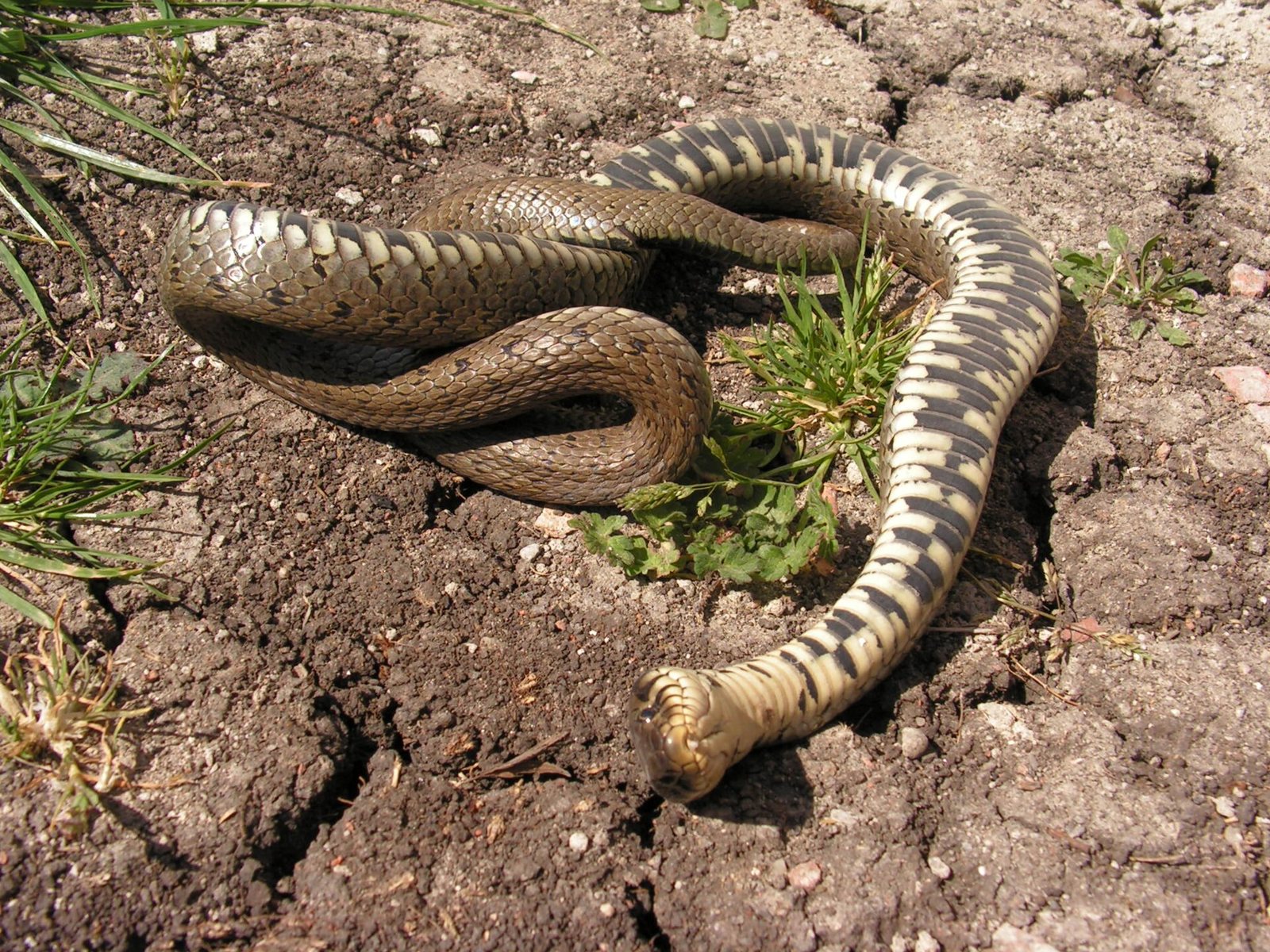
A snake that flattens its neck, hisses, then flips belly-up with its mouth open and tongue hanging out is very likely a hognose snake putting on its defensive act. When bluffing does not make a threat go away, it rolls onto its back, may release a strong musk and lies still. Scientists call this death-feigning, or thanatosis.
Is it dangerous? The Florida Museum says the eastern hognose is not dangerous to people or pets. The University of Georgia's Savannah River Ecology Laboratory describes its mild venom as not medically significant.
The best response is the easy one. Step back, keep pets away, and let the snake finish the performance on its own schedule.
Meet the hognose snakes
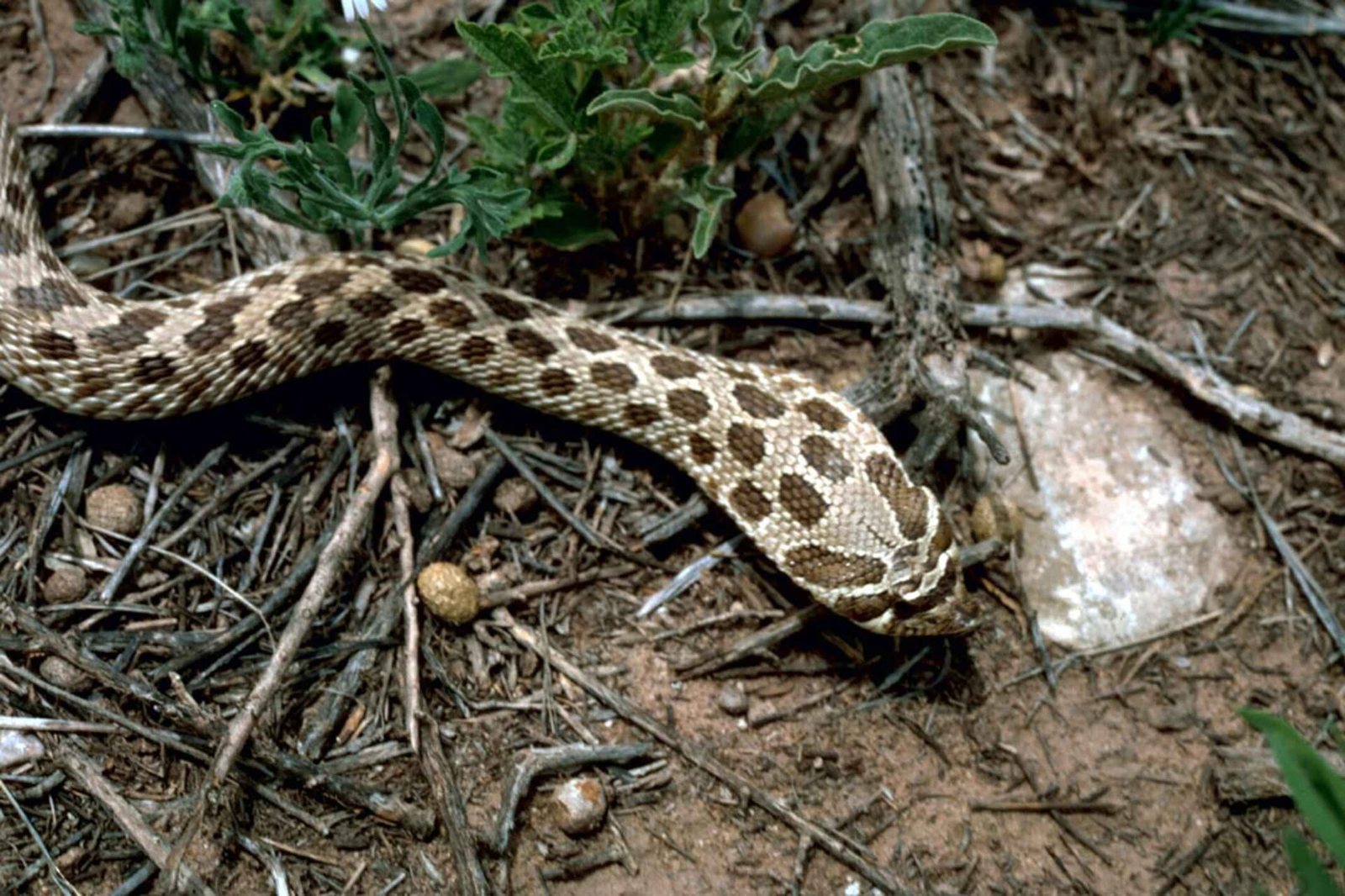
Three North American snakes share the name, all in the genus *Heterodon*: the eastern hognose (*Heterodon platirhinos*), the western hognose (*Heterodon nasicus*, which some researchers call the plains hognose) and the southern hognose (*Heterodon simus*). The giveaway is the snout. All three have an upturned nose that gives them their common name.
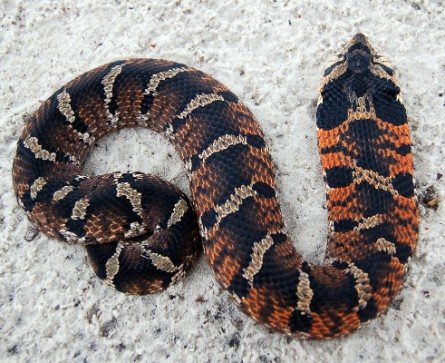
That nose belongs to a snake with a particular appetite. The University of Georgia ties the hognose's enlarged rear teeth to a diet heavy on toads; the teeth help the snake handle a toad that has inflated itself. If the bones of toads and frogs interest you, our frog skull story looks at what this snake is up against.
The act, step by step
Playing dead is the finale, not the opening number. The University of Georgia describes the eastern hognose's sequence this way: the snake flattens its neck, hisses loudly and makes bluff strikes. If the harassment continues, it rolls onto its back, releases musk and stays motionless with its mouth open.
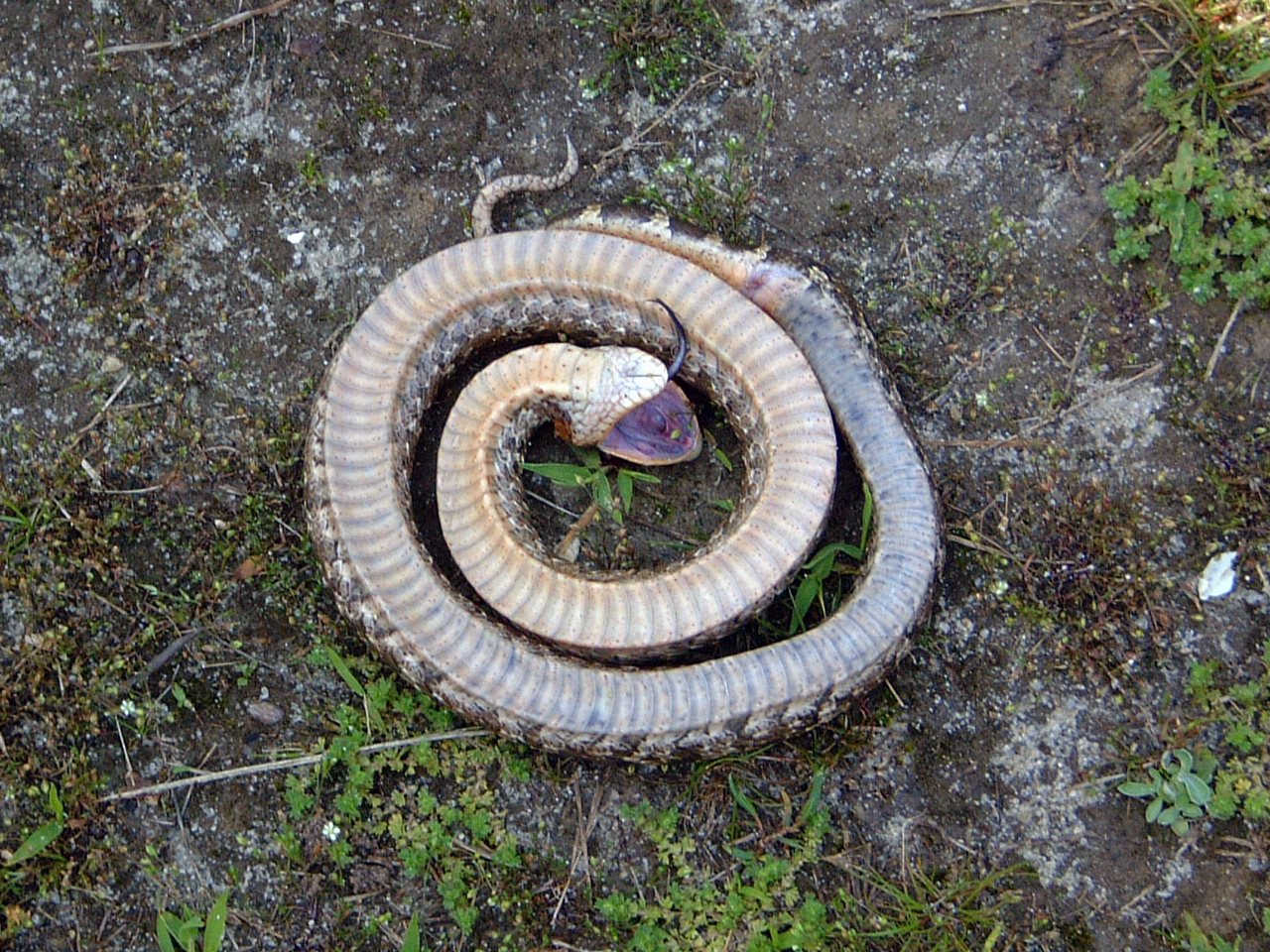
The details can get theatrical. A death-feigning hognose may lie upside down with its tongue out, and the display can include musk, defecation, regurgitation or a little bleeding from small vessels in the mouth. That is why a snake on its back with its mouth open and tongue out looks so convincingly dead.
Scientists have been watching this for decades. In a 1974 study at Eastern Illinois University, Brenda S. Hemken recorded neck spreading, hissing, bluff striking and death-feigning in newly hatched eastern hognose snakes. Every snake in her experiment bluffed, but only three of ten went on to feign death. Andrew M. Durso and Stephen J. Mullin documented the same general sequence in plains hognose snakes and noted that individuals may skip some stages entirely.
The hognose defense, in order
Tap a card to bring it forward.
- Neck flattening: The snake spreads its neck and head to look bigger.
- Hissing: A loud hiss warns the threat off.
- Bluff strikes: Lunges meant to startle, part of the bluff before any rollover.
- Rolling over: If harassment continues, the snake turns onto its back.
- Musk and open mouth: It releases musk and lies still, mouth open, tongue often out.
- Rolling back if righted: Turned right side up, it may flip straight back over.
Why it flips back over
Here is the part that makes the videos so popular: turn a "dead" hognose right side up, and it may promptly roll onto its back again. Durso and Mullin report that a hognose may resume the inverted posture after being reoriented, especially after it has been touched. It is hard to look convincingly dead while insisting on one particular way of being dead, but the snake commits.
It is not confused and it has not passed out. Work by Gordon Burghardt and Harry Greene, published in 1988, showed that death-feigning hognose snakes keep monitoring a predator's presence and even the direction of its gaze while lying limp. The flip back is best understood as the defensive pattern carrying on while the snake still senses danger. Once the threat leaves, the snake rights itself and moves off.
What playing dead does for the snake
A hognose plays dead when the earlier options, escaping, spreading its neck, hissing and bluff striking, have not ended the threat. Researchers treat it as a last-resort antipredator behavior. The odor, the gaping mouth and the look of lifelessness may make the snake less appealing to some predators, and an animal that seems already dead may simply be left alone.
That explanation is still a hypothesis rather than a settled fact. The behavior is well documented; exactly how much it helps a hognose survive is a question scientists are still working on. The opossum is the other famous practitioner, with its own physiology and its own debate.
Is a hognose snake dangerous?
The Florida Museum says the eastern hognose is not dangerous to people or pets, and it labels the species "non-venomous." Hognose snakes are rear-fanged colubrids, though, and the same museum explains that they produce a mild venom delivered by enlarged teeth at the back of the mouth. The difference is partly a matter of terms: different authorities describe the same mild secretion in different words.
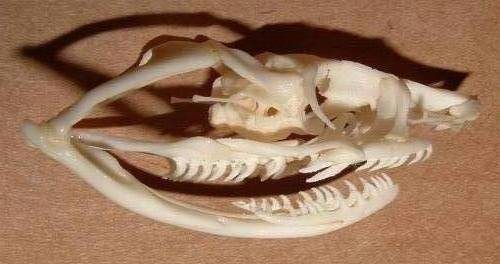
The University of Georgia describes the venom as coming from Duvernoy's glands and used mainly to subdue prey such as toads. It says bites may cause localized swelling or irritation but are not medically significant. The Florida Museum adds that bites are extremely rare, usually follow intentional handling, and that no human death is recorded from this species.
Has a hognose snake ever killed a person? The medical reports on hognose bites describe local injuries, not deaths. In a 2009 case report, Weinstein and Keyler described a captive western hognose (*Heterodon nasicus*) that held onto a person's arm for several minutes; the bite caused marked swelling, bruising, swollen lymph nodes and blistering, and full recovery took about five months. A California Poison Control review of 35 western hognose bites from 2016 through March 2026 reported two hospitalizations for presumed cellulitis and no deaths.
How much does a bite hurt? For the eastern hognose, the Missouri Department of Conservation says symptoms in people, such as burning, tingling and swelling, are usually short-lived. A bite that lasts longer can do more. In the California review, 91 percent of western hognose bites caused local swelling, in 43 percent it spread to the wrist or forearm, and 6 percent involved nausea or vomiting. Weinstein and Keyler concluded that hognose snakes can, uncommonly, cause medically significant bites, so a bite with spreading swelling, blistering or severe pain should be seen by a medical professional.
None of that is an invitation to pick one up. Wild snakes should be left alone, and the most reliable way to avoid a bite from any snake is not to handle it.
Other snakes that play dead
The hognose is the celebrity, but plenty of other snakes play dead. In Europe, the grass snake (*Natrix natrix*) was studied by Patrick T. Gregory, Leigh Anne Isaac and Richard A. Griffiths of the University of Victoria and the University of Kent, who looked at death-feigning after handling by human "predators" in 2007. They saw it in 66 percent of their wild-caught grass snakes, from mouth gaping and a hanging tongue to, in the most dramatic cases, rolling onto the back and going limp. Its relative the dice snake (*Natrix tessellata*) was studied on Golem Grad, an island in North Macedonia. There, in a 2024 study, Vukašin Bjelica and Ana Golubović linked musking, fecal smearing and autohaemorrhaging (releasing a little blood as part of the display) to how long the snakes stayed in their death pose.
Central America has its own cast. Rogemif Fuentes Magallón and coauthors reported death-feigning in six Panamanian species in 2021: the dark-headed red falseboa (*Pseudoboa neuwiedii*), double-banded false coralsnake (*Erythrolamprus bizona*), forest flamesnake (*Oxyrhopus petolarius*), rufous-headed snake (*Amastridium veliferum*), Colombian long-tailed snake (*Enuliophis sclateri*) and Pacific banded coffee snake (*Ninia maculata*).
There is even a cobra on the list. In 2022, Krunal Trivedi and Pravesh Kumar published a report of death-feigning in a spectacled cobra (*Naja naja*) in India. It is a single report, not a species habit, but together these records show playing dead is a defense spread across many snakes, not a trick confined to one family.
Tap or hover a row to highlight it.
| Species | Scientific name | Documented display | Place or study |
|---|---|---|---|
| SpeciesEastern hognose snake | Scientific name*Heterodon platirhinos* | Documented displayNeck spreading, hissing, bluff striking, rolling over, open mouth, tongue out, death-feigning | Place or studyEastern Illinois University study, 1974; University of Georgia species account |
| SpeciesPlains or western hognose snake | Scientific name*Heterodon nasicus* | Documented displayLying upside down and still, sometimes with musk, defecation, regurgitation or oral bleeding | Place or studyStudies by Andrew M. Durso and Stephen J. Mullin |
| SpeciesGrass snake | Scientific name*Natrix natrix* | Documented displayDeath-feigning after handling, with stillness after release | Place or studyUniversity of Victoria and University of Kent study, 2007 |
| SpeciesDice snake | Scientific name*Natrix tessellata* | Documented displayDeath-feigning with musk, fecal smearing and autohaemorrhaging | Place or studyGolem Grad, North Macedonia, published 2024 |
| SpeciesSix Panamanian species | Scientific name*Pseudoboa neuwiedii*, *Erythrolamprus bizona*, *Oxyrhopus petolarius*, *Amastridium veliferum*, *Enuliophis sclateri*, *Ninia maculata* | Documented displayDeath-feigning reports | Place or studyPanama, published 2021 |
Hognose snakes as pets, and the law
Captive-bred hognose snakes are sold in the pet trade, but being bred in captivity does not set aside wildlife law, and the rules change from species to species and state to state. A few examples show how much they differ.
Maryland's captive reptile and amphibian rules place the eastern hognose on List B, which requires a Captive Reptile and Amphibian Permit or License to possess, breed or sell one. Rhode Island's regulations list the western hognose among exotic colubrids that may be kept without an exotic-animal possession permit, while the native eastern hognose may not be kept as a pet there.
The southern hognose carries the strictest protections. North Carolina lists it as state-threatened. On August 29, 2025, the U.S. Fish and Wildlife Service proposed federal threatened-species protection for it, and the proposed rule says North Carolina, South Carolina and Georgia generally prohibit taking, possessing, transporting or selling southern hognose snakes, with permits available for scientific research.
For anyone considering a hognose as a pet, the order of operations is plain: identify the exact species, confirm the animal is legally captive-bred, and check the current rules with your state wildlife agency before buying. Never take a hognose from the wild.
Studying snakes that play dead
Tap or hover a step to follow the order.
1974
Brenda S. Hemken studies defensive behavior in eastern hognose hatchlings at Eastern Illinois University.
1988
Gordon Burghardt and Harry Greene study predator simulation and death-feigning in newly hatched hognose snakes.
2007
Gregory, Isaac and Griffiths publish their study of death-feigning in grass snakes.
2009
Weinstein and Keyler publish a western hognose bite case with marked local injury and about five months of recovery.
2021
Fuentes Magallón and coauthors report six Panamanian snake species playing dead.
2024
Bjelica and Golubović publish field results on death-feigning dice snakes from Golem Grad.
August 29, 2025
The U.S. Fish and Wildlife Service proposes federal threatened-species protection for the southern hognose snake.
If you meet one
If a hognose rolls over in front of you on a trail or in the garden, the show is meant for you, and the kindest review is to leave. Give it space, keep dogs and cats back, and do not turn it over to test it; as the videos prove, it will only flip back. Once it decides the danger has passed, it will right itself and slip away.
Sometimes what turns up is a snake's bones rather than a live snake. Our snake skull story helps with identifying one, and do snakes have bones covers the hundreds of vertebrae and ribs behind that long body. Keeping any snake remains you come across, above all those of a protected species like the southern hognose in the states named above, is governed by state and federal wildlife rules. What follows is general information, not legal advice: ask your state wildlife agency or the US Fish and Wildlife Service before you keep anything, and read what to do when you find an animal skull.
Hognose quiz
Answer every question to check.
Hognose questions, answered
A few last answers for anyone who just watched one roll over.
How can you tell if a snake is playing dead or really dead?
You cannot reliably tell at a glance, so treat a motionless snake as alive and keep your distance. Connecticut's wildlife agency and Maryland's Department of Natural Resources note that a death-feigning eastern hognose lifts its head and moves off once danger passes, so give it time rather than touching or flipping it, and call a wildlife agency if the snake looks injured or is stuck somewhere dangerous.
Which snake plays dead?
The eastern hognose is one of the best-known snakes that play dead, and grass snakes, dice snakes and several Panamanian species do it too. In Spanish the word "víbora" is often used for any snake, but *Heterodon* is not a viper of the family Viperidae.
Why do hognose snakes play dead?
It is a last-resort defense used after escape, hissing and bluff strikes have not worked. The musk and lifeless look may put some predators off, though how much it helps the snake survive is still being studied.
A snake with a sense of drama
The hognose's routine is one of the best shows in North American nature: the hood, the hiss, the fake strike, the dramatic collapse and the stubborn insistence on lying belly-up. It is not dangerous by the measure of the scientists who study it, but it deserves its space and, in some states, legal protection. For more on what is inside that upturned head, read the snake skull story, and for the mammal that made "playing possum" a phrase, see why opossums play dead. If snakes in art and symbols are more your interest, skull and snake meaning picks up from there.
Terms in this story
Tap a term to see what it means.
Thanatosis. Feigning death. In a hognose snake it means lying on its back, motionless, often with the mouth open and tongue out.
---