

No. 337
Why Opossums Play Dead, and What to Do When One Does
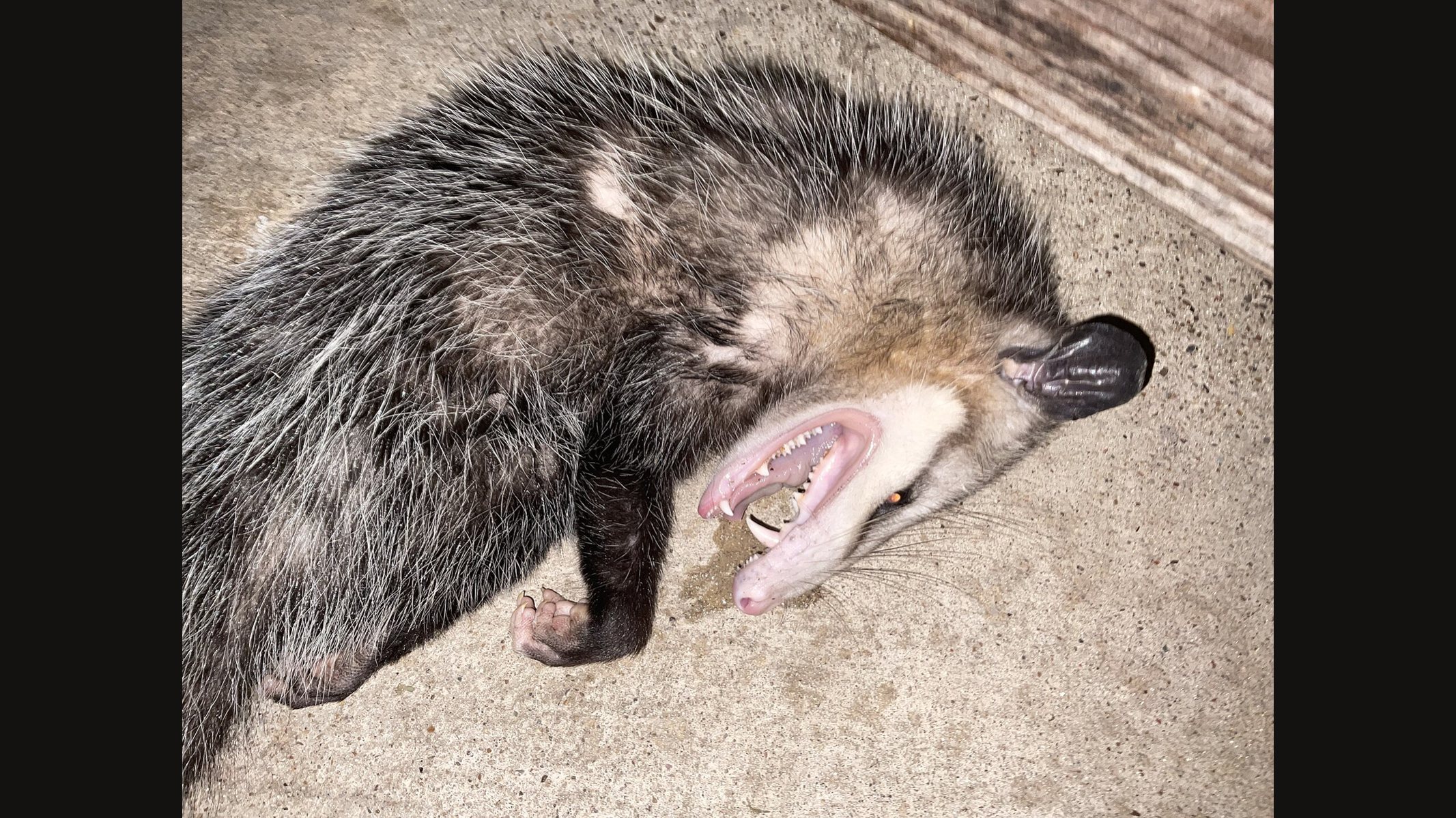
An opossum lying stiff in your yard, mouth open and drooling, may well be alive. When a Virginia opossum (*Didelphis virginiana*) is badly frightened, it can collapse into a death-like state that lasts from a few minutes to several hours.
The look is convincing. The animal lies limp or rigid on its side, eyes and mouth open, tongue sometimes hanging out, breathing shallow, often with a musky smell, according to the Pennsylvania Game Commission. People call it playing possum. Biologists call it death-feigning, thanatosis or tonic immobility.
What to do first is simple: leave it alone. Keep children and pets away, do not touch or prod it, and watch from a distance. If the ears start to twitch, the show is nearly over.
What to do right now
The most useful thing you can do for an opossum that looks dead is nothing at all, from a comfortable distance. Roanoke Wildlife Rescue, a licensed rehabilitation group, advises leaving it alone, keeping children and pets indoors or away from it, and not touching, moving, feeding or giving it water. The South Carolina Department of Public Health gives the same core advice: do not approach or handle a wild opossum, and keep pets and children back. Oakland Zoo's found-wildlife guide says the same about a startled opossum.
That holds whether the animal is in a flower bed or on the shoulder of a road. A frightened opossum needs the threat to leave, and in this case the threat is us, the dog and the curious kids.
Some signs mean the animal needs help rather than patience. Roanoke Wildlife Rescue lists visible wounds, bleeding, a limb at an odd angle, fly eggs or maggots, known trauma from a car or another animal, and an animal that stays unresponsive. Any of those is a reason to call a licensed wildlife rehabilitator. The Opossum Society of the United States uses about four hours as a practical point for contacting animal control or a rehabilitator if there is still no movement. That is a working guideline, not a hard rule, and it still does not mean poking the animal to check.
Can you tell whether it is dying or only playing dead? Usually not from a distance, so treat it as alive. Smell, stiffness and a lack of movement are all part of the act, so none of them works as a home diagnosis. The U.S. Fish and Wildlife Service advises giving an apparently uninjured opossum time and space; if it is in danger, injured, or still unresponsive after the threat has gone, contact a licensed wildlife rehabilitator or your state wildlife agency.
Call a licensed rehabilitator if you see
Tap a card to bring it forward.
- Wounds: Any visible cut, puncture or open injury on the opossum.
- Bleeding: Blood on the animal or on the ground around it.
- An abnormal limb: A leg held at an odd angle or not moving with the rest of the body.
- Fly eggs or maggots: A sign the animal is injured or weak and needs care.
- Known trauma: You saw it hit by a car or attacked by a dog or another animal.
- No movement after a long wait: Still unresponsive after about four hours, the Opossum Society's practical mark.
What playing possum looks like
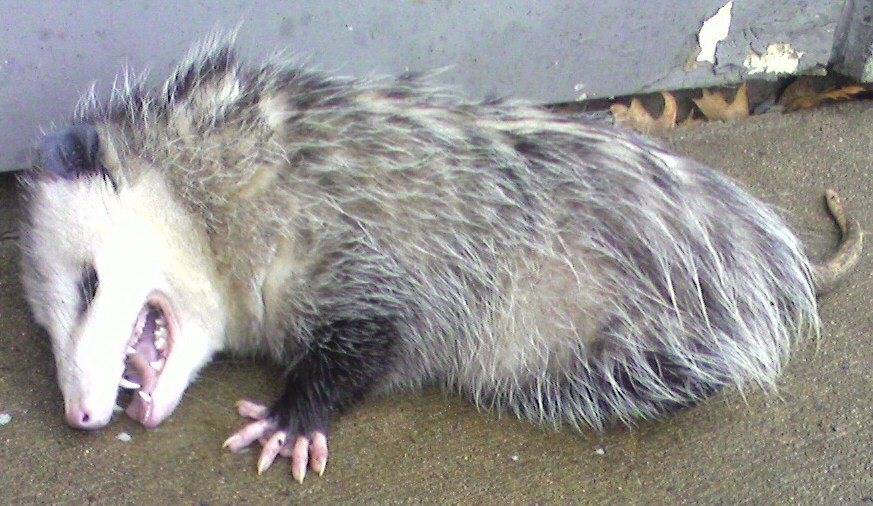
The collapse is usually the last act, not the first. A cornered Virginia opossum may hiss, bare its teeth, drool and open its mouth wide before it falls onto its side. Then the body goes limp or stiff, the eyes and mouth may stay open, the tongue may stick out, the forefeet may clench, breathing becomes shallow, and the animal stops responding normally to touch, as the Pennsylvania Game Commission describes it.
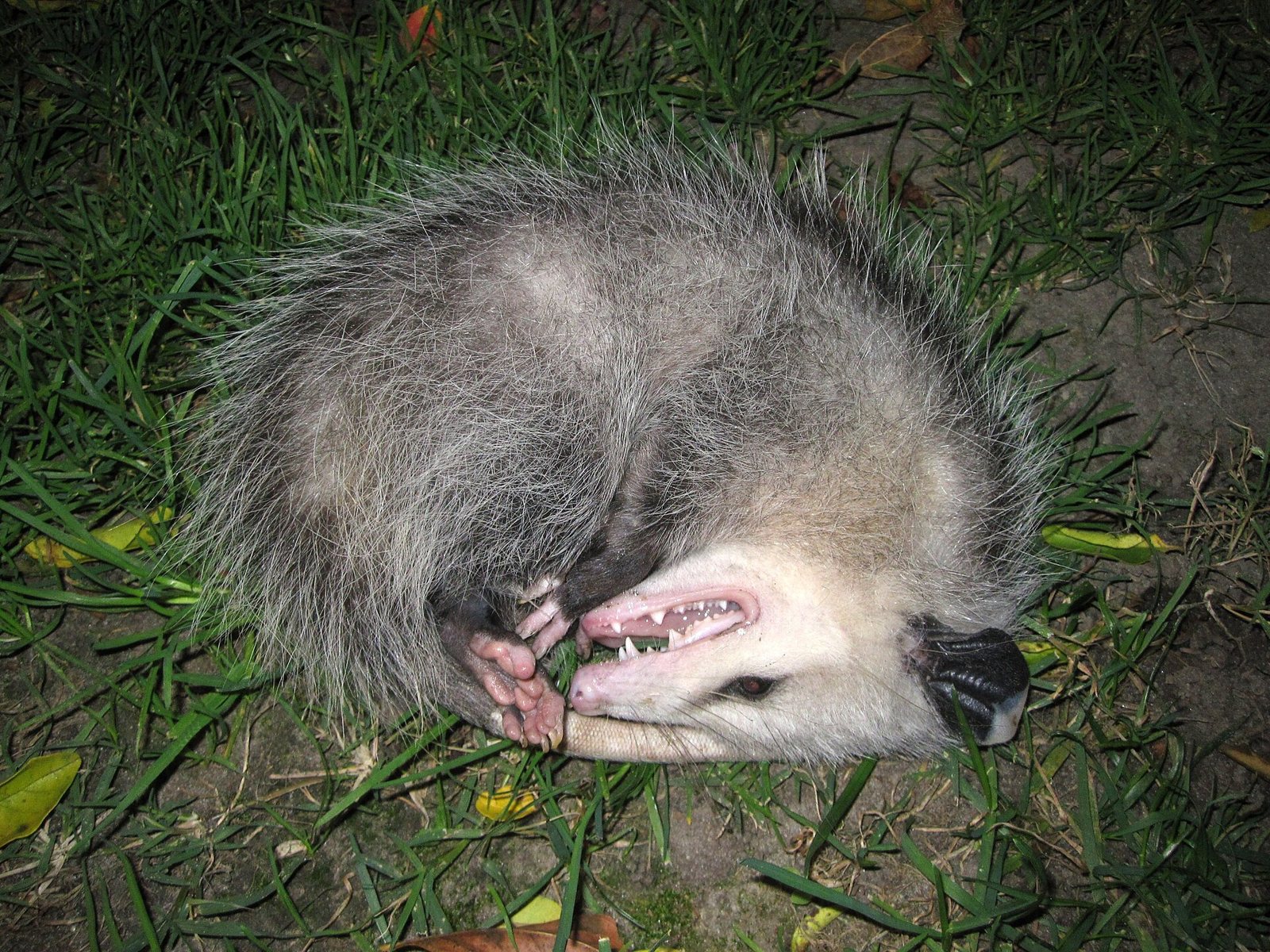
That is why a stiff opossum with its mouth open is such a common sight in yards and on roadsides. The posture looks like death because, from a predator's point of view, that is the whole idea.
Tap or hover a row to highlight it.
| Question | Answer |
|---|---|
| QuestionScientific name | AnswerVirginia opossum, *Didelphis virginiana* |
| QuestionCommon behavior names | AnswerPlaying possum, death-feigning, thanatosis, tonic immobility |
| QuestionTypical posture | AnswerLimp or stiff on its side, mouth open, tongue sometimes out |
| QuestionOther signs | AnswerDrooling, shallow breathing, little movement, urination, defecation, musky odor |
| QuestionDuration | AnswerSeveral minutes to several hours |
| QuestionFirst recovery signs | AnswerEar movement, head lifting, looking around |
| QuestionImmediate response | AnswerLeave it alone, keep pets and children away, do not touch |
| QuestionWhen to call a rehabilitator | AnswerWounds, bleeding, abnormal limb, maggots, known trauma, or continued unresponsiveness |
The smell, the drool and all those teeth
Every unpleasant detail has a job. The North Carolina Wildlife Resources Commission describes bared teeth, hissing and drooling as threat displays that may discourage an approaching predator, and the drool can make the animal look sick or dangerous. A mouth full of teeth, in other words, is usually a bluff. It is not proof of aggression or of rabies.
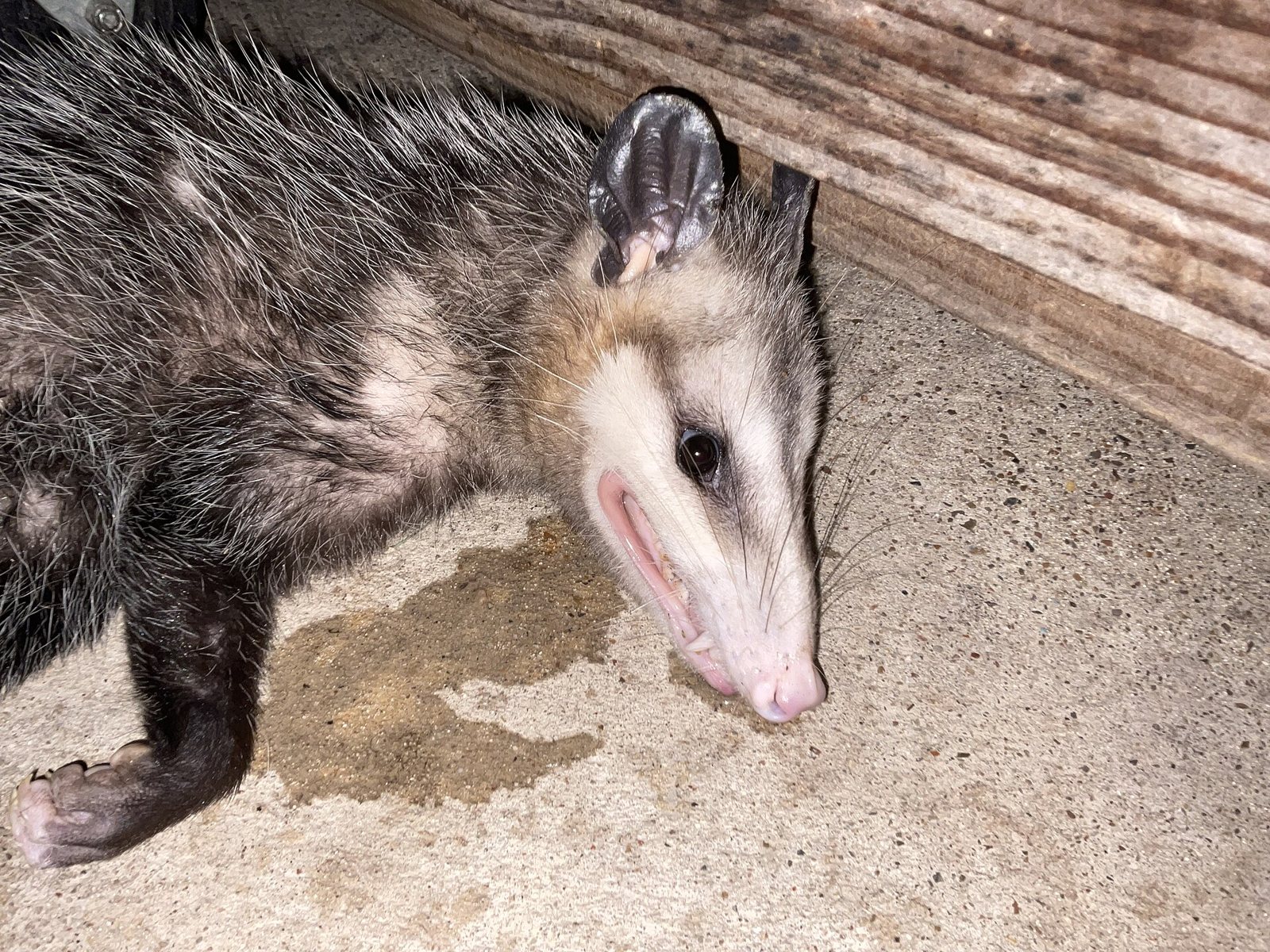
The smell is part of the act too. North Carolina's wildlife agency describes a foul-smelling greenish substance released from the anal glands, and the Pennsylvania Game Commission describes a musky odor that may repel enemies. In their physiological study, G. W. Gabrielsen and E. N. Smith also recorded salivation, urination and defecation during the response. An animal that looks dead and smells worse is simply less appealing to a hungry fox or a curious dog.
Trick or reflex: what happens inside the animal
Nobody can say for certain whether an opossum decides to play dead, and the evidence points to something it does not fully control. The Pennsylvania Game Commission notes that wildlife biologists have not settled whether the behavior is deliberate or involuntary.
The physiology leans one way. In a 1985 study, Gabrielsen and Smith recorded lower heart rate, slower breathing and a drop in body temperature in four free-ranging American opossums while they feigned death. That looks less like acting and more like a stress response the body runs on its own. The safest reading is that an opossum cannot reliably choose when to go into the state or when to come out of it.
It does resemble fainting: the animal goes unresponsive, its breathing turns shallow and its heart rate can fall. The more accurate names are death-feigning, thanatosis or tonic immobility, the terms the New York State Conservationist uses for an animal that revives once danger has passed.
Is the opossum awake, and can it feel anything while it lies there? Science has not settled either question, so it is safest not to assume it is asleep, unconscious or beyond harm. A scientific review of tonic immobility describes heavy salivation and a slowed heart rate during the response, and cautions against treating it as a proven conscious performance. Older brain-wave work, such as Francq's 1969 study of feigned death in *Didelphis marsupialis*, recorded changes that were not unique to the feigning state. Treat the animal as alive and vulnerable.
Opossums are not the only performers, either. Some snakes stage an even more dramatic version, covered in our story on hognose snakes playing dead.
Waiting it out: the slow wake-up
An opossum can stay in this state for a few minutes or for several hours. The Pennsylvania Game Commission gives that range, and the Washington Department of Fish and Wildlife describes periods of several minutes or several hours. The Opossum Society of the United States puts the practical range at a few minutes to about four hours, and the New York State Conservationist notes that recovery after the danger has passed can take several hours.
The wake-up is gradual. First the ears wiggle. Then the head lifts, the opossum looks around, and when it judges the coast clear, it walks off as if nothing happened. That is the best way to tell a living opossum from a dead one without going near it: give it quiet, give it time, and watch from a window or across the yard.
From pouch to playing dead
Tap or hover a step to follow the order.
Birth
Young crawl into the mother's pouch.
About 55 days
Young can briefly crawl out of the pouch.
About 85 days
Young travel in the pouch or on the mother's back.
About 100 days
Young are weaned and disperse on their own.
When threatened
The animal may hiss, bare its teeth, drool and go into death-feigning.
After danger passes
The ears may move, the head may lift, and the animal may leave.
Opossums and rabies
Opossums can get rabies, but health departments treat them as lower-risk animals. The Washington State Department of Health classes opossum exposures as very low risk and advises consulting the local health jurisdiction if the animal is acting rabid. The Virginia Department of Health says opossums appear to have a lower risk of rabies infection, but under its guidance an opossum that acts aggressively, appears ill or is found dead can be treated as a suspected rabid animal.
Lower risk is still a reason not to handle one, and opossums do bite people when they are cornered, restrained, injured or picked up. Roanoke Wildlife Rescue notes that even a weak or apparently dead opossum may bite when touched, and the Virginia Department of Health says never to pet, handle, approach or feed a wild animal. If someone is bitten or scratched, or saliva gets into broken skin, the eyes, nose or mouth, wash the area and contact a healthcare provider and the local health department promptly. The CDC's rabies guidance says exposures to wildlife it does not specifically list should be assessed with the public health department.
Why you may meet more of them in autumn
Two things can bring opossums into yards in the fall. The first is family life. Young Virginia opossums ride in their mother's pouch and then on her back, and North Carolina's wildlife agency says they are weaned and disperse at about 100 days old. A young opossum newly out on its own has a lot to learn about dogs, cars and porches.
The second is food. The Missouri Department of Conservation lists grapes, persimmons, pawpaws and pokeberries among the fruits opossums eat particularly in fall and early winter. Fallen fruit under a backyard tree is an open invitation. Neither fact means sightings always peak in autumn, but together they explain why many people meet their first stiff, open-mouthed opossum around then.
Tlacuache, zarigüeya, carachupa: one animal, many names
The animal English speakers call the opossum carries much older names across the Americas. *El Tlacuache*, a 2026 publication of Centro INAH Morelos, traces them. In Mexico, "tlacuache" comes from the Nahuatl *tlacuatzin*. "Zarigüeya" came through Brazilian Portuguese from the Guaraní word *sariwewa*. "Carachupa" comes from the Quechua *qarachupa*, and the same publication records "chucha" and "churcha" as Quechua-derived names. Even "opossum" is borrowed, from an Algonquian word recorded as *opassom*.
In Spanish, a tlacuache that plays dead is said to "hacerse el muerto" or "fingir la muerte," the same behavior biologists call thanatosis. Because these names vary by country and region, and the same common name can refer to different *Didelphis* species, it helps to pair a local name with the scientific one. North of Mexico, though, there is only one candidate: the New York State Conservationist notes that the Virginia opossum is the only marsupial native to North America north of Mexico.
If you come across bones later
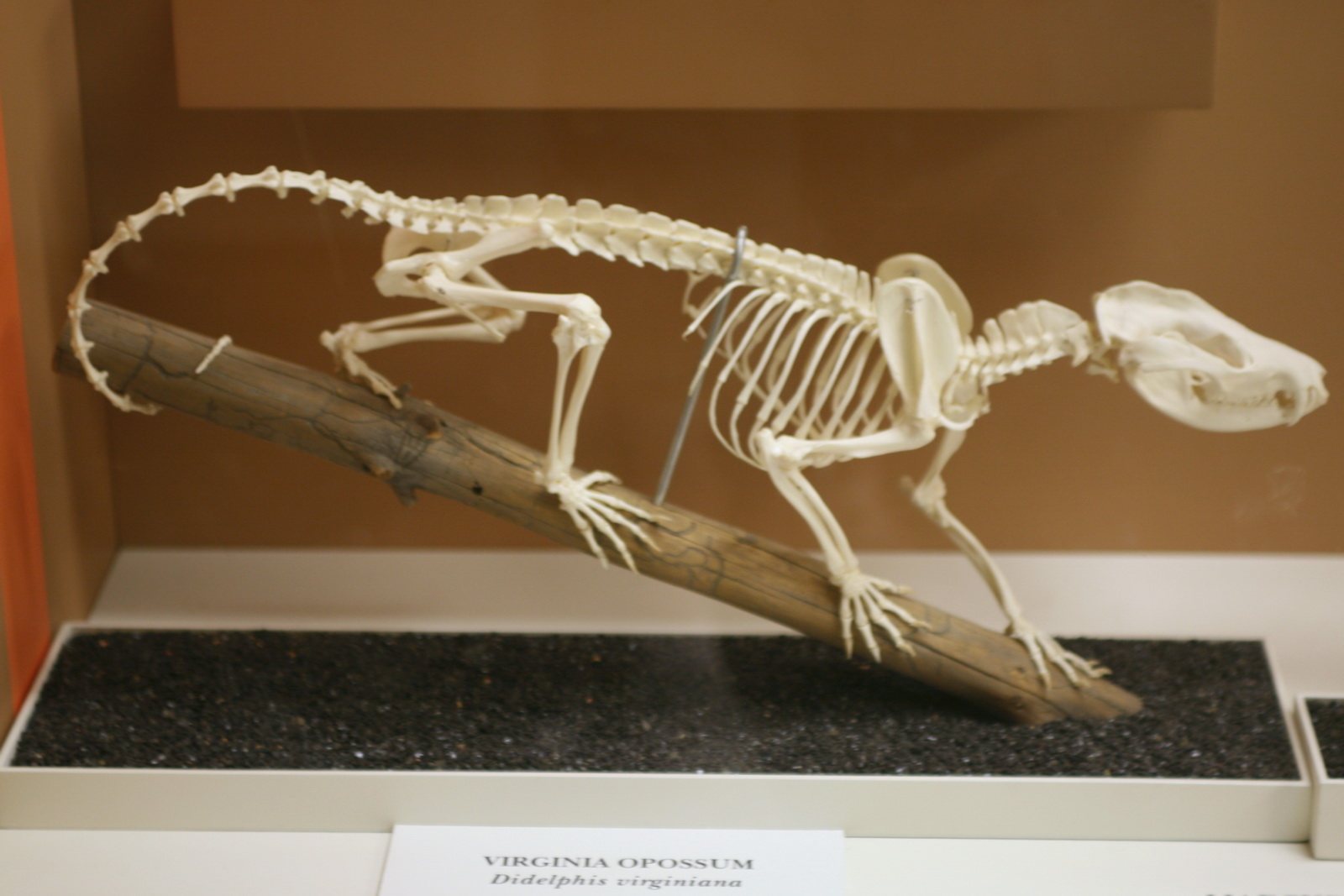
Sometimes the opossum in the yard really has died, or a skull turns up months later under a hedge. Our opossum skull story covers how to recognize one, starting with its famous count of teeth. Whether you may keep any skull or bones you come across depends on wildlife law where you live, which differs from one state to the next. Treat this as general information rather than legal advice, and put the question to your state wildlife agency or the US Fish and Wildlife Service before anything goes on a shelf. The story on what to do when you find an animal skull lays out who to ask.
Playing possum quiz
Answer every question to check.
Opossum questions, answered
A few more answers for anyone still keeping an eye on the yard.
Do opossums play dead on purpose?
Probably not in the way people mean it. Biologists have not settled the question, but the drop in heart rate, breathing and body temperature that Gabrielsen and Smith measured fits an automatic stress response better than a calculated trick.
How long does an opossum, or tlacuache, play dead?
Anywhere from a few minutes to several hours. Ear twitches are usually the first sign it is coming back, and the Opossum Society treats about four hours with no movement as the point to call for help.
How can I tell if an opossum is really dead?
Watch rather than touch. A living opossum will eventually move its ears, lift its head and leave; if it stays still past about four hours, or shows wounds, bleeding or maggots, call a licensed wildlife rehabilitator or animal control.
What do I do with a dead opossum?
Do not handle it. Virginia's health guidance can treat an opossum found dead as a suspected rabies animal, so call local animal control or the health department and follow their instructions.
Are opossums dangerous to dogs?
An opossum can injure a dog that corners, grabs or attacks it, and a dog can badly hurt the opossum. Keep the dog away from a motionless opossum without putting yourself at risk, and if the dog was bitten, scratched or had direct contact, call a veterinarian promptly and ask the local health department about rabies steps, as Roanoke Wildlife Rescue and the Virginia Department of Wildlife Resources advise.
Do Australian possums play dead too?
Not necessarily, because Australian possums are a different group of marsupials and the Virginia opossum's response should not be assumed for them. The Australian Museum describes the common brushtail possum (*Trichosurus vulpecula*) as nocturnal, resting in hollows or roofs by day and making threatening noises, and New South Wales protects it as native wildlife. For a motionless possum in Australia, contact the state wildlife authority or a licensed wildlife rehabilitator there.
How do I find a wildlife rehabilitator?
Contact your state wildlife agency or a local licensed wildlife rehabilitation group. The Opossum Society of the United States FAQ also answers that question for opossums specifically.
When the show is over
Most of the time, the stiff opossum in the yard is gone by morning, having waited out the dog, the porch light and the people. Give it space and time, call a licensed rehabilitator if it is hurt, and let it walk away. If you want to see what is inside that famously toothy head, the opossum skull story is the next stop, and the human vs animal skull story shows how it compares with ours.
Terms in this story
Tap a term to see what it means.
Thanatosis. The scientific term for feigning death, the motionless, death-like state an opossum can fall into when badly frightened.
---