


No. 106
The Dragon Man Skull from Harbin: China's Mystery Human
The Dragon Man skull is a nearly complete fossil cranium from the Harbin area of northeastern China. Uranium-series dating puts it at more than 146,000 years old. In 2021 a team of Chinese scientists made it the type specimen of a proposed new human species, *Homo longi*, which means "Dragon Man." Then, on June 18, 2025, two studies of ancient proteins and DNA from the same skull linked the person it belonged to with the Denisovans, an archaic human group first known from a cave in Siberia. Both claims are recent, both come with named authors, and scientists are still talking through what they mean together. Here is the whole story in order.
The skull in a few lines
The fossil is a cranium, the skull without its lower jaw, and it is unusually complete for a human relative this old. Most of what we know about ancient human groups in Asia comes from teeth, jaw pieces and skull fragments, so a braincase and face in one piece is rare. Scientists call it the Harbin cranium, after the city where it was reportedly found. The headlines call it Dragon Man, after the species name.
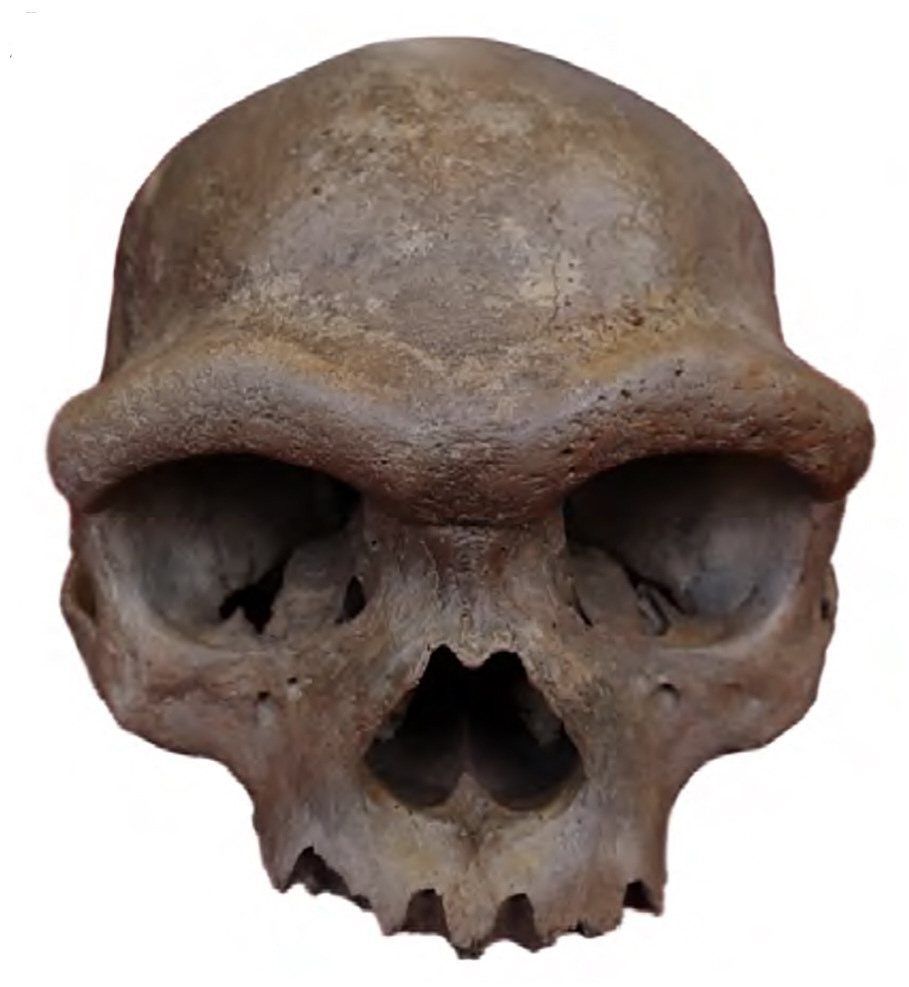
It also has a museum number. The skull is catalogued as HBSM2018-000018(A) and belongs to the Geoscience Museum of Hebei GEO University in Shijiazhuang, China, according to the 2021 species paper by Ni and colleagues. The "2018" in that number is the year the skull reached the university, which is its own story.
A fossil hidden in a well for 85 years
The way the skull came to light is not the usual archaeology story of trowels and trenches. As later accounts tell it, the skull came out of the ground in 1933 near Harbin during the building of a bridge, while the region was under Japanese occupation. The man who came across it hid it in an abandoned well. It stayed there for decades. In 2018 the skull was recovered and donated to Hebei GEO University, a sequence described in Archaeology Magazine and in a commentary in Nature Ecology & Evolution.

The 2021 species paper records the donation to the university. The 1933 find and the well come from later recollections, so they are best read as the reported history of the fossil. Because nobody excavated it and recorded the layer it lay in, its exact original location is uncertain. That missing record matters for the next question everyone asks.
How old is the Dragon Man skull?
The skull is at least 146,000 years old. That figure comes from direct uranium-series dating of the fossil itself, a method that measures the slow decay of uranium taken up by bone, published by Shao and colleagues in The Innovation. It is a minimum age. The true age could be older.
The same team tried to work out which deposits the skull had come from. They compared the chemistry of the fossil with sediments around Harbin and linked it to lake deposits, which geologists call lacustrine sediments, dated to roughly 138,000 to 309,000 years ago. That puts the skull in the late Middle Pleistocene, a stretch of the Ice Age when several kinds of humans lived across Europe, Africa and Asia.
Why not a single number? The dating paper explains that the uncertain find spot makes a narrower age difficult. With an excavated fossil, scientists can date the layers above and below it. With a fossil that spent decades in a well, they date the bone and match its chemistry as closely as they can. If you want a feel for how these methods work on any old bone, our piece on how old bones are dated walks through the basics.
Tap or hover a row to highlight it.
| Measure | Figure | Published by |
|---|---|---|
| MeasureMinimum age (uranium-series dating) | FigureMore than 146,000 years | Published byShao et al., 2021 |
| MeasureAge range of the matched lake sediments | FigureAbout 138,000 to 309,000 years | Published byShao et al., 2021 |
| MeasureProteins recovered from the skull | Figure95 | Published byFu et al., Science, 2025 |
| MeasureDenisovan-derived amino-acid variants | Figure3 | Published byFu et al., Science, 2025 |
| MeasureDNA recovered | FigureMitochondrial DNA from dental calculus | Published byFu et al., Cell, 2025 |
Homo longi: the 2021 Dragon Man name
In 2021, Qiang Ji, Xijun Ni and colleagues published a study proposing the Harbin cranium as the holotype, the reference specimen that defines a species, of *Homo longi*. The name translates as "Dragon Man," and it stuck in the press at once.
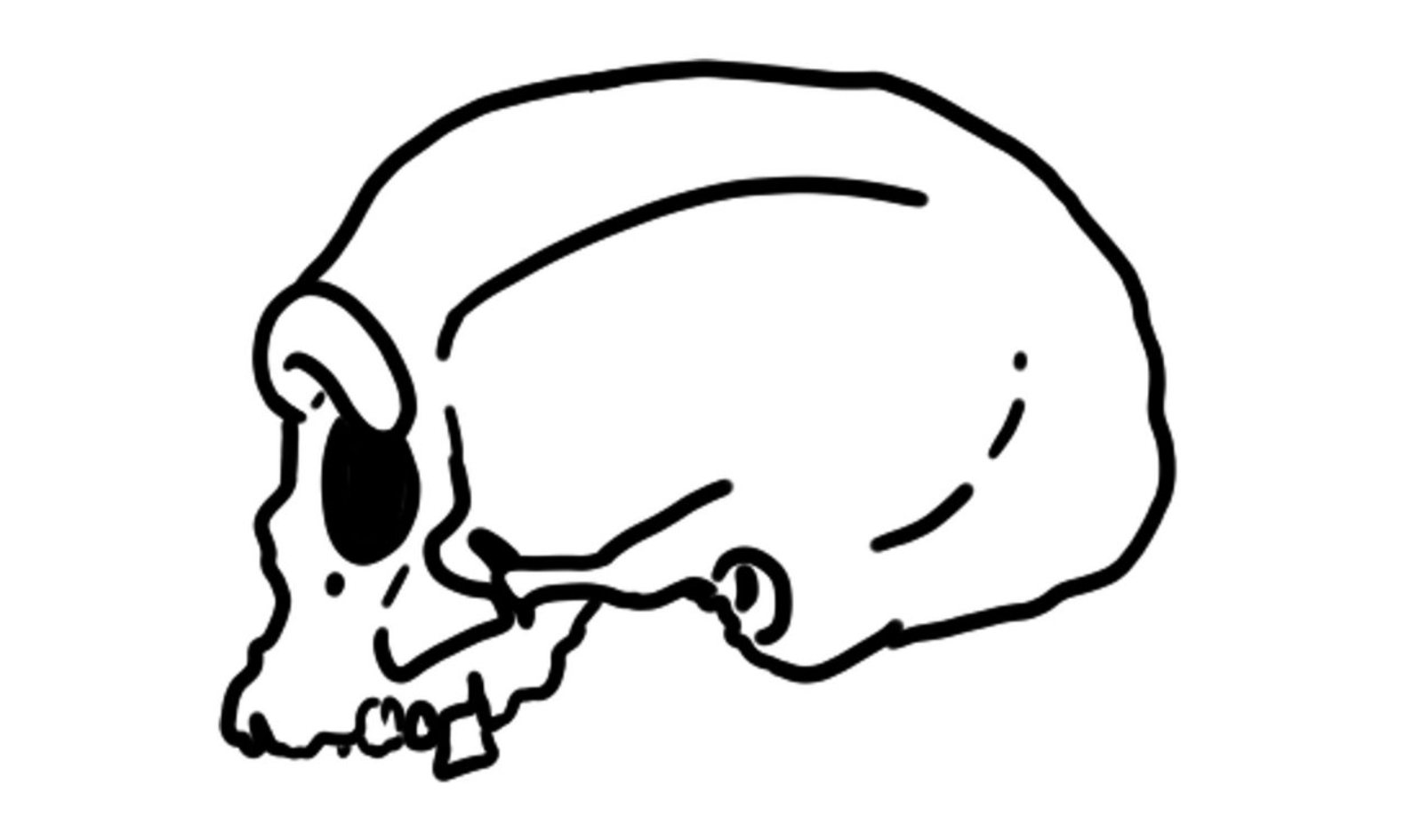
Their argument rested on anatomy. The team found that the skull showed an unusual combination of features, and their analysis placed it as a distinct Middle Pleistocene lineage. In their family tree, that lineage sat close to the line leading to modern humans and to the Neanderthal line, while belonging to neither. In plain terms, they saw a third branch of large-brained humans living in East Asia at the same time as early Neanderthals in Europe.
That was the state of things for four years. A new name in human evolution always draws discussion, and this one did, partly because the skull had no excavation record. The next step came from inside the skull itself.
June 18, 2025: proteins, plaque and the Denisovan link
On June 18, 2025, two papers led by the geneticist Qiaomei Fu and colleagues tied the Harbin individual to the Denisovans.
The first, in *Science*, looked at ancient proteins. The team recovered 95 endogenous proteins, meaning proteins that came from the person's own body and from no later contamination. Among them were three amino-acid variants known from Denisovans. When the researchers built a protein-based family tree, Harbin grouped with Denisova 3, the Denisovan whose high-coverage genome came from Denisova Cave.
The second paper, in *Cell*, went after DNA. The team could recover no DNA from the tooth or from the petrous bone, the dense part of the skull near the ear that often keeps DNA best. They turned instead to dental calculus, the hardened plaque on the teeth, and recovered mitochondrial DNA from it. That DNA fell within known Denisovan mitochondrial variation and was related to an early Denisovan branch previously identified in southern Siberia, according to the PubMed record of the Cell study.
One limit belongs right beside those results. The team did not obtain a complete nuclear genome, the main body of DNA that carries most of a person's ancestry. Mitochondrial DNA passes down the maternal line only. Taken together, the two studies strongly support a Denisovan affiliation, which is how Nature's news coverage described the result while noting that some researchers were still debating the interpretation.
Who were the Denisovans?
Denisovans were an archaic human population first identified through DNA, which is unusual in this field. In 2010, a *Nature* study led by Svante Pääbo, with David Reich and colleagues, showed that a finger bone and molars from Denisova Cave in the Altai Mountains of southern Siberia, Russia, belonged to a previously unknown human group, distinct from both modern humans and Neanderthals. For years, that was most of what anyone had: small bones, a few teeth and a great deal of genetic data.
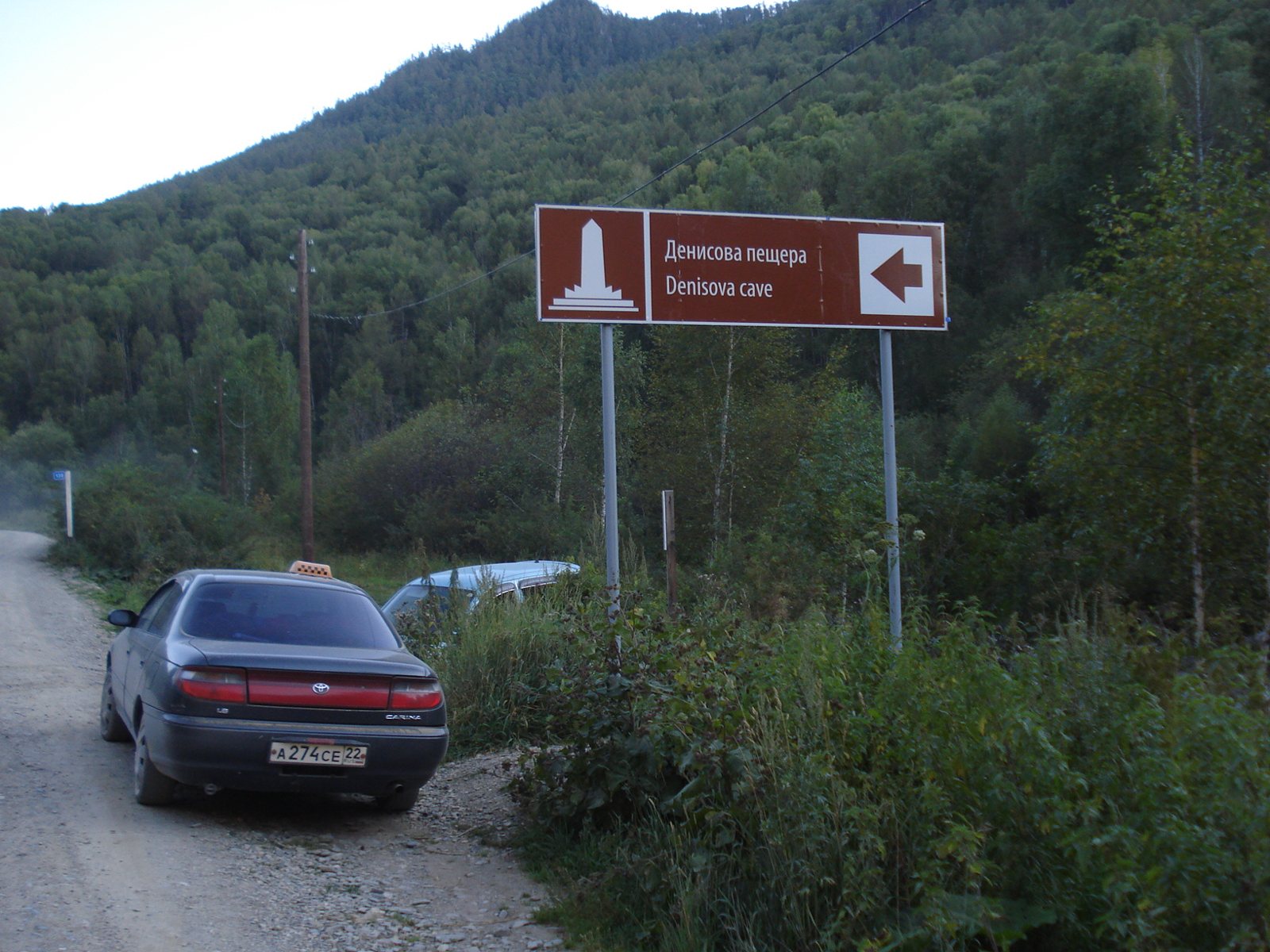
The cave itself had many tenants over time. The Smithsonian Human Origins Program summarizes sediment DNA evidence placing Denisovans there as early as about 250,000 years ago, with Neanderthals appearing later and modern humans arriving around 45,000 years ago. The Smithsonian's page on ancient DNA and Neanderthals adds that Denisovans and Neanderthals interbred, and that Denisovan ancestry survives in some living people. If the Neanderthal side of this family interests you, our story on the Neanderthal skull picks it up from there.
The Dragon Man skull, from the well to the lab
Tap or hover a step to follow the order.
1933
Skull reportedly discovered near Harbin during bridge building and hidden in an abandoned well
2010
Denisovans identified from DNA in a finger bone and molars from Denisova Cave, Siberia
2018
Skull recovered and donated to Hebei GEO University
2021
Uranium-series dating gives a minimum age of more than 146,000 years
2021
Ji, Ni and colleagues propose the species Homo longi, "Dragon Man"
June 18, 2025
Science paper groups the skull's proteins with Denisovan material
June 18, 2025
Cell paper links mitochondrial DNA from dental calculus to Denisovans
Why one skull matters so much
Before Harbin, scientists could read Denisovan DNA in detail but had almost no idea what a Denisovan head looked like. A nearly complete cranium changes that. It gives the clearest direct evidence yet for Denisovan skull anatomy, which means other puzzling fossils from Asia can now be compared with a known shape.
It also changes the map. Denisova Cave sits in southern Siberia, and Harbin lies far to the east in northeastern China. A Denisovan-related person living near Harbin more than 146,000 years ago shows that these people ranged across a large area of Asia. The mitochondrial link to an early Siberian branch, reported in the *Cell* paper, points the same way.
For anyone curious how much a single bone can say about a life, this is a good case. Our piece on what bones tell archaeologists covers the everyday version of the same questions: age, health and diet, read from what survives.
Homo longi or Denisovan? Where scientists stand
So, which is it? Both names are in use, for different reasons.
The 2021 name *Homo longi* remains part of the scientific literature, proposed by Ji, Ni and colleagues on the strength of the skull's anatomy. Some researchers argue that Harbin should instead be treated as a Denisovan, without a separate species of its own. The 2025 studies themselves describe the individual as Denisovan or Denisovan-related, and the Nature Ecology & Evolution commentary "Face to face with a Denisovan" summarized the protein result as grouping Harbin with Denisova 3.
What everyone agrees on is the core: a skull more than 146,000 years old, from northeastern China, belonging to a person of an archaic human population that genetics had known for fifteen years before it had a face. What remains open is the name on the label.
Where the Dragon Man skull is kept today
The skull is held by the Geoscience Museum of Hebei GEO University in Shijiazhuang, China, under the number HBSM2018-000018(A). The university received it in 2018. If you hope to see it, contact the museum directly about display and access, since a research specimen of this importance is not always on public view.
Harbin is one of several famous human fossils from China. The Zhoukoudian cave near Beijing gave the world Peking Man, and Spain's Sima de los Huesos holds the world's largest collection of Middle Pleistocene human fossils. For a different branch altogether, the small-bodied people of Flores in Indonesia are told in our story on Homo floresiensis.
Questions people ask about the Dragon Man skull
What is the Dragon Man skull?
It is the nearly complete Harbin cranium from northeastern China, more than 146,000 years old. In 2021 researchers proposed it as the holotype of *Homo longi*, and in 2025 protein and mitochondrial DNA studies linked the individual to the Denisovan lineage.
Is Dragon Man a Denisovan?
The 2025 protein and mitochondrial DNA studies support identifying the Harbin individual as Denisovan or Denisovan-related. No complete nuclear genome was recovered, and some researchers still debate whether *Homo longi* should be kept as a separate species name.
How old is the Dragon Man skull?
It is at least 146,000 years old by direct uranium-series dating. Its likely geological setting lies in Harbin lake sediments of about 138,000 to 309,000 years, and the age cannot be narrowed further because the original find was never recorded.
¿Qué es el hombre dragón?
The "hombre dragón," or Dragon Man, is the Spanish name for the same fossil: the nearly complete cranium found in the Harbin area of northeastern China, more than 146,000 years old. It was proposed in 2021 as the type specimen of *Homo longi*, and the 2025 protein and DNA studies related it to the Denisovans.
What did Denisovans look like?
The Harbin skull is the clearest direct evidence of a Denisovan head so far, because Denisovans were otherwise known mainly from a finger bone, teeth and DNA. Comparisons with this cranium now give scientists a known Denisovan-associated skull shape to measure other Asian fossils against.
If this left you wanting more of the deep past, start with the oldest human skulls ever found, then follow the trail to Spain's pit of bones at Sima de los Huesos.
How well do you know the Dragon Man skull?
Answer every question to check.
Terms in this story
Tap a term to see what it means.
Cranium. The skull without its lower jaw. The Harbin fossil is a nearly complete cranium.