

No. 098
Homo floresiensis: The Hobbits of Flores
*Homo floresiensis* was a small, extinct human species from the island of Flores in Indonesia. It is known best from LB1, the skeleton of a small adult excavated at Liang Bua cave in 2003 and given its species name in 2004. Adults stood about 1.0 to 1.1 metres tall, and LB1 is estimated at about 106 centimetres, with a brain of roughly 380 to 430 cubic centimetres. The bones from Liang Bua date to about 100,000 to 60,000 years ago, and the last known evidence of the species ends around 50,000 years ago. Scientists regard *Homo floresiensis* as extinct. Below is how they were found, how small they were, how old the bones are, and what is still argued about.
The hobbits of Flores, in brief
The scientific name means "human from Flores." The nickname everyone uses, "hobbit," comes from the species' small adult size and echoes the small, human-like people in J. R. R. Tolkien's stories, as the Natural History Museum London explains. It is an informal nickname only, and in Spanish you will also see "el hobbit de Flores" or "hombre de Flores."
Behind the friendly nickname are real people. LB1 was an adult who lived and died on Flores tens of thousands of years ago, one of a population that made stone tools and lived on the island for a very long time. The questions people ask about them, how small, how old and whether any survived, all have answers that come from a handful of excavations and a long scientific argument.
The 2003 excavation at Liang Bua
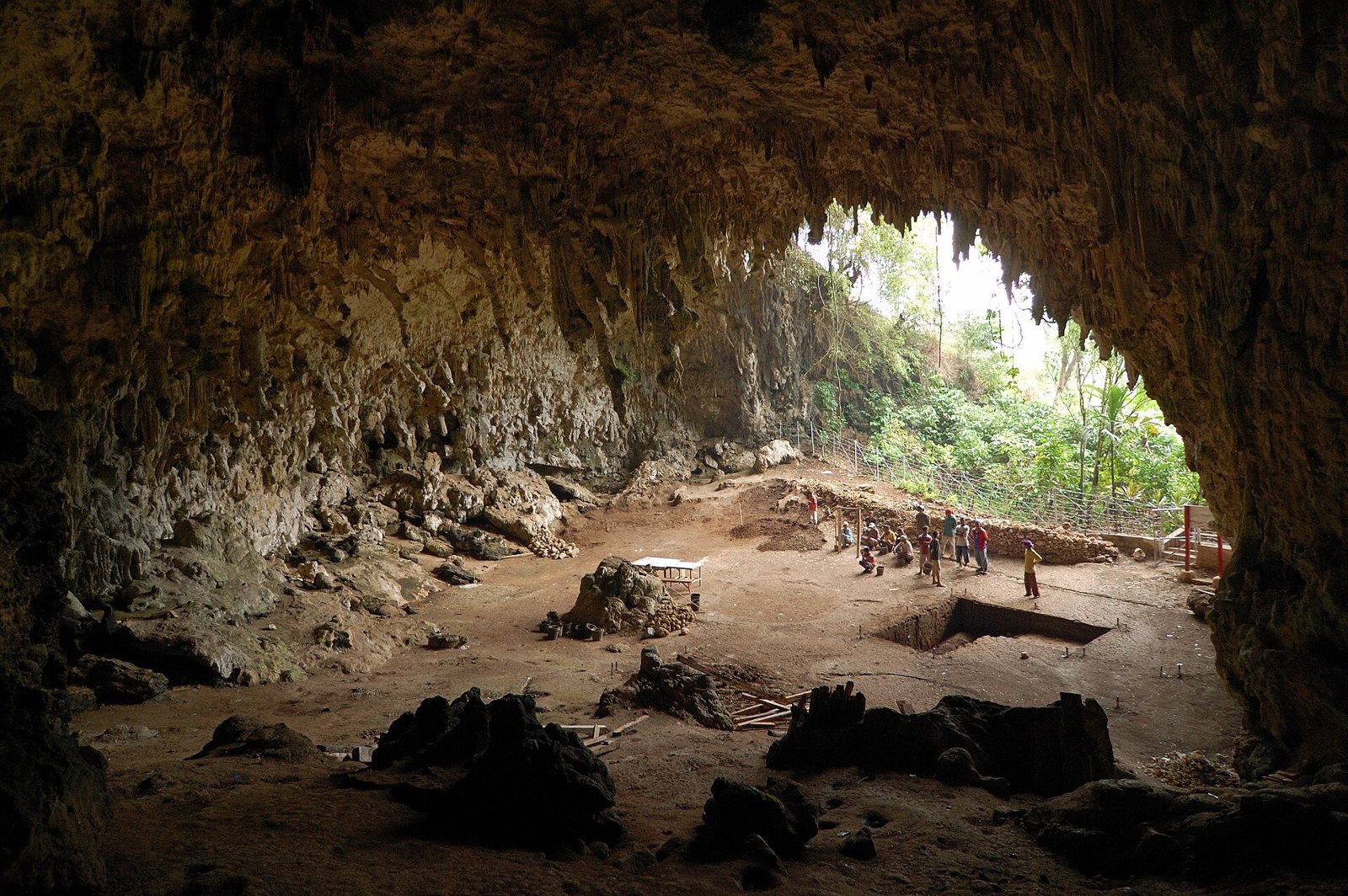
Liang Bua is a cave on Flores. In 2003 an Indonesian and Australian team led by the archaeologist Michael J. Morwood was excavating there. The Indonesian researchers named in the original work include Thomas Sutikna, Jatmiko, Rokus Due Awe and E. Wahyu Saptomo.
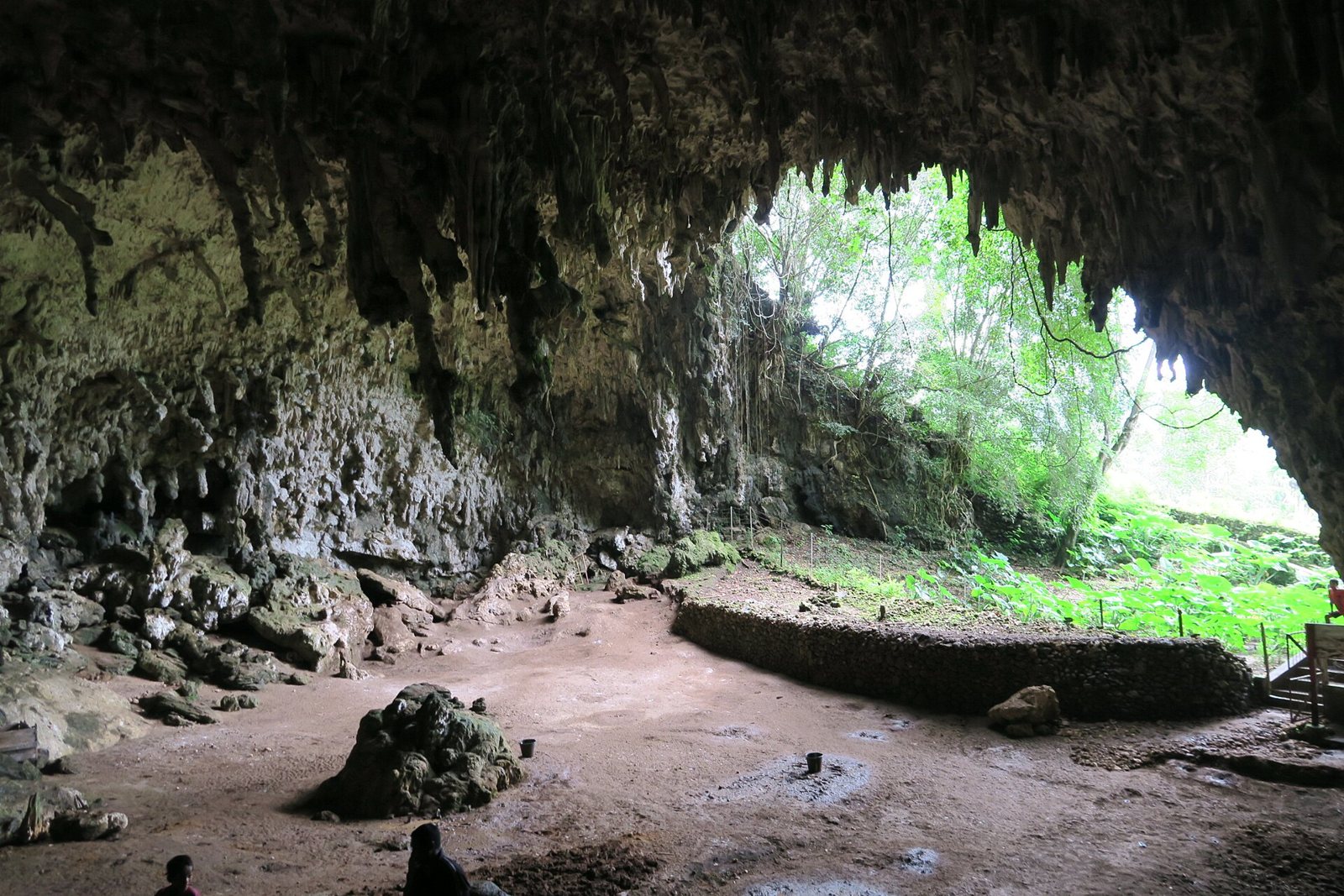
That season the team recovered LB1, a partial skeleton with a skull, a lower jaw, a pelvis and leg bones. The skeleton belonged to a small-bodied adult, probably a woman. In 2004, Brown and colleagues in Nature made LB1 the holotype, the reference specimen, of a new species, *Homo floresiensis*. Later excavations at Liang Bua, reported by Morwood and colleagues in 2005 and since, added more than 100 bones and teeth from at least several individuals. LB1 was one person among several.
How small was Homo floresiensis?
Adults were about 1.0 to 1.1 metres tall. The Smithsonian Human Origins Program estimates LB1 at 106 centimetres, and the Natural History Museum London gives about 1.05 to 1.10 metres. That is roughly the height of a young child today, yet LB1 was a grown adult.
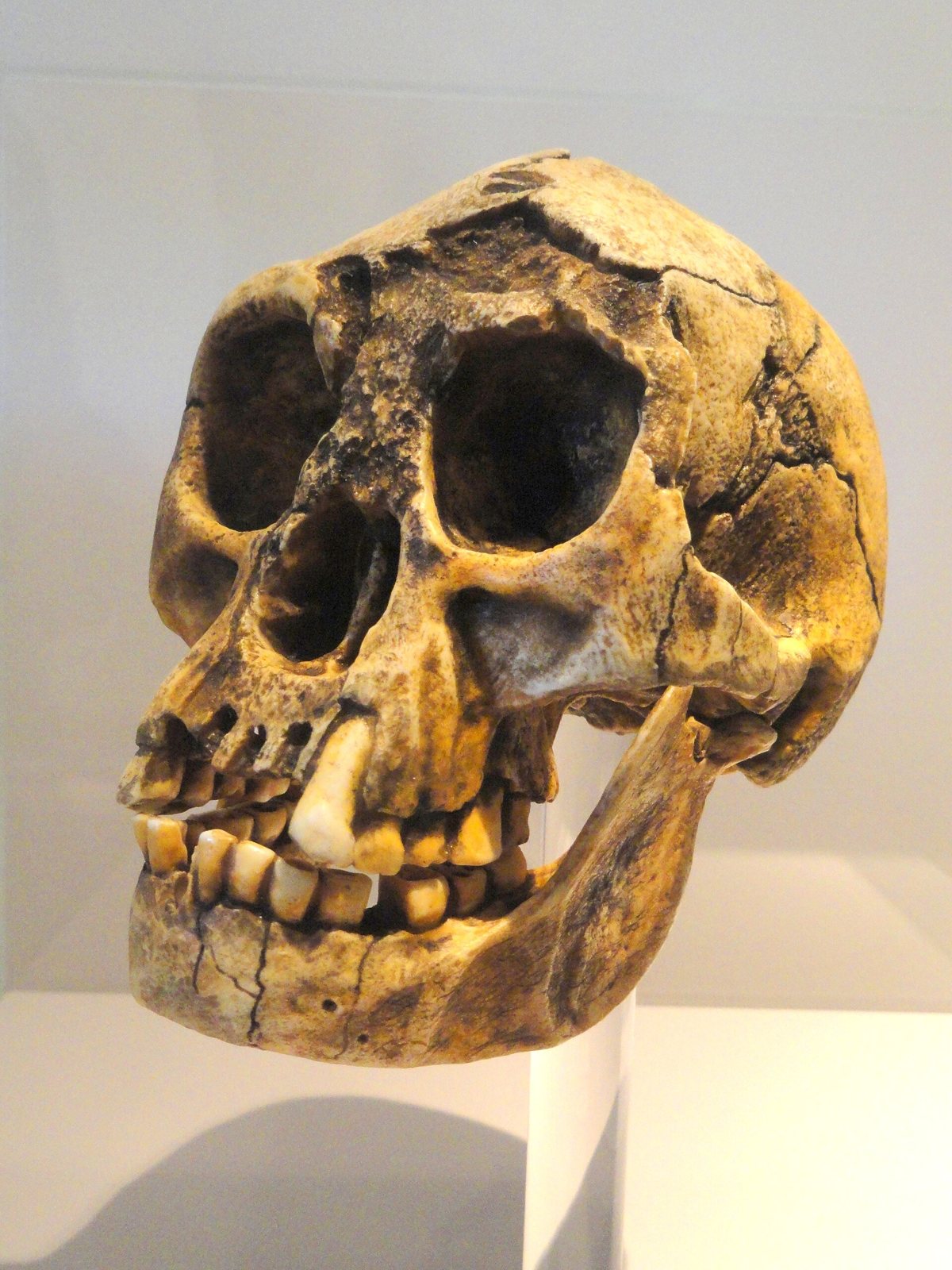
The brain was small as well. Early measurements put the inside volume of LB1's braincase at about 380 cubic centimetres. Later studies reported values from 380 to 430 cubic centimetres, including a high-resolution micro-CT estimate of 426 cubic centimetres by Kubo and colleagues. Our own skulls hold far larger brains, which is one reason LB1 drew so much attention. For a sense of how a human skull is built and measured, our human skull facts cover the basics.
Tap or hover a row to highlight it.
| Field | Value | Published by |
|---|---|---|
| FieldIsland | ValueFlores, Indonesia | Published byNatural History Museum London |
| FieldMain fossil site | ValueLiang Bua cave | Published byNatural History Museum London |
| FieldExcavation that recovered LB1 | Value2003 | Published byNatural History Museum London |
| FieldHolotype | ValueLB1 | Published byBrown et al., 2004 |
| FieldApproximate adult height | Value1.0 to 1.1 metres | Published bySmithsonian Human Origins Program |
| FieldLB1 brain volume | Value380 to 430 cubic centimetres; 426 in one micro-CT study | Published byKubo et al. |
| FieldLiang Bua skeletal dates | ValueAbout 100,000 to 60,000 years ago | Published bySutikna et al., 2016 |
| FieldStone tools attributed to the species | ValueAbout 190,000 to 50,000 years ago | Published bySutikna et al., 2016 |
| FieldMata Menge fossils | ValueAbout 700,000 years old | Published byMata Menge chronology paper, 2016 |
A new species, or something else?
When LB1 was announced, not everyone accepted a new species. The original team argued that the whole skeleton, the body proportions, skull shape, teeth, wrist, shoulder and legs, added up to a distinct human species. Some researchers proposed instead that LB1 was a modern human with microcephaly, a condition in which the head and brain stay unusually small, or with another developmental condition.
Today, the Smithsonian states that most scientists recognize *Homo floresiensis* as a valid species distinct from *Homo sapiens*. The same page notes that debate continues over its ancestry and parts of its anatomy, so the species question is largely settled while the family-tree question stays open.
How old are the Liang Bua bones?
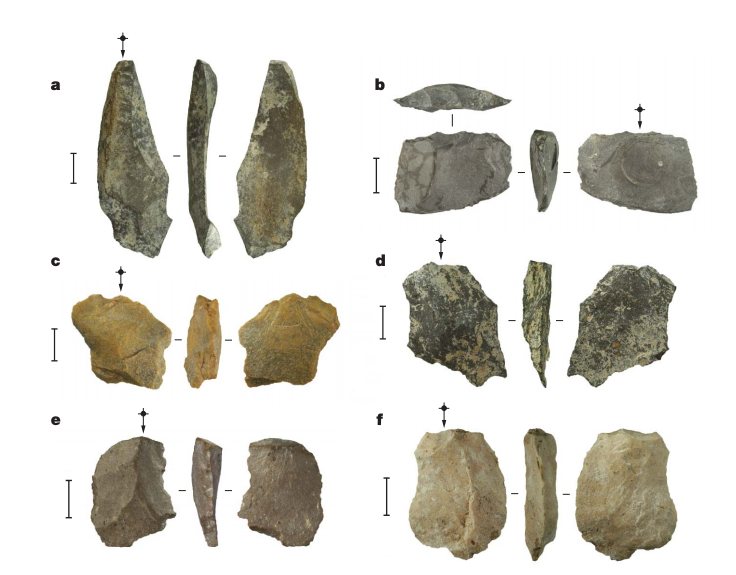
The bones date to about 100,000 to 60,000 years ago. That figure comes from a 2016 reanalysis by Sutikna and colleagues, who dated both the skeletal remains and the layers containing them. The same study placed stone tools attributed to the species between about 190,000 and 50,000 years ago.
Those dates replaced earlier interpretations that put some Liang Bua remains as recently as about 12,000 years ago. The revised ages push the last known *Homo floresiensis* evidence back to around 60,000 to 50,000 years ago.
Flores also has much older tools. The Smithsonian notes stone tools on the island from about 1 million years ago, though who made the oldest of them is uncertain. If you like knowing how these ages are worked out, our story on how old bones are dated walks through the methods.
Mata Menge: the older relatives
The story goes much further back at Mata Menge, in the So'a Basin of central Flores. In 2014, excavations there recovered hominin teeth and a small jaw fragment from a layer laid down about 700,000 years ago, as reported by van den Bergh and colleagues.
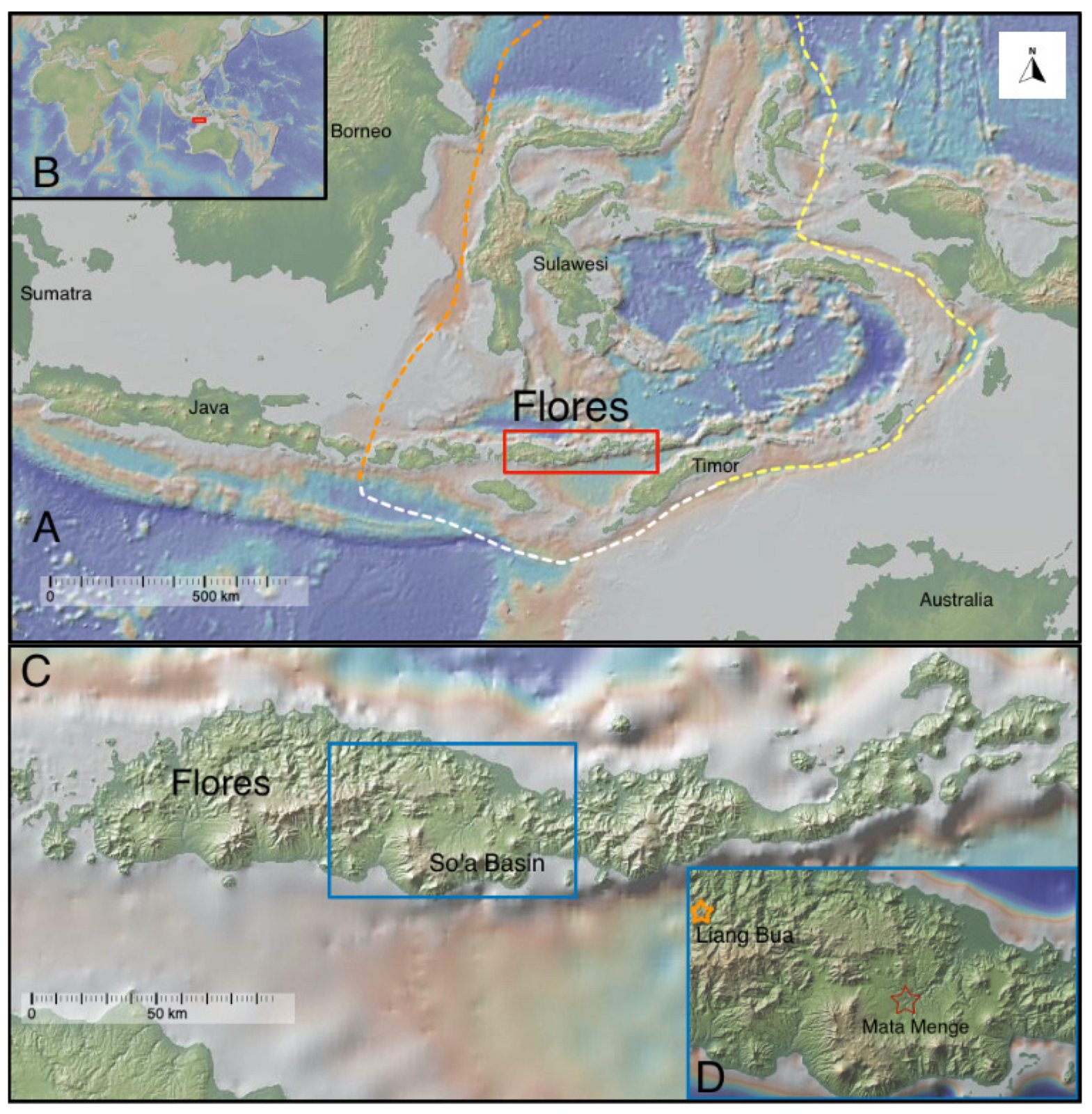
The age came from several methods working together. Volcanic deposits in the same layers were dated by argon-argon and fission-track methods, and fossil teeth were dated by uranium-series and electron spin resonance, according to the Mata Menge chronology paper. The fossils are described as belonging to a population ancestral to the later *Homo floresiensis* of Liang Bua. The exact relationship is still unresolved, but Mata Menge shows that small-bodied people lived on Flores hundreds of thousands of years before LB1.
Homo floresiensis, from the first tools to the new dates
Tap or hover a step to follow the order.
About 1 million years ago
Early stone tools appear on Flores; their maker is uncertain
About 700,000 years ago
Hominin fossils are laid down at Mata Menge in central Flores
About 190,000 to 50,000 years ago
Stone tools attributed to Homo floresiensis at Liang Bua
About 100,000 to 60,000 years ago
The Liang Bua skeletons, including LB1
About 50,000 years ago
The last known evidence of the species
2003
LB1 and other remains are excavated at Liang Bua
2004
Homo floresiensis is formally named
2014
Teeth and a jaw fragment are recovered at Mata Menge
2016
The Liang Bua dates are revised to about 100,000 to 60,000 years ago
Who were their ancestors?
There are two main answers, and scientists still argue over them.
The first comes from the 2004 description. Brown and colleagues proposed that *Homo floresiensis* descended from an Asian population of *Homo erectus* that reached Flores and then grew smaller over a very long time, a process called island dwarfing, in which animals isolated on islands sometimes evolve smaller bodies. This remains one major hypothesis.
The second holds that the small body and brain were inherited rather than evolved on the island. Other researchers argue that *Homo floresiensis* may descend from a more primitive, small-bodied hominin related to *Homo habilis*, from an australopith-like population, or from another early Asian hominin. Kubo and colleagues discuss both explanations in their brain-size study.
The Mata Menge fossils have small teeth and other traits that fit an ancestral population, but they do not settle whether the line came from *Homo erectus* or from an earlier dispersal of early humans. The Smithsonian also notes that no DNA has been recovered from *Homo floresiensis*, so genetics cannot yet break the tie. For the wider family, our story on the oldest human skulls ever found covers *Homo habilis* and the australopiths, and our story on Lucy follows one australopith skeleton in detail.
Could Homo floresiensis still be alive?
Scientists regard the species as extinct. The last known remains and related evidence date to roughly 60,000 to 50,000 years ago, and there is no accepted fossil, genetic or archaeological evidence that *Homo floresiensis* survived to the present.
The question comes up because of the ebu gogo. Flores traditions tell of the ebu gogo, small, hairy, human-like beings who lived in caves or forests. Some writers and scientists have suggested that these stories might preserve a cultural memory of meetings with an extinct human species. That idea is unproven. The Australian Museum describes the link as a suggestion and stops short of identifying the ebu gogo with *Homo floresiensis*.
The stories themselves belong to the people of Flores and their traditions, and they are worth hearing as that. They are best described as a local tradition alongside a scientific hypothesis, and neither one is evidence that the species lived into recent centuries.
Where to see Homo floresiensis
Most people meet *Homo floresiensis* through museums, their public pages and casts of the bones. The Smithsonian Human Origins Program, the Natural History Museum London and the Australian Museum all keep public pages on the species, and the Cantonal Museum of Geology in Lausanne, Switzerland, holds a cast of the skull. If you plan a visit to see a cast, ask the museum what is on show first.
Questions people ask about Homo floresiensis
How tall was Homo floresiensis?
Adults were about 1.0 to 1.1 metres tall. LB1, the best-known skeleton, is estimated at about 106 centimetres by the Smithsonian, roughly the height of a young child today.
Is Homo floresiensis still alive?
No, scientists regard the species as extinct. The last accepted evidence dates to roughly 60,000 to 50,000 years ago, and the suggested link with the ebu gogo stories of Flores remains speculative.
Why are they called hobbits?
The nickname refers to their small adult size and echoes the small, human-like people in J. R. R. Tolkien's books. It is informal; the scientific name, *Homo floresiensis*, means "human from Flores."
¿Qué es el Homo floresiensis?
*Homo floresiensis* is an extinct human species from the island of Flores, Indonesia, known in Spanish as "el hombre de Flores." Its fossils show adults about a metre tall with small brains, and the Liang Bua remains are about 100,000 to 60,000 years old.
Who were the ancestors of Homo floresiensis?
Their ancestry is still disputed. One hypothesis is island dwarfing from an Asian *Homo erectus* population, and the other is descent from an earlier small-bodied hominin related to *Homo habilis* or an australopith-like group.
Curious about other members of the human family who turned up in caves? Read about the pit of bones at Sima de los Huesos in Spain, the Dragon Man skull from China, Peking Man, and Homo naledi from South Africa.
How well do you know the hobbits of Flores?
Answer every question to check.
Terms in this story
Tap a term to see what it means.
Liang Bua. A cave on the island of Flores, Indonesia, where LB1 and other Homo floresiensis remains were excavated from 2003.