


No. 320
The Skull (1965): Cushing, Lee and the Marquis de Sade's Skull
*The Skull* is a 1965 British horror film from Amicus Productions, directed by Freddie Francis. Peter Cushing plays an occult collector who buys the skull of the Marquis de Sade, and Christopher Lee plays the friend who warns him off it.
Milton Subotsky adapted it from Robert Bloch's 1945 short story "The Skull of the Marquis de Sade". The haunting and the killings are fiction, but the story starts from a real episode: Sade's skull was taken for phrenological study after his death in 1814, and the original has never been securely located.
The film, its makers and its release dates
The BFI's record lists *The Skull* as a 1965 United Kingdom production, directed by Freddie Francis and produced by Max J. Rosenberg and Milton Subotsky. Subotsky also wrote the screenplay. It runs about 83 minutes, and Paramount Pictures is listed as its original distributor.
The release dates depend on which record you read, and the two countries did not get it at the same time. The film's listed United States release date is 25 August 1965, as shown on its Plex listing. The Spanish film site Pasadizo records a United Kingdom release on 4 November 1966, after the film received its British certificate. So, American audiences saw this British film more than a year before its home audience did.
The pairing of Cushing and Lee is the big draw for most fans, and here they share the screen as two collectors of the strange and the forbidden, which is about as on-brand as casting gets. Those names, along with Freddie Francis, are ones many fans connect with Hammer horror, but *The Skull* was not a Hammer film: it is an Amicus Productions film, and the BFI's record names Subotsky and Rosenberg as its producers.
Robert Bloch's story behind the film
Robert Bloch wrote "The Skull of the Marquis de Sade" two decades before the film. It first appeared in *Weird Tales*, the pulp magazine of horror and fantasy, in the September 1945 issue, volume 39, number 1, on pages 6 to 16, as recorded in the Robert Bloch Collection inventory.

Twenty years later the story gave its name to a book. Bloch's official bibliography lists it as the title story of the 1965 Pyramid Books collection *The Skull of the Marquis de Sade and Other Stories*, the same year Subotsky turned it into a screenplay for Amicus.
What happens in The Skull
The film opens in the nineteenth century, with a phrenologist digging up the Marquis de Sade and taking his skull. Then it jumps to modern London. Christopher Maitland, Cushing's occult collector, buys the skull from an antiques dealer. His friend Sir Matthew Phillips, played by Lee, warns him that the thing has already brought disaster to everyone who owned it.
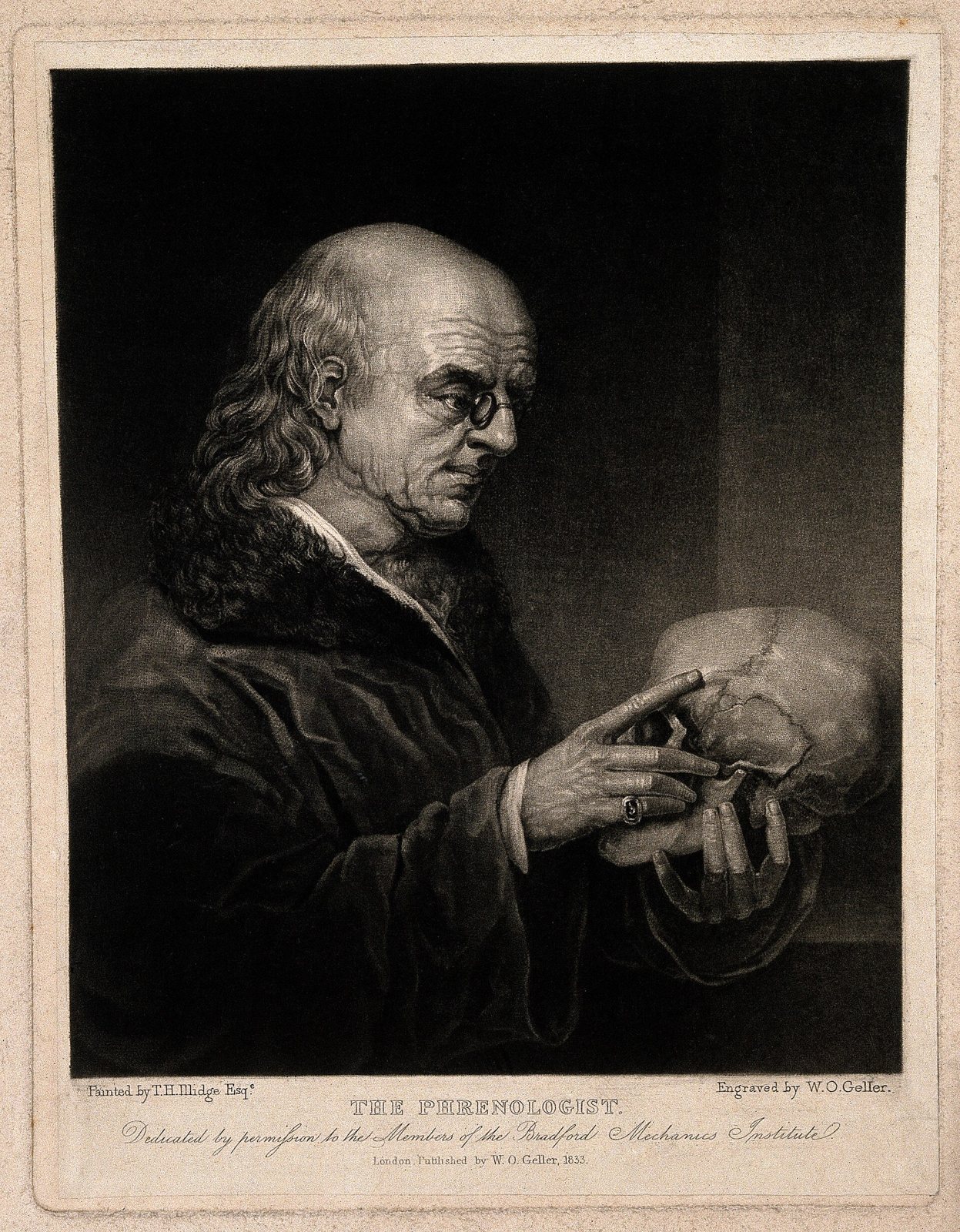
Maitland does not listen, which is the first rule of any film about a cursed object. What follows is a slide into hallucinations, violence and madness, with the skull at the centre of it. The ending is best left for the viewing.
From Charenton to Blu-ray
Tap or hover a step to follow the order.
1814
The Marquis de Sade dies at Charenton asylum near Paris.
September 1945
Robert Bloch's story "The Skull of the Marquis de Sade" appears in Weird Tales.
1965
Pyramid Books publishes The Skull of the Marquis de Sade and Other Stories.
1965
Freddie Francis directs the Amicus film adaptation, The Skull.
25 August 1965
The film's listed United States release date.
4 November 1966
United Kingdom release, as recorded by Pasadizo.
14 March 2017
Kino Lorber releases the film on Blu-ray in the United States.
How critics received it, then and now
Critics have tended to admire how the film looks more than how its plot behaves. In its own day, the *Monthly Film Bulletin* praised Freddie Francis's visual imagination, Bill Constable's art direction and Elisabeth Lutyens's score, and called the film an unusually deft piece of macabre supernatural cinema. It also had complaints: too much camera movement, and too many shots seen from inside the skull itself.
Later writers have been kind to the same qualities. For the BFI, critic Matthew Thrift called it visually inventive, singling out its off-kilter camerawork and its satanic-ritual climax. Reviewing the Blu-ray, Brian Orndorf praised the performances, the design and Francis's brisk direction, while noting that the supernatural plot is deliberately strange and sometimes silly.
If you are wondering whether it counts as an underrated Amicus film, that is the critics' answer in short: a stylish, well-acted oddity whose skull gets a lot of screen time from its own point of view.
What happened to the Marquis de Sade's skull?
The real story is quieter than the film and, in its way, just as strange. The Marquis de Sade died in 1814 at Charenton, the asylum near Paris where he spent his last years. Two historical accounts describe what happened to his skull afterward, and they differ in the details.
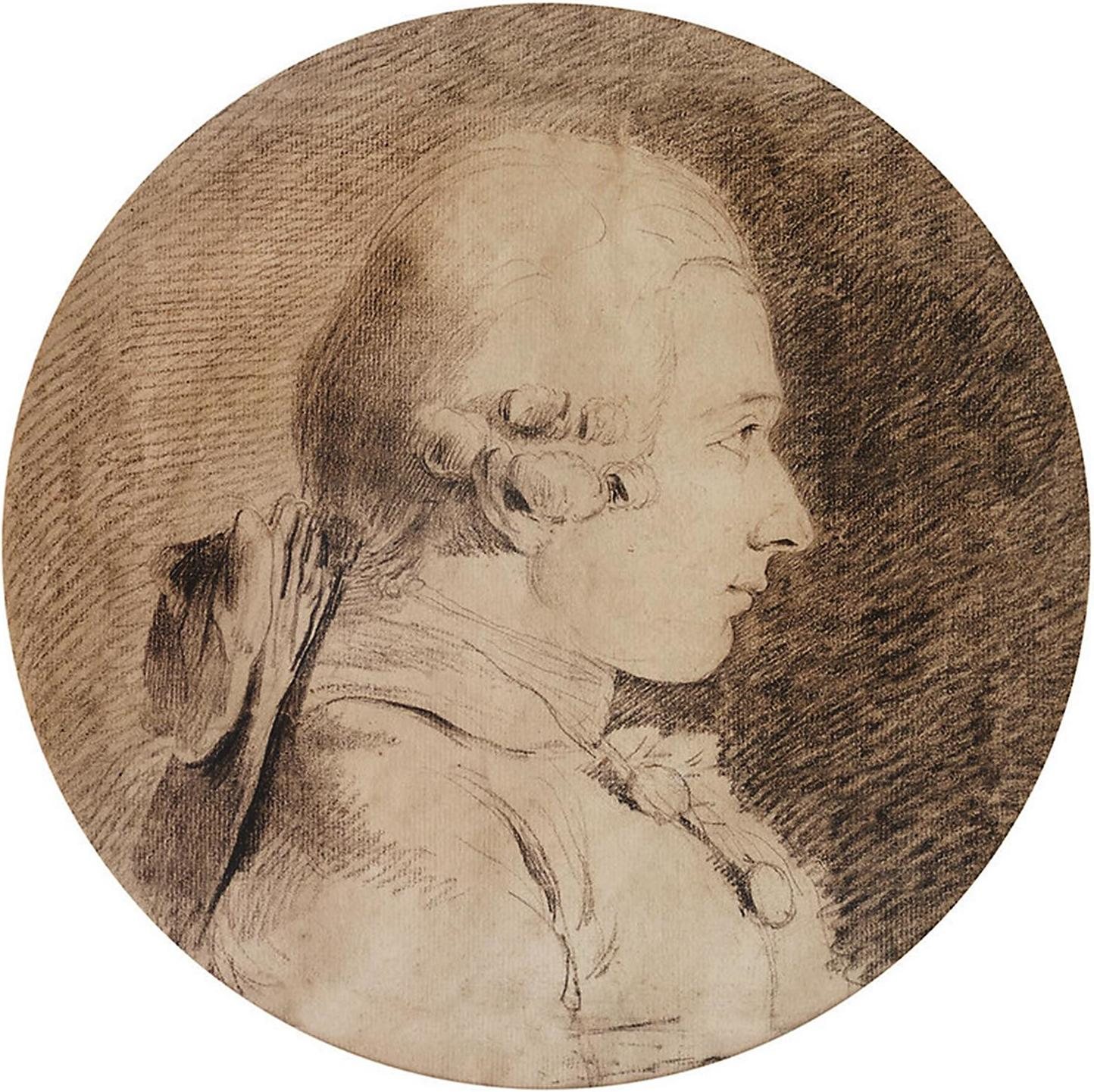
In a 2019 essay for University College London, Ray Huling writes that J.-L. Ramon, a physician at Charenton, held back Sade's skull when the cemetery was relocated. Ramon then lent it to Johann Spurzheim, the phrenologist, who took it away. Spurzheim made casts of it, and one of them survived and was later identified in the Musée de l'Homme in Paris.
Writing for Smithsonian Magazine, Tony Perrottet tells a related version. In his account, Ramon made or arranged a plaster cast, and the original skull disappeared after being lent to a German colleague. Perrottet describes a cast marked "Marquis de Sade, Coll. Demoustier No. 529" in the Musée de l'Homme, linked to Charles-Albert Demoustier and to later museum collections.
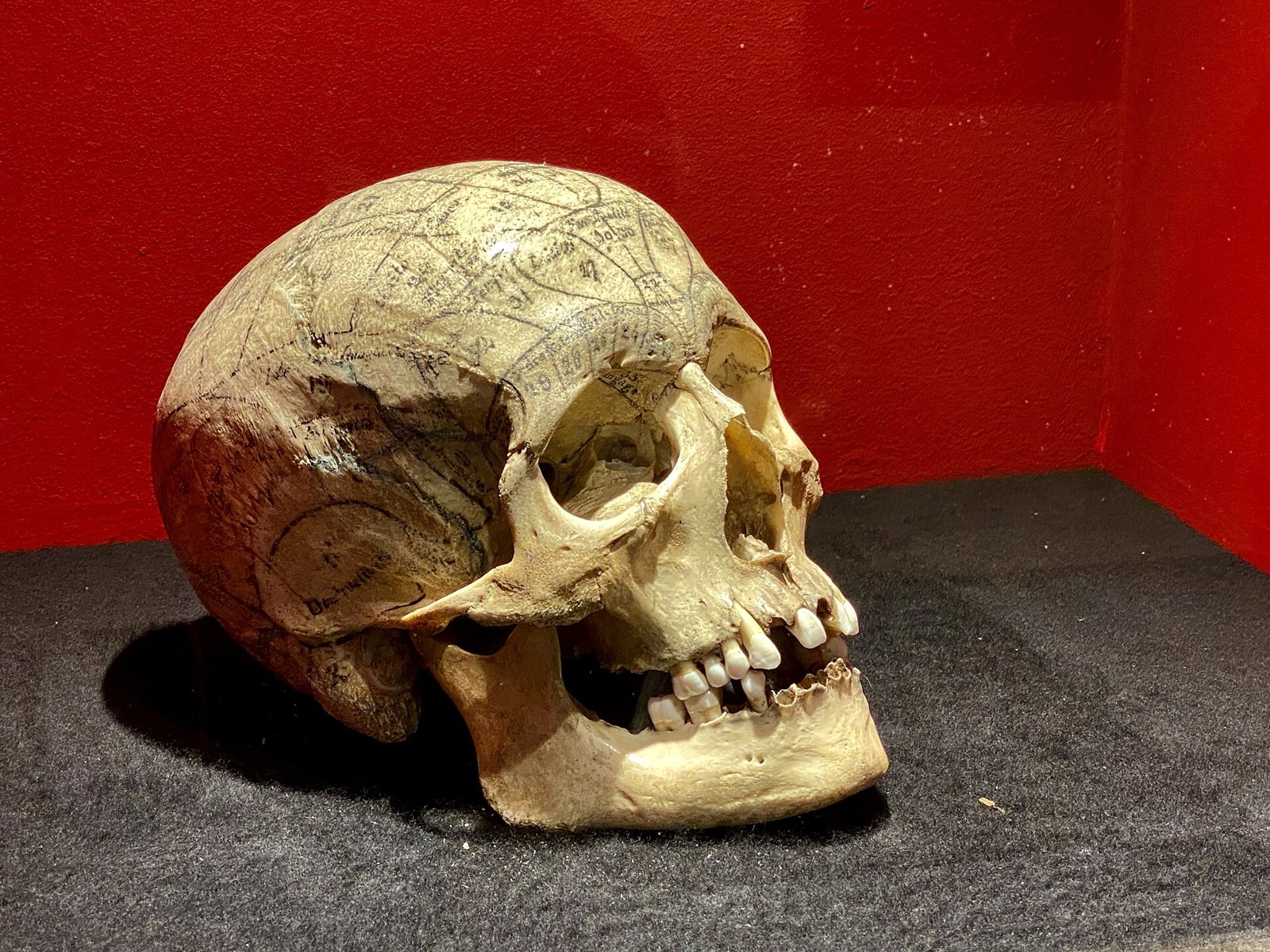
Both accounts end in the same place. What survives is a plaster cast, not the skull itself, and the original skull has not been securely located. Casts like this were a normal tool of nineteenth-century French phrenology, and the Muséum national d'Histoire naturelle keeps a collection of anthropological moulds from that tradition. For what phrenologists believed they could read in a skull's bumps and ridges, our phrenology skull story tells the whole story.
Tap or hover a row to highlight it.
| Account | Who kept the skull | What survives |
|---|---|---|
| AccountRay Huling, University College London, 2019 | Who kept the skullJ.-L. Ramon held it back during a cemetery relocation and lent it to Johann Spurzheim, who took it away | What survivesA cast made by Spurzheim, later identified in the Musée de l'Homme |
| AccountTony Perrottet, Smithsonian Magazine | Who kept the skullRamon, who made or arranged a cast; the original disappeared after being lent to a German colleague | What survivesA cast marked "Marquis de Sade, Coll. Demoustier No. 529" in the Musée de l'Homme |
Other famous skulls with complicated afterlives
Sade's is not the only famous skull whose story carried on long after its owner's funeral. The composer's skull in our Haydn skull story, the philosopher's in the Descartes skull story and the poet's in the Schiller skull story each have their own long and tangled histories. They make good company for anyone who finishes *The Skull* wanting more true stories behind the fiction.
The Skull in Spanish
The film went out under different Spanish titles in different countries, so the name you know may depend on where you saw it. In Argentina it was released as *La calavera del Marqués de Sade*, and in Mexico as *La calavera del marqués*, according to Pasadizo. The title *La maldición de la calavera* appears in Spanish-language listings and criticism, especially for Spain.
Tap or hover a row to highlight it.
| Country | Title |
|---|---|
| CountryArgentina | TitleLa calavera del Marqués de Sade |
| CountryMexico | TitleLa calavera del marqués |
| CountrySpain | TitleLa maldición de la calavera |
Where to watch The Skull (1965) now
The surest way to own it is on disc. Kino Lorber released a Region A Blu-ray in the United States on 14 March 2017, with the original 83-minute film, English audio and English SDH subtitles, as listed by Blu-ray.com. Check that your player accepts Region A discs before you order one.
Streaming depends on your country and changes often. In November 2026, Plex's United Kingdom listing showed the film for purchase through Amazon Video at 7.99 euros and listed links to Paramount+. At the same time, Netflix's United States page listed the title as unavailable there. Confirm availability, price, region and subtitles with the service for your country before you rent, buy or subscribe.
How well do you know The Skull?
Answer every question to check.
Quick answers about The Skull
A few last questions fans often ask.
Is The Skull (1965) based on a true story?
The story is fiction, built on a real episode: the reported removal of the Marquis de Sade's skull for phrenological study after his death. The possession, the demonic influence and the murders all come from Robert Bloch's imagination. The real skull's fate is a quieter mystery, with a plaster cast surviving in Paris.
Who do Peter Cushing and Christopher Lee play in The Skull?
Cushing plays Christopher Maitland, the occult collector who buys the skull, and Lee plays Sir Matthew Phillips, the fellow collector who warns him it has ruined its earlier owners. Lee's character is the voice of caution in a film where caution loses.
When was The Skull released?
Its listed United States release date is 25 August 1965, and Pasadizo records the United Kingdom release on 4 November 1966. The BFI dates the production itself to 1965.
How long is The Skull?
It runs about 83 minutes. The 2017 Kino Lorber Blu-ray presents the original 83-minute film.
Is The Skull (1965) the same film as The Skulls (2000)?
No, they are unrelated films: *The Skulls* is an American college thriller about a secret society, directed by Rob Cohen and written by John Pogue. The AFI Catalog lists it as a Universal Pictures release that opened in the United States on March 31, 2000. Its story is fiction, with a premise drawn from public speculation about Yale's Skull and Bones society.
Where to read next
If the skull on screen sent you looking for the real ones, start with the phrenology skull story, then follow the trail of famous heads through the Haydn skull and Descartes skull stories. For a skull with a very different screen career, the Punisher skull story follows a comic-book emblem off the page and onto trucks and patches.
Terms in this story
Tap a term to see what it means.
Amicus Productions. The British production company that made The Skull in 1965, with Max J. Rosenberg and Milton Subotsky as producers.
---