

No. 200
La Muerte Lotería Card: Card 14, Its Verse and Its Story
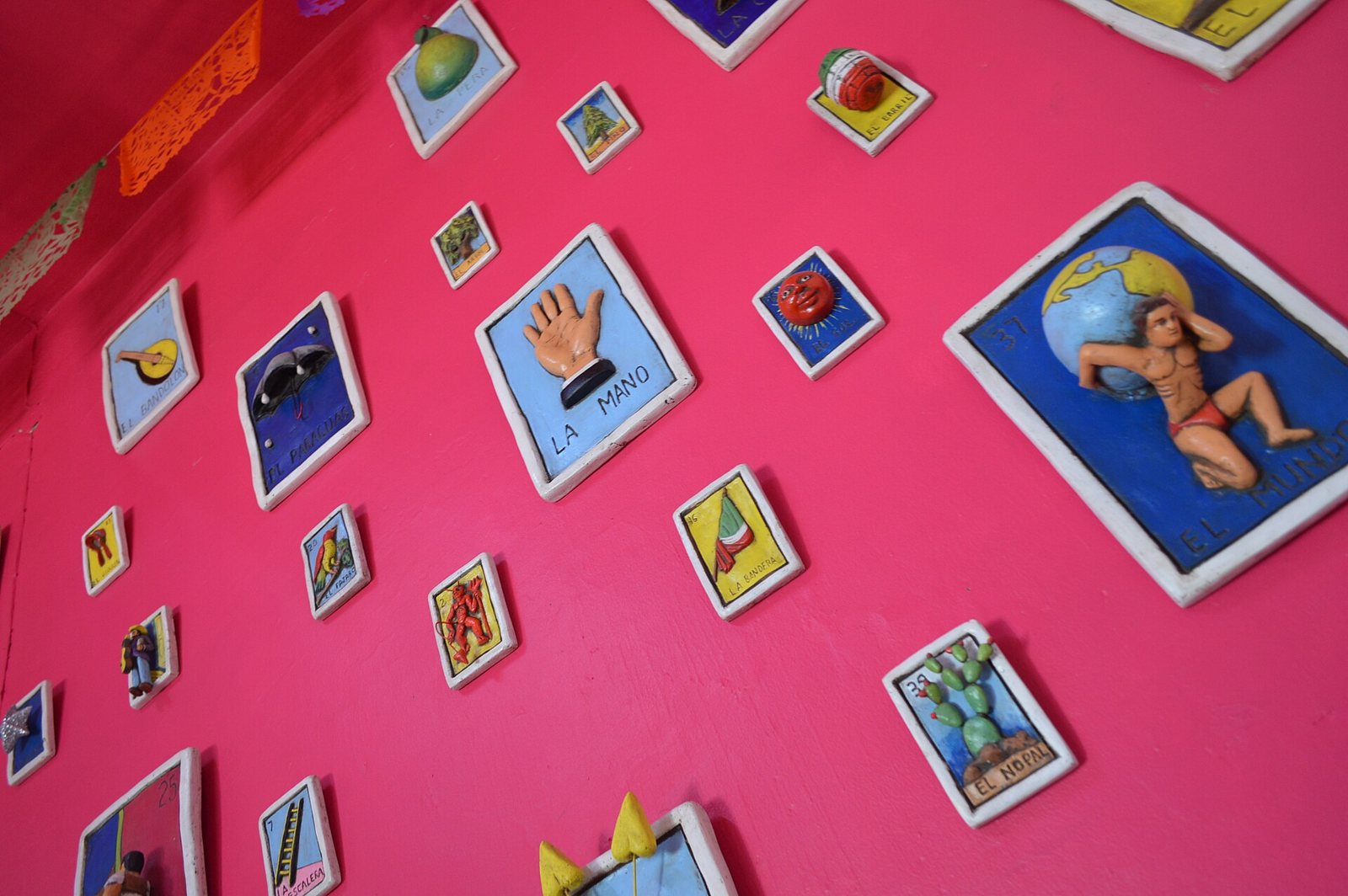
La Muerte, the skeleton card, is number 14 in the traditional 54-card lotería deck designed by Clemente Jacques, sitting between El Gorrito, number 13, and La Pera, number 15. When it comes up, the caller sings out a rhyme. One published version, recorded by Gloria Libertad Juárez in the journal *Revista de Literaturas Populares*, goes: "La muerte siriquiflaca, montada en su burra flaca."
In the game itself, La Muerte is one image among 54, called out and marked on a board like every other card. If you just drew it at a family table, you have one more square to mark, and nothing more ominous than that.
The card has a story, though, and it reaches back through a French printer in Mexico City to a lotto game in Naples.
Card 14 and its neighbors
Lotería works like bingo played with images. Each player has a board printed with them. A caller draws cards from the deck one at a time and announces each one, and players mark the matching image on their board. In the traditional Clemente Jacques sequence, the deck runs to 54 cards, and La Muerte is the fourteenth.
Its neighbors are a reminder of how ordinary the deck is. Just before it comes El Gorrito, the little cap. Just after it comes La Pera, the pear. Death, in this game, is filed between a hat and a piece of fruit.
Tap or hover a row to highlight it.
| Number | Card | Position |
|---|---|---|
| Number13 | CardEl Gorrito | PositionBefore La Muerte |
| Number14 | CardLa Muerte | PositionThe death card |
| Number15 | CardLa Pera | PositionAfter La Muerte |
What the caller says when La Muerte comes up
Lotería callers do not simply read the card's name. They sing or recite a short verse, a copla, that plays on the image.
For La Muerte, one documented verse is "La muerte siriquiflaca, montada en su burra flaca," which Gloria Libertad Juárez recorded in her 2007 compilation of lotería coplas in *Revista de Literaturas Populares*. The second half translates plainly: "riding on her skinny donkey." The first word is harder to put into English. Juárez's note explains that *siriquiflaca* is a popular variant of the word *siriquisiaca*, applied here to death. Whatever its exact shade, it rhymes with *flaca*, skinny, and the image it leaves is a scrawny Death on an equally scrawny donkey, which is about as funny as the end of all things gets.
Another short call goes around widely: "La muerte tilica y flaca," a playful rhyme on just how thin Death is. A traditional-games guide from Mexico's sports commission, CONADE, includes a call for La Muerte, and the Indiana University Libraries exhibition *Posada and the Mexican Imagination* shows the La Muerte verse among its lotería coplas.
Callers in different regions use different versions. So, if your grandmother sang it another way, her version is part of the same living tradition.
Two calls for La Muerte
Tap a card to bring it forward.
- La muerte siriquiflaca, montada en su burra flaca: Death, siriquiflaca, riding on her skinny donkey. Recorded by Gloria Libertad Juárez in 2007.
- La muerte tilica y flaca: A short, widely shared call that rhymes on Death's thinness.
Where lotería came from
The game came to Mexico from Europe. José Enrique Ortiz Lanz of INAH, Mexico's National Institute of Anthropology and History, describes an Italian influence from Naples, where a related lotto game had been played for about 500 years. Lotería reached Mexico during the 19th century and took on regional forms there, among them the lotería campechana.
The deck most people know today is the work of Clemente Jacques, a French immigrant who arrived in Mexico City in 1880. He created the commercial design that became widely recognized, the numbered, named cards many families still play with. Gloria Arjona, speaking to TIME, places the familiar modern form of the game in the early 20th century, with its visual language set by the early 1920s.
How lotería reached the family table
Tap or hover a step to follow the order.
Centuries ago
Related lotto traditions are associated with Italy and Naples, where INAH's Ortiz Lanz says a related game was played for about 500 years.
19th century
Image lotería develops in Mexico, with regional forms such as the lotería campechana.
1880
Clemente Jacques, a French immigrant, arrives in Mexico City.
Early 20th century
The commercial Clemente Jacques design becomes the best-known version.
Early 1920s
Gloria Arjona dates the familiar modern visual form to this period.
2007
Gloria Libertad Juárez publishes a scholarly compilation of traditional lotería coplas.
2008
UNESCO inscribes the Indigenous festivity dedicated to the dead on its Representative List.
Why a family game has a death card
It can seem strange that a game played by children and grandparents alike includes a skeleton. Ortiz Lanz explains that when Clemente Jacques put his deck together, he kept figures connected with the tarot, among them La Muerte, El Sol and La Luna. The tarot's Death card has a long history of its own, told in our story on the tarot Death card.
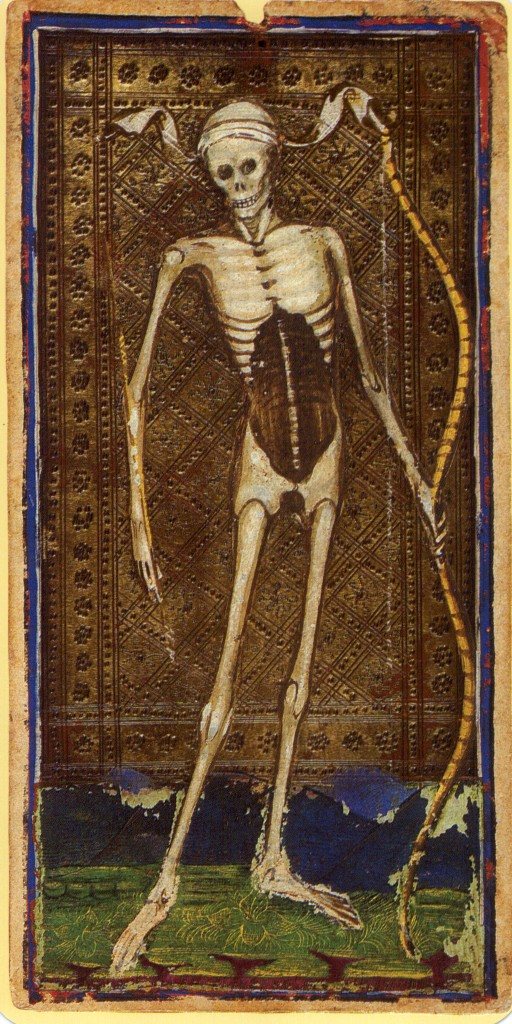
Around those old figures, the deck gathers a whole world: everyday objects, trades and occupations, religious references, social types and popular symbols. La Muerte belongs to that crowd as one more familiar image, as recognizable as the sun or the pear.
In play, it is a card of chance. The caller draws it, the players who have it mark it, and the game moves on. La Muerte carries death as an image, not as a prediction.
La Muerte beside La Catrina
La Muerte and La Catrina are both skeletons from Mexican visual culture, and people sometimes mix them up, but they are different figures. La Muerte is a numbered card in a game's set of images. La Catrina grew from José Guadalupe Posada's 1913 calavera print associated with La Calavera Garbancera, which INAH says was later renamed Catrina after the well-dressed catrín, and which Diego Rivera reworked in his mural *Sueño de una tarde dominical en la Alameda Central*.
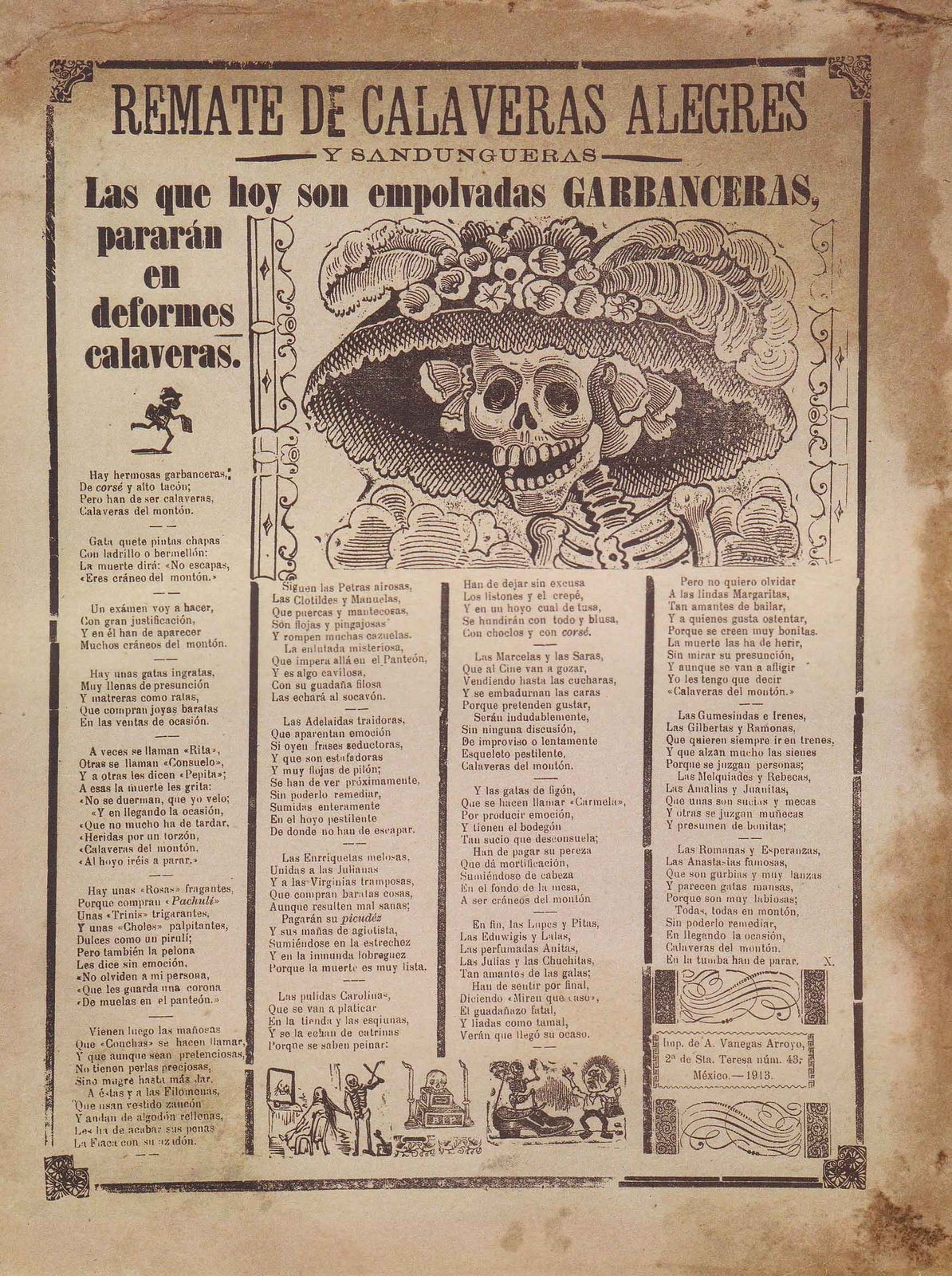
Both make death visible with a skeleton. La Catrina carries Posada's satire and, later, her place as a Día de Muertos emblem, a history told in full in our story on La Catrina and in our profile of the printmaker José Guadalupe Posada. For the wider family of Mexican skulls and skeletons, see what a calavera means.
There is a family resemblance in the humor, too. The rhyming calls for La Muerte share something with the calaveras literarias, the comic verses that tease the living as if they were already dead.
Lotería in the Día de Muertos season
Día de Muertos itself is a remembrance kept by families and communities. UNESCO, which inscribed the Indigenous festivity dedicated to the dead on its Representative List in 2008, describes it as practiced by Indigenous communities of Mexico from the end of October to the beginning of November, when relatives who have died are remembered with ofrendas, flowers, candles and paths that link the cemeteries to the homes.
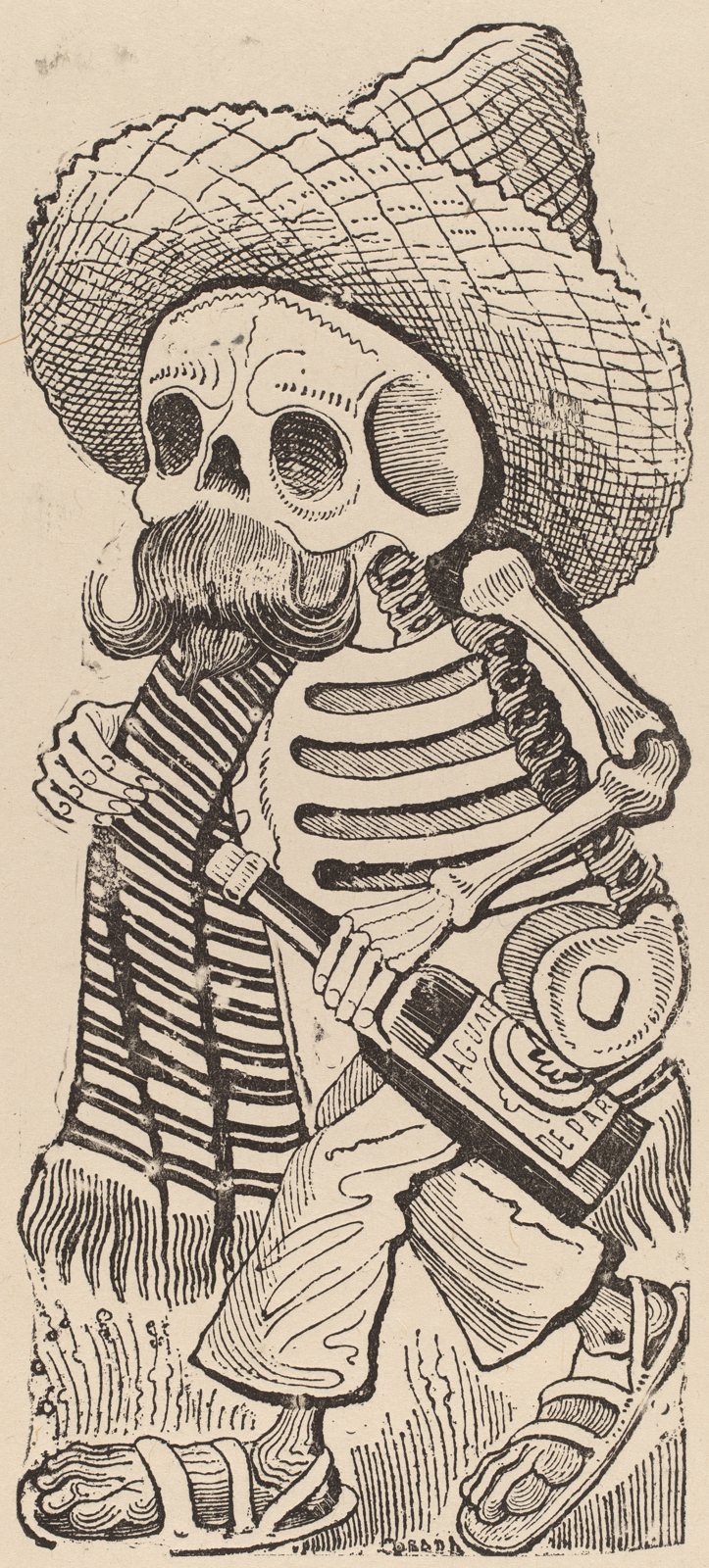
Lotería is a different kind of thing. Families may play it when they gather in the season, but it is not a ritual of Día de Muertos and no one needs it to keep the days. La Muerte fits the season's imagery, while the game at the table and the remembrance at the altar each keep their own place. For the season as a whole, start with our guide to Día de Muertos.
Does drawing La Muerte mean something?
In the rules and history of lotería, no. The card is drawn by chance, like every other card, and it brings no message about the person whose board it lands on. Some people give lotería cards personal or fortune-telling meanings, and those readings belong to the people who make them, in the way tarot readers interpret their own cards. The game asks only that you mark your board and listen for the next call.
How well do you know La Muerte?
Answer every question to check.
Questions about La Muerte and lotería
A few more answers about the card and the deck around it.
Which card comes after La Muerte in lotería?
La Pera, the pear, number 15, comes right after La Muerte in the traditional numbered sequence. El Gorrito, number 13, comes right before it.
Which lotería card stands for the end?
La Muerte, the card named for death, is the natural answer. El Mundo, the world, is another of the deck's large symbolic images, and any meaning a player gives either card is their own rather than part of the game's rules.
Is La Muerte the death card in Mexican bingo?
Yes, lotería is often called Mexican bingo, and La Muerte, card 14, is its death card. Like every card in the deck, it is announced by the caller with a short rhyme.
How many cards are in a traditional lotería deck?
The traditional Clemente Jacques deck has 54 cards, each with its own number and name. La Muerte is number 14.
Who designed the classic lotería cards?
The best-known design comes from Clemente Jacques, a French immigrant who arrived in Mexico City in 1880. According to Gloria Arjona, its familiar visual style was settled by the early 1920s.
Where to go next
If La Muerte caught your eye on a shirt or a game board, the skeletons around her have their own stories. Start with La Catrina and what a calavera means, then turn to the tarot Death card that stands behind card 14. For playful skeletons of the season, read about calacas, and for what skulls have meant across cultures, see skull symbolism.
Terms in this story
Tap a term to see what it means.
Lotería. A Mexican image game played like bingo, in which a caller announces cards and players mark the matching pictures on their boards.
---